Reviewed · PROVENCE TOURS
Marseille: découvrir la vieille ville avec un marseillais
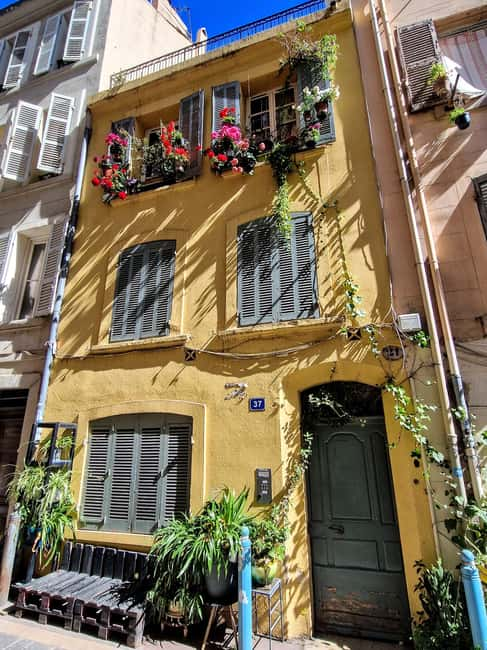
Marseille’s oldest neighborhoods make more sense with someone who lives there. On this two-hour walk with Claude, you move from the ancient port and Greek remains into Hôtel de Ville and Le Panier, while getting the local context that a map rarely provides.
I like the small-group format, limited to 10 people, and I like that Claude shares practical addresses for restaurants, bars, and places to visit after the walk. He also adjusts the pace to the group, a useful touch in a city where a short distance can include a lot of history. The main drawback is simple: the tour is in French, so it works best if you understand the language.
Key points to know before booking
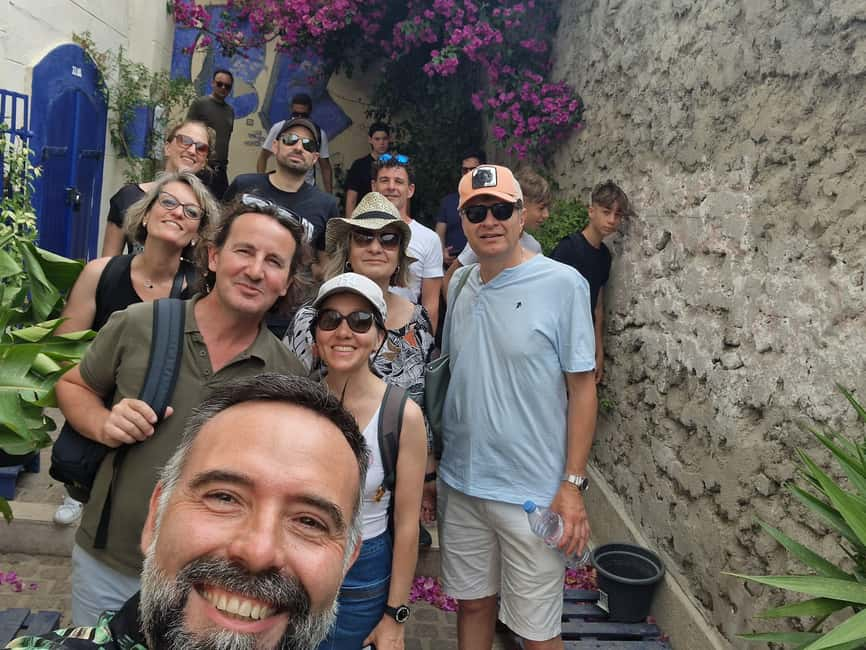
- A Marseille resident leads the walk: Claude has lived in the city and has welcomed more than 1,000 visitors over five years.
- The route covers three historic areas: You’ll walk through the Old Port, the Hôtel de Ville district, and Le Panier.
- Ancient Marseille is part of the story: The walk includes Greek and Roman remains and the history of a city with about 2,600 years of existence.
- Small groups keep it personal: The usual maximum is 10 participants, with larger private or group arrangements possible by request.
- The advice continues after the tour: Claude gives tips on food, drinks, sightseeing, and ways to spend the rest of your stay.
- It is a walking orientation, not a museum tour: The focus is on streets, buildings, local stories, and practical help rather than indoor collections.
Why Claude’s local approach works in Marseille
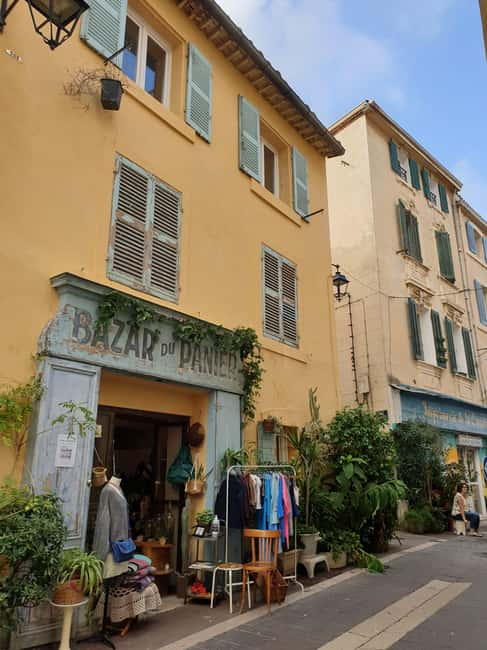
Marseille can feel confusing on a first visit. The Old Port is easy to find, but the streets behind it change character quickly. You may pass a formal hotel, a church, an old court, and a narrow lane within a few minutes. Claude’s role is to connect those pieces.
He presents Marseille as both an ancient city and a place where people live today. That balance matters. You get the major historical markers, but you also hear about the less obvious corners and the current character of the neighborhoods.
I especially like the way this format uses local knowledge without making the walk feel like a lecture. The description promises a friendly outing with good humor, and the recent feedback points to Claude’s relaxed manner, clear answers, and ability to adapt when the weather turns difficult. One January group found that he changed the plan to suit a capricious day, while another described the experience as easy to follow, like walking around town with a good friend.
That does not mean the tour is casual in the sense of being vague. Claude covers the basic story of Marseille, points out important buildings, and explains how the districts fit together. You simply get it in a conversational way.
A few more Marseille half-days worth comparing
- Marseille: City Sightseeing Hop-On Hop-Off Bus Tour
★ 3.8 · 2,820 reviews - Marseille: Côte Bleue Calanques Half-Day Kayak Tour
★ 4.7 · 877 reviews - Marseille Food Tour – Full Meal of Local Tastes by Do Eat Better
★ 5.0 · 530 reviews
Starting beside the Old Port at 31 Rue Reine Elisabeth
The meeting point is in front of the red façade of Magasin Trabuc at 31 Rue Reine Elisabeth. This is a useful location because the walk begins close to the Old Port rather than requiring a long transfer from another part of Marseille.
You should arrive with comfortable shoes and be ready to walk for two hours. The exact pace follows the group, but this is not a vehicle tour or a series of quick stops. You move on foot from one district to the next, with short pauses for explanation and photographs.
The walk finishes near Hôtel de Ville. That ending is practical. You are still in the historic center, close to the Old Port, rather than being left at a distant transport point.
Greek and Roman remains: meeting Marseille at its beginning
The first major subject is the ancient port area. Claude introduces the Greek and Roman remains and uses them to explain Marseille’s long past.
Marseille is presented here as a city with roughly 2,600 years of history. That long timeline gives the rest of the tour a useful frame. Instead of seeing the Old Port only as a modern waterfront, you begin to understand it as the starting point of the city itself.
The ancient remains are not treated as an isolated archaeological stop. Claude connects them to the growth of Marseille and to the changes that shaped the city around them. If you like history but do not want to spend your entire morning inside a museum, this is a good balance.
There is a short break in this part of the walk. It gives you time to look around and ask questions before heading onward. Since the tour lasts only two hours, do not expect an exhaustive archaeological visit. The value is the explanation and the setting, not a long study of every surviving stone.
Hôtel de Ville and the quieter corners of old Marseille
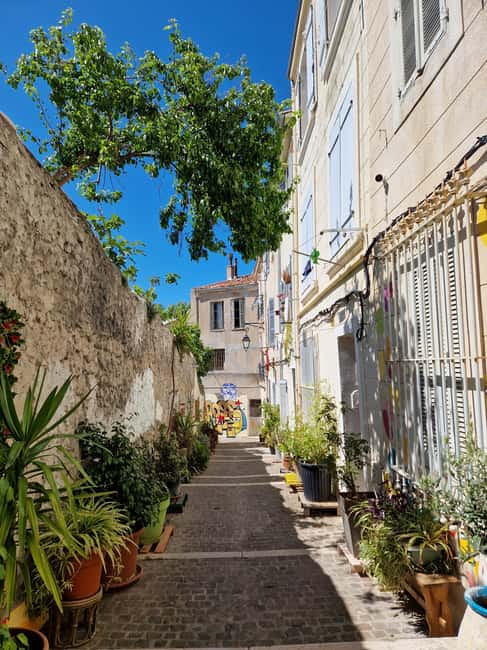
From the ancient area, the route continues toward the Hôtel de Ville district. This section is where the walk shifts from broad historical background to close-up street details.
Claude points out the Hôtel Dieu, the old court, and the Church of Accoules. Each stop helps show how different institutions shaped the old city. You also move through alleys and less obvious corners that are easy to miss if you stay on the main routes.
The Hôtel Dieu is especially useful as a reference point because it gives the neighborhood a strong architectural marker. The old court and Accoules Church add another layer, helping you see how civic and religious buildings sit within the older street pattern.
I like this part for travelers who want more than the standard postcard views. The Old Port attracts most first-time attention, but the streets just behind it reveal how Marseille works as a lived-in city. Claude’s local perspective is most useful here because he can point out details that are not always obvious from a guidebook paragraph.
The tradeoff is that the tour does not promise extended entry time inside every building. The focus is on seeing the area and understanding it from the outside as you walk through. If you want a full interior visit to the Hôtel Dieu or a detailed church tour, you will need to arrange that separately.
Same trip, a completely different kind of day:
- Marseille: Calanques National Park Guided Hike with Picnic
★ 4.9 · 516 reviews - From Marseille: Calanques National Park Guided Hike
★ 4.8 · 489 reviews - Marseille: Musée de l’Illusion Entry Ticket
★ 4.1 · 488 reviews - Marseille: Frioul Calanques Sailing Trip
★ 4.8 · 433 reviews
Le Panier, Marseille’s oldest district
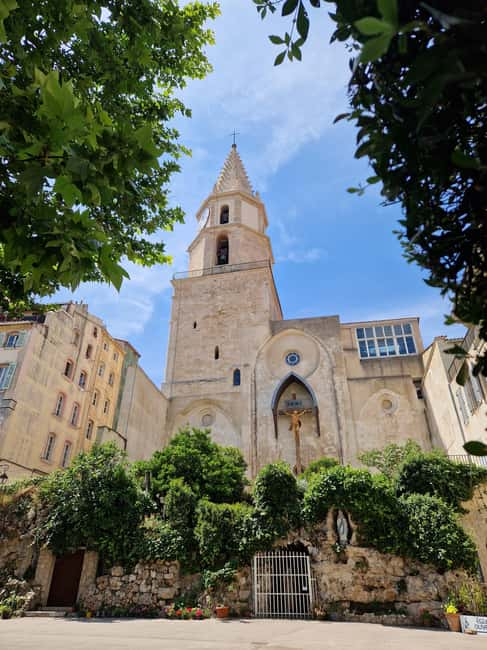
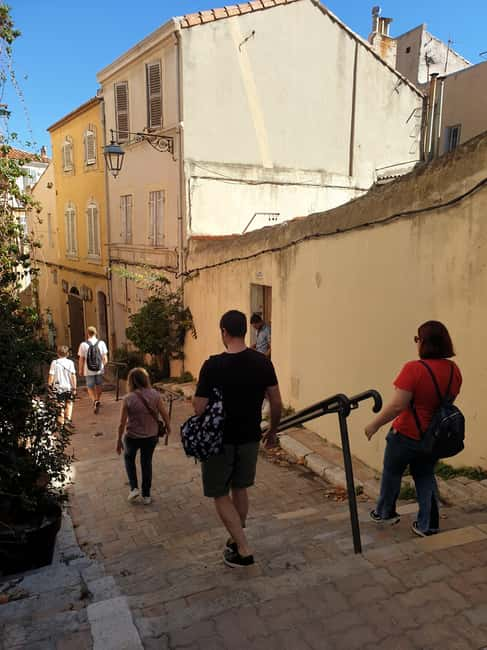
The route then enters Le Panier, described as Marseille’s oldest neighborhood. This is the part many people picture when they imagine old Marseille: lanes, historic buildings, and a more intimate street pattern above the port.
Claude explains the story of Le Panier while leading you through its alleys. That makes the visit more useful than simply wandering with a camera. You get a sense of why the district matters and how it fits into the wider history of Marseille.
Le Panier rewards a slower pace. A small group helps here because Claude can respond to questions without trying to manage a large crowd. The maximum of 10 participants also means the walk should feel more personal than a standard city tour with dozens of people.
The neighborhood is not presented as a polished stage set. Claude’s approach includes both the appeal of Marseille and the reality of the city today. One November visitor valued that frankness, noting that the discussion moved between history, architecture, and present-day Marseille. That is a useful expectation to carry into the walk. You are not getting a carefully softened version of the city.
Le Panier is also where you will want to pay attention to the physical pace. The route is on foot, and the neighborhood streets are not the same as the broad waterfront promenade. The supplied information does not specify accessibility details, so you should contact Claude in advance if you have mobility concerns or need the route adjusted.
Returning to the Old Port and Hôtel de Ville
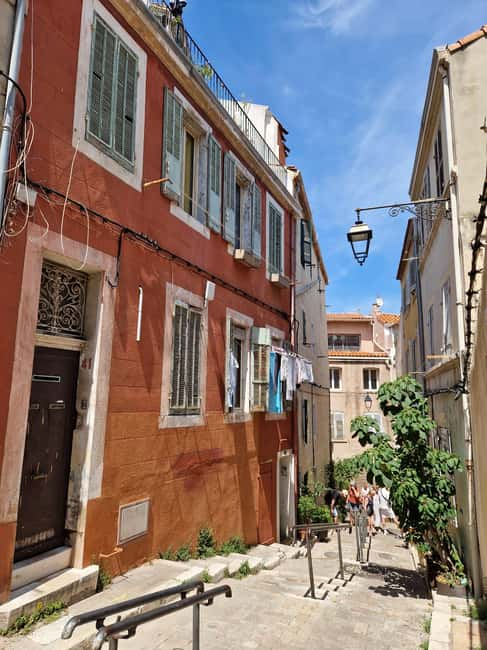
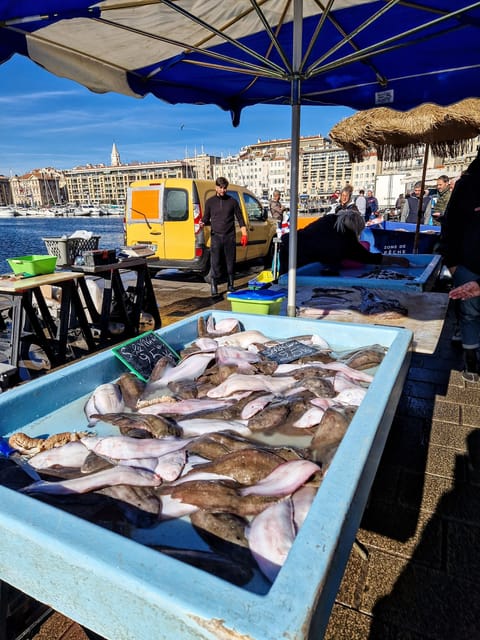
After Le Panier, the group returns toward the Old Port and finishes near Hôtel de Ville. Claude uses this final section to explain the story of the port, described as France’s oldest.
That ending helps pull the route together. You began with the ancient port, moved through the old civic and religious quarter, entered Le Panier, and then came back to the waterfront. You leave with a basic mental map of central Marseille rather than a collection of unrelated stops.
The finish is also well placed for the rest of your day. You can continue exploring near the port, stop for food, or use Claude’s suggestions to choose your next neighborhood. The tour is designed to give you a starting point, not to fill your entire day.
The best part may be the advice after the walk

Claude includes recommendations for restaurants, bars, activities, and important places to see during the rest of your stay. This is a real part of the tour’s value.
A two-hour walk can show you the historic center, but personal advice can save you much more time later. You can ask where to eat, what to see next, or which places fit your interests. The information provided does not name specific restaurants or bars in advance, so you should ask questions during the walk and take notes if a recommendation sounds useful.
I would book this early in a Marseille visit if possible. The tour works well as an orientation. Once you know the Old Port, Hôtel de Ville, and Le Panier, later walks through the center become easier. You can also use Claude’s tips to decide how to spend the rest of your visit instead of choosing places at random.
The advice is not a substitute for your own research, and tastes differ. Still, the chance to ask a Marseille resident direct questions is valuable, especially if you prefer local suggestions to a long list of generic attractions.
Group size, private options, and pace
The standard group is limited to 10 people. That is small enough for questions and conversation, but large enough to keep the $25 price reasonable.
The pace follows the participants. This is helpful for families, mixed-age groups, or anyone who wants time to look around. It also means the exact feel of the tour can vary. A group that asks many questions may spend longer at one point and move faster through another.
Larger groups of more than 10 adults can be arranged. Claude can also adapt the route as a private tour. Dates that do not appear in the normal schedule may be possible by contacting him through mon-marseille.fr before booking.
The private option matters if you want a route built around a particular interest or need more control over timing. The standard walk is the better value for most visitors, while a private version makes more sense for a family, organized group, or anyone who wants a customized visit.
Is $25 a fair price?
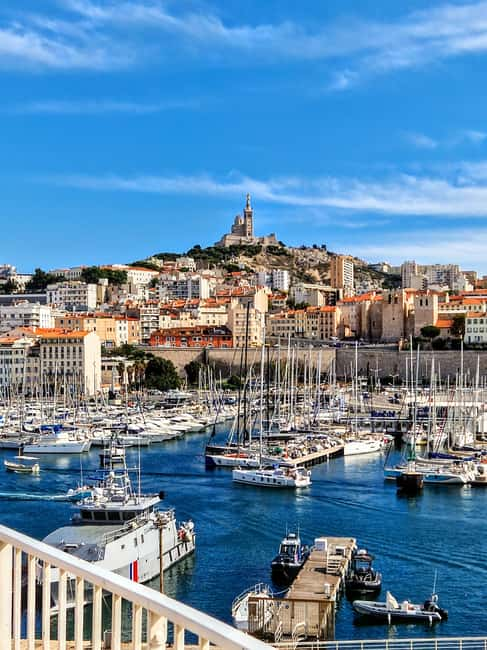
At $25 per person, the tour is priced as an affordable introduction to Marseille. You are paying for two hours with a local guide, a walk through three important central areas, and practical recommendations for the rest of your stay.
There are no paid attractions or meals included. That keeps the price low, but it also means you should not compare this with a full-day sightseeing package. The value is in the local explanation, the route, and the chance to ask questions.
For a first visit, I consider the price fair because the walk can help you make better choices afterward. If Claude’s food and activity suggestions lead you to places you would otherwise have missed, the benefit extends beyond the two hours.
The price is less compelling if you already know central Marseille well or only want a rapid list of monuments. This experience works best when you value context, conversation, and neighborhood details.
Language, weather, and what to expect
The live tour is conducted in French. That is the most important booking consideration. You need enough French to follow explanations and take part in questions. The supplied information does not promise an English-language option.
The walk is described as friendly and informal, with a good mood encouraged. Feedback also points to Claude’s enthusiasm, his ability to answer questions, and his flexibility when weather conditions change. That suggests a relaxed approach rather than a rigid script.
Still, prepare for outdoor conditions. The experience takes place on city streets and lasts two hours. Check the forecast, wear suitable shoes, and bring whatever you normally need for a walk in Marseille. The tour does not include food, drinks, or transport.
Who should book this Marseille walk?
I would recommend it to you if:
- You are visiting Marseille for the first time.
- You want a local introduction before exploring on your own.
- You enjoy history explained through streets and buildings.
- You want restaurant, bar, and sightseeing advice from a resident.
- You prefer a small group to a large organized tour.
- You understand French well enough to follow a live guide.
- You like a flexible pace and a conversational style.
I would choose another option if you need an English-language tour, require a fully specified accessible route, or want long interior visits at historic buildings. This walk is about central Marseille outdoors, with Claude’s stories and advice tying the route together.
Should you book it?
Book this tour if you want to meet Marseille through a resident’s eyes rather than simply check off monuments. Claude brings together the ancient port, Hôtel de Ville, Accoules Church, Hôtel Dieu, Le Panier, and the waterfront in a compact route, then adds the local tips that can shape the rest of your stay.
The strongest reasons to book are Claude’s personal connection to Marseille, the small group, and the useful advice for restaurants, bars, and further sightseeing. The decision comes down mainly to language and expectations. If French works for you and you want a friendly walking orientation, $25 is a sensible price. If you need English or a detailed specialist tour, this probably is not the right fit.
FAQ
How long does the Marseille walking tour last?
The tour lasts two hours.
What language is the tour conducted in?
The live tour guide speaks French.
How much does the tour cost?
The listed price is $25 per person.
Where does the tour meet?
Meet in front of Magasin Trabuc, which has a red façade, at 31 Rue Reine Elisabeth.
Where does the tour finish?
The walk finishes near Hôtel de Ville.
Which Marseille areas does the route visit?
The route includes the ancient port area, the Hôtel de Ville district, Le Panier, and the Old Port.
How many people can join the standard group?
The small group has a maximum of 10 travelers. Groups of more than 10 adults may be possible by arrangement.
Can the route be customized or booked privately?
Yes. Claude can adapt the route, arrange a private visit, and discuss dates not shown in the usual schedule. Contact him through mon-marseille.fr before booking.
Just added around Marseille
- The Urban Hike of Marseille★ 5.0 · 35 reviews
- Rando-Palmée Getaway Around an island★ 4.0 · 54 reviews
- Sunset Lavender Tour in Valensole with pickup from Marseille★ 5.0 · 41 reviews
- Sailing day in the heart of the Calanques★ 4.5 · 61 reviews
- Sormiou Calanques National Park Electric Bike Tour from Marseille★ 5.0 · 60 reviews
- Provence : Aix en Provence, Cassis and Marseille Private Tour★ 4.5 · 53 reviews
- Cassis and Aix en Provence Sightseeing Tour from Marseille★ 4.5 · 132 reviews
- Lavender Small-Group Tour In Valensole from Marseille★ 4.5 · 53 reviews
Provence Tours, compared.
Marseille: City Sightseeing Hop-On Hop-Off Bus Tour
Read our review →

Sea trips Scandola Girolata and Calanches de Piana
Read our review →


3.5 Hour Camargue 4×4 Safari from Le Grau-du Roi
Read our review →
Porto: Scandola and Calanches of Piana Boat Trip
Read our review →