

Reviewed · MONTMARTRE TOURS
Montmartre for Art Lovers – Walking tour with Expert Guide
Montmartre’s best stories are tucked into its side streets, artists’ former homes, old dance halls, and quiet cemetery paths. This two-hour walk connects those places with an art lesson, a quiz, and a small drawing session, so you are not just looking at Montmartre, you are asked to see it as an artist might. I especially like the sketching exercise and the way guide Billy turns names such as Picasso, Toulouse-Lautrec, Van Gogh, and Dalida into human stories. The trivia adds a little friendly competition without turning the walk into a school lecture.
I also like the price: $17 per person is modest for a guided route that includes cemetery admission and a small canvas. The catch is the terrain. Montmartre has steep streets, steps, and uneven walking, and the tour is not suitable for wheelchair users, people with mobility impairments, or pregnant women. It is a good fit only if you enjoy walking uphill.
Key things to know before you book
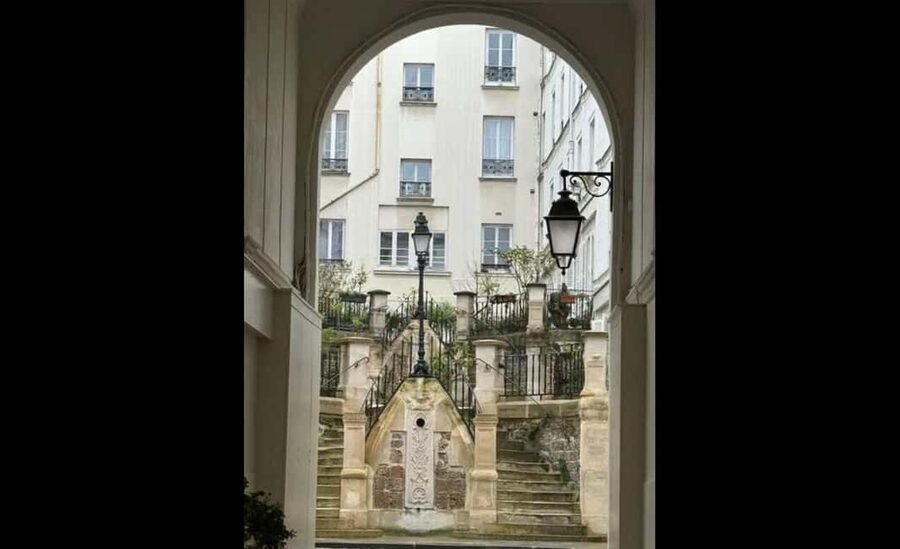
- You start at Montmartre Cemetery: Meet at 20 Avenue Rachel, directly in front of the cemetery entrance.
- You draw from an artist’s viewpoint: A short sketching session on a small canvas gives the tour a hands-on purpose.
- Billy is a lively guide: His clear English, warm manner, and strong grasp of Montmartre’s art and entertainment past are central to the experience.
- The route reaches Sacré-Cœur: You pass Moulin de la Galette, Le Passe-Muraille, Square Suzanne Buisson, Dalida’s statue, La Maison Rose, Lapin Agile, Place du Tertre, and Saint-Pierre de Montmartre.
- The quiz may win you a small prize: Questions cover Montmartre’s art, history, and culture.
- The walk is short but hilly: Wear comfortable shoes and allow extra energy for slopes and steps.
Why this Montmartre walk feels different
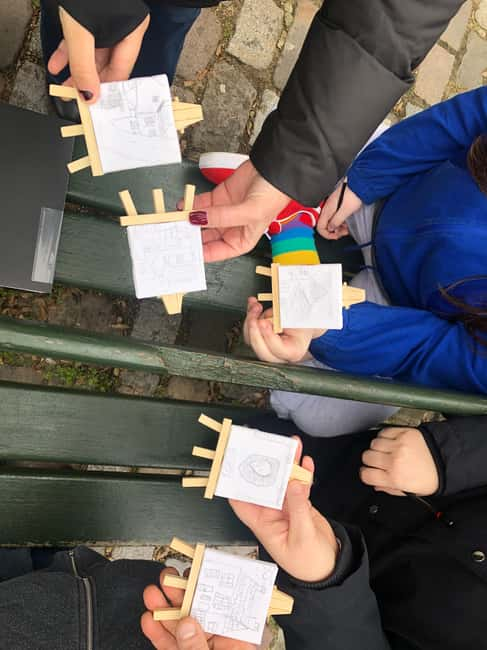
Many Montmartre walks follow the same basic path from the Moulin Rouge area to Sacré-Cœur. This one takes a more playful route. You begin at a cemetery, stop at places tied to painters and performers, and use a pencil to copy a view from the same general perspective an artist once used.
That structure matters. Montmartre can feel like a jumble of famous names, pretty façades, souvenir shops, and crowded viewpoints. A guide gives those sights a thread. The quiz helps you remember the thread, while the drawing pause slows you down long enough to look closely at shape, angle, and detail.
Billy is the guide most often associated with this experience. He speaks clearly, keeps a group involved with open questions, and adjusts his pace when people need time for photographs or a rest. His approach works well for families. Children and teenagers can take part in the quiz instead of simply trying to keep up with a long art lecture.
The experience also suits adults who do not consider themselves art experts. You do not need to know French painting before arriving. The focus is on stories, places, and observation, not on testing your museum knowledge.
More Walking Tours in Paris
- Paris Top Sights Half Day Walking Tour with a Fun Guide
★ 5.0 · 2,893 reviews - Montmartre Hidden Gems and Scenic Highlights Walking Tour
★ 5.0 · 2,684 reviews - Montmartre Hill French Gourmet Food and Wine Tasting Walking Tour
★ 5.0 · 2,588 reviews
Starting at Montmartre Cemetery
The meeting point is at 20 Avenue Rachel, directly in front of Montmartre Cemetery. This is a sensible starting place because it puts you outside the busiest tourist flow and gives the guide room to set the scene before the climb begins.
The cemetery visit lasts about 20 minutes. Inside, you get a quieter introduction to Montmartre and its past. The guide points out notable people connected with the area, including artists, singers, and entertainers. That matters because Montmartre’s cultural story is not limited to painters. Cabaret performers, popular singers, writers, and stage figures all helped shape the neighborhood’s identity.
I like beginning here because the cemetery changes your pace. Instead of rushing from one photo stop to another, you start with names, graves, and personal stories. It also gives you a better sense of how long Montmartre has drawn creative people.
The drawback is practical: cemetery paths are not the easiest surface for everyone, and the rest of the route continues uphill. If you need frequent breaks, tell the guide early.
Moulin de la Galette and Montmartre’s artists
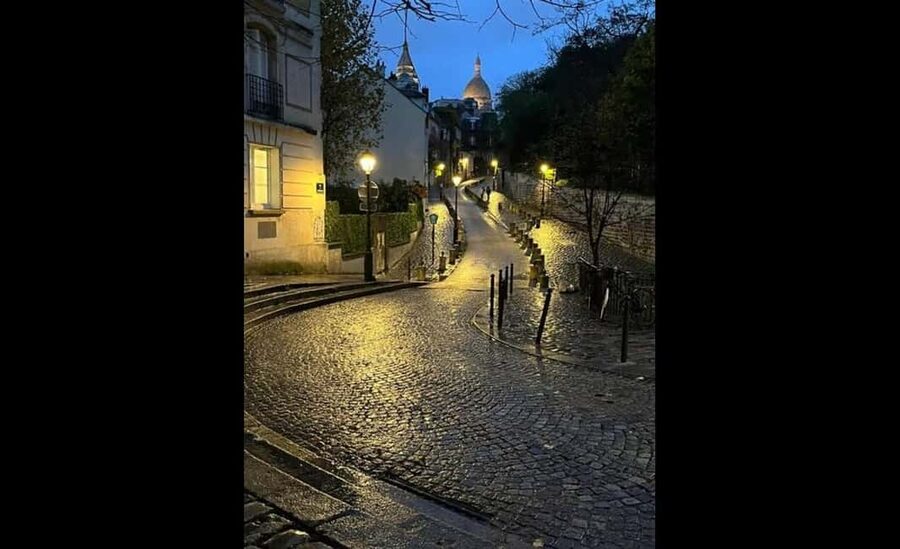
From the cemetery, the walk moves through Montmartre’s winding streets toward Moulin de la Galette. The stop takes about 10 minutes, with the guide explaining its place in the neighborhood’s artistic life.
Moulin de la Galette is one of the stops that helps connect Montmartre’s scenery with the paintings associated with it. You are not only looking at a building or a street. You are hearing how artists used this part of Paris as a subject and as a social setting.
The route also brings in Picasso, Toulouse-Lautrec, and Van Gogh. Their stories help explain why Montmartre attracted painters who wanted cheap rooms, lively company, and a setting away from the formal center of Paris. The useful part of the tour is the connection between the people and the streets. You see where the stories happened rather than hearing a list of artists inside a museum.
The guide’s style is important here. Billy is described as energetic and easy to hear, with a talent for making art history conversational. That is helpful in a street setting, where traffic, pedestrians, and changing weather can make a formal talk hard to follow.
Le Passe-Muraille and Square Suzanne Buisson
The route continues to Le Passe-Muraille, a sculpture based on the fictional character who can walk through walls. The guide spends about 10 minutes here.
This is a welcome change from the better-known painting and music stories. It shows that Montmartre’s art is not only found in galleries or on old façades. Public sculpture gives you something to look at, touch with your eyes, and discuss as a group.
Next comes Square Suzanne Buisson, another pause of about 10 minutes. Small squares and side streets are where a guide earns the ticket price. On your own, you might pass through without learning why the place matters. With Billy, the route includes details and local connections that help Montmartre feel less like a collection of postcard views.
These middle stops are also useful for the pace. The walk has many short explanations rather than one long talk. You can take photos, ask questions, and keep moving without feeling trapped in a lecture.
More Montmartre walks and Sacre-Coeur visits:
- Paris: Montmartre Cheese, Wine & Pastry Guided Walking Tour
★ 4.8 · 2,255 reviews - Paris: Montmartre Highlights Walking Tour with a Local Guide
★ 4.9 · 1,668 reviews - Private Montmartre Food Tour with Wine, Cheese & Pastries
★ 5.0 · 1,027 reviews - Paris: Sacré-Coeur and Montmartre Tour with Expert Guide
★ 4.1 · 1,027 reviews
Dalida’s statue and Rue de l’Abreuvoir
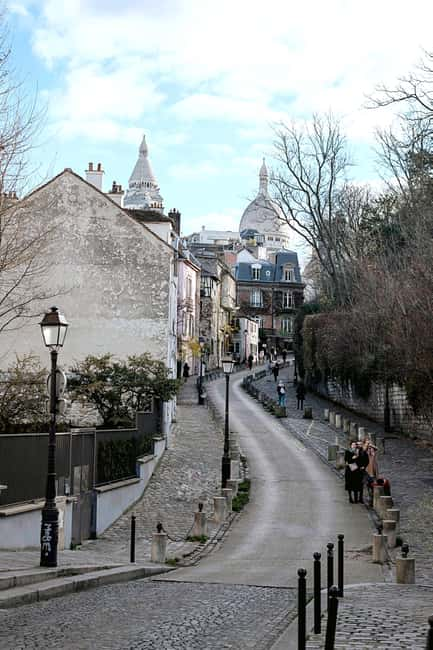
Dalida’s bronze statue is one of the most memorable stops. The statue honors the French singer, whose connection to Montmartre remains part of the neighborhood’s popular culture.
The guide explains more than the object in front of you. The stop helps show how Montmartre continued to attract performers and public figures after the great painterly era often used in tourist brochures. You get a broader picture of the district, one that includes music, nightlife, personal drama, and celebrity.
The tour also takes you along Rue de l’Abreuvoir, one of Montmartre’s most picturesque streets. Its narrow line of historic buildings and cafés gives you the village-like atmosphere people hope to find here. This is a good place for photographs, but it can also be crowded, so the guide’s timing and group control matter.
The route does not treat every attractive street as a quick photo stop. The idea is to connect the view with the artists and performers who lived or worked nearby. That makes the setting more meaningful after the walk ends.
La Maison Rose and Lapin Agile
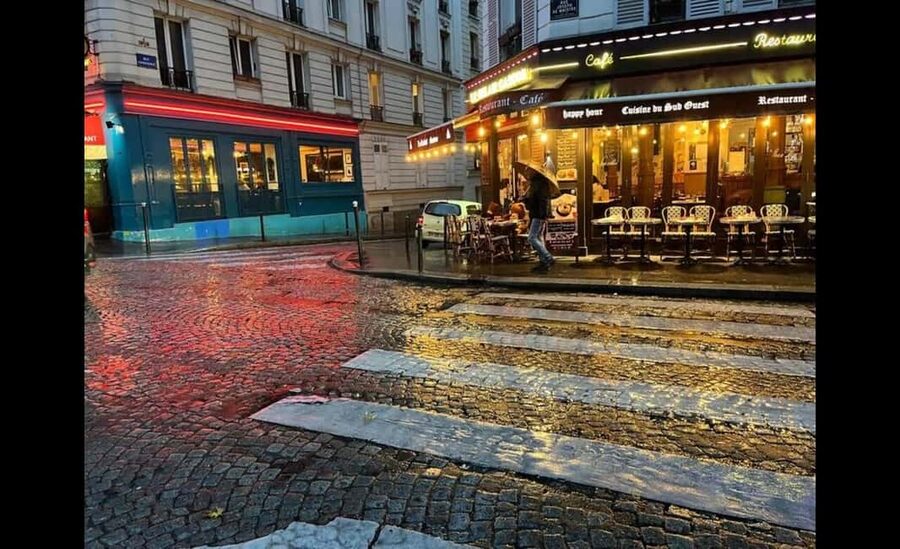
La Maison Rose is one of Montmartre’s most recognizable buildings. Its painted exterior and compact setting make it an easy photo subject, but the guide adds the artistic and social context that a photograph cannot provide.
This is one of the places where Montmartre’s postcard image and its working neighborhood past meet. The house looks charming, but the value of the stop comes from hearing how cafés, studios, cabarets, and rented rooms supported the people who came here to create.
Later, you reach Lapin Agile, the historic cabaret associated with Montmartre’s old entertainment scene. The stop widens the story again. Painters did not work in isolation. They met singers, writers, actors, and other people who made the district a place for conversation and performance.
The tour includes several unnamed short stops between the main landmarks. That is not a problem in itself. It suggests that the guide uses the streets between headline sights to explain lesser-known connections, point out photo angles, or answer questions. The exact balance can change with the group, crowd levels, and walking pace.
The sketching session on a small canvas
The most distinctive part of this walk is the chance to draw and reproduce art from the same perspective as the artist. You receive a small canvas for the sketching session.
Do not read this as a full art class. It is a short activity during a sightseeing walk. You are given a reason to stop, study the view, and notice how the composition works. That makes it suitable for beginners, families, and anyone who would like a physical reminder of the day.
I like this feature because it turns passive looking into active looking. You may notice the angle of a street, the position of a roofline, or the way a building sits against the hill. Even a simple sketch can make you pay attention to details you would otherwise miss.
The small canvas is included, but you should keep your expectations realistic. The main product is the walking tour, not a finished artwork. If you already paint or draw seriously, you may want more time and materials than the schedule allows.
The quiz and the guide’s approach
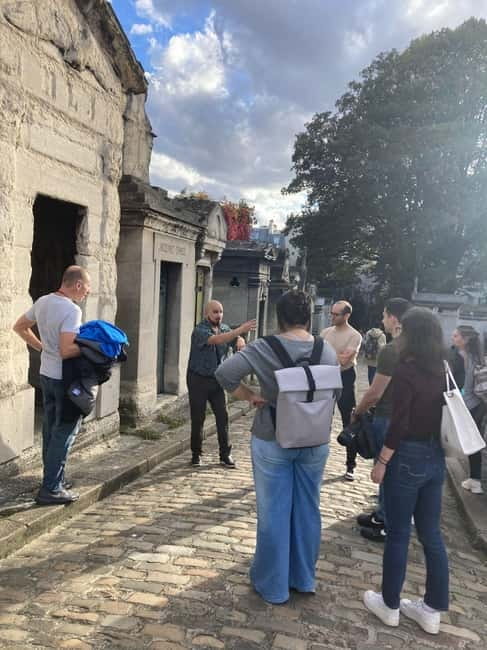
Trivia runs through the walk, with questions about Montmartre’s history, art, and culture. Correct answers can earn a small prize.
This works best when you treat it as a bit of fun rather than a contest. The questions give children a reason to listen, and adults can join without needing specialist knowledge. Billy also uses questions and discussion to bring the group into the conversation.
The guide’s personality is a major part of the experience. Billy is described as patient with children, flexible with groups, and willing to help with photographs. He has also offered restaurant suggestions outside the most touristy areas, which can be useful at the end of a walk, though those recommendations are an extra benefit rather than a promised part of the formal itinerary.
Group size can affect the feel. A small group of four, for example, allows more direct conversation and a more personal sketching session. A larger group may feel less intimate, though the quiz and short stops keep it active.
Place du Tertre, Saint-Pierre, and Sacré-Cœur
Place du Tertre brings you into the best-known artistic square in Montmartre. Artists and portrait painters work here, and the square is one of the neighborhood’s main visitor centers.
The guide helps you see the square in context. After hearing about artists’ homes, cabarets, and cafés, you understand why this location became so strongly linked with art. At the same time, you should expect a more commercial and crowded atmosphere than on the quieter side streets.
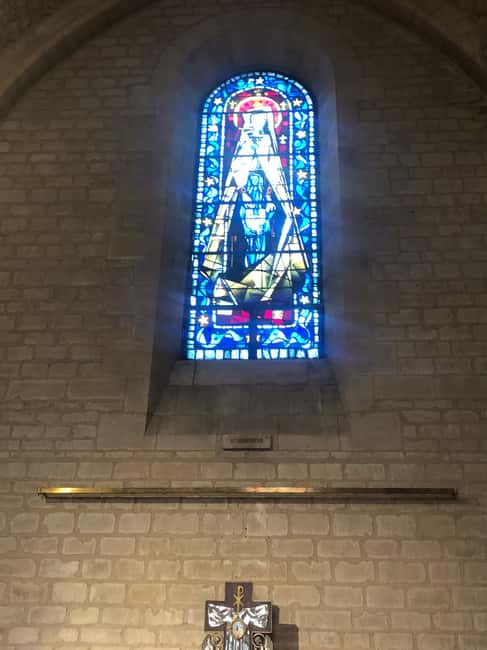
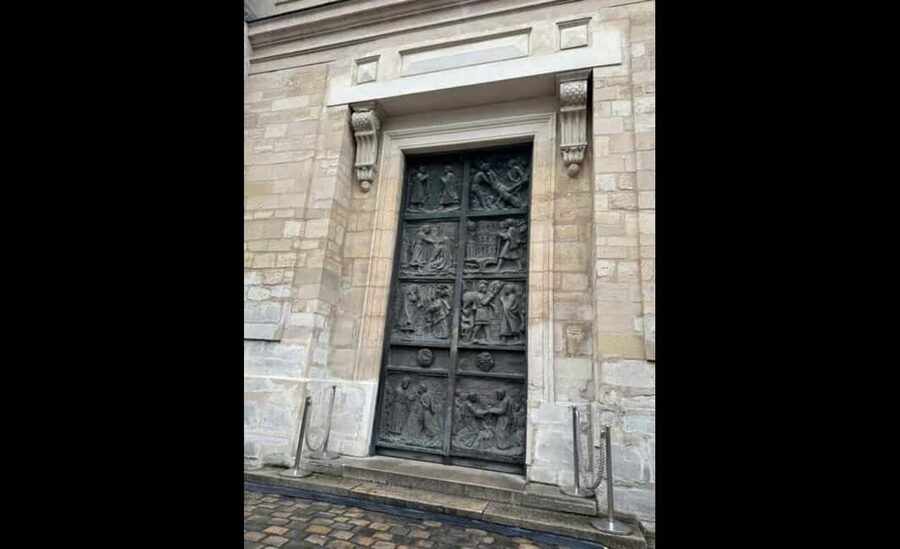
The route then reaches Saint-Pierre de Montmartre, one of the oldest churches in Paris. The guide gives you about 10 minutes here. This stop adds a religious and architectural layer to a tour otherwise centered on modern artistic life.
The final stop is the Basilica of Sacré-Cœur. Its hilltop position gives you a dramatic finish and a broad view over Paris. The guided activity ends here according to the route description. The meeting information also says the activity ends back at the meeting point, so confirm the final meeting arrangement when you book.
Admission to the Sacré-Cœur Basilica is not included. You can still visit the exterior and enjoy the area around the church as part of the walk, but plan separately if you want to enter.
Price, timing, and practical value
At $17 per person, this is inexpensive for a two-hour guided walk in Paris. The price includes an experienced local guide, cemetery admission, the trivia format, and a small canvas for sketching. You are paying for a focused introduction to Montmartre rather than a full-day art tour.
The value is strongest if you want structure. You could walk through these streets for free, but you would likely miss the connections between the cemetery, artists, cabarets, singers, sculptures, and churches. The guide also saves you from spending your limited Paris time figuring out a sensible route.
The listed schedule gives French at 10:00 and English at 13:00, but you should check availability because starting times can change. The tour lasts two hours, though one account of the route describes it as closer to an hour and a half. Build your plans around the stated two-hour duration and allow extra time if you want to stay at Sacré-Cœur.
Free cancellation is available up to 24 hours before the activity, and you can reserve now and pay later. That is helpful when Paris plans are still shifting.
Wear comfortable shoes. The walk includes steep streets and uneven sections, and the activity is not suitable for wheelchair users, people with mobility impairments, or pregnant women. Weapons and sharp objects are not allowed.
Who should book this walk?
I would choose this tour for families, first-time visitors to Montmartre, casual art fans, and anyone who prefers stories and conversation to a silent audio guide. The quiz keeps children engaged, while the sketching pause gives adults a pleasant change from ordinary sightseeing.
It is also a good choice if you want to see more than the standard Sacré-Cœur route. The cemetery, Le Passe-Muraille, Square Suzanne Buisson, Dalida’s statue, La Maison Rose, and Lapin Agile add variety.
I would hesitate if you want a museum-level art lecture, a completely flat route, or a long visit inside Sacré-Cœur. You also may prefer to explore independently if you dislike scheduled stops and group pacing.
Should you book Montmartre for Art Lovers?
Book it if you want an affordable, active introduction to Montmartre and like the idea of learning through questions, stories, and a quick sketch. Billy’s energy, patience, clear speaking style, and practical local suggestions add real value, especially for families and small groups.
Skip it if steep streets are a serious concern or if your main goal is interior access to Sacré-Cœur. For most people who can manage the hills, this is a well-priced way to connect Montmartre’s artists, singers, cabarets, churches, and famous views in one lively walk.
FAQ
Where does the Montmartre walking tour start?
The meeting point is directly in front of the entrance to Montmartre Cemetery at 20 Avenue Rachel.
Where does the tour finish?
The route description finishes at the Basilica of Sacré-Cœur de Montmartre. The meeting information also says the activity ends back at the meeting point, so confirm the final arrangement when booking.
How long does the tour last?
The stated duration is two hours. Starting times should be checked when you select your date.
Which languages are available?
The tour is offered with a live guide in English or French. The listed schedule gives French at 10:00 and English at 13:00, subject to availability.
Is admission to Sacré-Cœur included?
No. Entry to the Sacré-Cœur Basilica is not included. Admission to Montmartre Cemetery is included.
Is the tour suitable for people with limited mobility?
No. The route includes steep streets, and the activity is not suitable for wheelchair users, people with mobility impairments, or pregnant women. Comfortable shoes are recommended.
Just added around Paris
- Paris at the First Lodges – Ducasse sur Seine dinner cruise★ 4.0 · 165 reviews
- Paris at the First Lodges – Ducasse sur Seine Lunch Cruise★ 4.5 · 70 reviews
- Disneyland® Paris 1 Day with Round-Trip Train Tickets from Paris★ 4.0 · 50 reviews
- Explore speakeasies and hidden bars, sip meet & socialize★ 4.5 · 47 reviews
- Disneyland® Paris Express Shuttle with Admission Ticket from Central Paris★ 3.5 · 172 reviews
- Paris Cheeses and Wines Tour de France with Tasty Games★ 5.0 · 32 reviews
- Musée Orsay Highlights Tour – Best of Impressionism & Hidden Gems★ 5.0 · 27 reviews
- Private Tour: Discover Paris with Local, 3 hours on a Segway★ 5.0 · 71 reviews
Montmartre Tours, compared.

Montmartre Hidden Gems and Scenic Highlights Walking Tour
Read our review →
Montmartre Hill French Gourmet Food and Wine Tasting Walking Tour
Read our review →
Montmartre Cheese, Wine & Pastry Guided Walking Tour
Read our review →
Montmartre Highlights Walking Tour with a Local Guide
Read our review →
Sacré-Coeur and Montmartre Tour with Expert Guide
Read our review →
Private Montmartre Food Tour with Wine, Cheese & Pastries
Read our review →
Paris Montmartre Food Tour – A Full French Meal by Do Eat Better
Read our review →
Hidden Montmartre: Paris’ Secret Streets Walking Tour
Read our review →Browse the lists this tour appears in