

Reviewed · LOUVRE TOURS
Murders and Mysteries of the Louvre Museum
The Louvre is more than a parade of famous paintings. This tour uses its murders, rituals, betrayals, and strange artistic stories to give the museum a sharper edge. You still see the Mona Lisa, Venus de Milo, royal jewels, French masterpieces, Egyptian works, and medieval remains, but you look at them through a darker and more curious lens.
I like the small group of no more than eight and the way the route mixes major sights with works many people walk past. I also like the two-hour format. It gives you a focused introduction without swallowing an entire day, and your ticket lets you stay inside and continue exploring alone.
The main concern is guide communication. One booking found the guide’s English soft and difficult to hear in the crowded galleries, while another felt the murder theme was only lightly developed. If you need a strong horror-story narrative or a microphone, this may not always deliver.
Key points to know before you book

- The meeting point is the Statue of Louis XIV beneath the Louvre Pyramid, after security but before the ticketed museum entrance.
- The route combines famous sights and overlooked corners, including medieval castle remains, Egyptian collections, royal jewels, and French paintings.
- The mystery theme is broad, covering magic, old rituals, violent scenes in art, royal scandal, betrayal, and murder.
- Groups are limited to eight people, which helps the guide keep the visit personal in a very crowded museum.
- The $200 price includes museum admission, skip-the-ticket-line entry, and a live English or French-speaking guide.
- You can remain in the Louvre afterward, so the two-hour tour can serve as your organized introduction before a self-guided visit.
Why the Louvre needs a story, not just a checklist
The Louvre can overwhelm you before you reach a single masterpiece. It is enormous, crowded, and packed with more art than you can sensibly absorb in one visit. A guide gives the building a shape and a pace.
This experience takes a useful approach. Instead of trying to explain every gallery, it links selected works to stories of fear, power, ritual, betrayal, and death. That gives you a reason to look closely. A painting is no longer just a famous name on a wall. You start asking what happened in the scene, who held power, and why the artist chose such a disturbing image.
The museum itself becomes part of the story. You learn about the Louvre as a medieval fortress, then as a royal residence. Its walls carry tales of court politics, scandal, and murder. That background matters because the building was not created as a quiet art museum. Its earlier roles help explain why the tour moves between architecture, royal objects, ancient artifacts, and paintings.
I find this angle especially useful for a first visit. You do not need a detailed art-history background to follow it. The stories give you handles, and those handles help you remember what you saw later.
More Louvre tickets and guided visits:
- Paris: Louvre Museum Timed-Entrance Ticket
★ 4.6 · 71,977 reviews - Paris: Louvre Guided Tour with Reserved Access & Boat Cruise
★ 4.3 · 16,353 reviews - Louvre Museum Masterpieces Guided Tour with Access
★ 4.5 · 12,023 reviews
Meeting beneath the glass pyramid
You meet at the Statue of Louis XIV in front of the Louvre Pyramid on Rue de Rivoli. Your voucher provides the precise meeting instructions, so read it carefully before setting out. The guide meets you underneath the immense glass structure, after the security check but before the ticketed entrance.
That security detail is important. Skip-the-ticket-line access does not mean you walk straight through every queue. You still need to pass the security check, and busy periods can slow that step. Arrive with time to spare and keep your group easy to spot.
Bring a passport or other identification. Large bags and luggage are not allowed, and anything larger than 55 by 35 by 20 centimeters cannot enter the museum. A small day bag is the sensible choice. You do not want to begin with a frantic search for storage or a bag that gets rejected at the door.
Once inside the entry process, the guide leads the group through the museum. The small size matters here. Eight people is still a group, but it is far easier to gather around a painting or hear an explanation than it would be with a large coach party.
Medieval castle remains and the Louvre before art
The first major shift in perspective comes when you encounter the remains of the old medieval castle. This is where the Louvre stops feeling like a grand collection in a former palace and starts feeling like a place with its own long, uneasy past.
The remnants connect the current museum to its beginning as a fortress. From there, the story moves through its years as a royal residence. The guide uses the building to explain how power, court life, and violence shaped the site before it became a public museum.
This part is valuable because many people rush toward the famous art and miss the building under their feet. The medieval remains offer physical evidence of the Louvre’s earlier life. You are not only hearing dates and royal titles. You are seeing the older structure within the modern museum.
The murder and mystery theme also makes more sense here. The tour is not limited to crime stories painted on canvas. It treats the Louvre itself as a setting for centuries of betrayal, scandal, and royal intrigue. That wider approach gives the visit more substance than a simple list of gruesome pictures.
Ancient Egypt, magic, and forgotten rituals
The Egyptian collection adds a different kind of mystery. Here, the guide brings up magic and long-forgotten rituals from the ancient world. The point is not just to identify objects, but to consider the beliefs and ceremonies behind them.
This is a strong change of pace after the medieval rooms. You move from the Louvre’s own fortress past to objects connected with ancient practices and ideas about the unseen world. The strange stories make the display cases easier to remember, especially if you normally find ancient collections hard to sort out.
The guide’s role matters a great deal in this section. A good explanation can turn a group of unfamiliar objects into a story about ritual and belief. The strongest feedback about this experience praised guides who explained more than the famous labels, including artistic relationships and techniques. That is the kind of added context you should hope for here.
Keep your expectations measured, though. The route has a mystery theme, but it is still a broad Louvre highlights tour. You may hear about magic and rituals without receiving a full specialist lecture on ancient religion. The appeal is the unusual connection between objects, stories, and the museum’s darker mood.
More museums and galleries in Paris:
- Paris: Louvre Museum Entry Ticket With Host and River Cruise
★ 4.6 · 9,926 reviews - Les Invalides: Napoleon’s Tomb & Army Museum Entry
★ 4.6 · 9,185 reviews - Louvre Museum – Exclusive Guided Tour (Entry Included)
★ 5.0 · 6,296 reviews - Paris: Louvre Museum Hosted Entry and Mona Lisa Audioguide
★ 4.6 · 5,235 reviews
Venus de Milo and the power of a famous statue
The Venus de Milo is one of the stops that proves this is still a highlights tour. You see a work that many people place near the top of their Louvre list, but the surrounding story gives the stop a little more flavor than a quick photograph.
The value of a guide here is not simply telling you the statue’s name. The guide can help you slow down and look at how the work is presented, how visitors react to it, and why it has become such a familiar symbol of the museum. The tour’s larger theme encourages you to consider how famous objects gather stories around themselves.
Crowds can make this stop less calm than you might wish. The Louvre is a loud, busy place, and one person specifically found it difficult to hear a soft-spoken guide. Stay close to the group and position yourself where you can see the guide’s face. If the guide moves quickly, speak up when you need an explanation repeated.
Crown jewels, French masterpieces, and royal danger
The crown jewelry collection brings the tour back to power and wealth. These objects are beautiful, but they also connect directly to monarchy, status, and the political world that surrounded the Louvre as a royal residence.
The murder-and-scandal angle works well with royal objects because jewels are never just decoration in a court setting. They signal rank and influence. The guide uses the collection as part of the broader story of betrayal and royal life, helping you see the connection between glittering objects and the conflicts around them.
The French masterpieces add another layer. You can expect the guide to point out major works while also drawing attention to less familiar pieces. One of the strongest experiences described a guide explaining artistic techniques and connections between artists, rather than simply stopping at the most famous names.
That is an important distinction. You are not paying only to be led from one famous object to another. You are paying for selection and explanation. If the guide is strong, you leave with a better sense of how the works relate to one another, not just a longer list of things you saw.
The Mona Lisa with a darker question
The Mona Lisa is the unavoidable stop. The tour includes it, but it tries to move beyond the standard question of why the smile looks mysterious. You are encouraged to consider the painting from a new angle and think about what makes her expression so difficult to read.
Do not expect a private viewing. The Mona Lisa is one of the most crowded points in the Louvre, and your time near the painting may be brief. The guide can give you context, but the room is not suited to a long, quiet art discussion.
Still, the mystery theme gives this familiar work a purpose within the route. You have already spent time hearing about secrets, power, violence, and hidden meanings. That makes the Mona Lisa feel like part of the tour’s central question: how much can you really know from a work of art?
After the guide moves on, your ticket lets you stay in the museum. This is one of the best practical features of the experience. You can revisit the Mona Lisa on your own if you want another look, or use the remaining time for galleries the guided route did not cover.
What the guide can add, and where the tour may fall short
The most praised part of this experience is the guide’s ability to make the Louvre manageable. Several bookings describe guides as friendly, engaging, accommodating, and highly informed. One guide even took photographs for the group, though you should not assume every guide will do this.
A good guide also helps you cover a lot in a short period. The route includes medieval remains, Egypt, Venus de Milo, crown jewels, French masterpieces, and the Mona Lisa in two hours. That is a brisk pace, but it suits you if your time in Paris is limited.
The small group supports a more personal visit. You can ask questions, hear explanations more easily than in a large group, and keep the route moving without the delays that come with a big crowd.
The weak point is inconsistency in communication. One person found the guide’s English difficult to understand and the voice too quiet for the Louvre’s noisy rooms. Another felt the guide selected a few violent paintings but did not build a strong mystery narrative around them.
That tells me you should book this as a guided Louvre highlights visit with a dark-story angle, not as a dedicated true-crime tour. The theme may be vivid and well connected by one guide, but lighter and more impressionistic with another.
Is $200 a fair price?
At $200 per person, this is not a budget museum visit. The fee includes museum admission and a live guide, and the small group has a maximum of eight people. You are paying for access, structure, and the chance to cover major rooms efficiently.
The value is strongest when you have limited time in Paris or feel unsure about tackling the Louvre alone. Two focused hours can prevent you from wandering without direction. You also get to continue inside afterward, which adds useful flexibility.
The value is weaker if you already know the Louvre well, want long periods to study individual works, or can comfortably plan your own route. You may prefer to buy entry and use a museum map or audio guide at a lower cost.
Think of the price as paying for an introduction. The guide selects the stops, provides a connecting theme, and gets you through the entrance process. The included time afterward lets you turn that introduction into a longer visit.
Who should book this Louvre tour?
I would choose this for a first-time visitor who wants the museum’s main sights but dislikes a dry art lecture. The dark stories give the visit a clear identity, while the major collections make sure you do not miss the Louvre’s headline works.
It also suits a short Paris stay. If you have only a morning or afternoon, the two-hour route gives you a useful framework. Families with older children or teenagers might appreciate the focus on secrets, rituals, scandal, and murder, though the tone can vary with the guide.
Art lovers should book only if they like interpretation and storytelling more than a slow study of individual works. The route covers many major stops, so it cannot spend long at every painting.
If you are sensitive to poor acoustics or rely heavily on spoken English, consider the communication concern. Stay near the guide, ask for repetition, and keep the group in sight. The Louvre is noisy, and one quiet voice can be a real problem.
The activity offers free cancellation up to 24 hours before the start, and you can reserve now and pay later. Those terms help if your Paris schedule is still shifting, but they do not change the main question: do you want a guided introduction or a self-directed museum day?
Should you book it?
Book this tour if you want the Louvre’s famous works tied to stories of magic, royal scandal, violence, and mystery. The small group, included admission, broad route, and extra time inside make it a practical choice for a first visit or a tight schedule.
Skip it if you want a specialist crime tour, a quiet Mona Lisa viewing, or a low-cost museum entry. The theme depends on the guide, and the experience can be less satisfying if the English is hard to hear or the dark stories feel loosely connected.
For most first-time visitors, I see the best use of this tour as a two-part visit: let the guide give you the structure and key works, then stay on your own to follow the rooms that caught your interest.
FAQ
Where does the Louvre tour meet?
Meet your guide at the Statue of Louis XIV in front of the Louvre Pyramid, at the Louvre Museum on Rue de Rivoli in Paris. The precise meeting point is also provided on your voucher.
How long does the tour last?
The guided visit lasts two hours. Afterward, your ticket allows you to remain in the Louvre and explore on your own.
What languages are available?
The tour is offered in English and French.
How many people are in the group?
It is a small-group tour limited to eight participants.
Does the price include Louvre admission?
Yes. Museum entrance fees are included in the $200 ticket price.
Does skip-the-ticket-line access avoid the security queue?
No. Skip-the-ticket-line access applies to museum entry, but you still need to wait for the security check.
What should I bring?
Bring a passport or ID card. Large bags and luggage are not permitted, and items larger than 55 by 35 by 20 centimeters cannot enter.
Can I cancel or pay later?
You can cancel up to 24 hours in advance for a full refund. You can also reserve the tour and pay later, which keeps your plans flexible.
Just added around Paris
- Paris at the First Lodges – Ducasse sur Seine dinner cruise★ 4.0 · 165 reviews
- Paris at the First Lodges – Ducasse sur Seine Lunch Cruise★ 4.5 · 70 reviews
- Disneyland® Paris 1 Day with Round-Trip Train Tickets from Paris★ 4.0 · 50 reviews
- Explore speakeasies and hidden bars, sip meet & socialize★ 4.5 · 47 reviews
- Disneyland® Paris Express Shuttle with Admission Ticket from Central Paris★ 3.5 · 172 reviews
- Paris Cheeses and Wines Tour de France with Tasty Games★ 5.0 · 32 reviews
- Musée Orsay Highlights Tour – Best of Impressionism & Hidden Gems★ 5.0 · 27 reviews
- Private Tour: Discover Paris with Local, 3 hours on a Segway★ 5.0 · 71 reviews
Louvre Tours, compared.


Louvre Guided Tour with Reserved Access & Boat Cruise
Read our review →
Louvre Museum Masterpieces Guided Tour with Access
Read our review →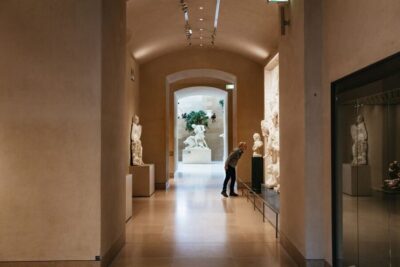
Louvre Museum Entry Ticket With Host and River Cruise
Read our review →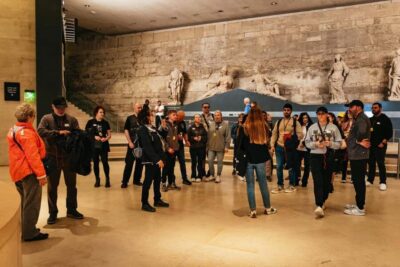
Priority Access Louvre with Host -Direct to Mona Lisa
Read our review →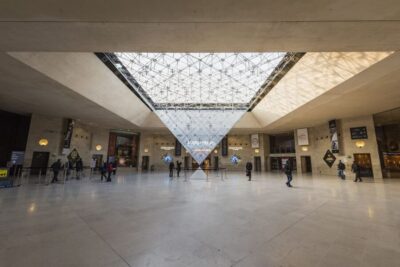
Mona Lisa & Louvre Masterpieces Tour with Reserved Access
Read our review →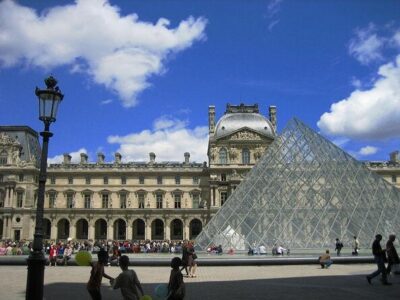
Louvre Museum – Exclusive Guided Tour (Entry Included)
Read our review →
Louvre Reserved Ticket and River Cruise Combo
Read our review →Browse the lists this tour appears in