Reviewed · TICKETS
Paris : Atelier des Lumières admission ticket
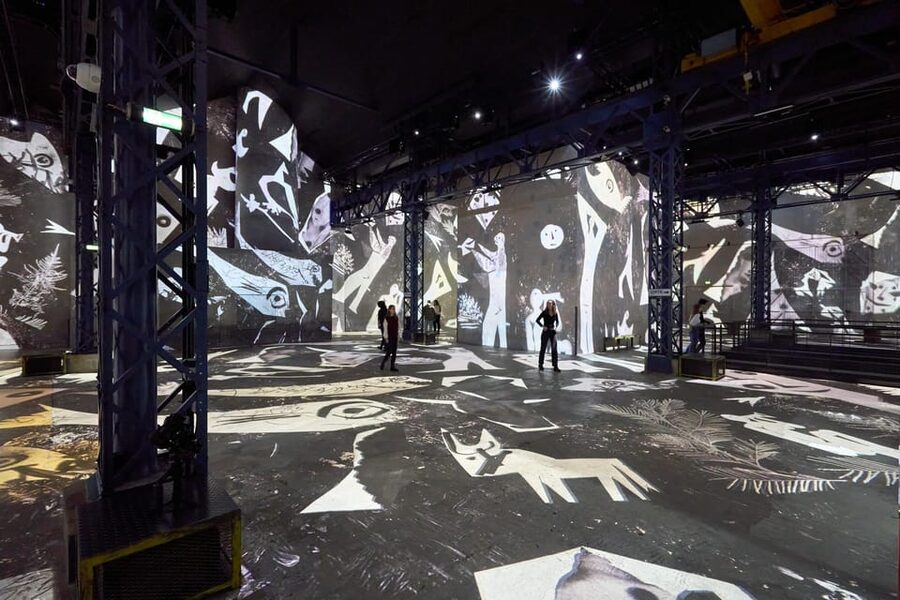
The most striking thing here is the building itself: a former foundry turned into a vast hall for projected art. Picasso’s paintings spread across walls and floors, while music and motion carry you from Spanish bullrings to Paris cabarets, then into the sharp forms of Les Demoiselles d’Avignon and Guernica. I like the continuous broadcasts, which make this easier to fit into a busy Paris day, and the chance to see major works in a way that feels active rather than still.
I also like the two-part program. Picasso brings force and movement, while Henri Rousseau’s imagined jungles and animals offer a gentler, dreamlike change of pace. The main drawback is that this is not a quiet museum visit: the pictures are enlarged, animated, and paired with sound, so anyone seeking close study of original brushwork may prefer a traditional gallery.
Key points to know before you go
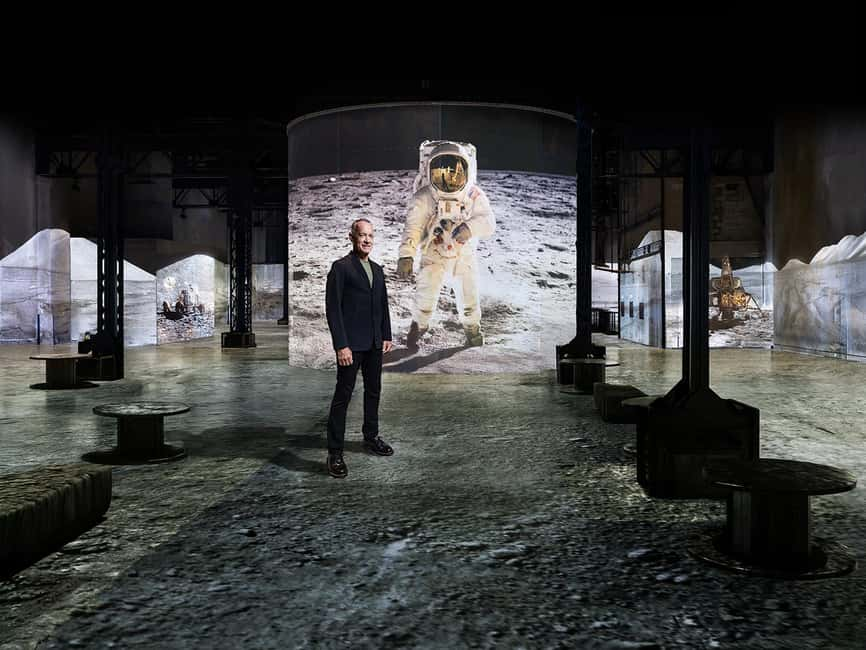
- A former foundry becomes the gallery: The industrial shell gives the projections room to cover walls, columns, and floors.
- Two exhibitions are included: See Picasso, l’art en mouvement and Le Douanier Rousseau, au pays des rêves with one admission.
- Continuous broadcasts add flexibility: Your ticket is valid for one day, with starting times shown when you check availability.
- The art changes as you walk: Picasso’s bullrings, cabarets, portraits, and major compositions appear in a moving visual sequence.
- Children get their own creative space: L’Atelier des Enfants introduces ages 4 to 12 to digital art through Rousseau’s work.
- Pack light: Strollers, baby carriages, luggage, and large bags are not allowed, and the experience is not suitable for children under 2 or people with epilepsy.
Why a former foundry makes such a good art space
Atelier des Lumières is not a conventional museum with framed canvases arranged along white walls. It uses the scale of a former foundry to turn the whole room into the viewing surface. You can look straight ahead, down at the floor, or up toward the high walls as images move around you.
That setting changes your role. You are not simply standing in front of a painting and reading a label. You are watching details expand, repeat, and shift in relation to music and motion. A small detail from a Picasso work can become a huge field of color, while a Rousseau plant or animal can appear as part of a larger dreamlike world.
I find this format especially useful if you are visiting Paris with someone who does not usually enjoy museums. You do not need a long background in art to follow the basic ideas. The program gives you visual clues through repeated shapes, changing color, and a clear journey through each artist’s work.
The tradeoff is just as important. Digital projections are an interpretation of the art, not the original art itself. You will not see the actual texture of Picasso’s paint or the physical surface of his prints. For that, you should pair this visit with a traditional museum, such as one devoted to Picasso, if your Paris schedule allows.
A few more Paris half-days worth comparing
- Paris: Louvre Museum Timed-Entrance Ticket
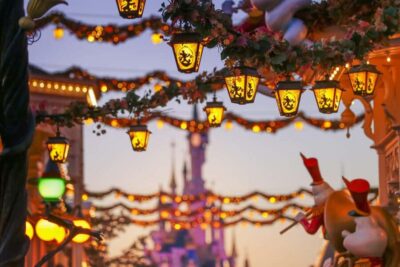
★ 4.6 · 71,977 reviews - Disneyland® Paris 1-Day Ticket
★ 4.6 · 49,412 reviews - Paris: Versailles Palace and Gardens Full Access Ticket
★ 4.6 · 41,579 reviews
Picasso from Spain to Paris
The first featured program, Picasso, l’art en mouvement, follows Picasso from his native Spain to France, where he spent most of his life. Rather than presenting his work as a fixed timeline on a wall, the show turns his subjects and styles into a moving visual sequence.
You can expect the program to pass through several strong themes. The bullring connects Picasso to Spain and to one of his recurring subjects. Parisian cabarets bring a more theatrical mood, with nightlife replacing the open space of the ring.
The program then turns to the shapes and colors of Les Demoiselles d’Avignon. This is one of Picasso’s most famous works, and digital projection lets you notice its angular bodies and forceful composition from a new scale. Instead of seeing the painting as a single large canvas, you may find yourself surrounded by its forms.
Guernica brings the heaviest moment. The work’s subject and striking visual force carry more weight than the lighter sections devoted to nightlife or portraiture. The format can make that contrast especially clear, though the large scale and sound may also make the experience feel intense.
The presentation also includes later work, such as the 1958 portrait of a young girl after Cranach the Younger, made with gouge-engraved linoleum. That detail matters because it reminds you that Picasso was not only a painter. The program points toward the variety of materials and methods behind his long career.
I like this section for the way it connects different parts of Picasso’s life without asking you to read a long wall of text. You get Spain, Paris, the cabaret, portraits, printmaking, and major antiwar imagery in one visual passage. Still, if you want exact dates, detailed biographies, or a careful look at each original object, you will need a standard museum visit too.
Rousseau’s dream country of plants and animals
The second program, Le Douanier Rousseau, au pays des rêves, shifts the mood. Henri Rousseau was self-taught and became an early figure in naive art in France. His paintings are known for a dreamlike, sometimes childlike quality, and the digital format suits that sense of fantasy.
Rousseau drew ideas from careful observations of plants and animals. His sources included the greenhouses and menagerie of Paris’s Jardin des Plantes, as well as vegetation and animals from faraway places. The result is not a travel documentary or a literal record of a jungle. It is a personal world built from observation, memory, and imagination.
As the program moves across the walls, you can expect leaves, animals, and plant forms to become the main characters. The change from Picasso’s sharper movement to Rousseau’s slower dream quality gives the visit a useful rhythm. You get contrast instead of two similar presentations placed side by side.
This section may work particularly well for families. Children can recognize animals and plants quickly, while adults can think about how a self-taught artist transformed familiar observations into an invented world. The show does not require you to know the full story of naive art before entering.
At the same time, the projections can simplify complicated ideas. Rousseau’s work has a specific place in French art, and a large moving display may give you a strong first impression without providing every detail. I would treat it as an introduction, then seek out original paintings or further reading if this style catches your interest.
What the continuous program means for your day
The exhibitions run as continuous broadcasts, so you are not tied to a single guided tour with a fixed spoken commentary. Your ticket is valid for one day, and you should check availability for the starting time offered when you book.
That setup gives you useful freedom. You can plan the visit around lunch, another museum, or a walk through Paris rather than building your day around one short presentation. It also helps if your group includes people who want to stay different lengths of time.
Do not confuse flexible entry with a quick attraction you can rush through in ten minutes. The large projections need time to develop, and the effect depends on seeing the artists’ work change from one sequence to the next. I would allow enough time to watch both programs rather than treating the venue as a quick photo stop.
The exact experience can also depend on where you stand. Since images cover a large room, one position may give you a broad view while another makes a single projected detail feel enormous. You can move around, but remember that other people will be doing the same.
There is no guide name to look for here because the experience is built around the digital presentation rather than a named live guide. That makes it simple to follow, but it also means you should not expect personal questions and answers or a tailored art lecture.
Same trip, a completely different kind of day:
- Paris: Evening River Cruise with Music
★ 4.4 · 22,721 reviews - Paris: Eiffel Tower Entry Ticket with Optional Summit Access
★ 4.4 · 20,035 reviews - Paris: Eiffel Tower Summit or Second Floor Access
★ 4.3 · 17,248 reviews - Paris: Louvre Guided Tour with Reserved Access & Boat Cruise
★ 4.3 · 16,353 reviews
A useful choice for families with children ages 4 to 12
Admission includes L’Atelier des Enfants, a space made for young visitors from 4 to 12. Here, children become creators of digital exhibitions instead of only watching one. The activities introduce digital art through the work of Rousseau.
That inclusion adds real value for families. A child who loses interest during the main program gets a hands-on way to connect with the same ideas. It also gives parents a reason to talk about how an image can be made, changed, and presented rather than only admired.
The space is not intended for children under 2, and the overall activity is not suitable for that age group. Baby strollers and baby carriages are not allowed, so plan carefully if your family normally depends on one.
Parents should also note the epilepsy warning. The changing projections and audiovisual presentation are part of the experience, so anyone with epilepsy should choose another activity.
Price, value, and who gets the most from it
At about $20 per person, this is reasonably priced for a Paris art experience that includes two programs and the children’s area. The value is strongest if you watch both Picasso and Rousseau and take time to appreciate the building-scale presentation.
The price is less appealing if you only want to see original paintings. This is a digital art show, not a museum collection, and the ticket does not replace seeing Picasso’s work in person. Think of it as a different way to encounter familiar images, with sound, movement, and size doing much of the work.
I would recommend it to first-time Paris visitors who want an easy art outing without a long lecture. It also suits families, couples, and adults who like visual experiences more than traditional galleries. Students of art may enjoy the fresh presentation but could want more historical explanation than the format provides.
The strong 4.5 rating from 91 reviews supports the idea that the basic experience works well for many kinds of visitors. Still, ratings cannot settle the most personal question: do you want art to move around you, or do you want to stand quietly in front of one original work? Your answer should guide the decision more than the score.
Practical details that can make the visit smoother
Pack as little as possible. Luggage and large bags are not allowed, along with strollers and baby carriages. If you are coming directly from a train station or airport with a suitcase, this is a poor place to make a storage plan at the last minute.
The venue is wheelchair accessible, which makes the large-format presentation easier to consider for visitors who need step-free access. The supplied information does not give further details about specific seating or routes, so contact the venue if you need a particular arrangement.
The activity is open seven days a week. That is helpful when you are working around a short Paris stay, but you still need to check the available starting time before booking.
You can cancel up to 24 hours in advance for a full refund. A reserve-now, pay-later option is also available, which helps if you are arranging a trip before every day is fixed.
Should you book Atelier des Lumières?
Book it if you want Picasso and Rousseau presented through scale, sound, motion, and color, especially if you are visiting with children. The two programs give you a good contrast, and the former foundry makes the art feel far removed from a standard gallery visit.
Skip it if your main goal is to inspect original paintings closely, read detailed curatorial notes, or enjoy a quiet room. For everyone else, the $20 price is fair, the one-day validity is practical, and the children’s area makes it one of the easier Paris art choices for a mixed-age group.
FAQ
How much does admission cost?
Admission costs about $20 per person.
How long is the ticket valid?
The ticket is valid for one day. Check availability for the starting times offered.
Which exhibitions are included?
Admission includes Picasso, l’art en mouvement and Le Douanier Rousseau, au pays des rêves.
Is the activity suitable for children?
L’Atelier des Enfants is included for children ages 4 to 12. The activity is not suitable for children under 2.
Are strollers and large bags allowed?
No. Baby strollers, baby carriages, luggage, and large bags are not allowed.
Is the venue wheelchair accessible?
Yes, the venue is wheelchair accessible.
Just added around Paris
- Paris at the First Lodges – Ducasse sur Seine dinner cruise★ 4.0 · 165 reviews
- Paris at the First Lodges – Ducasse sur Seine Lunch Cruise★ 4.5 · 70 reviews
- Disneyland® Paris 1 Day with Round-Trip Train Tickets from Paris★ 4.0 · 50 reviews
- Explore speakeasies and hidden bars, sip meet & socialize★ 4.5 · 47 reviews
- Disneyland® Paris Express Shuttle with Admission Ticket from Central Paris★ 3.5 · 172 reviews
- Paris Cheeses and Wines Tour de France with Tasty Games★ 5.0 · 32 reviews
- Musée Orsay Highlights Tour – Best of Impressionism & Hidden Gems★ 5.0 · 27 reviews
- Private Tour: Discover Paris with Local, 3 hours on a Segway★ 5.0 · 71 reviews
Tickets, compared.
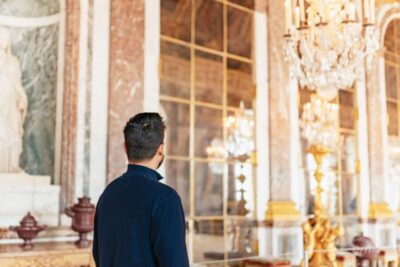
Versailles Palace and Gardens Full Access Ticket
Read our review →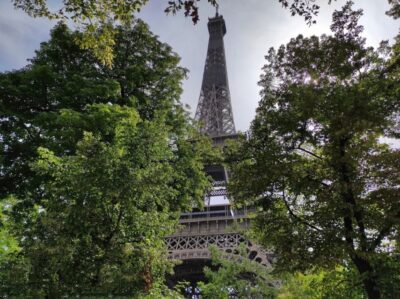
Eiffel Tower Entry Ticket with Optional Summit Access
Read our review →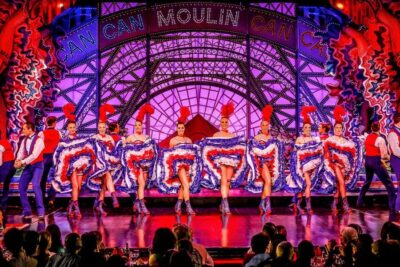
Moulin Rouge Cabaret Show Ticket with Champagne
Read our review →
Montparnasse Tower Observation Deck Entry Ticket
Read our review →
Louvre Museum Entry Ticket With Host and River Cruise
Read our review →