
Reviewed · SEINE RIVER CRUISES
Paris: Hop-On Hop-Off Seine Cruise Pass with 9 Stops
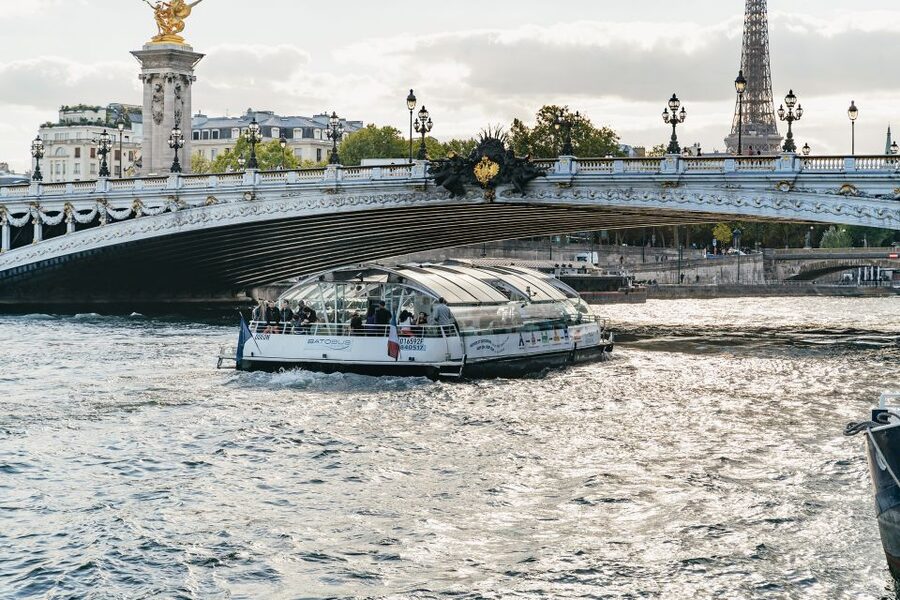
Paris is easiest to enjoy when you stop trying to conquer it on foot. The Batobus Seine shuttle lets you move between the Eiffel Tower, Louvre, Notre-Dame, Musée d’Orsay, and other central sights while sitting above the traffic. I especially like the open terrace for photos and the chance to turn a transport ride into a short sightseeing cruise.
I also like that your 24 or 48 hour pass starts with first use, not at a fixed morning departure. That gives you room to begin late, stop for lunch, and use the boat again in the evening. The main drawback is that the glass-covered cabin can feel hot in sunny weather, and the roof may not give perfectly clear photos.
Key points to know before you board
- Nine useful Seine stops: Reach the Eiffel Tower, Louvre, Musée d’Orsay, Notre-Dame, Hôtel de Ville, Invalides, and several central neighborhoods.
- A flexible 24 or 48 hour pass: Use the boat as sightseeing transport rather than committing to one short cruise.
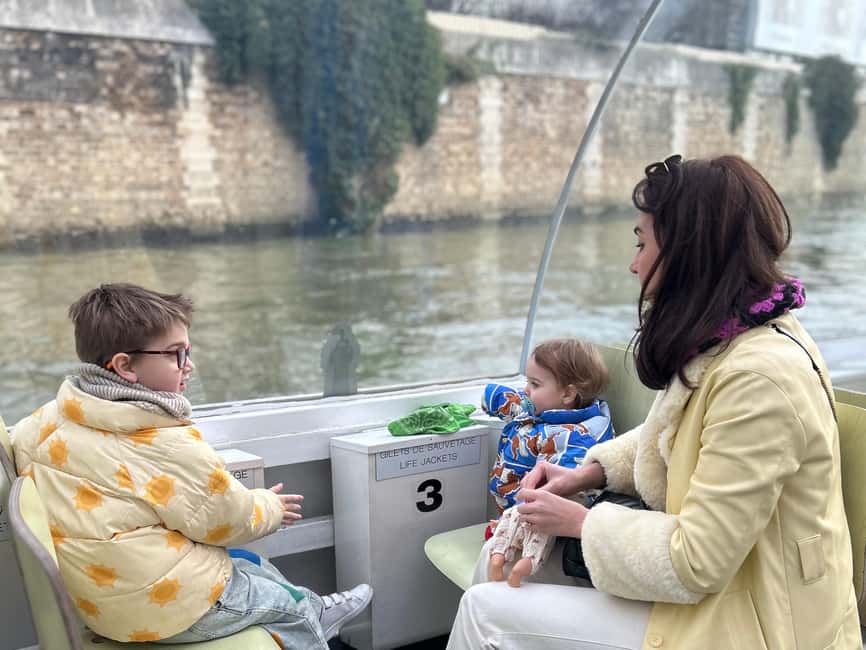
- Heated cabin plus terrace: Winter rides are comfortable, while summer passengers may prefer the open deck.
- No built-in audio tour: Use the multilingual webapp on your charged phone for monument notes and nearby ideas.
- Boats usually arrive about every 20 to 25 minutes: That makes it practical to stop for a museum or neighborhood walk.
- Best for a gentler day in Paris: It cuts down on Metro stairs and long walks, but it is not suitable for wheelchair users.
Why the Batobus works better than a standard sightseeing cruise
A normal Seine cruise gives you one loop and a fixed view. Batobus gives you that river view, then lets you get off when something catches your eye. For a first day in Paris, that difference matters.
The boat follows a central stretch of the Seine, with stops spaced near major museums, monuments, gardens, and neighborhoods. You can ride the full circuit to get your bearings, then use the pass as a practical link between sights. A complete loop takes about two hours, while boats can arrive roughly every 20 to 25 minutes, depending on the service period.
The price is about $27 per person, which is reasonable if you use the boat several times. One short ride will not make the pass a bargain, but a day of moving between the Eiffel Tower, Musée d’Orsay, Louvre, and Notre-Dame can quickly justify it. The 48 hour option makes the value clearer because you do not need to rush through every stop in one day.
This is not a guided tour with a person narrating every bridge. The multilingual webapp provides information in English, French, Italian, Spanish, and German. Bring a charged smartphone, and check the monument notes before you sail away from each stop. Without using the webapp, you get the views but much less context.
More Boat Tours in Paris
- Paris: Evening River Cruise with Music
★ 4.4 · 22,721 reviews - Paris: Louvre Guided Tour with Reserved Access & Boat Cruise
★ 4.3 · 16,353 reviews - Paris: Big Bus Hop-On Hop-Off Tour with Optional Cruise
★ 4.4 · 13,279 reviews
Starting at the Eiffel Tower stop
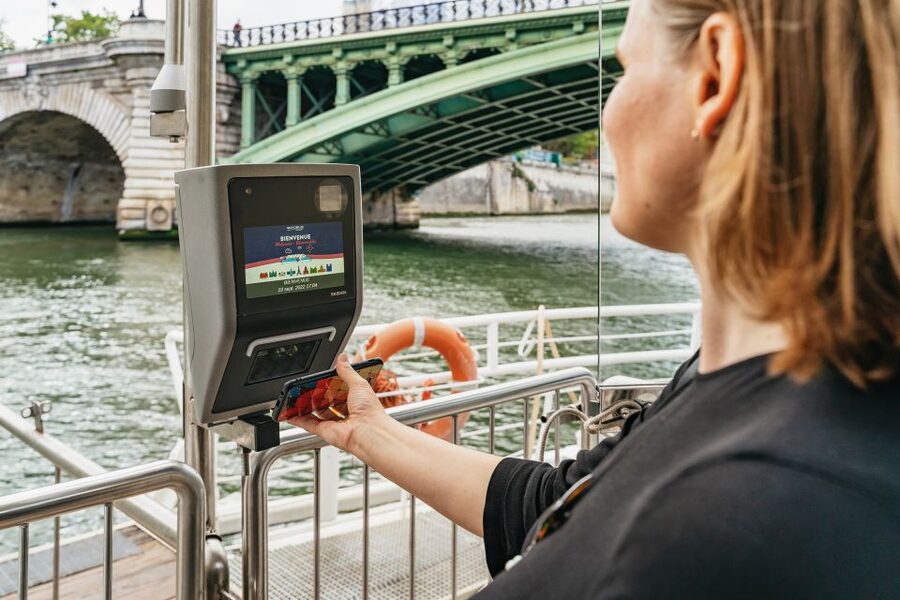
The main starting point is Port de la Bourdonnais, directly by the Eiffel Tower. You can also board at any of the other eight stops, so you are not tied to the advertised starting point. Each time you board, scan your ticket, and remember that the validity begins when you first use it.
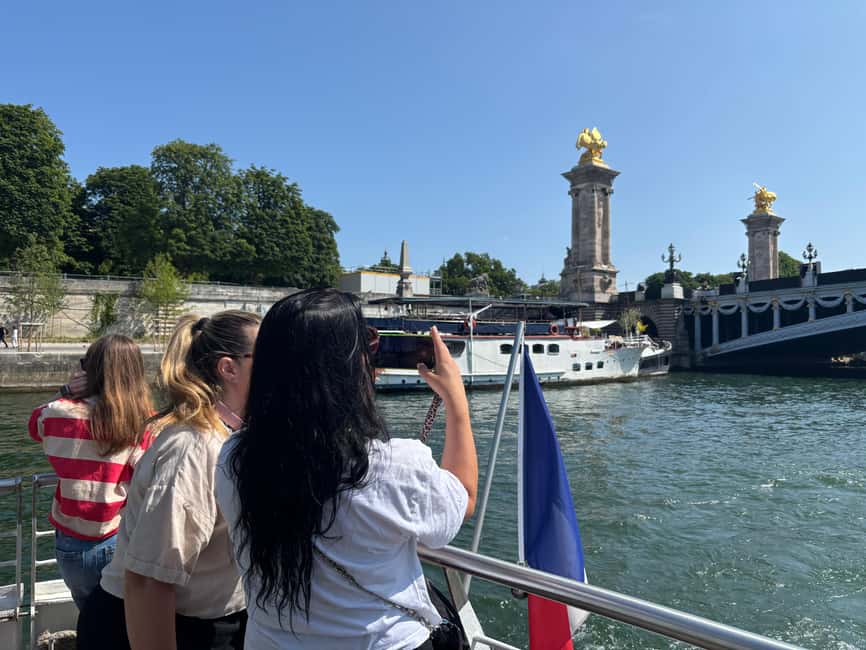
From the water, the Eiffel Tower has a different scale. The iron structure changes as the boat pulls away, and the river gives you a clean angle for photos that can be hard to find on the crowded streets. The terrace is the best place for pictures, though you may need to wait for a clear spot when the boat is busy.
Nearby, the Cité de l’Architecture is a useful choice if you want more than the tower. It focuses on French architectural heritage from the 12th to the 18th century. You can also simply use this stop as the start of a full loop, especially if you arrive in Paris without a firm plan.
Musée d’Orsay and the artistic left bank
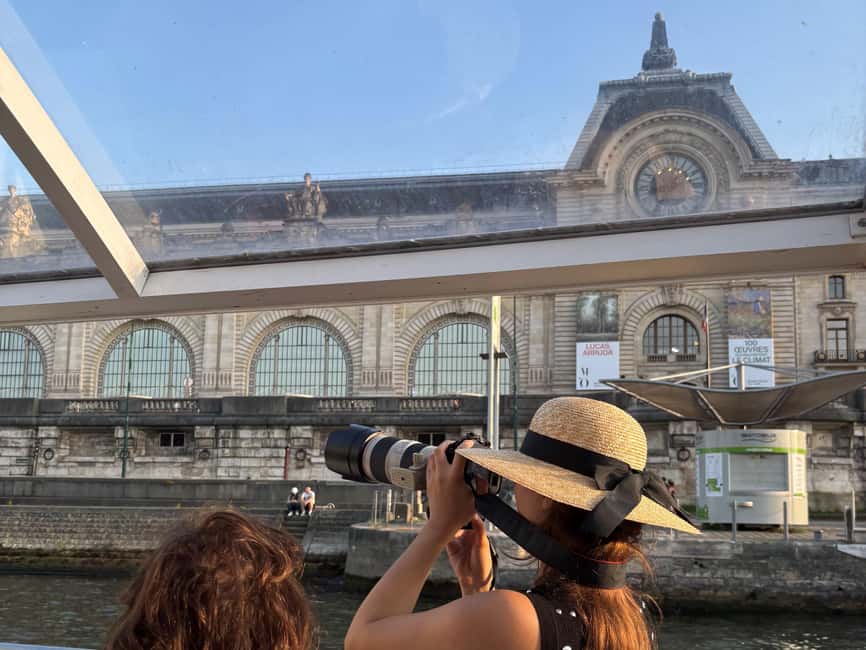
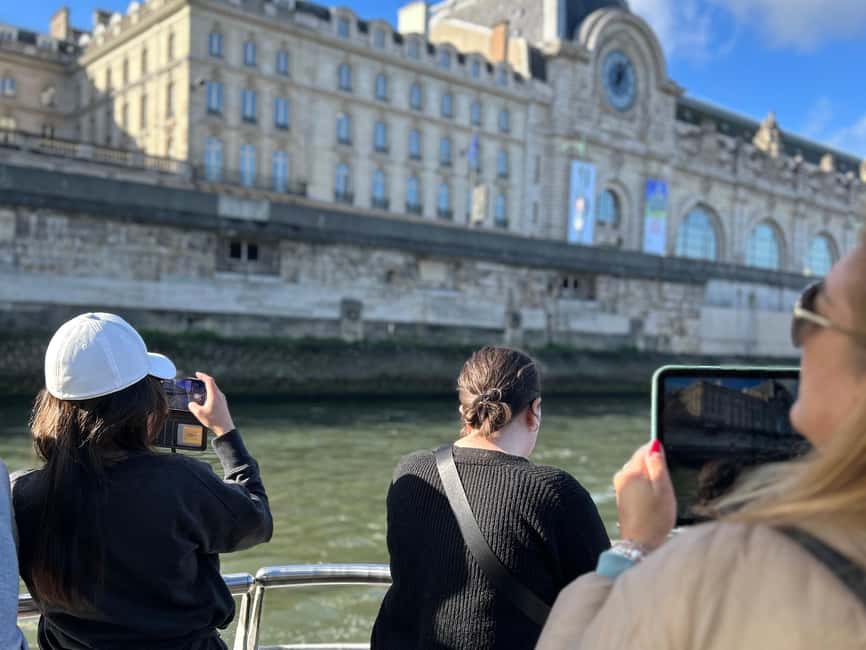
The Musée d’Orsay stop at Quai de Solférino puts you close to one of Paris’s finest art museums. The former railway-station building is known for works by Monet, Renoir, and Van Gogh, along with many other 19th century paintings and sculptures.
This is one of the most useful stops for a museum day. You can ride in, spend several hours indoors, and continue by boat instead of retracing your route through traffic. Allow enough time for the museum itself, since a quick stop here would undersell the value of the location.
The river approach also gives you views of the grand stone buildings along the Seine. If your feet need a break after a museum visit, this is an especially pleasant place to board again. In hot weather, though, the covered cabin can hold heat, so the terrace may be more comfortable.
Saint-Germain-des-Prés, cafés, and old Paris
The Saint-Germain-des-Prés stop is at Quai Malaquais, near the Institut de France and the famous cafés Café de Flore and Les Deux Magots. This is a good place to leave the river and wander without a strict checklist.
The neighborhood is associated with writers, artists, and intellectual life, but you do not need to know its literary history to enjoy it. Walk the side streets, browse bookshops, and settle into a café. The stop also gives you a useful break between the large museums farther along the route.
Do not expect the boat to drop you at every landmark door. The stops are close to the main areas, but you still need to walk from the quay. Comfortable shoes remain important, even with a river shuttle doing much of the work.
More cruises along the Seine:
- Paris: Seine Cruise & Crepe Tasting near the Eiffel Tower
★ 4.4 · 11,231 reviews - Paris: Seine River Panoramic Views Dinner Cruise
★ 4.3 · 10,611 reviews - Paris: Eiffel Tower Access by Elevator & Seine River Cruise
★ 4.6 · 7,329 reviews - Paris: 3-Course-Dinner Cruise on the Seine with live music
★ 4.7 · 7,248 reviews
Notre-Dame and the Latin Quarter
The Notre-Dame stop at Quai de Montebello is among the most useful on the route. From here, you can see Notre-Dame Cathedral and explore the Latin Quarter, with its cafés, bookshops, and student atmosphere.
This is a good place for a relaxed meal or a morning coffee before continuing. One practical advantage of the route is that you can return to the quay after exploring instead of navigating the Metro. The boat ride then becomes a quiet pause between busy sightseeing areas.
The cathedral stop can be crowded, particularly around popular visiting hours. Give yourself time to find the correct quay and check the direction of the next boat. It helps to learn which side of the river you need before you walk away from the landing.
Jardin des Plantes and a calmer stretch
At Quai Saint-Bernard, the Jardin des Plantes stop leads to Paris’s main botanical garden. This is a fine choice when you need open space and a slower hour after museums and city streets.
The nearby Cité de la Mode et du Design offers a different mood, with contemporary design and creative exhibitions. The stop is less essential for a first-time visitor focused only on famous monuments, but it adds variety to a two-day pass.
I would use this stop as a pressure-release valve. Spend time in the gardens, then board again instead of filling the day with one major sight after another. The boat gives you a chance to sit, watch the riverbanks, and reset your schedule.
Hôtel de Ville and the Marais
The Hôtel de Ville stop at Quai de l’Hôtel de Ville is well placed for Paris’s historic City Hall and the Centre Pompidou. It is also a practical entrance to the Marais, with galleries, boutiques, cafés, and narrow streets.
This stop suits independent exploring. You can choose a museum, wander through the Marais, or simply use the area for lunch before returning to the Seine. The boat is most useful here because the neighborhood is more enjoyable on foot, while the ride handles the longer connection to your next stop.
The Centre Pompidou and Marais are not right on the quay, so check your walking route before leaving the boat. The webapp can help identify sights and things to do around each landing.
The Louvre stop at Pont Royal
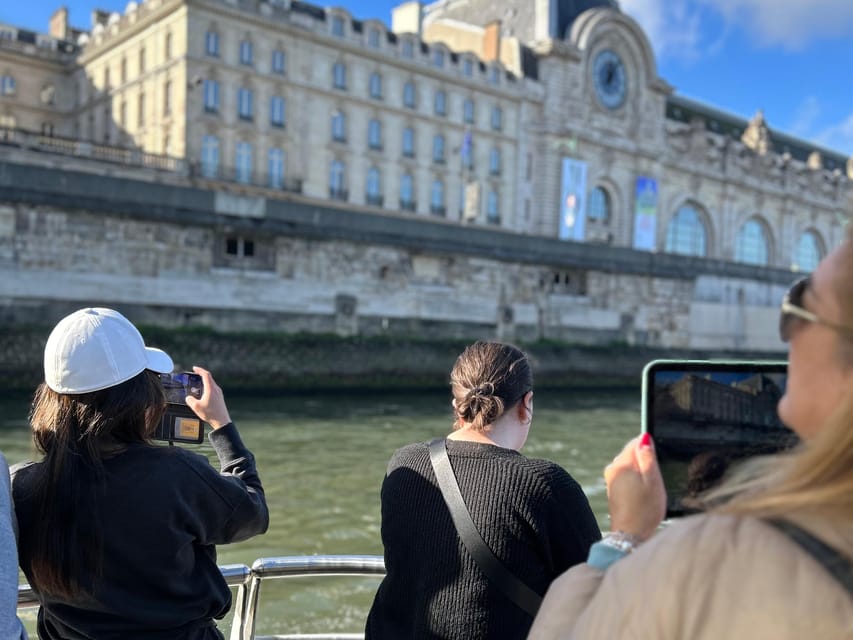
The Louvre stops at Pont Royal and Pont du Carrousel put you near the world’s most famous art museum. This is a strong reason to choose Batobus over a simple one-way cruise. You can arrive by river, spend as much time as your museum plans require, and continue later without buying another transport ticket.
The Louvre is far too large for a casual hour. If you plan to visit, set aside a substantial part of the day and use the boat only for the journey before or after. If you already have museum plans elsewhere, the riverside view may be enough.
The location also works for a walk along the Seine and the surrounding historic center. You can use the pass to connect the Louvre with Musée d’Orsay or Place de la Concorde without dealing with road traffic.
Place de la Concorde and the grand avenue
The Place de la Concorde stop at Port des Champs-Élysées is useful for one of Paris’s grandest squares. From here, you can walk toward the Champs-Élysées, Avenue Montaigne, the Grand Palais, and the Petit Palais.
This is a good stop for visitors interested in monumental architecture, luxury shopping, and major museums. It is also a handy point for a late afternoon ride, when the light over the river and buildings can be especially attractive.
The area is broad, so walking distances can feel longer than the map suggests. If you have already spent the day on foot, use the boat as a proper rest rather than forcing in one more sight.
Invalides and Pont Alexandre III
The Invalides stop at Port des Invalides is included among the nine boarding points and adds two strong sights. The Hôtel des Invalides contains Napoleon’s tomb, while Pont Alexandre III is one of the most ornate bridges in Paris.
The bridge is especially photogenic from the water. The terrace gives you a cleaner view of its details than you may get while crossing among traffic and pedestrians. This is one of the stops where the ride itself is part of the attraction.
If you are interested in French military history, allow time for Invalides. If not, use this stop for the bridge and riverside views before continuing toward the Eiffel Tower.
What the boat is like in different weather
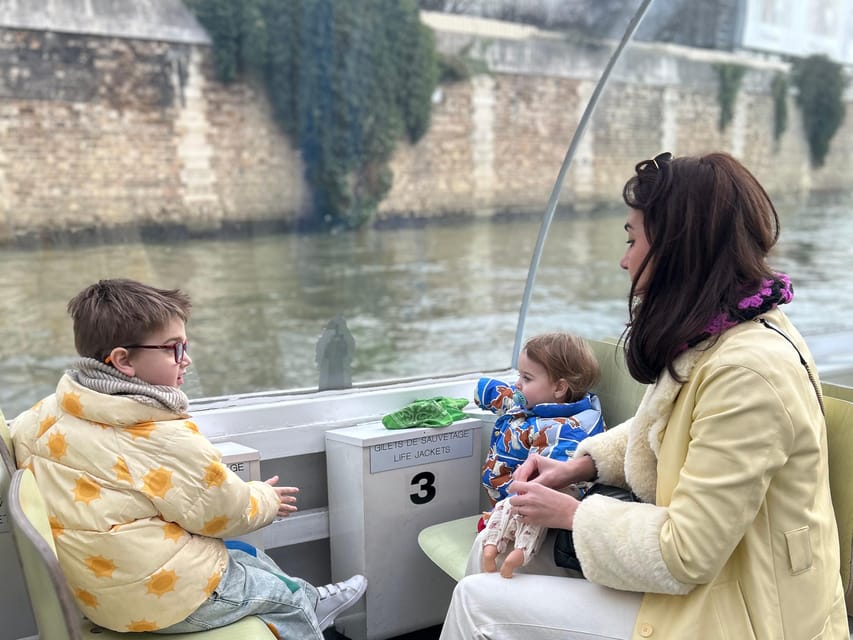
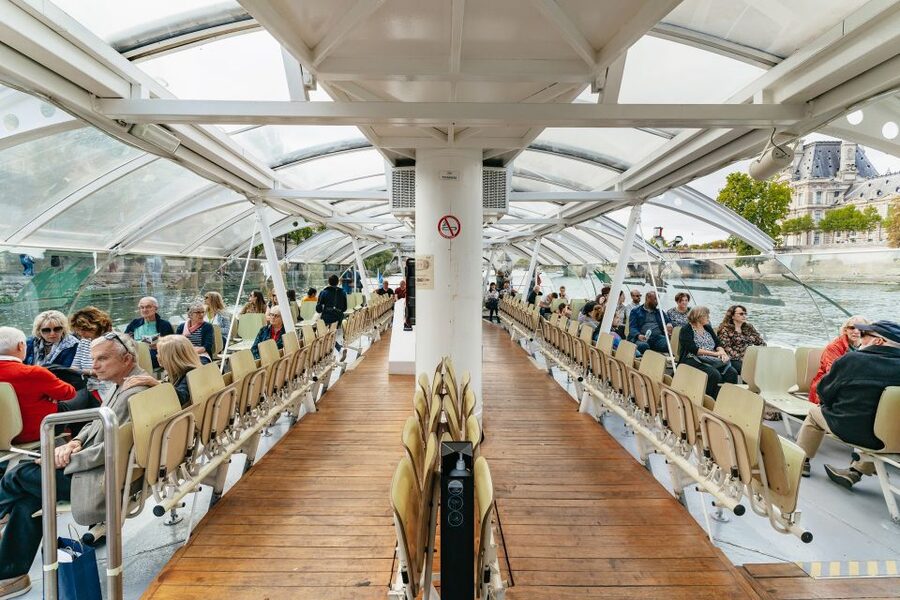
The boats are heated and glass-covered, which is a real benefit in colder months. Winter passengers have found the cabin warm and clean, and the enclosed design keeps the ride comfortable when Paris is chilly or damp.
In warm weather, the same glass can work against you. Several rides in summer have felt hot, especially when there is little breeze. The terrace helps, but space is limited and a small awning does not provide full shade.
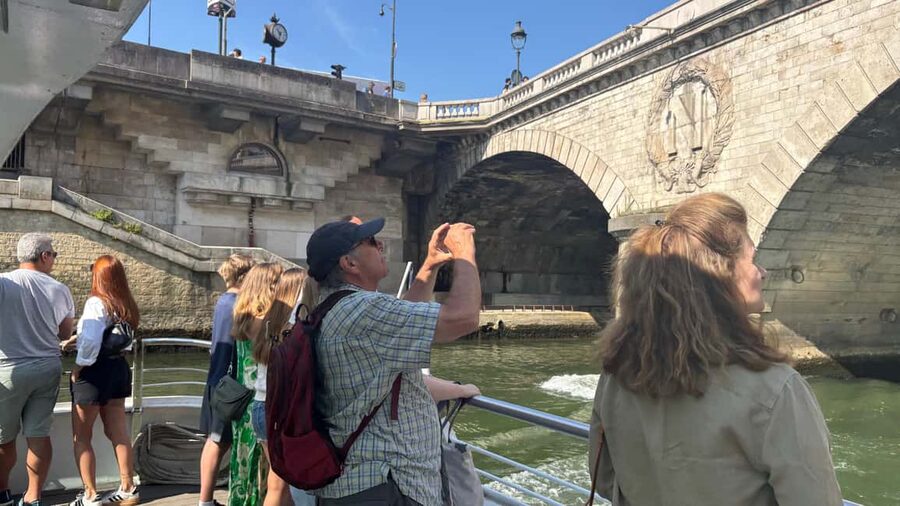
The open deck is best for photography, while the indoor cabin is better for steady seating and shelter. Roof panels can sometimes look blurry, so use the terrace for your sharpest pictures when conditions allow.
Tickets, timing, and practical limits
You can choose a 24 or 48 hour consecutive pass. The clock starts with your first boarding, not when you book, and the ticket can be used up to 30 days after the booked date. That flexibility helps if your arrival plans shift.
For the operating period listed, from November 3, 2025 through March 31, 2026, the first and last departures from the Eiffel Tower stop are 10 a.m. to 5 p.m. Monday through Thursday, and 10 a.m. to 7 p.m. Friday through Sunday. Check the current schedule before you build a late-night plan.
Large luggage is not allowed, and non-folding strollers cannot board. Fold-up baby carriages are allowed. The service is not suitable for wheelchair users, although some people with mobility difficulties have found it gentler than the Metro because it avoids many stairs. Seating can become tight when the boat is busy, particularly with children and pushchairs.
Free cancellation is available up to 24 hours before departure, and you can reserve now and pay later. Those terms are useful if your Paris schedule is still changing, but the main decision remains simple: will you use the boat several times?
Who should book the Batobus pass?
I would recommend it most for a first or second visit, families with children, older visitors who want fewer Metro stairs, and anyone staying near the Seine. It is also helpful if you have only a few days and want to connect several major sights without spending every minute underground.
The 48 hour pass is the better choice if you want to explore slowly. You can dedicate one day to museums and another to neighborhoods, gardens, and bridges. A 24 hour pass works well for a compact sightseeing day, especially if you begin with a full loop and then repeat only the sections you need.
I would not choose it as your only transport plan for all of Paris. The route covers the central sights along the Seine, not every neighborhood, and boats operate within set hours. Use the Metro, walking, or another service when your destination lies far from the river.
Should you book this Seine pass?
Book it if you want scenic transport with real sightseeing value, not just a narrated cruise. The strongest reasons are the useful stops, the relaxed pace, the terrace views, and the freedom to start whenever your day allows.
Skip it if you prefer a tightly guided tour, need full wheelchair access, or plan to visit only one riverfront sight. For most visitors with a central Paris itinerary, especially those choosing the 48 hour pass, Batobus offers a calm and practical way to connect the city’s headline attractions.
FAQ
How long is the Batobus pass valid?
You can choose a 24 hour or 48 hour consecutive pass. The validity begins when you first board and scan the ticket.
Where can I board the Batobus?
You can board at nine stops: Tour Eiffel, Musée d’Orsay, Saint-Germain-des-Prés, Notre-Dame, Invalides, Jardin des Plantes, Hôtel de Ville, Louvre, and Place de la Concorde.
Does the pass include an audio guide?
There is no standard onboard audio commentary listed. An interactive webapp provides information about monuments and nearby activities in English, French, Italian, Spanish, and German.
Are the boats heated?
Yes. The boats have heated, glass-covered interiors and a terrace. The covered cabin can feel hot during sunny weather.
Can I bring a stroller or luggage?
Fold-up baby carriages are allowed. Non-folding strollers and large bags or luggage are not allowed on board.
Is the Batobus suitable for wheelchair users?
No. The activity is listed as unsuitable for wheelchair users. Availability of seating may also be limited when boats are busy.
More Hop-On Hop-Off Routes in Paris
- Paris: Tootbus Hop-on Hop-off with optional river cruise
★ 4.3 · 11,924 reviews - Paris Big Bus Hop-On Hop-Off Tour with Optional River Cruise
★ 4.0 · 6,534 reviews - Paris: Big Bus Panoramic Night Tour by Open-Top Bus
★ 4.4 · 4,168 reviews - Paris Seine River Hop-On Hop-Off Sightseeing Cruise by Batobus
★ 4.0 · 3,411 reviews
Just added around Paris
- Paris: Croissant Baking Class with a Chef★ 5.0 · 201 reviews
- Cooking Class with a Parisian Chef★ 5.0 · 46 reviews
- Cocktails lessons in Speakeasy★ 4.5 · 72 reviews
- Paris: Choux Pastry and Chocolate Éclair Making Class★ 4.9 · 50 reviews
- Paris: Classic Sites Tour by Vintage Citroen 2CV★ 4.6 · 189 reviews
- Paris: Cheese and Wine Class in a 17th Century Cellar★ 4.8 · 91 reviews
- Paris: Romantic Photoshoot for Couples★ 4.9 · 131 reviews
- Paris: Bread and Croissant-Making Class★ 4.8 · 206 reviews
Seine River Cruises, compared.

Seine Cruise & Crepe Tasting near the Eiffel Tower
Read our review →
Eiffel Tower Access by Elevator & Seine River Cruise
Read our review →
3-Course-Dinner Cruise on the Seine with live music
Read our review →
Bateaux Parisiens Seine River Gourmet Dinner & Sightseeing Cruise
Read our review →
3-Course Gourmet Dinner Cruise on Seine River
Read our review →
Bateaux Mouches Dinner Cruise on the Seine River in Paris
Read our review →Browse the lists this tour appears in