
Reviewed · LOUVRE TOURS
Paris Louvre Exclusive Semi Private Guided Tour Max 6 People
The Louvre’s great trick is making you feel both thrilled and slightly lost. This tour gives you a small group of no more than six, so your guide can move you toward the major works without the usual crowd of strangers gathered around one flag. You’ll see the Mona Lisa, Venus de Milo, and other famous pieces while learning how the museum grew from fortress to palace to art museum.
I like the chance to stay inside after the guided visit, since two hours is enough for an introduction but not enough for the Louvre itself. I also like the personal scale: guides such as Nazli, Sara, and Zach have been praised for clear explanations, strong storytelling, and adapting to group interests. The drawback is price. At $199 per person, this is a serious splurge, and one poor experience included a guide ending the tour early after a disagreement.
Key points at a glance
- Six-person maximum: You get more room to ask questions and less time waiting for a large group to regroup.
- The main Louvre masterpieces: The route includes the Mona Lisa, Venus de Milo, Great Sphinx of Tanis, and works linked to Da Vinci, Canova, and Delacroix.
- A guide-led introduction: You receive context on the art and on the Louvre’s earlier life as a fortress and royal residence.
- Extra museum time included: Your entry ticket remains useful after the guided portion, so you can continue at your own pace.
- Flexible language choices: Tours are offered in English, French, Portuguese, Spanish, Russian, and Swedish.
- A high price with real tradeoffs: The $199 cost buys a small group and guide access, but the value depends heavily on the quality of your guide.
Why a six-person Louvre tour changes the visit
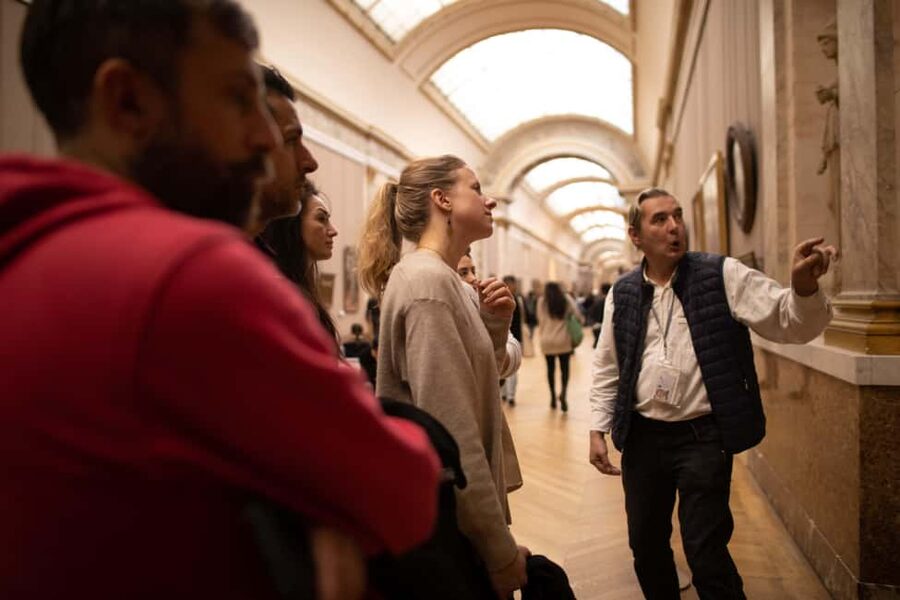
The Louvre is not simply a large museum. It is a huge building with several wings, multiple floors, and more than 35,000 works on display. A first visit can become a race from one famous object to the next, with little idea of what you are seeing or why it matters.
A six-person group helps with that problem. Your guide can keep the group together without a raised flag and can usually hear your questions without stopping the whole room. You also have a better chance of asking for a little more time at a painting or sculpture that catches your eye.
This is still a group tour, not a fully private visit. Five other people may have different interests and walking speeds. But the limit is small enough to make the experience feel personal, especially compared with a large museum group.
The tour lasts between two and two and a half hours. That is enough time to establish a useful framework for the Louvre and see a long list of major works. It is not enough to cover every department, so you should think of this as a guided first pass rather than a complete museum visit.
More Louvre tickets and guided visits:
- Paris: Louvre Museum Timed-Entrance Ticket
★ 4.6 · 71,977 reviews - Paris: Louvre Guided Tour with Reserved Access & Boat Cruise
★ 4.3 · 16,353 reviews - Louvre Museum Masterpieces Guided Tour with Access
★ 4.5 · 12,023 reviews
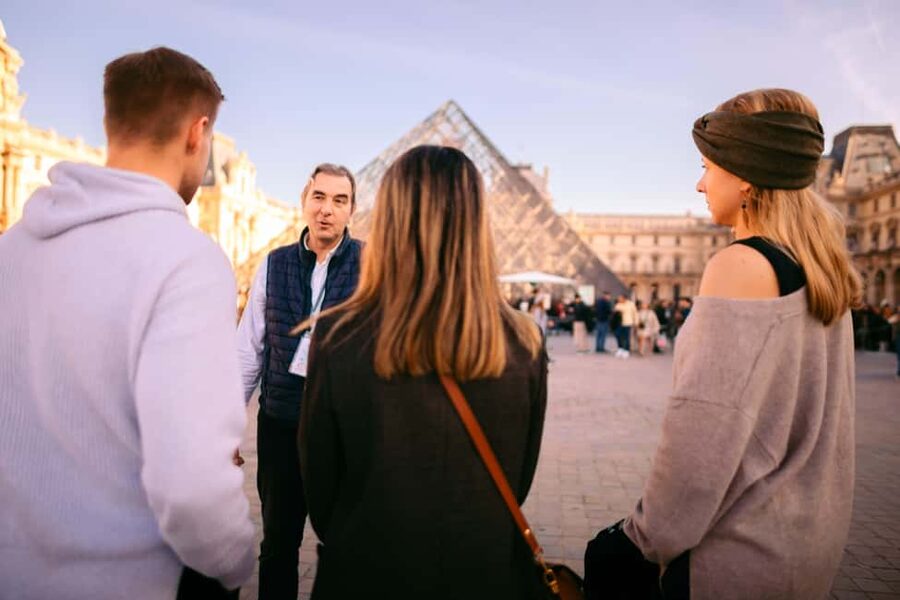
Meeting under the Louis XIV statue
Your meeting point is beneath the equestrian statue of Louis XIV, in front of the glass pyramid. The guide will hold a LivTours sign. Arrive 10 to 15 minutes early, since the area around the pyramid can be crowded and you do not want to begin by searching for the group.
The starting statue is a copy of Louis XIV as Marcus Curtius. It is a practical landmark, but it also hints at the building’s royal past. Before the Louvre became a museum, it was tied closely to the French monarchy and occupied an important place in Parisian power.
From there, you pass the Louvre Pyramid before entering the museum for the guided portion. The pyramid is one of the easiest places to recognize in Paris, but it can also be an awkward meeting area when many groups gather at once. Arriving early matters more here than it might at a small neighborhood museum.
Bring a passport or ID card. The experience does not allow non-folding wheelchairs or electric wheelchairs, so anyone needing those should check carefully before booking. Private or small-group formats are available, but the experience reviewed here is built around a maximum of six people.
Inside the Louvre: a focused route through famous art
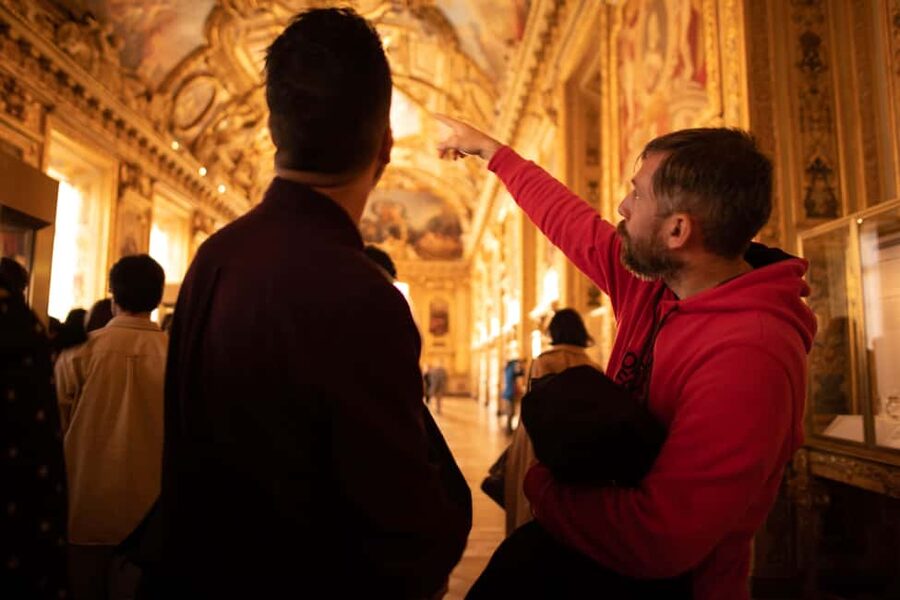
Once inside, your guide leads you through a selected group of the Louvre’s best-known works. The precise order can change, since museum rooms and crowd patterns are not always predictable. The goal is not to see every gallery. It is to connect a series of major objects with stories about art, power, technique, and the building itself.
That focus is useful. Without a plan, you can spend too much time finding your way and too little time looking. A good guide gives you enough information to understand the work, then keeps the route moving.
The tour includes works associated with Leonardo da Vinci, Antonio Canova, Eugène Delacroix, and other major artists. The guide may discuss artistic methods along with dates and names. One especially positive account praised Zach for bringing together the history of the art and the techniques used to make it.
That combination is important. You do not need a lecture on every painting. You need a few clear ideas that help you look: how a sculptor creates movement in stone, how a painter directs your eye, or how an image gained its cultural power.
Mona Lisa: famous, crowded, and still worth seeing
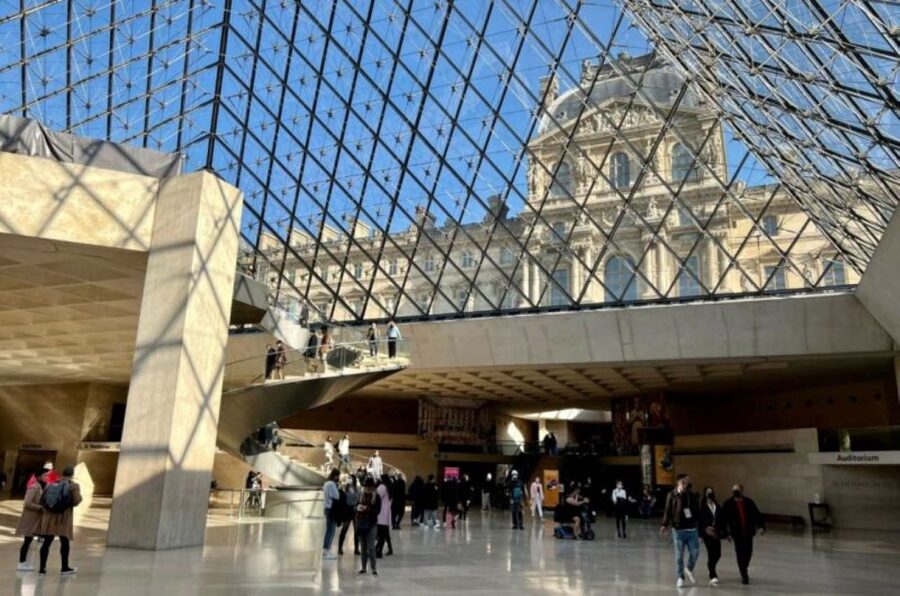
The Mona Lisa is the stop most people already have in mind. You will stand in front of Leonardo da Vinci’s portrait, but do not expect a quiet room or a long private look. This is the Louvre’s most famous attraction, and the experience is shaped by crowds, ropes, and people holding phones above their heads.
A guide is useful here because you do not have to work out the room by yourself. You can receive the essential context, take your look, and move on with a better sense of what makes the painting so important.
It is also worth keeping expectations realistic. The portrait is smaller than many first-time visitors expect, and the room can feel more like a major landmark stop than a calm art encounter. That does not make it unworthy. It simply means the value lies partly in seeing an object that has become part of worldwide popular culture.
If this is your first Louvre visit, you will probably want the Mona Lisa included. If you have already seen it and prefer quieter galleries, tell your guide early. The small group gives you a better chance of discussing your priorities.
A few more Paris half-days worth comparing
- Disneyland® Paris 1-Day Ticket
★ 4.6 · 49,412 reviews - Paris: Versailles Palace and Gardens Full Access Ticket
★ 4.6 · 41,579 reviews - Paris: Evening River Cruise with Music
★ 4.4 · 22,721 reviews - Paris: Eiffel Tower Entry Ticket with Optional Summit Access
★ 4.4 · 20,035 reviews
Venus de Milo and the power of sculpture
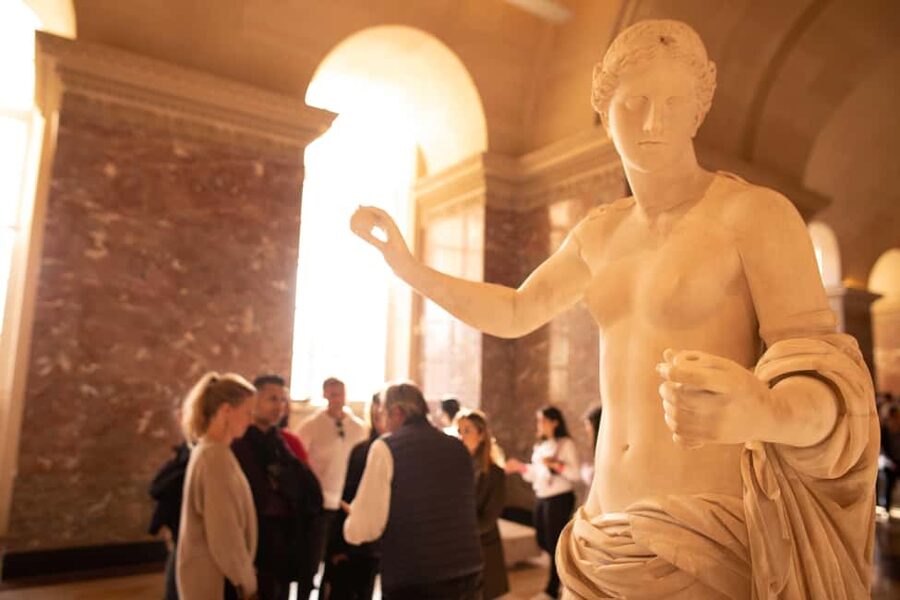
The Venus de Milo offers a different kind of Louvre experience. The ancient Greek sculpture is instantly recognizable, yet it rewards more than a quick photograph. Your guide can help you consider the figure’s pose, balance, missing arms, and the way the sculpture has been displayed and admired over time.
Sculpture is easy to rush past when a museum is crowded. A guide can slow the moment down and point out details that are hard to notice from a distance. You will also have a chance to compare the work with later sculpture, including pieces connected with Canova.
This part of the route suits visitors who want more than a list of famous names. The Louvre’s collection spans different periods and cultures, and the best explanations show how artistic ideals change from one era to another.
The room may be busy, and you should not expect silence or a long period alone with the sculpture. Still, this is one of the stops where a short explanation can make a familiar image feel less familiar, and more interesting.
The Great Sphinx of Tanis and the Louvre’s wider collection
The Great Sphinx of Tanis brings ancient Egyptian art into the route. It also reminds you that the Louvre is not just a place for French painting and Italian portraits. Its collections reach across civilizations, centuries, and artistic traditions.
A stop like this gives the tour some needed range. You are not only moving between the most photographed objects. You are also seeing how the museum presents large, symbolic works from the ancient world.
The supplied details do not promise a full Egyptian gallery tour, so you should not book this experience expecting a detailed survey of every department. Instead, think of the sphinx as one important stop within a highlights route.
That is a good fit for a first visit. You get a sample of the Louvre’s enormous reach, then can return to the departments that interest you after the guide leaves.
Delacroix, Canova, and learning how to look
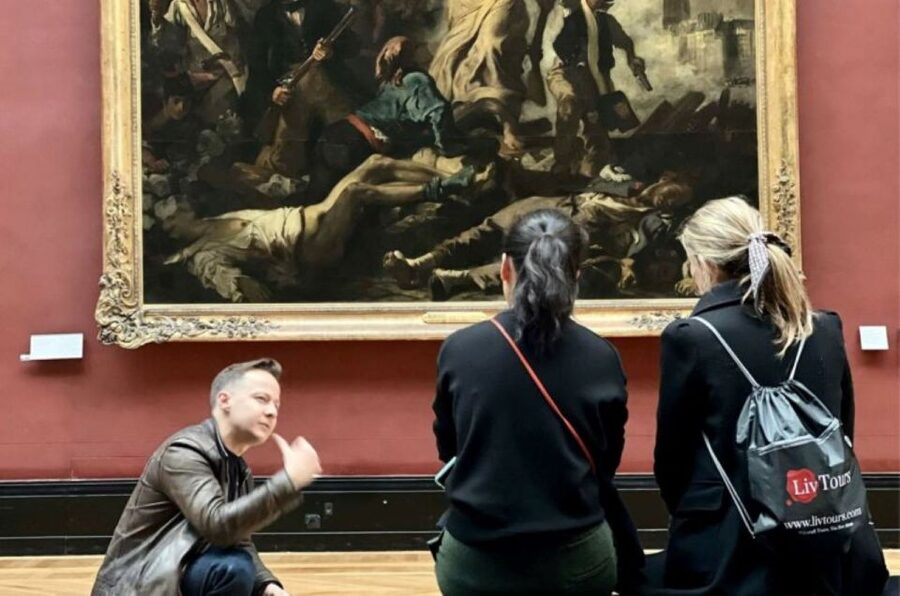
The route also includes dramatic paintings by Delacroix and sculpture linked to Canova. These names give the guide room to explain different artistic goals. Delacroix can open a discussion about movement, drama, and color. Canova can lead toward the polished surfaces and controlled forms of neoclassical sculpture.
Your guide’s skill matters greatly here. One strong account described Sara moving efficiently through a crowded summer Louvre while still offering substantial explanations and taking the group’s interests into account. Another praised Nazli for her intelligence, energy, and passion.
Those comments point to the main strength of this experience: the guide can turn famous objects into a connected visit. You are not just collecting photographs. You are hearing why the works have lasted in public memory and how to notice more when you look at them.
There is also a practical benefit to a live guide. If you have a question, you can ask it at the moment. If one work interests you more than another, you may be able to adjust the emphasis. That flexibility is harder to get from an audio guide or a printed museum map.
From fortress to royal palace to public museum
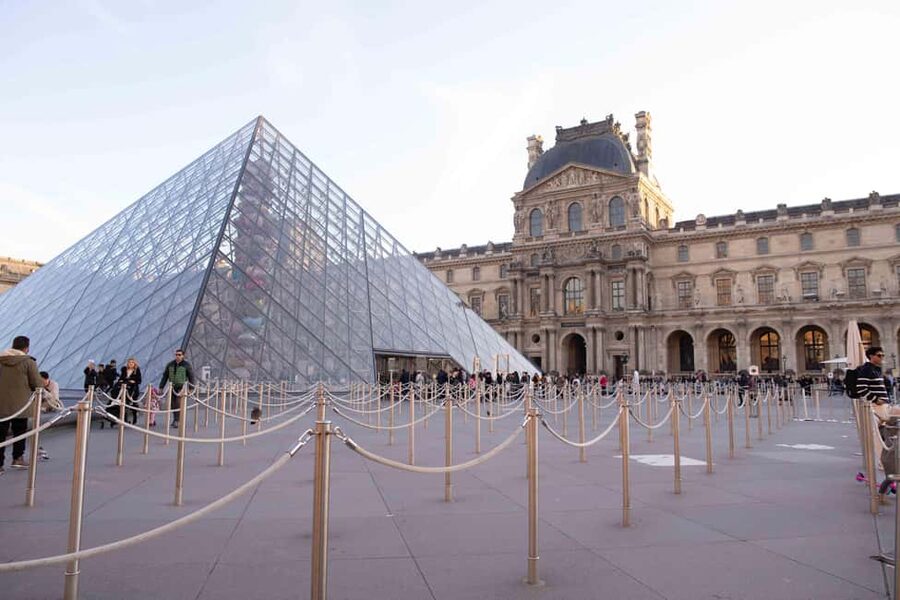
The Louvre’s building is part of the tour. Your guide explains its long life as a fortress and royal palace before its role as a museum. That background gives the visit a useful sense of place.
You are not walking through a purpose-built modern gallery. The Louvre developed over time, and its scale can feel excessive until you understand its past. The rooms, courtyards, and grand passages make more sense when you see them as parts of a former seat of royal power as well as a home for art.
This context helps tie the stops together. A portrait of a celebrated ruler, a sculpture collected for royal taste, and a monumental ancient object do not sit in a neutral container. They are part of a much longer story about collecting, status, scholarship, and public access.
The guide cannot explain every stage of that story in two hours. But even a concise account helps you navigate the museum with more purpose after the tour ends.
Why the ticket after the tour matters
The biggest practical benefit is that you can remain in the museum after the guided visit. At first, two hours may sound adequate. Once you are inside, you will see how quickly that time passes.
After the tour, you can choose your own pace. You might return to a work you saw too quickly, visit another gallery, or simply stop following a route and look around. This extra time improves the value of the ticket, especially if you already know which part of the collection interests you.
Do not assume that the guide-led route covers all the sections you want. Use the guided portion to learn the building and major highlights, then treat the remaining museum time as your chance to make the visit personal.
If you have limited time in Paris, this arrangement is especially useful. You receive structure at the beginning, then retain freedom at the end. That is better than being released outside the museum just when you have finally learned how to get around.
Is $199 per person a fair price?
At $199, this is not a budget Louvre ticket. You are paying for entry, a live professional guide, a maximum group of six, and a route designed around major works.
The price makes more sense for visitors who value time and clear orientation. If you are nervous about finding the major galleries, want the Mona Lisa handled as part of a planned route, or prefer asking questions in a small group, the cost may feel justified.
The value is weaker for confident museum visitors who already know the Louvre well. You could spend less and explore alone, then use your extra money on another Paris experience. The guided route also cannot remove the crowds around the most famous pieces.
Guide quality is the largest variable. The overall score is 4.6 out of 5 from 28 ratings, with strong praise for Nazli, Sara, and Zach. One serious complaint described a guide becoming frustrated with another participant, collecting the audio transmitters, and ending the tour abruptly. That appears to be an exception, but it is worth remembering when judging a high-priced activity.
The tour also received praise for handling a very busy summer day. That matters because crowd control is part of the product here. A guide who can keep six people together and still explain the art is providing more than directions.
Who should book this Louvre tour?
I would consider it a good match for first-time Louvre visitors who want the major works without spending their whole day studying a museum map. It also suits couples, families, and small groups who prefer a personal guide but do not want to pay for a completely private tour.
Art lovers who want context on Da Vinci, Canova, Delacroix, ancient Greek sculpture, and Egyptian art will get a useful introduction. The tour is also a good choice if you want to see the Mona Lisa and Venus de Milo while learning about the Louvre’s royal and fortress past.
I would be more cautious if you dislike crowds, need a quiet art experience, or plan to spend the day in one specialized department. The Mona Lisa and other major works can be crowded, and the route is designed around highlights rather than a slow study of individual galleries.
Plan to arrive early, bring identification, and wear something suitable for a couple of hours on your feet. The available tour languages are English, French, Portuguese, Spanish, Russian, and Swedish. Free cancellation is available up to 24 hours before the start, and you can reserve now and pay later, which helps if your Paris plans are still shifting.
My verdict: a strong introduction at a premium price
Book this tour if you want the Louvre’s essential works explained by a live guide and like the idea of continuing alone afterward. The six-person limit is the key benefit, and the extra museum time makes the short guided route more useful.
Skip it if $199 feels too high for a highlights visit or if you already know exactly which Louvre galleries you want. For first-time visitors who want structure, personal attention, and a better chance of making sense of this enormous museum, it is a worthwhile splurge, provided you accept that the experience depends heavily on the guide assigned to your group.
FAQ
How long does the Louvre tour last?
The tour lasts between two and two and a half hours, depending on the scheduled start time and tour format.
What is the maximum group size?
The semi-private group has a maximum of six people. Private and small-group options are also available.
Where do I meet the guide?
Meet beneath the Louis XIV statue with the horse in front of the Louvre’s glass pyramid. The guide will be holding a LivTours sign.
Which Louvre works are included?
The route includes the Mona Lisa, Venus de Milo, Great Sphinx of Tanis, and other major works associated with artists such as Leonardo da Vinci, Canova, and Delacroix.
Can I stay in the Louvre after the tour?
Yes. Your entry ticket allows you to continue visiting the museum collection at your own pace after the guided portion.
Which languages are offered?
Live tours are offered in English, French, Portuguese, Spanish, Russian, and Swedish.
What should I bring, and are there accessibility restrictions?
Bring a passport or ID card, and arrive 10 to 15 minutes early. Non-folding wheelchairs and electric wheelchairs are not allowed on this experience.
Just added around Paris
- Paris Private Custom Tour with a Local Guide, Hidden Gems & Highlights★ 5.0 · 293 reviews
- Explore Hidden bars and Speakeasies in Paris★ 5.0 · 79 reviews
- Paris French Baking Class Baguettes and Croissants in a Bakery★ 4.5 · 172 reviews
- Paris: Experience Segway Top Highlights Small Group 2 Hours★ 5.0 · 75 reviews
- Seine River Evening Cruise with Music (Drink Options)★ 3.5 · 321 reviews
- Eiffel Tower Tour & River Cruise with Summit Option★ 4.0 · 215 reviews
- Paris Evening City of Lights Small Group Bike Tour & Boat Cruise★ 5.0 · 97 reviews
- Paris Eternelle Notre-Dame Virtual Reality Tour★ 4.5 · 50 reviews
Louvre Tours, compared.


Louvre Guided Tour with Reserved Access & Boat Cruise
Read our review →
Louvre Museum Masterpieces Guided Tour with Access
Read our review →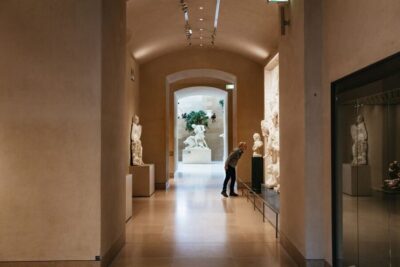
Louvre Museum Entry Ticket With Host and River Cruise
Read our review →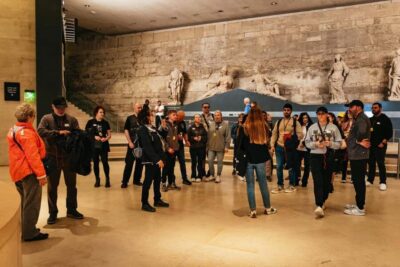
Priority Access Louvre with Host -Direct to Mona Lisa
Read our review →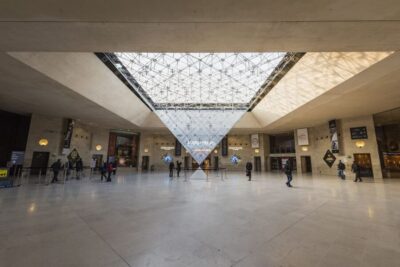
Mona Lisa & Louvre Masterpieces Tour with Reserved Access
Read our review →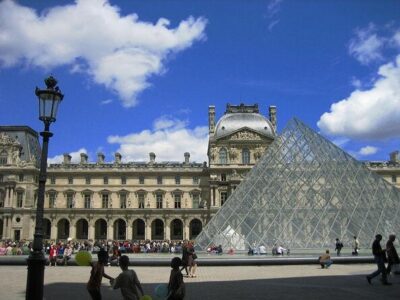
Louvre Museum – Exclusive Guided Tour (Entry Included)
Read our review →
Louvre Reserved Ticket and River Cruise Combo
Read our review →Browse the lists this tour appears in