
Reviewed · CITY TOURS
Paris: Private Guided City Tour in a Traction Avant or DS 21
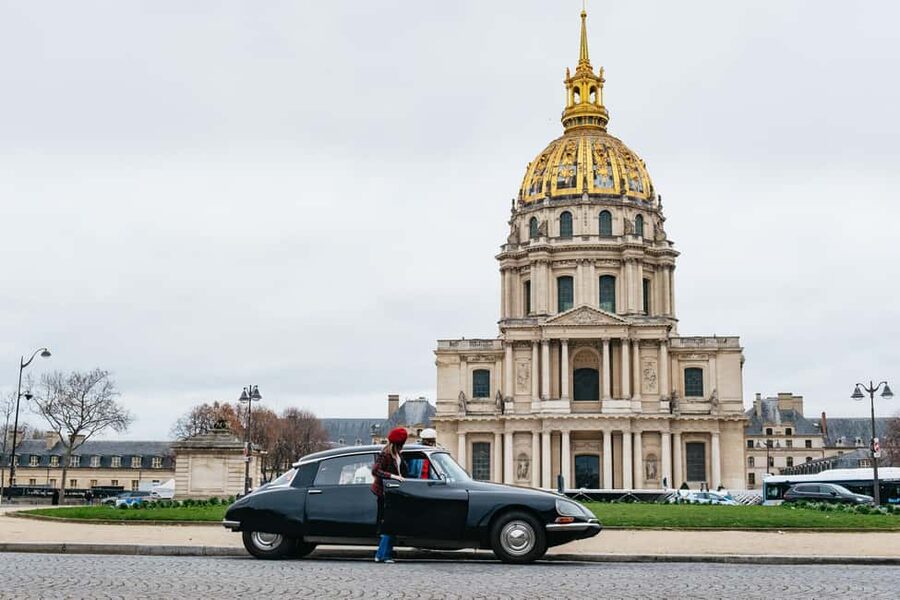
A polished 1955 Citroën Traction Avant or 1971 DS 21 carries you through Paris while drawing almost as much attention as the Eiffel Tower. The car is the star, but guide-driver Abi adds local streets, photo stops, restaurant tips, and small details you could easily miss from a tour bus.
I like two things here: hotel pickup and drop-off make the outing easy, and the private format lets you choose between famous sights and quieter corners. The main caution is space and comfort. Four people can fit, but luggage cannot, and some passengers have found the back seat harder for hearing every word.
Key points at a glance
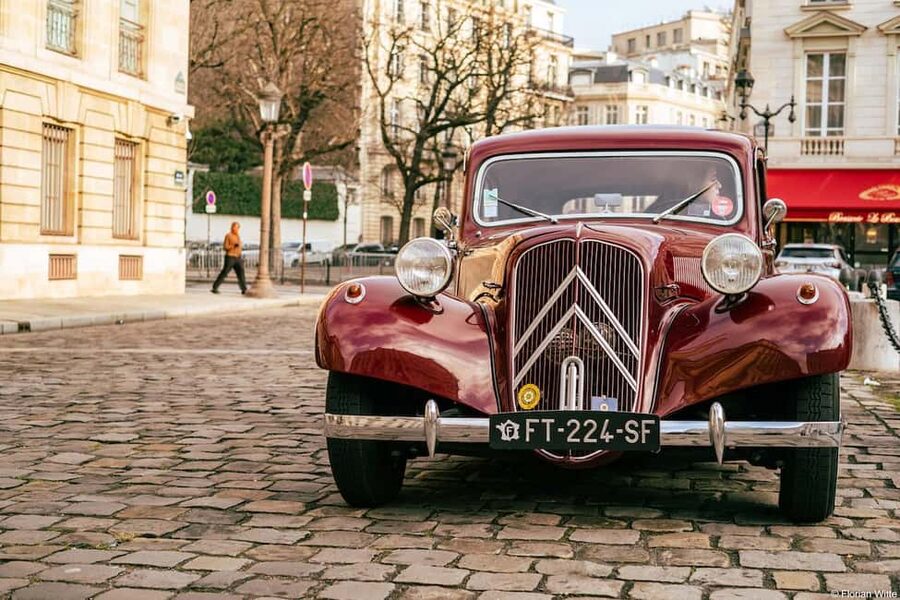
- Two genuine Citroën classics: Choose a 1955 Traction Avant 11B or a 1971 DS 21 Bhv, both memorable ways to cross Paris.
- Three time choices: One hour gives you a quick orientation, while two or three hours allow more photo stops and neighborhood detours.
- Abi’s photo skills: He knows useful angles for the Eiffel Tower, Arc de Triomphe, and other stops, and can take pictures for you.
- Major sights plus local streets: The route can include the Louvre, Notre-Dame, Sacré-Cœur, Saint-Germain, Moulin Rouge, and places outside the usual coach route.
- Private group value: The $164 price covers up to four people, making the per-person cost reasonable for a family or small group.
- Plan around your needs: This is not suitable for wheelchair users, people with mobility impairments, or people with hearing impairments.
Why a vintage Citroën changes the Paris experience
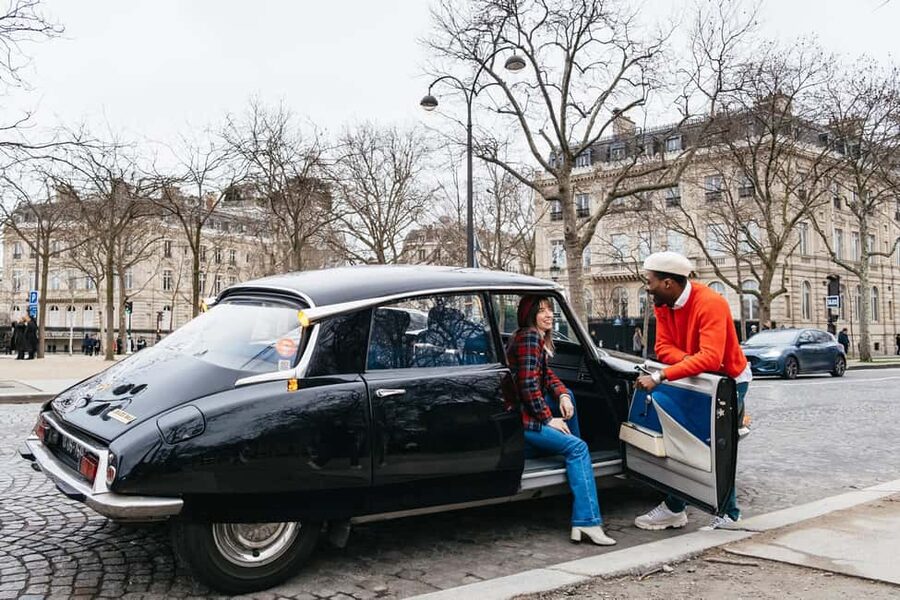
Paris is easy to admire from a sidewalk, but a classic car gives you a different rhythm. You move from grand avenues to narrow streets without spending the whole day walking, and you get a moving view of the city rather than a string of isolated monuments.
The Citroën Traction Avant has a particularly strong link to French motoring history. This 1955 model was among the first cars built with a unibody design and front-wheel drive. The DS 21, from 1971, is famous for its hydraulic suspension and unusual, futuristic shape. Neither is simply a substitute for a taxi. They are part of the experience.
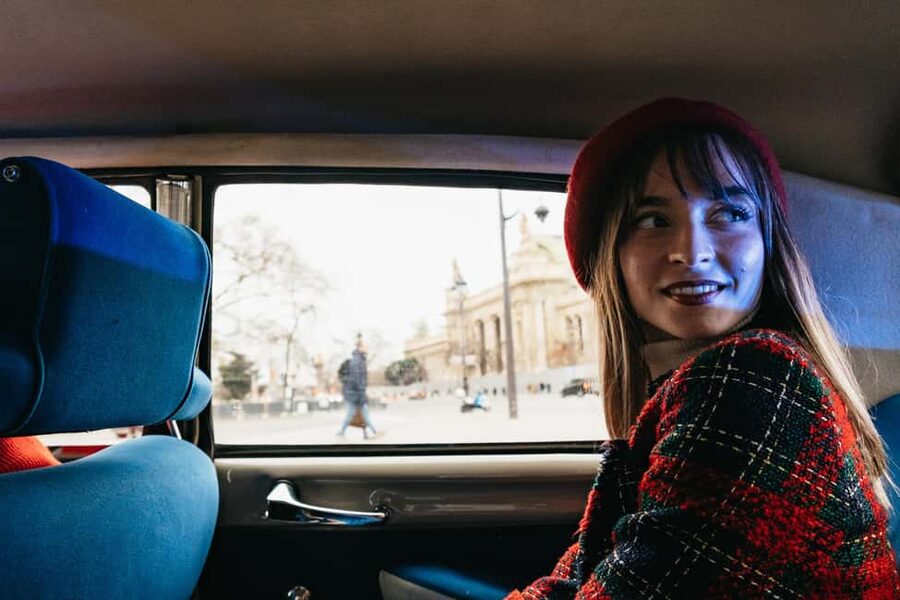
The car also attracts attention. Several rides have felt like a small parade, with people turning to look and taking pictures as the Citroën passes. That can make your own photo session more fun, especially if you enjoy old cars, design, or film-like Paris scenes.
You should also set your expectations correctly. This is a sightseeing drive, not a museum tour or a walking tour with long stops inside monuments. You see the exteriors, hear stories, and pause at selected photo points. Entry to museums and other sites is not included.
More City Tours in Paris
- Eiffel Tower Summit Option with Seine River Cruise and City Tour
★ 3.5 · 2,176 reviews - Paris: City Highlights Bike Tour
★ 4.7 · 1,835 reviews - Paris: Eiffel Tower Hosted Tour, Seine Cruise and City Tour
★ 4.0 · 1,507 reviews
What you see in one, two, or three hours
The route is private and adjustable, but the time you choose matters. Paris traffic, road closures, and photo stops can eat into a short outing.
A one-hour tour works as a quick first look. You can pass major sights such as the Champs-Élysées, Arc de Triomphe, Eiffel Tower, Place de la Concorde, or Louvre area. It is useful on your first afternoon, before a train departure, or when you want a pleasant introduction without committing half a day.
The tradeoff is simple: you will see a lot, but you will not linger everywhere. If you want several stops and time for family photos, one hour may feel tight.
A two-hour tour is the sensible middle choice for most people. It gives you time for the major monuments and a few carefully chosen pauses. You can cover the central sights, add a neighborhood such as Saint-Germain, or head toward Montmartre and the Moulin Rouge without rushing quite so much.
A three-hour tour is best if this is your main Paris orientation or if you want a broad mix of landmarks and local streets. You can combine the classic route with Sacré-Cœur, the Latin Quarter near the Panthéon, the Louvre, and several photo stops. One guest found three hours comfortable rather than excessive, while another advised booking as much time as possible because traffic and photographs take longer than expected.
I would choose two hours for a couple focused on highlights and three hours for a family of four, first-time visitors, or anyone who wants the car itself to be a major part of the day.
From Place de la Concorde to the Champs-Élysées
Place de la Concorde gives you a strong opening view of central Paris. From here, the route can run along the Champs-Élysées toward the Arc de Triomphe, linking formal public space, grand facades, and one of the city’s best-known avenues.
The Champs-Élysées is more about scale and setting than intimate Paris. It is broad, busy, and lined with shops, so you may prefer to see it from the car rather than spend a long time walking there. The advantage is that the Citroën lets you experience the avenue without giving up your sightseeing time.
At the Arc de Triomphe, expect a photo stop of about five minutes. This is one of the best moments to photograph both the monument and the classic car. If you want to climb the Arc, visit the museum, or study the carved details, you need a separate visit because admission is not part of the drive.
Eiffel Tower photos and the bridges of the Seine
The Eiffel Tower is one of the tour’s main anchors. The car can stop for photographs, and Abi has a reputation for finding useful angles and taking pictures for passengers. This is especially helpful if you are traveling as a family or couple and do not want one person left out of every image.
The listed photo stop is about five minutes, so think of it as a well-planned picture break rather than free time around the tower. Traffic and access rules can affect exactly where the car stops.
The route may also pass Les Invalides, Pont Alexandre III, Petit Palais, and Grand Palais. These areas give you more than another tower view. You see formal Parisian architecture, ornate bridges, museums, and broad avenues in a compact part of the city.
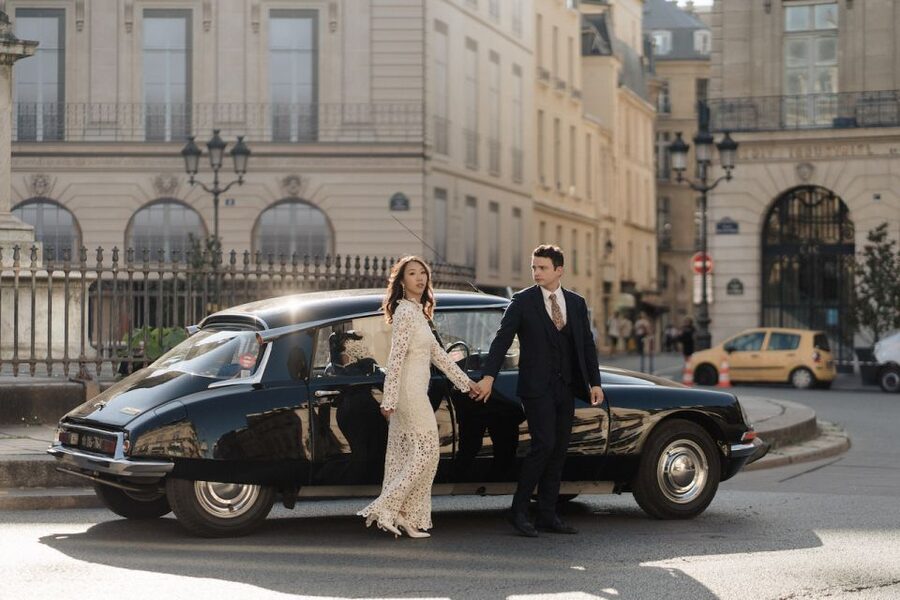
Pont Alexandre III is particularly useful for photographs because it frames the river and nearby monuments. Petit Palais and Grand Palais add strong architectural detail. The Palais de l’Élysée, home of the French presidency, and Place Vendôme bring in political and luxury Paris without requiring a separate museum ticket.
Same trip, a completely different kind of day:
- Paris: Louvre Museum Timed-Entrance Ticket
★ 4.6 · 71,977 reviews - Disneyland® Paris 1-Day Ticket
★ 4.6 · 49,412 reviews - Paris: Versailles Palace and Gardens Full Access Ticket
★ 4.6 · 41,579 reviews - Paris: Evening River Cruise with Music
★ 4.4 · 22,721 reviews
Opera, Moulin Rouge, and Montmartre
The route can continue toward Place Vendôme and the Palais Garnier. Place Vendôme is associated with fine jewelry and polished classical architecture, while the Opera area offers a different look at Paris, with grand civic buildings and busy streets.
At the Moulin Rouge, the scheduled photo stop is about five minutes. This is a quick exterior visit, not a cabaret performance. The value is in seeing the famous red windmill in context and getting a photograph with the vintage car.
From there, you can go up toward Sacré-Cœur. Montmartre provides a change of scale, with steeper streets and a more village-like feel than the ceremonial avenues around the Champs-Élysées. The basilica is another short photo stop, so you should not expect a full interior visit or a long walk through the neighborhood.
This part of the route is worth adding if you want variety. It also takes time. If your priority is the Eiffel Tower, Louvre, and Notre-Dame, tell Abi that before setting off so the route does not become too spread out.
The Louvre, Notre-Dame, and the historic center

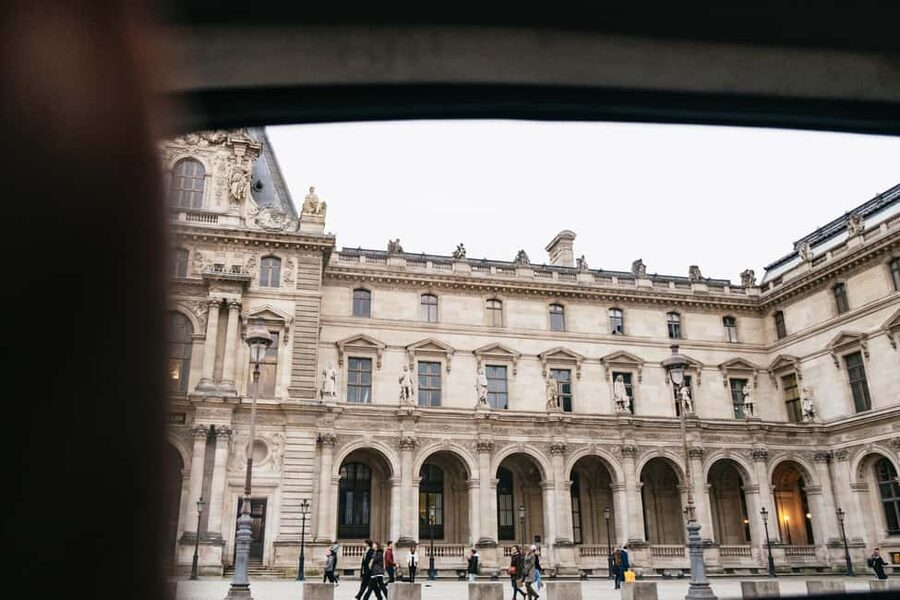
The Louvre area gives you several sights close together: the museum exterior, Louvre Pyramid, and surrounding courtyards. The car helps you cover this large district without using your legs for every transition.
Again, the tour does not include entry to the Louvre. You are seeing the outside and receiving commentary while moving through the area. If you want the galleries, reserve a separate timed visit.
Notre-Dame and the nearby historic center provide another major stop. Road closures and special events can change access, so the exact route may need to shift. Abi has adjusted plans when streets were closed and still covered the key areas, but flexibility is important in central Paris.
The Panthéon adds a different kind of grandeur. It is a strong exterior stop near the Latin Quarter and works well for visitors who want to see more than the usual Eiffel Tower circuit.
The best part may be the streets between the sights
The advertised monuments are easy to understand. The less obvious value lies in the connecting streets.
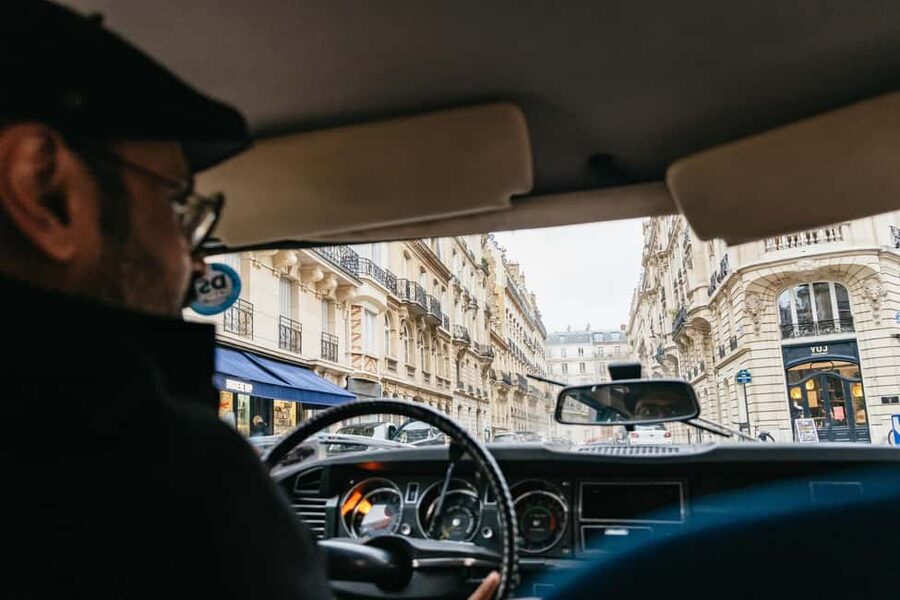
Abi can point out architecture linked to Haussmann, Hector Guimard, and Jules Lavirotte. You may also hear about local art, shop windows, fashion, restaurants, and places that appear in films or television dramas. This makes the drive feel less like a checklist.
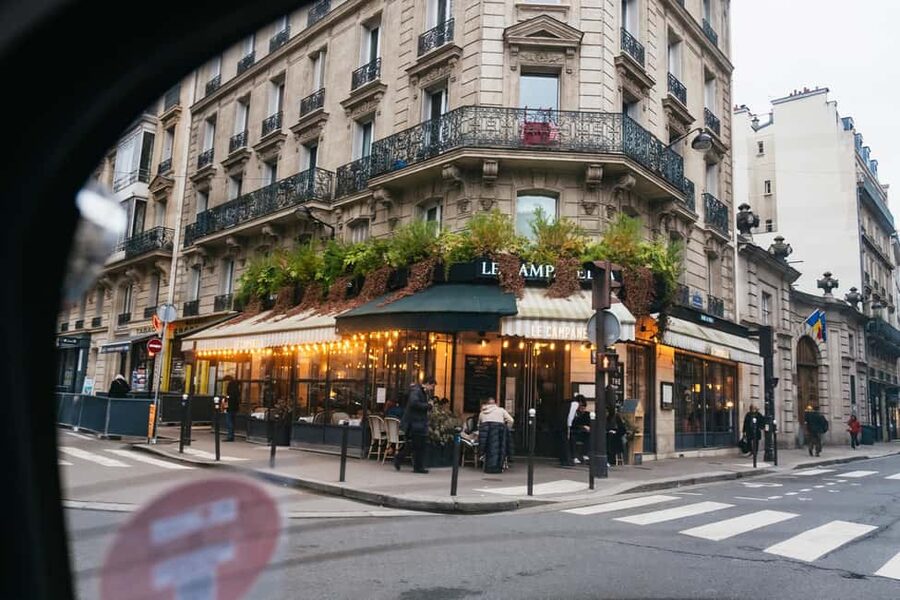
The car can also reach narrow streets that larger sightseeing buses cannot use. That matters on busy weekends or in districts where a coach would never fit. You may see a side of Paris that is difficult to plan on your own, even if you have already visited the main monuments.
Do not expect a formal lecture at every corner. Abi’s approach seems strongest when he mixes history with everyday observations, photo advice, shopping suggestions, and food recommendations. His commentary can be softly spoken, and passengers sitting in back have sometimes found it difficult to hear every word. If a detail matters, ask him to repeat it.
How much value do you get for $164?
The price is $164 per group of up to four, not per person. A full group pays about $41 each before any currency conversion, which is fair for a private car, driver-guide, hotel pickup, and drop-off.
The comparison is not just with a public bus. You are paying for a small private outing in a collector car, with no strangers sharing the ride and some control over the route. For a family of four, the value is stronger. For one or two people, it becomes more of a special occasion purchase.
The cost does not include food, drinks, or entry fees. Some special add-ons, such as champagne or macarons, have been available separately, but you should confirm what is offered when booking rather than assume they are included.
I see this as good value if you want photos, a quick city overview, and a memorable vehicle. It is less useful if you want to spend your budget inside museums or prefer a long walking tour with detailed historical commentary.
Comfort, communication, and practical limits
Hotel pickup and drop-off are available across many Paris postal districts, including central areas and several outer arrondissements. Confirm your address during booking, since the listed pickup and drop-off districts cover a wide but specified area.
The activity lasts one to three hours, and you can check available starting times. Late afternoon can be appealing because you may see Paris in both daylight and dusk, though the best time depends on your sightseeing plans and the season.
Do not bring luggage or large bags. The car is a vintage vehicle, not a spacious modern minivan. Four passengers can fit, but comfort depends on your size, the model assigned, and how much photo equipment or personal baggage you carry.
This experience is not suitable for wheelchair users, people with mobility impairments, or people with hearing impairments. If you need easy boarding or clear amplified commentary, choose another way to see Paris.
The guide languages are English, French, and Japanese. Abi is the guide-driver named in the supplied details and the person most often associated with the tour. His driving through tight Paris streets and willingness to take photographs are important parts of the experience.
Free cancellation is available up to 24 hours before the start, and you can reserve now and pay later. Those terms help if your Paris schedule is still shifting.
Who should book this Citroën tour?
I would recommend it to first-time visitors who want to get their bearings quickly, families who cannot or do not want to walk all day, couples marking an anniversary, and anyone who loves classic cars. It also works well as a first-afternoon activity because it gives you a broad view before you choose where to return on foot.
The tour is especially good for people who care about photographs. The car gives your images a clear theme, and Abi knows where to position it for landmark shots.
I would hesitate if you want a formal, highly detailed history lesson, since commentary may be informal and hard to hear from the back seat. I would also skip it if you need wheelchair access, want to carry luggage, or plan to spend the whole day inside museums.
Should you book it?
Book this if you want Paris with personality rather than simply another transfer between monuments. Choose two hours for a balanced outing, or three if you want Montmartre, central Paris, extra photo stops, and time for lesser-known streets.
Choose the Traction Avant if you like a classic 1950s look, and the DS 21 if you prefer its futuristic 1970s design. Check your car selection carefully when booking, since one passenger accidentally chose the DS instead of the Traction Avant and still had a great time, but the model can matter if the vehicle is the main reason you are going.
At $164 for up to four people, this is a sensible splurge for a small group. You will not replace a Louvre visit or a proper walking tour, but you may get a better first feel for Paris, a set of memorable photographs, and a ride you will talk about after the monuments blur together.
FAQ
How long is the private Citroën tour?
You can choose a one-hour, two-hour, or three-hour tour, depending on availability.
How many people can join the tour?
The private group price covers up to four people.
Which cars are used?
The experience uses either a 1955 Citroën Traction Avant 11B or a 1971 Citroën DS 21 Bhv.
Is hotel pickup included?
Yes. Hotel pickup and drop-off are included for the listed Paris postal districts.
Which Paris sights can the tour visit?
Possible sights include Place de la Concorde, Champs-Élysées, Arc de Triomphe, Eiffel Tower, Les Invalides, Pont Alexandre III, Petit Palais, Grand Palais, Palais de l’Élysée, Place Vendôme, Palais Garnier, Moulin Rouge, Sacré-Cœur, the Louvre, Louvre Pyramid, Notre-Dame, and the Panthéon.
Are entry tickets included?
No. Entry fees to attractions and museums are not included.
What languages does the guide speak?
The live guide is available in English, French, and Japanese.
Can I bring luggage or use a wheelchair?
Large bags and luggage are not allowed. The experience is not suitable for wheelchair users, people with mobility impairments, or people with hearing impairments.
Just added around Paris
- Paris at the First Lodges – Ducasse sur Seine dinner cruise★ 4.0 · 165 reviews
- Paris at the First Lodges – Ducasse sur Seine Lunch Cruise★ 4.5 · 70 reviews
- Disneyland® Paris 1 Day with Round-Trip Train Tickets from Paris★ 4.0 · 50 reviews
- Explore speakeasies and hidden bars, sip meet & socialize★ 4.5 · 47 reviews
- Disneyland® Paris Express Shuttle with Admission Ticket from Central Paris★ 3.5 · 172 reviews
- Paris Cheeses and Wines Tour de France with Tasty Games★ 5.0 · 32 reviews
- Musée Orsay Highlights Tour – Best of Impressionism & Hidden Gems★ 5.0 · 27 reviews
- Private Tour: Discover Paris with Local, 3 hours on a Segway★ 5.0 · 71 reviews
City Tours, compared.
Marseille: City Sightseeing Hop-On Hop-Off Bus Tour
Read our review →
Eiffel Tower Summit Option with Seine River Cruise and City Tour
Read our review →
Eiffel Tower Hosted Tour, Seine Cruise and City Tour
Read our review →
Eiffel Tower and City Tour by Bus with Seine River Cruise Option
Read our review →
Openair Double Decker Bus Audio-Guided City Tour
Read our review →

Browse the lists this tour appears in