
Reviewed · WWI BATTLEFIELD TOURS
Full-Day Canadian Battlefields & sites Normandy Tour from Bayeux
Juno Beach is only the opening chapter. This full-day tour follows Canadian troops from the landing shore through villages south of Caen, showing how the fight continued long after the first assault. I especially like the small group of no more than eight people and the way the route connects beaches, bunkers, cemeteries, and battle sites instead of treating D-Day as one isolated morning.
The Juno Beach Centre adds welcome context, while Beny-sur-Mer Canadian War Cemetery gives the day its quiet emotional center. Guides such as Emmanuel, Laurent, Jeremy, Remy, and Bice have been praised for detailed storytelling and personal attention. The trade-off is simple: this is a long, information-heavy day, and the minivan can feel tight when full. Bring layers, especially in winter, when wind off the Channel cuts sharply.
Key points to know before you book
- Follow the Canadian advance beyond Juno Beach: The route traces the push toward Caen, Carpiquet, and Hill 67, not just the landing itself.
- Visit the Juno Beach Centre: Your admission is included, with exhibits, photographs, personal accounts, artifacts, and access to German bunker remains.
- Travel in a group of up to eight: The small van allows more direct conversation with your guide and easier access to lesser-known stops.
- Allow a full day from 8:30 am to about 6 pm: You will cover a lot of ground and hear a steady stream of military history.
- Prepare for a moving experience: The cemetery, memorials, and stories of young Canadian soldiers can be emotionally heavy.
- Pack lunch or plan ahead: Lunch is not included, and the schedule leaves you with a full day away from Bayeux.
Why this Canadian-focused Normandy tour matters
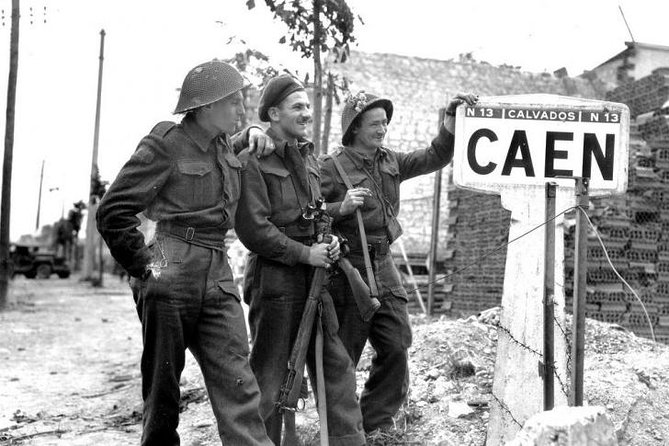
Most D-Day tours from Bayeux concentrate on the American beaches, especially Omaha, or divide attention among several Allied forces. This one keeps Canada at the center. That focus makes it a good choice if you want to understand the Canadian role rather than receive a quick mention between stops.
Canadian troops landed at Juno Beach on June 6, 1944, then faced the difficult work of holding ground west of Caen and stopping German counter-attacks. The route helps you see that the operation did not end when the landing craft reached shore. It became a long campaign through villages, roads, fields, fortified positions, and airfields.
I like that the tour does not stop at a museum and call the job done. You visit the places where the advance continued on June 7 and afterward, including the route of the 9th Brigade toward Abbey d’Ardenne and Carpiquet. That broader view gives the day much more weight.
The experience costs about $161 per person. That is not a budget outing, but the price includes hotel pickup and drop-off in Bayeux, transport, a professional driver-guide, fuel charges, and admission to the Juno Beach Centre. For you, the value comes from combining several difficult-to-reach sites in one day without arranging a car, studying battlefield maps, or trying to find each memorial yourself.
More WWI Battlefield Tours in Normandy
- Normandy Battlefields Tour – American Sites (A3)
★ 5.0 · 876 reviews - Normandy Battlefields D-Day Private Trip with VIP Services from Paris
★ 5.0 · 240 reviews - Full-Day US Battlefields of Normandy Tour from Bayeux (A3LST)
★ 5.0 · 214 reviews
Starting at Bayeux train station
The day begins at 8:30 am. You can meet the guide at Bayeux train station, Place de Quebec, or request pickup from a Bayeux hotel. The service is specifically based in Bayeux, so do not book it expecting pickup from Paris or a cruise port.
You’ll ride in an air-conditioned minivan with a maximum group size of eight. That is a strong setup for this kind of trip. A large coach can make battlefield stops feel distant and impersonal, while a small van gives you a better chance to ask about a relative, a regiment, or a particular location.
The vehicle is comfortable for most people, but space becomes tighter when every seat is occupied. One practical issue is airflow. The van has air-conditioning, though it may be felt more strongly in the front than in the back, and opening the windows may not be allowed. If you are sensitive to heat or motion, choose your seat early when possible and dress in light layers.
The drive toward the coast becomes the first history lesson. Your guide sets the Allied landings in context and explains why the Canadian effort at Juno deserves attention in its own right.
Juno Beach, from St. Aubin-sur-Mer to Graye-sur-Mer
Your first formal stop is Juno Beach, with about 30 minutes outside. This is where the Canadian 3rd Infantry Division came ashore in the face of German machine-gun fire and fortified positions.
Thirty minutes is enough to get your bearings, look across the beach, and hear the opening story of the assault. It is not enough for a slow, solitary walk along every section of sand, so keep your expectations realistic. This is a guided battlefield visit rather than a leisurely beach outing.
The shore looks peaceful now, which makes the details harder to picture. Your guide fills in what the open sand meant to soldiers moving forward under fire. You will also visit different sections of the beach between St. Aubin-sur-Mer and Graye-sur-Mer, giving the landing a wider geographic frame.
This is a useful contrast with a visit focused only on Omaha Beach. The Canadian force suffered very heavy losses here, and the tour explains the cost of getting off the beach and moving inland. I find that the Canadian focus makes the experience especially meaningful for people with family connections to Canada, but you do not need Canadian ancestry to follow the story.
Bring sturdy, comfortable shoes. The day involves repeated stops, getting in and out of the van, and walking around outdoor memorial sites. Wind and rain can make the coast feel raw even when the weather forecast looks mild.
Inside the Juno Beach Centre
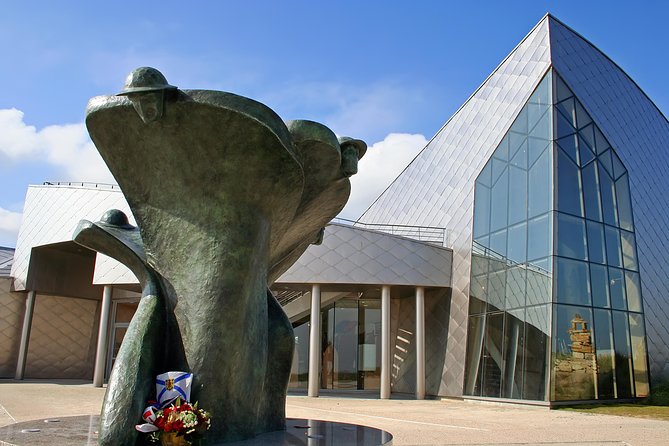
The Juno Beach Centre receives about an hour, and admission is included. This is the main museum stop of the day, so it gives you time to absorb the broader story rather than only listen from the van.
The center covers the Canadian war effort through photographs, archival material, personal accounts, and artifacts. It also explains the lives of Canadian soldiers beyond the landing itself. That matters because the Canadian contribution was not limited to the first assault. About 45,000 Canadians died during the war, including 359 on D-Day and about 5,500 during the Battle of Normandy.
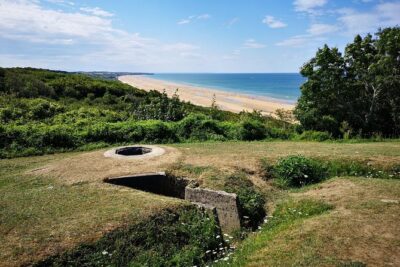
You can also see excavated German bunker remains near the beach. The bunkers help make the defensive system more concrete. Instead of hearing only about strongpoints and machine guns, you see the physical structures that Canadian troops faced.
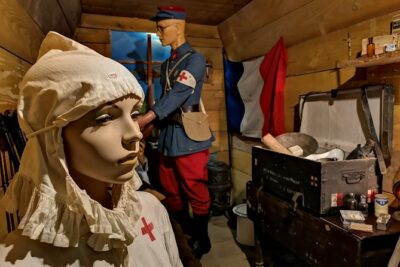
The museum balances military events with human stories. That makes it a good pause in the middle of an outdoor-heavy day. You will have considerable material to take in, though, and the subject can become emotionally demanding. If you already know a lot about Normandy, you may find some displays familiar, but the Canadian emphasis gives them a different frame.
One particularly useful feature is the chance to connect names, photographs, and personal accounts with the places you have just seen outside. I would pay close attention to this stop rather than treating it as a quick break from the van.
More WWI Battlefield Tours in Bayeux:
- Somme Battlefields Small-Group Day Trip with John Monash Centre from Paris
★ 4.5 · 270 reviews - Somme Battlefields from Paris with Australian memorial & Amiens Cathedral
★ 5.0 · 228 reviews - Private Round Trip Transfer to Vimy Ridge from Arras
★ 5.0 · 164 reviews - WWI Somme Battlefields Day Trip from Paris
★ 4.9 · 111 reviews
Beny-sur-Mer Canadian War Cemetery
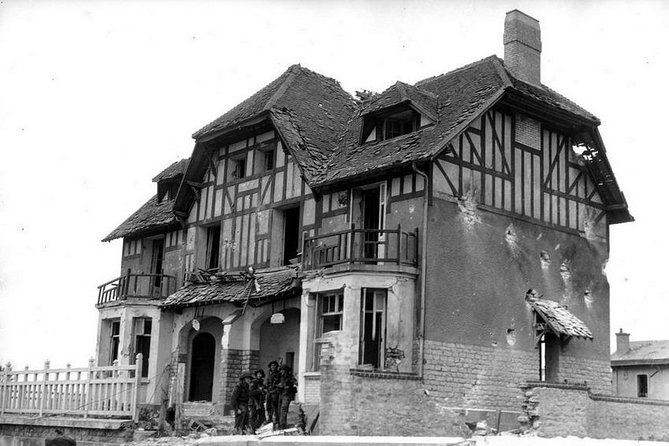
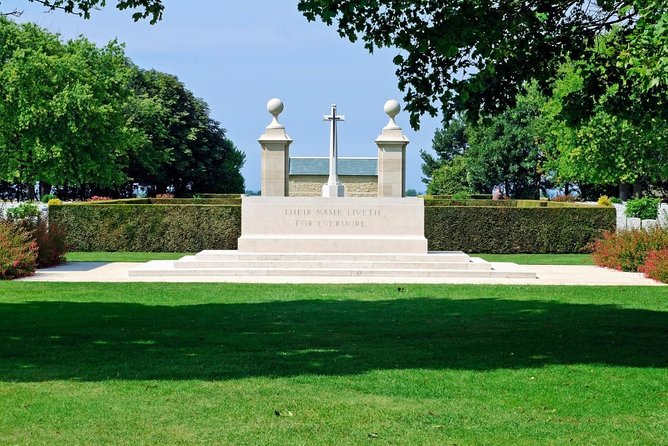
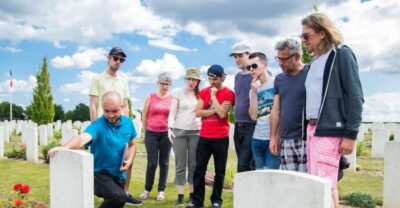
The tour then reaches Beny-sur-Mer Canadian War Cemetery, with about an hour here. This is one of the most important stops of the day and one of the places where the scale of the campaign becomes personal.
The cemetery is a place for quiet attention. Rows of graves show how many young lives were lost during the assault and the fighting that followed. Your guide provides context, but the setting also gives you time to walk, reflect, and pay your respects.
An hour is generous enough to avoid feeling rushed. If you have a family name to find, bring the spelling and any unit information you have. The tour has helped people connect a relative’s story with a specific grave, and guides may be able to assist when the details are available. Do not count on a family search as a guaranteed part of the experience, but it is worth asking before the day begins.
This stop can be more moving than the beach itself. Juno shows the danger of the landing. Beny-sur-Mer shows the price. I would not schedule a demanding evening immediately afterward if you prefer time to process what you have seen.
Authie and the road toward Caen
At Authie, you’ll have about 30 minutes to look at another part of the Canadian advance. This stop helps connect the landing area with the fighting inland, where the campaign became a contest for roads, villages, and routes toward Caen.
Short stops such as this one are useful because they break up the museum and cemetery visits with open-air battlefield interpretation. They can also feel brief if you want to explore every detail. Listen closely to your guide’s explanation, since the meaning of the site may not be obvious from the location alone.
The route through the countryside is part of the experience. You are not simply being driven between famous names. You are following the direction of the Canadian advance and seeing how close the battlefield sites are to ordinary communities. The contrast between quiet French villages and the events of 1944 is one of the day’s strongest impressions.
This is also where a small group helps. You can ask why a road, crossroads, or village mattered, then follow up without competing with a busload of people.
Abbey d’Ardenne and the Canadian advance
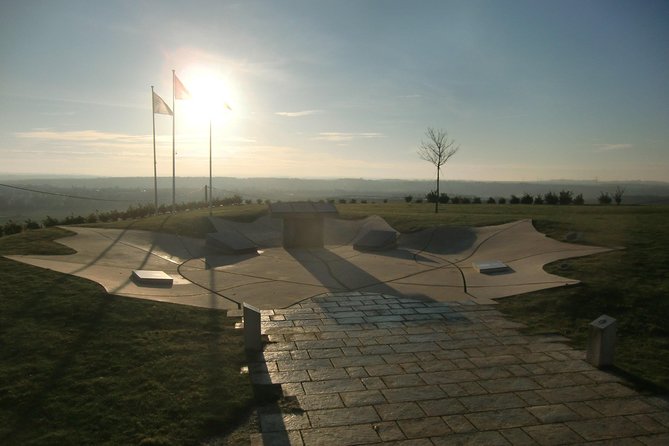
Abbey d’Ardenne receives about an hour. The stop covers the route of the 9th Brigade advance on June 7 and the fighting connected with the capture of Carpiquet.
The abbey is not just another attractive historic building on the route. Its wartime story is tied to the grim treatment of Canadian prisoners and the wider fighting around Caen. The guide’s job here is especially important, because the significance of the site is not always clear if you arrive without background.
This is one of the places where the tour moves beyond the familiar D-Day image of landing craft and beach obstacles. The Canadian campaign included brutal fighting after the shore had been secured. The stop helps you understand how quickly the operation turned into a ground war with serious losses on both sides.
Expect a sober visit. The subject matter is difficult, and the day’s cumulative effect begins to build here. The guides who receive the strongest praise, including Emmanuel, Laurent, Jeremy, and Remy, are described as combining military facts with personal stories and a touch of humor. That balance matters during a long day, since nonstop dates and unit numbers can be hard to absorb.
Carpiquet and the fight for the airfield
The Carpiquet stop lasts about an hour and focuses on the capture of the airfield and the fighting south of the landing beaches. Your guide follows the route taken by Canadian troops as they pressed toward Caen.
Carpiquet helps explain why the advance did not move as quickly as Allied commanders hoped. Holding the airfield and nearby positions mattered to the wider fight for Caen, and the Canadian troops faced determined resistance.
This is a good stop for anyone who wants more than a D-Day introduction. You will hear about movement inland, counter-attacks, and the hard work of taking strategic ground. It also shows why a full-day tour has an advantage over a short beach visit. The story becomes a campaign rather than a single event.
At this point, you may feel overloaded. That is normal. I would take brief notes, photograph the memorials where allowed, and ask your guide to repeat names or dates when needed. Guides on this route are used to questions, and the small group format makes it easier to pause for clarification.
Hill 67 and the final memorial stop
The last listed stop is the Hill 67 Canadian Memorial, with about 30 minutes. Located south of Caen, the memorials here recall the bloody fighting around the hill.
Hill 67 provides a fitting final chapter because it shows how far the Canadian story extended from the beach. By now, you have followed the route from the shore to the inland battlefront. The final stop reinforces the cost of holding and gaining ground during the summer campaign.
The visit is short but useful. It gives you a final chance to ask how the various positions fit together before returning to Bayeux. After a full day of names, dates, routes, and losses, the memorial offers a quieter place to gather the story in your mind.
You should return to Bayeux around 6 pm. The exact feel of the day depends on weather, traffic, group interests, and the guide’s pacing, but plan on being away for roughly nine and a half hours including the start and return.
The guide can shape the whole day
The guide is the key variable in a battlefield tour. The strongest accounts describe Emmanuel as exceptionally informed and personable, Laurent, also called Wally, as bilingual and flexible, and Jeremy and Remy as clear, passionate storytellers. Bice, Manon, Jeremiah, and Woody are also singled out for strong historical detail and friendly service.
That does not mean every departure will have the same guide. It does mean you should expect the guide to do more than drive. The best moments come when the route is tied to individual soldiers, regiments, family stories, and the physical places around you.
There is one practical caution. One guide received criticism for forgetting the microphone, making it hard to hear from the back, while a strong French accent made some explanations harder for one person to follow. If you cannot hear clearly, speak up early. A full day of missed commentary is frustrating, especially when the tour’s main value lies in the interpretation.
What to bring and how to handle lunch
Lunch is not included. The supplied details do not promise a specific restaurant or fixed meal stop, so prepare for the possibility of buying food during the day or bringing something from Bayeux. A water bottle and a few snacks are sensible on any eight-hour battlefield outing.
Wear shoes suitable for outdoor walking and bring layers. Winter visitors should take the wind seriously. Even when the temperature seems moderate, the Channel air can feel cold at Juno Beach.
A rain jacket is useful, as is sun protection in warmer weather. You will repeatedly get in and out of the vehicle, so avoid carrying a bulky bag. Keep your phone charged if you plan to photograph memorials or refer to family records.
Who should book this tour?
I would choose this tour if you want a Canadian-centered account of Normandy and prefer a guide to organize the geography for you. It suits people with Canadian military family connections, visitors interested in the Battle of Normandy beyond June 6, and anyone who wants a small group rather than a large coach.
It is also a good match if you are staying in Bayeux without a rental car. The sites are spread across the coast and inland areas, and reaching them independently would take planning.
I would hesitate if you want a relaxed day with plenty of free time. The schedule is full, the subject is serious, and the commentary can be dense. It may also be too much if you have already spent several days on battlefield tours and need a lighter day.
Should you book the Canadian battlefields tour?
Book it if your priority is a detailed Canadian story, not just a quick photograph at Juno Beach. The included museum admission, cemetery visit, inland battle sites, hotel transport in Bayeux, and small group make the $161 price reasonable for a full day of guided access.
Skip it if you are based outside Bayeux, need a short excursion, or prefer to explore at your own pace. For most people who want to understand what Canadian troops did after landing at Juno, this is one of the clearest ways to connect the beach, the advance, and the graves left behind.
FAQ
Where does the tour begin?
You can meet the guide at Bayeux train station, Place de Quebec, or your Bayeux hotel.
What time does the tour start?
The tour starts at 8:30 am.
What time does it return to Bayeux?
The tour returns to Bayeux around 6 pm.
Does the tour pick up from Paris?
No. Pickup is offered from Bayeux only, and there is no hotel pickup from Paris or ports.
How many people can join the tour?
The maximum group size is eight people.
Is transportation included?
Yes. Transport is provided in an air-conditioned minivan, and fuel charges are included.
Is admission to the Juno Beach Centre included?
Yes. Admission to the Juno Beach Centre is included in the tour price.
Is lunch included?
No. Lunch is not included.
Can children join the tour?
Yes, but children must be accompanied by an adult.
What is the cancellation policy?
You can receive a full refund if you cancel at least six full days before the start time. Cancellations made two to six full days before the tour receive a 50 percent refund, while cancellations less than two full days before departure are not refunded.
Just added around Bayeux
- Bayeux: Normandy D-Day Landing Beaches Full-Day Guided Tour★ 4.8 · 158 reviews
- Bayeux: 2-hour tour of the D-Day beaches, by vintage sidecar★ 4.9 · 64 reviews
- Bayeux: Band Of Brothers Full-Day Tour★ 4.9 · 53 reviews
- Full-Day US Battlefields of Normandy Tour from Bayeux (A3LST)★ 5.0 · 214 reviews
- Normandy Battlefields D-Day Private Trip with VIP Services from Paris★ 5.0 · 240 reviews
- Private vintage sidecar tour of the D-Day Landing Beaches★ 5.0 · 130 reviews
- 2- to 6-hour sidecar excursion on the D-Day Landing Beaches★ 5.0 · 131 reviews
- Historic Bayeux Daily Group City Tour In English 2 hrs (Apr-Sept)★ 5.0 · 220 reviews
WWI Battlefield Tours, compared.
Normandy Battlefields Tour – American Sites (A3)
Read our review →
Somme Battlefields Small-Group Day Trip with John Monash Centre from Paris
Read our review →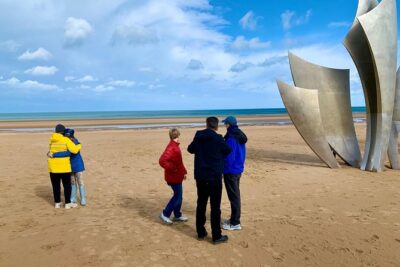
Normandy Battlefields D-Day Private Trip with VIP Services from Paris
Read our review →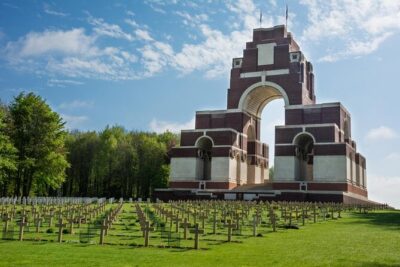
Somme Battlefields from Paris with Australian memorial & Amiens Cathedral
Read our review →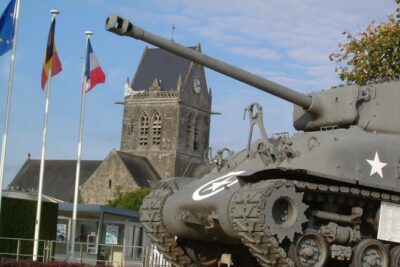
Full-Day US Battlefields of Normandy Tour from Bayeux (A3LST)
Read our review →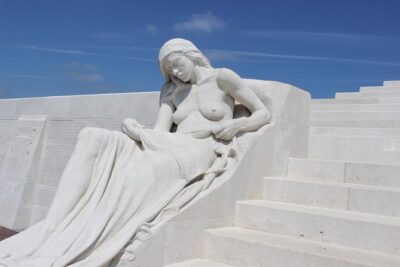
Browse the lists this tour appears in