
Reviewed · PERFUME WORKSHOPS
Molinard Classic Perfume Workshop in Grasse
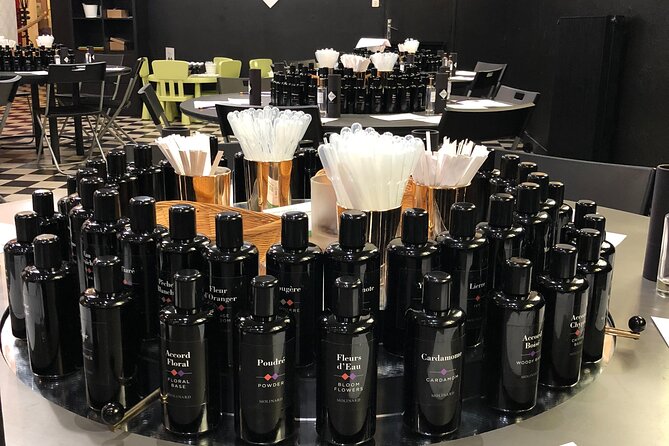
Creating a perfume from 90 different essences is the heart of this Grasse experience. In about an hour, a perfume expert explains top, heart, and base notes, then helps you turn your favorite smells into a wearable scent of your own.
I like the useful souvenir: a 50 ml bottle of Eau de Parfum plus a numbered diploma so you can reorder the formula later. I also like the setting, a beautiful Molinard building with a museum and free parking. The main drawback is pace. With up to 20 people in a session, some participants get plenty of help while others may feel rushed or overlooked.
Key points at a glance
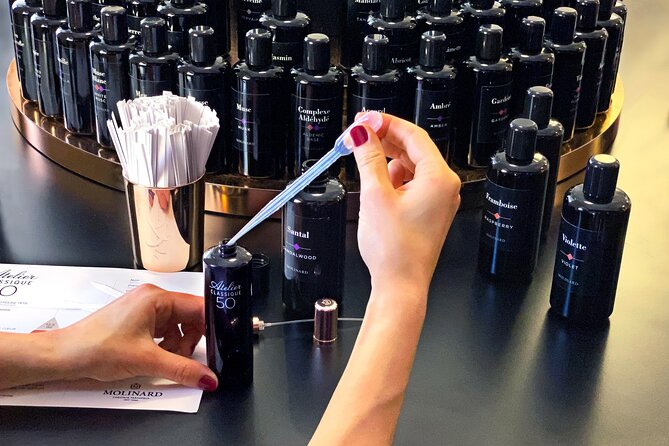
- You make a real personal fragrance: Choose from 90 essences, then blend a custom Eau de Parfum with guidance from a perfume expert.
- The one-hour format is focused: You learn the basics of top, heart, and base notes before moving quickly into scent selection and mixing.
- Your souvenir is practical: Take home a 50 ml bottle and a numbered diploma that lets you reorder your creation.
- The Molinard setting adds atmosphere: The building includes a museum and offers a glimpse into Grasse’s perfume tradition.
- Groups can reach 20 people: A smaller session may allow more individual attention, while a full class can feel hurried.
- Arrive early and on time: Late arrival can cancel the workshop, and the Molinard site is about a 12-minute walk from Fragonard.
Why this Molinard workshop fits Grasse so well
Grasse is closely tied to French perfume making, so this workshop gives you more than a bottle from a shop shelf. You get a short, hands-on look at how a fragrance is built and why two people can smell the same ingredients yet choose completely different combinations.
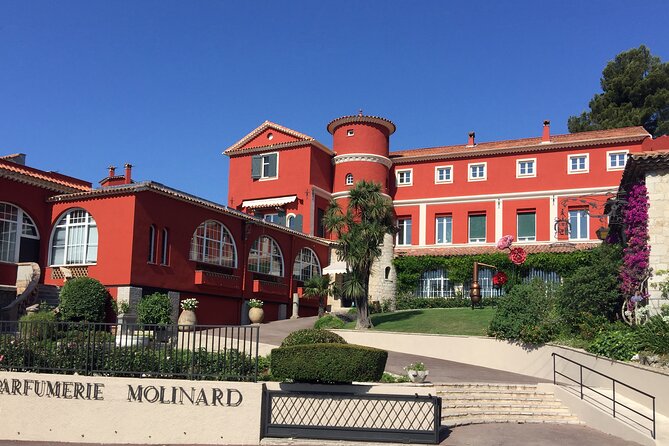
Molinard is one of the town’s established perfume houses. The workshop takes place at its main Grasse campus, in a building with a museum and attractive interiors. That setting helps the activity feel connected to the town rather than like a generic craft class that could happen anywhere.
The format is simple. You do not spend half a day studying raw materials or learning the full technical work of a professional perfumer. Instead, you get a brisk introduction, time to test scents, and help shaping your own blend. That makes it a good match for a first perfume-making experience.
I would think of it as perfume blending 101, not a full course in perfumery. You learn the basic structure and make something personal, but the short session leaves limited time for detailed questions or a long talk about local perfume history.
More Perfume Workshops in the French Riviera
- Fragonard Eze: Perfume Making Class and Factory Tour
★ 4.5 · 743 reviews - Grasse: Perfume Making Class and Fragonard Factory Tour
★ 4.5 · 684 reviews - Nice: Discovery Perfume Workshop
★ 4.8 · 637 reviews
Arriving at Molinard in Grasse
The meeting point is 60 Boulevard Victor Hugo, 06130 Grasse. The activity begins and ends there, so you do not need to arrange a separate return transfer.
Free parking is included, which is useful if you are touring the French Riviera by car. The parking detail can save money and reduce fuss, particularly when Grasse is one stop in a longer driving day. Still, be sensible with valuables. If you arrive with luggage in the car, do not leave it visible. One participant chose not to attend because they were uncomfortable leaving belongings in the vehicle.
Molinard is about a 12-minute walk from Fragonard, another major perfume name in Grasse. If you are visiting both, allow time for the walk and check the address carefully. The workshop requires punctual arrival, and late arrival can lead to cancellation.
You can choose from several workshop times, which helps fit the class around a day in Grasse. Confirmation is provided at booking, and the experience is offered in English. It may also be operated by a multilingual guide, useful for mixed-language groups.
The first lesson: top, heart, and base notes
The session begins with the basic structure of a fragrance. The guide explains top notes, heart notes, and base notes, the three broad layers used to describe how a perfume develops.
Top notes are the scents you notice first. Heart notes form the central character, while base notes help give the fragrance depth and staying power. You are not expected to arrive with technical knowledge. The point is to learn how to pay attention to what your nose is telling you.
This introduction is clear but brief. If your main goal is to understand the craft in detail, you may find it too short. Several aspects of perfume making, such as the history of Grasse, the work of professional noses, or the source of individual ingredients, receive little attention during the one-hour workshop.
That limitation is worth knowing before you book. You are paying mainly for the chance to create and take home a personal fragrance, not for a lecture or extended museum lesson.
Choosing from 90 essences
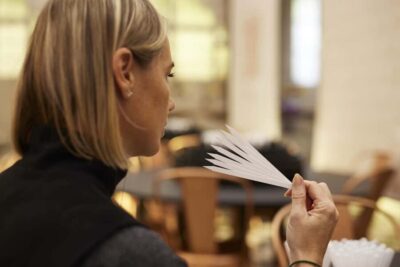
The most enjoyable part is testing the available essences and deciding which ones appeal to you. You smell a wide range of options, identify your favorites, and begin to think about how they might work together.
This is where the activity becomes personal. One person may lean toward a light, fresh blend, while another prefers something warmer or more floral. The class gives you room to notice your own preferences instead of simply selecting a finished perfume from a display.
Try not to rush into a favorite based only on the first sniff. The smell on a testing strip may change as you keep comparing it with other ingredients. You may also find that an essence you like by itself does not fit the blend you are building.
The staff help narrow the choices. Guides such as Lea, Bella, and Marie have been praised for explaining the process clearly and helping participants turn several favorite notes into a balanced fragrance. The guide’s role matters here. Without assistance, it would be easy to choose too many strong scents or create a mixture that lacks a clear character.
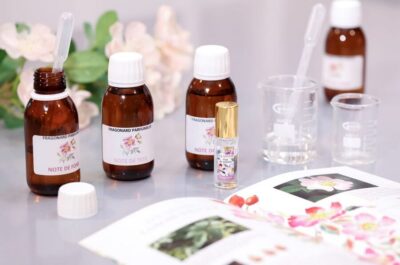
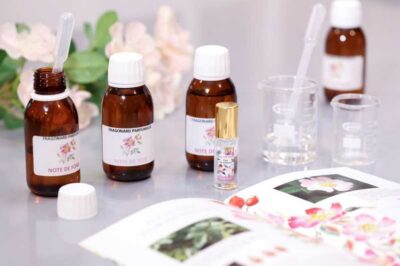
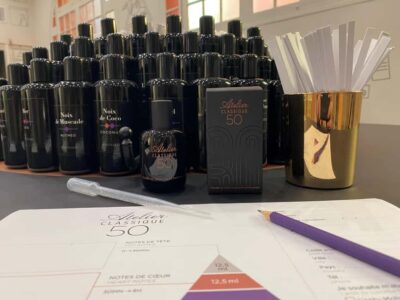
Bring patience and curiosity. The activity involves a lot of smelling, comparing, and making choices. It also involves measuring quantities with small pipettes and keeping track of milliliters, so this is not simply a fragrance tasting.
Same trip, a completely different kind of day:
- From Nice: French Riviera in One Day
★ 4.5 · 5,215 reviews - Nice: 1-Hour Sightseeing Cruise to Villefranche Bay
★ 4.6 · 2,747 reviews - Nice: 1 or 2-Day Hop-On Hop-Off Bus Tour
★ 4.3 · 2,663 reviews - Nice: Gorges of Verdon and Fields of Lavender Tour
★ 4.4 · 1,975 reviews
Building a balanced personal scent
Once you have selected your preferred essences, the perfume expert helps determine the ratios. This is the part that turns a collection of nice smells into a finished blend.
You may have a clear idea of what you want, but the guide can suggest adjustments. A strong ingredient may need less volume than a softer one. A blend that smells appealing at first may need another note to make it feel more complete.
The class is designed so you do not have to solve the formula alone. The expert works around the tables, checks your choices, and helps make the final scent cohesive. With a small group, this can feel quite personal. With a full group of 20, the guide has to move quickly from table to table.
That group size is the biggest variable in the experience. Some sessions may have only a few participants, giving you more time for questions and advice. In a crowded class, you may need to signal clearly when you are ready for help. One participant found the process so delayed that the workshop lasted almost two hours, while others described the staff as patient and attentive.
My practical advice is to decide what you like before the guide reaches your table, but do not mix the final formula until the guide confirms the ratios. It is easy to get ahead of the instructions when you are excited.
Measuring and bottling your Eau de Parfum
After the formula is set, you use the provided pipettes to measure the ingredients. This gives you a better sense of the precision involved in perfume making. Even a small bottle requires attention to quantities.
The finished product is a 50 ml bottle of Eau de Parfum. That is a generous souvenir compared with a tiny sample, and it is something you can actually use after the trip. Each person leaves with a different result, making the bottle more personal than a standard Molinard purchase.
The scent may need time to settle after mixing. One participant noted that the elements take about a week to come together, and another planned to let the perfume macerate for a week before judging the final result. Give your bottle some time before deciding if the blend is exactly what you hoped for.
You also receive a numbered diploma. Keep it with your travel documents or photograph the number, since it allows you to reorder your creation in the future. That detail adds lasting value. If you use the perfume often, you are not limited to a one-time souvenir.
The museum and Molinard building
The workshop takes place in a setting that contributes to the experience. The Molinard building is described as beautiful, and the site includes a museum with information connected to the perfume house.
You may be able to take a tour of the factory and learn more about the company’s history and perfume production, but do not assume the one-hour workshop includes an extensive factory visit. If that part matters to you, arrive early or leave time afterward to explore the site.
This is a good way to add context to the blending session. The workshop explains how to assemble a personal scent, while the museum and factory visit can help you understand the larger tradition behind the brand.
The setting also gives you attractive photo opportunities. That may sound minor, but the building helps make the activity feel like a special stop in Grasse rather than a quick retail demonstration.
Is the $107.63 price good value?
At $107.63 per person, this is not a cheap souvenir activity. The value depends on what you want from the hour.
The price includes the workshop, expert assistance, a 50 ml bottle, a numbered diploma, and free parking. If you would buy a quality perfume in Grasse anyway, the chance to create the fragrance yourself makes the cost easier to justify. You are paying for the activity as well as the finished bottle.
The value is strongest for perfume lovers, couples, families with older children, and friends who want a shared activity with a different result for each person. It can also work well for men. The fragrance-making process is not limited to floral scents, and men have enjoyed choosing and blending their own perfumes during the sessions.
The value is weaker if you want a detailed academic lesson. The opening explanation covers the basic note structure, but the class does not promise a full study of perfumery or Grasse. You are mainly buying a guided creative session and a personalized product.
Since the average booking is made about 17 days in advance, popular times may fill ahead of a Riviera visit. If your schedule is fixed, booking early is sensible.
Who should book this experience?
You should consider it if you like hands-on activities more than passive sightseeing. The finished bottle gives you a useful reminder of Grasse, and the process gives you a story to tell when you use it later.
It also suits groups. Friends and family can work side by side, then compare how differently their preferences turn out. Four adult daughters, for example, can each leave with a scent that fits her own taste rather than sharing one family souvenir.
Teenagers can take part too, especially if they enjoy experimenting and making choices. The activity is short enough to hold attention, though the smell-heavy format may be tiring for anyone sensitive to strong fragrances.
You may want to skip it if you have limited patience for group instruction, want a long historical tour, or expect a private appointment. The class can feel rushed when all 20 places are filled, and individual help depends on how quickly each participant works.
Practical tips for a smoother session
- Arrive early: Late arrival can cancel your workshop. Early arrival also gives you a better chance to see the building and museum.
- Keep your booking details handy: The activity begins at 60 Boulevard Victor Hugo and ends there.
- Do not mix too soon: Wait for the guide to confirm your ratios before measuring the final formula.
- Track your quantities: You will use pipettes and work with milliliters, so note what you add.
- Ask for help clearly: In a full class, the guide may be assisting several tables at once.
- Allow time for the scent to settle: Give the finished fragrance about a week before making a final judgment.
- Protect belongings in the car: Free parking is useful, but do not leave luggage or valuables visible.
- Plan around Fragonard: Molinard is roughly a 12-minute walk from Fragonard, so allow for that distance if you visit both.
Free cancellation is available up to 24 hours before the start time for a full refund. Changes or cancellations made less than 24 hours before the session are not accepted for a refund.
Should you book Molinard’s perfume workshop?
I would book this if you want a personal, hands-on souvenir from Grasse and accept that the lesson is brisk. The custom 50 ml bottle, reorder diploma, beautiful setting, and expert help give the experience real value, especially for anyone who already enjoys perfume.
I would not book it expecting a long history of perfumery or one-to-one instruction. The best session is likely to be a smaller one, while a full group of 20 may feel hurried. Arrive on time, protect your car belongings, and give the finished scent a week to settle.
For a first taste of perfume making in Grasse, this is a thoughtful choice. It lets you leave with something you helped create, not just something you bought.
FAQ
Where does the Molinard perfume workshop begin and end?
The workshop begins at 60 Boulevard Victor Hugo, 06130 Grasse, France, and ends back at the same meeting point.
How long does the workshop last?
The scheduled duration is approximately one hour. Some sessions may take longer if the group needs extra assistance.
How many people can join the workshop?
The activity can have a maximum of 20 participants.
What do I take home?
You take home a 50 ml bottle of Eau de Parfum made from your chosen blend. You also receive a numbered diploma that allows you to reorder the creation later.
How many essences can I choose from?
The workshop provides 90 essences for you to smell and use when creating your fragrance.
Is parking included?
Yes. Free parking is included, though you should not leave luggage or valuables visible in your car.
Can I cancel for a refund?
Yes. You can cancel at least 24 hours before the start time for a full refund. Cancellations or changes made less than 24 hours before the experience are not refunded.
More Workshops in French Riviera
- Grasse: 1-hour Perfume Workshop
★ 4.7 · 535 reviews - Nice: 1-hour Perfume Workshop
★ 4.8 · 414 reviews - Molinard Classic Perfume Workshop in Nice
★ 4.5 · 363 reviews - Grasse: Perfume Workshop
★ 4.3 · 324 reviews
Just added around French Riviera
- Wine Tasting Class: Tour de France in Nice City Centre★ 5.0 · 201 reviews
- Visit Nice in 2h with Local Certified Guide★ 5.0 · 28 reviews
- Visit Saint Tropez from Nice★ 4.0 · 90 reviews
- Vineyard Tour with Wine Tasting within Nice city borders★ 5.0 · 132 reviews
- Visit Marc Chagall Museum★ 5.0 · 28 reviews
- Villages Médiévaux,Grasse, Gourdon, Tourrettes sur Loup, St Paul★ 5.0 · 73 reviews
- Best of the Riviera Full Day Tour★ 4.5 · 116 reviews
- Half-Day Trip from Nice to Monaco Monte carlo with Guided Walk★ 5.0 · 129 reviews
Perfume Workshops, compared.
Fragonard Eze: Perfume Making Class and Factory Tour
Read our review →
Grasse: Perfume Making Class and Fragonard Factory Tour
Read our review →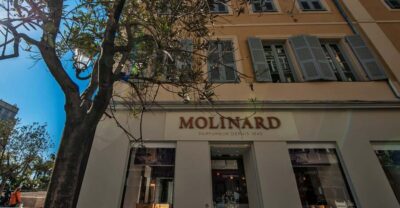

Browse the lists this tour appears in