
Reviewed · HISTORICAL TOURS
Lyon’s History and Must-Sees with a Local! (English Walking Tour)
Lyon reveals itself best on foot, and this tour links its most important sights with the stories that give them meaning. In less than two hours, Quentin Dubourg takes you from the ancient city of Lugdunum through Renaissance Vieux Lyon, wartime Resistance history, Lyon’s food traditions, and the broad sweep of Place Bellecour.
I like the route for two clear reasons: it uses Lyon’s secret passageways and lesser-known details, not just the postcard stops, and it connects the city’s past to daily life today. I also like the low listed price of $4.64 per person, with the option to tip Quentin afterward if you feel the tour earned more.
The main consideration is pace. Seven stops in about 1 hour and 45 minutes means this is an introduction, not a slow museum-style visit. You will see and discuss many places, but you will not have long inside each one.
Key points to know before you book
- Roman beginnings: Learn why Lyon, once called Lugdunum, mattered during the Roman Empire.
- Traboules in Vieux Lyon: Walk through Lyon’s famous covered passageways and hear the stories behind them.
- Food with local context: Discover bouchons, traditional recipes, Paul Bocuse, and Mère Brazier.
- World War II stories: Hear about Jean Moulin, the Resistance, and Klaus Barbie at the historic courthouse.
- A useful city-center finish: End at Place Bellecour, close to restaurants and transport links across Lyon.
- Small group format: The tour accepts a maximum of 20 people and is conducted in English.
Starting at Saint-Jean Cathedral with Lyon’s ancient roots
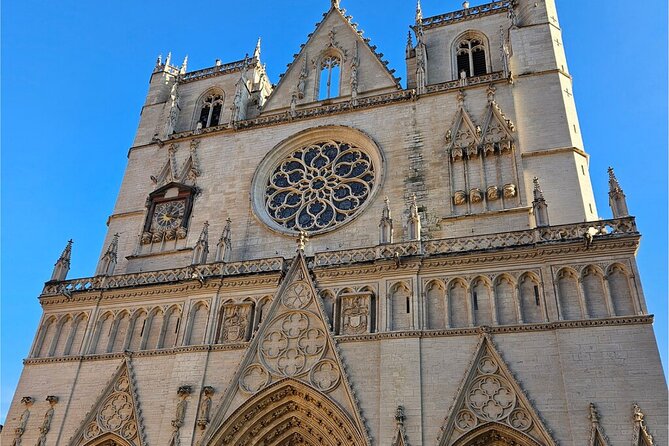
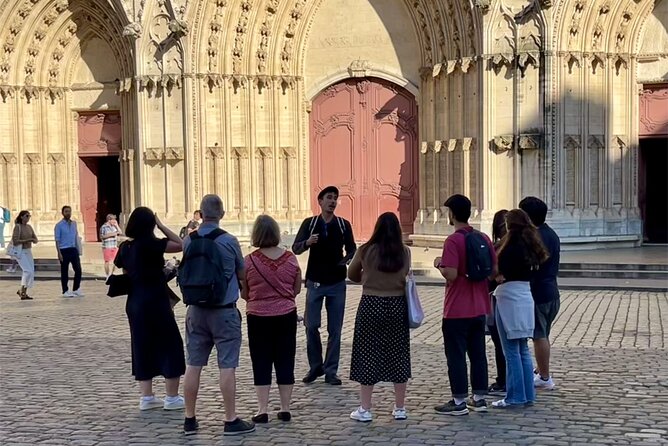
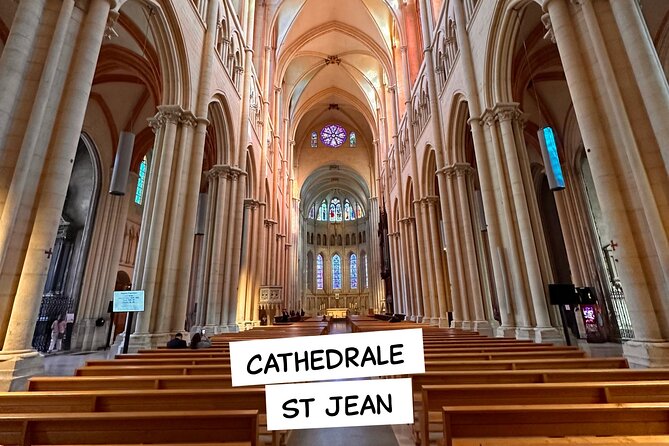
Meet Quentin at Place Saint-Jean at 2:00 p.m. The starting point puts you in the heart of Vieux Lyon, beside the Cathédrale Saint-Jean-Baptiste. This is a practical place to begin because the old town is one of the city’s main areas for historic buildings, narrow streets, and passageways.
The first stop sets up Lyon’s long story. Quentin explains the construction of Lugdunum, the Roman city that became the capital of the Gauls during the Roman Empire. That opening gives you a useful frame for the rest of the walk. Lyon is not simply a Renaissance town with a pleasant riverfront. Its identity reaches back to the ancient city beneath and around the modern one.
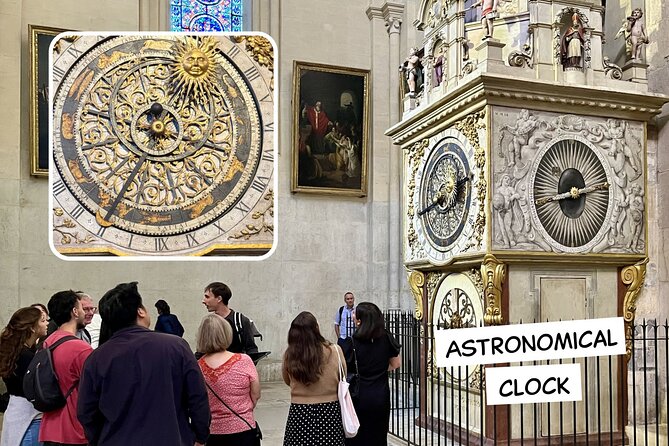
You will also hear about the Basilica of Fourvière before going inside Saint-Jean Cathedral. The cathedral visit is listed as free, so there is no extra admission charge for this part of the walk. Allow about 10 minutes here. That is enough for an introduction and a look inside, but not a detailed architectural study.
I would treat this stop as a quick orientation. If you want an extended visit to Fourvière or the cathedral, plan to return on your own. The tour gives you the background you need, then keeps moving.
More Walking Tours in Lyon
- Vieux Lyon Cultural & Historical Walking Guided Tour (English)
★ 5.0 · 942 reviews - Lyon: Private Walking Tour of “Traboules” in the Old Town
★ 5.0 · 866 reviews - Lyon: City Highlights Walking Tour
★ 4.9 · 847 reviews
Through Vieux Lyon and its traboules
The longest stop comes in Vieux Lyon, where you spend about 30 minutes. This is the heart of the route, and likely the part most people picture when they think of a walking tour in Lyon.
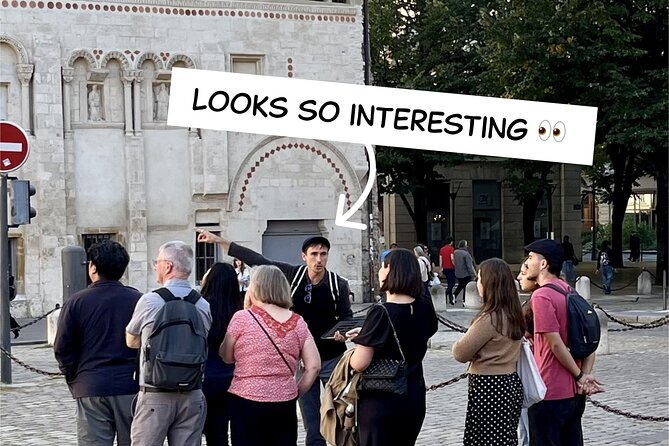
Much of the old town was built during the Renaissance. Quentin points out the district’s character while sharing lesser-known stories about the city. The highlight is the traboules, Lyon’s passageways that cut through buildings and courtyards. They are easy to miss if you walk alone, and they are one reason a local guide adds real value here.
The passageways are not just visual curiosities. They show how Lyon’s buildings were arranged and how people moved through the old town. You will get more from them when someone explains what you are looking at rather than simply walking past an unmarked entrance.
This is also where Quentin’s style matters. The strongest praise for the tour focuses on his energy, humor, and ability to connect a place to its story. One particularly useful quality is his knack for pointing out small features and quirks in buildings, rather than giving only broad dates and names.
Keep in mind that Vieux Lyon is a walking district, and the route involves moving through streets and passageways. Most people can take part, and service animals are allowed, but you should still choose comfortable shoes. The tour is not presented as a fully private visit, so you may share these spaces with a group of up to 20 people.
Rue du Bœuf and the story of bouchons
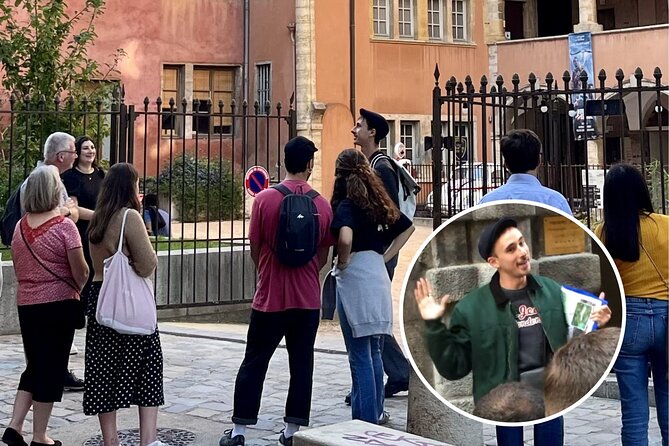
At Rue du Bœuf, Quentin turns from stone and politics to food. Lyon is known as France’s gastronomic capital, and this short 10-minute stop explains the local tradition of bouchons, the city’s traditional restaurants.
You will hear about classic recipes and the part played by Paul Bocuse and Mère Brazier in bringing Lyon’s cooking to a wider audience. This is a useful addition because food in Lyon is not just a list of restaurants to try. It is part of the city’s local identity, and learning the background can help you make better choices later in your stay.
The stop is brief, so do not expect a tasting or a full food tour. No meal is included in the information provided. Instead, you get a compact explanation of what makes a bouchon different and why Lyon became so closely linked with serious cooking.
I like the placement of this stop. After the ancient and Renaissance sections, it gives you a clear sense of how Lyon’s culture continues today. You can also use the information when choosing a restaurant after the tour.
The Saône and Lyon’s Resistance history
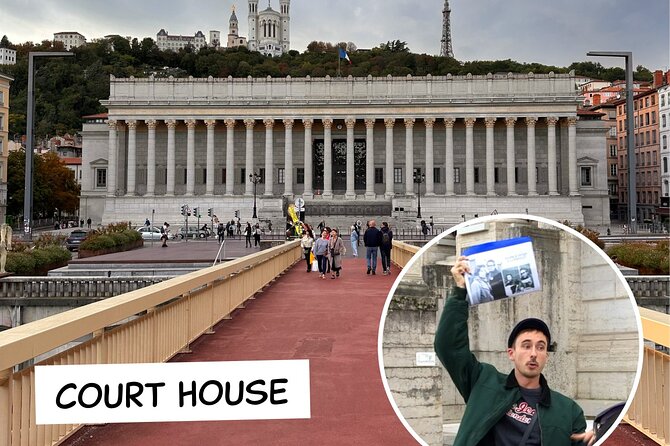
The walk then reaches the historic Palais de Justice de Lyon, beside the River Saône. This 10-minute stop shifts the mood. Quentin explains Lyon’s role during World War II, when the city became an important point for the French Resistance.
The focus includes Jean Moulin, one of the best-known figures in the Resistance, and Klaus Barbie, the Gestapo chief later judged in this courthouse more than 30 years after the war. The location gives the subject weight. You are not hearing a detached list of wartime events. You are standing beside the building connected with the later trial.
This is one of the tour’s strongest features for anyone who wants more than pretty streets. Lyon’s wartime story is difficult, but it is central to understanding the city in the 20th century. Quentin’s approach appears to balance clear facts with the physical setting, helping you connect the story to the place.
Again, the time is limited. Ten minutes can introduce the main people and events, but it cannot cover the full Resistance story or the trial in detail. If this subject matters greatly to you, use the tour as an orientation and seek out further information during your visit.
More Historical Tours in Lyon:
- Historical and naughty tour of Lyon in french
★ 4.5 · 49 reviews - Lyon: Music History Tour with Wine Tasting
★ 4.9 · 34 reviews - Paris: Louvre Museum Entry with History of Mona Lisa
★ 3.9 · 2,823 reviews - Paris: Dark History and Ghostly Guided Walking Tour
★ 4.7 · 1,000 reviews
Place des Jacobins and the Lyon of the 19th century
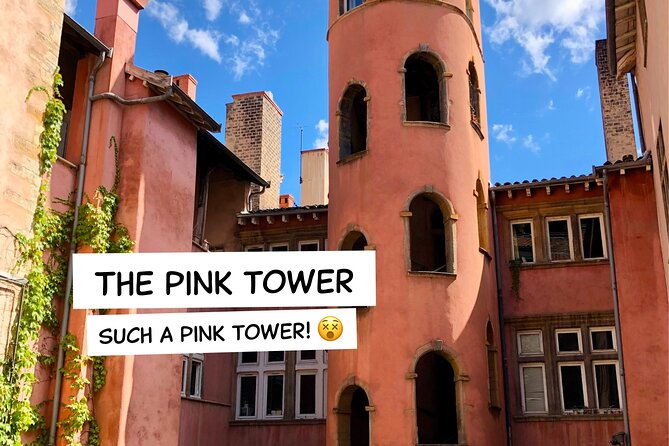
The next section takes about 15 minutes around Place des Jacobins and nearby squares. Here the focus moves to the Lyon built in the 19th century for wealthy residents.
This part helps break up the tour’s older material. You will see a different side of the city, one shaped by later urban development and grander public spaces. Quentin also talks about what it is like to live in Lyon today, which gives the tour a useful present-day note.
I value that kind of conversation because a city tour can become too focused on the past. Lyon is not a preserved stage set. People live, work, eat, and travel through these neighborhoods now. Hearing about modern life gives you a better sense of how the historic areas fit into the current city.
The stop also makes a good visual bridge between old Lyon and the center. You are gradually leaving the narrow streets behind and moving toward the more open spaces of the Presqu’île.
Hôtel-Dieu, from hospital to public complex
At Grand Hôtel-Dieu, Quentin introduces a building that served as a major hospital for centuries. The former hospital has now been transformed into a mall and public shopping complex.
The appeal here is the change of use. You see how a historic institution can take on a new role without losing its place in the city’s story. The stop lasts about 10 minutes, so you will get an overview rather than a full architectural tour.
This is also a practical point on the route. The complex gives you another place to return to later, especially if you want to look around at a slower pace. The tour itself does not include shopping time or a meal, so keep your attention on Quentin during the scheduled visit and come back afterward if the building interests you.
The Hôtel-Dieu stop adds variety. It is not another church, square, or old street. Instead, it shows Lyon adapting an important historic site for modern use.
Finishing at Place Bellecour and Saint-Exupéry
The walk ends at Place Bellecour, one of Lyon’s main squares in the city center. The final 10 minutes cover some lesser-known details of the square and conclude with a visit to the statue honoring Antoine de Saint-Exupéry, the Lyon-born author of The Little Prince.
That ending is especially helpful because it gives the tour a clear finish in a central location. You are left near the Presqu’île, described as one of the best areas for reaching other parts of Lyon. If you want dinner, restaurants are within a few minutes on foot.
Saint-Exupéry’s connection to Lyon offers a memorable final detail. Many people know The Little Prince, but fewer connect its author with this city. The statue gives you a simple landmark to look for and a more personal ending than another general view of the square.
Place Bellecour is also a good point for continuing your day. You can stop for food, walk around the center, or use public transport to reach another part of Lyon. Since the tour ends here rather than returning to Saint-Jean, plan your onward route from the finish.
How Quentin’s guiding style shapes the experience
Quentin Dubourg presents himself as a local guide who enjoys sharing French culture and history. The feedback attached to the experience repeatedly praises his humor, energy, charm, and ability to bring a group together.
That matters on a short walking tour. With seven stops and several centuries of material, a dry lecture would quickly become tiring. Quentin’s lively approach helps keep the pace moving, and his jokes make the historical details easier to remember.
The best fit is someone who likes an interactive, social introduction to a city. You may meet people from different countries, and the group can include up to 20 participants. If you prefer a silent, highly formal guide or a private pace, this may not be your ideal choice.
The English-language format makes the tour accessible to visitors who do not speak French. The route also works well for a first visit, though it can still help you find details you missed if you have already been to Lyon. Several parts, especially the traboules and architectural quirks, reward a guide’s local knowledge.
Is $4.64 good value for 1 hour and 45 minutes?
At $4.64 per person, the listed price is unusually low for a guided city walk. You are getting nearly two hours of commentary across seven locations, with no separate admission fee listed for the stops.
The price should be judged alongside the tipping note. Quentin invites you to tip what you think the tour was worth after it ends, and tips help make the experience possible. So the listed cost is low, but your final outlay can be higher if you feel the guide delivered a strong experience.
That arrangement can work well if you want to keep your initial cost down. It also gives you a chance to judge the tour before deciding on an additional amount. Still, you should arrive understanding that the guide welcomes a tip rather than treating the low price as the full measure of the service.
For the content covered, the value is strongest if you want orientation, stories, and practical ideas for the rest of your stay. It is less useful if you want long interior visits, food samples, or specialist-level detail at every stop.
Timing, group size, and practical details
The tour starts at 2:00 p.m. and lasts about 1 hour and 45 minutes. Starting in the afternoon leaves your morning open for another attraction, a relaxed meal, or time in Fourvière before meeting at Place Saint-Jean.
The maximum group size is 20. That is small enough for a local guide to address the group, but it is not a private walk. You should expect a shared experience and a steady route through busy central areas.
A mobile ticket is provided, and booking confirmation arrives at the time of booking. The experience is near public transportation, and most people can participate. Service animals are allowed.
You can cancel for a full refund up to 24 hours before the start time. Cancellations or changes made less than 24 hours before the tour are not accepted for a refund, and the cut-off follows Lyon’s local time.
Who should book this Lyon walking tour?
I would choose this tour if you want a broad first look at Lyon with plenty of local color. It is especially suitable for first-time visitors who want to understand the connection between the Roman city, Renaissance Vieux Lyon, French food, World War II, and the modern center.
It also suits anyone who likes a guide with personality. Quentin’s humor and energy are a major part of the experience, not an extra detail. Families and mixed-age groups may appreciate the lighter delivery, while history-minded visitors will value the sections on Lugdunum, the Resistance, and Klaus Barbie.
You should think twice if you want a slow architectural walk, a food tasting, or extended time inside the cathedral and Hôtel-Dieu. The route covers a lot, but each stop is short.
Should you book it?
Book this walk if you want an affordable, lively introduction to Lyon and plan to explore more on your own afterward. The traboules, food traditions, Resistance stories, Saint-Exupéry connection, and central finish give you plenty of useful starting points.
Skip it if your main goal is a specialist tour with long visits at only one or two sites. For most visitors, though, the combination of a low price, a manageable 1-hour-45-minute route, and Quentin Dubourg’s engaging style makes this a sensible first activity in Lyon.
FAQ
Where does the tour start?
The tour starts at Place Saint-Jean, beside the Cathédrale Saint-Jean-Baptiste in Lyon.
What time does the tour begin?
The tour begins at 2:00 p.m.
Where does the tour end?
The tour ends at Place Bellecour in Lyon’s city center.
How long does the walking tour last?
The tour lasts approximately 1 hour and 45 minutes.
Who guides the experience?
The guide is Quentin Dubourg, a local English-speaking guide.
What places are included?
The route includes Saint-Jean Cathedral, Vieux Lyon, Rue du Bœuf, the historic Palais de Justice, Place des Jacobins, Grand Hôtel-Dieu, and Place Bellecour.
Is the tour conducted in English?
Yes. It is an English walking tour.
How many people can join the tour?
The maximum group size is 20 people.
Can I cancel for a full refund?
Yes. You can cancel up to 24 hours before the experience starts for a full refund. Cancellations or changes made less than 24 hours before the start time are not accepted for a refund.
Just added around Lyon
- 1 or 2-Hour Pedicab tour of Lyon★ 5.0 · 213 reviews
- Storytelling tour of Old Lyon★ 5.0 · 39 reviews
- Rhône Valley Wine Tasting Private Day Tour from Lyon★ 5.0 · 43 reviews
- Segway – Ride along the rivers 1h30★ 5.0 · 43 reviews
- Northern Rhône Valley From Lyon Full day★ 5.0 · 150 reviews
- Lyon Old Town Private Food Tour with 6 French Delicacies & Wines★ 5.0 · 85 reviews
- Lyon Morning Food Market Tasting Tour in Les Halles Paul Bocuse★ 4.0 · 29 reviews
- Make French Pastries with Professional Chef in Private Atelier★ 5.0 · 66 reviews
Historical Tours, compared.
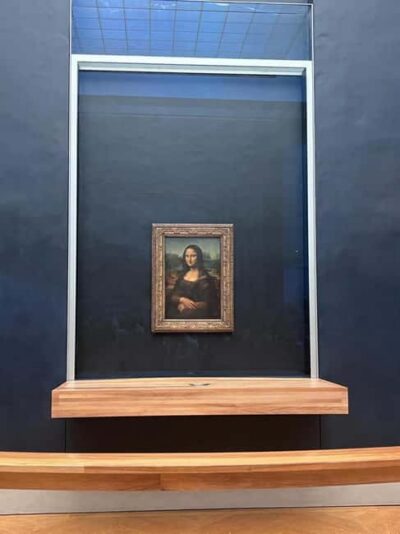
Louvre Museum Entry with History of Mona Lisa
Read our review →

Vieux Lyon Cultural & Historical Walking Guided Tour (English)
Read our review →
Toulouse Food & History Tour with a Chef (in English)
Read our review →
Small-Group Full-Day Tour of Côte de Nuits, Côte de Beaune Vineyards and Beaune Historical District
Read our review →
Browse the lists this tour appears in