Reviewed · PROVENCE TOURS
Marseille Guided Tour for 2.5 Hours with a Bilingual Local Guide
Marseille reveals itself best on foot, and this 2.5-hour walk with Charles gives you a useful first look at the city’s old quarters, harbor, monuments, and hilltop views. You begin at the dramatic Cathedral of La Major, wind through Le Panier, cross the Old Port, and finish near the center of Marseille.
I like the small maximum of eight people, which makes it easier to ask questions and keep a good pace. I also like the mix of famous sights and practical advice, including where to eat and what to see after the walk. The main drawback is the route itself: there are stairs, slopes, and plenty of walking, so this is not a gentle stroll for every pair of shoes.
Charles brings strong storytelling, humor, and clear English to the tour. The route covers a lot in a short time, but you should know that the pace leaves little room for long indoor visits or relaxed café stops.
Key points to know before you book
- Charles leads a small walking group: The tour accepts no more than eight people, creating a more personal feel than a large city tour.
- You see six distinct parts of Marseille: The route includes La Major Cathedral, Le Panier, La Canebière, Saint-Victor Abbey, Palais du Pharo, and the south side of the Old Port.
- The route mixes history with city life: You hear about Greek and Roman Marseille, wartime events, architecture, the port, local food, and modern neighborhoods.
- Expect stairs and uphill sections: The high viewpoints near Palais du Pharo and the narrow streets of Le Panier require a reasonable level of fitness.
- The finish is useful for the rest of your day: You end at Vieux-Port, where you can continue on foot or use buses, the subway, or boats.
- Personal suggestions come after the walk: Charles sends a follow-up email with recommendations suited to what you want to eat or visit.
Starting beneath the striped domes of La Major
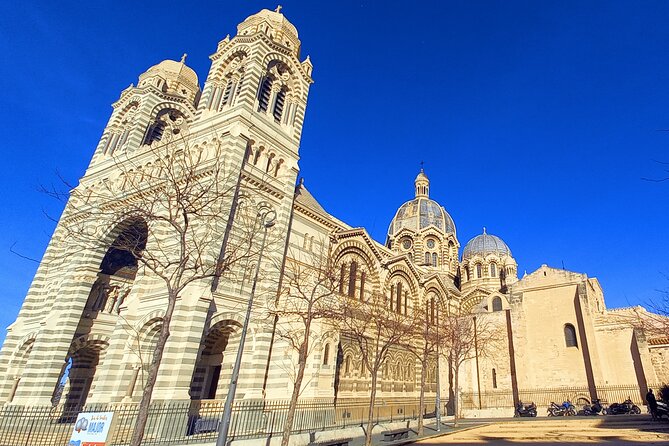
The tour begins at Cathédrale La Major at 2:30 p.m. This huge cathedral sits near the water and makes an impressive opening scene. Its Neo-Byzantine design gives you an immediate sense that Marseille is not simply an old French port. The city has long looked toward the Mediterranean, and the cathedral’s style reflects that wider connection.
You spend about ten minutes here, learning the basic story of the building and its place in Marseille. Admission is free, so you are not paying extra for an entry ticket. The stop is brief, which makes sense on a city overview, but you should not expect a detailed interior tour.
This first stop also helps set the tone. Charles focuses on the city’s past while pointing out how the buildings and streets around you still function as part of everyday Marseille. You begin with a major monument, then quickly move into the older streets where the tour becomes more intimate.
A few more Marseille half-days worth comparing
- Marseille: City Sightseeing Hop-On Hop-Off Bus Tour
★ 3.8 · 2,820 reviews - Marseille: Côte Bleue Calanques Half-Day Kayak Tour
★ 4.7 · 877 reviews - Marseille Food Tour – Full Meal of Local Tastes by Do Eat Better
★ 5.0 · 530 reviews
Le Panier, Marseille’s oldest quarter
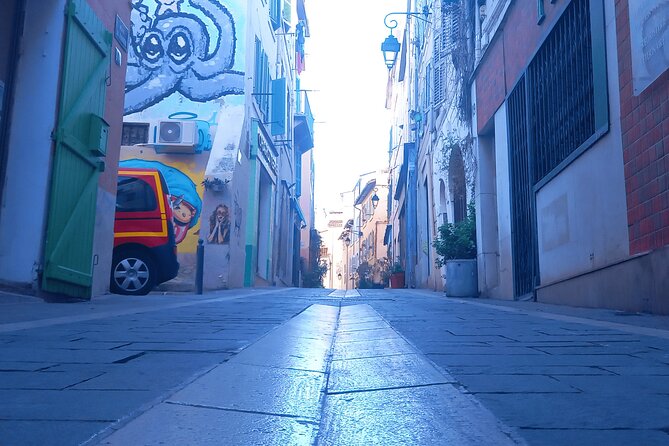
From La Major, the group heads into Le Panier, the city’s best-known old district. This is where the walk shifts from grand buildings to narrow lanes, colorful facades, small shops, cafés, and uneven streets.
You spend about fifty minutes here, the longest stop on the route. That gives Charles time to explain the area’s Greek and Roman roots, including traces connected with Marseille’s beginnings in the fifth century B.C. He also covers the difficult chapters of Le Panier’s past, rather than presenting it as a postcard quarter with no hard edges.
One central sight is the Vieille Charité, a former hospital with a long and complicated story. The building helps explain how Marseille cared for, controlled, and moved people through the city over the centuries. Charles also connects the quarter’s French, Mediterranean, and North African influences, giving you a better sense of why the area feels so different from the broad avenues near the port.
I find this part especially useful for first-time visitors because Le Panier can be confusing on your own. The lanes turn often, the streets rise and fall, and the district rewards context. With Charles, you are not just looking at old walls. You learn what they were used for and why this corner of Marseille matters.
The tradeoff is physical. Le Panier includes stairs and some steep stretches. Wear shoes with a good grip, and do not plan this walk around a heavy suitcase or a formal pair of sandals.
La Canebière and the long view across the Old Port
The route then moves toward La Canebière, Marseille’s famous main street. You spend about thirty minutes looking at the connection between the north and south sides of the Old Port and learning how this road helped shape the city.
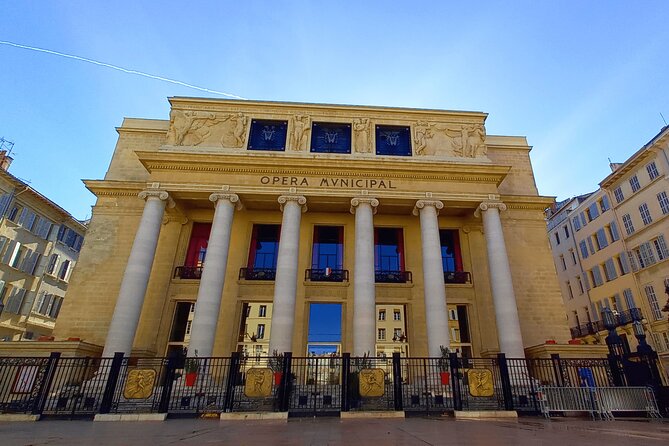
Charles points out the Chamber of Commerce, the Opera House, and the site of a former shipyard. These details help you read the city beyond its churches and old lanes. Marseille was built through trade, shipping, work, migration, and public life, and La Canebière gives you a broad stage for that story.
This section is less secluded than Le Panier, but that is part of its value. You see how the city’s grand civic buildings sit beside working streets and busy routes. It is also a useful orientation point if you plan to return to the area for shopping, food, or further sightseeing.
The tour does not include a long visit inside the Opera House or Chamber of Commerce. Think of La Canebière as an outdoor history lesson and a way to understand the city’s layout, not as a series of museum admissions.
Saint-Victor Abbey and the story behind la Navette
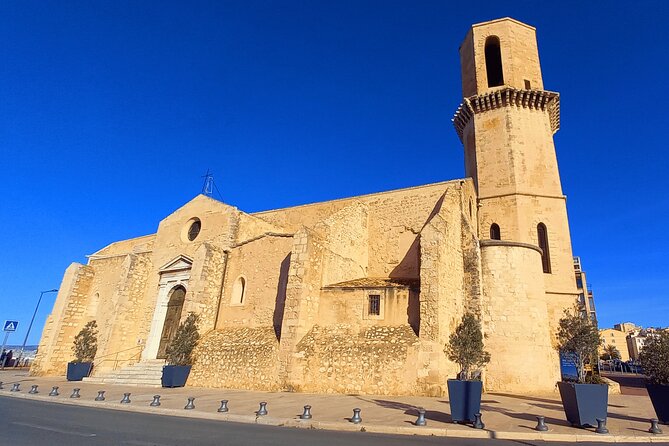
Next comes Abbaye Saint-Victor, an ancient monastery near the Old Port. The abbey’s Romanesque architecture and religious history offer a quieter change from the streets around La Canebière.
You spend about twenty-five minutes here. Charles explains Marseille’s past through the monastery and the buildings around it, while also introducing one of the city’s best-known treats, la Navette.
The biscuit is associated with the shape of a small boat, and Charles explains the tradition and inspiration behind it. He also tells you about one of Marseille’s oldest bakeries, giving the food a place in the city’s customs rather than treating it as a random snack recommendation.
This is the sort of detail I value on a walking tour. You leave with something practical to look for after the tour, and you understand why a simple local biscuit can carry more meaning than a standard souvenir.
Again, the visit is mainly guided from the outside. If you want a long, quiet look inside the abbey, you may need to return independently. The tour gives you context and a focused introduction, not an extended religious-art visit.
Same trip, a completely different kind of day:
- Marseille: Calanques National Park Guided Hike with Picnic
★ 4.9 · 516 reviews - From Marseille: Calanques National Park Guided Hike
★ 4.8 · 489 reviews - Marseille: Musée de l’Illusion Entry Ticket
★ 4.1 · 488 reviews - Marseille: Frioul Calanques Sailing Trip
★ 4.8 · 433 reviews
Palais du Pharo and Marseille’s best harbor views
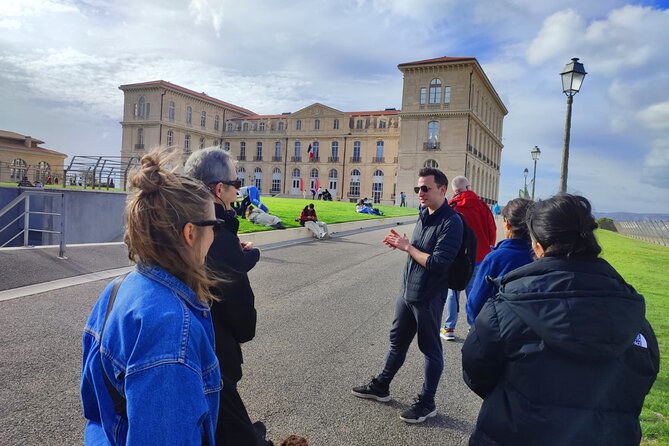
The route continues to Palais du Pharo, a former palace set above the Old Port. This is one of the strongest photo stops of the afternoon. From the terraces and gardens, you can look across the harbor toward Fort Saint-Jean, MUCEM, the Cosquer Museum, and the surrounding waterfront.
Charles uses the view as a large outdoor map. Instead of pointing at buildings without context, he explains how the monuments fit together and how the Old Port developed. That makes the stop useful for planning the rest of your stay. After seeing the city from this angle, it becomes easier to decide which museums, forts, or waterfront areas deserve more of your time.
You spend about twenty-five minutes at the palace. The stop is short enough to keep the route moving, but long enough for photos and questions. I would keep a little space in your phone or camera for this part, since the harbor views are among the most rewarding moments on the walk.
The climb is also one reason to judge your fitness honestly. The route includes higher viewpoints and stairs, and the walk does not promise a fully flat path. Most people who can manage a steady city walk should understand the demands, but anyone with mobility concerns should ask before booking.
Returning along Quai de Rive Neuve
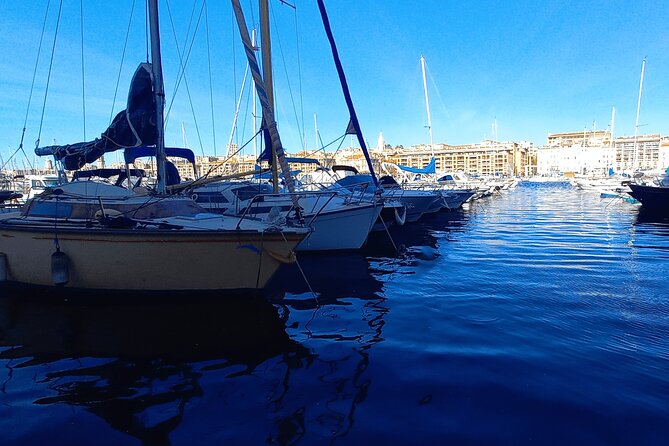
The final section follows the south dock, Quai de Rive Neuve, back toward the Old Port. It takes about ten minutes and gives you a calmer look at the harbor, with boats lined along the water.
Charles talks about the port in the twentieth century and points out what you can do next. This last stretch is not packed with monuments, and that is fine. It lets the tour finish at a natural city center rather than ending on a remote street.
At Vieux-Port, you can continue on foot or connect with buses, the subway, or boats. That makes the end point particularly handy if you have a dinner reservation, want to visit another museum, or need to return toward your hotel.
Charles also asks about your plans and sends recommendations by email afterward. The advice can cover food, drinks, and further places to visit. This is a real benefit if you have only two days in Marseille and want to avoid spending your evening in a restaurant aimed mainly at passing visitors.
What the $41.94 price gets you
At $41.94 per person, this is not the cheapest way to see Marseille, but the price is reasonable if you value a private-style experience with a small group and a local guide. You are paying for 2.5 hours of guiding, route planning, interpretation, and follow-up suggestions. The admission costs at the listed stops are free, so there are no major ticket expenses built into the price.
The value is strongest for a first visit. In one afternoon, you cover the cathedral, oldest quarter, central avenue, monastery, palace, and harbor. You also receive help understanding what deserves a longer visit later.
The value is weaker if you prefer to explore alone, stop often for coffee, or spend a long time inside each monument. This is a moving overview. You see many places, but you do not receive extended entry time at museums or historic interiors.
Lunch and bottled water are not included. Bring your own water, especially in warm weather, and eat before or after the tour. The 2:30 p.m. start makes it easy to have lunch first and dinner afterward.
Who will get the most from this Marseille walk
I would choose this tour if you are visiting Marseille for the first time and want a clear introduction before exploring on your own. It suits couples, families with older children, solo visitors, and small groups who prefer conversation over a large flag-following crowd.
It is also a good match for a short stay. The route gives you a map of the city in physical form, and the finish at Vieux-Port leaves you well placed for the evening.
The tour may not suit you if you need a flat route, dislike stairs, or want a museum-heavy afternoon. It is also not the best choice if you have only one specific sight in mind and want to study that place in detail.
Charles’s style is another reason to consider it. He uses humor, personal attention, and stories rather than delivering a dry list of dates. He also adjusts to the group’s pace, which matters on a route with narrow streets and climbs.
Timing, group size, and practical details
The tour starts at 2:30 p.m. at Cathédrale La Major and ends at Vieux-Port. The total duration is approximately two hours and thirty minutes, though walking tours can vary slightly with questions, group pace, and street conditions.
The group maximum is eight people. That is small enough for direct conversation and easier movement through Le Panier. You receive a mobile ticket, and the tour is offered in English with a bilingual local guide.
Most people can take part, and service animals are allowed. The route is near public transportation, but the key planning point is the amount of walking. Wear comfortable shoes, carry water, and avoid bringing anything cumbersome.
Free cancellation is available up to 24 hours before the start time. If poor weather or insufficient bookings cause the tour to be canceled, you can receive a different date or a full refund.
Should you book this Marseille tour?
Book it if you want to understand Marseille quickly, prefer a small group, and like a guide who combines city history with restaurant and sightseeing advice. The strongest reasons are the route through Le Panier, the views from Palais du Pharo, and Charles’s lively way of explaining the city.
Skip it if you need a wheelchair-friendly or fully flat walk, want a long interior visit, or prefer complete independence. For most first-time visitors who can manage stairs and a steady pace, this is a useful opening chapter to Marseille, followed by an evening at the Old Port using Charles’s recommendations.
FAQ
Where does the Marseille walking tour begin?
The tour begins at Cathédrale La Major, at Pl. de la Major, 13002 Marseille, France.
Where does the tour end?
The walk ends at Vieux-Port in central Marseille.
What time does the tour start?
The scheduled start time is 2:30 p.m.
How long does the tour last?
The tour lasts approximately two hours and thirty minutes.
How many people can join the tour?
The maximum group size is eight travelers.
Is the tour offered in English?
Yes. The tour is offered in English with a bilingual local guide.
Is food included?
No. Lunch is not included, and bottled water is also not included.
Are admission tickets included?
The listed stops have no admission charge. The tour is primarily an outdoor walking experience.
Is the tour suitable for people with limited mobility?
The tour requires walking through narrow streets and includes stairs and uphill sections. Most people can participate, but the route may not suit anyone who needs a flat or low-effort walk.
What happens if the weather is poor?
The experience requires good weather. If it is canceled because of poor weather, you are offered another date or a full refund.
Just added around Marseille
- The Urban Hike of Marseille★ 5.0 · 35 reviews
- Rando-Palmée Getaway Around an island★ 4.0 · 54 reviews
- Sunset Lavender Tour in Valensole with pickup from Marseille★ 5.0 · 41 reviews
- Sailing day in the heart of the Calanques★ 4.5 · 61 reviews
- Sormiou Calanques National Park Electric Bike Tour from Marseille★ 5.0 · 60 reviews
- Provence : Aix en Provence, Cassis and Marseille Private Tour★ 4.5 · 53 reviews
- Cassis and Aix en Provence Sightseeing Tour from Marseille★ 4.5 · 132 reviews
- Lavender Small-Group Tour In Valensole from Marseille★ 4.5 · 53 reviews
Provence Tours, compared.
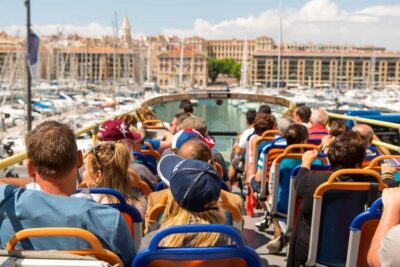
Marseille: City Sightseeing Hop-On Hop-Off Bus Tour
Read our review →

Sea trips Scandola Girolata and Calanches de Piana
Read our review →


3.5 Hour Camargue 4×4 Safari from Le Grau-du Roi
Read our review →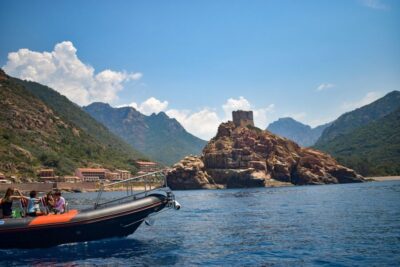
Porto: Scandola and Calanches of Piana Boat Trip
Read our review →