
Reviewed · WALKING TOURS
Colmar: Unusual Walking Tour with a local guide
Colmar’s prettiest streets are only the beginning. This two-hour walk with local guide Nicolas connects the postcard canals of Petite Venise with medieval stories, Auguste Bartholdi’s statues, and the grand buildings of the city’s German Imperial district. You get a clearer sense of how Colmar became the place it is today, rather than simply collecting pretty photographs.
I like the small group of six or fewer, which makes it easier to ask questions and hear the guide in narrow streets. I also like the route beyond the usual old-town circuit, especially the southern district with its Cour d’Appel, Château d’Eau, and Central Train Station. The main consideration is mobility: this is a walking tour through historic streets and is not suitable for people with mobility impairments.
Key points at a glance
- A local view of Colmar: Nicolas grew up in Colmar and brings personal knowledge of the city and Alsace to the walk.
- More than Petite Venise: The route reaches the southern Imperial district, an area many short city visits miss.
- Medieval stories with context: Learn how ordinary people lived and how Colmar’s past was shaped by French and German rule.
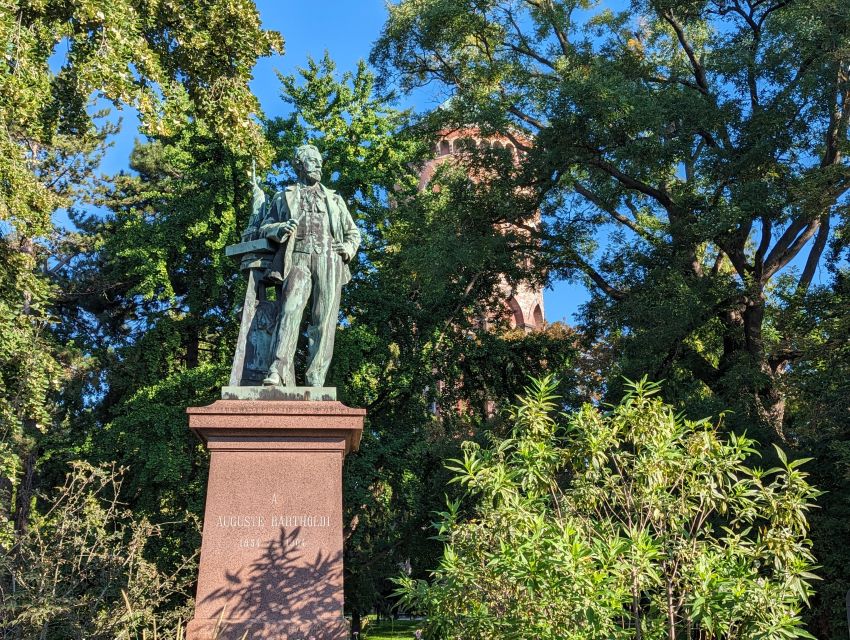
- Bartholdi’s hometown connection: See several works linked to Auguste Bartholdi, the Colmar-born sculptor of the Statue of Liberty.
- Useful food and drink advice: Nicolas can suggest local places to eat, drink, and continue exploring after the walk.
- A compact, flexible outing: The tour lasts two hours, costs $41 per person, and uses English or French.
Starting at the Bruat Fountain
The meeting point is the Bruat Fountain, in the middle of Parc du Champ de Mars. That location gives you a simple start outside the tightest lanes of the old center, with room to find your guide before the walk moves into narrower streets.
Look for Nicolas at the fountain and arrive ready to walk for the full two hours. The activity is offered in English or French, and the small group format is useful here. Colmar’s old streets can be noisy and crowded, so a group capped at six should make explanations easier to follow than on a large coach-style outing.
The tour works particularly well early in your stay. You can use Nicolas’s recommendations for the rest of your visit, and you will recognize places you pass later on your own. One person who took the tour early in the day found the timing helpful for getting ahead of the crowds, a sensible reason to choose a morning start if one is available.
More Walking Tours in Alsace
- Strasbourg: Walking Tour with a Local Guide
★ 4.3 · 607 reviews - Strasbourg: Walking Tour with Local Guide
★ 5.0 · 598 reviews - Strasbourg: Guided Historical Neighborhoods Walking Tour
★ 4.9 · 275 reviews
Reading Colmar through its medieval streets
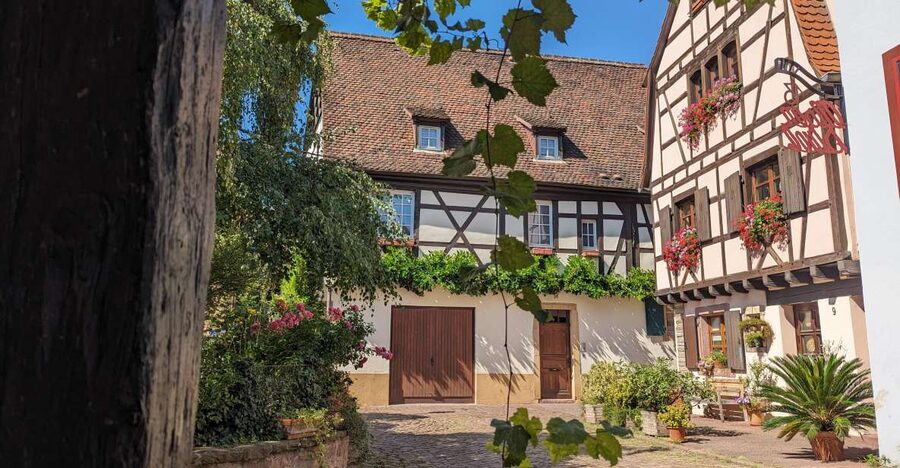
The first part focuses on Colmar’s medieval center and the daily life of people who lived here centuries ago. This is more useful than a simple list of dates. Buildings, street patterns, signs, and small architectural details become clues to how the city worked.
Nicolas explains the past through anecdotes, which gives the walk a human scale. You are not only looking at handsome façades. You are considering the people who lived and worked behind them, the customs that shaped local life, and the changes that came as political control shifted between France and Germany.
That context matters in Alsace. Colmar’s identity cannot be reduced to one national story. The region has experienced changing borders, conflict, and cultural pressure, and the tour places those changes into the setting you are walking through. Several people found the explanations of the Thirty Years’ War, the First World War, the Second World War, and later political changes especially helpful.
The guide also covers local culture, Alsatian pride, sayings, and regional customs. These details help explain why Colmar feels distinct from other French towns. If you have already walked the old center alone, you may still notice much more with guidance. The tour is designed to point out features you might pass without stopping.
Petite Venise without the standard postcard route
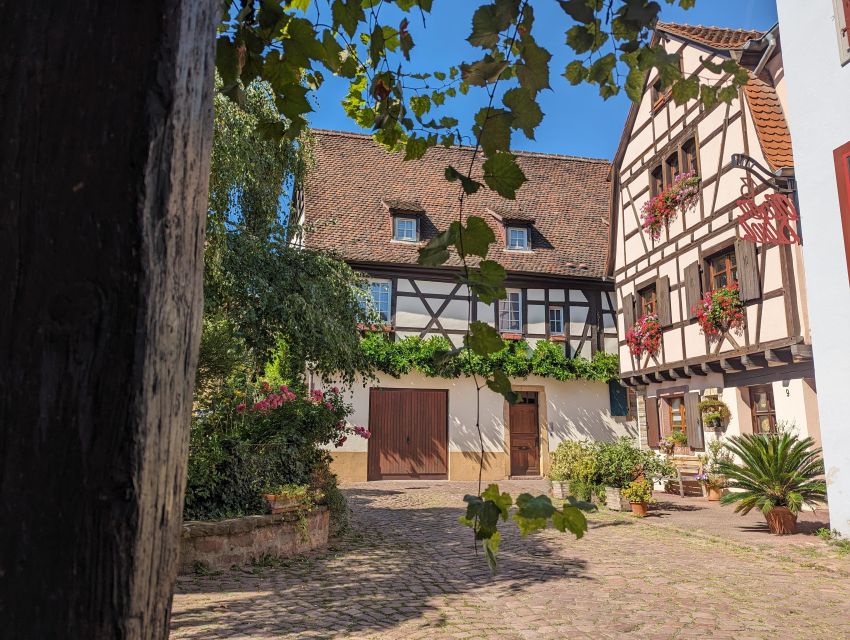
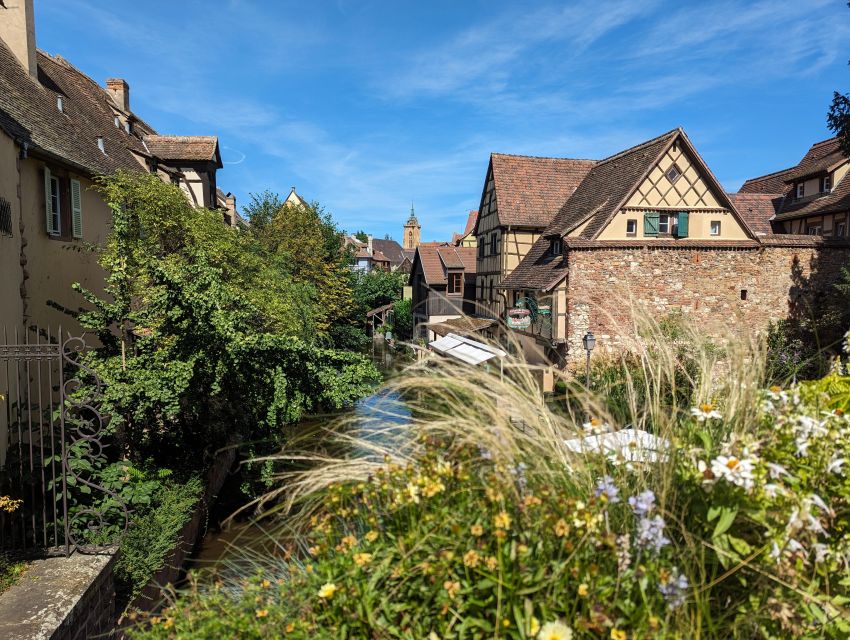
Petite Venise is Colmar’s famous district, with canals, half-timbered houses, and narrow streets. It is also the place most likely to feel crowded, especially when visitors cluster around the best-known viewpoints.
This walk does not treat Petite Venise as the whole story. Nicolas takes you through smaller streets and less obvious corners, helping you see the district from a different angle. That can make a real difference. Instead of spending your entire time following the crowd toward the same photograph, you get some direction about where to look and why a particular building or lane matters.
The tour does not promise an empty Petite Venise. The district remains popular, and two hours is not enough to inspect every corner. Still, moving away from the busiest paths gives you a better chance to appreciate the area as part of a living city rather than a staged picture set.
This is also where a local guide can help with orientation. Colmar’s center is compact, but its streets can feel confusing on a first visit. Nicolas points out features that help you understand the shape of the town, making it easier to return later for photographs, shopping, or a quiet drink.
Following Bartholdi through his hometown
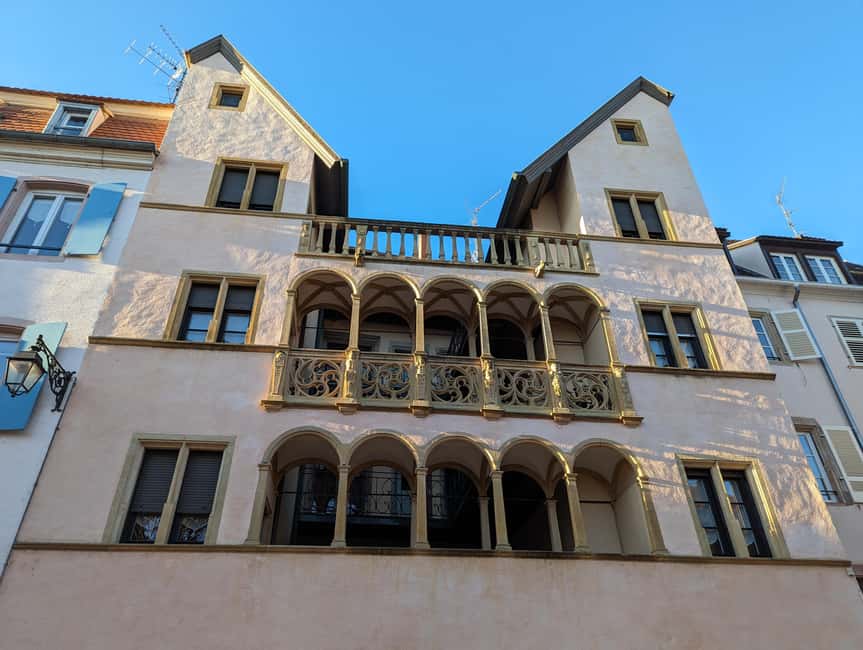
Auguste Bartholdi is one of Colmar’s most famous sons. He was the sculptor behind the Statue of Liberty, and the tour uses his work to connect the city’s streets with a figure known around the world.
You will see several statues linked to Bartholdi and learn more about Colmar’s local heroes. This gives the sculptor a stronger connection to the city than a single museum label can provide. You see how public art, memory, and civic pride appear in everyday places.
The Bartholdi section also adds variety to the walk. Medieval buildings and canal views can begin to blur together when you visit on your own. Statues and public monuments give you different points of focus, while Nicolas explains the people and stories behind them.
If Bartholdi interests you, you may want to use the tour as a starting point for further exploration. The supplied information does not promise an interior visit or a museum entry, so treat this as an outdoor city walk rather than a dedicated museum tour.
Same trip, a completely different kind of day:
- Strasbourg: Euro Guided Tour by Segway
★ 4.7 · 808 reviews - Colmar, Medieval Village & Castle Small Group from Strasbourg
★ 5.0 · 769 reviews - 2-Hour Strasbourg Euro Tour by Segway
★ 5.0 · 642 reviews - From Strasbourg: Best Of Alsace Historical Day Trip
★ 4.7 · 633 reviews
The German Imperial district in southern Colmar
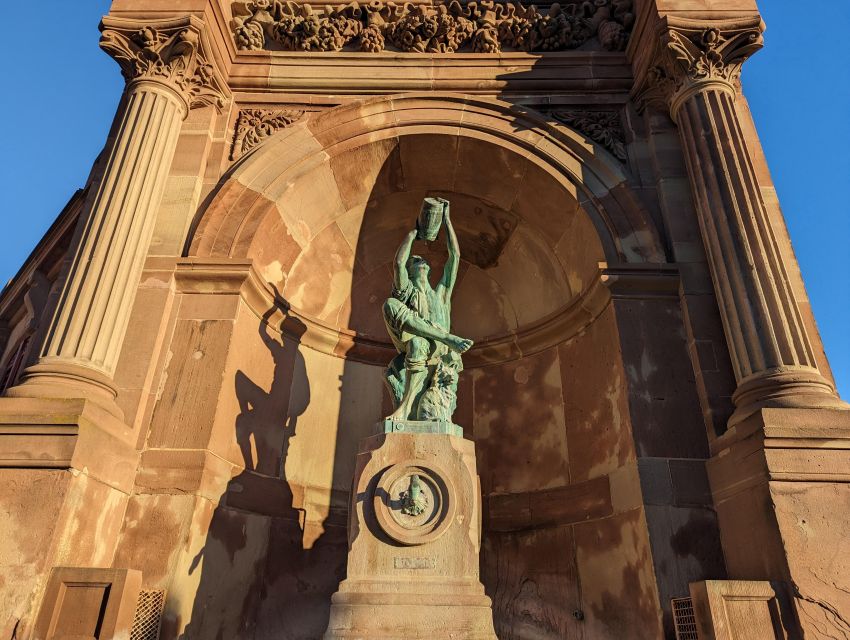
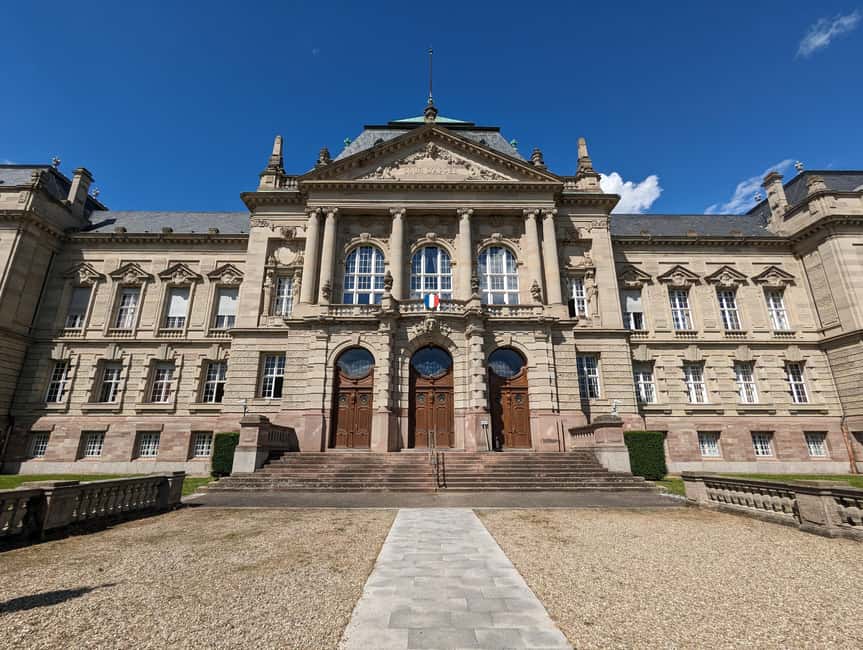
One of the best reasons to choose this experience is the move south of the most photographed old town. The route explores Colmar’s German Imperial era, when grander and more monumental buildings appeared in the city.
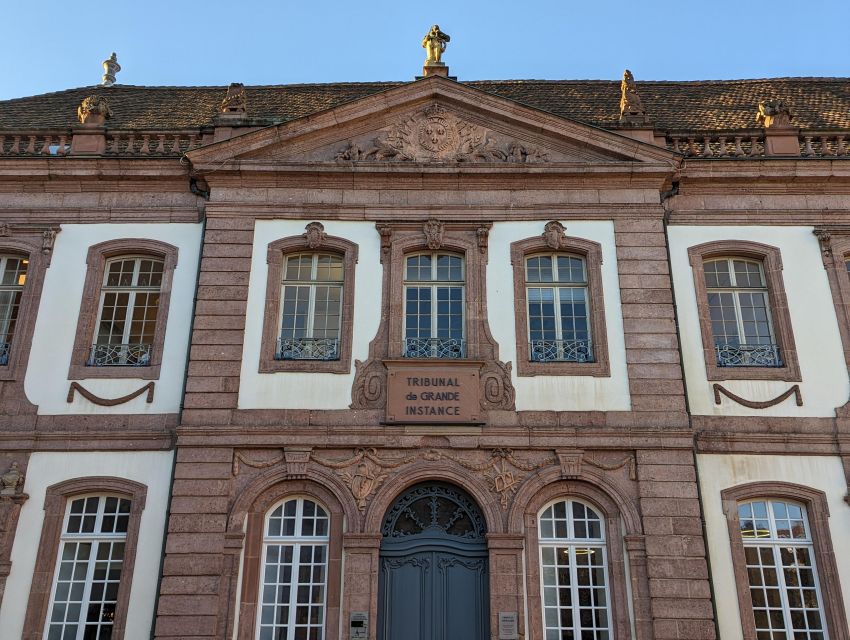
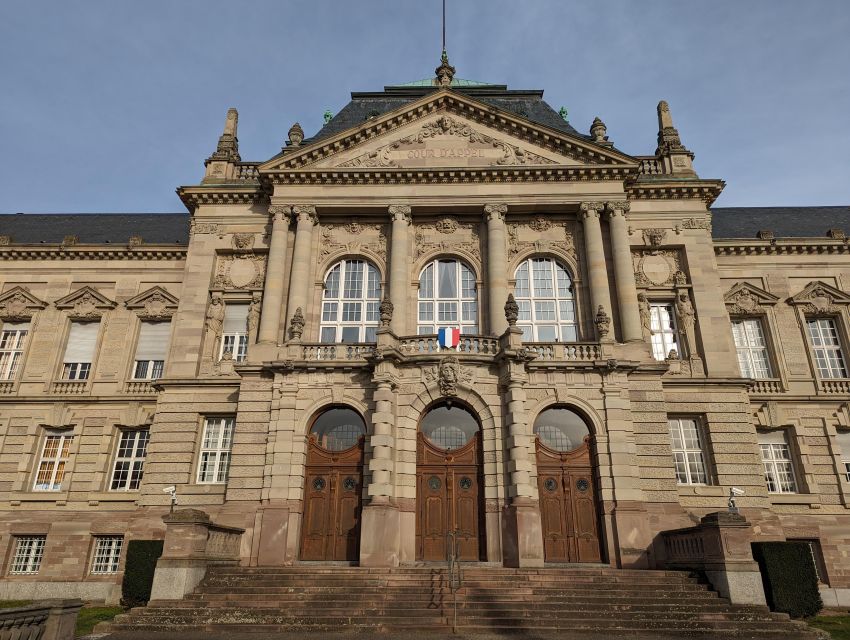
The Cour d’Appel is one of the major sights in this section. Its scale gives you a different impression of Colmar from the intimate half-timbered lanes. The Château d’Eau, described as huge, adds another striking landmark, while the Central Train Station shows how the city’s transport and civic planning changed over time.
This part of the walk helps you avoid a common mistake: assuming Colmar is only a medieval village with canals. The southern district shows a later city, shaped by imperial ambition, public institutions, and larger urban projects. It is less immediately cute than Petite Venise, but it adds useful balance.
The trade-off is simple. If your only goal is a fast collection of Colmar’s most famous views, this detour may feel less efficient. If you want to understand the city’s development, it is one of the tour’s strongest features. I would choose this route over a walk that stays entirely inside the most crowded historic lanes.
Nicolas’s style and what you can ask
Nicolas is repeatedly described as relaxed, friendly, humorous, and easy to understand in English. His English is reported as excellent, and he can move between English and French for mixed-language groups. One particularly useful feature is his willingness to answer questions rather than deliver a fixed speech and move on.
That matters on a small-group walk. You can ask about local food, the French-German border story, Alsatian customs, football clubs, public statues, or places you have already noticed. The tone appears conversational, but the content remains substantial.
Nicolas also adjusts the emphasis when he can. If your group is especially interested in architecture, local personalities, history, or food, you can ask for more detail in that direction. This flexibility is one benefit of a six-person limit.
His local connection is important too. Nicolas grew up in Colmar, and his affection for the city comes through in the way he explains its streets and people. That does not mean every stop will suit every interest. Some visitors may prefer a formal art-history lecture or a faster list of sights. For most first visits, though, the friendly, story-based approach should make the city easier to understand.
Food advice after the walk
The tour includes tips on where to eat and drink, and this may be one of its most practical benefits. Colmar’s central streets contain plenty of restaurants aimed at short-stay visitors, but the first place you see is not always the best choice.
Nicolas can point you toward local options and help you think beyond the busiest streets. One useful piece of advice from the experience is to step away from the tourist restaurant zone. You should still check opening times and current menus yourself, but getting personal direction can save you from making a rushed choice at lunchtime.
The food suggestions are not a substitute for a tasting tour. There is no stated meal, wine tasting, or restaurant visit included in this two-hour walk. Think of the recommendations as a bonus you can use later, especially if you have just arrived and do not yet know the city.
The guide can also suggest what to do after the tour. In at least one case, Nicolas sent additional ideas for spending the rest of the day. That makes the experience useful as an orientation walk, not just a two-hour history lesson.
Price, pace, and overall value
At $41 per person, this is not the cheapest way to walk around Colmar. You can explore the streets for free, and a guidebook can explain many major sights. The value comes from the route, the local interpretation, the small group, and the time you save finding the less obvious details yourself.
For two hours, the price works best if you use the tour early in your visit. You gain a framework for the city and then spend the rest of your stay returning to places that caught your attention. It is less compelling if you have only a very short stop and want nothing beyond the most famous canal views.
The pace is described as calm and well judged. That should suit people who want time to ask questions and take in buildings, rather than rush from one landmark to another. A two-hour walk is long enough to cover several parts of Colmar but short enough to fit around lunch or an afternoon visit.
The group limit of six is a real value point. A private tour would cost more, while a large group can make a historic walking tour harder to hear and less personal. This sits between the two: limited enough for conversation without the price of a fully private outing.
Who should book this Colmar walk
I would recommend it to first-time visitors who want context before exploring alone. It is also a good fit if you have already seen the obvious old-town streets and want to understand the Imperial district, Bartholdi, and the city’s French-German past.
History-minded visitors should get plenty from the tour, but you do not need to be a specialist. Nicolas presents the past with humor and everyday details, which makes the material approachable for families and mixed-interest groups. A 15-year-old enjoyed the experience even on a rainy day, suggesting that the storytelling can hold the attention of younger visitors.
English-speaking visitors should feel comfortable booking, while French speakers can take the same experience in French. The small group makes it easier to keep the language suited to the people present.
Think carefully if you have mobility limits. Colmar’s historic streets, narrow lanes, and two-hour walking format are not suited to people with mobility impairments. Also consider your priorities: this is not a food tour, wine excursion, or indoor museum visit. It is a city walk built around history, public art, architecture, and local advice.
Should you book it?
Book this tour if you want Colmar to feel like a real place rather than a pretty collection of façades. Nicolas brings together medieval life, Petite Venise, Bartholdi, the Imperial district, and practical food advice in a compact route.
I would book it near the start of a Colmar stay, ideally at a time that helps you avoid the heaviest crowds. Skip it only if you prefer to wander without a schedule, have mobility concerns, or want a tour focused mainly on wine, food, or museum interiors. At $41, the small group and wider route make it a sound choice for a first visit.
FAQ
How long is the Colmar unusual walking tour?
The tour lasts two hours.
How much does the tour cost?
The price is $41 per person.
Where does the tour meet?
Your guide meets you at the Bruat Fountain in the middle of Parc du Champ de Mars.
Which languages are available?
The tour is available in English and French.
How large is the group?
The group is limited to six participants.
Who leads the tour?
The tour is led by a local guide named Nicolas, also referred to as Nicholas in some tour details.
What parts of Colmar does the tour visit?
The route includes the medieval city, smaller streets around Petite Venise, sites connected with Auguste Bartholdi, and the southern German Imperial district.
Does the tour visit the southern district?
Yes. The southern section includes sights such as the Cour d’Appel, Château d’Eau, and Central Train Station.
Is food or drink included?
No food or drink is listed as included. The guide does provide suggestions for local places to eat and drink.
Is the tour suitable for people with mobility impairments?
No. The activity is specifically listed as unsuitable for people with mobility impairments.
Just added around Alsace
- Colmar: Private Guided Walking Tour of the City Center★ 4.1 · 36 reviews
- Colmar: Express Walk with a Local in 60 minutes★ 4.7 · 39 reviews
- Colmar : 45-minute Chocolate Making Workshop at Choco-Story★ 4.6 · 120 reviews
- Colmar: Highlights Walking Tour and Wine Tasting★ 4.9 · 209 reviews
- Cellar visit and Alsace wine tasting with a feminine touch★ 4.7 · 40 reviews
- Capture the Magic of Strasbourg with an Exclusive Photoshoot★ 4.9 · 61 reviews
- From Colmar: Alsace Medieval and Wine Tasting Day Tour★ 4.7 · 91 reviews
- Alsatian Guided Wine Tasting and Immersive wine cellar tour★ 4.7 · 110 reviews
Walking Tours, compared.

Paris Top Sights Half Day Walking Tour with a Fun Guide
Read our review →
Montmartre Hidden Gems and Scenic Highlights Walking Tour
Read our review →
Montmartre Hill French Gourmet Food and Wine Tasting Walking Tour
Read our review →
Paris Île de la Cité and Notre-Dame Walking Tour With Crypt
Read our review →
Montmartre Cheese, Wine & Pastry Guided Walking Tour
Read our review →
Paris in a Day: Louvre or Orsay, Eiffel Tower, City Walk & Cruise
Read our review →
Montmartre Highlights Walking Tour with a Local Guide
Read our review →
Browse the lists this tour appears in