Reviewed · PARIS TOURS
A Day of Exploring Black Paris
Paris has many famous stories, but this tour follows the ones often left out of the standard sightseeing route. You move from a Saint-Germain café linked with Black writers to bookstores, rum houses, jazz-era neighborhoods, African markets, and a West African restaurant. Guide Knight connects the places with history, humor, and personal insight.
I especially like the small group limit of 10 and the way the day joins history with ordinary city life. Breakfast at Les Deux Magots gives the morning a graceful start, while La Goutte d’Or and BMK Paris-Bamako bring you into present-day African Paris. The main drawback is simple: this is a serious walking day, with stairs and several public transport rides, so comfortable shoes and decent mobility matter.
Key points at a glance
- Black Paris from several angles: Learn about writers, performers, activists, students, shopkeepers, and immigrant communities.
- A literary beginning: Start with a French breakfast at Les Deux Magots, then visit Présence Africaine and sites tied to Black intellectual life.
- History with food and neighborhoods: La Rhumerie, Pigalle, La Goutte d’Or, and BMK Paris-Bamako give the subject a physical, flavorful setting.
- Public transport is part of the day: Your Metro pass is included, but expect walking, stairs, and transfers.
- A guide-led experience: Knight is known for clear storytelling, warm interaction, and careful attention to group comfort.
- Lunch is extra: The final restaurant stop is included, but you pay for your own meal.
A different map of Paris, beginning in Saint-Germain
A Day of Exploring Black Paris is not a parade of monuments. It is a six-hour journey through places where Black writers, artists, students, entrepreneurs, musicians, and families have shaped the city.
That difference matters. Paris sightseeing often focuses on royal power, grand boulevards, museums, and famous churches. This experience asks you to look at the city through African, Caribbean, African-American, and diasporic connections. You still see central Paris, but you read it through people and communities rather than only through buildings.
The morning starts at Les Deux Magots, at 6 Place Saint-Germain des Prés. You meet Knight and the rest of the group at 10 a.m. over a light breakfast of croissant, bread with Poitou-Charentes butter, and a hot drink. The meal is modest, but it gives the day a pleasant rhythm and lets you settle in before the walking begins.
Les Deux Magots is useful as more than a pretty café stop. It places you in the old literary quarter, where writers and thinkers gathered and where Black authors also lived, worked, argued, and built relationships. Knight uses the café to set up the larger story: Paris was not simply a backdrop for Black artists. It was a working home, a meeting place, and a city where ideas crossed the Atlantic and moved between Africa, the Caribbean, France, and the United States.
A few more Paris half-days worth comparing
- Paris: Louvre Museum Timed-Entrance Ticket
★ 4.6 · 71,977 reviews - Disneyland® Paris 1-Day Ticket
★ 4.6 · 49,412 reviews - Paris: Versailles Palace and Gardens Full Access Ticket
★ 4.6 · 41,579 reviews
Présence Africaine and the ideas that shaped a movement
The next stop is Présence Africaine, a bookstore and publishing house founded in 1949. This is one of the most important stops for anyone interested in the intellectual side of Black Paris.
The shop helped connect African and diasporic writers and thinkers at a time when questions about colonial rule, identity, language, and independence were being debated with real urgency. You learn why Paris became a meeting point for people from Africa, the Caribbean, and North America, and how publishing gave those voices a way to reach a wider audience.
This stop may appeal most to readers, students, and anyone who wants more than a quick story about famous entertainers. It gives the tour a serious foundation. You are not only hearing about individual personalities. You are seeing how books, ideas, and political movements created networks across continents.
The drawback is that a 30-minute stop can only introduce such a large subject. If you already know a great deal about Pan-Africanism, the Négritude movement, or Présence Africaine, you may want more time to browse and read. For most people, though, it works as a focused introduction rather than a full seminar.
La Rhumerie and the Caribbean side of Paris
At La Rhumerie, you shift from publishing to food, drink, and the French Caribbean. This historic rum house dates to 1932 and has roots in Martinique. The stop helps explain the economic and cultural links between Paris and the Caribbean, including the role of Caribbean business owners in the city.
The setting gives the history a warmer, more social feel. You are not studying an abstract connection on a map. You are inside a long-running establishment tied to Caribbean life and hospitality. Details shared during the visit include the story of Joseph Louville, a Martinican who founded the restaurant, and the fact that his family still runs it.
You may have time to taste or discuss Caribbean flavors, but the listed tour inclusions do not promise a meal at La Rhumerie. Treat this as a historical stop with a food connection, not as a food tour with tastings at every location.
Pigalle, jazz, and the Black Montmartre story
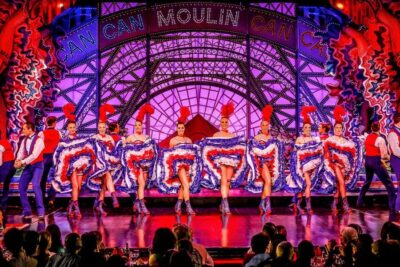
Pigalle brings music, nightlife, migration, and performance into the picture. In the early 20th century, this part of Paris was shaped by Black performers and venues, with jazz and cabaret helping create links between Paris and Harlem.
The stories here include Josephine Baker, the energy of Black entertainment, and the role of clubs in bringing artists and audiences together. You also hear about figures such as Langston Hughes, Richard Wright, James Baldwin, Malcolm X, and Martin Luther King Jr., depending on how Knight frames the day and the group’s interests.
This section is especially useful if you know Paris mainly through museums and monuments. Pigalle shows how culture can change a neighborhood without leaving behind an obvious museum label. Music, dancing, nightlife, and international friendships all helped make this area part of Black Paris.
Do not expect a long stop at a single attraction. Pigalle is treated as a neighborhood to read and discuss, not as a formal venue visit. You will be walking and listening, so staying close to Knight matters.
Same trip, a completely different kind of day:
- Paris: Evening River Cruise with Music
★ 4.4 · 22,721 reviews - Paris: Eiffel Tower Entry Ticket with Optional Summit Access
★ 4.4 · 20,035 reviews - Paris: Eiffel Tower Summit or Second Floor Access
★ 4.3 · 17,248 reviews - Paris: Louvre Guided Tour with Reserved Access & Boat Cruise
★ 4.3 · 16,353 reviews
La Goutte d’Or and everyday African Paris
The day then moves north to La Goutte d’Or, including the Château Rouge area. Here the subject becomes more contemporary and grounded in daily life.
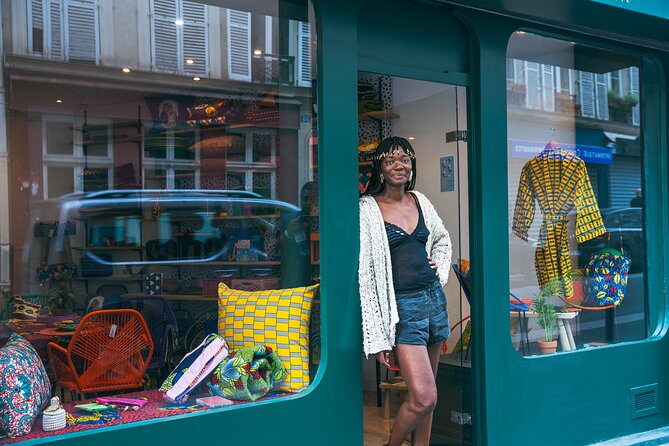
African communities have shaped the neighborhood’s shops, markets, clothing, food, and social networks. You may see textiles, design, jewelry, cafés, and businesses serving local residents. The point is not to treat the area as a stage set for sightseeing. It is a real neighborhood where people live, work, shop, and meet.
That distinction is important. Knight asks you to be respectful, including by avoiding photographs of people without consent. This is good practical guidance, and it changes how you move through the area. You are there to learn and observe, not to turn someone’s daily routine into a souvenir.
The stop can include places such as Keur Coffee Shop, which links Dakar and Paris through design and coffee culture, and Peulh Vagabond, known for clothing, jewelry, and accessories. One shop visit may introduce you to African textiles and the complicated story of Dutch wax prints. These details make the neighborhood feel lived in rather than reduced to a single label.
La Goutte d’Or is also where the tour’s balance becomes clearest. You get history, but you also see the present. You learn how African Paris continues to grow through small businesses, fashion, food, and community life.
The route requires real energy
Although the tour lasts about six hours, it is not six hours of standing in one place. You walk between stops and use public transportation, including the Metro and bus. The included all-day Metro pass is useful, but it does not remove the physical demands of the route.
Expect stairs at some stations and a good amount of time on your feet. One account of the day describes the walking as extensive, with several Metro rides and stairs. Knight has adjusted the pace or route when someone needed extra help, but you should not book this expecting a gentle café crawl.
Wear supportive shoes. Bring water. Keep your bag manageable. If you have trouble with stairs or long walks, contact the provider before booking and ask whether the route can work for you. The stated fitness level is moderate, and that is a fair description.
The transport also adds value. You are not sealed inside a private vehicle, watching Paris pass by through a window. You learn how the different neighborhoods connect and get a small lesson in moving around the city like a resident.
BMK Paris-Bamako closes the day with a meal
The final stop is BMK Paris-Bamako, at 14 Rue de la Fidélité. This African restaurant provides a natural ending after a morning and afternoon of walking, listening, and changing neighborhoods.
Lunch is not included in the $216.48 price, so budget separately for your meal and drink. That may seem like a minor detail, but it is worth knowing before you arrive. The restaurant stop is part of the experience, not a prepaid meal.
The food links Mali, Senegal, and wider West African cooking with the Paris setting. Dishes mentioned during the experience include West African specialties, and hibiscus mint drink is a popular choice. The shared meal also gives the group time to talk about what they have seen.
Ending at a restaurant is a smart design choice. After the literary and historical material, you finish with food, conversation, and a real local business. It keeps the day from feeling like a lecture with a few photo stops attached.
How Knight shapes the experience
The guide can make or break a history-focused tour. Knight’s role is central here. He brings together politics, entertainment, literature, migration, and personal stories without keeping the subject in a single period.
His strongest quality appears to be the ability to connect names and places. You may begin with Josephine Baker in Pigalle, move to Richard Wright and James Baldwin, then hear about Anna Julia Cooper at the Sorbonne or Malcolm X in Paris. The links between these figures help you understand that Black Paris was never one thing. It included artists, scholars, political organizers, students, workers, and families.
Knight also appears attentive to the practical side of guiding. He checks on comfort, helps people who need assistance, and can adapt the pace while keeping the group engaged. His humor and warmth matter during a long day, especially when the group is moving between several neighborhoods.
The small-group format supports this style. With a maximum of 10 people, you have a better chance to ask questions and hear the guide clearly. It also makes the shared meal and public transport easier than they would be with a large coach group.
Is $216.48 a fair price?
At $216.48 per person, this is not a budget walking tour. The price includes breakfast and an all-day Metro pass, but not lunch. You are paying mainly for the guide’s time, the six-hour route, the small group, and access to a subject that is not covered well by standard Paris sightseeing.
I think the value depends on what you want from Paris. If your goal is the cheapest way to see landmarks, this is not the right purchase. You could spend far less using a guidebook and public transit.
If you want a focused day built around Black history and culture, the price is easier to justify. The route covers several parts of Paris, and the guide provides context that would be difficult to assemble on your own in one day. You also avoid spending hours researching which literary sites, businesses, neighborhoods, and restaurants belong in a coherent route.
The small group is another part of the value. A maximum of 10 people allows for discussion rather than a one-way speech. For solo visitors, couples, and families who want an interpretive experience, that personal contact can matter more than a long list of included admissions.
Who should book this day?
I would recommend it most strongly to first-time visitors who want a different introduction to Paris, repeat visitors who have already seen the major monuments, and anyone interested in African, Caribbean, and African-American connections to France.
It is also a good choice for solo visitors. The group setting encourages conversation, and the stops at cafés, shops, and restaurants make it easier to meet people than a self-guided route would.
You do not need to be Black to benefit from the experience. The subject is about the African diaspora, French colonial and cultural connections, American writers and performers in Paris, and the continuing role of African communities in the city. Anyone willing to listen respectfully can learn from it.
I would hesitate if you dislike public transit, cannot manage several hours of walking, or prefer a tour centered on major monuments. The route may also feel too introductory if you already have advanced knowledge of Black Parisian history and want archival detail rather than a broad, accessible overview.
Practical details before you go
The meeting point is Les Deux Magots, 6 Place Saint-Germain des Prés, at 10 a.m. The tour ends at BMK Paris-Bamako, 14 Rue de la Fidélité, in the 10th arrondissement. Since you finish in a different part of Paris, do not plan to return to your hotel between the start and end.
Breakfast includes a croissant, bread with Poitou-Charentes butter, and a choice of hot drink. Lunch is available at BMK Paris-Bamako but must be paid for separately. Service animals are allowed, and the route is near public transportation.
The experience is offered in English and uses a mobile ticket. Free cancellation is available up to 24 hours before the start time. If poor weather forces cancellation, you are offered another date or a full refund.
Should you book A Day of Exploring Black Paris?
Book it if you want Paris presented through writers, performers, Caribbean connections, African communities, food, and neighborhood life rather than only through monuments. The strongest reasons are Knight’s personal style, the small group, the carefully linked stops, and the chance to see parts of Paris you might otherwise pass without understanding.
Skip it if you want a low-cost route, a relaxed pace, or a tour with little walking. For everyone else, this is a thoughtful and lively way to give your Paris visit a wider frame. Wear good shoes, keep your camera respectful in La Goutte d’Or, and arrive ready to listen as much as you look.
FAQ
How long does A Day of Exploring Black Paris last?
The experience lasts approximately six hours and begins at 10 a.m.
Where does the tour start?
It starts at Les Deux Magots, 6 Place Saint-Germain des Prés, 75006 Paris.
Where does the tour end?
It ends at BMK Paris-Bamako, 14 Rue de la Fidélité, 75010 Paris.
Is breakfast included?
Yes. Breakfast includes a croissant, bread with Poitou-Charentes butter, and a choice of hot drink.
Is lunch included?
No. Lunch at BMK Paris-Bamako is not included in the price.
How many people can join the tour?
The maximum group size is 10 people.
Does the tour include public transportation?
Yes. An all-day Metro pass is included, and the route uses public transportation. Expect walking and some stairs.
Just added around Paris
- Explore Hidden bars and Speakeasies in Paris★ 5.0 · 79 reviews
- Paris Private Custom Tour with a Local Guide, Hidden Gems & Highlights★ 5.0 · 293 reviews
- Paris French Baking Class Baguettes and Croissants in a Bakery★ 4.5 · 172 reviews
- Paris: Experience Segway Top Highlights Small Group 2 Hours★ 5.0 · 75 reviews
- Seine River Evening Cruise with Music (Drink Options)★ 3.5 · 321 reviews
- Paris Eternelle Notre-Dame Virtual Reality Tour★ 4.5 · 50 reviews
- Eiffel Tower Tour & River Cruise with Summit Option★ 4.0 · 215 reviews
- Paris Evening City of Lights Small Group Bike Tour & Boat Cruise★ 5.0 · 97 reviews
Paris Tours, compared.

Versailles Palace and Gardens Full Access Ticket
Read our review →
Eiffel Tower Entry Ticket with Optional Summit Access
Read our review →
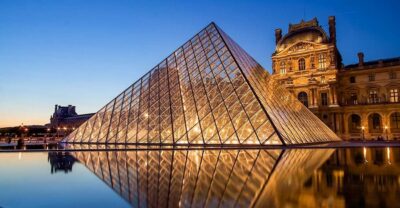
Louvre Guided Tour with Reserved Access & Boat Cruise
Read our review →