Reviewed · PARIS TOURS
Stade de France: Behind the Scenes Tour
The most memorable part of this tour is the route through the stadium’s working spaces. You walk through the player tunnel, see the locker rooms, visit private boxes, and get a feel for the enormous machinery beneath the seating bowl. The tour also connects football and rugby with concerts by Madonna, AC/DC, and The Rolling Stones.
I like the way the guide mixes architecture with stories about major events, rather than treating the stadium as a simple sports venue. I also like the included museum, which adds signed shirts, guitars, models, and French football and rugby displays at no extra cost. The main drawback is important: the pitch may not be visible, especially during winter or when technical and security rules change.
Key points to know before booking
- Walk the player route: Enter the stadium through the same tunnel used by athletes heading toward the field.
- See more than football: The tour covers rugby, World Cup matches, concerts, the Olympics, and the building itself.
- Visit restricted areas: The locker rooms, private boxes, stands, and below-seat corridors give you access beyond the normal spectator experience.
- Museum entry is included: Stay afterward to look through sporting objects, signed jerseys, guitars, models, and archives.
- Allow extra time at the entrance: Arrive 15 minutes early for security checks, since late arrivals can miss the tour without a refund.
- Check the pitch situation: Current conditions may prevent any view of the playing surface.
Why the Stade de France tour feels different from a match ticket
A match ticket shows you the stadium as a spectator. This tour shows you how the place works behind the scenes.
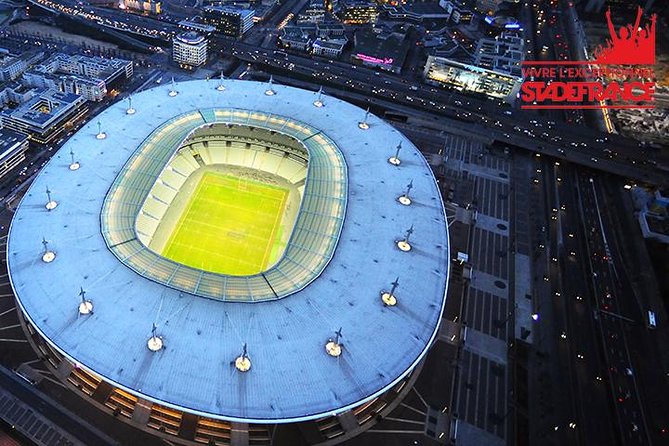
The Stade de France is not only a football ground. It has hosted FIFA World Cup and Euro Cup matches, major rugby events, concerts, and Olympic ceremonies. That variety gives the tour more range than a standard stadium visit. You are not simply looking at rows of seats and taking a quick photograph. You are following the path used by players, performers, officials, and high-profile visitors.
The guide explains the building’s design and how the venue has been used over the years. That architectural angle matters because the stadium can feel almost anonymous from outside. Inside, the scale becomes clearer. You see the spectator bowl from different levels, then move into areas most ticket holders never enter.
I especially like the way the tour links famous names to physical places. You can think about Zidane or Ronaldo while standing near the player route, then shift your attention to the concert side of the venue when the guide discusses Madonna, AC/DC, and The Rolling Stones. It gives the building several identities instead of reducing it to one famous match.
The experience is also lively enough for families. Guides have used playful activities, including a Brazilian-style warm-up, and some have been especially good at keeping children involved. One guide was praised for speaking English, French, and Spanish and for handling questions from both adults and children. The exact guide and language mix can vary, so book the English option if that is what you need and confirm what is being offered when you arrive.
A few more Paris half-days worth comparing
- Paris: Louvre Museum Timed-Entrance Ticket
★ 4.6 · 71,977 reviews - Disneyland® Paris 1-Day Ticket
★ 4.6 · 49,412 reviews - Paris: Versailles Palace and Gardens Full Access Ticket
★ 4.6 · 41,579 reviews
Meeting the guide and getting inside
The tour begins at the Official Shop at the Stade de France in Saint-Denis. That is also where the experience ends after the museum visit.
Give yourself at least 15 minutes before the scheduled start. Stadium security can include a bag check, and the administration may change access arrangements when events are taking place. This is not the place to cut things close. If you arrive late, the group may already be moving through a secured area, and the stated policy allows no postponement or refund for missed entry.
Public transportation serves the area, but allow time to find the correct entrance and walk to the meeting point. A serious transport problem has caused at least one person to miss the beginning, so I would avoid scheduling this immediately after another timed attraction. The tour itself covers about 1.2 kilometers on foot.
The maximum group size is 20 people. That is large enough to create a social group but small enough for a guide to manage questions and keep everyone moving together. The route is accessible for disabled visitors, and strollers are accepted. Dogs are not allowed, except for guide dogs serving blind visitors.
The stands and the view into stadium life
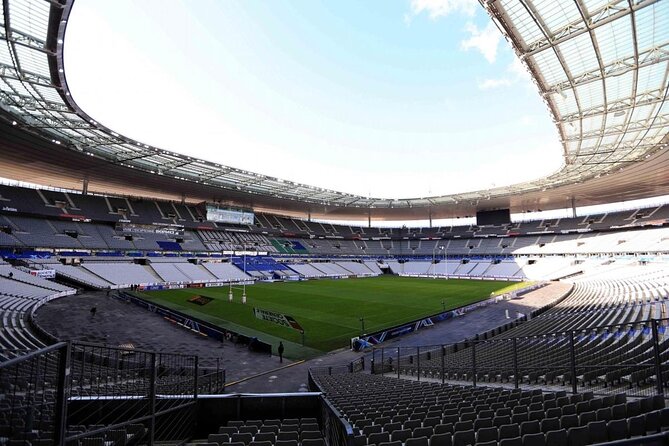
One early highlight is sitting in the spectator areas and taking in the stadium from the public side. From here, the size of the venue makes sense. A football or rugby crowd experiences the place from these seats, but the tour lets you pause and consider how the whole structure supports a major event.
The guide also explains details of the architecture and the stadium’s development. This is useful for visitors who are interested in large public buildings, not only in sport. The Stade de France is built to handle several kinds of events, and the tour shows how that broad purpose affects the spaces around the arena.
The seating areas are also good for photographs, although access and sightlines can change depending on what is being prepared in the stadium. Security requirements take priority, and the route may be adjusted if an event is taking place.
A key warning applies here. The experience description refers to the field and player route, but the pitch currently cannot be seen for technical reasons. Winter conditions can also keep it out of view. If standing on the actual grass is the central reason you want to book, check the current conditions first. The tour still reaches the tunnel and other stadium areas, but you should not pay expecting a guaranteed field visit.
Locker rooms, private boxes, and the player tunnel
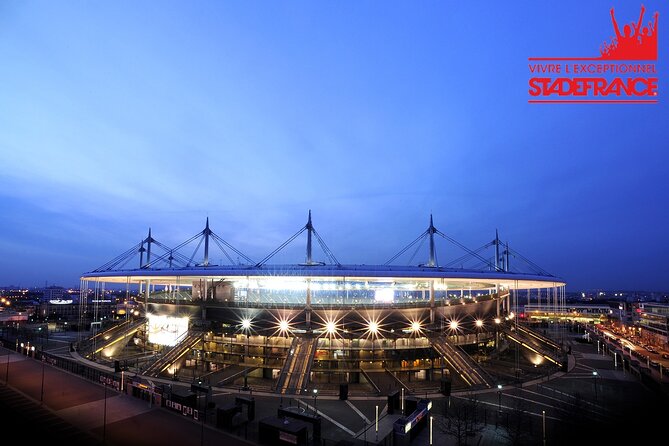
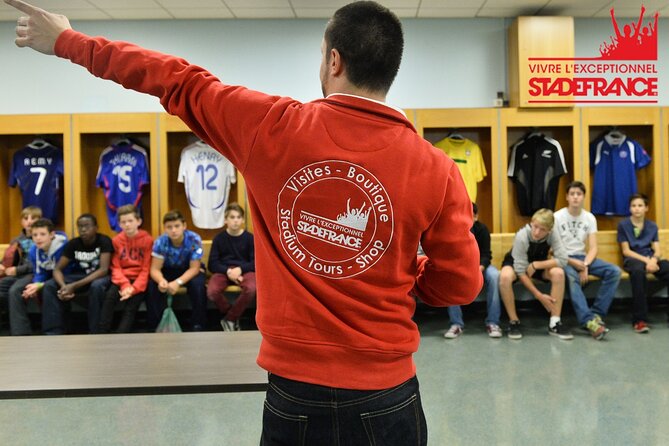
The restricted areas are the heart of the experience. You visit the locker rooms, see the private boxes, and move through corridors beneath the stands. These spaces explain why a major stadium feels like a small city on event day, with separate routes and rooms for different groups.
The private boxes offer a contrast to the public seating. Instead of the noise and closeness of the main stands, you get a look at how important visitors experience a match or concert. The visit does not turn you into a VIP, of course, but it gives you a clear sense of the venue’s different levels of access.
The locker rooms are likely to be the biggest draw for football and rugby fans. This is where the stadium becomes personal. A seat in the crowd is about watching a famous player. A locker room visit lets you picture the preparation before the players walk out.
Then comes the player tunnel. Walking the same route toward the field is a simple experience, but it works because it connects the ordinary visitor with the ritual of a major event. You can imagine the noise building at the end of the tunnel, even if the pitch is not currently open to view.
The guide may also turn parts of this section into a small group activity. A light training exercise or a chance to pose like a player can make the visit more fun for children and less formal for adults. I would not book this expecting a full sports session, but the playful touches help keep the 90-minute tour from becoming a lecture.
Same trip, a completely different kind of day:
- Paris: Evening River Cruise with Music
★ 4.4 · 22,721 reviews - Paris: Eiffel Tower Entry Ticket with Optional Summit Access
★ 4.4 · 20,035 reviews - Paris: Eiffel Tower Summit or Second Floor Access
★ 4.3 · 17,248 reviews - Paris: Louvre Guided Tour with Reserved Access & Boat Cruise
★ 4.3 · 16,353 reviews
World Cup football, rugby, concerts, and the Olympics
The Stade de France has a wide event history, and the guide uses it to show how one building can serve very different audiences.
Football fans will hear about major international matches, including the FIFA World Cup and Euro Cup. The references to Ronaldo and Zidane give the football side of the tour a strong pull, especially for families with a favorite player or a child who follows the sport closely.
Rugby also has an important place here, and the museum includes material connected with French rugby. That makes this a better choice for rugby fans than many city sightseeing tours, which often focus only on football.
Concert history adds another layer. AC/DC, Madonna, and The Rolling Stones are among the acts associated with the venue. Even if you have no interest in sport, this part can make the stadium worthwhile. You start to see the arena as a flexible performance space rather than a field surrounded by seats.
The Paris Olympics are also part of the story. Depending on the current route and event schedule, the guide may discuss Olympic ceremonies and the stadium’s role in the wider sporting calendar. Access can change when the stadium is preparing for an event, so the tour is not a fixed museum display. That flexibility is practical, but it means two visits on different dates may not follow exactly the same path.
The museum adds real value after the walk
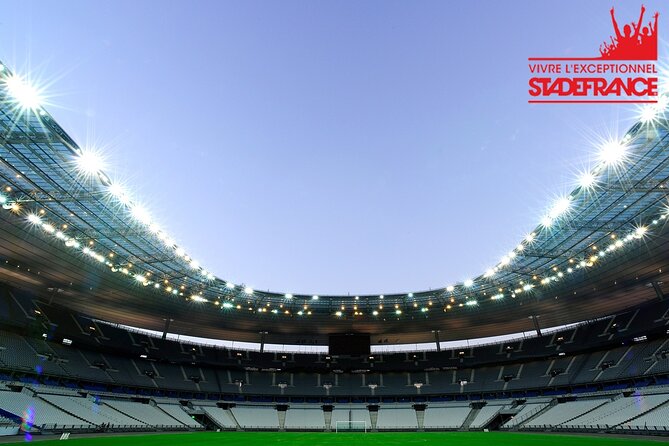
Your ticket includes entry to the Stade de France Museum, and you can visit it after the guided portion at your own pace.
This is a useful addition rather than a token room at the exit. Displays include signed football and rugby jerseys, autographed guitars, models, and historical archives. The collection helps connect the stories from the tour with physical objects.
I would save enough energy for the museum instead of treating it as a two-minute finish. The guided tour gives you the building and the stories. The museum lets you slow down and inspect the objects. Families can use it as a calmer final section, while sports fans may want extra time with the jerseys and archival material.
The museum is also the part most likely to work for a mixed group. One person can enjoy the stadium architecture, another can focus on football memorabilia, and someone else can look at the concert material. You do not need to be a dedicated football supporter to find something of interest.
Is $22.64 a fair price?
At about $22.64 per person, the price is reasonable for a 90-minute guided visit with access to restricted stadium areas and a museum included.
The value comes from the combination. You are paying for a guide, the locker rooms, player route, private boxes, stands, and museum entry, not just admission to a viewing platform. The group limit of 20 also helps keep the visit more personal than a huge stadium procession.
The price is less convincing if your only goal is to stand on the pitch. Since the playing surface may be unavailable, check that detail before booking. The tour remains worthwhile for its other spaces, but the pitch limitation changes the calculation for a visitor who wants the classic field photograph.
You also need to factor in your time. The activity lasts about 1 hour and 30 minutes, covers a fair amount of walking, and requires early arrival. Add time for transportation and the museum. It is not a quick stop you can squeeze between two attractions with no margin.
Free cancellation is available until 24 hours before the scheduled start. Changes or cancellations inside that window are not accepted for a refund, so keep your Paris schedule flexible before the deadline.
Who should book this experience?
I would recommend it first to football and rugby fans, especially families with children who know the players and want to see the spaces connected with international sport.
It also suits concert fans and visitors interested in modern stadium architecture. The references to Madonna, AC/DC, The Rolling Stones, and the Olympics give the tour enough variety for someone who does not follow football.
You should also consider it if you enjoy places that normally operate only during major events. The locker rooms, private boxes, tunnels, and below-stand corridors offer a different kind of access than a normal match or concert ticket.
I would hesitate if you want the PSG stadium. The Stade de France is a different venue, and a person expecting a Paris Saint-Germain visit could easily book the wrong experience. Check the stadium name carefully before paying.
I would also think twice if you dislike timed tours, group movement, or walking. The route is about 1.2 kilometers, late entry is not forgiven, and security rules may alter the plan. Those are manageable conditions, but they matter.
Practical verdict on the Stade de France visit
Book this tour if you want to understand how one of France’s major venues works from the inside. The locker rooms, tunnel, private boxes, and museum give you plenty to see, while the guide’s stories connect football, rugby, concerts, and the Olympics.
The strongest reason to go is the access beyond the spectator seats. The main caution is the current lack of guaranteed pitch visibility. Arrive early, allow time for transport, and think of the museum as part of the visit rather than an optional afterthought.
For the price, it is a solid choice for sports fans and a surprisingly good option for anyone curious about the machinery behind major events. Just confirm the pitch situation and make sure you want the Stade de France, not the PSG stadium, before booking.
FAQ
How long does the Stade de France behind-the-scenes tour last?
The guided experience lasts approximately 1 hour and 30 minutes.
Where does the tour begin and end?
It begins at the Official Shop at the Stade de France in Saint-Denis. The activity ends back at the meeting point.
Is the Stade de France Museum included?
Yes. Museum admission is included, and you can visit the museum after the guided tour at your own pace.
What areas can I see during the tour?
The route can include spectator seats, private boxes, locker rooms, the player tunnel, and corridors beneath the stands. Access may change because of stadium events and security requirements.
Can I see the pitch?
The pitch currently cannot be seen for technical reasons, and winter conditions can also prevent a view. Check the current situation before booking if seeing the playing surface is essential to you.
How early should I arrive?
Arrive at least 15 minutes before the scheduled start. Security staff may check bags, and late arrivals risk missing the tour without a postponement or refund.
Is the tour accessible for visitors with disabilities and strollers?
Disabled access is included, and strollers are accepted. Dogs are not permitted, except for guide dogs serving blind visitors.
Just added around Paris
- Explore Hidden bars and Speakeasies in Paris★ 5.0 · 79 reviews
- Paris Private Custom Tour with a Local Guide, Hidden Gems & Highlights★ 5.0 · 293 reviews
- Paris French Baking Class Baguettes and Croissants in a Bakery★ 4.5 · 172 reviews
- Paris: Experience Segway Top Highlights Small Group 2 Hours★ 5.0 · 75 reviews
- Seine River Evening Cruise with Music (Drink Options)★ 3.5 · 321 reviews
- Eiffel Tower Tour & River Cruise with Summit Option★ 4.0 · 215 reviews
- Paris Evening City of Lights Small Group Bike Tour & Boat Cruise★ 5.0 · 97 reviews
- Paris Eternelle Notre-Dame Virtual Reality Tour★ 4.5 · 50 reviews
Paris Tours, compared.



Versailles Palace and Gardens Full Access Ticket
Read our review →
Eiffel Tower Entry Ticket with Optional Summit Access
Read our review →

Louvre Guided Tour with Reserved Access & Boat Cruise
Read our review →