
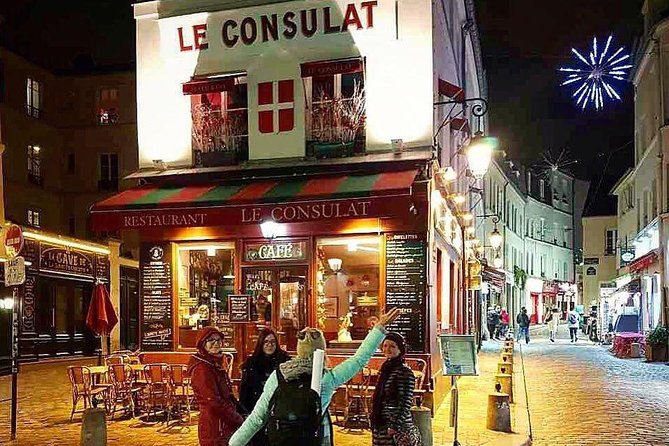
Reviewed · MONTMARTRE TOURS
Montmartre Highlights – Bohemian Streets & Sacré-Coeur Basilica
Montmartre is Paris at its most theatrical: white-domed Sacré-Coeur above the city, the red windmill of the Moulin Rouge below, and narrow streets tied to Picasso, Van Gogh, Monet, and other artists. This tour connects those pieces in about two hours, with live stories instead of a simple stroll past buildings.
I like the small maximum group of 15, which makes it easier to hear the guide and ask questions. I also like the choice of morning, afternoon, or evening departures, though I would choose daylight if the Paris view matters most. The catch is simple: this is a hilly walk, with steps and slopes that may feel tough for anyone with limited mobility or low stamina.
Key points at a glance
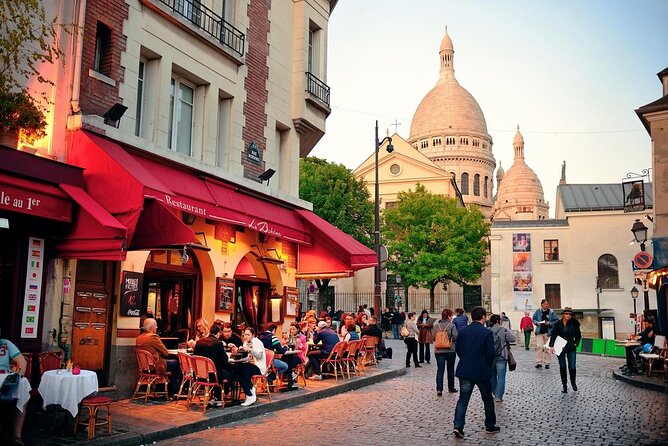
- Sacré-Coeur from the Montmartre hilltop: See the basilica’s huge 480-square-meter fresco, impressive dome, and wide view across Paris.
- Artists’ Montmartre: Hear stories connected with Van Gogh, Picasso, Monet, Manet, Pissarro, Rodin, Zola, and other figures.
- Moulin Rouge from the outside: Learn how the red windmill became a symbol of cabaret and the French Cancan.
- Pigalle’s changing character: See the famous nightlife district, including cafés, cabarets, and sex shops, alongside traces of its earlier artistic life.
- Place du Tertre finish: End among painters and caricaturists, with cafés and restaurants close by.
- A compact walking tour: The two-hour format gives you a useful first look without taking up half your Paris day.
Why this Montmartre walk works well
Montmartre can be confusing on your own. The streets twist, the sights are scattered, and the neighborhood shifts quickly from touristy squares to quiet lanes. This walk gives you a clear thread: start near Blanche, move through the lower nightlife district, climb into the old village, and finish at Place du Tertre.
The guide is the main reason to book it. Sacha, Max, Catherine, Caterina, Christian, Katrina, and other guides are named in the experience feedback, with repeated praise for their clear explanations, humor, patience, and ability to bring local stories to life. Sacha is especially noted for using maps and old photographs to show how Montmartre changed over time.
That kind of visual aid matters here. A modern street rarely explains what stood there before, and Montmartre has changed from a village outside Paris into one of the city’s best-known districts. A guide can connect the present street to the artists, writers, cabaret performers, and working windmills that shaped its identity.
The group limit of 15 is another practical plus. Montmartre gets crowded, especially around Sacré-Coeur and Place du Tertre. A small group is easier to keep together on narrow streets, and the guide’s loudspeaker helps you hear the commentary without everyone pressing close.
More Montmartre walks and Sacre-Coeur visits:
- Montmartre Hidden Gems and Scenic Highlights Walking Tour
★ 5.0 · 2,684 reviews - Montmartre Hill French Gourmet Food and Wine Tasting Walking Tour
★ 5.0 · 2,588 reviews - Paris: Montmartre Cheese, Wine & Pastry Guided Walking Tour
★ 4.8 · 2,255 reviews
Starting at Blanche and meeting the Moulin Rouge
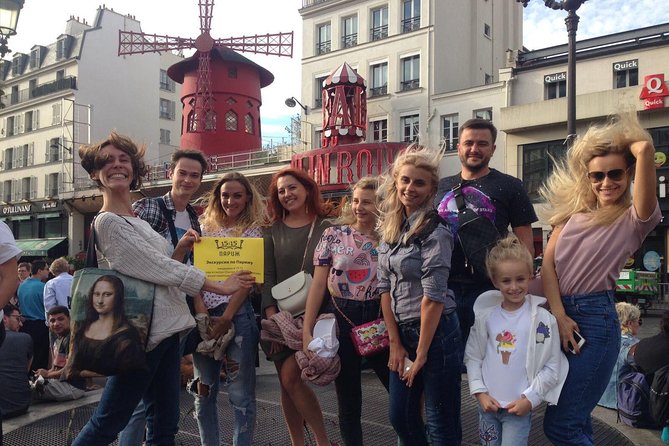
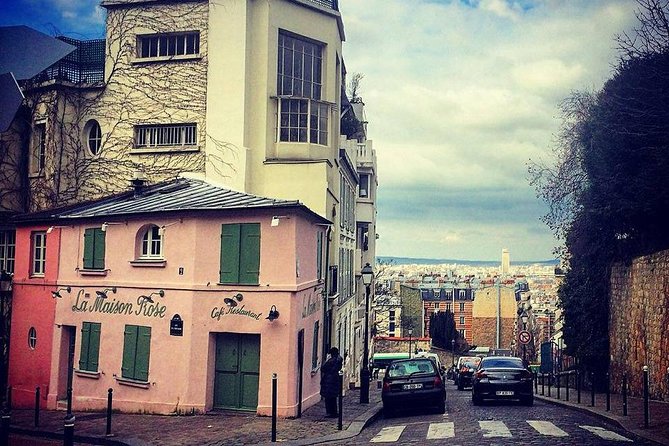
The tour begins at Blanche, in the 18th arrondissement, close to the Moulin Rouge. This is a useful starting point because it places you at the edge of Montmartre’s famous nightlife district rather than dropping you straight into the souvenir shops around Sacré-Coeur.
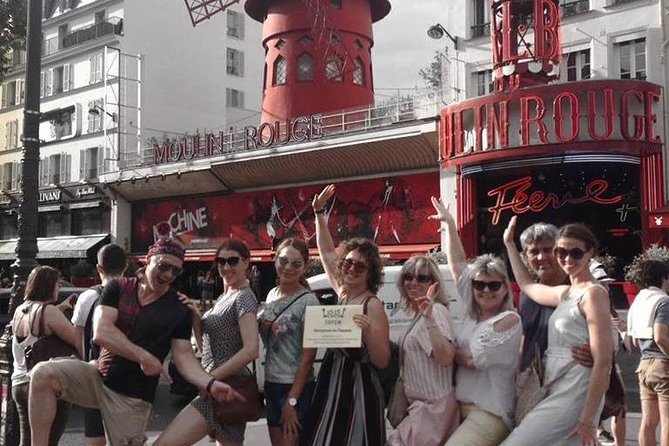
The Moulin Rouge is viewed from outside. You will hear about the red windmill, the cabaret’s place in Parisian culture, and the introduction of the French Cancan to the Parisian public. It is a short stop, about 15 minutes, so think of it as an introduction and photo opportunity, not a cabaret performance.
That distinction matters when judging the price. The $47.79 fee covers a guided walking experience, not admission to a show, meal, or paid attraction. If you want to see a Moulin Rouge performance, that requires a separate plan and budget.
The streets around Pigalle can feel lively and adult-oriented. The district is known for cafés, cabarets, sex shops, and nightlife, so it may not suit every family or every visitor. The guide also points out older connections with painters and writers, giving you more context than a quick look at the modern storefronts.
Pigalle and the climb into old Montmartre
Pigalle is more than a backdrop for the Moulin Rouge. It sits at the foot of the Montmartre hill and helps explain the area’s long link with nightlife, artists, and performers. The tour spends about 30 minutes here, enough time for an overview without turning the walk into a detailed study of every street.
From Pigalle, the route moves upward. This is where the physical side of the experience becomes clear. You should expect hills, stairs, and repeated changes in elevation. Several people specifically describe the walk as strenuous, while others note that the pace remained manageable for an older family member.
I would wear comfortable shoes and avoid carrying a heavy day bag. There is no need to rush, but you should be ready for a genuine walking tour rather than a flat city promenade. If you are dealing with a serious health issue, limited balance, or difficulty on steep slopes, this may not be the right way to see Montmartre.
The guide can make the climb feel more purposeful. Instead of simply counting steps, you learn where artists lived, worked, met friends, or spent their evenings. The names connected with the district include Van Gogh, Picasso, Monet, Manet, Pissarro, Rodin, and Zola. The stories are not limited to paintings. They also touch on the personal lives and habits of the people who made Montmartre famous.
Sacré-Coeur and the best city view
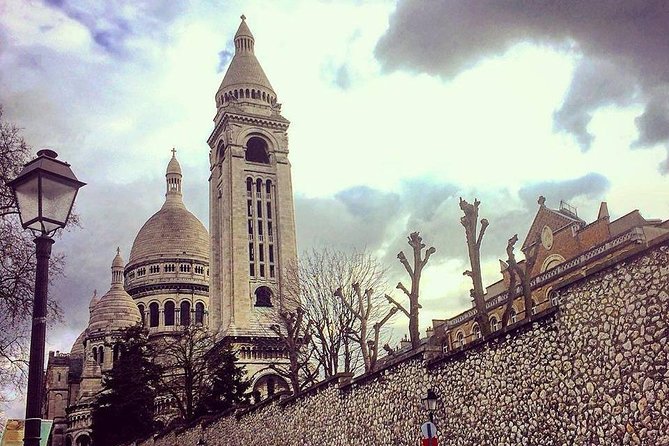
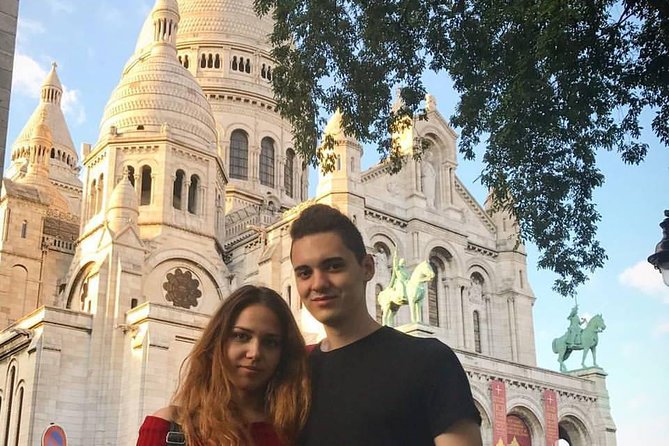
Sacré-Coeur is the visual high point of the tour. The basilica is one of Paris’s largest churches, with an impressive dome and a 480-square-meter fresco inside. Admission to the basilica is included at no extra charge.
The church itself is worth more than a quick photograph. The guide explains what you are seeing, then gives you time to take in the hilltop setting. From Montmartre, Paris spreads below in a broad city view, and this is one of the main reasons to include the district in a first visit.
The tour information describes a view from the top of the hill, not a separate paid visit to the basilica dome. Do not assume that the tour price includes a climb into the dome or every paid area. The included visit is to the basilica, with the hilltop view forming part of the walk.
Timing can change how this stop feels. A morning departure gives you daylight and may help you avoid the busiest hours. An afternoon tour works well if you want to pair Montmartre with another morning activity. An evening departure can give the neighborhood a different mood, but the view may not be as useful for identifying Paris landmarks, especially in poor weather.
The area around Sacré-Coeur is crowded and attracts pickpockets. One guide, Sacha, is specifically praised for giving practical advice about avoiding theft near the basilica. Keep your phone and wallet secure, especially when stopping for photographs or moving through dense foot traffic.
A few more Paris half-days worth comparing
- Paris: Louvre Museum Timed-Entrance Ticket
★ 4.6 · 71,977 reviews - Disneyland® Paris 1-Day Ticket
★ 4.6 · 49,412 reviews - Paris: Versailles Palace and Gardens Full Access Ticket
★ 4.6 · 41,579 reviews - Paris: Evening River Cruise with Music
★ 4.4 · 22,721 reviews
Following the artists through Montmartre
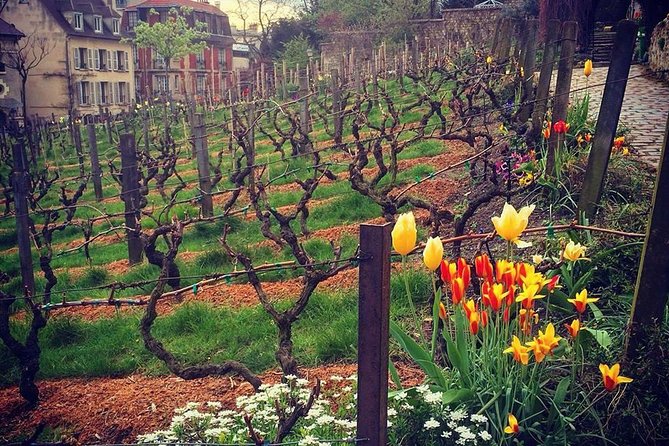
The central Montmartre section is where the tour moves beyond headline sights. For about 30 minutes, you walk in the footsteps of painters and writers who lived in the area during the late 19th and early 20th centuries.
The value here is not simply hearing a list of famous names. A good guide explains how the neighborhood worked as a place to live, meet, drink, paint, and write. You may learn about former homes, gathering places, and the everyday settings behind the legends.
The guide’s presentation style matters. Sacha is described as carrying maps and photographs, while Catherine and Caterina are noted for using older images to compare past and present. Max is praised for combining historical explanation with colorful stories. Those details suggest a tour that uses the streets as evidence instead of treating Montmartre like a series of unrelated photo stops.
You may also recognize places connected with the film Amélie. That is a nice extra for film fans, though this is not presented as a dedicated movie tour. The main focus remains the neighborhood’s art, social life, and changing identity.
Some guides offer restaurant suggestions and practical advice at the end. Because the tour finishes at Place du Tertre, you can continue exploring without having to cross Paris for lunch or dinner.
Place du Tertre and the village feel
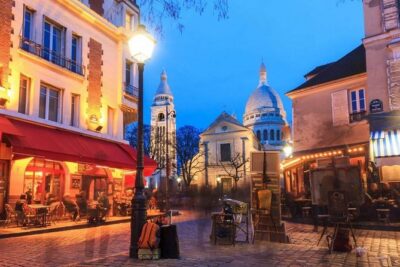
Place du Tertre is the final stop and the official end point. The square is known for painters, caricaturists, cafés, and restaurants. It can be crowded and touristy, but it also gives you a clear sense of why Montmartre is often described as a village within Paris.
The tour presents the square as a remnant of the area’s older rural character, with references to vineyards, bocce fields, and tucked-away parks. You should not expect a quiet country lane in the middle of the day. Instead, look for fragments of that older atmosphere behind the artists’ tables and restaurant terraces.
Ending here is convenient. You can eat, rest, browse the square, or continue uphill and downhill on your own. The tour does not include a meal, so plan to buy food separately if you want to stay in the area.
Place du Tertre is also a useful point for deciding how much more Montmartre you want. After two hours, you will have an orientation to the district and its main stories. You can then return to a street or sight that caught your attention rather than wandering without a plan.
How much walking should you expect?
The listed stops add up to roughly two hours, but the physical effort is greater than the time suggests. Montmartre is built on a hill, and the route includes uphill sections, steps, and downhill walking. Several people describe it as a lot of climbing, while one account notes that the guide was patient with an 80-year-old participant.
A moderate fitness level is recommended. That does not mean you need to be an athlete, but you should be comfortable walking for two hours and handling uneven or steep sections. The tour is not designed as a seated sightseeing experience.
Choose footwear for grip and comfort. Bring water, and leave enough space in your schedule so you do not need to hurry through the last part. If you are visiting with an older relative, discuss the hills in advance. A guide can set a reasonable pace, but the route cannot remove Montmartre’s slopes.
The loudspeaker is a useful touch. In a group of up to 15, it helps the guide maintain some distance while keeping the commentary audible. It also reduces the need to gather tightly around the guide in crowded areas.
Price, group size, and overall value
At $47.79 per person, this is not the cheapest way to walk around Montmartre. You can visit Sacré-Coeur and Place du Tertre without paying an admission fee, and you can see the Moulin Rouge from the pavement for free.
The fee pays for structure, interpretation, and time saved. In two hours, you cover the lower nightlife district, the artistic streets, Sacré-Coeur, and the main square. A good guide also helps you understand why these places belong in the same story.
The value is strongest if this is your first time in Montmartre or if you want history and art rather than only photographs. It is less useful if you already know the area well, dislike group walks, or prefer to explore at your own pace.
The maximum group of 15 keeps the price more reasonable than a private tour while avoiding the scale of a large coach group. Group discounts may be available, and confirmation is provided at booking. The tour is offered in English with a mobile ticket.
Who should book this tour?
I would recommend it to first-time Paris visitors, art fans, people who enjoy local stories, and anyone who wants a firm introduction to Montmartre before exploring alone. It also suits visitors with limited time, since the route covers several major themes in about two hours.
Families with older children may enjoy the stories, though the Pigalle section includes adult nightlife and the hills can test younger legs. Adults who want a cabaret show should remember that the Moulin Rouge is an exterior stop only.
I would think carefully before booking if you have difficulty walking uphill, need frequent seated breaks, or want an in-depth visit inside Sacré-Coeur. The tour provides a useful overview, not a slow architectural study.
Free cancellation is available if you cancel at least 24 hours before the start time. Poor weather or failure to reach the minimum number of participants can lead to a new date, another experience, or a full refund. Since weather affects both the walk and the view, it is wise to keep some flexibility in your plans.
Should you book the Montmartre Highlights walk?
Book it if you want Montmartre explained by a lively guide rather than simply photographed. The strongest parts are the small group, the art and neighborhood stories, the Moulin Rouge context, and the finish at Place du Tertre. Guides such as Sacha, Max, and Catherine are singled out for humor, strong preparation, and clear storytelling.
Choose a morning or afternoon start if the Paris view is important. Bring comfortable shoes, protect your valuables near Sacré-Coeur, and expect real hills. For a first look at Montmartre that mixes famous sights with the people and stories behind them, the $47.79 price is fair.
FAQ
How long does the Montmartre Highlights tour last?
The walking tour lasts approximately two hours.
Where does the tour begin?
The tour begins at Blanche, 75018 Paris, France.
Where does the tour end?
It ends at Place du Tertre, the main square of Montmartre, near painters, caricaturists, restaurants, and cafés.
Is the tour offered in English?
Yes. The tour is offered in English.
How large is the tour group?
The group has a maximum of 15 participants.
Is admission to Sacré-Coeur included?
Yes. The visit to the basilica has no additional admission charge as part of the tour.
Is a Moulin Rouge show included?
No. The Moulin Rouge is viewed from outside, and admission to a show is not included.
Are meals included?
No. Meals are not included.
How difficult is the walking?
A moderate level of physical fitness is recommended. The route includes uphill walking and steps, so it may be strenuous for people who have difficulty with hills.
Can I cancel for a full refund?
Yes, if you cancel at least 24 hours before the experience start time. Cancellations or changes made less than 24 hours in advance are not refunded or accepted.
Just added around Paris
- Paris at the First Lodges – Ducasse sur Seine dinner cruise★ 4.0 · 165 reviews
- Paris at the First Lodges – Ducasse sur Seine Lunch Cruise★ 4.5 · 70 reviews
- Disneyland® Paris 1 Day with Round-Trip Train Tickets from Paris★ 4.0 · 50 reviews
- Explore speakeasies and hidden bars, sip meet & socialize★ 4.5 · 47 reviews
- Disneyland® Paris Express Shuttle with Admission Ticket from Central Paris★ 3.5 · 172 reviews
- Paris Cheeses and Wines Tour de France with Tasty Games★ 5.0 · 32 reviews
- Musée Orsay Highlights Tour – Best of Impressionism & Hidden Gems★ 5.0 · 27 reviews
- Private Tour: Discover Paris with Local, 3 hours on a Segway★ 5.0 · 71 reviews
Montmartre Tours, compared.
Montmartre Hidden Gems and Scenic Highlights Walking Tour
Read our review →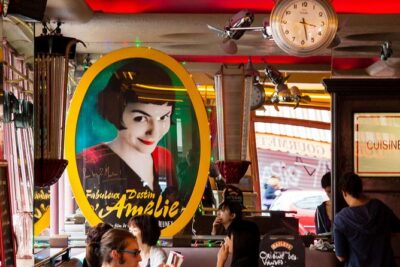
Montmartre Hill French Gourmet Food and Wine Tasting Walking Tour
Read our review →
Montmartre Cheese, Wine & Pastry Guided Walking Tour
Read our review →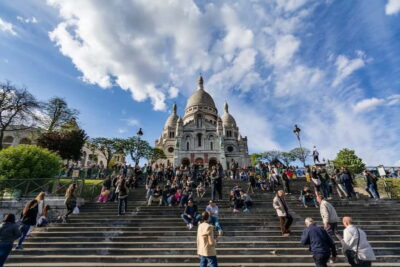
Montmartre Highlights Walking Tour with a Local Guide
Read our review →
Sacré-Coeur and Montmartre Tour with Expert Guide
Read our review →
Private Montmartre Food Tour with Wine, Cheese & Pastries
Read our review →
Paris Montmartre Food Tour – A Full French Meal by Do Eat Better
Read our review →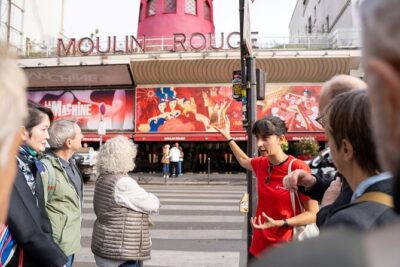
Hidden Montmartre: Paris’ Secret Streets Walking Tour
Read our review →Browse the lists this tour appears in