
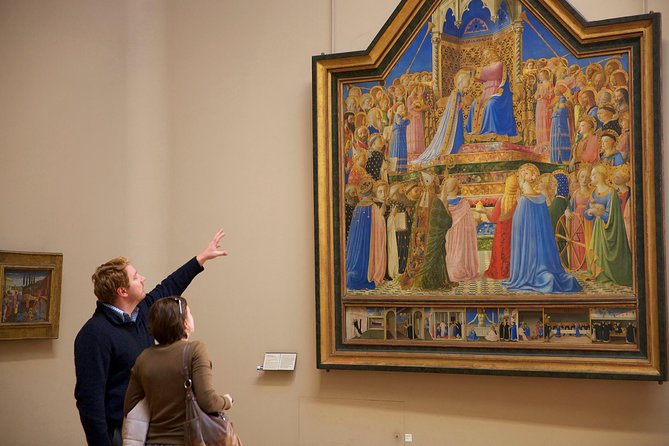
Reviewed · LOUVRE TOURS
Closing Time at the Louvre: The Mona Lisa at her Most Peaceful
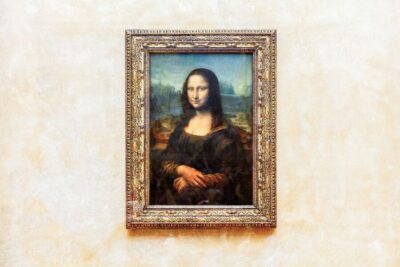
The best reason to book this Louvre tour is the timing. You enter late, move through the palace with a guide, and reach the Mona Lisa as the museum heads toward closing. At its best, this means less pushing, less noise, and a real chance to look at Leonardo’s small, famous portrait instead of viewing it over a wall of raised phones.
I like the focused route through the Louvre, which saves you from wandering past room after room without a plan. I also like the guides’ teaching style. Adam, Julie, Felix, Nazli, and others have been praised for making art clear, lively, and useful for children as well as adults.
The catch is that late does not always mean peaceful. A June afternoon or peak holiday period can still be hot and crowded, especially around the Mona Lisa. This is a brisk three-hour highlights visit, and because it ends at closing, you may not have time to explore alone afterward.
Key points to know before booking
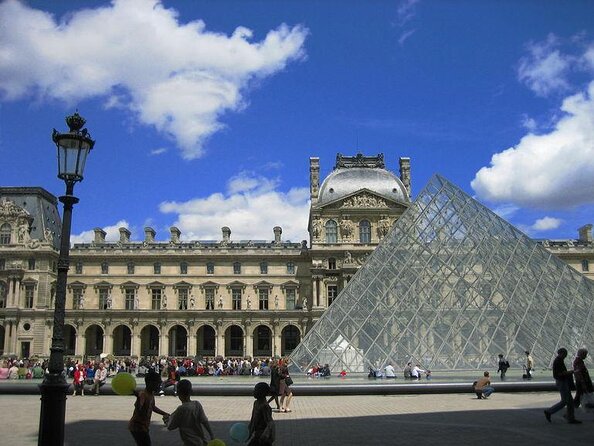
- The Mona Lisa comes near the end: The late timing can make the most famous stop easier, but crowd levels change by season and day.
- You see the Louvre with a plan: The route includes the moat foundations, Greek sculpture, major Italian paintings, and French masterpieces.
- Small-group format matters: The maximum is 20 people, and smaller departures may give you more room for questions and discussion.
- The guide shapes the experience: Past departures have featured Adam, Julie, Felix, Nazli, Nancy, Omar, and other English-speaking art specialists.
- Skip-the-line access saves energy: The group uses a designated entrance and is guided through security, though you should still arrive at the exact meeting point on time.
- The price covers more than admission: The $101.58 cost includes the €22 adult museum ticket, guide, walking tour, and headset.
Why the late Louvre visit can work
The Louvre is not a museum you casually finish. It is a former palace with enormous collections, long corridors, grand staircases, and more famous works than most people can name. If you try to make your own route on a first visit, you can spend half your time checking a map and the other half wondering if you missed the important room.
This tour gives you a route and a reason for the late start. You are not simply buying entry to see one painting. You are using the final part of the museum day to cover a carefully chosen group of works, with the Mona Lisa as the closing prize.
The late hour is the main gamble. On a quiet winter evening, the museum may feel remarkably open. One departure had enough room for the group to sit near artworks and talk without being hurried. In summer, June, and busy holiday periods, the same idea works less perfectly. The Mona Lisa can still have a thick crowd in front of it, and the building can feel warm.
That does not make the tour a poor choice. It means you should book it for efficient guidance and a better chance at a calmer final visit, not as a guarantee of an empty gallery.
More Louvre tickets and guided visits:
- Paris: Louvre Museum Timed-Entrance Ticket
★ 4.6 · 71,977 reviews - Paris: Louvre Guided Tour with Reserved Access & Boat Cruise
★ 4.3 · 16,353 reviews - Louvre Museum Masterpieces Guided Tour with Access
★ 4.5 · 12,023 reviews
Meeting at the Arc de Triomphe du Carrousel
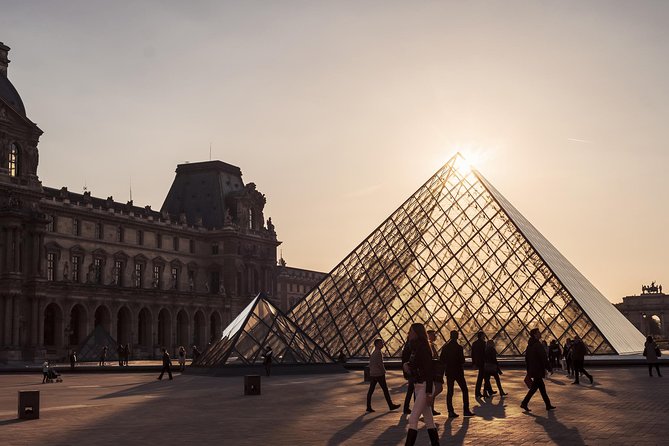
The tour begins at the Arc de Triomphe du Carrousel, at Place du Carrousel in the 1st arrondissement. The starting area is close to the Louvre Pyramid, Place des Pyramides, and Place du Carrousel, so you are meeting in the heart of the museum district rather than at a distant office.
This location is practical, but you need to take the meeting instructions seriously. One unhappy customer missed the group after confusion about the meeting point and had trouble obtaining a refund. The operator’s position was that the guide and group had been present and left after the waiting period.
Arrive early. Confirm the precise point on your booking and look for the tour staff or sign before the scheduled start. Do not assume that being somewhere near the Louvre is enough. The Louvre grounds are large, and a few minutes of uncertainty can cost you the entire tour.
The tour ends at the Louvre. Hotel pickup and drop-off are not included, so plan your own route to the meeting point and your return afterward. The area is near public transportation, which makes it practical for a start or finish in central Paris.
Entering through the Louvre’s grand setting
Before the art begins, you get a sense of the building itself. The Louvre was not built as a simple gallery, and the route includes the palace foundations at the moat. This early look helps you see the museum as a former fortress and royal residence, not only as a place where paintings hang on walls.
The glass Louvre Pyramid gives the meeting area its famous modern marker. Its sharp geometry contrasts with the old palace around it, and Place du Carrousel provides the broad open setting that makes the complex easier to recognize.
The group entrance is an important practical benefit. Several people found that the guide helped them pass the entrance lines and move through security without wasting time in the main queue. This does not mean you skip every step or walk straight inside without checks. It means the guide handles the group entry process and keeps the visit moving.
You receive a headset. That small item matters in a large, noisy museum. You can stay a little behind the guide to look at a sculpture or painting and still follow the explanation. A headset also helps when the group is moving through crowded rooms.
Greek sculpture: Venus de Milo and Winged Victory
The Classical Greek sculpture section gives the tour two of its essential stops. Venus de Milo is famous for her missing arms, calm expression, and graceful balance. A guide can give you a better way to look at her than simply taking a photograph and moving on.
Winged Victory of Samothrace is a different kind of experience. The sculpture is placed dramatically at the top of a grand staircase, and its forward motion feels almost physical. The winged figure has no head, yet the pose and drapery suggest power, wind, and arrival.
These are good choices for a short museum visit because they show two very different ideas of the human figure. One is quiet and self-contained. The other seems to surge toward you. You do not need a degree in art to enjoy the contrast, but a guide can point out details you might otherwise miss.
The route is brisk. One guide was described as a fast walker, and that may be true of the tour’s general pace. You should be comfortable walking at a moderate speed, stopping for explanations, then moving on to the next room. It is not designed as a slow afternoon in one gallery.
A few more Paris half-days worth comparing
- Disneyland® Paris 1-Day Ticket
★ 4.6 · 49,412 reviews - Paris: Versailles Palace and Gardens Full Access Ticket
★ 4.6 · 41,579 reviews - Paris: Evening River Cruise with Music
★ 4.4 · 22,721 reviews - Paris: Eiffel Tower Entry Ticket with Optional Summit Access
★ 4.4 · 20,035 reviews
The Italian masters and Leonardo’s famous portrait
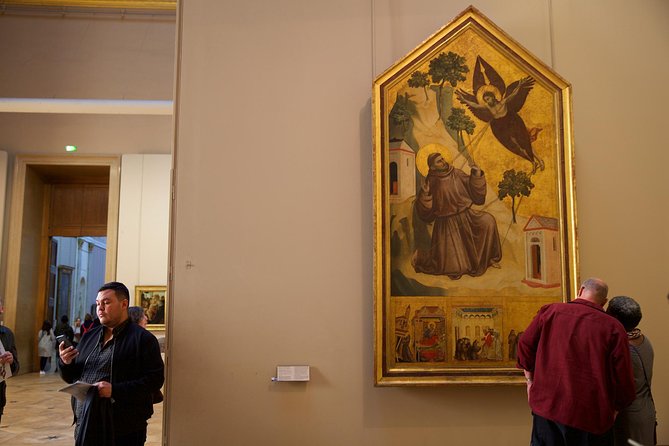
The tour also brings you to works by Caravaggio, Raphael, and Leonardo da Vinci. These names are familiar, but seeing several artists in the same museum gives you a chance to compare their choices.
Caravaggio’s drama comes through light, shadow, and strongly staged figures. Raphael offers a different kind of balance and control. Leonardo rewards patience, especially when a guide points out the small decisions behind the famous effect of a face that seems to follow you.
The Louvre holds far more Italian art than can fit into a three-hour route. That is why the guide’s selection matters. A strong guide makes the painting stop useful rather than turning it into a list of names and dates.
Several guides have used visual aids, including an iPad, to show related examples or details. That can help when you are trying to understand a work at a distance or compare one artist’s treatment with another. The exact guide and teaching tools can vary, so consider this a possible benefit, not a promised feature.
The Mona Lisa comes late in the visit. You will not be able to stand inches from the painting, and the protective setup limits how close you can get. Still, a lighter crowd can let you reach the front of the viewing area rather than seeing her from behind a dense line of people.
Do not expect the painting to become a private appointment. The room may still be busy, and photographs are likely to be part of the scene. The advantage is relative: fewer people may mean a clearer view, more time to look, and less need to hold your phone above your head.
The Raft of Medusa and the Louvre beyond paintings
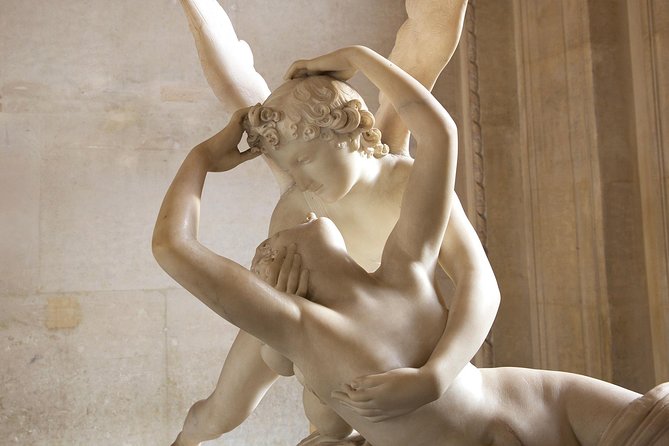
Géricault’s The Raft of Medusa adds a large French Romantic canvas to the route. Its scale and emotional force are useful reminders that the Louvre is not only about small portraits and polished royal art. The painting presents a desperate scene, and its composition guides your eye through suffering, hope, and distant rescue.
A good guide can help you read the direction of the figures and the way the canvas builds tension. Without that help, the painting can seem like an enormous, grim scene that you walk past because the room is crowded.
The Louvre’s building is part of the lesson. One of the most useful ideas from the tour is that the palace’s past helps explain the art shown inside it. You are moving through spaces shaped by kings, court life, and changing ideas about collecting and display.
That broader context is especially useful if this is your first Louvre visit. You get enough architecture, sculpture, and painting to understand the museum’s range without trying to cover every department.
What the guides add to the three hours
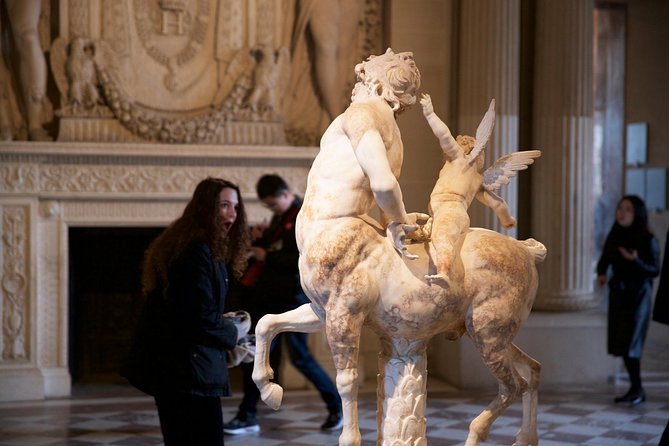
The strongest part of this experience is the human element. The guide is not only there to lead you from one room to another. The best guides ask you to notice things, explain why a work matters, and keep the pace from becoming a lecture.
Adam has been singled out for humor, clear teaching, and a way of making people think about the art. Julie has been praised for an engaging approach and for creating time to sit near works and talk, especially during a quiet winter departure. Felix has been appreciated for an approachable style and strong context.
Nazli has taken time to show extra areas when the group had particular interests. Nancy has been praised for combining personality with art knowledge. Omar, Ahmed, Sara, Laurence, Felicia, and others have also received warm feedback for keeping the route organized and enjoyable.
You cannot choose a particular guide from the information provided, so book the tour for the format rather than a promised personality. Guide quality can vary from one departure to another, but the repeated strength is clear: the experience depends heavily on how well your guide turns a huge collection into a manageable story.
Families can use this format well. One guide kept children and teenagers involved with humor and interaction, and another was described as especially good with kids. Still, the walking pace and length mean very young children may find the route tiring.
Is $101.58 good value?
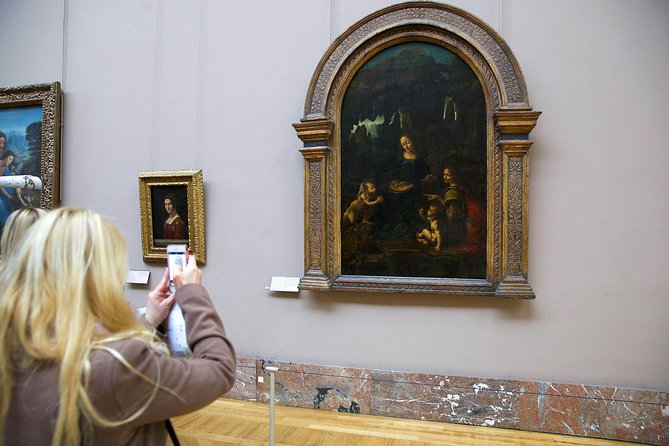
The listed price is $101.58 per person. That includes the €22 adult museum admission, an English-speaking local guide, the guided walk, and a headset.
The value comes from time and direction rather than the ticket alone. You are paying to enter through a group route, avoid the ordinary entrance queue, find the famous works efficiently, and hear explanations that would be difficult to recreate from labels alone. If you have only one Louvre visit in Paris, those benefits can justify the cost.
The price is less attractive if you already know the museum well or want a slow, independent visit. You may prefer to choose your own rooms, spend an hour with one painting, or remain after the guided route. This tour ends at closing, so there is no built-in time to continue exploring afterward.
Free museum admission applies to visitors under 18 and EEA residents under 26 who show valid identification and proof of residency. The tour still has a listed per-person price, so check the booking terms carefully if that rule applies to you.
Pace, crowds, and comfort
You should be ready to walk at a moderate pace for about three hours. The Louvre is large, and the route includes several sections rather than one compact gallery. Some guides pause for toilets and check that no one is being left behind, but the tour is not a sit-down activity.
The museum has limited air conditioning. On a hot day, the interior can feel warm, even if it remains manageable. Wear comfortable shoes and bring water if permitted under the museum’s current rules. A folding stool may be available from the Louvre, and one person found it useful during longer explanations, but do not count on a seat for every stop.
The maximum group size is 20. That is small enough for a guide to keep the group together, but it is not the same as a private tour. If personal questions and a quieter pace are important to you, look for the smallest available departure.
Crowds change constantly. The late visit is a sensible strategy, especially outside the busiest periods, but the tour name should not be read as a promise of silence. The most honest expectation is a potentially calmer Louvre with a better chance of reaching the front near the Mona Lisa.
Who should book this Louvre experience?
I would choose this tour if you are visiting Paris for the first time, want the major works without planning your own route, or feel overwhelmed by the museum’s size. It is also a good match for families who need a guide to keep children engaged and for couples who want a memorable evening art visit.
Art lovers may appreciate the context and the chance to ask questions, though repeat Louvre visitors might prefer a department-specific tour. Independent museum wanderers should think twice, since the fixed route and closing-time finish leave little room for unscheduled exploration.
The tour is offered in English only. You should be comfortable following spoken English while walking and standing in busy museum spaces. If you have difficulty walking at a moderate pace, this may not be the right format.
Cancellation is free up to 24 hours before the start time for a full refund. Changes or cancellations inside that window are not accepted for a refund, so keep the policy in mind before you commit.
Should you book it?
Book this tour if the Louvre’s size worries you and the Mona Lisa is high on your Paris list. You get a practical route, a guide who can explain what you are seeing, included admission, headset support, and a late visit that may soften the crowds.
Do not book it expecting an empty museum or a private audience with Leonardo’s portrait. For the best odds of a calmer experience, choose a less busy season or later departure, arrive early at the Arc de Triomphe du Carrousel, and treat the tour as a well-planned introduction rather than your only possible Louvre visit.
FAQ
How long does the Louvre tour last?
The tour lasts approximately three hours.
What language is the tour offered in?
The tour is offered in English with a local English-speaking guide.
Is museum admission included?
Yes. The adult museum entrance ticket, listed as €22, is included.
Does the tour include a guide?
Yes. The experience includes an expert-guided walking tour with a local English-speaking guide.
Is a headset provided?
Yes. A headset is included so you can hear the guide while moving through the museum.
Where does the tour start?
It starts at the Arc de Triomphe du Carrousel, Place du Carrousel, 75001 Paris, France.
Where does the tour end?
The tour ends at the Louvre Museum.
Is hotel pickup included?
No. Hotel pickup and drop-off are not included.
How many people can join the tour?
The tour has a maximum of 20 participants.
Just added around Paris
- Paris: Croissant Baking Class with a Chef★ 5.0 · 201 reviews
- Cooking Class with a Parisian Chef★ 5.0 · 46 reviews
- Cocktails lessons in Speakeasy★ 4.5 · 72 reviews
- Paris: Choux Pastry and Chocolate Éclair Making Class★ 4.9 · 50 reviews
- Paris: Classic Sites Tour by Vintage Citroen 2CV★ 4.6 · 189 reviews
- Paris: Cheese and Wine Class in a 17th Century Cellar★ 4.8 · 91 reviews
- Paris: Romantic Photoshoot for Couples★ 4.9 · 131 reviews
- Paris: Bread and Croissant-Making Class★ 4.8 · 206 reviews
Louvre Tours, compared.

Louvre Guided Tour with Reserved Access & Boat Cruise
Read our review →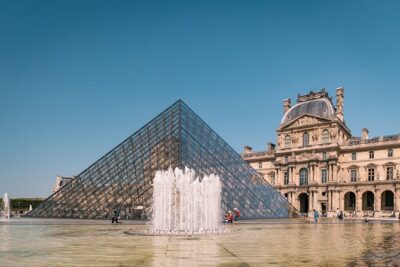
Louvre Museum Masterpieces Guided Tour with Access
Read our review →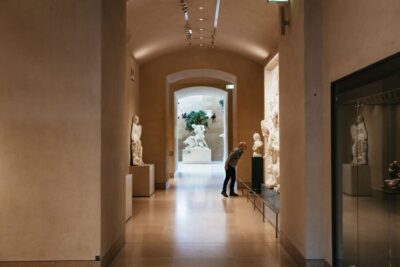
Louvre Museum Entry Ticket With Host and River Cruise
Read our review →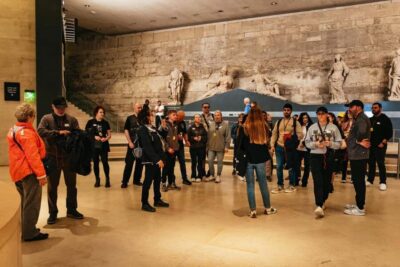
Priority Access Louvre with Host -Direct to Mona Lisa
Read our review →
Mona Lisa & Louvre Masterpieces Tour with Reserved Access
Read our review →
Louvre Museum – Exclusive Guided Tour (Entry Included)
Read our review →
Louvre Reserved Ticket and River Cruise Combo
Read our review →Browse the lists this tour appears in