
Reviewed · WINE TOURS
From Reims: Champagne Day Trip to 3 Family Domains & Lunch
The most appealing part of this day is its focus on three family Champagne estates, where you taste nine glasses and see how smaller producers work. You also reach Hautvillers, linked with Dom Pérignon, and Épernay’s grand Avenue de Champagne without having to arrange several separate visits.
I like the small group, limited to eight, and the guide-led route through the Marne Valley. I also like the useful mix of tastings, villages, vineyard views, cellar visits, and a sit-down French lunch. The main drawback is the pace: three estate visits plus Hautvillers and Épernay make for a full day, and the tour is not suitable for wheelchair users.
Key points
- Nine glasses at three family estates: The tastings give you several chances to compare styles, grapes, and production choices.
- Hautvillers and Dom Pérignon: Visit the village where the famous monk is buried at the former Benedictine abbey.
- Épernay’s grand avenue: See the headquarters and mansions of famous names such as Moët & Chandon, Perrier-Jouët, and Pol Roger.
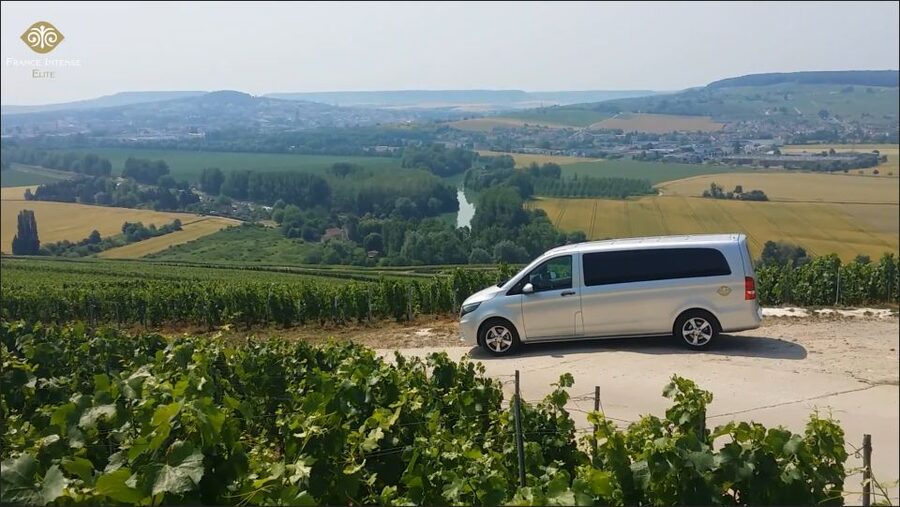
- Small-group transport: A comfortable van carries no more than eight participants from Reims.
- Guides with strong local knowledge: Radames, Pierre, Pascal, Victor, and others have received especially warm praise for their explanations and humor.
- A practical Paris day trip: The morning TGV makes this possible from Paris, but the train connection requires careful planning.
Why this Champagne day trip works so well
At $283 per person, this is not a bargain basement outing. It is a full-day regional tour with transport, a guide, nine Champagne tastes, three estate visits, and a main course at a local restaurant. If you tried to arrange those pieces separately, you would spend time coordinating trains, wineries, taxis, and reservations.
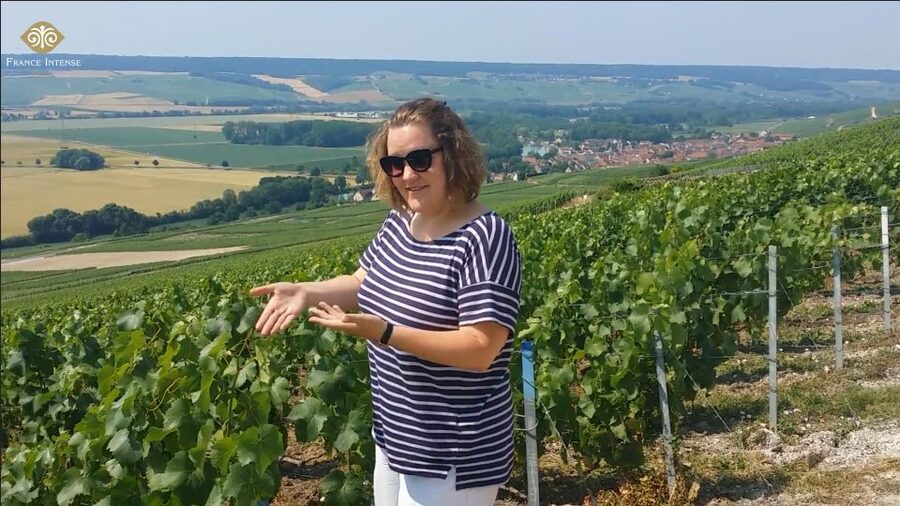
The real value comes from the access and structure. Champagne country is spread across vineyards, villages, and two main centers, Reims and Épernay. A small van lets you cover more ground than you could on foot or by local public transport. You can look out at the vineyards rather than worry about driving after tastings.
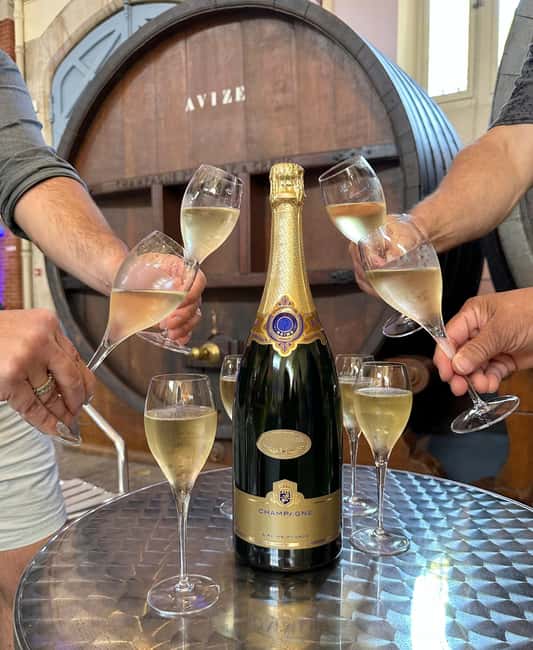
The format also suits you if you want to understand Champagne rather than simply drink it. The estate visits explain production, and the tastings give those explanations a practical purpose. You can connect what you hear about grapes, aging, blending, and house style with what is in your glass.
The tour has a 4.8 rating from 194 ratings, with particularly strong praise for guides including Radames, Pierre, Pascal, and Victor. The common thread is their ability to explain Champagne clearly while keeping the day relaxed and sociable. That matters on an eight-hour outing, since a dry lecture can make even excellent wine seem like homework.
More Day Trips in Champagne
- From Paris: Day Trip to Champagne with 8 Tastings & Lunch
★ 4.8 · 1,501 reviews - Champagne Day Trip with 6 Tastings, Reims and Winery from Paris
★ 5.0 · 902 reviews - Champagne Day Trip from Paris with 8 Tastings & Lunch
★ 4.5 · 607 reviews
Starting at Reims station
The meeting point is in front of the Tourist Office at Reims Central Station. The stated meeting time is 9:20 AM, though the supplied instructions also refer to a 9:30 AM meeting for people already staying in Reims. Confirm the precise time on your booking, especially if you are arriving by train.
From Paris, the suggested Monday to Saturday train is TGV 2709 from Paris-Est at 8:28 AM, arriving at Reims at 9:14 AM. That gives you only a small margin, so do not assume a delayed train will be accommodated. The operator specifically accepts no responsibility for train delays or cancellations.
Sunday planning is different. From March through June and September through October, the guide may collect Paris arrivals at 9:00 AM in front of Champagne-Ardenne station. In July and August, there is no Sunday morning train connection, so you should arrive in Reims the previous day.
For the return, the suggested train is any departure from Reims after 5:45 PM. That is sensible, since the advertised tour lasts eight hours and road delays can happen. If you are building a Paris day trip around this outing, leave breathing room rather than booking the first possible train.
A quick look at Reims before the vineyards
The day begins with about 20 minutes of sightseeing in Reims. This is a short introduction, not a full city tour, but it helps you place the Champagne region in context before heading into the countryside.
If you have never been to Reims, treat this as an orientation. The focus soon shifts to vineyards and producers, so you should visit the cathedral and other major city sights separately if they matter to you. Several guide accounts describe Reims, its history, and the surrounding area as part of the commentary during the drive, which adds more value than a simple transfer.
The van ride to the first Champagne stop takes about 30 minutes. With a group capped at eight, the ride should feel more personal than a large coach excursion. You can ask questions, and the guide can point out villages and vineyard areas along the route when timing allows.
The first estate and your introduction to Champagne
The first estate visit lasts about 90 minutes and includes a guided tour and Champagne tasting. This is where the day’s main subject comes into focus: how family producers make and present their wine.
The producers described for this experience are traditional family growers. Their own vineyard production is supplemented by grapes purchased under contract from independent growers working in some of Champagne’s best vineyard areas. That point is useful because it shows that a family label does not always mean every grape comes from one small parcel owned by the family.
You should expect the tasting to be more than a quick pour. The day includes nine glasses across three estates, so this first visit gives you a base for comparison. Notice how the aroma, sweetness, acidity, and finish change from one cuvée to another. You do not need expert wine vocabulary. Simply ask what makes each bottle different and which food the producer would pair with it.
The first tasting may be the most generous part of the day, depending on the estate and final arrangements. One past account described five glasses at an initial small family winery, while the current experience advertises nine glasses across three estates. The exact distribution can vary, so do not assume each location will pour the same number.
More Wine Tours in Champagne:
- From Reims: Champagne and Family-Run Wineries Tour
★ 4.8 · 671 reviews - From Paris: Reims and Champagne Tasting Full-Day Tour
★ 4.8 · 610 reviews - Reims afternoon tour Champagne and family growers
★ 5.0 · 535 reviews - From Reims: Morning Champagne Tour and Tastings
★ 4.8 · 463 reviews
Hautvillers and the Dom Pérignon connection
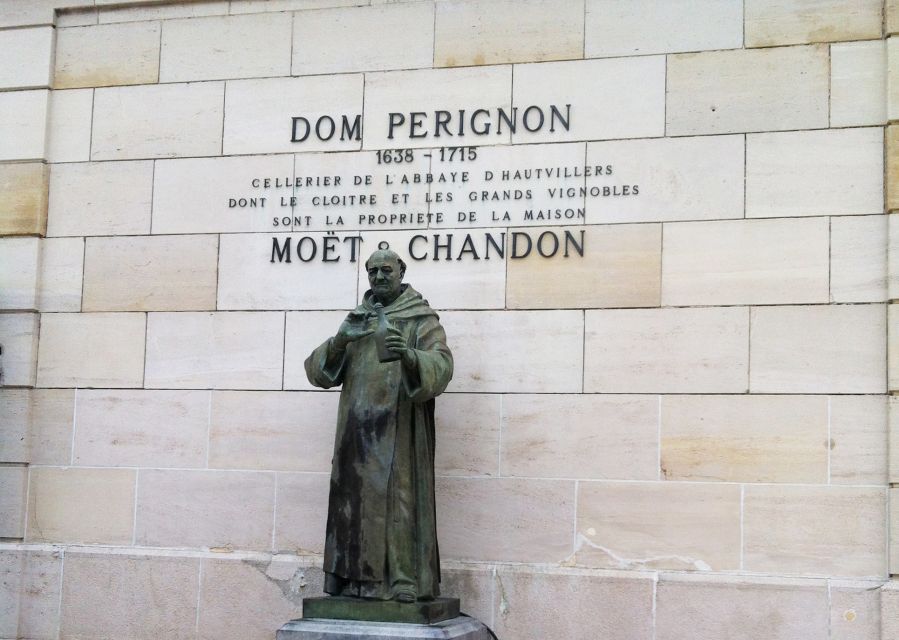
After the first tasting, the van travels for roughly 20 minutes to Hautvillers. You have about 30 minutes there, enough for a focused visit rather than a long village walk.
Hautvillers is closely tied to Dom Pérignon, the Benedictine monk associated with Champagne’s early development. He is buried in the church of the former Benedictine abbey. The stop gives the day a human and historical center: you are not just visiting modern brands, but a village connected with the story that helped make Champagne famous.
Do not expect a full abbey tour or an extended museum visit based on the stated schedule. The value here is the setting, the church, the village, and the guide’s explanation. The Marne Valley views also add a welcome pause after the first tasting.
This is one of the tour’s best moments for a camera, though the experience is not built around lengthy photo stops. If you like small French villages and regional history, Hautvillers gives the itinerary character that a cellar-only tour would lack.
Épernay and the Avenue de Champagne
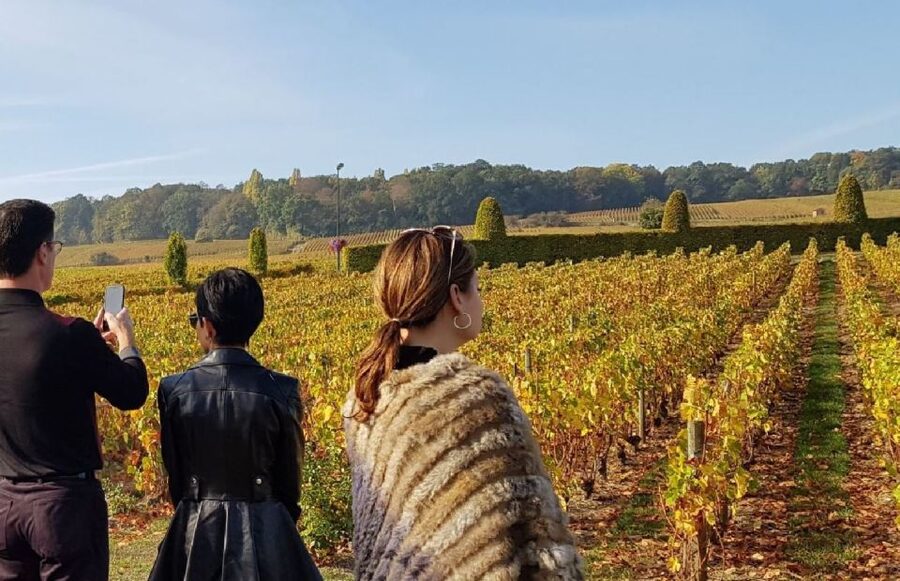
The van ride from Hautvillers to Épernay takes about 10 minutes. You then spend around 10 minutes passing through or stopping at the Avenue de Champagne, the city’s famous wine street.
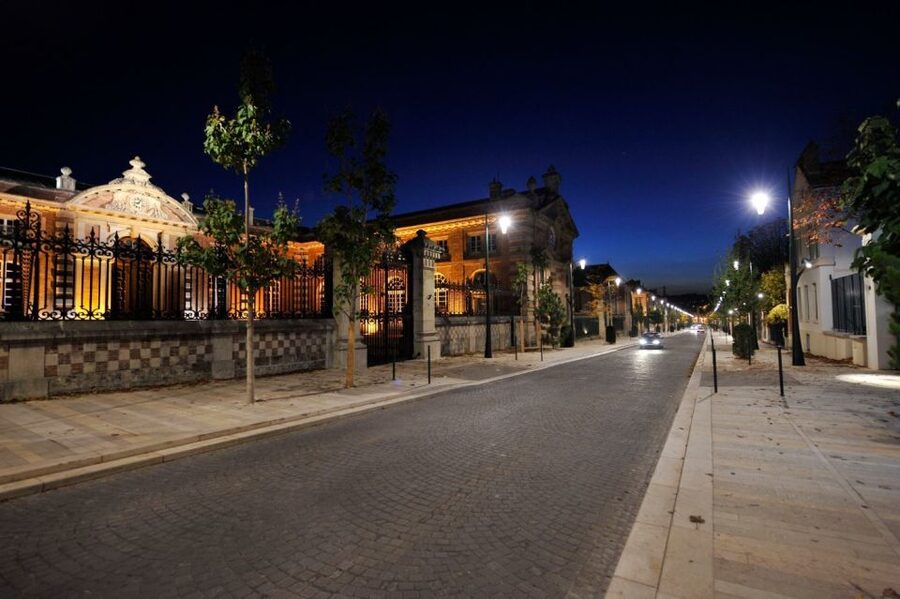
The avenue is lined with grand houses linked to major Champagne names, including Moët & Chandon, Perrier-Jouët, and Pol Roger. Beneath the streets are about 100 kilometers of tunnels used for Champagne storage. You may not enter those tunnels on this particular stop, but the guide can explain why Épernay became such an important center for the trade.
Ten minutes is brief, so keep your expectations realistic. This is a visual introduction to the avenue, not a full visit to several major Champagne houses. That is also part of the tour’s appeal: the day uses Épernay to show you the grand commercial side of Champagne, while the estate tastings focus on smaller family producers.
The contrast is useful. Large houses have famous names, impressive buildings, and extensive cellar networks. Family estates offer a closer look at smaller-scale production and personal presentation. Seeing both sides helps you understand that Champagne is a region of varied producers, not one single style of business.
Lunch in Épernay
Lunch lasts about an hour at a local restaurant, with a main course included. This is an important pause in a day that includes several tastings and regular movement between stops.
The meal is described as convivial and traditional, though the exact restaurant and menu are not specified. One rating praised the lunch as excellent, while another found it disappointing. I would treat the meal as a convenient regional break rather than the main reason to book the tour.
Because only the main course is stated as included, check what you will pay for drinks, starters, desserts, or extras. One older account also described lunch as being at your own cost, so the current booking details are worth confirming if the meal budget matters to you.
An hour is enough for a proper sit-down meal, but not for a long, leisurely restaurant experience. That fits the rest of the day. You are here to see Champagne country, not spend two hours at one table.
The second and third family estates
After lunch, the tour continues to a second family estate. The drive takes about 20 minutes, followed by around 90 minutes for a guided visit and tasting.
This second stop is where the comparison becomes more useful. You have already heard the basic production story, so you can focus on differences in house style, vineyard sourcing, aging, and presentation. One account particularly liked visiting two smaller producers because their methods and flavors offered a clear contrast.
A final 20-minute transfer brings you to the third estate. This visit also lasts about 90 minutes and includes a guided tour and tasting. By this point, you have had time to form your own preferences. You might prefer a drier Champagne, a fuller style, a particular grape balance, or simply the bottle from the estate that made you feel most welcome.
The visits may include cellars, production areas, or tasting rooms, but the exact facilities depend on the estates scheduled for your date. The strongest accounts describe warm welcomes and personal connections between the guides and the family producers. That can make these stops feel less formal than a major-brand cellar tour.
The schedule is full, and three 90-minute tastings require some stamina. You will be drinking across the day, so pace yourself and use the meal as a proper break. The tour provides nine glasses, not unlimited pours, but Champagne still adds up when combined with a long day.
The guide makes or breaks the day
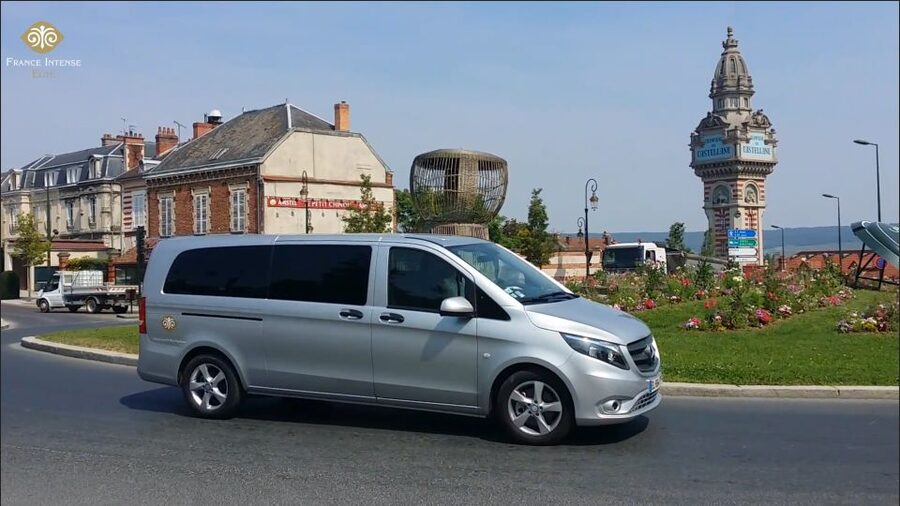
The guide is central to this experience. Radames, Pierre, Pascal, Victor, and other guides have been praised for explaining both Champagne production and the region’s history in clear English. Their style is often described as warm, funny, patient, and easy to talk with.
That matters because the itinerary includes several transfers. A good guide turns those drives into part of the tour by explaining villages, vineyards, producers, and local traditions. A weaker guide would leave the day feeling like a series of disconnected tastings.
Guide quality can vary by departure, so you cannot book a specific personality unless the operator confirms one. Still, the repeated praise for named guides is a strong sign that France Intense places real value on its guiding team.
The small group helps. With no more than eight people, the guide can answer questions without losing half the van. It also makes the tastings more personal and reduces the waiting that often comes with large organized tours.
Who should book this experience
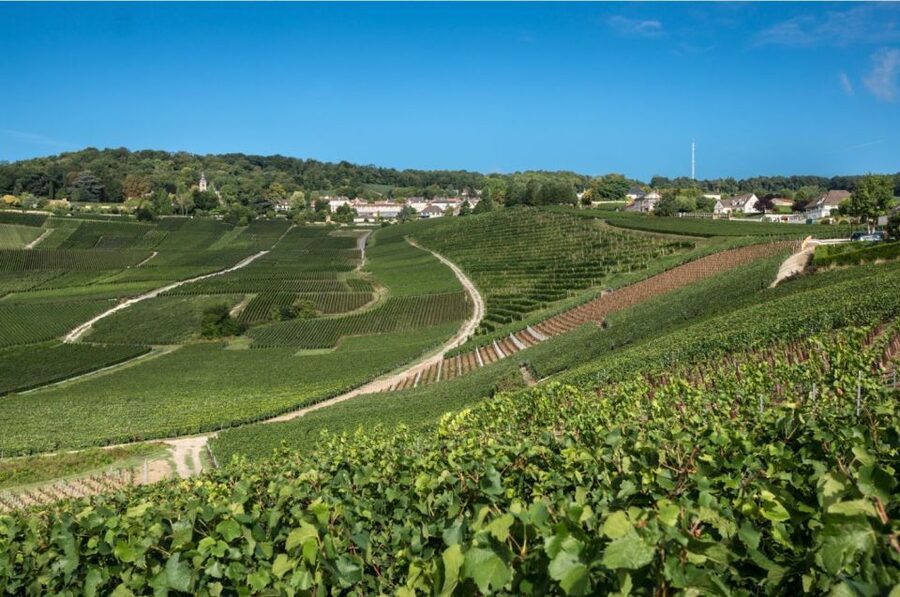
I would choose this tour if you have one day for Champagne and want the major pieces handled for you. It works especially well for first-time visitors who want Reims, Hautvillers, Épernay, vineyard scenery, Champagne education, and tastings in one carefully timed day.
It also suits people who prefer smaller producers to a parade of famous brand names. The itinerary does not center on a full visit to Moët & Chandon, Pommery, or another large house. Instead, you see the Avenue of Champagne and learn about major names while spending tasting time at family estates.
You should think twice if you want a slow, specialist wine day with long visits at one or two producers. This is a broad regional introduction. You see more places, but each stop has a fixed time.
It is not suitable for wheelchair users. You should also be comfortable getting in and out of a van and keeping to a full eight-hour schedule, though the supplied details do not give a specific accessibility breakdown for each estate.
Is the $283 price fair?
For $283, you are paying for convenience as much as wine. The price covers pickup and return at Reims station, a comfortable van, an English-speaking guide, three guided estate visits, nine Champagne glasses, the Hautvillers stop, the Épernay pass, and a main course at lunch.
The value is strongest if you are coming from Paris for one day. Booking individual tastings and arranging transport across the Marne Valley would be difficult, and hiring a private vehicle would likely cost more for a solo visitor or couple. The small group keeps the experience more personal without the cost of a fully private tour.
The price is less compelling if you are already staying in Épernay and plan to visit one nearby producer on your own. In that case, you are paying for the full circuit and guide service, not just the tastings.
Free cancellation up to 24 hours before departure and reserve-now, pay-later booking make the financial planning easier. The train from Paris is not included, so add that to your budget.
Should you book it?
Book this Champagne day trip if you want maximum regional coverage in one day, especially from Paris or Reims. The combination of family estates, nine tastings, Hautvillers, Épernay, lunch, and a small van is hard to arrange independently.
Skip it if your priority is a slow gourmet lunch, a wheelchair-accessible route, or a single prestigious house with a long cellar visit. For most first-time visitors with only one day, though, the mix is practical, varied, and well supported by guides who bring the vineyards and producers to life.
FAQ
Where does the tour start?
It starts in front of the Tourist Office at Reims Central Station.
What time should I arrive?
The meeting instructions state 9:20 AM, while another instruction refers to 9:30 AM for people already staying in Reims. Confirm the exact time on your booking.
Can I take this tour from Paris?
Yes, but you must arrange and pay for your own train ticket. Suggested train times are provided for weekday, Saturday, and some Sunday departures.
Is transportation included?
Yes. Transport between the stops is provided in a comfortable van, with pickup and drop-off at the stated Reims meeting point.
How large is the group?
The tour is limited to eight participants.
How many Champagne tastings are included?
Nine glasses are included across three family Champagne estates.
Is lunch included?
A main course at a local restaurant is included. The provided details do not state that starters, desserts, or all drinks are included.
Does the tour visit Hautvillers?
Yes. You have about 30 minutes to visit Hautvillers, including the village connected with Dom Pérignon and the church where he is buried.
Does the tour enter the Avenue de Champagne cellars?
The itinerary includes a visit or pass through Épernay’s Avenue de Champagne. It explains the major houses and underground tunnels, but it does not state that you enter the tunnels during this tour.
Is the tour wheelchair accessible?
No. The experience is listed as unsuitable for wheelchair users.
What happens if my train is delayed?
The operator states that France Intense cannot be held responsible for train delays or cancellations. Plan a connection with enough time before the meeting and after the tour.
Just added around Champagne
- Passy-Grigny: Chocolate and Champagne Tasting Tour★ 4.8 · 208 reviews
- Champagne Vineyard Experience: Delve into the terroir★ 4.4 · 52 reviews
- Champagne: Canard-Duchêne Champagne House Tour★ 4.7 · 66 reviews
- Champagne Cellar Experience: Explore our historic cellars★ 4.7 · 46 reviews
- Champagne Munoz Bruneau : Half Day Visit and Tasting★ 4.9 · 53 reviews
- Aÿ-Champagne: Pressoria Champagne Museum with Tasting★ 4.7 · 239 reviews
- Aÿ-Champagne: Champagne House Tour and Tasting Class★ 4.9 · 209 reviews
- Small Group – Half Day Champagne Tour – Visit of 2 Small Producers/Growers★ 5.0 · 341 reviews
Wine Tours, compared.
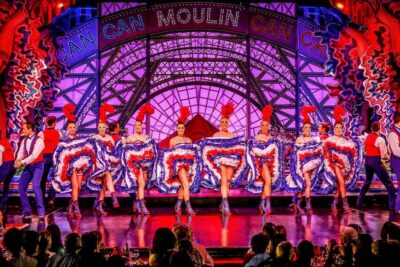
Moulin Rouge Cabaret Show Ticket with Champagne
Read our review →
Authentic Parisian Gourmet Food Tour with 10 Local Dishes & Wines
Read our review →
Loire Valley Castles Day Trip from Paris with Complementary Wine
Read our review →
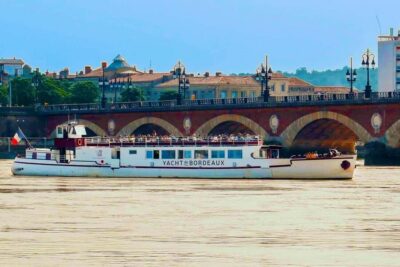
River Garonne Cruise with Glass of Wine and Canelé
Read our review →
Montmartre Hill French Gourmet Food and Wine Tasting Walking Tour
Read our review →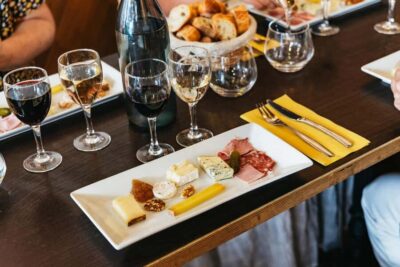
Montmartre Cheese, Wine & Pastry Guided Walking Tour
Read our review →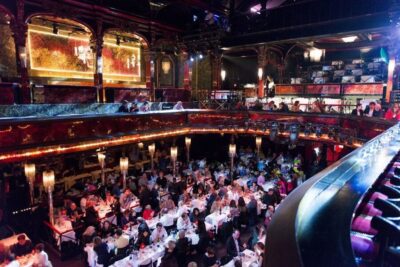
Paradis Latin Cabaret Show with Optional Champagne
Read our review →Browse the lists this tour appears in