
Reviewed · CHATEAUX TOURS
Chateau Gaillard Royal Domain Admission Ticket
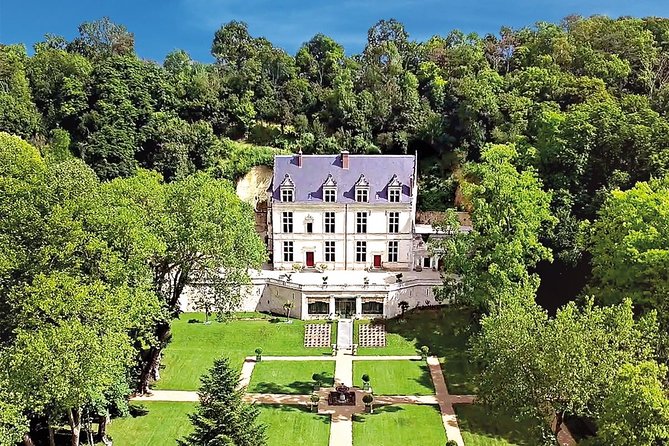
Château Gaillard is a small, unusual royal estate where Renaissance rooms and citrus gardens share equal billing. You’ll see the former royal orangery, wander seven paths through the 15-hectare grounds, enter hillside caves, and finish with orange juice, cake, or citrus preserves at the bar.
I like the relaxed scale and the chance to see a less formal chateau without fighting large crowds. I also like the story of Dom Pacello da Mercoliano, the Neapolitan monk who helped Charles VIII acclimatize France’s first orange trees. The main consideration is that the free guided tour is in French, and the chateau is reached on foot.
Key points
- France’s first royal orangery: Learn how Charles VIII and Dom Pacello da Mercoliano introduced orange trees to France.
- A small royal residence: The palazotto offers a more intimate visit than the grand Loire palaces.
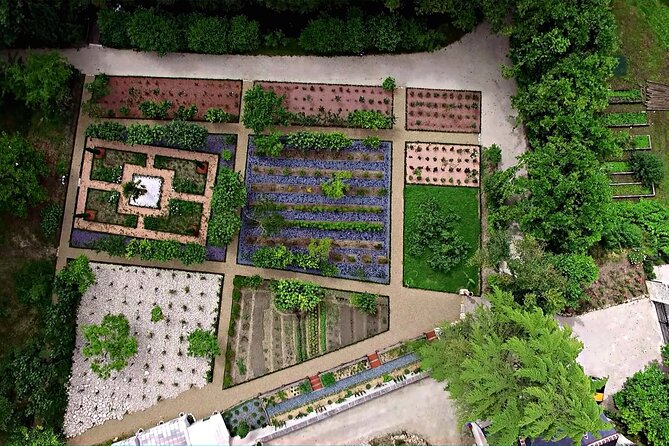
- Seven paths through the gardens: Allow time for mature trees, citrus plants, caves, and quiet corners.
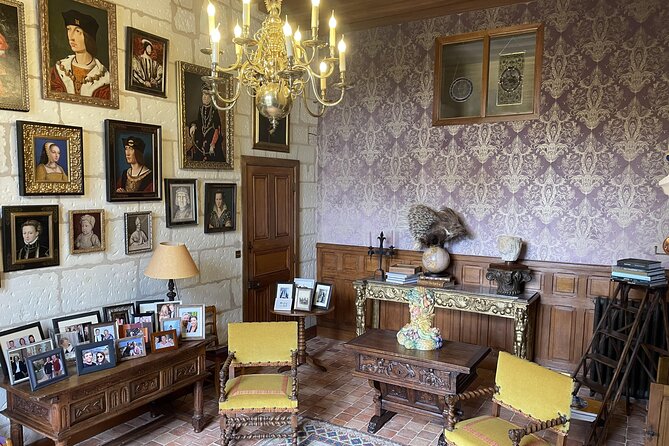
- Restored Renaissance interiors: See period furniture, Italian collections, handmade glass windows, paintings, and decorative arts.
- A tasty finish: Orange cake, freshly pressed juice, orange-blossom jelly, honey, and blood orange wine are available at the citrus bar.
- French guided tours: A free art historian led tour is offered in French, while independent exploration remains possible.
Why Château Gaillard feels different from the big Loire chateaus

Many Loire Valley castles are grand, polished, and built to impress from a distance. Château Gaillard is more intimate. It is described as a palazotto, a compact Italian-style residence commissioned by Charles VIII, and its appeal comes from the mix of royal connections, garden experiments, and domestic scale.
That makes it a useful choice if you have already seen the largest palaces around the Loire and want something quieter. You are not simply walking through a line of enormous ceremonial rooms. You are following the story of a working royal estate, a gardener, and an ambitious experiment with plants that had never before grown in France.
The estate is associated with Charles VIII, Louis XII, Anne of Brittany, François I, Catherine de Medici, Mary Stuart, and other major figures of the French Renaissance. The royal names matter, but the visit works best when you pay attention to the smaller details: furniture from different periods, decorative objects, art, glass, and the practical role of the gardens.
At a price of $24.14 per person, this is not a quick photo stop. You are paying for access to the house, the grounds, the orangery, the caves, and the restored collections. Plan on two to three hours so you can see the site at an unhurried pace.
More Chateau Tours in the Loire Valley
- From Paris: Full-Day Loire Valley Chateaux Tour
★ 4.4 · 1,269 reviews - Loire Valley Day Tour Chambord and Chenonceau plus Lunch at a Private Castle
★ 5.0 · 380 reviews - From Paris: Small-Group Loire Valley Castles Full-Day Tour
★ 4.8 · 244 reviews
Inside the palazotto: art, glass, and royal rooms
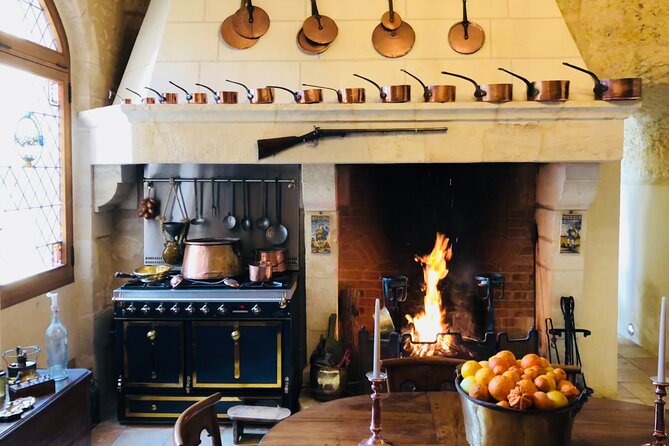
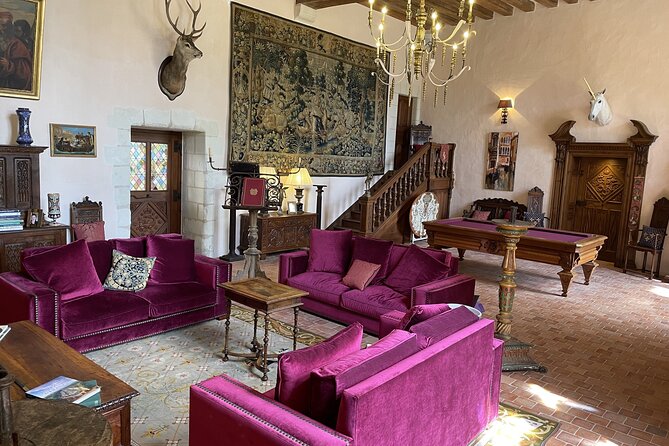
The indoor portion gives you a sense of a residence shaped by several centuries rather than one carefully staged historical moment. Furniture from different periods appears alongside paintings, Italian collections, and decorative pieces connected with the Renaissance setting.
The restoration took five years and involved 300 artisans from the Loire Valley. That detail helps explain why the interiors can feel varied. This is not an untouched ruin, nor is it a perfectly uniform palace display. Some parts are restored and polished, while others retain an older, more personal feel.
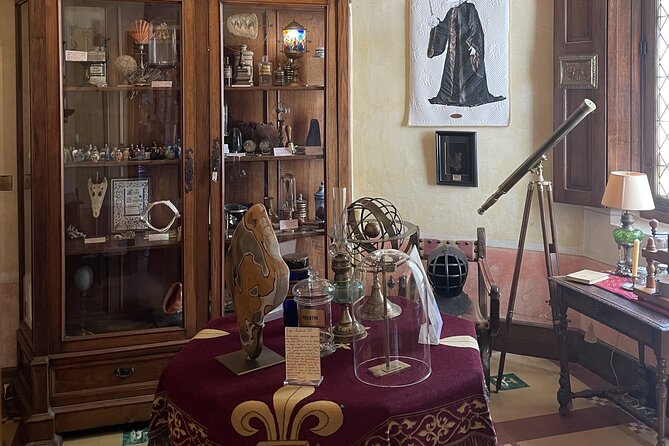
Look for the handmade glass windows. There are 8,000 of them, and they add texture and color to the building. You may also find works attributed to artists such as Rembrandt and Titian, along with a Commedia dell’Arte textile. The collection gives the visit more substance than a simple walk through empty rooms.
One room linked with Mary Stuart is a particular point of interest. She is said to have lived there for three weeks after her marriage to François II of Valois. The room offers a direct connection to the personal side of royal history, though the chateau’s appeal is not based on a single famous bedroom or one spectacular object.
If you enjoy art history, join the free tour led by an art historian. Keep in mind that it is offered in French. The ticket experience itself is available in English, but that should not be taken to mean that a full guided tour in English is included.
The Renaissance garden experiment of Dom Pacello
The strongest story here belongs to Dom Pacello da Mercoliano, a Neapolitan monk and celebrated gardener whom Charles VIII brought back from Italy in 1496. He was not simply asked to plant a few decorative trees. He helped create a place for testing new plants, garden ideas, and fruit varieties.
In 1500, the estate became known as Les Jardins du Roy. Pacello inherited it in exchange for an annual gift of orange blossoms for the king. That arrangement tells you how valuable the gardens were. Orange trees were rare, difficult to protect from cold weather, and closely tied to royal prestige.
Pacello worked across the 15-hectare grounds and developed early versions of French-style gardens. He also helped develop the greengage plum, a variety still familiar to anyone who enjoys French fruit preserves and desserts.
I find this part of the visit especially worthwhile because it connects royal power with practical horticulture. The gardens were not only for beauty. They were a place to test what could grow, how plants could be protected, and how imported ideas could be adapted to French conditions.
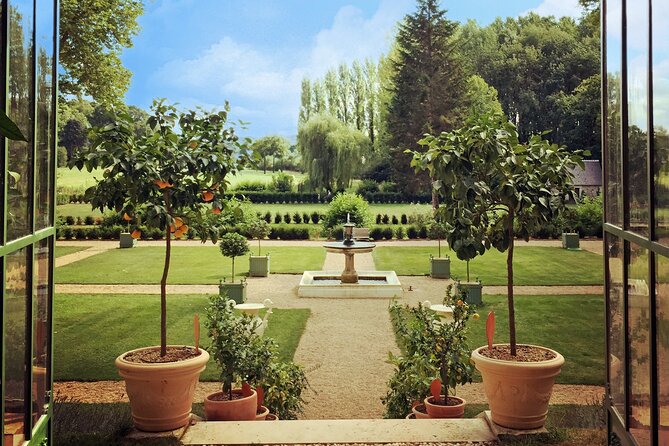
The royal orangery is the centerpiece of that story. You can see where citrus trees were sheltered, then follow the connection between the old royal experiment and the fragrant greenhouses used today.
Seven paths, caves, and citrus scents
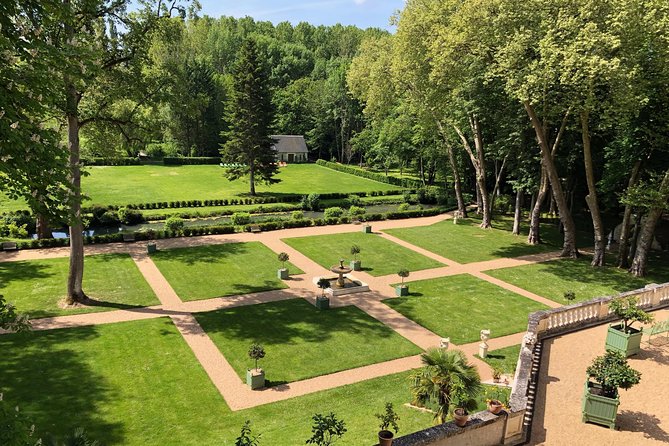
Set aside more time for the grounds than you might expect. Seven walking paths lead through the estate, collectively called the paths of Paradise. The name may sound grand, but the experience is simple: walk slowly, look up at the mature trees, and allow the gardens to unfold at their own pace.
The paths also lead to caves in the hillside. These add a change of mood from the open gardens and royal rooms. Since the visit includes pedestrian access only, wear shoes that feel comfortable for walking around the property.
The citrus areas are the sensory highlight. You can smell the trees in the greenhouses and see how the orangery remains central to the estate’s identity. This is a good place to slow down rather than rush from one sight to the next.
The grounds are also where Château Gaillard feels least like a formal museum. You have room to wander, pause beneath tall trees, and take in the gardens without the pressure of a tightly timed route. The setting is particularly appealing if you prefer a calm visit with plenty of room for your own pace.
Still, do not expect a vast formal garden laid out for grand views at every turn. The attraction is the combination of paths, trees, citrus, caves, and garden history. It is more exploratory than theatrical.
More Chateau Tours in Tours:
- ★ Walking Tour of Old Nice and Castle Hill
★ 5.0 · 1,318 reviews - Nice Old Town and Castle Hill: Guided Cultural Walking Tour
★ 4.8 · 790 reviews - Versailles Château and Gardens Walking Tour from Paris by Train
★ 4.5 · 714 reviews - Fontainebleau & Vaux-le-Vicomte Châteaux Day Tour from Paris
★ 4.4 · 454 reviews
The citrus bar is part of the visit
The visit ends on a pleasantly practical note. At the citrus bar, you can try honey of Heaven, orange-blossom jelly, homemade orange cake, and freshly pressed orange juice.
The orange cake is one of the strongest reasons to leave time at the end rather than heading straight back to town. It gives the garden story a taste you can remember. The juice also fits the setting better than a standard café drink would.
Blood orange wine is another option, and a bottle can be purchased to take with you. If you are driving, treat it as a purchase for later rather than an immediate sample. The citrus bar is not just a refreshment counter. It completes the link between the historic orchards, the orangery, and the estate’s present-day use.
These food details help justify the visit for people who are not interested in every art object. You can enjoy the grounds, learn the basic royal story, and still have a clear reason to linger at the end.
How much time to allow and how to plan the visit
The expected visit takes about two to three hours. That is enough for the chateau, gardens, orangery, caves, and citrus bar without turning the outing into an all-day commitment.
Book ahead if your schedule is tight. Admission is limited to a maximum of 40 people, and advance booking is a sensible way to protect your preferred visit. The experience is booked an average of 15 days ahead, so last-minute availability should not be assumed during a busy Loire Valley trip.
The address is 29 allée du Pont Moulin in Amboise, postal code 37400. The attraction is listed in the Tours area, but the entrance itself is in Amboise. Transportation to and from the site is not included, so you need to arrange your own way there.
Access to the property is pedestrian only. The site is near public transportation, but the supplied information does not specify a particular route or stop. Service animals are allowed, and most people can take part.
Free cancellation is available if you cancel at least 24 hours before the local start time. Changes or cancellations made inside that period are not accepted for a refund.
Is $24.14 good value?
At $24.14, Château Gaillard costs more than a brief garden admission but less than the price many visitors associate with major royal palaces. The value depends on how you like to spend your time.
You get several different experiences in one ticket:
- A Renaissance residence with restored rooms and collections
- A 15-hectare garden area with seven walking paths
- The historic orangery and citrus greenhouses
- Hillside caves
- Access to the citrus bar and its local-style treats
- A free guided tour in French, when you choose to join it
The price makes the most sense if you stay for the full two or three hours. A rushed walk through the rooms followed by a quick look at the garden would make the ticket feel less worthwhile.
It is also good value if you appreciate smaller historic sites. Château Gaillard will not give you the massive scale of a famous palace, and some parts may feel less glossy than the most heavily restored attractions. That is part of the character, but it also means you should arrive expecting charm and variety rather than a flawless royal showpiece.
Who will enjoy Château Gaillard most?
I would recommend this experience to people who like gardens, historic houses, horticulture, and quieter cultural stops. Families may enjoy the caves and open paths, while food-minded visitors have an easy reward waiting at the citrus bar.
It suits anyone spending time in Amboise who wants an attraction that can fill half a day without requiring a full-day commitment. It also works well for repeat visitors to the Loire Valley who have already seen the grandest castles and want a site with a different rhythm.
Art lovers will find plenty to examine in the collections, especially the glass windows, Italian pieces, paintings, furniture, and decorative arts. For the most useful context, join the free French tour if you understand French well enough to follow an art historian’s explanation.
I would be more cautious about recommending it to someone who wants a fully guided experience in English. The activity is offered in English for booking, but the included guided tours are in French. I would also choose another stop if your main goal is a vast, formal palace with huge ceremonial halls.
Should you book Château Gaillard?
Book it if you want a compact royal site with unusual garden history, a calm setting, and a memorable citrus theme. The story of Dom Pacello, the first French orange trees, the caves, and the seven paths gives the visit a clear identity.
Skip it if you have only a short time in the Loire Valley and want the largest, most famous palace possible. But if you can spare two to three hours in Amboise, the $24.14 ticket offers a pleasant mix of rooms, gardens, history, and food. Book at least a day ahead if your plans are fixed, and remember that the chateau is reached on foot.
FAQ
Where is Château Gaillard located?
The entrance is at 29 allée du Pont Moulin, 37400 Amboise, in the Loire Valley area. The attraction is listed in the Tours region.
How long does the visit take?
Plan on approximately two to three hours for the chateau, gardens, orangery, caves, and citrus bar.
What does the admission ticket include?
The ticket includes admission to Château Gaillard and its grounds. A free guided tour led by an art historian is also offered in French.
Is the guided tour available in English?
The experience is offered in English for booking, but the free guided tours are offered in French.
Is transportation included?
No. Transportation to and from the attraction is not included.
Is the site accessible by public transportation?
The property is near public transportation. Access within the attraction is pedestrian only.
How many people can join the activity?
The experience has a maximum group size of 40 people.
Can I cancel for a full refund?
Yes. You can cancel at least 24 hours before the experience’s local start time for a full refund. Cancellations or changes made less than 24 hours before the start time are not refunded.
Just added around Tours
- Coastal boat tour from Villefranche-Sur-Mer to Monaco★ 4.5 · 50 reviews
- Grasse, Valbonne & Gourdon: Day Tour with Wine Tasting★ 4.5 · 84 reviews
- Corsica Richiusa Sporty Canyon Tour★ 4.8 · 66 reviews
- Côte de Beaune Half-Day Wine Tour from Dijon★ 4.7 · 32 reviews
- 4×4 Agriates Desert and Beach Excursion from Calvi★ 4.8 · 129 reviews
- From Porto: Piana Creeks and Scandola Semi-Rigid Boat Tour★ 4.4 · 78 reviews
- Colmar: Private Guided Walking Tour of the City Center★ 4.1 · 36 reviews
- Colmar: Unusual Walking Tour with a local guide★ 4.9 · 194 reviews
Chateaux Tours, compared.

Loire Valley Castles Day Trip from Paris with Complementary Wine
Read our review →

Loire Valley Castles Day Trip With Wine Tasting
Read our review →
Medoc or Saint Emilion Wine Tasting and Chateau from Bordeaux
Read our review →

From Paris: Full-Day Loire Valley Chateaux Tour
Read our review →
Loire Valley Castles Trip with Chenonceau and Chambord from Paris
Read our review →Browse the lists this tour appears in