
Reviewed · CHATEAUX TOURS
Amboise: Clos Lucé Castle, Da Vinci Park and Museum Ticket
Leonardo da Vinci spent the final three years of his life at Château du Clos Lucé, working on inventions, paintings, engineering plans, and grand projects for King Francis I. The visit lets you move from his private rooms to a park filled with life-size machines, making the connection between the artist and the scientist unusually clear.
I especially like the restored château rooms, which give you a sense of da Vinci’s daily world, and the interactive park, where his ideas become large, touchable models rather than dusty diagrams. The main drawback is that the $23 ticket can feel expensive if you rush through in two hours, and the uphill approach plus limited benches may trouble visitors with mobility issues.
Key points to know before you go
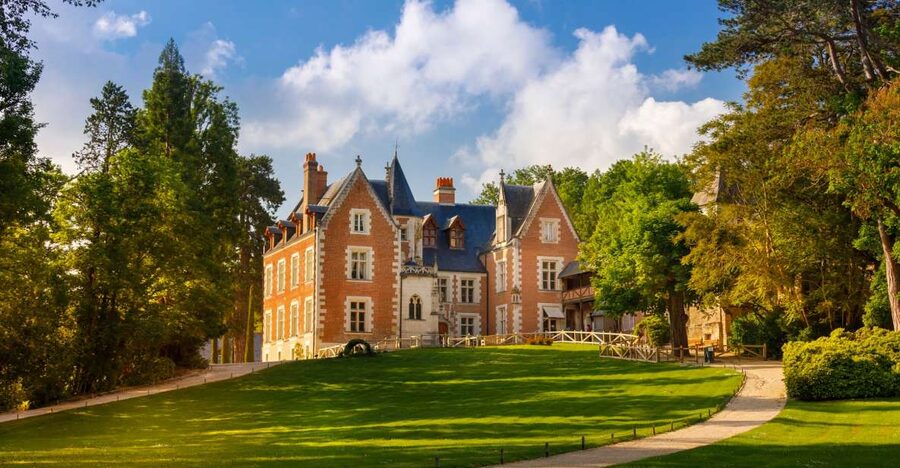
- Leonardo’s final home: See the apartments, Renaissance rooms, and restored workshops where he lived and worked in France.
- Forty invention models: Explore recreations covering military engineering, hydraulics, flying machines, mechanics, and city planning.
- Interactive park: Twenty large machines, eight audio stations, and 40 translucent panels turn the grounds into an outdoor museum.
- A full half-day visit: You can see the main areas in about two hours, but the park, cafés, exhibitions, and gardens reward a longer stay.
- Self-guided format: Your ticket includes the château, park, exhibitions, and interactive installations, but no guided tour.
- Plan your arrival: Paid parking is about 300 meters from the entrance, and the walk from Amboise train station takes roughly 25 minutes.
Why Clos Lucé tells a bigger story than the Mona Lisa
Many people arrive knowing Leonardo as a painter. Clos Lucé gently widens the picture. Here, his paintings share space with plans for bridges, weapons, flying machines, water systems, machines, and ideal cities.
That is the real strength of this visit. The château is not simply a memorial to one famous artist. It presents Leonardo as a restless thinker who studied nature, mechanics, architecture, anatomy, and flight with the same curiosity.
Leonardo arrived in France at the invitation of King Francis I and lived at Clos Lucé from 1516 until his death on May 2, 1519. He spent those final years refining inventions and developing projects for the king. The setting gives the visit a clear human focus: you are seeing the home of an aging genius, not just a collection of unrelated displays.
I find the story most effective when you connect the rooms inside with the machines outside. A sketch or small model can seem abstract in a gallery. A full-size recreation in the park gives you a better idea of the scale and ambition of the original idea.
More Chateau Tours in the Loire Valley
- Loire Valley Castles Day Trip from Paris with Complementary Wine
★ 4.5 · 3,907 reviews - Chambord: Entry Ticket to the Castle
★ 4.6 · 1,841 reviews - From Paris: Loire Valley Castles Day Trip With Wine Tasting
★ 4.6 · 1,727 reviews
Inside the château: Leonardo’s private world
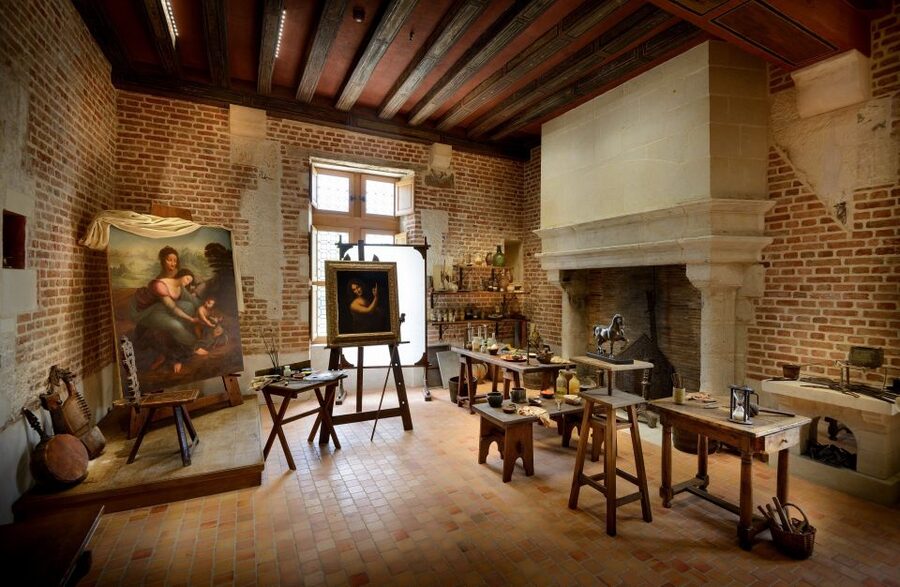
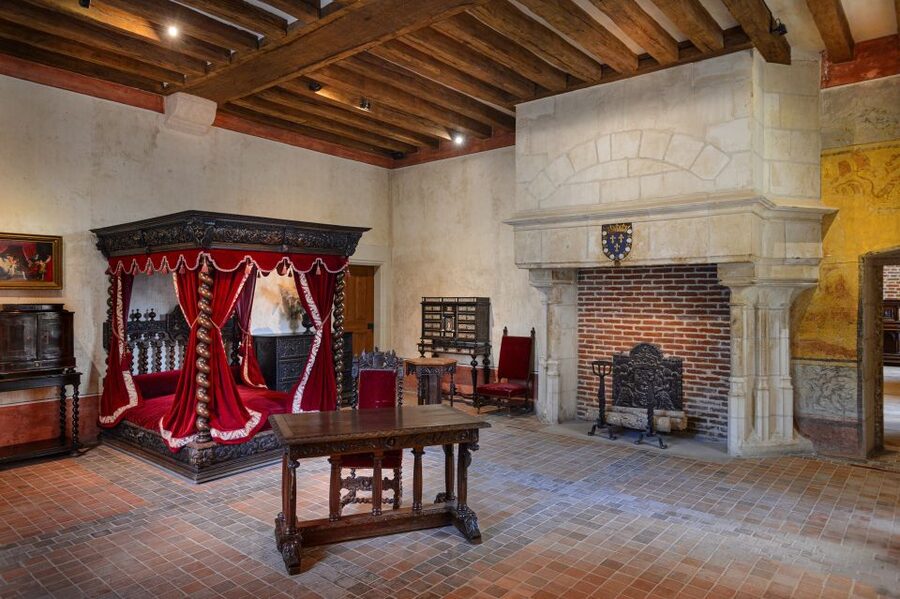
Begin inside the château, where the visit moves through Leonardo’s personal surroundings. You can see his apartments, Renaissance rooms, and restored workshops. These spaces matter because they place his work in an ordinary domestic setting.
The rooms are not presented as a grand royal palace. That makes them easier to understand as a home and working place. You can picture Leonardo thinking, drawing, testing ideas, and meeting the people around the French court.
The exhibitions inside cover several areas of his work:
- Military engineering
- Urban planning
- Mechanics
- Flying machines
- Hydraulics
This range is useful for anyone who thinks of Leonardo only as the painter of the Mona Lisa or The Last Supper. The displays show how closely his art and science were linked. He studied the movement of water, the structure of the body, the flight of birds, and the mechanics of machines through careful observation.
A booklet guide in English has been available for the self-guided visit, which helps if you want context without joining a group. The ticket itself does not include a guided tour, so you should allow time to read the displays and follow the material at your own pace.
The château is charming, but it is not enormous. If you move quickly, you may see the indoor areas in less than an hour. I would resist rushing. The rooms provide the emotional center of the visit, while the park explains how Leonardo’s ideas worked.
The park turns sketches into machines
The outdoor park is the main reason to allow more than a quick stop. It retraces Leonardo’s interest in nature and technology through a series of large interactive installations.
You will find about 20 giant machines, eight audio stations, and 40 translucent canvases. The displays cover practical ideas such as bridges, military devices, hydraulic systems, mechanical equipment, and flying machines.
Some models are life-size, while others are presented at a smaller scale. Their value is not that they recreate every detail of Leonardo’s original work. Instead, they help you understand the basic principle behind an idea. You can see how a machine might move, lift, fly, or carry weight.
The interactive approach works particularly well for children and school-age students. Young visitors can move between the models and the gardens rather than spending the whole visit reading wall panels. Adults who enjoy engineering, design, or the history of science will also find plenty to consider.
The park is not just a display area. It is a pleasant place to slow down, sit in the shade, and walk among the trees, bridges, water, and garden paths. Some visitors spend much of their time outdoors, especially in warm weather.
There are not as many benches as some visitors with mobility problems may need. The grounds also include paths and an uphill approach, so comfortable shoes are sensible. The site is wheelchair accessible, but anyone using sticks or needing regular rest should plan a slower visit.
Painting and architecture in the new exhibition space
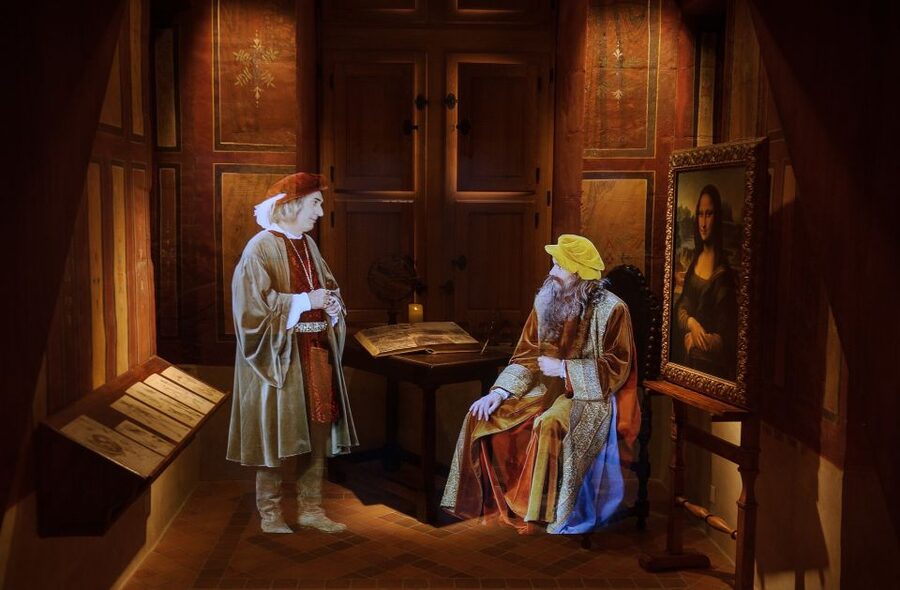
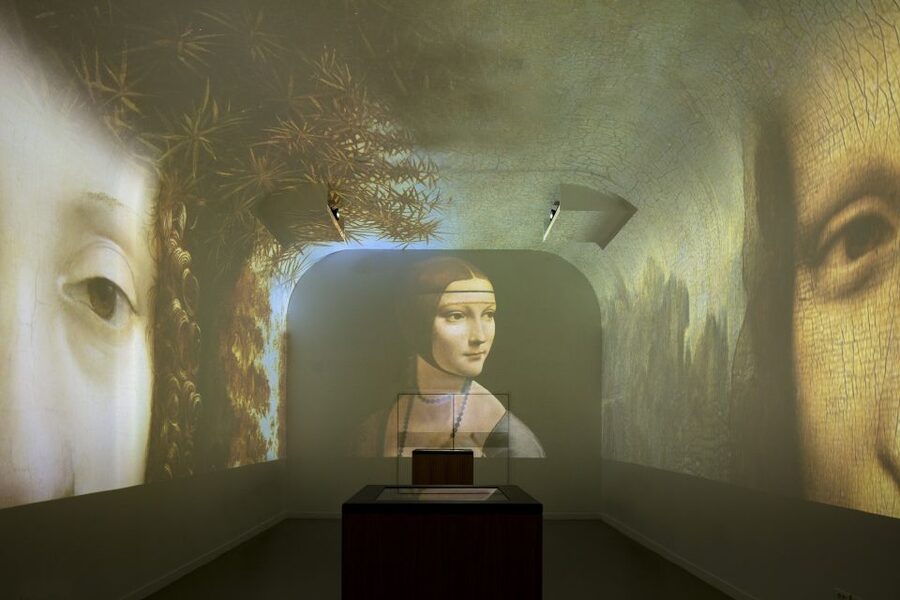
A newer cultural and museum area focuses on two major sides of Leonardo’s work: painting and architecture. It uses interactive and audiovisual presentation to show how he approached both subjects.
This section adds variety to the château and park. The rooms inside offer historical context, the outdoor displays explain machines, and the newer space presents Leonardo’s creative process through technology.
The virtual show is a highlight for visitors who prefer a visual presentation to traditional labels. It gives you another way to experience his work, especially if you have already seen reproductions of his best-known paintings.
Do not expect every part of the visit to feel equally historical. The château rooms are tied to Leonardo’s life in France, while the interactive and virtual displays are modern museum experiences. I see that mix as a strength for families and mixed-age groups, though visitors looking only for an untouched historic house may prefer the original rooms and workshops.
Temporary exhibitions may cost extra. One exhibition about an animated film was praised for its quality, but it was not included in the basic ticket. Check the current admission details if a temporary show is important to you.
Same trip, a completely different kind of day:
- Chenonceau Castle Admission Ticket
★ 4.7 · 1,515 reviews - From Paris: Full-Day Loire Valley Chateaux Tour
★ 4.4 · 1,269 reviews - Loire Valley Castles Trip with Chenonceau and Chambord from Paris
★ 4.0 · 901 reviews - Loire Valley Wine and Castles Small-Group Day Trip from Paris
★ 5.0 · 613 reviews
How long should you allow?
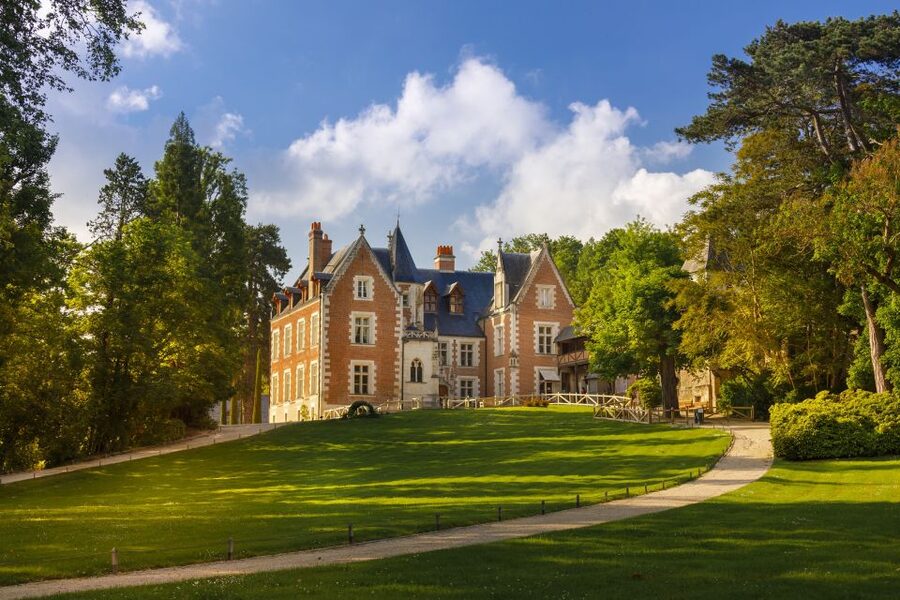
The ticket is valid for one day, so you do not need to race from room to room. Around two hours may be enough for a brisk visit covering the château and principal park displays.
I would allow three to four hours if the weather is good and you want time for the gardens, interactive machines, virtual show, cafés, and exhibitions. A half-day fits the site well. You can see the essential displays in a shorter visit, but the park is where extra time pays off.
The grounds also offer places to pause, and there is a Renaissance-style restaurant on the property. Food concessions and shade make it easier to treat Clos Lucé as part of the day rather than a quick museum stop.
In July and August, the château closes at 8:00 PM, one hour before the park. That schedule can help if you arrive late, but do not assume the indoor rooms remain open as long as the grounds. The château and park are open year-round except December 25 and January 1.
Getting there from Amboise
Clos Lucé is in Amboise, in the Loire Valley, and the meeting point is the château itself. If you drive, paid private parking is available on Rue du Clos Lucé, about 300 meters from the visitor entrance.
The final approach is uphill. It is manageable for many people, but it can feel like a pull after a full day of sightseeing or in summer heat. If you have limited mobility, check the route before setting out and leave extra time.
Amboise train station is also practical for some itineraries. A walk from the station takes about 25 minutes in good weather and offers a scenic way to reach the château. Taxis may not be easy to find at the station, so do not rely on finding one immediately after arrival.
The site is wheelchair accessible, but accessibility does not mean every part will feel effortless. Paths, slopes, distances between buildings, and the shortage of resting benches may affect how comfortably you move around. An occasional staff member may be able to help, but you should plan on making the visit at your own pace.
Is the $23 ticket good value?
At $23 per person, Clos Lucé is not the cheapest short museum visit in the Loire Valley. If you spend only an hour inside the château, the price may seem high.
The value improves when you use the ticket as a half-day admission. You are getting access to the historic house, restored rooms, workshops, invention displays, the interactive park, and modern exhibitions. The gardens alone can fill a pleasant hour, while the machines give the visit an educational purpose beyond sightseeing.
I think the price works best for three groups:
- Families who want a museum with outdoor space and hands-on displays
- Adults interested in science, engineering, art, and the history of ideas
- Visitors already exploring Amboise who can give the site several hours
It may be less satisfying if you want a formal guided tour, a small and quiet historic house, or a purely original collection. The ticket is self-guided, and some of the park models are fixed rather than movable. If you visited the museum of inventions in Florence, you may find the displays here less hands-on.
Still, the combination is unusual. Few sites let you walk through an artist’s final home, then see his mechanical ideas rebuilt at full scale in a garden.
Best time to visit and what to bring
The park is central to the experience, so weather matters. On a warm day, the trees and shaded areas provide welcome relief, while rain can make the outdoor portion less enjoyable.
Bring comfortable shoes. You will walk between the château, park installations, exhibitions, and cafés, and the approach from town or the parking area adds more distance.
If you are visiting with children, plan pauses rather than trying to read every panel. The machines and gardens provide natural breaks. Families may also want to check the closing time carefully in July and August so they do not leave the château until the final hour.
Photography is especially rewarding around the park bridges and the life-size models. The gardens are peaceful, and a peacock may even appear among the paths, though wildlife should be treated as an occasional bonus rather than a scheduled attraction.
Who will enjoy Clos Lucé most?
I would recommend Clos Lucé to anyone who wants more than a standard château interior. Its best quality is the way it links art, science, nature, and invention.
Children can move through the interactive park. Teenagers may connect with the engineering displays and virtual show. Adults can focus on Leonardo’s final years, the restored rooms, and the large question behind the whole visit: how did one person explore so many fields?
The site also suits visitors who prefer a self-guided day. You can spend ten minutes on a machine, linger in a workshop, or pause in the gardens without holding up a group.
You should think twice if steep or uneven walking is difficult, if you have only a few minutes in Amboise, or if you expect every exhibit to be original sixteenth-century material. The historic rooms are authentic in character, but much of the park is modern reconstruction designed to explain Leonardo’s ideas.
Should you book the Clos Lucé ticket?
Book it if Leonardo interests you, especially if you want to understand him as an inventor and engineer as well as a painter. Give yourself at least two hours, and preferably half a day, so the $23 price feels justified.
The strongest plan is to visit the château rooms first, then take your time in the park and finish with the newer painting and architecture displays. Add a meal or café stop if your schedule allows.
Skip it only if your Amboise day is already packed with other major sites or if you want a guided, tightly structured tour. For most visitors with time to walk and explore, Clos Lucé offers a memorable and unusually broad look at Leonardo’s last years in France.
FAQ
Where is Château du Clos Lucé?
Château du Clos Lucé is in Amboise in France’s Loire Valley.
What does the ticket include?
The ticket includes access to Château du Clos Lucé, the park, exhibitions, and interactive installations.
Is a guided tour included?
No. The ticket is for a self-guided visit and does not include a guided tour.
How long is the ticket valid?
The ticket is valid for one day on the booked date.
Is the site open all year?
The château and park are open all year except December 25 and January 1.
Does the château close at the same time as the park?
Not in July and August. During those months, the château closes at 8:00 PM, one hour before the park.
Is Château du Clos Lucé wheelchair accessible?
Yes, the site is wheelchair accessible. The approach and grounds may still require care because of slopes, walking distances, and the limited number of benches.
More Museums in Loire Valley
- Paris: Louvre Museum Timed-Entrance Ticket
★ 4.6 · 71,977 reviews - Louvre Museum Masterpieces Guided Tour with Access
★ 4.5 · 12,023 reviews - Paris: Louvre Museum Entry Ticket With Host and River Cruise
★ 4.6 · 9,926 reviews - Les Invalides: Napoleon’s Tomb & Army Museum Entry
★ 4.6 · 9,185 reviews
Just added around Loire Valley
- From Tours/Amboise: Chenonceau & Chambord Chateaux Day Trip★ 4.4 · 44 reviews
- From Amboise: Chambord and Chenonceau Tour with Lunch★ 4.9 · 122 reviews
- Loire Valley Castles: Chenonceau, Amboise & Da Vinci Trip★ 4.6 · 29 reviews
- From Tours: Chambord, Chenonceau & Lunch at Family Chateau★ 4.8 · 147 reviews
- Amboise Hot-Air Balloon Sunset Ride over the Loire Valley★ 4.8 · 47 reviews
- Tours: Chateaux Azay-le-Rideau and Villandry Morning Tour★ 4.9 · 71 reviews
- Tours/Amboise: Chambord, Chenonceau Day Trip & Wine Tasting★ 4.6 · 138 reviews
- From Paris: Small-Group Loire Valley Castles Full-Day Tour★ 4.8 · 244 reviews
Chateaux Tours, compared.

Loire Valley Castles Day Trip from Paris with Complementary Wine
Read our review →

Loire Valley Castles Day Trip With Wine Tasting
Read our review →

Medoc or Saint Emilion Wine Tasting and Chateau from Bordeaux
Read our review →

From Paris: Full-Day Loire Valley Chateaux Tour
Read our review →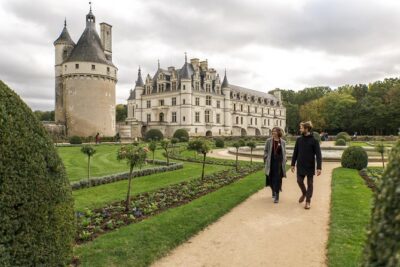
Loire Valley Castles Trip with Chenonceau and Chambord from Paris
Read our review →Browse the lists this tour appears in