
Reviewed · MONTMARTRE TOURS
German private Walking Tour through Montmartre & Passages
Montmartre gives this private Paris walk its character. You begin beside the Moulin Rouge, climb through the old artists’ quarter to Sacré-Cœur and Place du Tertre, then trade hilltop views for the elegant Grands Boulevards and two 19th-century covered passages. I like the mix of famous Paris sights and quieter streets, and I like that the tour is private, so your guide can shape the pace for your own group.
The main consideration is the four-hour walking load. Montmartre includes slopes and steps, and a long restaurant break can cut into the sightseeing time. One family found that a two-hour lunch left much less time for the tour, so keep meals short if you want the full route.
Key points to know before booking

- A German-speaking private guide: You get the guide and route in German, with your own group rather than a large shared party.
- Montmartre from Moulin Rouge to Sacré-Cœur: The walk links cabaret history, artists’ studios and famous hilltop views.
- More than the usual postcard stops: You visit quieter parts of Montmartre as well as Place du Tertre and the basilica.
- Two historic covered passages: Passage Jouffroy and Passage Verdeau offer a change from open streets and major avenues.
- A full four-hour city walk: The route covers several neighborhoods, so comfortable shoes and a sensible lunch plan matter.
- A private option for families: Children under 12 join free, making the per-person price more appealing for some family groups.
From Moulin Rouge into old Montmartre
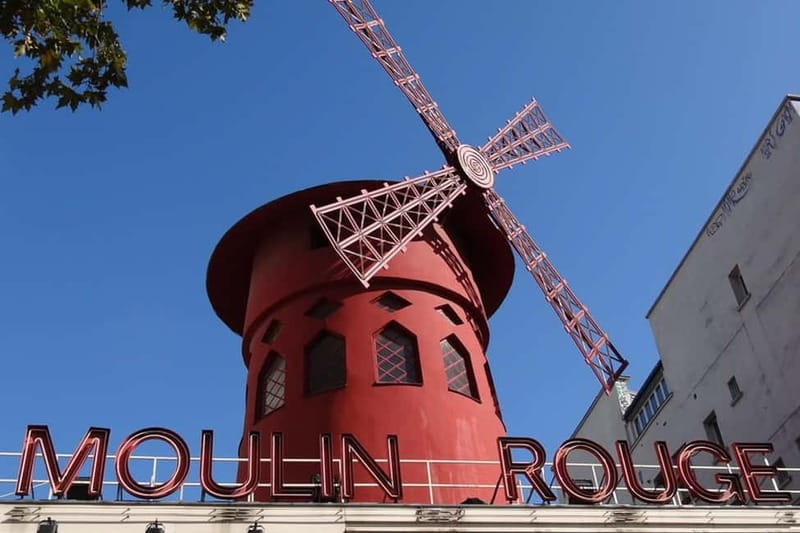
Meet your guide at Metro Blanche, on the small traffic island in front of the Moulin Rouge at 1 Place Blanche. Look for the guide carrying a HelpTourists bag. This is a practical starting point because it puts you right at the foot of Montmartre, with the hill rising ahead.
The Moulin Rouge is a fitting first stop. It is one of Paris’s best-known cabarets, and it sets up the story of Montmartre as a place of nightlife, art and performance. From here, the tour heads uphill into the quarter that attracted painters, writers and performers in the late 19th and early 20th centuries.
I like beginning here rather than meeting at Sacré-Cœur. You see the neighborhood change as you walk, from a major tourist street to smaller lanes and old buildings. Your guide can also provide the context that a quick photo stop usually misses: who worked in Montmartre, why artists came here, and how the area developed its reputation.
The hills are part of the appeal, but they are also the first practical issue. Four hours on foot is not a light stroll, especially if you stop often for photographs. Wear shoes with good support, and expect a route that includes inclines rather than a flat city walk.
More Walking Tours in Paris
- Paris Top Sights Half Day Walking Tour with a Fun Guide
★ 5.0 · 2,893 reviews - Montmartre Hidden Gems and Scenic Highlights Walking Tour
★ 5.0 · 2,684 reviews - Montmartre Hill French Gourmet Food and Wine Tasting Walking Tour
★ 5.0 · 2,588 reviews
Sacré-Cœur and the view across Paris
The walk continues to the Sacré-Cœur Basilica, the white-domed church at the top of Montmartre. This is one of the tour’s major landmarks and one of the places where the climb pays off. From the hill, you get a broad view over Paris and a clear sense of how the city spreads beyond the northern districts.
Sacré-Cœur is also a useful pause in the route. After the climb from Moulin Rouge, you can take in the building, the open space around it and the city below. Your guide can connect the basilica to the wider story of Montmartre, rather than treating it as an isolated monument.
The area around Sacré-Cœur can be crowded. That is not a flaw in the monument, but it does affect the feel of the stop. The private format helps because you are not tied to a large group trying to hear one guide in a noisy square. You can ask questions and move on when your own group has had enough.
If your priority is a quiet visit inside the basilica, ask about the time available. The stated route is a walking tour with sightseeing stops, not a dedicated church tour. Its strength is the way it links Sacré-Cœur to the streets and people of Montmartre.
Place du Tertre and the artists’ quarter
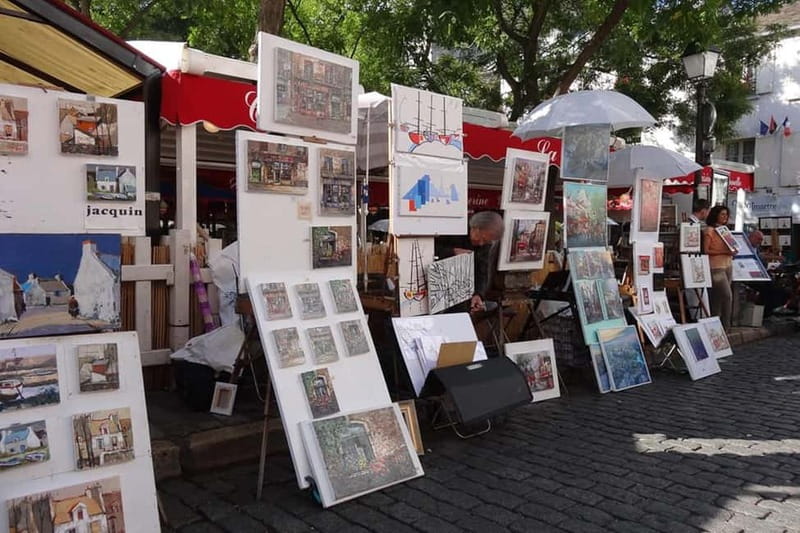
Place du Tertre is the classic Montmartre artists’ square. It is known for its painters and portrait artists, and it gives you the most recognizable version of the neighborhood. Your guide provides background on the artists associated with the area and explains the square’s place in Montmartre’s story.
This stop can feel touristy, especially compared with the quieter streets nearby. That contrast is useful. You see why the square attracts so many people, then you can step away from it and discover a less polished side of the quarter.
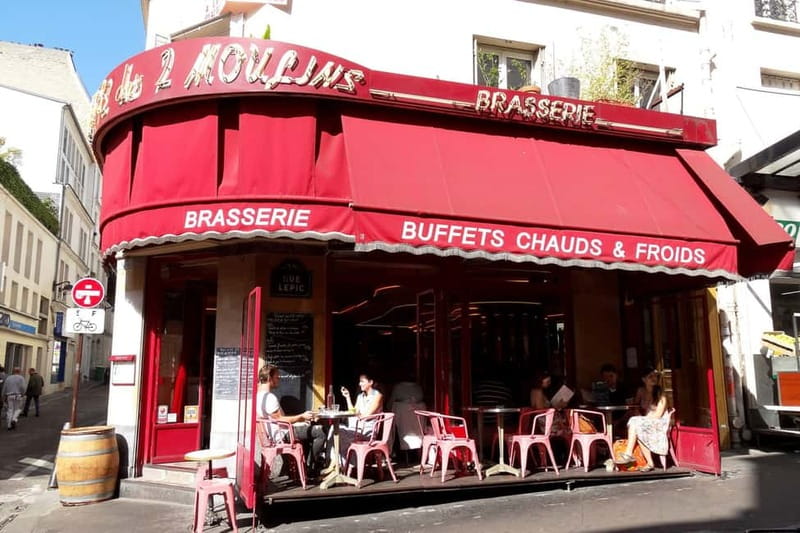
The tour specifically includes lesser-known parts of Montmartre, which is one of its better features. You are not limited to the standard route between Moulin Rouge, Place du Tertre and Sacré-Cœur. The quieter sections give you a chance to notice the neighborhood as a place where people live, not only as a backdrop for photographs.
A private guide also makes it easier to ask about the artists who lived and worked here. If you are interested in painting, literature or Parisian café culture, this is the section where questions can turn a general sightseeing walk into a more personal tour.
The value of a private German-language guide
The tour is conducted in German and is limited to your own private group. That matters most if German is the language in which you prefer to ask detailed questions or follow a long explanation about art and city history.
Guide Katharina is specifically associated with a particularly strong local focus. Her tour has been praised for stories, useful facts and details connected with Montmartre. She may not be your assigned guide, but her feedback gives you a good idea of the style to expect: less quick landmark naming, more explanation of the people and places behind the streets.
The private format is also practical for families. Children under 12 can join free of charge, and you can discuss the pace with your guide rather than trying to keep up with a fixed public group. The route still covers a lot, so young children need to be comfortable with several hours of walking.
There is one important family tip. A group with small children stopped for a two-hour lunch and lost a substantial part of the tour. That is easy to avoid: eat before the walk, choose a quick break, or tell the guide at the beginning if your group needs extra time.
More Montmartre walks and Sacre-Coeur visits:
- Paris: Montmartre Cheese, Wine & Pastry Guided Walking Tour
★ 4.8 · 2,255 reviews - Paris: Montmartre Highlights Walking Tour with a Local Guide
★ 4.9 · 1,668 reviews - Private Montmartre Food Tour with Wine, Cheese & Pastries
★ 5.0 · 1,027 reviews - Paris: Sacré-Coeur and Montmartre Tour with Expert Guide
★ 4.1 · 1,027 reviews
From the hill to the Grands Boulevards
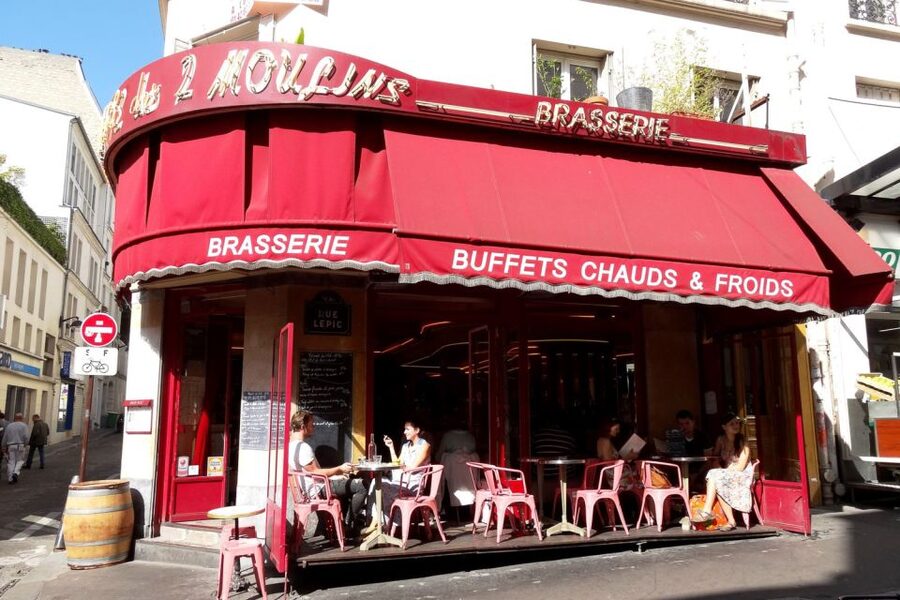
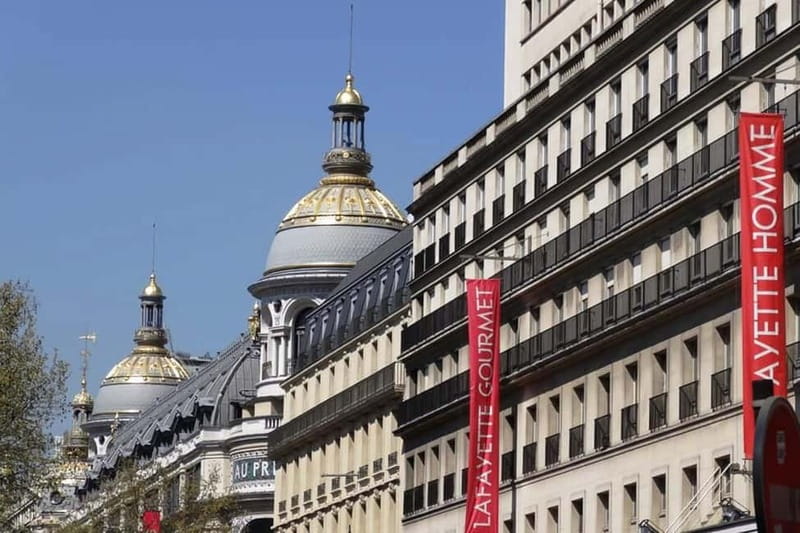
After Montmartre, the route shifts in mood. You leave the hill and continue toward the Grands Boulevards, described as the oldest boulevards in the city. Here the scenery changes from narrow Montmartre streets to broad avenues and grand Parisian views.
This change gives the tour a wider scope. You are not spending all four hours in one neighborhood. Instead, you see how different parts of Paris fit together, from the working artists’ quarter in the north to the formal boulevards closer to the center.
The Grands Boulevards are good for understanding Paris as a planned city of long avenues, busy public spaces and imposing buildings. Your guide can point out views and explain how the boulevards relate to the city around them. The walk is less about entering one major monument and more about reading the city from the street.
The route’s variety is its strongest point. If you want a single neighborhood explored at a very slow pace, this may feel ambitious. If you want a broad introduction to several recognizable parts of Paris, the change of setting keeps the four hours interesting.
Passage Jouffroy and Passage Verdeau
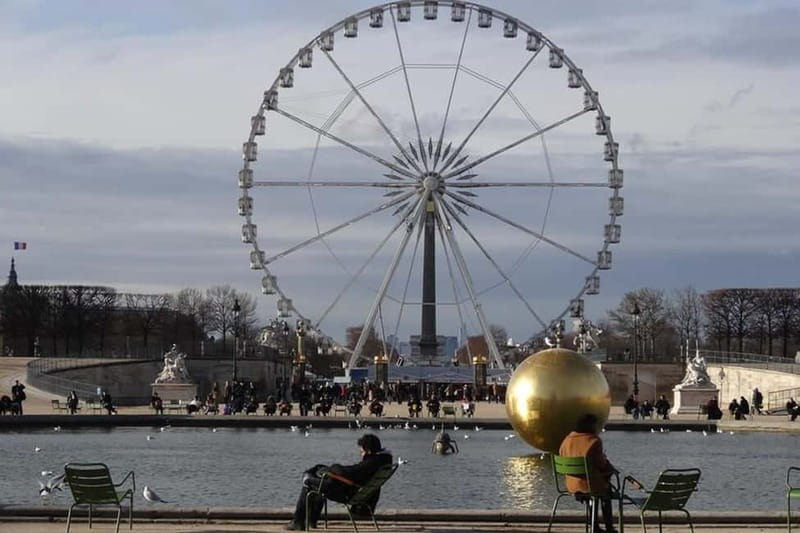
The covered passages are among the most distinctive stops. Passage Jouffroy and Passage Verdeau date from the 19th century and offer a quieter, more enclosed alternative to the open boulevards.
These passages are worth seeing because they show a different side of Parisian urban life. They were designed as sheltered shopping and strolling spaces, with an atmosphere separate from the broad streets outside. You can look for details in the arcades, shopfronts and covered walkways while your guide explains why these passages mattered to the city.
Passage Jouffroy and Passage Verdeau also break up the walking rhythm. After the climb through Montmartre and the open boulevards, the covered passages provide shade or shelter depending on the weather. They are not just shortcuts between major sights. They are part of the reason this route feels more varied than a basic highlights tour.
The word hidden should be taken in a practical sense, not as a promise of empty streets. These passages are included because they are less obvious to first-time visitors than the Eiffel Tower or Arc de Triomphe. Their appeal comes from their design, age and connection to old Paris, not from being completely unknown.
Opéra Garnier and the Phantom of the Opera
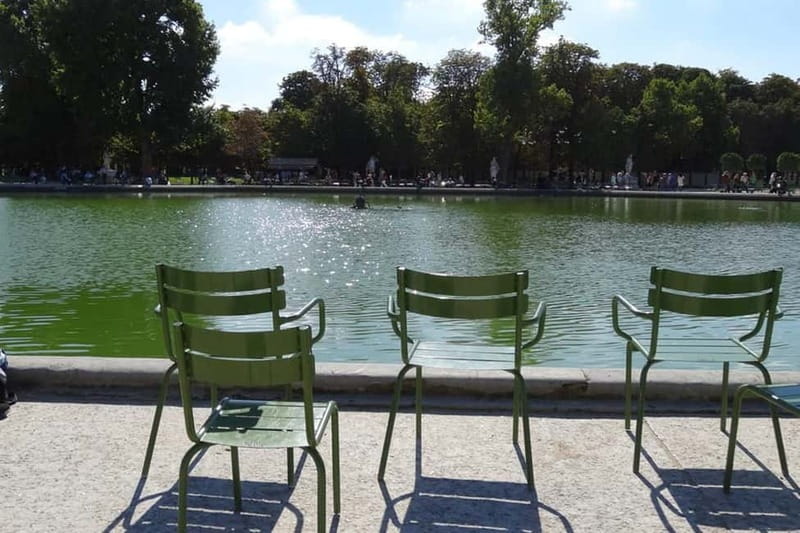
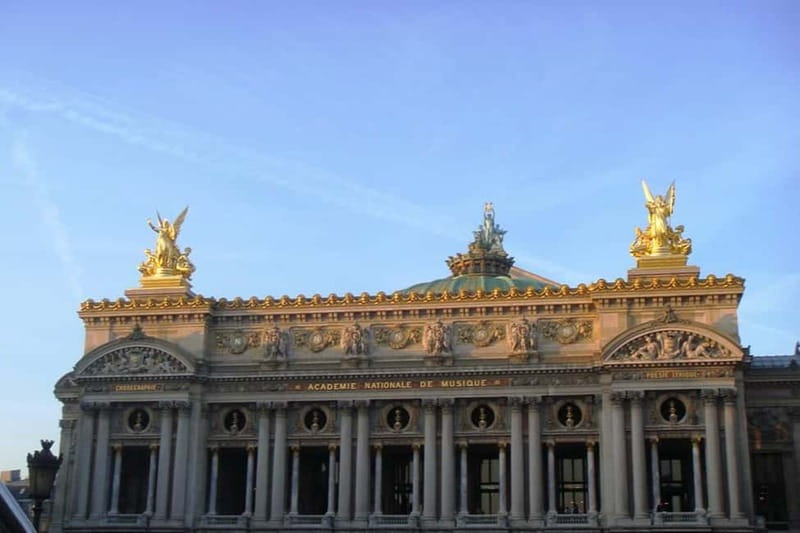
The final major stop is the Palais Garnier, also called Opéra Garnier. This grand opera house gives the tour a strong ending after the more informal streets of Montmartre and the passages.
Your guide discusses the history of the building and the story of the Phantom of the Opera. That makes the stop especially appealing if you enjoy literary and theatrical connections. The Phantom story has helped make the opera house famous far beyond its role as a performance venue, and the tour uses that connection to add atmosphere to the final part of the walk.
The listed route finishes at Opéra Garnier. The meeting information also says the activity ends back at the meeting point, so confirm the exact end point when you book or meet your guide. This is worth checking if you have a restaurant reservation, train connection or another timed activity afterward.
Opéra is a useful end point because it is a major Paris landmark and a clear place to continue your day. Still, do not plan anything too tight immediately afterward. A private walk can adjust its pace, but the route covers four hours and includes several substantial stops.
Is $183 per person good value?
At $183 per person, this is not a budget walking tour. You are paying for a private experience, a German-speaking guide and a route that combines Montmartre, the Grands Boulevards, two covered passages and Opéra Garnier.
The value depends heavily on group size. For one or two people, the price is a serious splurge. For a larger private group, the same total guide service is spread across more people, and the price becomes easier to justify. Children under 12 join free, which can also improve the calculation for families.
I would compare this with the cost of booking several separate activities. The tour gives you four hours of guiding, neighborhood context and the ability to ask questions throughout. You are not paying only to be led from one famous building to another. You are paying for the connections between them.
It is less good value if you mainly want free time for photographs or a very relaxed pace. The route is ambitious, and the tour loses value if a long meal takes up a large portion of the four hours. Plan to keep the sightseeing moving.
Who should book this Paris walk?
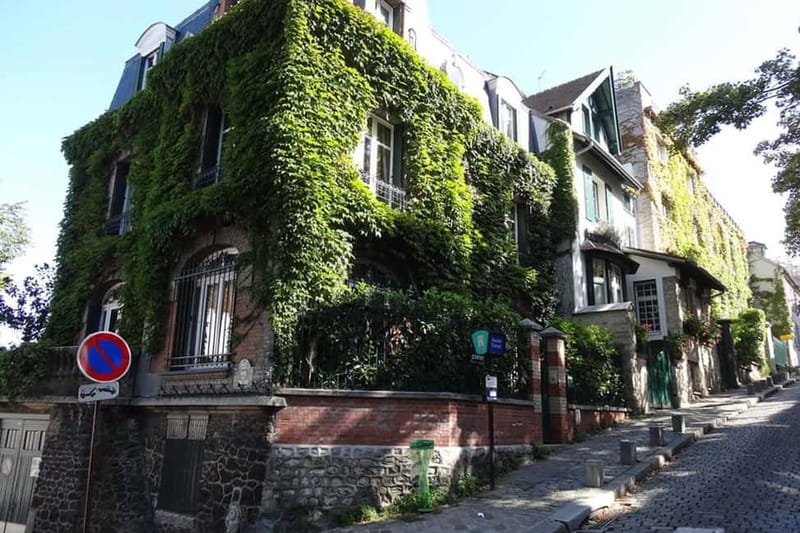
I would recommend it most strongly to German-speaking visitors who want a personal introduction to Paris beyond the major monuments. It suits you if Montmartre interests you, but you also want to see another part of the city instead of spending the whole afternoon on the hill.
It is a good choice for families who value flexibility and can manage a long walk. The free admission for children under 12 helps, but small children may find the slopes and duration tiring. A short meal plan is especially important with young children.
Art lovers, first-time visitors and people curious about Parisian architecture should also find plenty to enjoy. The artists of Montmartre, the old passages and the Phantom of the Opera connection give the guide several useful themes to work with.
I would choose a different format if you need an accessible route with minimal inclines, want extensive interior visits, or prefer a slow lunch built into the day. Those details are not the focus here. This is a city walk, with sightseeing from the street and a steady route across several neighborhoods.
Should you book it?
Book this tour if you want German-language guiding, a private group and a route that goes beyond the standard Montmartre checklist. The strongest combination is the move from Moulin Rouge to Sacré-Cœur, the quieter Montmartre streets, the covered passages and the final arrival at Opéra Garnier.
Think twice if $183 per person feels high for a walking tour or if your group needs long breaks. The best way to protect the value is to wear comfortable shoes, eat before you start and keep the four hours for the route itself.
FAQ
Where does the tour start?
It starts at Metro station Blanche on line 2, on the small traffic island in front of the Moulin Rouge at 1 Place Blanche. Look for a guide carrying a HelpTourists bag.
Where does the tour finish?
The route lists Opéra Garnier as the finish. The meeting information says the activity ends back at the meeting point, so confirm the exact end location with the provider.
Is the tour conducted in German?
Yes. The tour includes a live German-speaking city guide.
How long does the walking tour last?
The tour lasts four hours. Starting times depend on availability.
Is this a private tour?
Yes. The tour is for your group only rather than a shared public group.
Can children join the tour?
Children younger than 12 can join free of charge. The tour still involves several hours of walking, including the slopes of Montmartre.
Just added around Paris
- Paris at the First Lodges – Ducasse sur Seine dinner cruise★ 4.0 · 165 reviews
- Paris at the First Lodges – Ducasse sur Seine Lunch Cruise★ 4.5 · 70 reviews
- Disneyland® Paris 1 Day with Round-Trip Train Tickets from Paris★ 4.0 · 50 reviews
- Explore speakeasies and hidden bars, sip meet & socialize★ 4.5 · 47 reviews
- Disneyland® Paris Express Shuttle with Admission Ticket from Central Paris★ 3.5 · 172 reviews
- Paris Cheeses and Wines Tour de France with Tasty Games★ 5.0 · 32 reviews
- Musée Orsay Highlights Tour – Best of Impressionism & Hidden Gems★ 5.0 · 27 reviews
- Private Tour: Discover Paris with Local, 3 hours on a Segway★ 5.0 · 71 reviews
Montmartre Tours, compared.
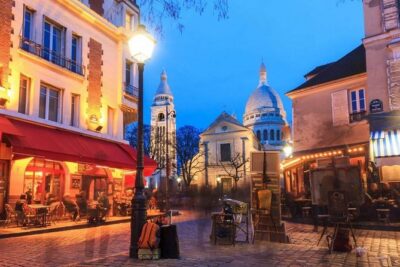
Montmartre Hidden Gems and Scenic Highlights Walking Tour
Read our review →
Montmartre Hill French Gourmet Food and Wine Tasting Walking Tour
Read our review →
Montmartre Cheese, Wine & Pastry Guided Walking Tour
Read our review →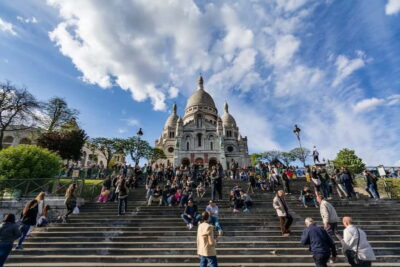
Montmartre Highlights Walking Tour with a Local Guide
Read our review →
Sacré-Coeur and Montmartre Tour with Expert Guide
Read our review →
Private Montmartre Food Tour with Wine, Cheese & Pastries
Read our review →
Paris Montmartre Food Tour – A Full French Meal by Do Eat Better
Read our review →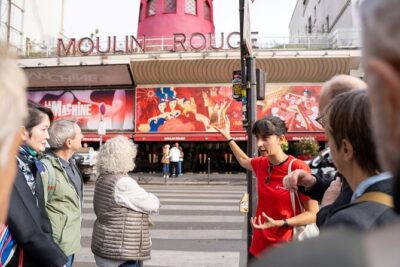
Hidden Montmartre: Paris’ Secret Streets Walking Tour
Read our review →Browse the lists this tour appears in