
Reviewed · WALKING TOURS
Antibes: 2 hour walking tour in the old town
Antibes reveals itself best on foot, one narrow lane and sea view at a time. I like this tour for its mix of port views and medieval streets, and for the way it links famous sights with small public artworks, craftsmen’s shops, and the lively Provençal market. Emilie also gives useful advice on beaches, restaurants, and what to do after the walk.
The main consideration is accessibility: this route uses old-town streets and is not suitable for wheelchair users. Two hours is enough for a helpful introduction, not a full visit to the cathedral, Picasso Museum, or Fort Carré interiors.
Key points to know before booking
- Start beside Port Vauban: Meet between the Blind sculpture by David David and the fishermen’s booth at 14 Quai de la 1ère Division Française libre.
- See Antibes in a natural order: The walk moves from the harbor and coast through the ramparts, old town, market, Safranier, and Place Nationale before returning to the port.
- Emilie leads in French or English: She is a local guide who has lived in the old town and brings in stories about art, Roman roots, traditions, and daily life.
- Small groups keep the walk personal: The group is limited to 10 people, and the guide can respond to individual questions.
- Expect a relaxed pace: The route covers plenty of ground, but the pace is designed for looking, listening, and taking photographs.
- Best for orientation: Book this early in your stay if you want restaurant, beach, and sightseeing suggestions for the rest of your time in Antibes.
Starting at Port Vauban among boats and yachts
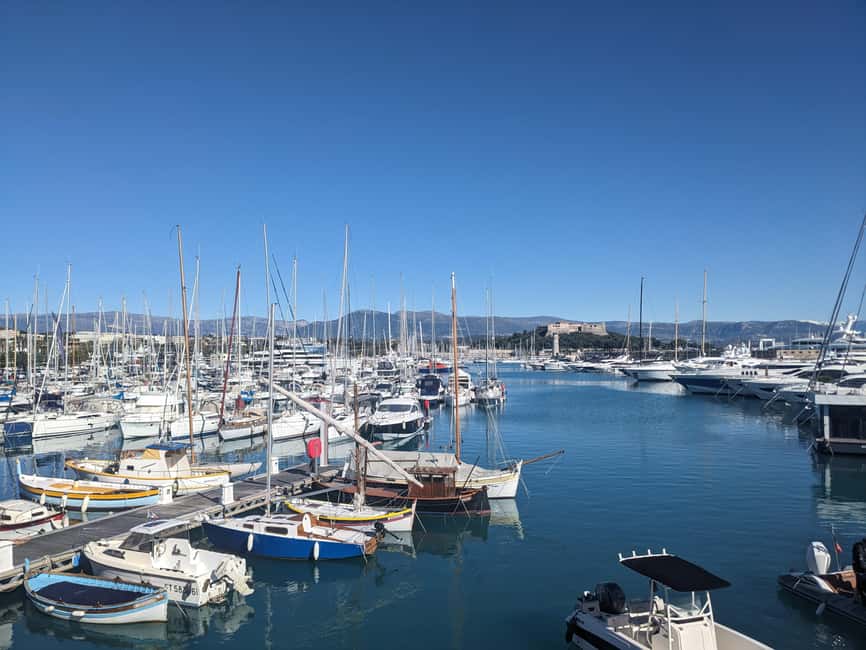
The tour begins at Port Vauban, Antibes’ large harbor, at 14 Quai de la 1ère Division Française libre. Look for the meeting point between the Blind sculpture by David David and the fishermen’s booth. Emilie is described as a small brunette carrying a small white bag with black flowers, a useful detail in a busy port area.
This is a smart place to begin. You do not start in the middle of a confusing lane network. Instead, you get a clear sense of Antibes as a coastal town shaped by fishing, trade, pleasure boats, and military history.
The harbor has heritage boats alongside luxury yachts, creating an immediate contrast between old Antibes and its modern waterfront. That contrast continues throughout the walk. You will see a town that is not simply preserved for sightseeing, but still used by residents, artists, shopkeepers, and fishermen.
A small group matters here. With no more than 10 participants, you should be able to hear the guide without standing shoulder to shoulder around her. The guide can also pause for questions, which is particularly useful if you want more detail about local food, beaches, or art.
More Walking Tours in the French Riviera
- ★ Walking Tour of Old Nice and Castle Hill
★ 5.0 · 1,318 reviews - Nice Old Town and Castle Hill: Guided Cultural Walking Tour
★ 4.8 · 790 reviews - Nice Small-Group Walking Food Tour with Local Specialties & Wine Tasting
★ 4.5 · 558 reviews
From Gravette Beach to the Nomade sculpture
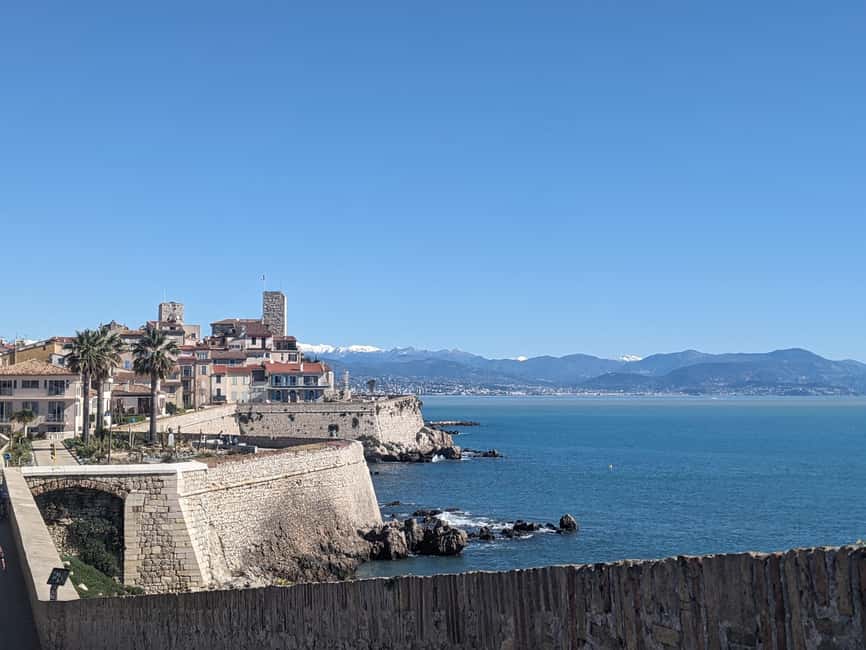
From the port, the route takes in popular Gravette Beach before continuing toward Le Nomade. The beach gives you one of Antibes’ most approachable coastal views, while the harbor nearby supplies the busier, working-and-leisure side of the waterfront.
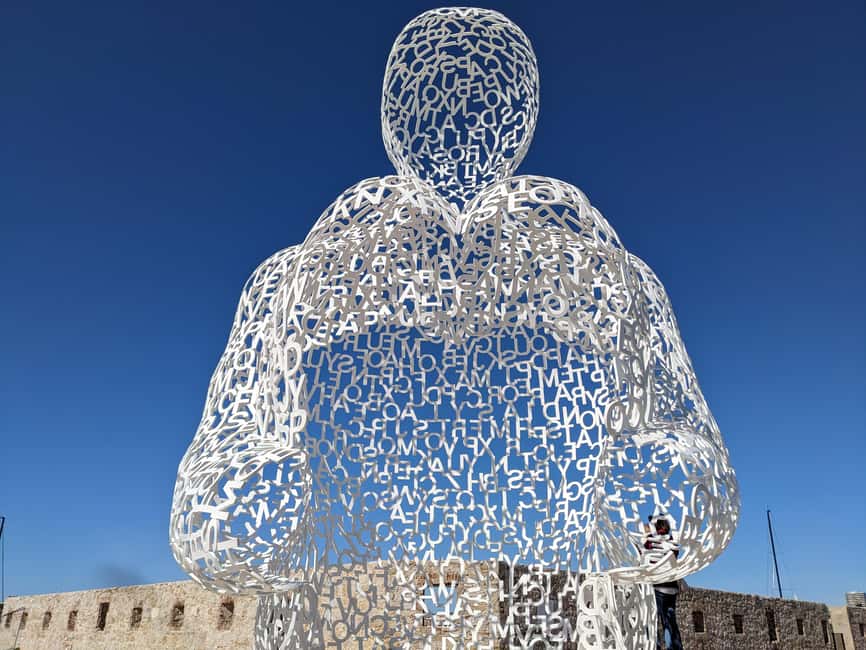
Le Nomade is one of the walk’s strongest visual stops. The large sculpture overlooks the sea and Fort Carré, giving the tour a modern artistic note before you enter the older part of town. It also helps explain why Antibes has long attracted artists and why art remains part of the town’s public spaces.
I like this sequence because it avoids treating the old town as a sealed historic display. You begin with the sea, boats, beach, and contemporary sculpture, then move toward walls, lanes, and older buildings. The story feels connected rather than divided into separate sightseeing stops.
The tour includes a view of Fort Carré, or Square Fort, but the route is a walking tour rather than a visit inside the fort. If you want to explore the fort itself, you will need separate time and arrangements. That is one of the few limits of a two-hour introduction.
Entering the medieval streets through the ramparts
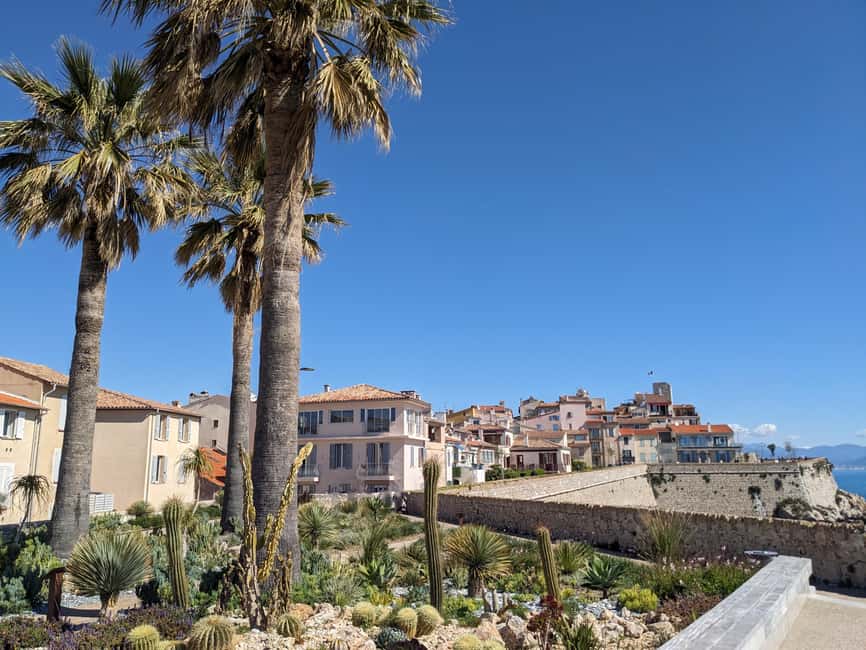
The route enters the old town through the ramparts. This transition is one of the most atmospheric parts of the walk. The broad coastal setting gives way to medieval streets where the scale becomes smaller and the details become easier to miss without a guide.
Emilie explains Antibes’ past, including its Roman roots, local traditions, and the changes that shaped the town. The emphasis is not only on dates and rulers. You get a sense of how the town developed, why its walls matter, and how old buildings now sit beside modern shops and studios.
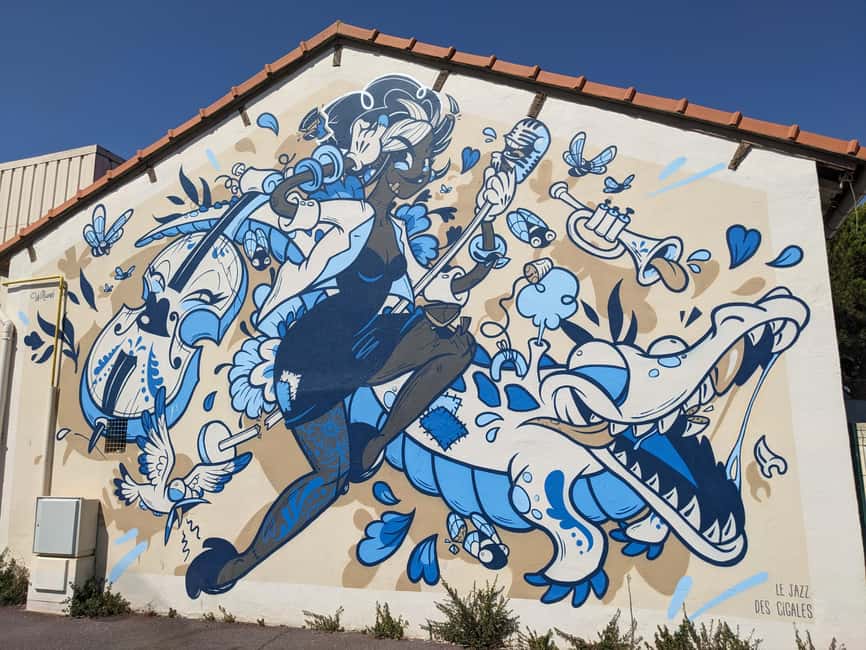
I would pay close attention to the small details here. Public art can be tucked into corners, and some pieces are subtle enough to pass without notice. A guide who points them out changes the walk from a simple route through pretty streets into a closer reading of the town.
The pace is a practical strength. The walk is described as relaxed but efficient, which means you should have time to look around without stopping for long lectures at every corner. Emilie has also been noted for taking photographs for participants at scenic spots, a kind touch if you are traveling as a couple or want a picture with the sea behind you.
Cathedral and Picasso Museum from the outside
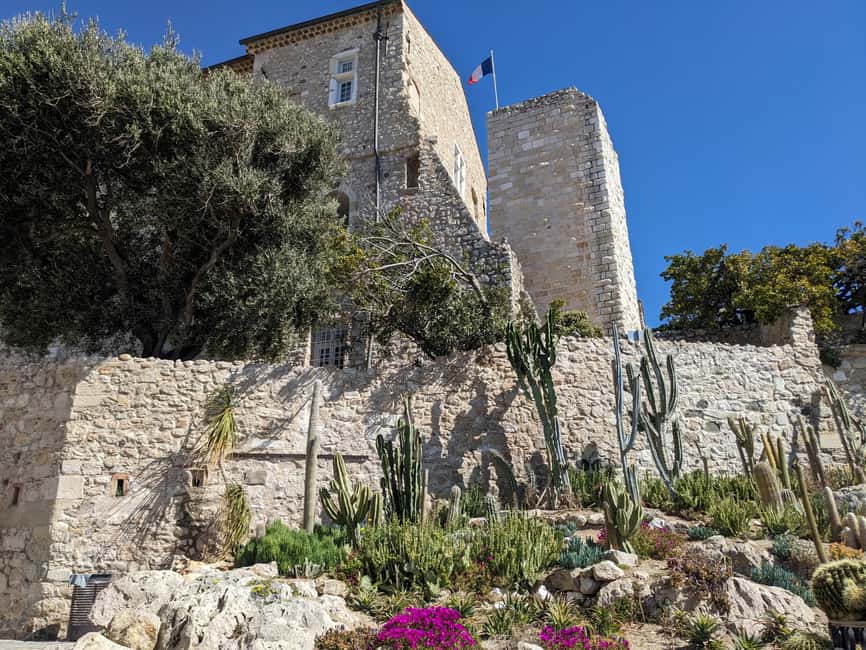
The route passes the Antibes Cathedral and the Picasso Museum, both seen from outside. These are important cultural landmarks, but this tour does not include interior visits or museum admission.
That distinction matters when you compare this walk with a dedicated art or museum tour. You will receive context about Antibes’ artistic life and the artists connected with the town, but you should plan another visit if you want to study Picasso’s works or see the cathedral interior.
Still, the exterior stops work well within this route. The cathedral helps anchor the old town’s religious and architectural identity, while the Picasso Museum connects Antibes with its modern artistic past. The tour treats both as part of a larger story rather than rushing past them as photo stops.
If art interests you, this may be one of the better reasons to choose Emilie. She brings attention to art around Antibes, including public pieces that are easy to overlook. The walk remains light and accessible, though, rather than becoming a specialist art lecture.
Same trip, a completely different kind of day:
- From Nice: French Riviera in One Day
★ 4.5 · 5,215 reviews - Nice: 1-Hour Sightseeing Cruise to Villefranche Bay
★ 4.6 · 2,747 reviews - Nice: 1 or 2-Day Hop-On Hop-Off Bus Tour
★ 4.3 · 2,663 reviews - Nice: Gorges of Verdon and Fields of Lavender Tour
★ 4.4 · 1,975 reviews
The Provençal market, where Antibes feels local
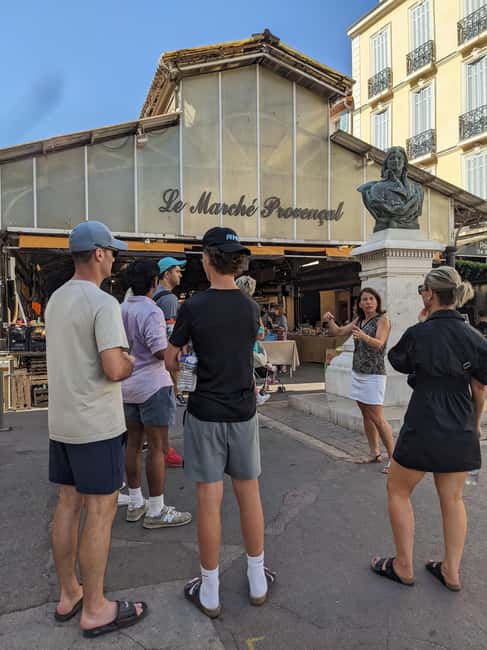
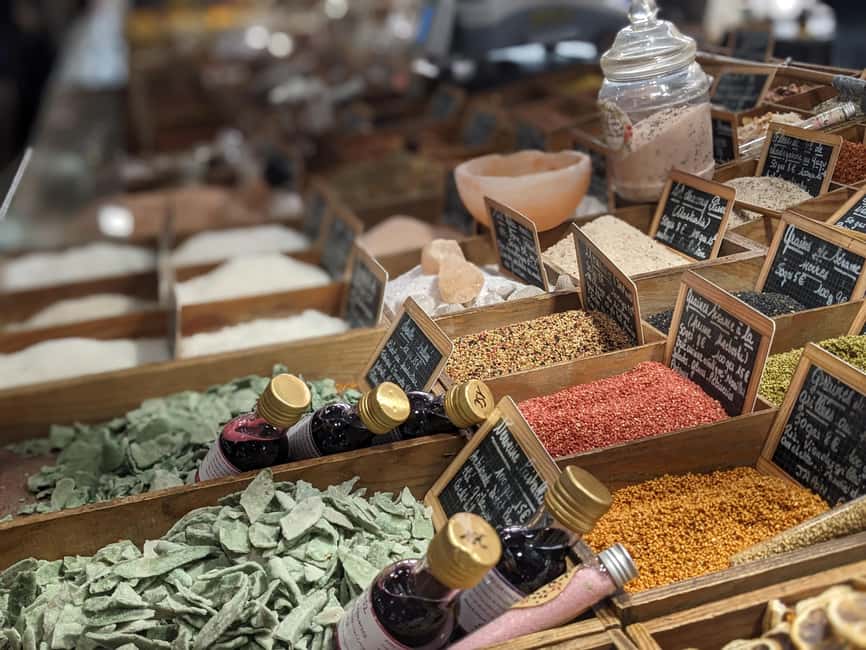
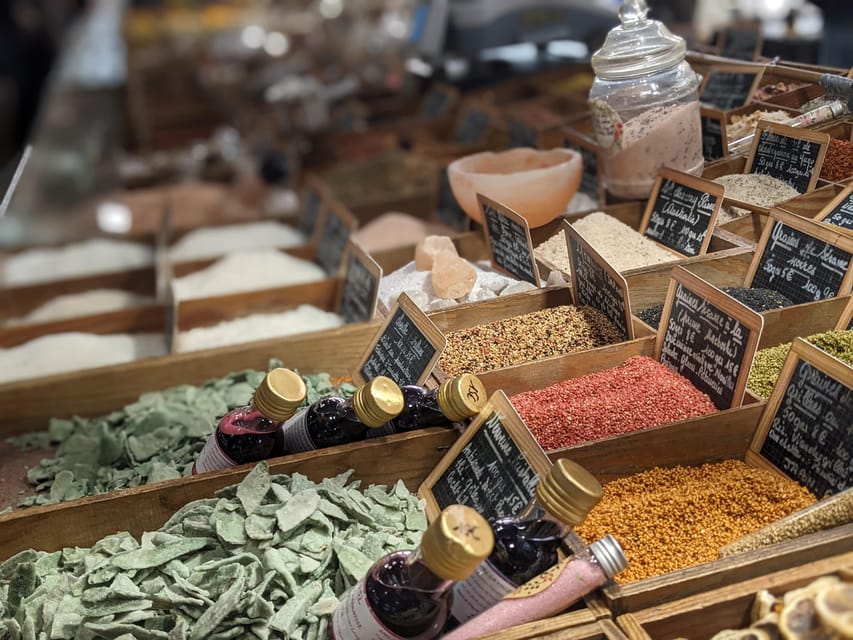
The Marché Provençal is a natural highlight. The market brings color and scent into the route, with the kind of everyday activity that gives a place its character. The experience is not just visual. You get a feel for the food culture and the ordinary rhythm of the old town.
Market conditions can vary by day and time, so do not expect a fixed display. The value of visiting with a local is knowing what you are looking at and how the market fits into life in Antibes. Emilie can also help with questions about local traditions and places to eat afterward.
I would not treat this stop as time to buy a full picnic unless you already know how much time you want to spend shopping. The tour has several more areas to cover, and the market is one part of a moving walk. You can always return later if a particular food stall or product catches your attention.
This section also makes the tour useful for first-time visitors who want more than a list of monuments. You get the colors, smells, and daily energy of Provence, then continue into quieter streets where the focus shifts to neighborhood life and small workshops.
Safranier and the character of a neighborhood
The tour continues through the Commune libre du Safranier, usually known simply as the Safranier neighborhood. This area offers a different feel from the market and the harbor. Instead of looking at Antibes from its grand public spaces, you see a more intimate quarter with its own identity.
This is where a local guide adds real value. A map can show you the streets, but it cannot easily explain why a neighborhood matters to residents or how it fits into Antibes’ traditions. Emilie has lived in the old town, so she can connect the lanes to local life rather than presenting them only as scenic backdrops.
The route includes quiet, attractive streets that you might pass without realizing their importance. That makes the Safranier portion especially useful for people who enjoy wandering but want a stronger sense of place. You can return later with more confidence and explore at your own pace.
Old-town walking does require some care. The tour is not suitable for wheelchair users, and anyone who finds uneven historic streets difficult should consider that before booking. The route is only two hours, but the surface and layout still matter more than the duration suggests.
Place Nationale and Mediterranean Antibes
Place Nationale is the final major old-town stop. Its typically Mediterranean style gives the walk a broad, open pause after the narrow lanes of Safranier and the medieval center.
This is a good point to put the earlier sights together. Antibes has the sea-facing port, defensive walls, religious buildings, market life, art, and neighborhood traditions. Place Nationale shows how those layers meet in a public square used for more than sightseeing.
I like that the route does not end in the middle of the old town. After Place Nationale, you return to the port where the walk began. That makes the experience easy to plan around, especially if you have a train, lunch reservation, beach visit, or another activity afterward.
The return also gives you a chance to recognize places you saw at the start. After two hours, Port Vauban should feel less like a random meeting point and more like a useful reference for exploring Antibes independently.
Street art, craftsmen, and the modern old town
During the last part of the walk, Emilie points out urban art and workshops run by local craftsmen. The examples include jewelry, paintings, and glassblowing. This is an important part of the tour because it keeps the old town connected to present-day creative work.
You are not only looking at old stone and church facades. You are also seeing how artists and makers use the historic center today. The contrast between ancient architecture and small contemporary works gives the walk extra texture.
The craft workshops may interest you even if you are not planning to buy anything. They show the skills and businesses that help keep the old town active. If you do want to shop, the guide’s local knowledge can help you understand what you are seeing, though the tour itself is not presented as a shopping excursion.
The urban art portion is also a good fit for younger visitors or anyone who finds conventional history tours too formal. Emilie’s approach combines light history, art, stories, and practical advice. You get structure without losing the pleasure of simply walking around.
What two hours and $29 get you
At $29 per person, this is a fairly modest price for a private-feeling introduction to Antibes, especially when the group reaches the 10-person limit. The value is strongest if you want orientation, local context, and recommendations rather than entry to paid attractions.
The fee includes the guide, not museum or fort admission. You are paying for Emilie’s time, route planning, explanations, and local perspective. Since the tour visits the Picasso Museum and Fort Carré from the outside, budget separately if you want to go inside either place.
Two hours is long enough to cover the port, coast, ramparts, old town, market, Safranier, Place Nationale, and artisan areas without turning the outing into an all-day commitment. It is also short enough to fit into a day trip or the first morning of a longer stay.
I think the best value comes from booking near the start of your time in Antibes. Emilie offers suggestions for beaches, restaurants, and later activities, so you can use the walk to shape the rest of your visit. If you already know Antibes well, the art and local stories may still appeal, but the orientation benefit will be smaller.
The booking terms are flexible. You can cancel up to 24 hours ahead for a full refund, and you can reserve now and pay later. French and English are available, and the exact starting times depend on availability.
Who should choose this Antibes walk
I would choose this tour if you want a friendly, personal introduction rather than a large group following a flag. The small size suits couples, solo visitors, families who enjoy walking, and locals who want more context about the town’s art and neighborhoods.
It is particularly useful for first-time visitors who want to know where to eat, which beaches to consider, and what parts of the old town deserve another look. The guide’s willingness to answer individual questions also helps if your interests lean toward food, architecture, art, or local customs.
You should think twice if you need step-free access, want extensive time inside museums, or prefer a tour devoted only to military history. You should also avoid expecting a long stop at every sight. This is a moving overview with stories and visual details, not a series of full guided visits.
The guide’s warmth and pacing are central to the experience. Emilie has been praised for being kind, engaging, accommodating, and good at bringing Antibes’ past to life. She also continued with very small groups when larger bookings changed, which suggests a personal approach rather than a rigid, one-size-fits-all routine.
Should you book it?
Book this tour if you want to understand how Antibes fits together: port, beach, walls, market, neighborhood, art, and craft shops. At $29, it offers good value for a two-hour walk, particularly because the small group and local advice can save you time later.
Skip it if your priority is entering the Picasso Museum or Fort Carré, since both are viewed from outside. For most visitors, though, this is a sensible first look at Antibes, with enough history to give the streets meaning and enough practical advice to improve the rest of your stay.
FAQ
Where does the Antibes walking tour start?
It starts at 14 Quai de la 1ère Division Française libre, between the Blind sculpture by David David and the fishermen’s booth at Port Vauban.
How long does the tour last?
The walking tour lasts two hours and returns to the starting point at the port.
What language is the tour offered in?
The tour is available in French and English.
How large is the group?
The tour is limited to 10 participants.
Who leads the tour?
The guide is Emilie, a local guide who has lived in Antibes’ old town. She is described as a small brunette carrying a small white bag with black flowers.
What sights are included?
The route includes Port Vauban, Gravette Beach, Le Nomade, Fort Carré from the outside, Antibes Cathedral, the Picasso Museum from the outside, the Provençal market, Safranier, Place Nationale, urban art, and artisan workshops.
Is the tour suitable for wheelchair users?
No. The activity is not suitable for wheelchair users.
Can I cancel the booking?
Yes. You can cancel up to 24 hours in advance for a full refund. You can also reserve now and pay later.
More 2-Hour Experiences in French Riviera
- Cannes 2-Hour E-bike Tour
★ 4.5 · 121 reviews - Cannes: 2-Hour Gyropod Tour
★ 4.9 · 100 reviews - The Père Lachaise Cemetery: Guided 2-Hour Small-Group Tour
★ 4.7 · 1,065 reviews - Paris: 2-Hour Perfume Creation Workshop
★ 4.8 · 731 reviews
Just added around French Riviera
- Coastal boat tour from Villefranche-Sur-Mer to Monaco★ 4.5 · 50 reviews
- Grasse, Valbonne & Gourdon: Day Tour with Wine Tasting★ 4.5 · 84 reviews
- From Mandelieu: Corniche d’Or Sightseeing Cruise with Guide★ 4.5 · 62 reviews
- Cannes : Visite guidée en Ferrari sur les routes de Cannes★ 4.8 · 83 reviews
- Cannes: Fireworks at Sea★ 4.4 · 37 reviews
- Cannes: Jet Ski Adventure with Optional Instructor★ 4.4 · 29 reviews
- Cannes: Private Boat Trip to Lerins Islands & Cap d’Antibes★ 5.0 · 101 reviews
- Cannes: 2-Hour Gyropod Tour★ 4.9 · 100 reviews
Walking Tours, compared.

Paris Top Sights Half Day Walking Tour with a Fun Guide
Read our review →
Montmartre Hidden Gems and Scenic Highlights Walking Tour
Read our review →
Montmartre Hill French Gourmet Food and Wine Tasting Walking Tour
Read our review →
Paris Île de la Cité and Notre-Dame Walking Tour With Crypt
Read our review →
Montmartre Cheese, Wine & Pastry Guided Walking Tour
Read our review →
Paris in a Day: Louvre or Orsay, Eiffel Tower, City Walk & Cruise
Read our review →
Montmartre Highlights Walking Tour with a Local Guide
Read our review →
Browse the lists this tour appears in