
Reviewed · PARIS TOURS
Behind the Scenes of the Roland Garros Stadium
The best part of this Roland Garros tour is the route players take before walking onto the clay. You see the changing rooms, the press rooms, the presidential stand, and the corridor that leads toward the main court. It turns a television image into a real place, with doors, stairs, plaques, and working spaces that most ticket holders never see.
I like the player’s-eye view and the way the tour links the building to tennis history. I also like the compact 90-minute length, which gives you a focused visit without taking a whole day from Paris. The main drawback is that access can change when the stadium is hosting an event, and late arrivals are not admitted.
Key points
- Walk the players’ route: Follow the passage from the changing-room area toward the clay court.
- See working spaces: Visit the press rooms, changing rooms, presidential stand, and other restricted areas.
- Look for tennis history: Plaques, statues, trophies, and stories about Nadal, Federer, Graf, and French tennis add meaning to the tour.
- Allow for stairs: This is a 90-minute walking tour, so comfortable shoes matter.
- Arrive early: The meeting point can be confusing, and latecomers receive no refund.
- Shop after the visit: The Roland-Garros boutique is open from 9:30 a.m. to 6:30 p.m.
What You Actually See Inside Roland Garros
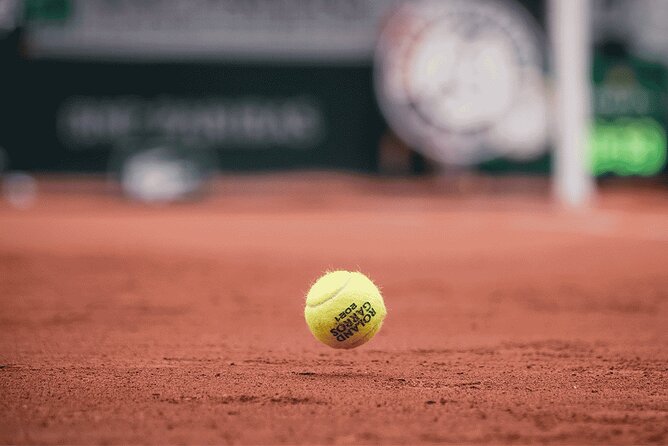
Roland Garros is not just a tennis stadium. During the tournament, it is a temporary city of players, officials, reporters, ball crews, sponsors, and spectators. This visit shows you the less visible side of that operation.
The tour lasts about one hour and 30 minutes. You are guided through the stadium rather than left to wander. The main stops include the press rooms, player changing rooms, presidential stand, and the corridor used by players on their way to the clay.
The route gives the visit a useful sense of order. You begin with the practical side of the tournament, then move closer to the center of attention. By the time you reach the player passage and court area, you have seen the rooms where matches are discussed, prepared, and reported.
That progression is what makes this more than a stadium photo stop. You can imagine the shift from quiet preparation in the changing rooms to the noise and pressure of the court.
A few more Paris half-days worth comparing
- Paris: Louvre Museum Timed-Entrance Ticket
★ 4.6 · 71,977 reviews - Disneyland® Paris 1-Day Ticket
★ 4.6 · 49,412 reviews - Paris: Versailles Palace and Gardens Full Access Ticket
★ 4.6 · 41,579 reviews
The Player Corridor Is the Highlight

The corridor leading to the clay court is the emotional center of the visit. It is the short stretch between private preparation and public performance, the place where a player leaves the locker room and becomes the focus of thousands of people.
You may see plaques or names connected with major champions along the route. One especially memorable detail is the plaque associated with Rafael Nadal, whose record at Roland Garros has made him inseparable from the tournament’s modern identity. Tennis fans may also notice names linked to earlier champions, including Tony Trabert.
The tour can make familiar television moments feel more physical. A player walking onto court is usually shown for only a few seconds. Here, you can consider the route itself: the stairs, the doors, the narrow passage, and the change in mood before the match begins.
If you follow tennis closely, this is likely the strongest reason to book. If you have little interest in the sport, the corridor may seem like an ordinary hallway, so your enjoyment will depend more on the architecture and behind-the-scenes access.
Press Rooms, Changing Rooms, and the Presidential Stand
The press rooms show the tournament from the media side. This is where matches become questions, answers, headlines, and analysis. The setting helps explain how a Grand Slam event continues after the final point, when players face cameras and reporters.
The changing rooms provide another useful contrast. Unlike the grandstand, they are functional spaces connected with preparation and recovery. Seeing them helps you understand the tournament as a workplace rather than just a public show.
The presidential stand offers a different perspective. It is one of the places that gives the stadium its ceremonial side, away from the working areas used by players and journalists. The mix of formal and practical spaces is one of the tour’s strengths.
Do not expect access to every room on every visit. The site remains active, and some areas can be closed when an event or other activity is taking place. That restriction is stated clearly in the tour conditions, and it is worth keeping expectations flexible.
Stories About Nadal and Other Champions
A good guide makes a major difference here. The strongest tours have included stories about Nadal, Federer, Graf, and other major figures, along with details about French tennis and the tournament’s traditions.
Guides have included Lionel, who has been praised for an interactive, funny presentation, and other guides who led tours in more than one language. The quality can vary. Some guides bring clear enthusiasm for tennis, while one poorly received visit was shortened to about 70 minutes and lacked engagement.
That variation matters because the buildings themselves are only part of the experience. The guide supplies the context. A stairway becomes interesting when you learn who used it, and a press room becomes memorable when you understand what happens there after a five-set match.
If your guide is passionate, the stories can carry the tour well beyond the physical spaces. If the presentation is flat, you may finish feeling that you saw rooms but missed the meaning behind them.
Same trip, a completely different kind of day:
- Paris: Evening River Cruise with Music
★ 4.4 · 22,721 reviews - Paris: Eiffel Tower Entry Ticket with Optional Summit Access
★ 4.4 · 20,035 reviews - Paris: Eiffel Tower Summit or Second Floor Access
★ 4.3 · 17,248 reviews - Paris: Louvre Guided Tour with Reserved Access & Boat Cruise
★ 4.3 · 16,353 reviews
How Much Walking and Climbing Should You Expect?
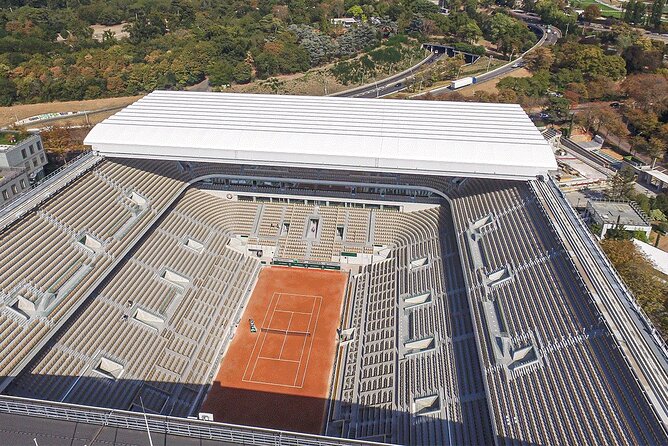
Treat this as a walking tour with stairs, not as a seated stadium visit. The route takes about 90 minutes, and comfortable shoes are a smart choice.
The exact amount of climbing can depend on the route used that day. Still, the visit includes corridors, stairs, court access areas, and several parts of the stadium. Anyone who dislikes long periods on their feet should plan accordingly.
There are no food or drinks included. It is sensible to eat beforehand or carry what you need according to the venue’s rules. Also use the bathroom before the tour ends. Access to facilities after the guide leaves may not be straightforward, and the shop itself does not have a public bathroom.
Most people can take part, and the group is capped at 30 participants. That is not a private tour, but the limit keeps it from becoming a huge crowd. The guide may still need to pause in narrow areas so everyone can stay together.
Seeing the Clay Court Without Tournament Crowds
A visit outside the French Open gives you a calmer look at the stadium. You can focus on the structure, route, and history without the full tournament crowd around you.
The tradeoff is atmosphere. During the tournament, the grounds are alive with matches and spectators, but the behind-the-scenes areas are harder to study. On a regular tour day, you may have a better chance to appreciate the spaces, yet some courts may be covered or unavailable because the stadium is being used for another event.
Do not book this expecting a full day on the outer courts. The tour focuses on the main behind-the-scenes route, and access to smaller stadiums and outside courts is not guaranteed.
In some cases, people have been able to get close to the clay surface, but that depends on the guide and the conditions that day. It is best not to count on stepping onto the court. The value is in seeing the route and restricted spaces, not in treating the playing surface as an open attraction.
Finding the Entrance at 1 Avenue Gordon Bennett
The official starting point is 1 Avenue Gordon Bennett, 75016 Paris. The tour ends at the Roland-Garros boutique at 2 Avenue Gordon Bennett.
The area is near public transportation, but the entrance procedure can be confusing. External signs may not clearly identify the tour, and a map app may lead you to a side entrance rather than directly to the shop or meeting place. Give yourself extra time to locate the correct spot.
Arrive at least 15 minutes before departure. This is not a casual recommendation. Latecomers are not accepted, and no refund is offered if you miss the start.
The meeting arrangements have caused confusion for some visitors, especially when security staff did not immediately recognize the tour. Go to the stated meeting point, keep your confirmation ready on your phone, and ask specifically for the Roland-Garros guided tour and boutique if you need help.
The end point at the shop is convenient. You can browse official merchandise after the visit, and the tour information says the shop is open from 9:30 a.m. to 6:30 p.m. Some tour arrangements also provide a 10 percent merchandise discount, so check the conditions attached to your booking.
Is $25.77 a Fair Price?
At about $25.77 per person, this is a reasonable price for a 90-minute guided visit to a famous venue. You are paying for entrance to areas normally closed to ordinary spectators, plus a guide who explains how the tournament works.
The price makes the most sense if you are a tennis fan, a Nadal supporter, or someone who has already attended the French Open and wants to understand the venue beyond the public seating areas. It is also a good choice for a short Paris activity because it does not consume an entire morning or afternoon.
The value is weaker if you want a broad stadium tour with every court, museum area, and outer ground included. This is a focused behind-the-scenes route. Transfers, food, and drinks are not included, so you must make your own way there.
I would also judge the value against the condition of the stadium on your date. If a major event blocks the main stadium or covers the court, you may still see useful areas, but the visit can feel less complete. The operator notes that some spaces may be inaccessible because of activity at the site.
Who Will Enjoy This Most?
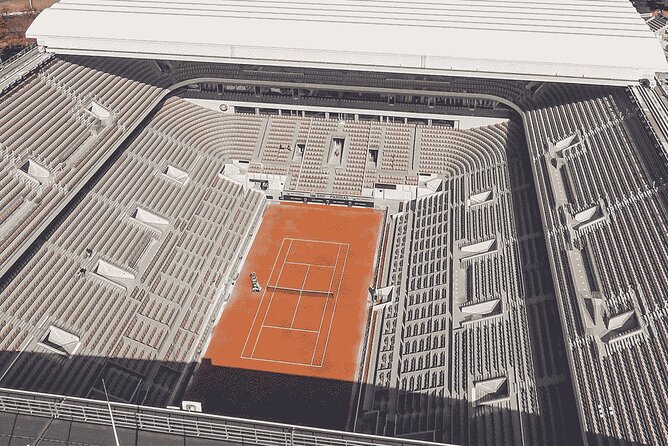
This tour is aimed first at tennis fans. You will get the most from it if you recognize the names connected with Roland Garros and enjoy hearing how players, reporters, and officials use the venue.
It also suits families with older children who play tennis. The 90-minute format is manageable, and the player route gives young fans a clear story to follow. A pair of tennis-playing grandchildren, for example, would have plenty to look at without needing to sit through a long museum visit.
You do not need to attend the French Open to appreciate the visit. In fact, the tour can work well for someone who has only seen Roland Garros on television. It explains what happens outside the match itself.
I would think twice if you have no interest in tennis, dislike stairs, or want guaranteed access to every court. Paris offers many attractions with more visual variety. This visit rewards curiosity about the sport more than general sightseeing.
Booking, Language, and Cancellation Details
The experience is offered in English, with a mobile ticket and confirmation sent at booking. The maximum group size is 30 people.
The standard cancellation policy allows a full refund when you cancel at least 24 hours before the start time. Changes or cancellations made less than 24 hours ahead are not accepted for a refund. The cutoff follows local Paris time.
Because the tour is often booked well ahead, with an average booking time of about 50 days, reserve early if your Paris dates are fixed. That matters especially for English-language departures and busy travel periods.
Keep your phone charged enough to show the mobile ticket, and arrive early rather than trying to solve the entrance question at the last minute.
Should You Book the Roland Garros Tour?
Book it if you want the behind-the-scenes side of tennis, not simply a view of a stadium. The changing rooms, press rooms, presidential stand, and player corridor give you access to the working world behind the French Open.
I would recommend it strongly to tennis fans, particularly those interested in Nadal and the history of the clay-court tournament. The price is fair, the time commitment is modest, and a strong guide can add plenty of character.
Go with realistic expectations. The route may change, the main court may be unavailable, and guide quality is not perfectly consistent. Arrive early, wear comfortable shoes, use the bathroom before the tour ends, and leave room in your schedule for the boutique.
FAQ
How long does the Roland Garros stadium tour last?
The tour lasts approximately one hour and 30 minutes.
What areas are included?
The guided visit includes the press rooms, changing rooms, presidential stand, and the corridor leading players toward the clay court.
Is the tour offered in English?
Yes. The experience is offered in English.
Where does the tour start?
The tour starts at 1 Avenue Gordon Bennett, 75016 Paris, France.
Where does the tour finish?
The tour ends at the Roland-Garros boutique at 2 Avenue Gordon Bennett, 75016 Paris, France.
What is included in the price?
The price includes the guided tour entrance tickets and a guide. Transfers, food, and drinks are not included.
What happens if I arrive late?
You must arrive 15 minutes before the start time. Latecomers are not accepted, and no refund is available if you miss the tour.
How many people can join the tour?
The maximum group size is 30 participants.
Can I cancel for a full refund?
Yes, if you cancel at least 24 hours before the experience starts. Cancellations or changes made less than 24 hours before the start time are not accepted for a refund.
Just added around Paris
- Paris at the First Lodges – Ducasse sur Seine dinner cruise★ 4.0 · 165 reviews
- Paris at the First Lodges – Ducasse sur Seine Lunch Cruise★ 4.5 · 70 reviews
- Disneyland® Paris 1 Day with Round-Trip Train Tickets from Paris★ 4.0 · 50 reviews
- Explore speakeasies and hidden bars, sip meet & socialize★ 4.5 · 47 reviews
- Disneyland® Paris Express Shuttle with Admission Ticket from Central Paris★ 3.5 · 172 reviews
- Paris Cheeses and Wines Tour de France with Tasty Games★ 5.0 · 32 reviews
- Musée Orsay Highlights Tour – Best of Impressionism & Hidden Gems★ 5.0 · 27 reviews
- Private Tour: Discover Paris with Local, 3 hours on a Segway★ 5.0 · 71 reviews
Paris Tours, compared.


Versailles Palace and Gardens Full Access Ticket
Read our review →
Eiffel Tower Entry Ticket with Optional Summit Access
Read our review →

Louvre Guided Tour with Reserved Access & Boat Cruise
Read our review →