
Reviewed · CYCLING TOURS
Best of Paris Bike Tour
Paris is at its most rewarding when you can move between its big sights without spending half the day underground. This four-hour bike tour links Notre-Dame, the Louvre, the Seine, the Eiffel Tower, the Champs-Élysées, and Place de la Concorde in one clear sweep.
I like the personal feel of a local guide, especially guides such as Joe, Arnold, Thibault, and Lucien, who are praised for their stories, humor, and care with children. I also like the practical advice, including a Louvre entrance shortcut and tips that help you plan the rest of your stay. The main drawback is city traffic: you need to be a confident cyclist, and the bikes are single-gear rather than electric.
Key things to know before you book
- You see Paris from Saint-Michel to the Eiffel Tower: The route covers the city’s major monuments without making you walk between far-flung sights.
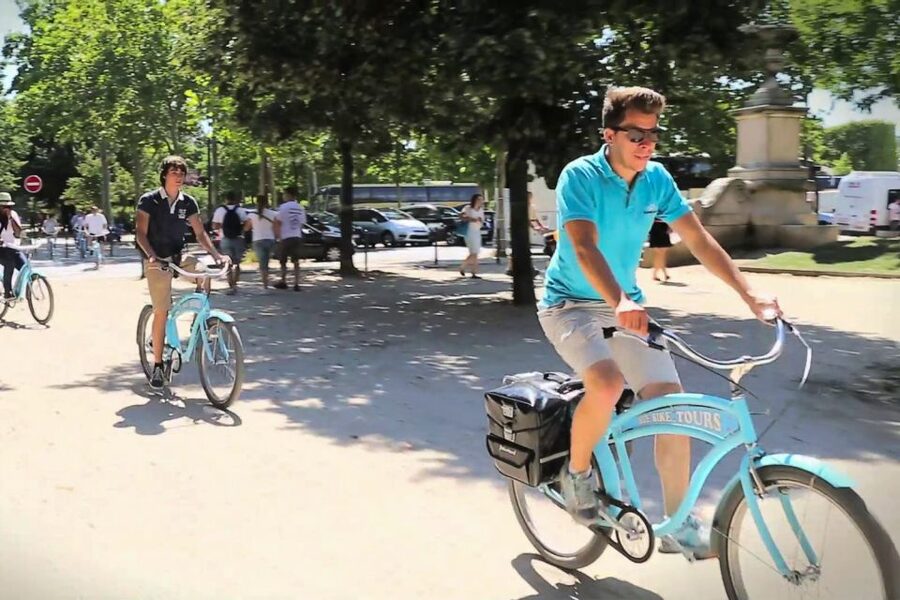
- The bikes are simple and easy to ride: They have aluminum frames and one gear, with no electric assistance.
- The guide controls the pace and crossings: This is especially useful on city streets, though you still need to stay alert.
- Rue Cler provides a 30-minute break: Food and drinks are not included, so bring money for a snack.
- You get an excellent first-day orientation: The tour shows you what deserves a longer visit later.
- Rain and cold are manageable: Rain gear, gloves, and scarves are supplied when needed.
Why a bike is a smart way to see Paris
Paris looks compact on a map, but its major sights are spread across both sides of the Seine. Walking from Notre-Dame to the Eiffel Tower takes time, and a sightseeing bus can leave you watching the city through glass. A bike gives you movement, fresh air, and quick access to viewpoints that would be awkward by car.
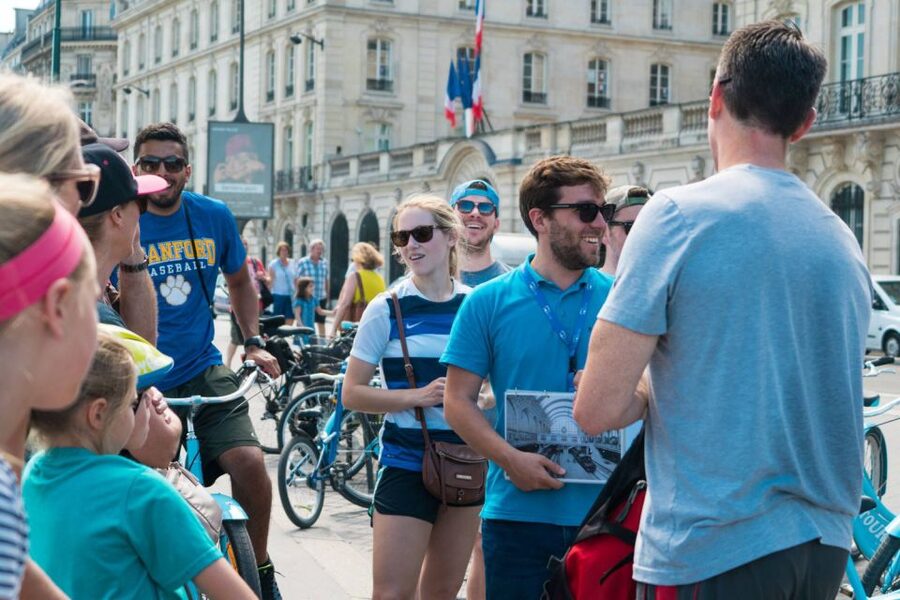
This is not a race. The route includes frequent stops for photographs and short explanations. Guides keep the group together, point out where to ride, and adjust the pace when needed. That matters in Paris, where a calm guide can make the difference between enjoying the ride and worrying about every intersection.
The route is mostly flat, which helps compensate for the simple one-speed bikes. You do not need to be a serious cyclist, but you should be comfortable starting, stopping, steering, and riding near traffic. One parent found the tour manageable for children from eight to twelve, while another noted that a child struggled more in hot weather near the end of a long ride.
More Bike Tours in Paris
- Versailles Palace Bike Tour with Market & Marie-Antoinette hamlet
★ 5.0 · 2,680 reviews - Paris: Charming Nooks and Crannies Bike Tour
★ 4.8 · 2,585 reviews - From Paris: Versailles Bike Tour w/ Palace, Gardens, & Picnic
★ 5.0 · 2,150 reviews
Starting at Fontaine Saint-Michel
Meet in front of Fontaine Saint-Michel in central Paris, next to the guide’s bright blue bike. The nearest transport is Saint-Michel-Notre-Dame station, served by Metro line 4 and RER line C, with Cluny on Metro line 10 also nearby.
The meeting point is convenient, but allow a few extra minutes to find the guide. One group had trouble because the guide was near the market area rather than exactly where the directions suggested. The bikes may be stored elsewhere, so the opening part of the tour can include a short walk to collect them.
You will be fitted with an aluminum-framed bike and a stylish helmet. The company also supplies rain gear in wet weather and warm gloves and scarves in cold weather. Dress for the forecast, and in summer bring sunscreen, a cap, and light clothing.
Notre-Dame and the early Seine ride
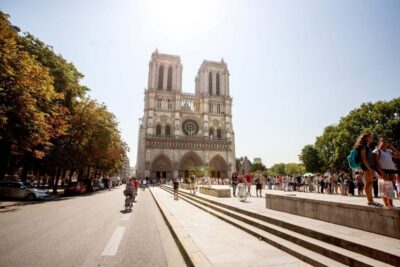
The first major stop is Notre-Dame Cathedral. You will see the cathedral from outside and receive a short introduction before riding on. This is a useful opening because Notre-Dame sits at the center of Paris history and geography, and the nearby Île de la Cité helps you understand how the city developed around the Seine.
From here, the tour moves along the river toward the Musée d’Orsay. Riding beside the Seine gives you a better sense of the city’s scale than simply arriving at isolated monuments. You pass bridges, quays, and layers of Parisian architecture while the guide points out details that are easy to miss at walking speed.
The stops are brief, generally around ten to fifteen minutes. That is enough for photographs and context, but not enough for a full visit inside a museum or cathedral. Think of this as an outdoor introduction, not a substitute for admission tickets.
Musée d’Orsay and the Seine quays
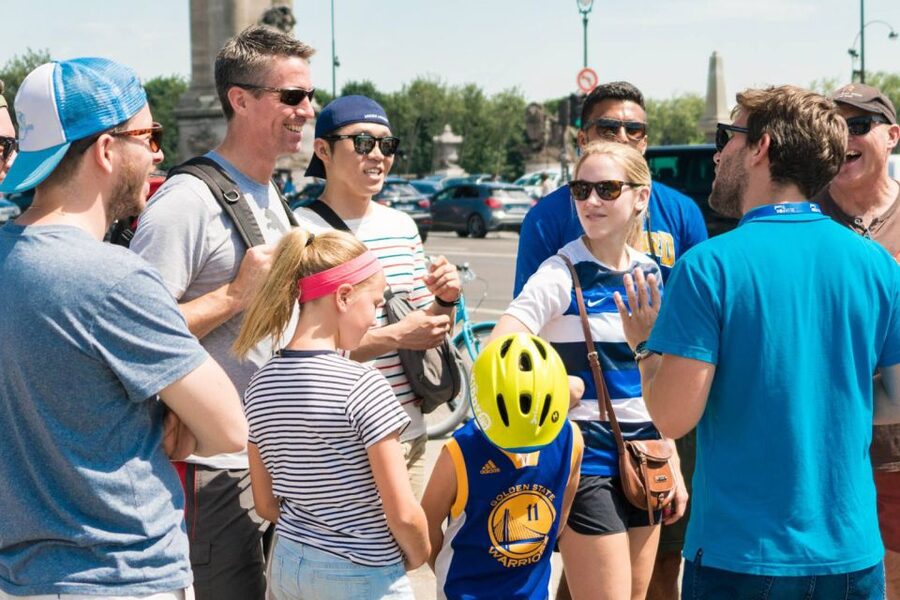
The Musée d’Orsay is a highlight for art lovers, even though the tour does not take you inside. Your guide introduces the building and its connection to the Impressionists, giving you a reason to return if you have time for a museum visit later.
The ride continues beside the Seine, where the route feels less confined than the busy streets. You may get a short pause to take photos and ask questions. Guides often add small observations about daily Paris life, local customs, and odd details along the route. Irving, for example, once paused to watch movers lifting furniture through a fifth-floor window because an old building’s stairs were too narrow. That kind of unscripted moment is part of the appeal of riding through the city.
The guide usually gives short, clear explanations rather than long lectures. That keeps the group moving, though one rider found it hard to hear at times in noisy areas. Stay close to the guide and ask for a repeat if traffic or surrounding noise swallows part of the explanation.
Same trip, a completely different kind of day:
- Paris: Louvre Museum Timed-Entrance Ticket
★ 4.6 · 71,977 reviews - Disneyland® Paris 1-Day Ticket
★ 4.6 · 49,412 reviews - Paris: Versailles Palace and Gardens Full Access Ticket
★ 4.6 · 41,579 reviews - Paris: Evening River Cruise with Music
★ 4.4 · 22,721 reviews
Pont Alexandre III and the Invalides area
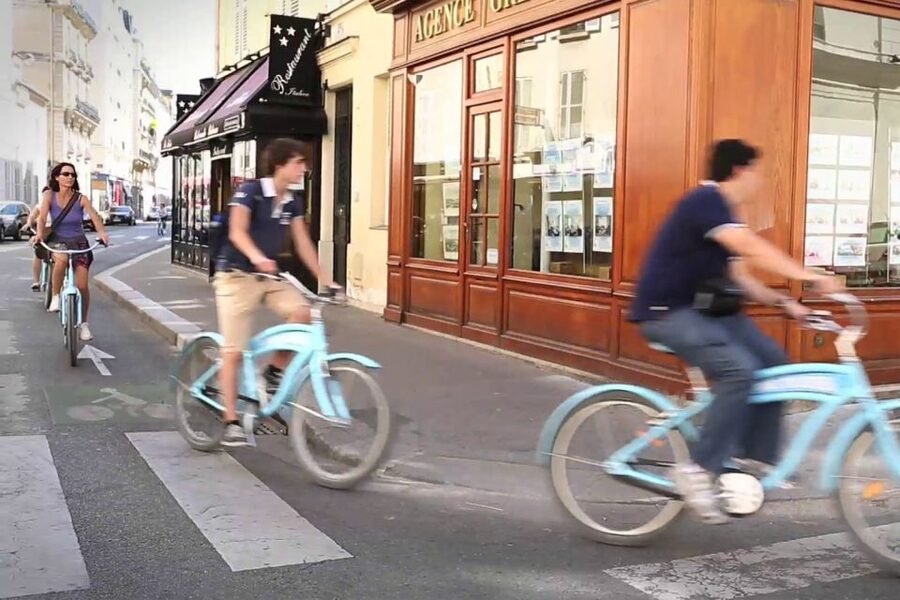
Pont Alexandre III is one of the best photo stops on the route. Its ornate lamps, sculptures, and wide views toward the Invalides and the Seine make it a natural place to pause. The bridge also gives you a strong sense of the grand scale used in Parisian urban planning.
The route then reaches the Army Museum and the Invalides area. You will see the exterior and hear about its role in French history. The golden dome is easy to recognize, and this stop adds architectural variety after the river views and museum district.
At each stop, you have time to look around, but the tour keeps its half-day rhythm. If you want to study the Invalides, Musée d’Orsay, or Notre-Dame in detail, mark them down for another visit. The real value here is knowing which places deserve your limited museum time.
The Rue Cler break and practical Paris advice
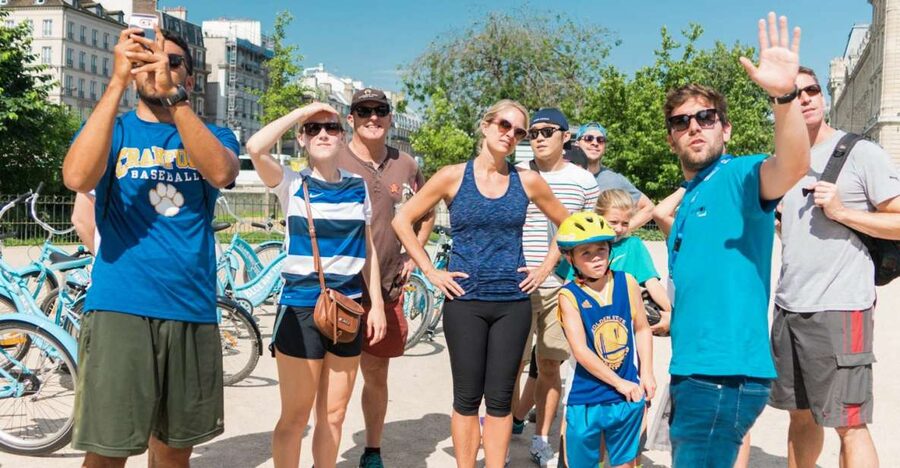
The planned break at Rue Cler lasts about 30 minutes. This outdoor market street is a good place to buy a snack, browse food stalls, and rest your legs. Food and drinks are not included, so carry a card or some cash for whatever looks appealing.
Some descriptions of the experience refer to this as a lunch stop, while the official details describe a snack break. Plan for a casual food pause rather than a full restaurant meal. It is also wise to use a restroom before the tour, since one rider specifically wished they had done so.
This break gives the tour a welcome change of pace. You are not simply stopping beside another monument for a quick photograph. You have time to choose something to eat, chat with the group, and watch a working Paris neighborhood. I would avoid buying too much food here if you are not used to cycling after a heavy meal.
The Eiffel Tower from street level
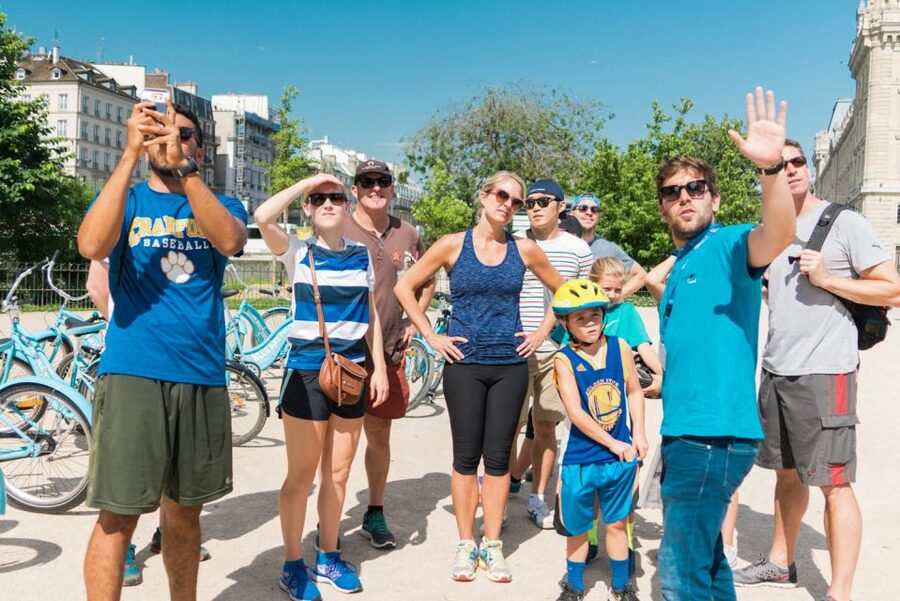
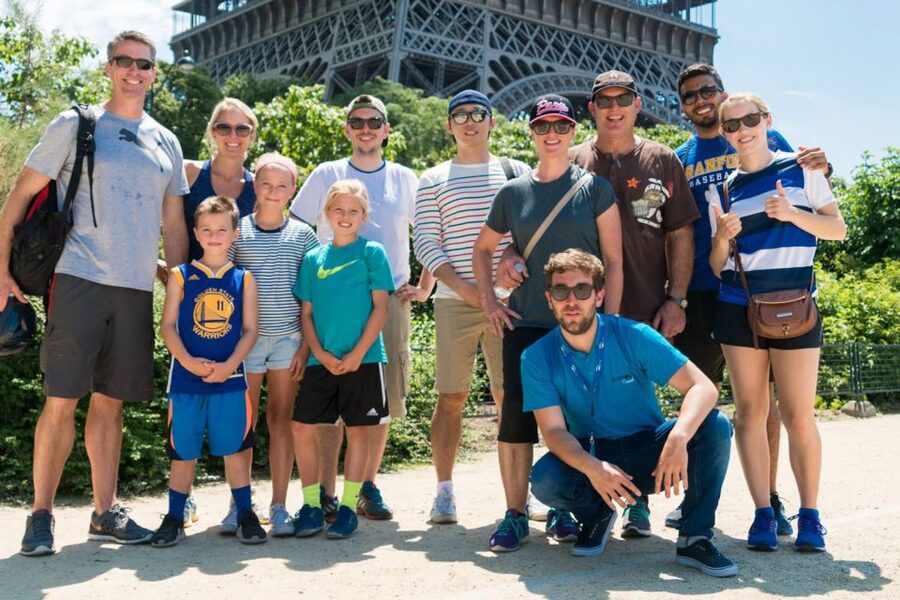
After Rue Cler, the route heads toward the Eiffel Tower. This is the moment many people anticipate, and arriving by bike makes the approach feel active rather than staged. You will stop for photographs and hear the guide explain the monument and its place in the city.
The tour does not include entry to the Eiffel Tower. That is not a serious weakness, because visiting the tower requires separate planning and can consume several hours. Instead, this stop gives you a clear view and helps you decide if you want to book a summit or second-floor visit later.
A picnic or snack pause with a view of the Eiffel Tower has been part of some tours, but the supplied schedule specifically lists Rue Cler as the 30-minute break. Treat the market stop as the dependable food pause and the Eiffel Tower stop as a sightseeing and photo stop.
Grand Palais, the Champs-Élysées, and Place de la Concorde
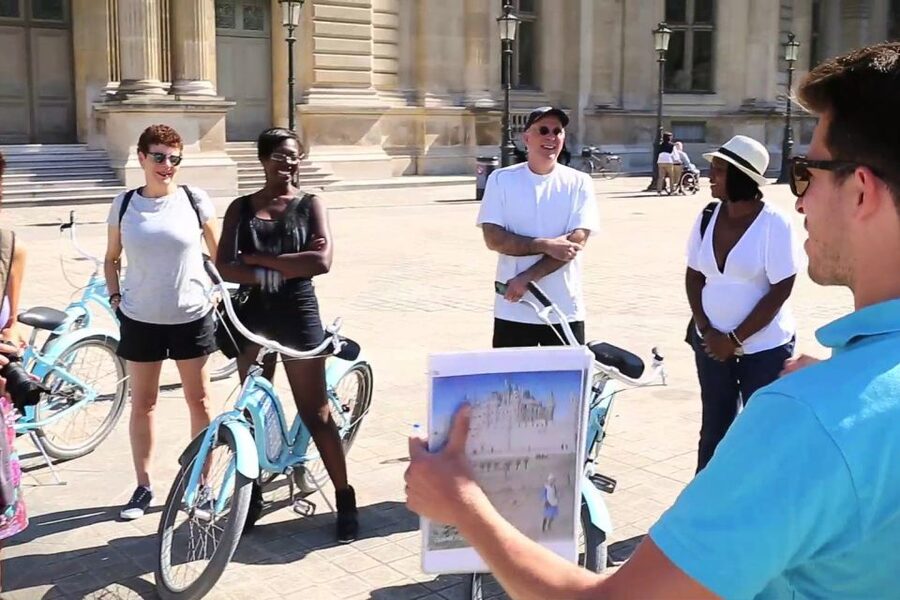
The route then passes the Grand Palais and heads along the Champs-Élysées. You get to see how the grand avenues connect the city’s monuments, gardens, palaces, and ceremonial spaces.
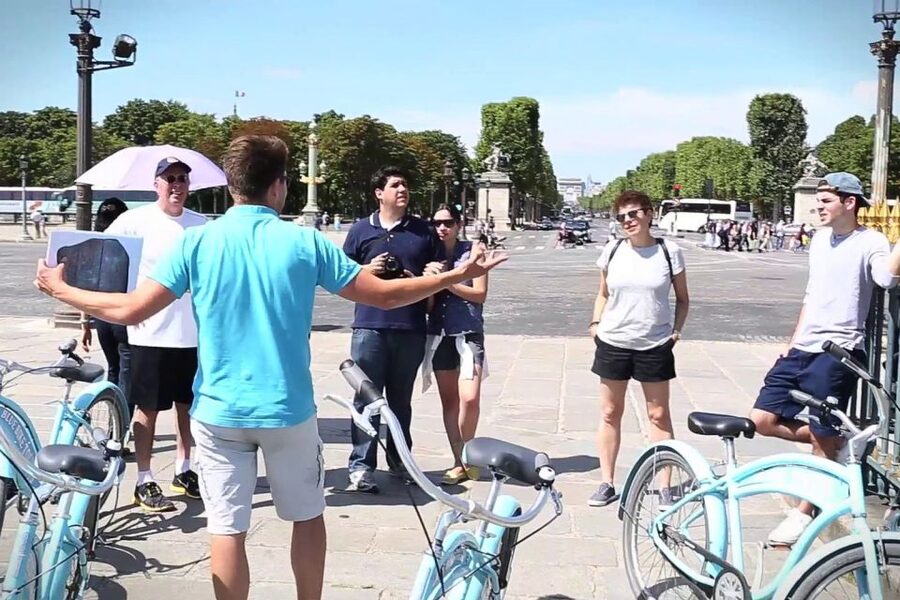
Place de la Concorde is one of the strongest viewpoints on the tour. From here, you can look along the Champs-Élysées toward the Arc de Triomphe, while also seeing how the square links the river, the Tuileries, and the central city. The guide’s short explanation helps turn a busy intersection into a readable part of Paris.
This section is also where traffic demands the most attention. The guides give safety instructions and lead the group through cycle paths and roads, but no guide can remove the need for caution. Keep both hands ready, follow the person ahead, and do not stop suddenly for photographs.
The Louvre courtyard and the ride back
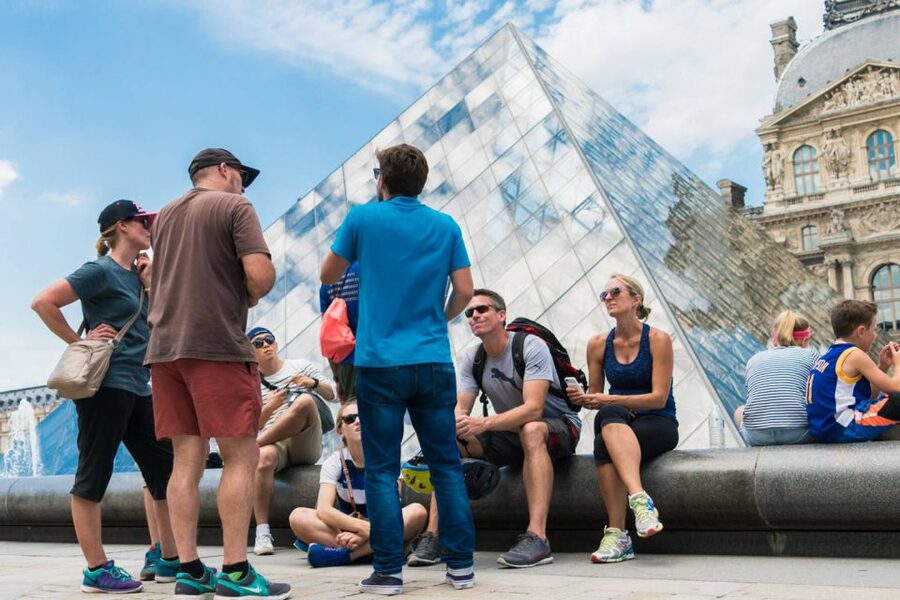
The final major stop is the Louvre. You will cycle around the glass pyramids in the courtyard, a memorable way to see the museum without committing to an interior visit. The courtyard gives you excellent photographs and a chance to understand the Louvre’s enormous scale.
A particularly useful part of the tour is the advice about saving time and money later. The guide can explain a shortcut into the Louvre that may save hours in line. You should still confirm current entrance arrangements before relying on any particular access point, since museum procedures can change.
After the Louvre, you ride back toward Saint-Michel. By the end, you will have crossed a large portion of central Paris and gained a working map in your head. That orientation is often more valuable than another isolated monument explanation, especially if you have only two or three days in town.
Guides, group size, and the feel of the ride
The experience is in a small group, although one booking formed a larger group of about twelve. The guide’s personality matters a great deal. Joe is praised for keeping children engaged and groups safe, while Arnold is known for detailed explanations and even bringing photographs to support his stories. Thibault is described as funny and attentive, and Lucien is praised for warmth and historical detail.
The strongest pattern is not one particular guide. It is the combination of local enthusiasm, short explanations, and steady group management. Guides take photographs at stops, answer questions, and sometimes adapt the route for an unplanned sight.
The English is generally clear, but hearing can be difficult beside traffic. Stay near the guide during explanations. If you are in a larger group, position yourself toward the front rather than assuming you will hear everything from the back.
Bikes, safety, and weather
These are comfortable city bikes with aluminum frames, but they are not e-bikes. The single gear is usually fine on the flat central route, though you will not have motor assistance if you are tired, hot, or less accustomed to cycling.
You do not need professional cycling skill. You do need reasonable confidence in traffic and enough stamina for four hours, including stops and riding between them. Families have managed the route successfully, but young children may find the length and summer heat tiring.
The company provides helmets and weather gear. Still, bring the basics yourself: sunscreen, a cap, water, and clothing that handles changing conditions. In winter, gloves and a scarf matter. In rain, the supplied gear helps, but wet streets can make riding less comfortable.
Is $53 good value?
At $53 per person, the tour is fairly priced for four hours of guided sightseeing, bike rental, helmet, and weather equipment. You also get a route that would be difficult to reproduce efficiently on foot, plus local advice about the Louvre and other parts of Paris.
The value is strongest if you are new to Paris, short on time, or want to see the city before choosing which museums and monuments deserve a longer visit. You are paying for transport between sights, but also for the guide’s route planning, safety support, and local context.
Food, drinks, and admission to the museums or Eiffel Tower are not included. Add those costs only if you plan separate visits. The tour itself is best understood as an outdoor overview rather than a ticketed attraction package.
Free cancellation is available up to 24 hours before departure, and you can reserve now and pay later. Check the available start times when booking. During summer maintenance, RER C may not run through central Paris, so use Metro line 4 or line 10 if needed.
Who should book this Paris bike tour?
I would choose this for a first or second day in Paris. It gives you a useful mental map, covers the major sights, and leaves you with a list of places to revisit at your own pace.
It suits solo visitors, couples, families with older children, and anyone who likes active sightseeing. It is also a good choice if you have only one full day and want more ground than walking allows.
I would think twice if you dislike city cycling, have difficulty riding for several hours, or want long interior visits at the Louvre, Musée d’Orsay, or Invalides. This tour shows you the city from outside. Its strength is range and orientation, not slow museum study.
Final verdict: book it for a fast, friendly Paris overview
Book the Best of Paris Bike Tour if you want to cover the city’s headline sights while learning how to navigate Paris afterward. The route is smart, the price is reasonable, and the guides bring the ride to life with stories, humor, photographs, and useful planning advice.
Go prepared for traffic, a one-speed bike, and a full four hours outside. If you do, this is one of the most efficient ways to get your bearings, spot places worth returning to, and enjoy Paris between the monuments rather than simply lining up for them.
FAQ
Where does the Best of Paris Bike Tour meet?
Meet your guide in front of Fontaine Saint-Michel in central Paris. Look for the guide beside a bright blue bike.
How do I reach the meeting point?
The nearest station is Saint-Michel-Notre-Dame, served by Metro line 4 and RER line C. Cluny station on Metro line 10 is also close. During summer maintenance, RER C may not operate through central Paris.
How long does the tour last?
The tour lasts four hours. Check the available starting times when booking.
Is the tour conducted in English?
Yes. The tour has a live English-speaking guide.
Are bikes and helmets included?
Yes. You receive an aluminum-framed bike and a helmet. The bikes have one gear and are not electric.
Is food included?
No. The tour includes a 30-minute break at Rue Cler, where you can buy your own snack or drink. Food and drinks are not included in the price.
What happens if it rains or the weather is cold?
Quality rain gear is provided in wet weather, and warm gloves and a scarf are supplied in cold conditions. You should still dress according to the forecast.
Just added around Paris
- Paris: Croissant Baking Class with a Chef★ 5.0 · 201 reviews
- Cooking Class with a Parisian Chef★ 5.0 · 46 reviews
- Cocktails lessons in Speakeasy★ 4.5 · 72 reviews
- Paris: Choux Pastry and Chocolate Éclair Making Class★ 4.9 · 50 reviews
- Paris: Classic Sites Tour by Vintage Citroen 2CV★ 4.6 · 189 reviews
- Paris: Cheese and Wine Class in a 17th Century Cellar★ 4.8 · 91 reviews
- Paris: Romantic Photoshoot for Couples★ 4.9 · 131 reviews
- Paris: Bread and Croissant-Making Class★ 4.8 · 206 reviews
Cycling Tours, compared.
Versailles Palace Bike Tour with Market & Marie-Antoinette hamlet
Read our review →
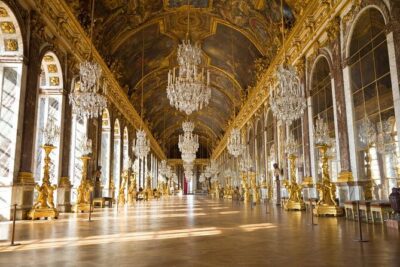
Versailles Bike Tour w/ Palace, Gardens, & Picnic
Read our review →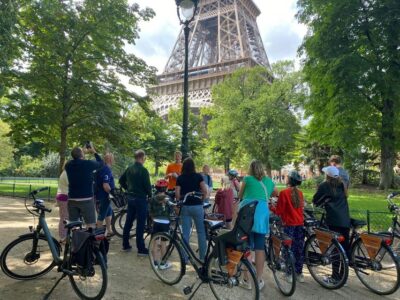
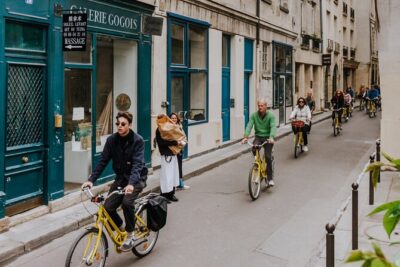
Paris Local Districts and Stories Off the Beaten Track Guided Bike Tour
Read our review →
Highlights of Paris Bike Tour w/ a Local Guide (English or Dutch)
Read our review →Browse the lists this tour appears in