Reviewed · PROVENCE TOURS
Beyond Bouillabaisse: Diving into Marseille’s Multicultural Stew
Marseille’s food story is much bigger than bouillabaisse. This small-group walk of no more than seven people follows the city’s migration routes through Algerian food, Provençal sweets, North African tea, market produce, spices, fish, cheese, wine, and an apéro at the Old Port. It is part meal, part neighborhood walk, and part lesson in how Marseille became Marseille.
I like the way the tour uses food to explain people and place, rather than treating local cuisine as a parade of famous dishes. I also like its practical value: guides such as Coco, Séverine, Chloé, and Alexis give restaurant ideas for the rest of your stay. The main consideration is that this is not mainly a traditional French food tour. If you want large servings of seafood and formal sit-down meals, the emphasis on breads, snacks, vegetables, immigrant cooking, and market bites may not fit your hopes.
Key points at a glance
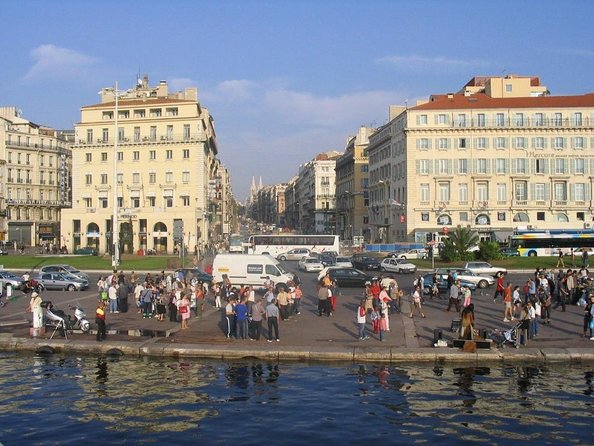
- A five-and-a-half-hour food walk: You move through central Marseille from Saint-Charles station to the Old Port, with frequent stops to eat and sit.
- A true multicultural focus: Algerian, North African, Provençal, Mediterranean, and other food traditions shape the day.
- A very small group: The maximum is seven people, making it easier to ask questions and keep the pace personal.
- Come hungry: The experience includes two full meals along with many tastes, drinks, pastries, and snacks.
- A useful first-day choice: You finish with a list of places to revisit and a better sense of how the central neighborhoods fit together.
- Plan for walking: Comfortable shoes matter, and the tour ends at the Old Port rather than returning to the starting point.
Why this food walk feels different from a standard Marseille tour
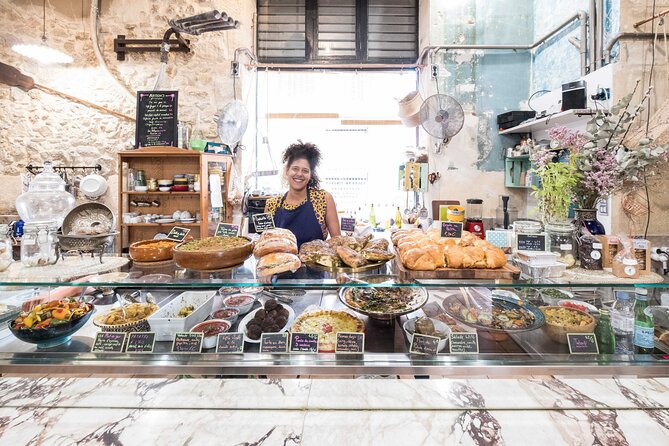
Many Marseille food tours begin and end with the expected local stars: fish soup, bouillabaisse, tapenade, and perhaps a pastry. This experience takes a wider view. It treats the city’s food as a record of movement, trade, family, and immigration.
That idea appears right away at Marseille Saint-Charles station. The station is more than a convenient meeting area. It is a fitting place to begin a tour about arrivals and departures, since Marseille has long drawn people from across the Mediterranean and beyond. Your first food stop includes an Algerian delicacy, setting the tone before you have walked far.
The tour also gives you a chance to see the city between bites. You are not simply driven from restaurant to restaurant. You move along streets, pass shops, enter markets, and hear how food customs connect with Marseille’s neighborhoods. The result is a useful introduction to the city for someone arriving for the first time.
The format works best if you enjoy conversation. With a maximum of seven people, you can ask about ingredients, local habits, and where to eat later. Several guides are praised for making the day feel relaxed and personal. Coco is known for explaining both the food and the city. Séverine brings strong local connections and a warm manner. Chloé is especially good at connecting immigration, food, and urban change. Alexis has also earned praise for combining food with the wider cultural side of the walk.
More dives off Marseille:
- Calvi: Introduction to Diving Dive with an Instructor
★ 4.8 · 112 reviews - Scuba diving baptism
★ 5.0 · 37 reviews - Fréjus: Diving Experience in Port-Fréjus with an Instructor
★ 4.7 · 34 reviews
Saint-Charles station and the first taste of Algeria
The opening hour begins at Place des Marseillaises, beside Gare de Marseille Saint-Charles. Expect a short introduction to Marseille’s migrant history, followed by an Algerian specialty.
This is a smart beginning because it immediately corrects a common misunderstanding. Marseille is French, but its food cannot be understood through French cooking alone. Its location on the Mediterranean and its long links with North Africa have shaped what people eat, sell, and share.
The first stop also gives your guide room to explain the city before the day becomes a series of tastings. That background matters. Without it, a spice shop, mint tea, or North African pastry might seem like an isolated novelty. Here, each taste forms part of a larger story.
The station meeting point is easy to connect with by public transportation. If you are arriving from a cruise ship, allow extra time and confirm your route carefully. One family had trouble with a taxi driver who dropped them far from the meeting point, so do not assume that a short description of the station area is enough. The tour itself waited for late arrivals in that case, but arriving on time is still the safer plan.
Saint-Vincent de Paul and a Provençal coffee break
After the opening food, the route reaches Église Saint-Vincent de Paul. You spend about half an hour visiting this grand Gothic church, then stop at a classic café for Provençal biscuits, coffee, and pastries.
This pause helps keep the day from becoming a food-eating contest. You have time to sit, talk with the guide, and let the first tastings settle. A coffee and croissant early in the tour are part of the experience, so I would not eat a full breakfast beforehand.
The church adds a useful change of pace. Food tours can become repetitive if every stop involves a counter or table. Here, the architecture and religious setting give you another way to read the city. Your guide may connect the building and surrounding streets to Marseille’s development, though the exact amount of architectural detail can vary by guide.
If you prefer a focused restaurant tour with little walking, this section may feel slow. If you like seeing how food fits into a city’s streets and buildings, it is one of the reasons the five-and-a-half-hour format works.
La Canebière, spices, and the everyday city
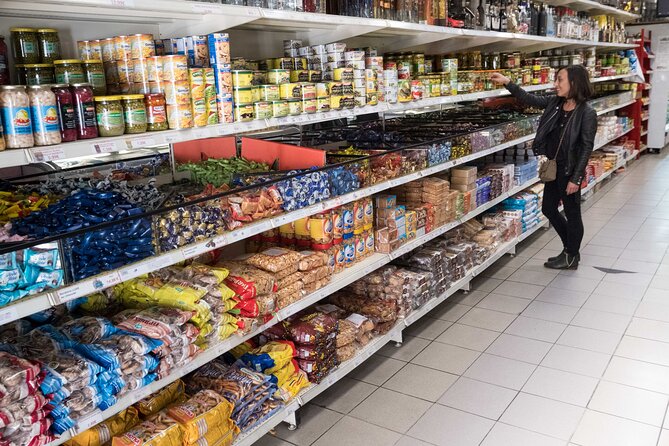
The next hour follows La Canebière, Marseille’s best-known boulevard, with a stop at a colorful spice shop and market. This is where the tour shifts from historic setting to daily life.
A spice shop can tell you plenty about a city without needing a formal museum display. The colors, smells, packages, and ingredients point toward the many communities that shop and cook in Marseille. You may see products associated with North African, Mediterranean, and other culinary traditions, while the guide explains how they are used.
This is also one of the most useful parts of the walk for future meals. You are shown the kinds of stores and food businesses you might otherwise pass without entering. If you want to buy spices, tea, or ingredients later, take note of the locations and ask which products travel well.
The street walking is manageable but steady. One person described the tour as a lot of walking, balanced by regular stops to sit and eat. Comfortable shoes are essential. Rain is possible, and the route may need small adjustments in poor weather. The provider requires good weather and offers another date or a full refund if conditions force cancellation.
A few more Marseille half-days worth comparing
- Marseille: City Sightseeing Hop-On Hop-Off Bus Tour
★ 3.8 · 2,820 reviews - Marseille: Côte Bleue Calanques Half-Day Kayak Tour
★ 4.7 · 877 reviews - Marseille Food Tour – Full Meal of Local Tastes by Do Eat Better
★ 5.0 · 530 reviews - Marseille: Calanques National Park Guided Hike with Picnic
★ 4.9 · 516 reviews
Noailles, Marseille’s food cupboard
The hour at Marché de Noailles is the heart of the tour’s multicultural theme. This neighborhood is often called the belly of Marseille, and the name makes sense once you see the dense food stalls, small shops, produce, spices, and prepared foods.
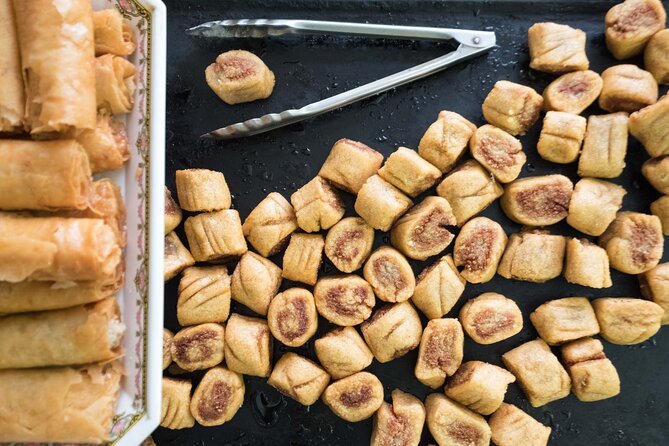
Here, you are likely to encounter tastes that you might not choose on your own. The exact stops can change, but the experience has included unusual fruits, flowers, breads, cheese, fish, vegetarian dishes, and foods from several immigrant communities. Mint tea has been a particular highlight for some people, and the tea stop offers a welcome chance to sit and talk.
Noailles is valuable because it shows food as something practical and lived-in. This is not a staged market built for sightseeing. It is a working part of the city where people shop for ordinary meals, family gatherings, and religious celebrations.
The drawback is also clear. The food can feel more like a succession of tastings than a polished restaurant meal. One less satisfied participant found the food too bread-heavy and vegetarian, with too little meat and seafood. That criticism is worth taking seriously. The tour’s goal is variety and cultural context, not a carefully balanced seafood menu.
The Old Port and an apéro with a view of Marseille’s past
The final stop is the Vieux-Port, where the tour explores the history of Marseille’s boat-filled harbor before ending with an apéro in a former sailors’ bar.
An apéro is not simply a drink. It is a social habit, a pause before dinner, and a good way to finish a long food walk. In this setting, it ties the city’s maritime identity to its modern eating culture. You have already passed through markets and immigrant food shops. Now you end beside the harbor that helped bring goods, workers, and ideas into the city.
The Old Port finish is convenient if you want to continue sightseeing, eat dinner nearby, or walk toward other central attractions. It is less convenient if you need to return to Saint-Charles or go straight back to a cruise ship. The tour does not return to its starting point.
For cruise passengers, the ending requires planning. A taxi can work, but allow enough time and make sure the driver understands your actual destination. One couple used taxis to and from the tour and paid about 50 euros in total. That cost was separate from the tour price, but the guide helped them arrange the return ride.
How much food do you really get?
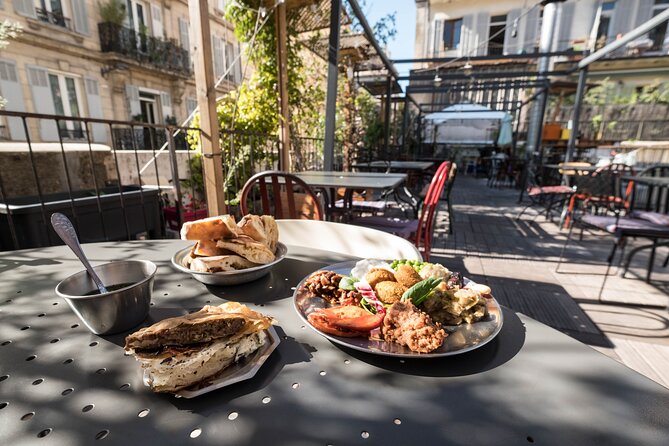
The experience is advertised as two full meals, and the overall amount of food is generous. You should arrive ready to eat, not merely ready for a few samples. Pastries, coffee, market tastes, tea, drinks, and the final apéro add up quickly.
The meal pattern is not necessarily a conventional breakfast, lunch, and dessert. You may eat standing, sitting in a café, at a market stop, or in a small local business. Some food is shared, and the precise menu depends on the day and the places open.
That flexibility is part of the appeal. You are tasting the city as it is, rather than following a fixed restaurant menu. It also explains why the experience can feel uneven to someone expecting formal dining or a large seafood course.
If you have allergies, dietary restrictions, or strong dislikes, contact the provider before booking. The supplied details do not promise a specific menu or set of substitutions. A guide may be able to adjust the route or tastings, but you should not assume every stop can accommodate every need.
The guides make the biggest difference
The guide is central to this experience. Food alone cannot explain why Marseille tastes the way it does.
Coco has led many highly praised walks and is especially good at linking food with architecture, festivals, neighborhoods, and later restaurant choices. Séverine is praised for knowing local businesses personally and for making the experience feel like a day with a well-connected friend. Chloé brings energy and clear explanations of immigration and city change. Alexis is also singled out for making the cultural side as enjoyable as the food.
The guide list is not a promise that you can select one person. It does tell you what kind of host the company looks for: someone who can explain ingredients, tell stories, manage a walking group, and respond to questions.
The small group helps here. Seven people is small enough for conversation without the cost of a private tour. On quieter dates, the group may be even smaller, and one booking became a private experience when no other people joined.
Is the $160 price fair?
At $160 per person, this is not a cheap way to grab lunch. You are paying for about five and a half hours, two full meals, numerous tastings, a guide, neighborhood interpretation, and the convenience of finding places you might never locate alone.
The value is strongest if you want a first-day orientation. You get a working map of central Marseille, ideas for later meals, and a better sense of which neighborhoods fit your interests. The restaurant suggestions after the tour can also save you from spending the rest of your visit guessing.
The value is weaker if you mainly want the greatest possible quantity of premium food. The tour does not promise a lavish seafood feast, and one critical experience felt that the food did not justify the price. You are buying access, context, company, and local direction as much as ingredients.
A 98 percent recommendation rate from 193 reviews is a strong signal, but it does not erase the difference between expectations. Book it for a cultural food walk, not a classic French tasting menu.
Who should book this experience?
I would recommend it to first-time visitors who want to understand Marseille through its neighborhoods and kitchens. It suits curious eaters, couples, families with adult children, solo visitors, and cruise passengers with a full day in port.
It is particularly useful for anyone nervous about approaching Marseille’s mixed food scene alone. You can taste unfamiliar dishes with a guide, learn how the ingredients are used, and return later with more confidence.
I would hesitate if you dislike walking, want only traditional French dishes, or need a guaranteed emphasis on meat and seafood. The pace includes regular food stops, but your feet will still work for several hours. The tour also requires a minimum number of participants and may be canceled if that number is not reached.
Free cancellation is available up to 24 hours before the start time. Cancellations or changes made later are not refunded, so keep the local cut-off time in mind.
My call: book it if you want Marseille beyond the postcard
Book this tour if your idea of a good day includes learning why a city eats what it eats. The route from Saint-Charles to Noailles and the Old Port gives you more than a list of dishes. It shows how migration, trade, religion, markets, and harbor life shape Marseille now.
Come hungry, wear comfortable shoes, and skip a large breakfast. If possible, take it near the start of your visit so you can return to the shops, cafés, and restaurants that catch your attention.
Do not book it expecting a formal seafood lunch or a classic French menu from start to finish. For that, choose a different food experience. For a generous, social, and sometimes surprising introduction to Marseille’s many food cultures, this is a strong choice.
FAQ
How long does the tour last?
The experience lasts approximately five hours and 30 minutes.
Where does the tour start?
It starts at Place des Marseillaises, beside Gare de Marseille Saint-Charles in Marseille.
Where does the tour end?
It ends at the Old Port of Marseille, also called Vieux-Port. It does not return to the original meeting point.
How large is the group?
The tour has a maximum of seven participants.
Is the tour offered in English?
Yes. The experience is offered in English.
Can I cancel for a full refund?
Yes, if you cancel at least 24 hours before the experience starts. Changes or cancellations made less than 24 hours before the start time are not accepted for a refund. If bad weather or an insufficient number of participants causes cancellation, you will be offered another date or a full refund.
Just added around Marseille
- The Urban Hike of Marseille★ 5.0 · 35 reviews
- Rando-Palmée Getaway Around an island★ 4.0 · 54 reviews
- Sunset Lavender Tour in Valensole with pickup from Marseille★ 5.0 · 41 reviews
- Sailing day in the heart of the Calanques★ 4.5 · 61 reviews
- Sormiou Calanques National Park Electric Bike Tour from Marseille★ 5.0 · 60 reviews
- Provence : Aix en Provence, Cassis and Marseille Private Tour★ 4.5 · 53 reviews
- Cassis and Aix en Provence Sightseeing Tour from Marseille★ 4.5 · 132 reviews
- Lavender Small-Group Tour In Valensole from Marseille★ 4.5 · 53 reviews
Provence Tours, compared.
Marseille: City Sightseeing Hop-On Hop-Off Bus Tour
Read our review →
Sea trips Scandola Girolata and Calanches de Piana
Read our review →


3.5 Hour Camargue 4×4 Safari from Le Grau-du Roi
Read our review →
Porto: Scandola and Calanches of Piana Boat Trip
Read our review →