
Reviewed · OCCITANIE TOURS
Carcassonne During World War 2
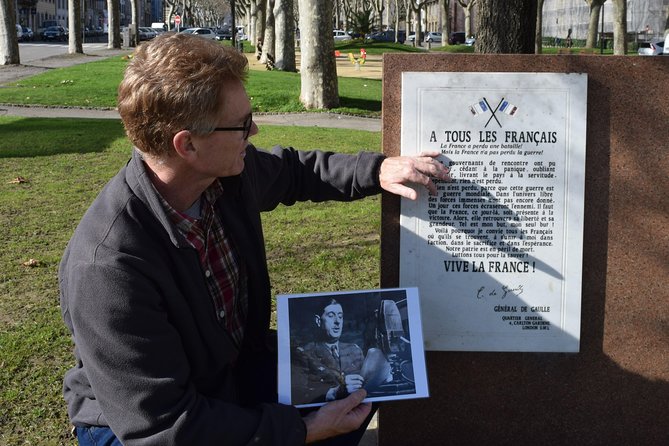
Carcassonne’s medieval walls are famous. Its wartime story is not. This walking tour shifts your attention from knights and ramparts to the streets, plaques, people, and choices that shaped the town between 1939 and 1945. Paul, the guide, uses black-and-white photographs to place the past directly against the present-day city.
I like the local focus, which puts Carcassonne’s experience beside the larger story of occupied France. I also like the personal stories, including national heroes, local figures, collaborators, and people whose names have largely faded from memory.
The main point to check is group size. The tour is described as private, but one unusually large group reached 23 people, making narrow streets and hearing difficult. The guide acknowledged this and planned to work toward a smaller limit, but it is worth confirming the expected group size before booking.
Key points at a glance
- A different Carcassonne: The walk focuses on the lower town and often-overlooked wartime sites rather than the usual medieval sights.
- Paul’s visual storytelling: Period photographs help you compare today’s streets with Carcassonne during the Occupation.
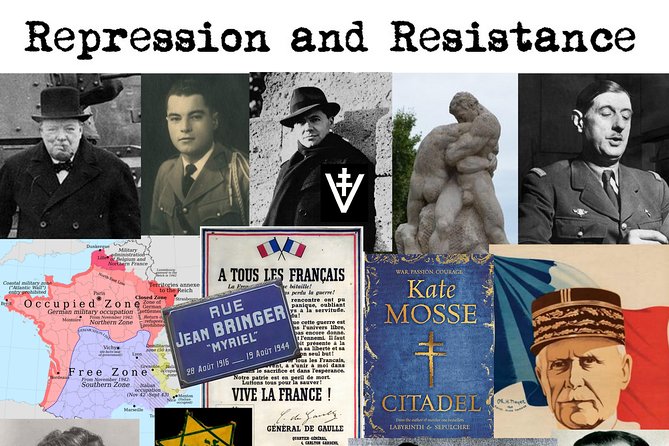
- A full wartime arc: The discussion covers the fall of France, the Vichy years, resistance, collaboration, liberation, and post-war purges.
- Personal and local: The guide links major events to ordinary men and women from Carcassonne and the surrounding area.
- A two-hour morning walk: The 9:30 a.m. start gives you a useful first look at the city before a day of sightseeing.
- Good value for history fans: At $24.19 per person, the cost is modest for a private English-language walk lasting a little over two hours.
Carcassonne beyond the medieval postcard
Most people come to Carcassonne for La Cité, with its towers, walls, and carefully restored medieval streets. This tour takes a different route. It explores the lower town, often called La Bastide, where daily life continued during the German Occupation and the difficult years of Vichy France.
That change of focus matters. You are not simply walking from one grand monument to another. You are looking at an ordinary urban setting and learning how war altered work, food, movement, law, and personal loyalties.
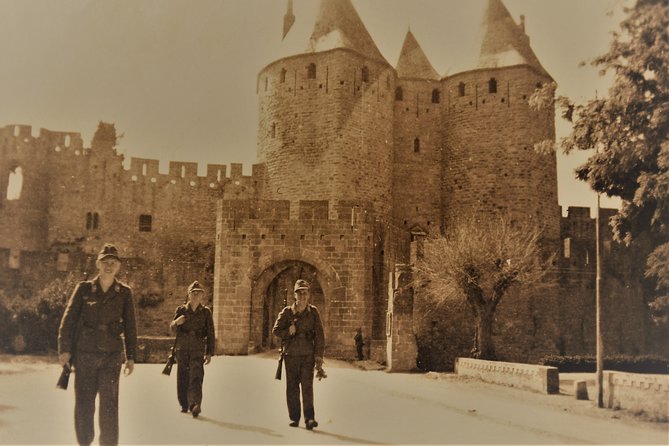
The walk asks you to imagine Carcassonne between 1939 and 1945. France first suffered military defeat, then division into occupied and non-occupied zones. The southern zone did not remain free forever. When it was invaded, the pressure on local people grew more direct and dangerous.
The guide connects national events to local places. A street corner or memorial becomes a prompt for discussing repression, resistance, collaboration, or liberation. The effect is less about memorizing dates and more about understanding how large events reached into daily life.
A few more Occitanie half-days worth comparing
- Saw2 vs Squid Game – Escape Game Montpellier
★ 5.0 · 752 reviews - The “Break in Prison” room
★ 5.0 · 609 reviews - Prison Break – Escape game in Montpellier
★ 5.0 · 583 reviews
The 9:30 a.m. start and meeting point
You meet at Brasserie à 4 Temps, 2 Boulevard Barbès, at 9:30 a.m. This is a useful starting time if you want to make the tour part of a full sightseeing day. You can finish the walk shortly after 11:30 a.m., leaving time for lunch and further exploration.
The meeting point is near public transportation, which makes the start fairly practical. You receive a mobile ticket, and the tour is offered in English.
The walk ends at 16 Avenue Arthur Mullot, beside the Resistance memorial on Square Gambetta. This is helpful because you do not return to the starting point. Plan your morning around the end location rather than assuming you will finish beside the café where you began.
The route is a guided walk, so wear comfortable shoes and expect to spend most of the two hours on foot. The available information does not promise a break, but Paul has included time for a coffee stop on at least one tour. Treat that as a welcome possibility, not a fixed part of the schedule.
Repression, resistance, and collaboration
The central strength of this experience is its balance. The story is not presented as a simple tale of brave resistance fighters and obvious villains. You hear about resistance, but also about collaboration, enforcement, fear, accommodation, and the difficult decisions made by people living under pressure.
Topics include the Milice, the French paramilitary force associated with Vichy repression, and the S.T.O., the compulsory labor system that sent French workers to Germany. These subjects help explain why the war was not only a conflict between foreign armies. It also divided French society.
Rationing is another important part of the picture. Food shortages and controlled supplies affected ordinary households, so the war is discussed through practical concerns as well as political events. That helps you picture life in Carcassonne beyond uniforms and military movements.
The guide also discusses the range of resistance activity. You should expect attention to national figures, local heroes, and people who are less well known. This is one reason the tour suits both serious WWII enthusiasts and people with only a passing interest. The local examples give the wider history a human scale.
At times, the subject is sombre. The discussion of repression, betrayal, arrests, and post-war purges is not light sightseeing material. Still, the guide’s delivery includes humor when appropriate, which helps keep the walk engaging without turning serious events into entertainment.
Wartime photographs beside present-day streets
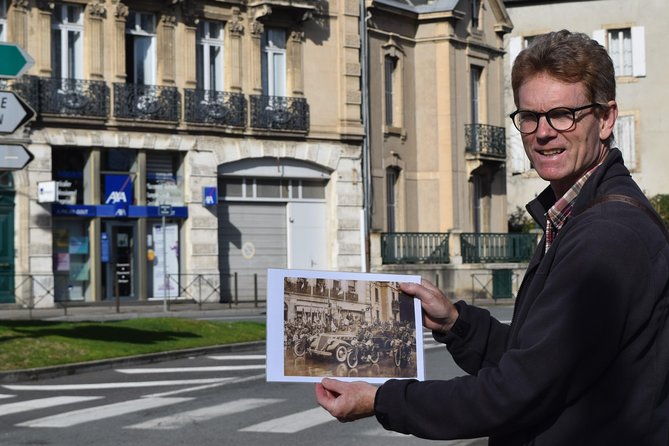
Paul’s black-and-white photographs are a key part of the walk. Instead of relying only on spoken explanation, he shows you images from the period and asks you to connect them with the places around you.
This visual method is especially useful in a city that has changed in small ways over the decades. A present-day street can look calm and unremarkable. A wartime photograph, placed beside it, gives you a sense of what was happening there and who once moved through the same space.
You may also be asked to look for details as the walk progresses. That makes you an active observer rather than someone simply following a lecture. It is a good approach for families and mixed-age groups, though the serious subject matter may suit older children and adults better.
The photographs also give structure to the storytelling. Paul is not just listing names and dates. He uses faces, buildings, and scenes from daily life to make the period easier to follow.
Same trip, a completely different kind of day:
- Toulouse: Carcassonne Day Trip by Coach with Audioguide
★ 4.4 · 580 reviews - School of Magic – Escape game Montpellier
★ 4.5 · 536 reviews - Toulouse Food & History Tour with a Chef (in English)
★ 5.0 · 503 reviews - Toulouse: Albi and Cordes/Ciel Day Trip with Audio Guides
★ 4.5 · 486 reviews
Carcassonne’s local heroes and forgotten figures
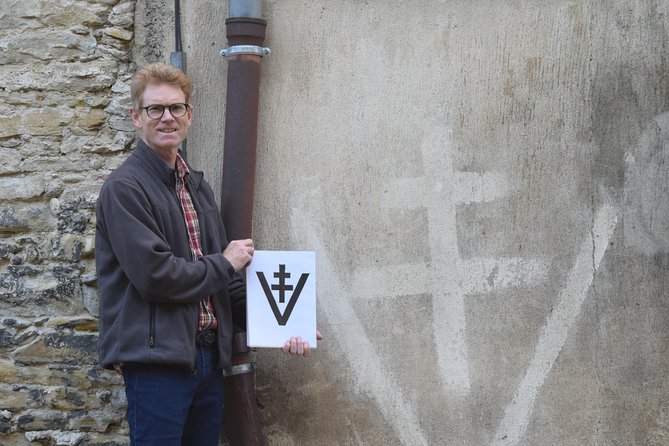
A national account of the French Resistance can easily become abstract. This walk keeps returning to people from Carcassonne and the surrounding region.
You hear about men and women who took risks, people who collaborated, and individuals whose stories are not as widely remembered. That range is important. It avoids the comforting idea that everyone knew the right choice from the beginning.
The strongest moments are likely to come when a personal story is connected to a specific location. A memorial becomes more meaningful when you understand whose name it carries and what happened to that person. A street becomes more than a route between sights when you know how war changed the lives of those who lived there.
The tour also places local events within the wider history of Vichy France. If you have read about the period or encountered it through historical fiction, this can help you connect broad themes with real places. If you know little about the subject, Paul provides enough background to make the local stories understandable.
The walk ends with the liberation and the post-war purges. That final section matters because the story did not simply stop when the Germans withdrew. France then had to deal with punishment, accusations, justice, revenge, and the difficult question of who had helped the enemy.
What the private format means in practice

The activity is described as a private tour, meaning only your group should participate. That can be a major advantage. You can ask questions freely, adjust the pace, and spend more time on a subject that interests you.
It also makes the experience suitable for a family, a couple, or a small group of friends with a shared interest in WWII. Paul’s style is interactive, and a small group should make it easier to hear the photographs and follow the discussion in narrow streets.
There is one practical caution. A previous outing had 23 people, which created problems with sound, safe stopping places, and consideration for local residents. The guide said he planned to look into a limit of 12. Since the published format remains private, contact the provider if group size is important to you.
A smaller group will make a real difference here. This is not a broad boulevard tour where you can stand at the back and still see everything. You need to hear the guide’s explanations and view the photographs. Ask about the expected number of participants before you commit, especially if you are booking close to the date.
Is $24.19 good value?
At $24.19 per person, the price is modest for a walk lasting about two hours and 15 minutes. The cost is particularly fair if you care about WWII, French history, or guided city walks that go beyond the obvious sights.
You are not paying for entry to a museum or a major monument. The value comes from the guide’s research, interpretation, photographs, and ability to connect scattered local details into a clear story.
For someone who only wants a quick look at Carcassonne’s famous architecture, this may not be the best use of two hours. You will spend the time on wartime history rather than medieval legends or views from the citadel.
For anyone interested in the French Resistance, Vichy France, or the daily experience of occupation, the price compares well with a standard sightseeing walk. The personal focus also gives you something you are unlikely to get from simply reading a plaque or walking past a memorial.
Who should book this Carcassonne WWII walk?
You should consider it if you have a serious interest in World War II or the French Resistance. The tour gives you local detail, names, photographs, and places to help bring the subject into focus.
It also works well if you have only a general interest. The guide builds in national and international context, so you do not need a detailed background in French wartime history. The clear presentation, questions, anecdotes, and occasional humor keep the pace accessible.
This tour may suit you especially well if you have already visited Carcassonne once. It reveals a side of the city that is easy to miss when your attention is fixed on La Cité.
You may want to choose another activity if your priority is medieval architecture, castle views, or a relaxed stroll with little serious discussion. The material includes repression, collaboration, forced labor, and post-war punishment. It is engaging, but it is not a carefree sightseeing loop.
The walk is listed as suitable for most participants and is near public transportation. Since it requires good weather and takes place outdoors, check the forecast. If poor weather forces cancellation, you can be offered another date or a full refund.
Booking, cancellation, and timing
Confirmation is sent within 48 hours of booking, subject to availability. You can cancel for a full refund up to 24 hours before the local start time.
Cancellations or changes made less than 24 hours before the start are not accepted for a refund. The experience also requires a minimum number of participants. If the provider cancels because that minimum is not met, you can choose another date or experience, or receive a full refund.
The advertised booking pattern is about 32 days in advance on average. That suggests you should not assume a last-minute place will be available, particularly if you want a private outing on a particular morning.
Should you book it?
Book this tour if you want to understand Carcassonne as a living wartime town rather than only as a medieval showpiece. Paul’s use of period photographs, local names, and personal stories gives the walk a clear purpose and a human focus.
The main question is group size. Confirm that the outing will be small enough for you to hear comfortably and move safely through narrow streets. If that is settled, the combination of a 9:30 a.m. start, English guidance, a two-hour-plus route, and a $24.19 price makes this a strong choice for history-minded visitors.
FAQ
Where does the Carcassonne WWII tour begin?
The tour begins at Brasserie à 4 Temps, 2 Boulevard Barbès, 11000 Carcassonne, France.
What time does the tour start?
The scheduled start time is 9:30 a.m.
Where does the tour end?
The walk ends at the Resistance memorial on Square Gambetta, listed at 16 Avenue Arthur Mullot, 11000 Carcassonne.
How long does the tour last?
The experience lasts approximately two hours and 15 minutes. The walking portion is described as lasting about two hours.
Is the tour offered in English?
Yes. The tour is offered in English and includes an English-speaking guide.
What subjects are covered?
The tour covers the fall of France, the occupied and non-occupied zones, the invasion of the Free Zone, rationing, the Milice, the S.T.O., resistance, collaboration, liberation, and post-war purges.
Is this a private tour?
Yes. It is described as a private activity in which only your group participates. Because one previous group was unusually large, you may wish to confirm the expected group size when booking.
Can I cancel for a full refund?
Yes. You can cancel up to 24 hours before the experience start time for a full refund. Changes or cancellations made less than 24 hours before the start are not accepted, and poor weather or failure to meet the minimum number of participants may lead to a rescheduled tour or full refund.
Just added around Occitanie
- The force to escape – Escape game in Montpellier★ 4.5 · 84 reviews
- Private Discovery of Montpellier by Bike-Taxi★ 5.0 · 83 reviews
- Legendary Montpellier, flexible legends and storytelling tour★ 5.0 · 54 reviews
- Escape Game Session in Montpellier★ 5.0 · 33 reviews
- Blind Test Room & karaoke Montpellier★ 5.0 · 48 reviews
- Discovery of the Grands Sites de l’Hérault from Montpellier★ 5.0 · 77 reviews
- Private guided tours of Lourdes / Walking tour★ 5.0 · 56 reviews
- Half-day sailing on the Gave de Pau★ 5.0 · 180 reviews
Occitanie Tours, compared.

Toulouse Food & History Tour with a Chef (in English)
Read our review →
Albi and Cordes/Ciel Day Trip with Audio Guides
Read our review →

Toulouse Victor Hugo Market Small Group Tasting Tour
Read our review →Browse the lists this tour appears in