
Reviewed · WINE TOURS
Champagne Cellar Experience: Explore our historic cellars
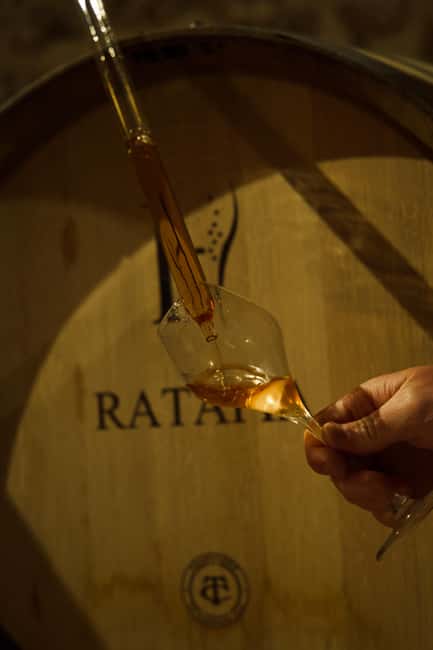
At Champagne Harlin Père & Fils, the appeal is personal and down-to-earth: you visit a working producer, walk through the winery and cellar, then taste four regional drinks with the person guiding you. The focus is not only on the bottle, but also on biodiversity and how the soil and climate help shape each cuvée.
I like two things right away: you taste three champagnes plus one Ratafia Champenois, and the visit gives you a closer look at a small producer rather than a grand Champagne house built around polished spectacle. The main point to consider is timing. The activity is advertised as one hour, while the detailed schedule allows one hour for the visit and another 30 minutes for tasting, so you should leave room for roughly 90 minutes.
Key points to know
- A small-producer visit: Meet the people behind Champagne Harlin Père & Fils and see the winery and cellar.
- Four drinks in the tasting: Three champagnes and one Ratafia Champenois are included.
- Terroir explained clearly: The tasting connects Mareuil-le-Port, Épernay, and Tours-sur-Marne with soil and climate.
- Biodiversity matters here: The producer makes environmental care part of the story, not a footnote.
- French or English guidance: The live tour is offered in both languages.
- A convenient Champagne stop: The cellar is less than two hours from Paris, 20 minutes from Épernay, and 30 minutes from Reims.
A personal look at Champagne Harlin’s cellar
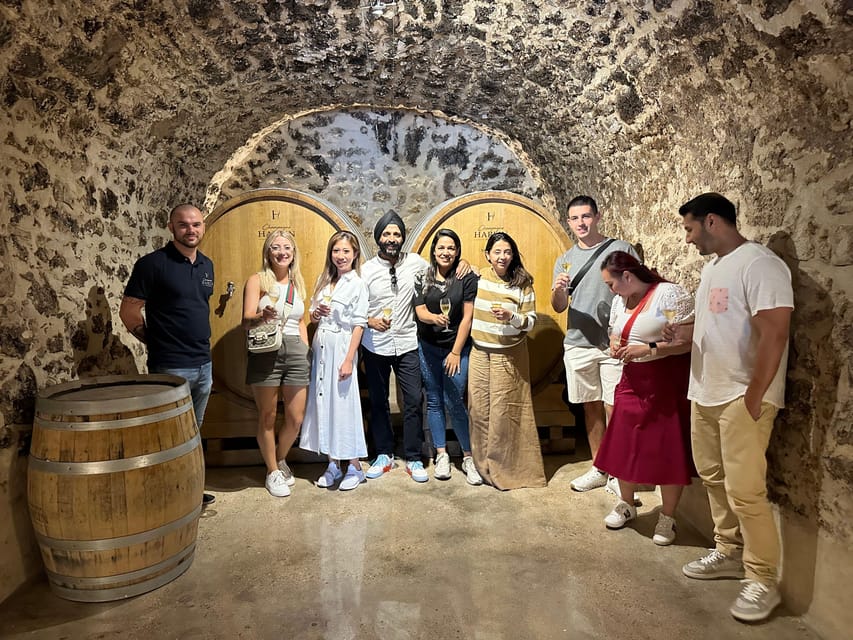
This experience suits you if you want Champagne explained by a producer rather than presented as a luxury brand display. At 8 Rue de la Fontaine, you enter the courtyard of Champagne Harlin and meet your guide there. If the guide is not already waiting, the instructions say they will greet you shortly.
That simple meeting point is useful. You do not need to search through a large visitor center or guess which entrance to use. The tour begins and ends at the same address, making it easy to fit into a day around Épernay or Reims.
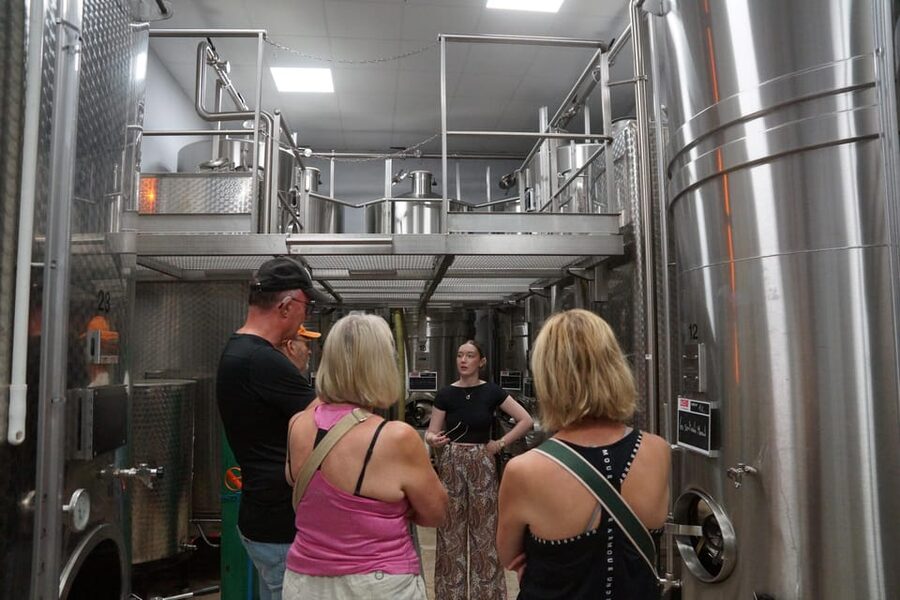
The visit centers on the cellar and winery. You get a practical look at where the wine is made and stored, with the guide explaining how Champagne Harlin approaches production. The experience is designed to show the work behind the label, not just offer a glass and a quick sales pitch.
The tone appears to be especially suited to people who enjoy questions. One recent French review praised the guide for taking time to explain everything, while another highlighted how useful it was to understand the specific production method used at this cellar. That matters because Champagne can seem full of rules and technical terms. A patient guide helps turn those details into something you can follow.
More Wine Tours in Champagne:
- From Paris: Day Trip to Champagne with 8 Tastings & Lunch
★ 4.8 · 1,501 reviews - Champagne Day Trip with 6 Tastings, Reims and Winery from Paris
★ 5.0 · 902 reviews - From Reims: Champagne and Family-Run Wineries Tour
★ 4.8 · 671 reviews
The one-hour cellar and winery visit
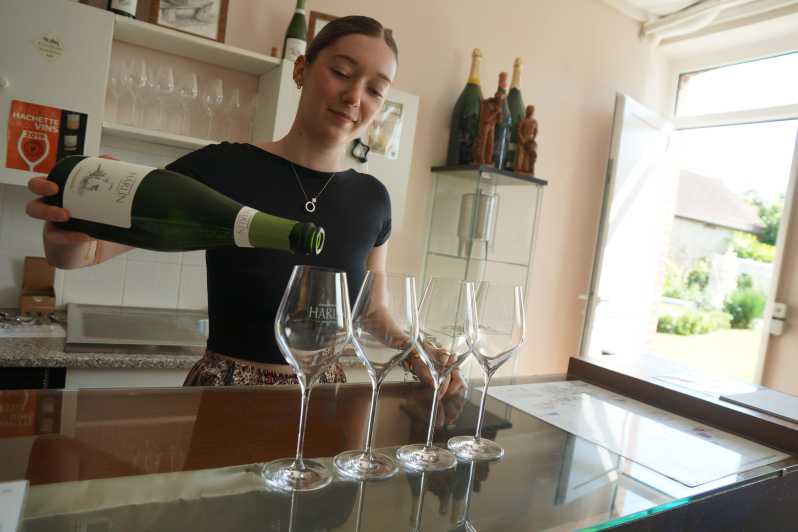
The first scheduled part lasts one hour. You walk through the winery and cellar while learning how the producer makes Champagne. The exact path and cellar details are not specified, so you should not expect a promised list of rooms, historic artifacts, or underground features. What is clear is that the tour gives you access to the production side of the business.
I like this format because it places the tasting after the explanation. You first see the setting and hear how the wine is made, then you taste with a better sense of what to look for. This is more useful than drinking several cuvées without any context.
The cellar also gives the producer a chance to explain the role of time, place, and technique. The experience specifically connects the wines to Mareuil-le-Port, Épernay, and Tours-sur-Marne. These names are not merely decoration on a map. They are used to show how different soils and local conditions can affect the final wine.
You may hear about the producer’s commitment to preserving biodiversity and using more sustainable viticulture. The supplied details do not list particular farming methods, so I would not expect a technical field lesson on every environmental measure. Still, this focus gives the visit a useful wider angle. You learn not only how Champagne is produced, but also why the health of the vineyard matters to the producer.
Tasting three champagnes and one Ratafia
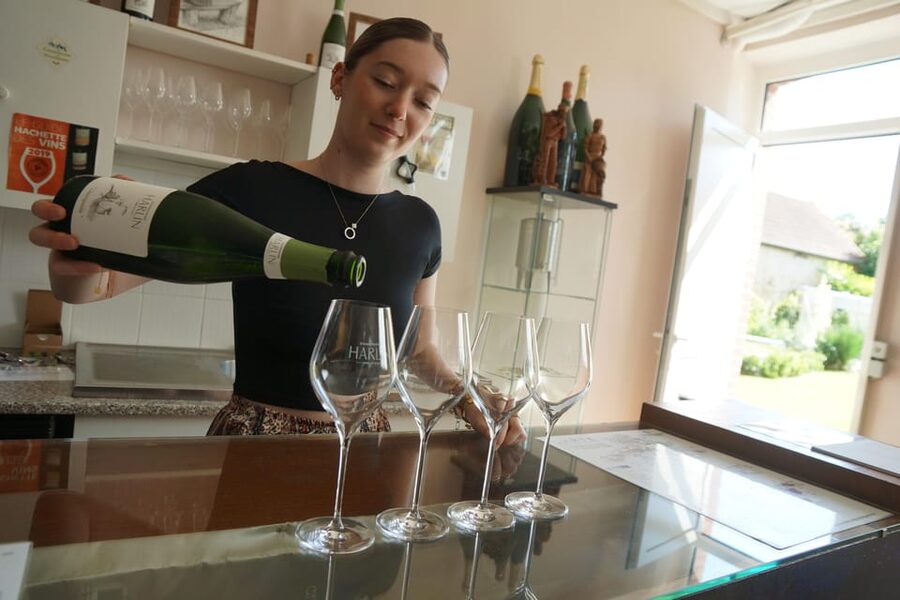
After the cellar and winery visit, the experience moves to a guided tasting. The scheduled tasting lasts 30 minutes and includes three champagnes and one Ratafia Champenois.
That is a good lineup for the price. You can compare several cuvées instead of basing your opinion on one pour. The three champagnes are associated with the terroirs of Mareuil-le-Port, Épernay, and Tours-sur-Marne, giving the tasting a clear regional theme.
Ratafia Champenois adds variety. It is not another sparkling wine, so it gives you a chance to compare Champagne with a different local style. The description calls it delicate, and the tasting lets you consider how it differs from the champagnes served beside it.
The guide also explains the art of tasting. That should help you pay attention to appearance, aroma, flavor, and balance rather than simply deciding if you like a bottle. You do not need formal wine experience. I would approach each pour with one simple question: what changes from one cuvée to the next, and how does the explanation of soil and climate help account for it?
The tasting is commented, according to the information provided, and one French visitor found the explanation especially useful for understanding the production process. That makes this a better choice for someone who wants to learn than for someone looking only for a quick drink.
Why the biodiversity message adds value
Many cellar visits focus almost entirely on famous names, old bottles, and production facts. Champagne Harlin adds a clear concern for biodiversity preservation and sustainable viticulture.
You should keep your expectations realistic. The experience does not promise a vineyard walk, a detailed farming demonstration, or a separate environmental workshop. In fact, a vineyard tour is specifically not included. The biodiversity theme is part of the guided cellar and tasting experience.
Still, it is an important part of the visit. Champagne depends on healthy vineyards, and the producer’s approach gives you another way to think about what is in your glass. A bottle reflects more than blending and carbonation. It also reflects the place where grapes grow and the choices made in caring for that place.
I especially like this angle for visitors who want a local experience with some substance. You are not simply touring a famous name and buying a souvenir. You are hearing how one producer connects its wine to land, climate, and long-term vineyard care.
More Historical Tours in Champagne:
- Paris: Louvre Museum Entry with History of Mona Lisa
★ 3.9 · 2,823 reviews - Paris: Dark History and Ghostly Guided Walking Tour
★ 4.7 · 1,000 reviews - Vieux Lyon Cultural & Historical Walking Guided Tour (English)
★ 5.0 · 942 reviews - Bordeaux: Historic Center & Chartrons District Bike Tour
★ 4.8 · 709 reviews
Small producer versus grand Champagne house
This visit will feel different from the large Champagne houses in Épernay or Reims. A famous house may offer grand entrances, carefully staged rooms, large-scale history, and a highly polished visitor route. Champagne Harlin offers a more intimate look at a family producer.
That difference is the point. The information names Champagne Harlin Père & Fils as the provider, and the experience is built around meeting a producer and seeing its own winery and cellar. You get closer to the working side of Champagne, with a guide explaining this cellar’s process.
The tradeoff is that you should not expect the scale or elaborate presentation of a major brand. There is no promise of grand architecture, a long underground route, or a museum-style display. If you want the classic big-house experience, this may feel modest. If you want a direct connection with a smaller producer, the modest scale works in its favor.
Several highly positive comments focus on the guide’s explanations and the amount learned about Champagne production. One French visitor directly preferred this kind of visit to the more tourist-oriented large houses. That is a useful clue about who will appreciate the experience most: people who value conversation, clear explanations, and a close look at one producer’s work.
Timing, location, and planning your day
Champagne Harlin is in the Grand Est region of France. The experience is described as less than two hours from Paris, 20 minutes from Épernay, and 30 minutes from Reims. Those travel times make it a practical stop during a wider Champagne trip, though you should allow extra time for your own transport and arrival.
The meeting point is 8 Rue de la Fontaine. You enter the courtyard and wait for the guide. Since the same address is used for the start and finish, you do not have to arrange a separate return point.
There is one timing detail worth watching. The headline duration is one hour, but the schedule lists a one-hour cellar visit followed by a 30-minute tasting. I would plan for 90 minutes and avoid booking another activity immediately afterward. The exact starting times depend on availability.
French and English tours are offered. That makes the experience easier to use for international visitors, while French speakers can take the tour in the local language. The information does not give a group size, so you should not assume a private tour or a very small group.
Is $23 a fair price?
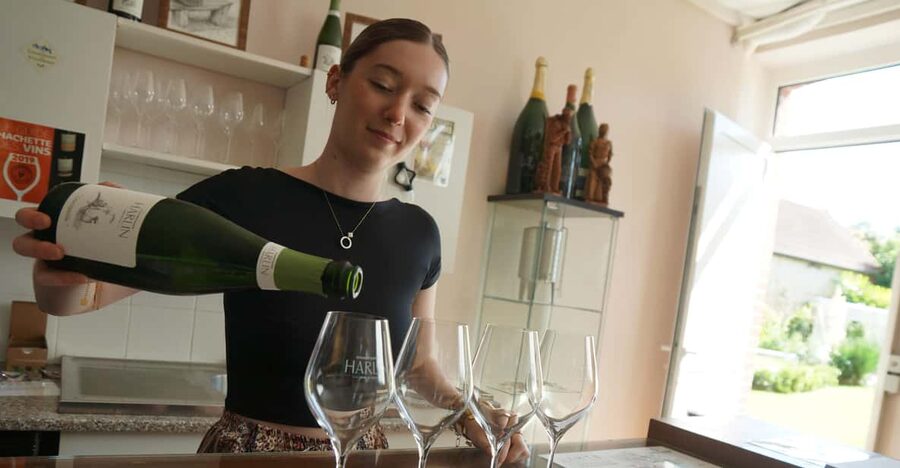
At $23 per person, the value is strong if you want both a visit and a tasting. The price includes entry to the Champagne Harlin cellar tour and the guided Champagne and Ratafia tasting. You receive three champagnes and one Ratafia Champenois, along with explanations of the production method and terroir.
The price does not include a vineyard tour. That distinction matters. If you want to walk among the vines, see vineyard work firsthand, or spend more time outdoors, you will need to arrange that separately if available.
For me, the value comes from the combination of access and context. A tasting alone can be pleasant but brief. A cellar tour without tasting can feel incomplete. Here, the two parts support each other, and the environmental focus adds another layer.
The price also works well for a first Champagne visit. You do not need to commit to a long half-day program or a premium grand-house ticket. You can learn the basic structure of Champagne production, compare several wines, and decide what styles you prefer before buying more bottles elsewhere.
Who will enjoy this most?
I would choose this experience for you if you want:
- A small-producer setting rather than a major international brand
- A guided tasting with several different pours
- A simple explanation of Champagne production
- A connection between terroir, climate, and flavor
- A producer that talks about biodiversity and sustainable viticulture
- A stop close to Épernay or Reims
- A French or English tour
It is also a sensible choice for couples, wine learners, and visitors who want a more personal introduction to Champagne. The guide’s patient explanations are likely to help if you are new to the region or unsure how to taste sparkling wine.
This is less suitable if you want a full vineyard visit, a long technical course, or a grand architectural showpiece. The experience is compact and focused on the cellar, winery, and tasting.
Children under 18 may accompany adults and do not need a ticket for entry. They cannot drink alcohol under French law, but fruit juice is provided. The supplied information also lists children under 18 and pregnant women as unsuitable for the activity, so you should check the policy carefully when planning.
Booking and practical details
You can cancel up to 24 hours before the experience for a full refund. A reserve-now, pay-later option is also available, which helps if your Champagne schedule may change.
The guide speaks French and English. The tour begins in the Champagne Harlin courtyard at 8 Rue de la Fontaine, and you return there after the visit and tasting.
I would wear comfortable shoes suitable for a winery and cellar visit. Specific clothing or accessibility details are not provided, so contact the provider if you have mobility needs or other concerns before booking.
Should you book Champagne Harlin?
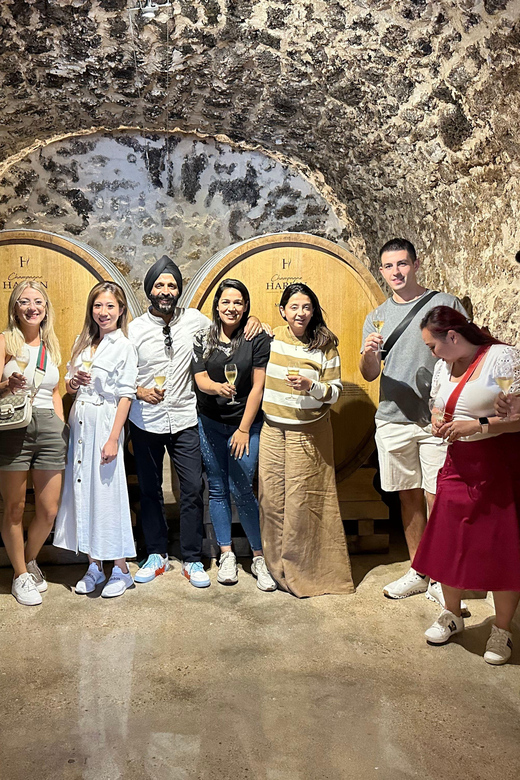
Book it if you want a direct, reasonably priced introduction to a smaller Champagne producer. The strongest reasons are the four-drink tasting, the clear link to three Champagne areas, and the guide’s focus on explaining how the wine is made.
Skip it if your main goal is a vineyard walk or a large-house spectacle. The vineyard tour is not included, and the advertised one-hour duration can be confusing when the detailed schedule adds a 30-minute tasting.
For most visitors staying near Épernay or Reims, I think it is a smart add-on. Plan for about 90 minutes, arrive at the courtyard, and come ready to ask questions. You will leave with a better grasp of Champagne production, a taste of Ratafia Champenois, and a clearer idea of how place and farming choices shape the bottle.
FAQ
Where does the Champagne Harlin experience take place?
The experience takes place at Champagne Harlin Père & Fils, 8 Rue de la Fontaine, in the Grand Est region of France.
Where do I meet the guide?
Meet the guide in the courtyard of Champagne Harlin at 8 Rue de la Fontaine. If the guide is not there immediately, they will greet you shortly.
How long does the experience last?
The activity is advertised as one hour, but the detailed schedule includes one hour for the cellar and winery visit plus 30 minutes for tasting. Plan for approximately 90 minutes.
How many drinks are included?
The tasting includes three champagnes and one Ratafia Champenois.
Is the tasting guided?
Yes. The tasting is guided and includes explanations about tasting, terroir, soil, climate, and Champagne production.
Is the tour available in English?
Yes. Live guidance is available in English and French.
Is a vineyard tour included?
No. The Champagne Harlin cellar tour and guided tasting are included, but the vineyard tour is not included.
Can children attend?
Children under 18 may accompany adults and do not need an entry ticket. They cannot drink alcohol, but fruit juices are provided.
Is the experience suitable during pregnancy?
Pregnant women are listed as unsuitable for this activity.
Can I cancel for a refund?
Yes. You can cancel up to 24 hours in advance for a full refund. A reserve-now, pay-later option is also available.
Just added around Champagne
- Passy-Grigny: Chocolate and Champagne Tasting Tour★ 4.8 · 208 reviews
- Champagne Vineyard Experience: Delve into the terroir★ 4.4 · 52 reviews
- Champagne: Canard-Duchêne Champagne House Tour★ 4.7 · 66 reviews
- Champagne Munoz Bruneau : Half Day Visit and Tasting★ 4.9 · 53 reviews
- Aÿ-Champagne: Pressoria Champagne Museum with Tasting★ 4.7 · 239 reviews
- Aÿ-Champagne: Champagne House Tour and Tasting Class★ 4.9 · 209 reviews
- From Reims: Champagne Day Trip to 3 Family Domains & Lunch★ 4.8 · 194 reviews
- From Paris: Small-Group Champagne Tour with 3-Course Lunch★ 4.8 · 304 reviews
Wine Tours, compared.
Moulin Rouge Cabaret Show Ticket with Champagne
Read our review →
Authentic Parisian Gourmet Food Tour with 10 Local Dishes & Wines
Read our review →
Loire Valley Castles Day Trip from Paris with Complementary Wine
Read our review →
River Garonne Cruise with Glass of Wine and Canelé
Read our review →
Montmartre Hill French Gourmet Food and Wine Tasting Walking Tour
Read our review →
Montmartre Cheese, Wine & Pastry Guided Walking Tour
Read our review →
Paradis Latin Cabaret Show with Optional Champagne
Read our review →Browse the lists this tour appears in