
Reviewed · WALKING TOURS
Discover La Rochelle: Discovery Walking Tour of La Rochelle
La Rochelle’s best introduction is on foot, where the harbor, medieval towers, market streets, and old town all fit into one easy route. John McGuiggan brings the city’s past to life with stories about trade, war, religion, navigation, food, and daily life. You get more than a quick photo stop at the port.
I like the way this tour mixes major sights with less commercial streets and local recommendations. I also like its timing: two hours is long enough to build a clear picture of La Rochelle, yet short enough for a cruise stop or a first morning in town. The main consideration is that the tour is outdoors, and a group of up to 35 people may feel large in narrow streets. Tower entry is not included, so plan a separate visit if you want to go inside.
Key points before you book
- A strong first look at La Rochelle: The route links the old port, towers, city walls, market, cathedral, and town hall.
- Led by John McGuiggan: Expect an English-language tour with humor, local advice, and plenty of time for questions.
- Useful for a short visit: The two-hour walk works well for cruise passengers and anyone with only an afternoon in town.
- Local food guidance included: John points out regional specialties, restaurants, bars, cheese shops, and places to try Pineau.
- Historic context beyond the postcard view: You hear about trade, the World Wars, iconoclasm, maritime navigation, and the growth of La Rochelle.
- Plan for an outdoor walk: Comfortable footwear and a weather-ready layer make sense, especially in uncertain conditions.
Why this two-hour route works so well
La Rochelle is easy to admire from the water, but its story becomes clearer when you connect the port to the streets behind it. This tour does exactly that. It begins at Place de la Chaîne beside the Chain Tower, moves through the waterfront and western edge of the center, then turns into the old town before finishing at La Rochelle Town Hall.
The route is not just a march from one landmark to the next. John uses the stops to explain how the city developed. The harbor leads naturally to stories of shipping and defense. The old walls introduce trade and city growth. The market opens the door to food and commerce. Churches and civic buildings add the political and religious sides of La Rochelle.
I would book this near the start of a stay. You get practical suggestions for restaurants, bars, shops, local specialties, and things to do later. Several people who took the walk also used John’s advice to shape the rest of their visit, including finding a cathedral light show, a cheese shop, and a restaurant area known locally as Rue Restau.
The tour costs $48.39 per person. That is a fair price if you want a guide to connect the sights and give you useful direction for the rest of your time. It is less compelling if you prefer to wander silently or plan to spend most of your day inside museums and monuments. The price covers the guided walk, not admission to the historic towers.
More Walking Tours in Atlantic Coast:
- Paris Top Sights Half Day Walking Tour with a Fun Guide
★ 5.0 · 2,893 reviews - Montmartre Hidden Gems and Scenic Highlights Walking Tour
★ 5.0 · 2,684 reviews - Montmartre Hill French Gourmet Food and Wine Tasting Walking Tour
★ 5.0 · 2,588 reviews
Starting among La Rochelle’s famous towers
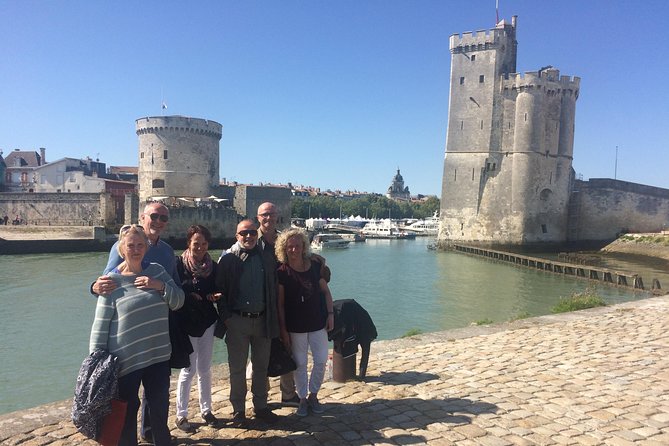
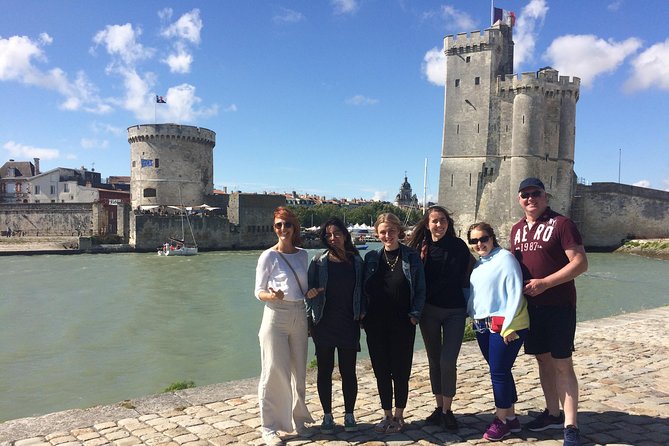
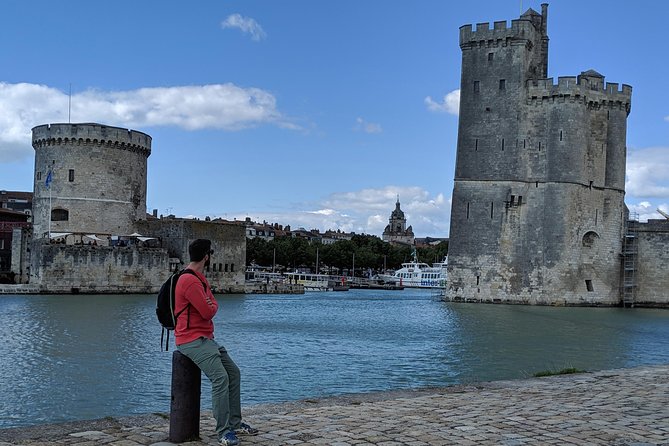
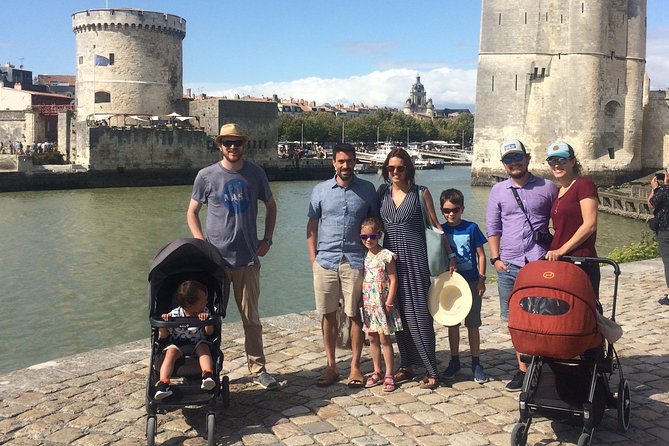
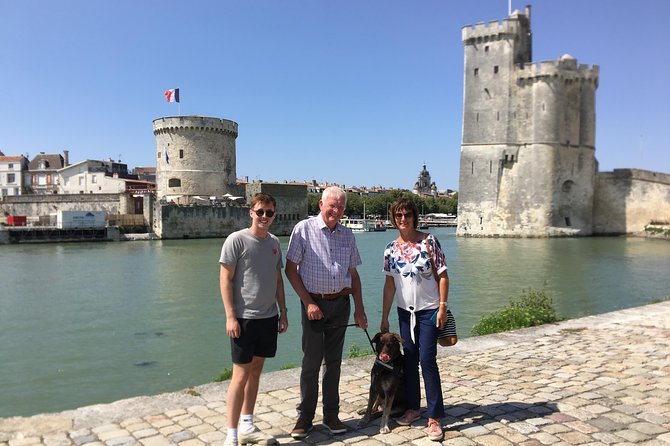
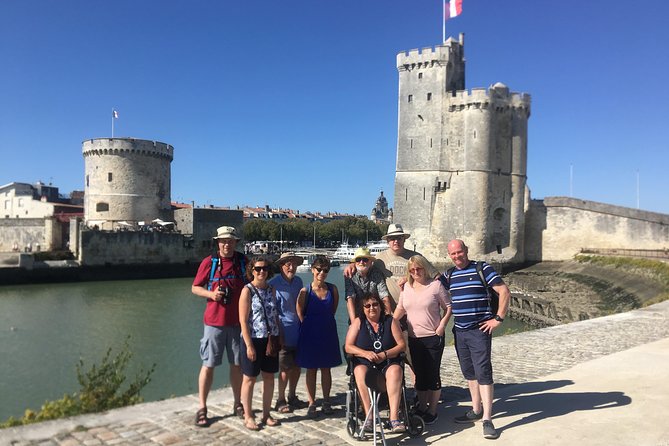
Meet John at Place de la Chaîne, beside the Chain Tower. This is one of La Rochelle’s signature views, with the old harbor framed by stone towers that once controlled access to the port.
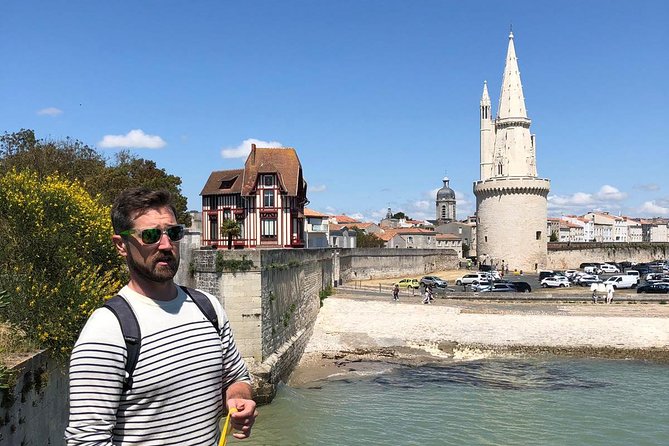
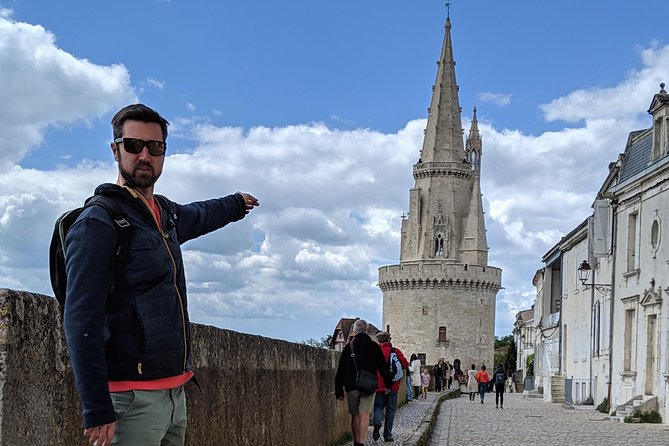
The tour discusses the Towers of La Rochelle from outside. You see the Chain Tower at the start, pass the Lantern Tower, and finish the tower section beside the Saint Nicholas Tower. The explanations help you understand the towers as part of a defensive and working port system, not just as attractive buildings beside the water.
Keep one thing clear: entry to the towers is not included. The stop is about their history, position, and role in the city. If you want to climb or explore inside, you will need to arrange that separately.
The route also passes through the Porte des Deux Moulins on the way from the Lantern Tower toward the Fort des Dames. These short passages are useful because they show how the old defenses connected different parts of the waterfront.
Following the Vieux Port from several angles
The Vieux Port is the natural center of the walk. The tour begins and ends near the old harbor area, and the route passes it several times. That repetition is helpful, since you see the port in relation to the towers, streets, and wider city rather than viewing it once and moving on.
John uses the harbor to explain La Rochelle’s maritime role and the trade that helped the city grow. You also get a sense of how the port still shapes the city’s identity. This is the part of the walk where the guide’s storytelling matters most. A simple harbor view becomes a starting point for stories about merchants, navigation, wartime events, and local life.
The port area can be busy, but the walk does not stay only on the most obvious waterfront stretch. It loops into quieter and more distinctive parts of central La Rochelle. That gives the experience more range than a standard harbor photo walk.
From Plage de la Concurrence to the western edge
At Plage de la Concurrence, John turns the conversation toward the western side of La Rochelle. The beach itself is a brief stop, but the subject matter expands to include the new port and La Rochelle’s role during World War II.
This is a useful change of pace. The old towers can make La Rochelle feel fixed in the medieval past, while the discussion here shows a city that continued to adapt as its port and strategic importance changed.
The walk then passes through a park on the way back from the western side toward the center. The route also follows the only surviving section of La Rochelle’s walls. That surviving stretch gives you a physical link to the city’s earlier boundaries and makes the discussion of defense and expansion easier to picture.
The itinerary includes several brief stops of around five to ten minutes. You should expect a steady walk with frequent pauses, not long periods at one monument. That format keeps the tour moving, but it also means the information comes in compact bursts.
A few more Atlantic Coast half-days worth comparing
- La Rochelle: 2-Hour Sunset Sailing Cruise
★ 4.8 · 652 reviews - From La Rochelle: Sailing Cruise to Fort Boyard
★ 4.8 · 623 reviews - Nantes CityPass : 24/48/72 Hours/7 Days Full Access
★ 4.3 · 320 reviews - Planet Exotica entrance ticket
★ 4.0 · 310 reviews
Entering the old city through the Grosse-Horloge
The Porte de la Grosse-Horloge marks the transition into the old city. Here, John explains the original city walls and the role of trade in La Rochelle’s earlier development.
This is one of the most useful stops for understanding the town layout. The clock gate is not simply a decorative entrance. It helps you see where the protected city began and how people, goods, and commerce moved between the harbor and the streets inland.
The route passes a statue of a famous French war hero, then continues through a bohemian neighborhood with independent boutiques and bars. That section adds a little present-day character to the historical material. You are not confined to monuments. You also get a look at the sort of streets where you might return later for a drink, a shop, or a slower wander.
John’s local tips are a major part of the value here. He has been particularly helpful with suggestions for dining, bars, regional products, and places that are easy to miss if you simply follow the main sightseeing path.
Hotel de Ville and the story of civic La Rochelle
At the Hôtel de Ville, the focus shifts from defense and trade to local government. John explains the role of the town hall in La Rochelle’s development and points out that it is the oldest working town hall in France.
This stop gives the tour a civic center. You begin with the port, then see how the city protected itself, traded, worshiped, and governed itself. The building also makes a good pause point because the walk’s end is at La Rochelle Town Hall, at 3 Place de l’Hôtel de Ville.
The ending is practical. You finish in the heart of the old town, near places to continue sightseeing, eat, or shop. If you have a tight schedule, this central finish is more useful than ending far from the harbor or transport connections.
Place de Verdun and La Rochelle’s beginnings
At Place de Verdun, the group stops outside the cathedral. John discusses the origins of La Rochelle here, adding another layer to the city’s story.
This stop is short, about five minutes, but it helps balance the tour. The harbor and walls explain the city’s practical power. The cathedral and surrounding square point toward its religious and social life.
The route does not promise entry into the cathedral or any other interior. You are mainly listening outside, so you should think of this as an orientation stop rather than a formal church visit.
Market streets, regional food, and useful local advice
At Marché Central de La Rochelle, the subject becomes commerce and food. John discusses how trade developed in La Rochelle and introduces some of the region’s food and drink specialties.
For me, this is one of the most valuable parts of a city walk. You are not just told what a building is. You get help deciding what to eat and where to look for it. The tour has included guidance on restaurants, bars, cheese, and Pineau, the regional aperitif mentioned during one walk.
The market stop also gives you a practical place to return after the tour. If you have a self-catering room, a picnic plan, or simply want to see what local shoppers buy, a market is more useful than another quick monument photo.
Do not expect a full food tour. Any tasting is not guaranteed as part of the advertised inclusions. The formal inclusion is the guided walking tour, so treat food samples or unexpected tastings as possible extras rather than something to book for.
Saint-Sauveur Church and the marks of religious conflict
The tour stops outside Église St-Sauveur, described as a famous relic of La Rochelle and an example of the effect of the iconoclastic wars.
This is a good reminder that the city’s past was not only about ships and merchants. Religious conflict left visible marks on buildings and communities. John uses the church to explain those changes without turning the walk into a lecture.
The stop lasts about five minutes. Again, the emphasis is on the exterior and the story connected to it. If you want a long interior visit, you will need to return on your own.
Near the end, the route passes through the area of the famous Guingette to see if anything interesting is happening there. That small possibility adds a local, unpolished touch to the final part of the walk.
The Phare du quai Valin and the practical side of navigation
At the Phare du quai Valin, John explains the importance of La Rochelle’s two lighthouses for maritime navigation.
This stop brings the walk back to the sea and ties together several earlier themes. The towers protected the port, trade made it prosperous, and the lights helped ships approach and leave safely. You finish with a clearer sense of La Rochelle as a working maritime city, not only a pretty old town.
The lighthouse stop is brief, around five minutes. Its value comes from the connection to the wider route rather than from a long visit at the structure itself.
What John’s guiding style adds
John McGuiggan is the named guide for this experience, and his style is friendly, humorous, and conversational. He keeps the group moving while making room for questions and personal interests.
You can expect stories rather than a list of dates. The subjects range from the city’s origins and medieval trade to World War II, food, local customs, religious change, and navigation. That broad mix suits you if you want context but do not want a formal academic lecture.
His practical advice is especially useful. You can ask about restaurants, bars, local products, attractions, and things to do after the walk. One participant even booked another tour with John for the following day, which suggests this experience can work as the first part of a longer visit.
The group limit is 35 people. That is not a private tour, and a full group may make it harder to hear in a noisy street. On the other hand, the guide has experience managing group activities and keeping the pace comfortable.
Timing, meeting point, and who should book
The meeting point is Place de la Chaîne, beside the Chain Tower. The end point is La Rochelle Town Hall, at 3 Place de l’Hôtel de Ville. Both are in central La Rochelle, and the tour is near public transportation.
The experience is offered in English and lasts about two hours. Most people can take part, and service animals are allowed. You should still be ready for an outdoor walk with regular stops and some movement through old streets.
This tour suits:
- First-time visitors who want a clear orientation
- Cruise passengers with less than a full day in port
- People who want restaurant and food advice early in their stay
- History fans who prefer stories connected to real streets and buildings
- Visitors who want to see both major sights and quieter neighborhoods
- Solo visitors who would like a guided introduction without booking a private tour
It may not suit you if your main goal is entering the towers, spending long periods inside churches, or taking a slow photographic walk. The route covers a lot in two hours, so the tradeoff is breadth over extended visits.
Book at least a day ahead if your plans are firm. The tour is often reserved well in advance, with an average booking time of 41 days. You can cancel for a full refund up to 24 hours before the start time. Changes or cancellations inside that window are not accepted for a refund.
Should you book this La Rochelle walking tour?
I would book it if you want a useful first look at La Rochelle, especially at the start of a short stay. The route covers the port, towers, walls, old city, market, cathedral, church, lighthouse, and town hall, while John adds food tips and local direction that can shape the rest of your visit.
The $48.39 price is reasonable for a two-hour English-language walk with a local guide, but remember that tower admission is extra. Choose it for the stories, orientation, and practical advice, not as a substitute for entering La Rochelle’s major monuments.
For cruise passengers and first-time visitors, this is an efficient choice. For repeat visitors who already know the center well, the value depends on how much you enjoy local history and guide-led storytelling.
FAQ
How long does the Discovery Walking Tour of La Rochelle last?
The tour lasts approximately two hours.
How much does the tour cost?
The listed price is $48.39 per person.
What language is the tour offered in?
The tour is offered in English.
Where does the tour begin?
The tour begins at Place de la Chaîne, beside the Chain Tower in La Rochelle.
Where does the tour finish?
The tour finishes at La Rochelle Town Hall, at 3 Place de l’Hôtel de Ville.
Is entry to the Towers of La Rochelle included?
No. Access and entry to the towers are not included in the tour price.
What sights are covered?
The route includes the old port, the Towers of La Rochelle from outside, Plage de la Concurrence, Porte de la Grosse-Horloge, Hôtel de Ville, Place de Verdun and the cathedral, Marché Central, Église St-Sauveur, and Phare du quai Valin.
Is the tour suitable for most people?
Yes. Most people can participate, and service animals are allowed.
How large can the group be?
The tour can have a maximum of 35 participants.
Can I cancel for a refund?
Yes. You can cancel at least 24 hours before the start time for a full refund. Cancellations or changes made less than 24 hours before the start time are not refunded or accepted.
Just added around Atlantic Coast
- Château du Bois-Huaut: Cellar Tour and Wine Tasting Class★ 4.8 · 53 reviews
- Puy du Fou Theme Park Multi Day Entrance Dated Ticket★ 4.5 · 103 reviews
- The Océâmes Treasure in La Rochelle★ 5.0 · 193 reviews
- La Rochelle: Sailing Cruise★ 4.7 · 192 reviews
- La Rochelle: 1-Hour Boat Tour of the Bay★ 4.7 · 130 reviews
- Puy du Fou France Multi-Day Ticket★ 4.8 · 116 reviews
- Les Epesses: Puy du Fou Theme Park 1-Day Entry Ticket★ 4.7 · 186 reviews
- Planet Exotica entrance ticket★ 4.0 · 310 reviews
Walking Tours, compared.

Paris Top Sights Half Day Walking Tour with a Fun Guide
Read our review →
Montmartre Hidden Gems and Scenic Highlights Walking Tour
Read our review →
Montmartre Hill French Gourmet Food and Wine Tasting Walking Tour
Read our review →
Paris Île de la Cité and Notre-Dame Walking Tour With Crypt
Read our review →
Montmartre Cheese, Wine & Pastry Guided Walking Tour
Read our review →
Paris in a Day: Louvre or Orsay, Eiffel Tower, City Walk & Cruise
Read our review →
Montmartre Highlights Walking Tour with a Local Guide
Read our review →
Browse the lists this tour appears in