
Reviewed · HISTORICAL TOURS
Historic Bayeux Daily Group City Tour In English 2 hrs (Apr-Sept)
Bayeux reveals itself best on foot, one old lane and story at a time. This two-hour walk moves from medieval river trades to Roman ruins, the Norman Conquest, the French Revolution, and the liberation of Bayeux in 1944. The guide uses old photographs to show how the town changed, and guides such as Christèle and Marie-Noëlle are known for clear storytelling, humor, and local detail.
I like the way this tour reaches small streets and overlooked corners, not just the obvious cathedral square. I also like its useful timing: the tour finishes near the main museums and cathedral, so you can continue sightseeing with a better sense of what you are seeing. The main drawback is that you stay outside, and two hours of standing can be tiring, especially for anyone with back trouble or limited stamina.
Key things to know before you book
- More than 20 stops: The route covers medieval trades, architecture, local figures, war history, and daily life.
- A strong English-language tour: You need to follow English comfortably, since simultaneous translation is not allowed.
- The Bayeux Tapestry is discussed from outside: The museum is closed until October 2027, but the guide explains the embroidery, its story, and its making.
- A compact two-hour route: You get a useful introduction without giving up most of your day.
- A maximum of 20 people: This is a group walk, but the size should still allow you to hear the guide.
- Outdoor sightseeing only: Museum tickets and entry inside Notre-Dame Cathedral are not included.
Why this walk is a smart first morning in Bayeux
At $24.20 per person, this is priced as an affordable introduction rather than a full-day historical program. You are paying for a guide who connects scattered details into one story, not for admission tickets. That matters in Bayeux, where a carved doorway, a river channel, or a church tower can mean little without context.
I would take this tour early in a Bayeux visit. The 9:30 a.m. start leaves time afterward for the cathedral, the museums, lunch, or a trip farther into Normandy. The ending point, Au Comptoir des Saveurs on Rue Saint-Martin, puts you near the Bayeux Tapestry Museum, the Art and History Museum, the Lace Museum, and the cathedral.
The guides bring a large selection of old photographs. That is one of the most useful touches. You can compare present-day streets with earlier versions of the town instead of relying only on dates and names. Christèle is praised for her humor and ability to make facts easy to follow, while Marie-Noëlle brings the perspective of someone who has lived in Bayeux for 35 years.
This is not a lecture delivered while you march from one famous building to another. The route includes more than 20 short stops, with explanations of language, old customs, local people, building styles, and major events. Some stops last only five or ten minutes, while the longer explanations focus on the Tapestry Museum and cathedral.
More Historical Tours in Normandy
- Rouen: Guided Tour of the Historic Center
★ 4.8 · 145 reviews - Mont Saint Michel: Village History and Legends Walking Tour
★ 4.8 · 96 reviews - Small Group Guided Tour of the Secret History of Rouen
★ 5.0 · 68 reviews
Starting at the tourist office and meeting medieval Bayeux
The tour begins at 3 Rue Saint-Jean, at the Bayeux tourist office area. The first stop is a short orientation, but the real value begins as the guide lays out the town’s layers. Bayeux is not just a place to sleep before a D-Day excursion. Its story reaches from Celtic origins and Roman occupation to Norman England, revolutionary France, and the events of 1944.
The opening also gives you a chance to get used to the guide’s pace and style. This matters on a walking tour conducted entirely in English. You should have a good level of English to follow names, dates, architectural terms, and historical connections without translation.
From the beginning, expect a cheerful tone rather than a dry recital of facts. The guides use anecdotes and old photographs to make the town easier to read. If you enjoy learning why a street looks the way it does, or how a local expression connects to the past, this approach will suit you.
Rue des Teinturiers and the river that powered old trades
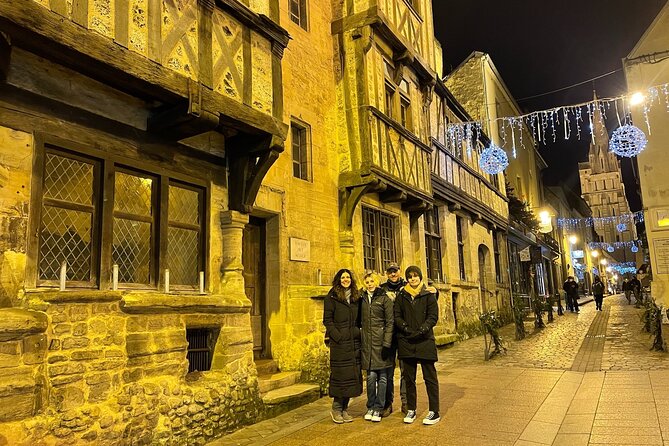
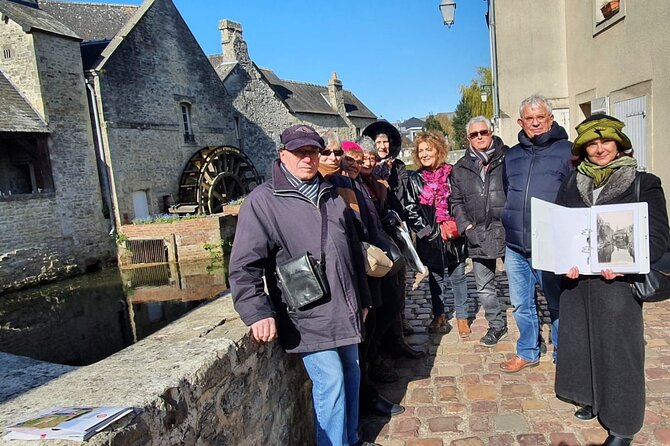
Rue des Teinturiers introduces one of the most telling sides of Bayeux: its working past. Here the guide explains medieval industries such as tanning and dyeing, and shows how the River Aure supported these activities.
This stop is useful because it shifts your attention away from grand monuments. The river was not just a pleasant feature for a stroll. It helped shape work, streets, and settlement. Learning about these trades gives you a better sense of how ordinary people lived and earned money around the town.
The stop lasts about ten minutes, long enough for an explanation without turning the walk into a technical history class. Look closely at the relationship between water and buildings as you move through this part of the route. The guide’s comments can help you notice details you might otherwise pass without a thought.
Allée des Augustines and the Bayeux Tapestry story
Allée des Augustines is one of the longer stops, at about 25 minutes. The guide explains the role of the Augustine sisters in the Bayeux community and tells the story of one sister whose work reached a country now called Canada.
This is the kind of local detail that makes a town feel more than a collection of monuments. You get a glimpse of the people and institutions that shaped daily life, not only the kings and battles usually connected with Normandy.
The walk then stops outside the Bayeux Tapestry Museum. The museum is closed until October 2027, so you will not see the famous embroidery inside on this tour. Still, the guide spends time explaining the 11th-century work, the Battle of Hastings, William the Conqueror’s rise to the English throne, and the methods used to make the embroidery.
That outdoor explanation has real value during the closure. You will hear about the characters and events shown in the work, along with its historical importance and basic facts about its construction. If the museum is a main reason for your visit, check its reopening plans separately and treat this tour as background rather than a substitute for entry.
More Historical Tours in Bayeux:
- Paris: Louvre Museum Entry with History of Mona Lisa
★ 3.9 · 2,823 reviews - Paris: Dark History and Ghostly Guided Walking Tour
★ 4.7 · 1,000 reviews - Vieux Lyon Cultural & Historical Walking Guided Tour (English)
★ 5.0 · 942 reviews - Bordeaux: Historic Center & Chartrons District Bike Tour
★ 4.8 · 709 reviews
The Liberty Tree and the French Revolution
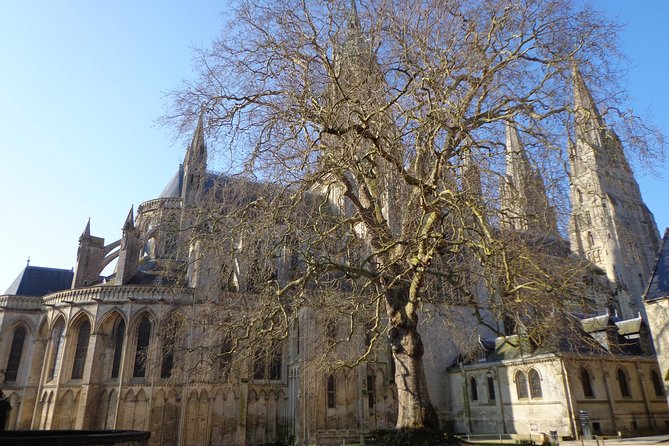
The Arbre de la Liberté is a 200-plus-year-old sycamore connected with the French Revolution. The guide explains why this particular tree carries the name Liberty Tree and places it within the political changes of the period.
This is a short stop of about ten minutes, but it adds variety to the route. You move from medieval commerce and religious life to a symbol of revolutionary France. It also shows how history can survive in living objects and public spaces, not only in stone buildings and museum displays.
The tree is one of the route’s more memorable points because it is easy to pass without knowing its meaning. This is exactly where a local guide earns the fee. You do not need another grand monument. You need someone to explain why this one matters.
Notre-Dame Cathedral, viewed from the outside
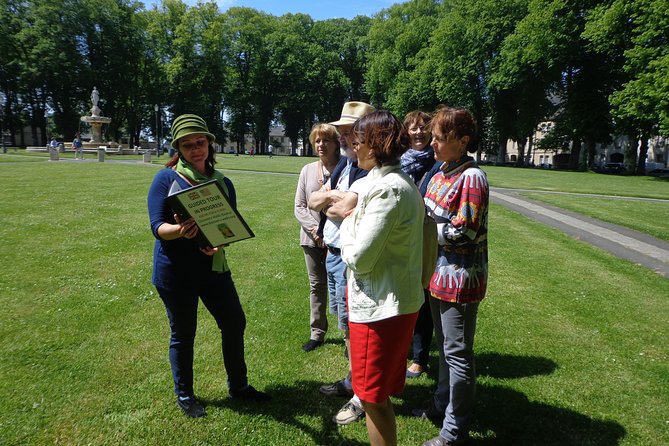
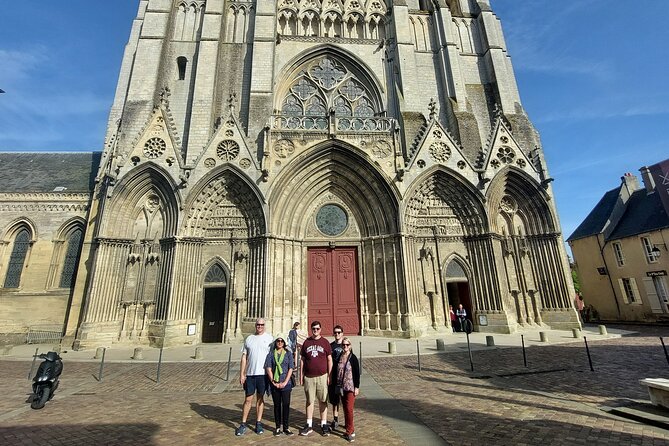
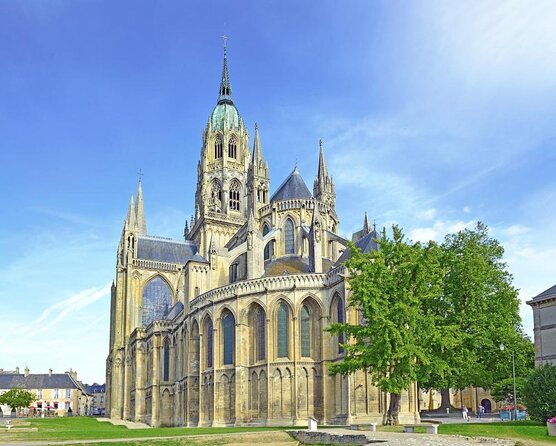
The cathedral stop lasts about 20 minutes. You learn about the different stages of construction and the architectural features visible from outside.
Do not expect a cathedral tour inside. Entry is not included, and the walk does not provide interior access. That is a clear limitation if you want to study the interior, stained glass, crypt, or religious art. Still, the exterior explanation helps you make sense of a building that might otherwise seem to have been built all at once.
Construction over different periods often leaves clues in materials, shapes, towers, and decorative details. The guide points out these features and explains how the building developed. After the tour, you can decide if you want to return on your own for a closer look inside.
The cathedral also makes a useful reference point for the rest of your visit. The tour ends close by, so this is not a rushed photo stop before a long walk to another part of town.
Roman beginnings on Rue Léonard Lambert Leforestier
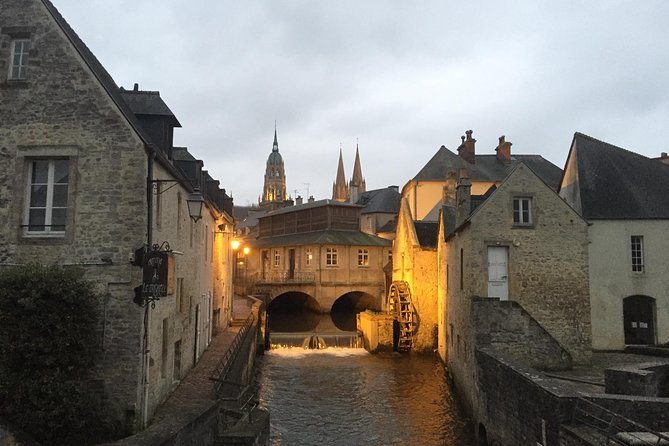
On Rue Léonard Lambert Leforestier, the guide reaches back to Bayeux’s Celtic origins and the Roman castrum. You can see ruins connected with the Roman settlement, a reminder that the town’s story began long before the Norman period.
This stop lasts about 15 minutes. It gives the tour a wider time frame and prevents Bayeux from being reduced to William the Conqueror and the 1944 liberation. The route shows how the town grew through several eras, with each period leaving traces behind.
For you, the benefit is visual continuity. Medieval streets, religious buildings, revolutionary symbols, and Roman remains are not separate attractions floating in isolation. The guide explains how they fit into the same town.
Place Charles de Gaulle and the liberation of Bayeux
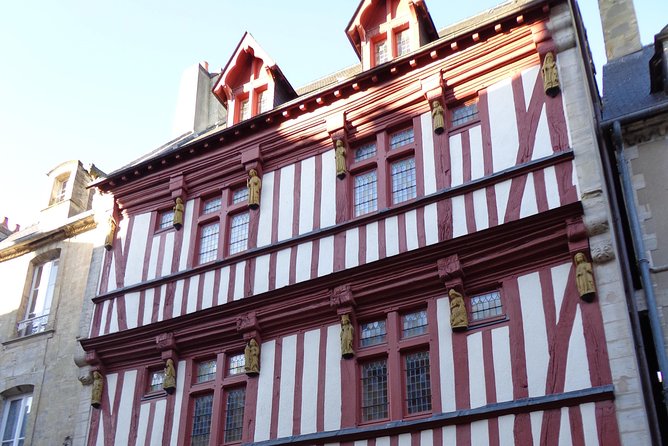
The final major stop is Place Charles de Gaulle, tied to the liberation of Bayeux on June 7 and General de Gaulle’s first visit to the square. This brings the tour into the 20th century and connects Bayeux with the wider story of Normandy after the D-Day landings.
The stop lasts about 15 minutes. The subject is especially useful if you are using Bayeux as a base for Normandy beaches, because it gives local context before you visit the battle sites. The focus here is the town’s own experience and the political importance of the liberation, rather than a full battlefield briefing.
Ending near Rue Saint-Martin works well. You can continue to the museums or cathedral, find a restaurant, or simply explore the lanes again with a better sense of what you are looking at.
What the guide’s style adds
The strongest part of this experience is the human delivery. Christèle is described as an amusing storyteller who explains Bayeux with warmth and plenty of local anecdotes. Marie-Noëlle is also praised for clear explanations, friendliness, and a strong grasp of the town’s past. Other guides may lead the walk, so do not book expecting one specific person unless the provider confirms it.
The guides use humor without losing the main thread. That helps during a route packed with dates and historical figures. Several stops involve standing while listening, so a guide who keeps the pace lively makes a practical difference.
The old photographs are another strong feature. They support the spoken explanation and help you see how streets, buildings, and public spaces looked in earlier times. If you learn best through images, this will make the tour easier to follow.
The tone is not aimed at specialists. You get a clear overview, useful stories, and enough detail to recognize important places later. If you want a dense academic seminar or extensive military analysis, this is not that kind of walk.
Practical comfort, group size, and timing
The walk lasts about two hours and has a maximum of 20 people. That is small enough to be more personal than a large coach group, though you should still stay near the guide at busy street corners and outdoor stops.
Wear comfortable shoes. Bayeux is best explored on foot, and the route includes repeated standing stops. Anyone with back problems, anyone pregnant, or anyone who finds prolonged standing difficult should consider bringing a foldable stool. Public benches are used where possible, but you should not count on a seat at every stop.
Plan ahead for a bathroom break. There are no scheduled nature call stops during the two-hour route. An umbrella is also sensible, since this is an outdoor activity and the walk continues in ordinary weather conditions unless the provider says otherwise.
Only backpacks can be brought, and there is no luggage storage at the tourist office. Service animals are allowed, and the meeting point is near public transportation. Most people can take part, but the standing and walking requirements should guide your decision.
The tour is offered in English only, with no simultaneous translation. You will get the most from it if you can follow spoken English at a normal guiding pace.
Price, season, and cancellation details
At $24.20, the tour offers good value if you want a guided introduction to Bayeux rather than simply a list of sights. The cost does not include museum entry or cathedral entry, so budget separately if you plan to visit those places.
The experience operates during the March to September season. The title specifies April through September, so confirm the exact operating dates when planning an early spring visit. It is often booked well ahead, with an average booking lead time of 39 days, so do not leave it until the last minute if your schedule is fixed.
You receive confirmation at booking. Free cancellation is available up to 24 hours before the local start time. Cancellations or changes made inside that window are not accepted for a refund.
Who should book this Bayeux walking tour?
I would recommend it to you if you are visiting Bayeux for the first time, want an English-speaking guide, and prefer local streets over a bus-only overview. It suits history-minded visitors who want connections between Roman remains, medieval work, the cathedral, the Norman Conquest, revolution, and liberation.
It is also a good choice for people visiting the Normandy beaches who have one morning to understand the town where they are staying. The walk gives you useful orientation before you choose museums, restaurants, and further excursions.
You may want a different plan if you need indoor sightseeing, cannot stand for long periods, or want to see the Bayeux Tapestry itself during the museum closure. In those cases, use this walk only if the outdoor explanation and town overview still appeal to you.
Should you book it?
Yes, if you want a friendly, story-led introduction to Bayeux at a modest price. The best reasons to book are the off-the-main-route details, the old photographs, the clear English commentary, and the mix of local life with major events.
I would book it near the start of your stay, then use the final stop near the cathedral and museums to plan the rest of your day. Wear good shoes, bring an umbrella, use the bathroom beforehand, and remember that the cathedral and museums are viewed from the outside only.
FAQ
How long is the Historic Bayeux Daily Group City Tour?
The tour lasts approximately two hours.
What time does the tour start?
The stated start time is 9:30 a.m.
Where does the tour begin?
The meeting point is listed as 3 Rue Saint-Jean, 14400 Bayeux, France, at the Bayeux tourist office area.
Where does the tour end?
The walk ends at Au Comptoir des Saveurs, 45 Rue Saint-Martin, near the cathedral and Bayeux museums.
Is the tour conducted in English?
Yes. It is an English-only guided walking tour, and simultaneous translation is not permitted.
Does the tour include the Bayeux Tapestry Museum?
No. The tour does not include museum entry. The Bayeux Tapestry Museum is closed until October 2027, but the guide explains the embroidery and its historical setting from outside.
Does the tour include entry inside Bayeux Cathedral?
No. The guide discusses the cathedral’s construction and architecture, but entry inside is not included.
Can I cancel for a full refund?
Yes, if you cancel at least 24 hours before the local start time. Cancellations or changes made less than 24 hours before the start are not refunded.
More City Tours in Bayeux
- Marseille: City Sightseeing Hop-On Hop-Off Bus Tour
★ 3.8 · 2,820 reviews - Eiffel Tower Summit Option with Seine River Cruise and City Tour
★ 3.5 · 2,176 reviews - Paris: City Highlights Bike Tour
★ 4.7 · 1,835 reviews - Paris: Eiffel Tower Hosted Tour, Seine Cruise and City Tour
★ 4.0 · 1,507 reviews
Just added around Bayeux
- Bayeux: Normandy D-Day Landing Beaches Full-Day Guided Tour★ 4.8 · 158 reviews
- Bayeux: 2-hour tour of the D-Day beaches, by vintage sidecar★ 4.9 · 64 reviews
- Bayeux: Band Of Brothers Full-Day Tour★ 4.9 · 53 reviews
- Full-Day Canadian Battlefields & sites Normandy Tour from Bayeux★ 5.0 · 191 reviews
- Normandy Battlefields D-Day Private Trip with VIP Services from Paris★ 5.0 · 240 reviews
- Full-Day US Battlefields of Normandy Tour from Bayeux (A3LST)★ 5.0 · 214 reviews
- Private vintage sidecar tour of the D-Day Landing Beaches★ 5.0 · 130 reviews
- 2- to 6-hour sidecar excursion on the D-Day Landing Beaches★ 5.0 · 131 reviews
Historical Tours, compared.
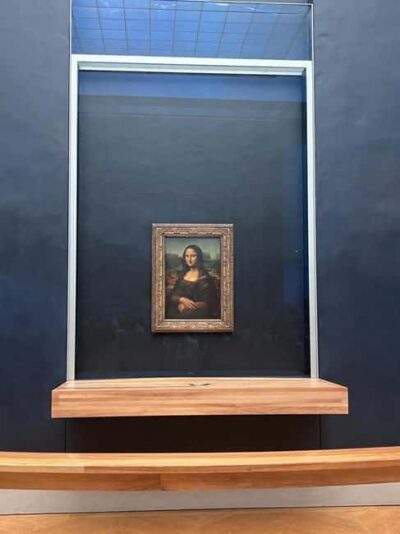
Louvre Museum Entry with History of Mona Lisa
Read our review →

Vieux Lyon Cultural & Historical Walking Guided Tour (English)
Read our review →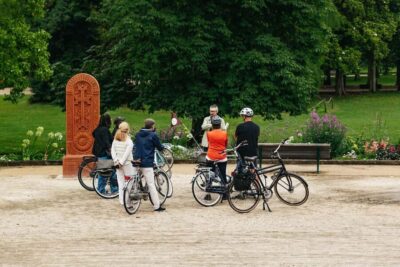
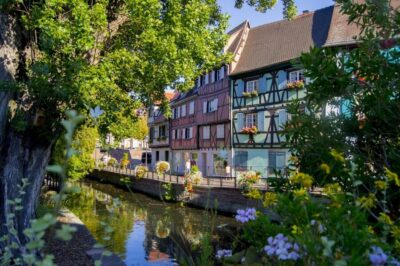

Toulouse Food & History Tour with a Chef (in English)
Read our review →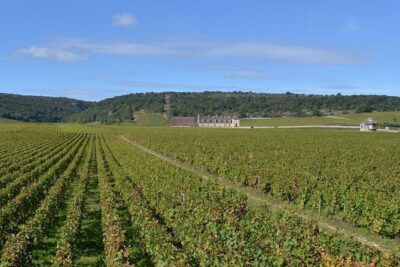
Small-Group Full-Day Tour of Côte de Nuits, Côte de Beaune Vineyards and Beaune Historical District
Read our review →
Browse the lists this tour appears in