
Reviewed · LOUVRE TOURS
Louvre Guided Treasure Hunt for Families and Kids
The clever part of this Louvre visit is that the children are not simply told to admire famous paintings. They are given a treasure hunt booklet, observation challenges, and clue cards that turn the museum into a game. While they work, your guide explains the Mona Lisa, Venus of Milo, and Victory of Samothrace in short, lively bursts.
I like the private format, since the guide can adjust the pace for your own children rather than a large mixed group. I also like the practical two-hour length and skip-the-line museum entry, which can save precious family energy. The main drawback is the price: $743 for up to four people is a serious investment, and a puzzle-focused visit means you may see fewer artworks than on a standard highlights tour.
Key points to know
- Age-matched activities: Children ages 3 to 6 and 7 to 12 follow the same general route with different challenges.
- Famous Louvre stops: The route includes the Mona Lisa, Venus of Milo, and Victory of Samothrace.
- A private English-speaking guide: Guides such as Marcella, Justine, Amy, Marine, and Sebastien have been praised for patience and strong rapport with children.
- Two hours inside the museum: The pace is designed to hold young attention, not cover every wing of the Louvre.
- Skip-the-line entry: This matters greatly at a museum where the entrance queue can consume a large part of your day.
- Family logistics: Meet at 8 Place du Carrousel by the Louis XIV equestrian statue. Large bags are not permitted.
Why a Louvre treasure hunt works better than simply following a map
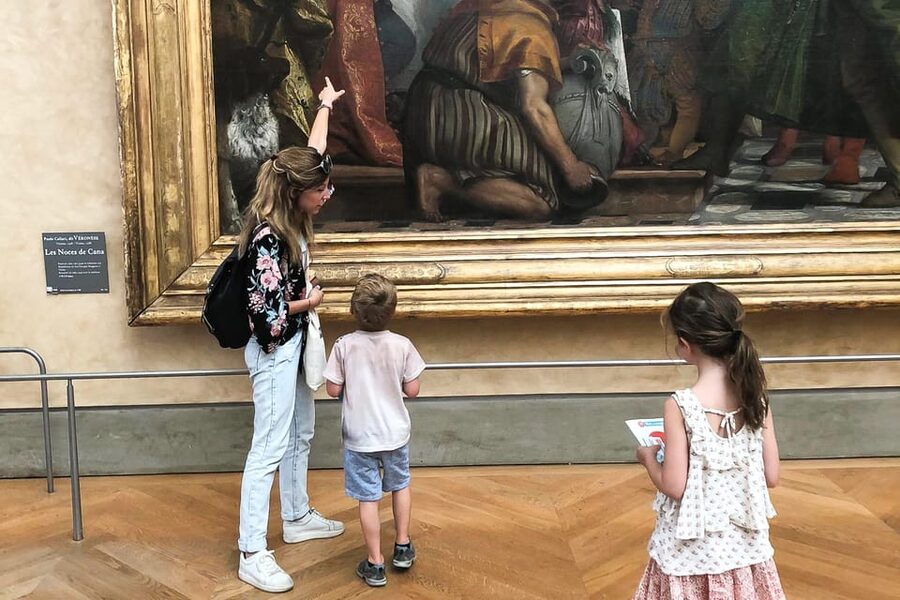
The Louvre is not difficult because it lacks things to see. It is difficult because it has too much. A child can lose interest long before you reach the first major masterpiece, especially when the museum is crowded and the rooms seem to go on forever.
This private tour gives children a job. They color, draw, look for visual details, answer questions, and collect cards with clues. Once the cards are gathered, the answers form a final puzzle. That simple structure gives the visit a beginning, a middle, and an ending.
I especially like this approach for families with children who do not yet enjoy traditional guided tours. The guide can explain a work, then ask the children to find something in it. The museum becomes less about standing quietly in front of old objects and more about noticing faces, poses, symbols, animals, and small details.
The activity is designed for two age bands, 3 to 6 and 7 to 12. Younger children may use coloring and drawing tasks, while older children face observation questions suited to their reading and attention skills. Both groups follow the same broad route, so siblings can stay together even when their booklets are different.
That does not mean every child will be hooked. One family found that their children were less engaged than expected, and the game requires stopping at each selected work. If your children prefer to move quickly or dislike worksheets, a simpler private highlights tour may suit you better.
More Escape Games in Paris
- Odéon Quiz Room
★ 5.0 · 385 reviews - Who Killed Victor ? Escape Game at Père Lachaise Cemetery
★ 4.8 · 258 reviews - Escape game in Montmartre
★ 5.0 · 247 reviews
Meeting Louis XIV before entering the Louvre
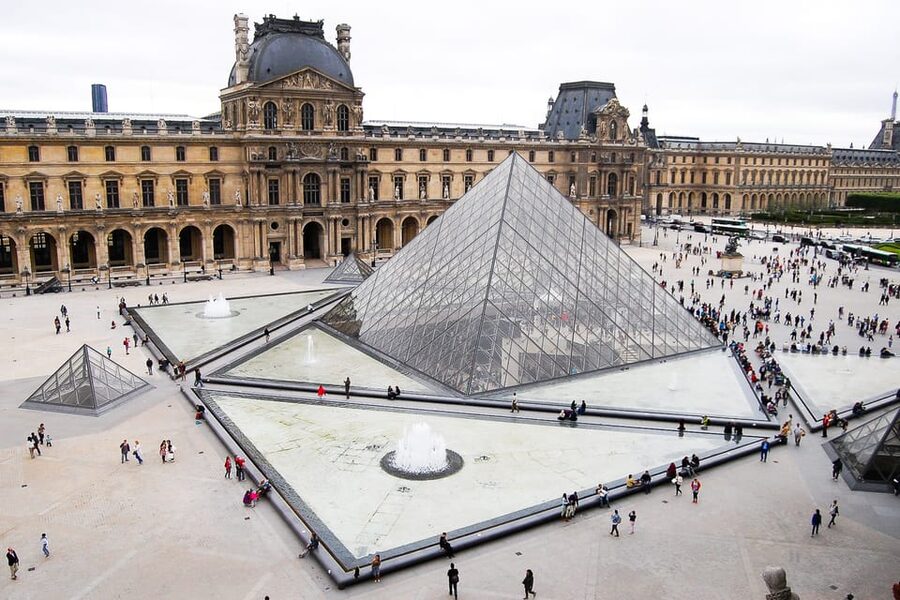
The meeting point is easy to identify: 8 Place du Carrousel, by the equestrian statue of Louis XIV near the Louvre’s glass pyramid. Your guide meets you there and gets the group organized before entering.
Bring your identification documents or photocopies. The museum does not permit items larger than 55 by 35 by 20 centimeters, and large luggage or oversize bags are not allowed. Wear comfortable clothes, since you will be on your feet and moving through a large museum.
The entry advantage is important. Skip-the-line tickets do not make the Louvre quiet, but they can prevent the visit from beginning with a long wait outside. One family estimated that the faster entry saved about an hour, which is a major gain when you are traveling with young children.
The tour ends back at the Louvre meeting area after about two hours. Hotel pickup and drop-off are not included, and food and drinks are your responsibility.
Activity booklets give younger children a reason to look closely
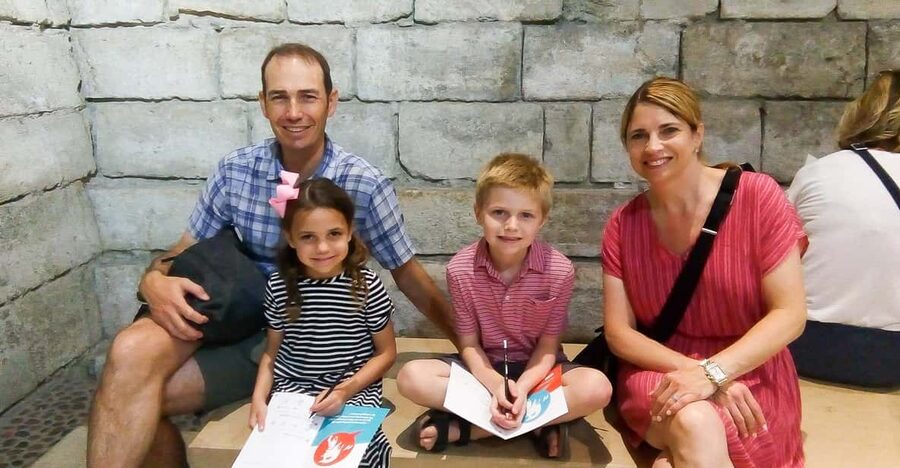
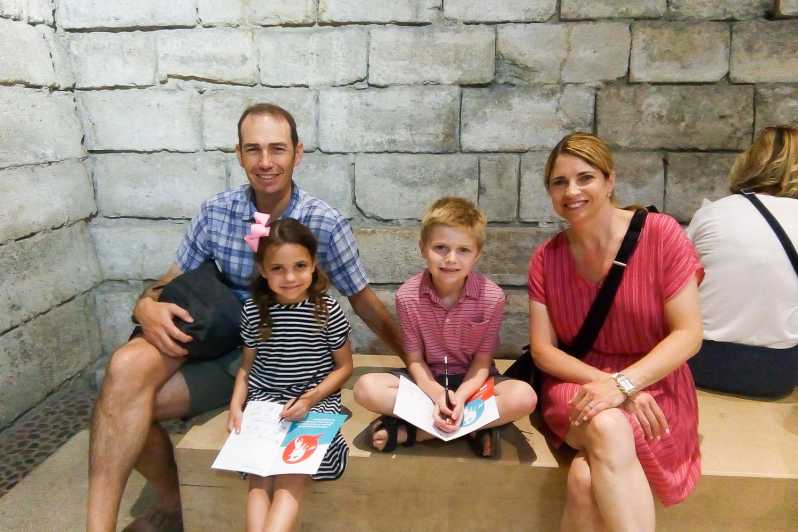
At the start, each child receives a booklet matched to their age. The guide explains how the treasure hunt works and begins leading the group through selected parts of the museum.
For children ages 3 to 6, the booklet may rely more on coloring, drawing, and basic visual searches. This is useful because preschool children are not expected to absorb long explanations about artists or royal patrons. They can focus on shapes, colors, and figures while still taking part in the same visit as older siblings.
For children ages 7 to 12, the tasks are more observation-based. They may need to compare details, identify clues, or answer questions about what they see. The point is not to test school knowledge. It is to train children to look carefully.
This is one of the strongest features of the experience. A child who might glance at a sculpture and walk away may spend another minute looking for a particular object or expression. That extra minute is often enough to turn a famous artwork into something memorable.
The guide also acts as a bridge between the activity and the adults. You are not left to supervise worksheets while missing the art. The guide keeps the children occupied and adds context for the whole family.
The Mona Lisa comes with crowds and a clever compromise
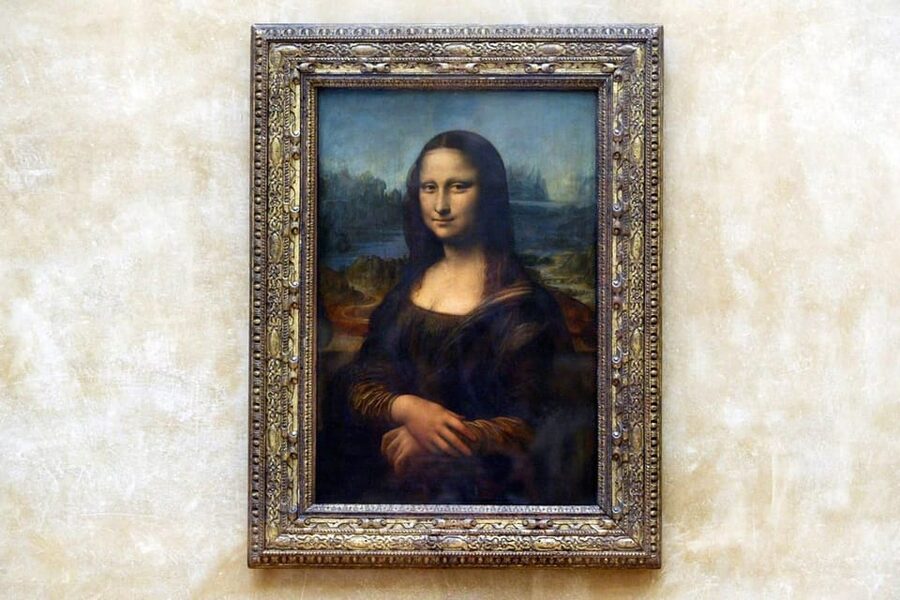
The Mona Lisa is one of the tour’s headline stops, but you should keep your expectations realistic. It is a major attraction, so the room can be crowded. A private guide can help you reach the painting efficiently, but no tour can remove the public interest that surrounds it.
One guide was able to bring a family close to the Mona Lisa while also keeping the visit moving. That kind of direction is valuable because families often lose time simply trying to understand where to stand and how to approach the room.
There is also a useful caution here. At the Mona Lisa, one group spent time using an iPad for a spot-the-difference activity even though the painting was only a few feet away. The adults felt that this activity would have worked better as something to finish at home.
That is a fair criticism. The booklet and digital tasks are tools, not the main event. If your child is eager to stare at the actual painting, tell the guide. The private setup should allow some flexibility, and the real artwork deserves a moment without a screen between you and it.
More Louvre tickets and guided visits:
- Paris: Louvre Museum Timed-Entrance Ticket
★ 4.6 · 71,977 reviews - Paris: Louvre Guided Tour with Reserved Access & Boat Cruise
★ 4.3 · 16,353 reviews - Louvre Museum Masterpieces Guided Tour with Access
★ 4.5 · 12,023 reviews - Paris: Louvre Museum Entry Ticket With Host and River Cruise
★ 4.6 · 9,926 reviews
Venus of Milo and Victory of Samothrace keep the route varied

The tour also includes two of the Louvre’s most recognizable sculptures: the Venus of Milo and the Winged Victory of Samothrace. These works help prevent the visit from becoming a parade of paintings.
The Venus of Milo offers plenty for children to notice, from the missing arms to the figure’s stance and drapery. The Victory of Samothrace is especially effective in a family route because of its dramatic setting and strong sense of movement. A guide can use those visual qualities to ask children what they think is happening before giving them the formal explanation.
The supplied experiences suggest that the route includes other works chosen for their stories and child-friendly themes, not only the three headline pieces. That matters at the Louvre. A visit built only around the Mona Lisa can feel like a long wait for one crowded painting, while a mix of sculpture and painting gives children more ways to connect.
The tradeoff is time. Two hours is just enough for highlights and a structured activity. It is not enough to cover the museum in a meaningful way. Some families felt the quiz tasks slowed the route and limited the total number of works they saw. If your priority is quantity, this may feel too measured.
A guide makes the huge museum easier to handle
The best part of a private tour is not simply having someone point out famous objects. It is having one person manage the route, the children, and the explanations at the same time.
Guides named in family feedback include Marcella, Justine, Amy, Marine, Sebastien, Roseane, Valerie, Yaelle, Quinten, and Marine. Their styles vary, but the most consistent praise centers on patience, concise explanations, and the ability to speak to both children and adults.
Amy was praised for getting a family through the crowds and up to the Mona Lisa. Marine worked with two girls ages 10 and 13, balancing information about the Louvre, its masterpieces, and the treasure hunt booklet. Sebastien was singled out for handling a group of children ranging from 5 to 13, which is a difficult age spread for any guide.
You should still tell the guide your children’s ages and interests at the start. The private format is most useful when the guide knows if one child needs more movement, another wants detailed stories, or the youngest needs simpler tasks.
The English-language guide is included, and the activity is wheelchair accessible. The information provided does not promise a particular route for every mobility need, so it is sensible to discuss access requirements when booking.
The two-hour pace is built for young attention spans
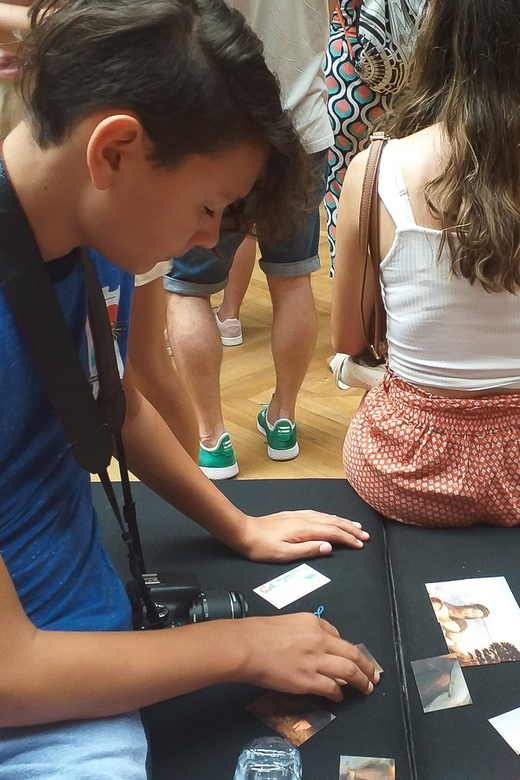
Two hours is a smart length for many families. It is long enough to reach major highlights but short enough to avoid the late-tour slump that can turn a museum visit into a negotiation.
Several families found the pace fast and effective for children. Others felt it was slow because the group had to stop for each quiz element. Both reactions make sense. The tour moves quickly between artworks, but each chosen stop may take time while children solve the task.
Think of the duration as two hours of guided focus, not two hours of nonstop sightseeing. You will probably see fewer rooms than you would while walking through on your own, but you should understand more of what you do see.
The tour ends with the final puzzle. This gives the children a clear goal and a satisfying finish. Adults then have a better chance of taking in the artworks because the guide has been keeping the children active rather than asking them to wait quietly.
If you want more time afterward, you can continue exploring independently, subject to museum access and opening arrangements. One family valued having time after the guided portion to see more on its own.
Is $743 for four people good value?
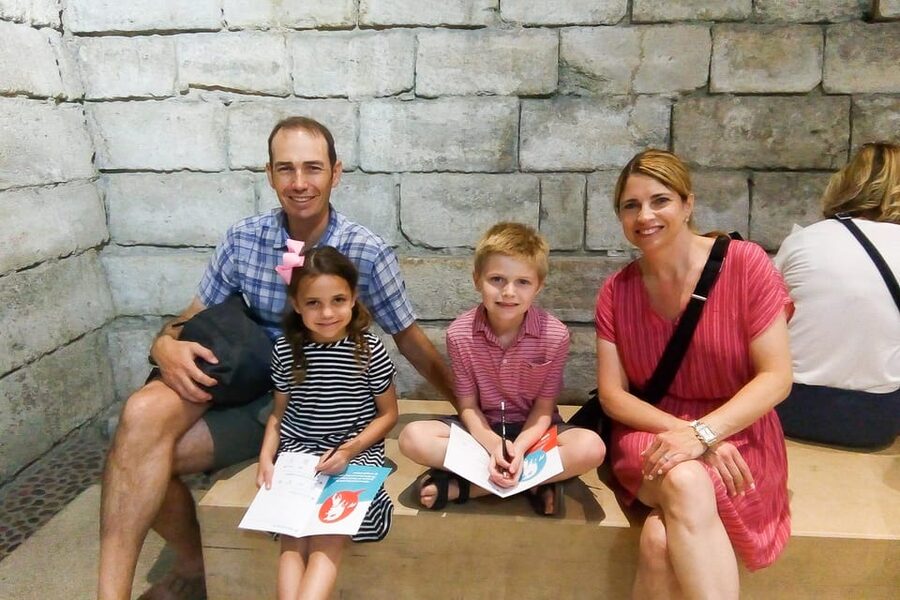
At $743 per group of up to four, the cost is high. For a family of four, that works out to about $186 per person. For two adults and two children, you are paying for a private guide, museum admission, the treasure hunt materials, and the convenience of skipping the regular entrance line.
The value depends on the alternative. If you are confident navigating the Louvre, keeping children interested, and finding the major works yourself, you can spend much less by visiting independently. You can also take as long as you like at each painting without stopping for a formal challenge.
The private tour makes more financial sense if the Louvre is a top priority and you want one carefully managed visit. A wasted museum morning, a long entrance queue, or children who give up after 30 minutes can cost you in time and frustration. The guide’s role is to protect that time.
I would be cautious about booking it solely because you want to see a large number of artworks. The tour is designed for engagement, not maximum coverage. You are paying for a child-focused experience and a smoother family visit, not a complete survey of the museum.
Tips are not included. Food and drinks are not included either, and the tour does not provide hotel transfers.
Who will enjoy this Louvre visit most?
This is a strong match for families with children from about preschool age through 12. It also worked for older children around 13 when they enjoyed art, questions, and stories. Families with several children may find the private format particularly helpful, since the guide can balance different attention spans.
I would choose it for:
- A first family visit to the Louvre
- Parents who want to see famous works without planning the route
- Children who enjoy puzzles, drawing, or finding details
- Families worried about long entry queues
- Groups with siblings in different age ranges
- Adults who want some space to listen and look while the guide manages the activity
I would think twice if your children dislike structured games, if you want to visit many rooms, or if the $743 price would strain your Paris budget. A private tour cannot guarantee that every child will be interested, and the crowd around the Mona Lisa remains part of the experience.
The cancellation policy is family-friendly: you can cancel up to 24 hours before the activity for a full refund. You can also reserve now and pay later, which helps if your schedule is still changing.
Should you book the family treasure hunt?
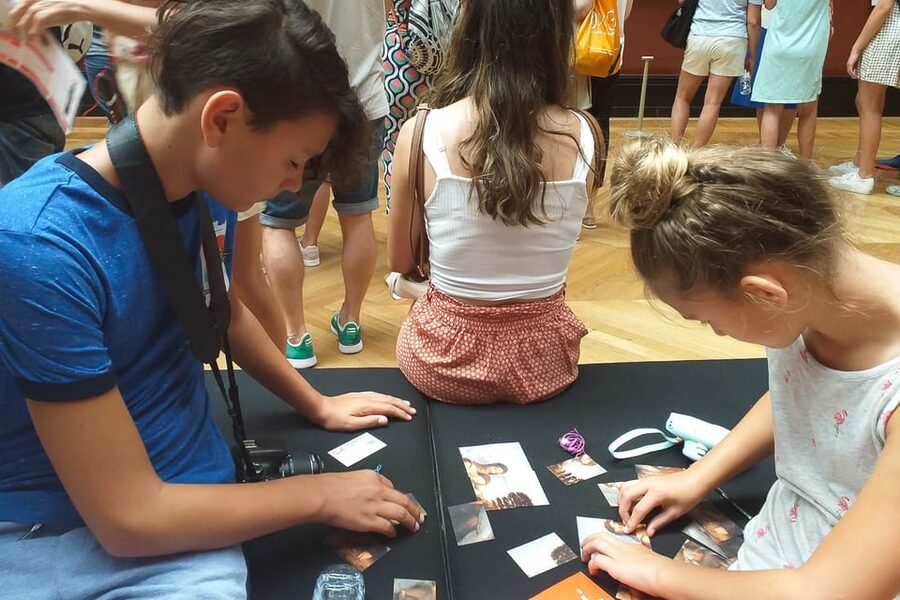
Book this if your main goal is a manageable, child-centered introduction to the Louvre. The booklet, clue cards, and age-based challenges give children a reason to participate, while the guide handles the museum’s size, crowds, and famous works.
I would book it for a family that sees the Louvre as a must-do but does not want to spend the morning persuading tired children to keep walking. I would skip it if you want a long, quiet art study or the lowest possible price.
For most families, the real benefit is not seeing every masterpiece. It is leaving with children who can name the Mona Lisa, remember the Venus of Milo, and say they would return to the Louvre. That is a good result from two crowded museum hours.
FAQ
How long does the Louvre treasure hunt last?
The guided visit lasts two hours.
Where does the tour meet?
Meet at 8 Place du Carrousel, by the equestrian statue of Louis XIV near the Louvre glass pyramid.
Is museum entry included?
Yes. Skip-the-line tickets to the Louvre Museum are included.
What ages are the activity booklets designed for?
Booklets are tailored for children ages 3 to 6 or 7 to 12. Children follow the same general route with age-appropriate challenges.
Which Louvre artworks are included?
The experience includes the Mona Lisa, Venus of Milo, and Victory of Samothrace, along with other selected artworks.
Is the tour private?
Yes. It is a private group experience.
What language is the tour conducted in?
The live tour guide speaks English.
Can I bring a large bag or luggage?
No. Large bags and oversize luggage are not allowed. Items larger than 55 by 35 by 20 centimeters cannot enter the museum.
Can I cancel the booking?
Yes. You can cancel up to 24 hours in advance for a full refund. The activity also offers a reserve-now, pay-later option.
Just added around Paris
- Paris at the First Lodges – Ducasse sur Seine dinner cruise★ 4.0 · 165 reviews
- Paris at the First Lodges – Ducasse sur Seine Lunch Cruise★ 4.5 · 70 reviews
- Disneyland® Paris 1 Day with Round-Trip Train Tickets from Paris★ 4.0 · 50 reviews
- Disneyland® Paris Express Shuttle with Admission Ticket from Central Paris★ 3.5 · 172 reviews
- Explore speakeasies and hidden bars, sip meet & socialize★ 4.5 · 47 reviews
- Paris Cheeses and Wines Tour de France with Tasty Games★ 5.0 · 32 reviews
- Musée Orsay Highlights Tour – Best of Impressionism & Hidden Gems★ 5.0 · 27 reviews
- Private Tour: Discover Paris with Local, 3 hours on a Segway★ 5.0 · 71 reviews
Louvre Tours, compared.


Louvre Guided Tour with Reserved Access & Boat Cruise
Read our review →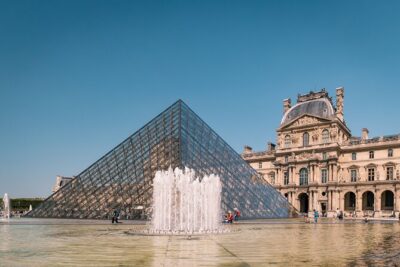
Louvre Museum Masterpieces Guided Tour with Access
Read our review →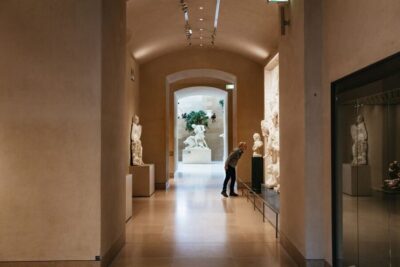
Louvre Museum Entry Ticket With Host and River Cruise
Read our review →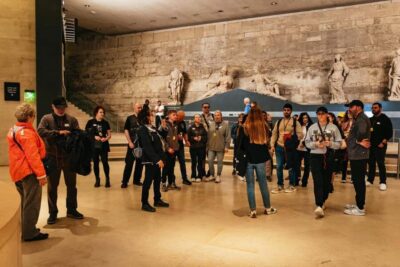
Priority Access Louvre with Host -Direct to Mona Lisa
Read our review →
Mona Lisa & Louvre Masterpieces Tour with Reserved Access
Read our review →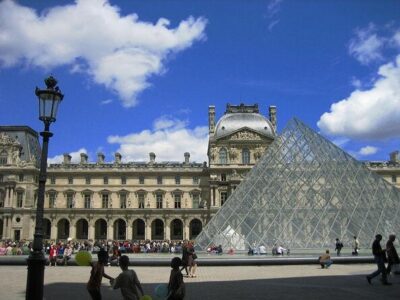
Louvre Museum – Exclusive Guided Tour (Entry Included)
Read our review →
Louvre Reserved Ticket and River Cruise Combo
Read our review →Browse the lists this tour appears in