
Reviewed · LOUVRE TOURS
Louvre Museum Access Guided Tour with Mona Lisa
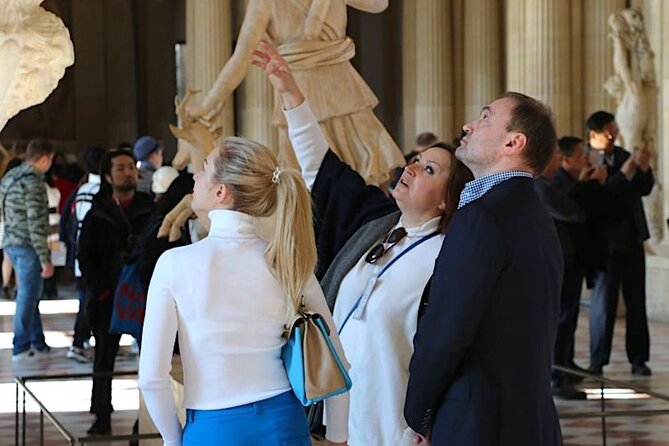
The Mona Lisa may draw the biggest crowd, but this tour’s real value is helping you make sense of the Louvre around it. In about two and a half hours, your guide leads you from Leonardo da Vinci to the French crown jewels, with stops for the Venus de Milo, Winged Victory, and major Renaissance works.
I like the timed-entry ticket, which can save precious Paris time, and the small-group format, capped at 20 people. Guides such as Sid, Nadia, Will, and Maryam have been praised for clear storytelling and a knack for making art history easy to follow.
The main drawback is simple: the Louvre is huge, and two and a half hours only gives you a guided taste. Expect plenty of walking, crowds around famous works, and a Mona Lisa viewing that may feel brief.
Key points at a glance
- Timed entry included: You have a pre-booked museum ticket, which helps reduce the uncertainty of waiting to get inside.
- A focused Louvre route: The tour covers the Mona Lisa, Venus de Milo, Winged Victory, Renaissance paintings, Bernini, and French crown jewels.
- English-speaking guide: The guide supplies context, points out details, and helps you follow the museum’s maze-like layout.
- Groups of up to 20: Some departures may be smaller, but 20 is the stated maximum per guide.
- About 2 hours 30 minutes: That is enough for the major sights, not enough to cover the Louvre in full.
- Good first visit choice: You get an organized introduction instead of wandering through the world’s largest museum without a plan.
Why a guided Louvre visit can save your day
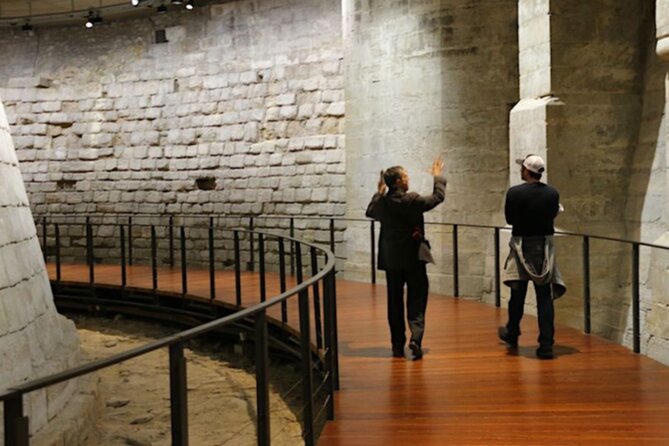
The Louvre is not a museum you casually finish. It occupies a former royal palace and holds far more art than you can see in one visit. Without a plan, you can spend a large part of your morning finding the right wing, climbing stairs, checking maps, and wondering if you have missed the famous pieces.
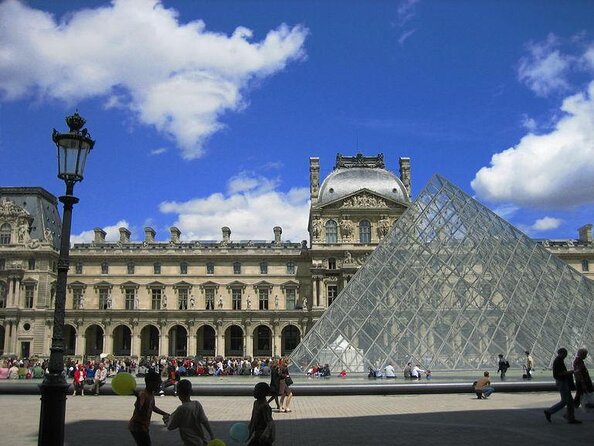
This tour gives you a route and a purpose. You meet near the Louvre Pyramid, at the statue of Louis XIV under the guise of Marcus Curtius in the Cour Napoléon. From there, the guide leads the group into the museum and focuses on major works rather than trying to show you every room.
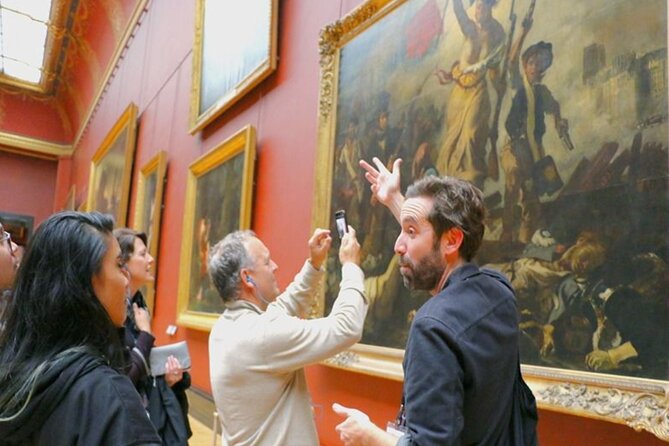
That focus matters. A guide can tell you why a sculpture is important, point out details you might walk past, and explain how the former palace became a museum. Several guides named in the feedback, including Sid, Nadia, Will, Maryam, Helin, Dimitri, and Lilli, were praised for making the art understandable and for keeping the pace comfortable.
You should still think of this as an introduction, not a complete Louvre education. The tour is designed to give you a strong first look at famous works and enough context to make the museum less intimidating.
More Louvre tickets and guided visits:
- Paris: Louvre Museum Timed-Entrance Ticket
★ 4.6 · 71,977 reviews - Paris: Louvre Guided Tour with Reserved Access & Boat Cruise
★ 4.3 · 16,353 reviews - Louvre Museum Masterpieces Guided Tour with Access
★ 4.5 · 12,023 reviews
Meeting at the Pyramid and getting inside
The meeting point is in the Cour Napoléon, near the Louvre Pyramid. The activity ends back at the meeting point, and there is no hotel pickup or drop-off, so you need to make your own way to the museum.
Your mobile ticket is confirmed at booking, and the museum entry is pre-booked for a set time. That does not mean the museum will be empty, but it should make the arrival process more orderly than turning up without a timed reservation.
The advertised duration is approximately 2 hours and 30 minutes. The route information breaks this into a short meeting and orientation period followed by roughly 2 hours and 25 minutes inside the Louvre. The description also refers to a three-hour tour, so allow some flexibility rather than planning a tight appointment immediately afterward.
A small group is useful from the first few minutes. It is easier to stay with a group of 6 or 10 than a large crowd, although the maximum is 20 people per guide. One report described a group of only four, while others mentioned groups split into smaller sections. Group size can vary by departure.
The Louvre’s sculptures: Winged Victory and Venus de Milo
The sculpture section gives you two of the Louvre’s most famous ancient works.
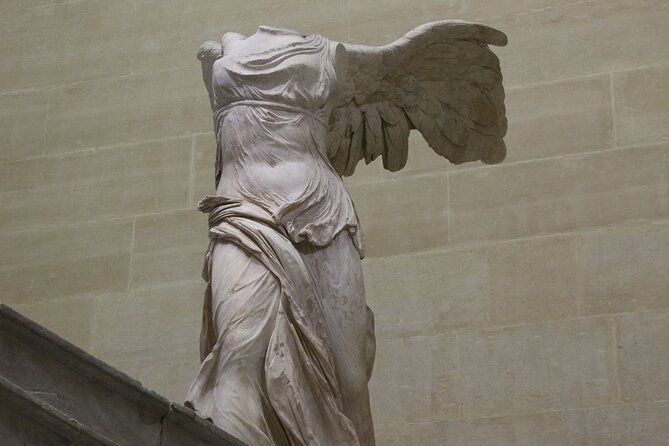
The Winged Victory of Samothrace is displayed at the top of a grand staircase. Even before you examine the sculpture closely, its setting makes an impression. Your guide can help you notice the sense of movement in the drapery and the way the figure is presented as if arriving on a ship’s prow.
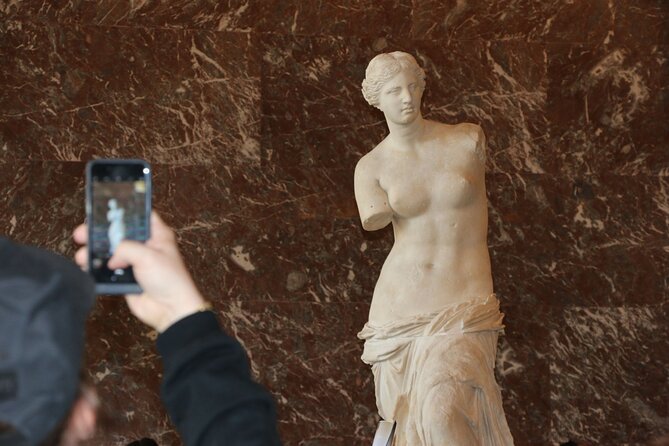
The Venus de Milo is another essential stop. The statue is famous partly because of its missing arms, which leave room for discussion about its original pose and appearance. A guide can give you enough background to see more than a beautiful marble figure.
The itinerary also includes Bernini’s Sleeping Hermaphroditus. This is a useful reminder that the tour is not limited to the three works everybody already knows. You get some famous names, along with pieces that may be unfamiliar before you arrive.
These sculpture stops also show why comfortable shoes matter. You will walk through large galleries and corridors, and the museum’s scale can make the distance between works feel longer than expected. The tour requires a moderate level of physical fitness.
The Mona Lisa, with realistic expectations
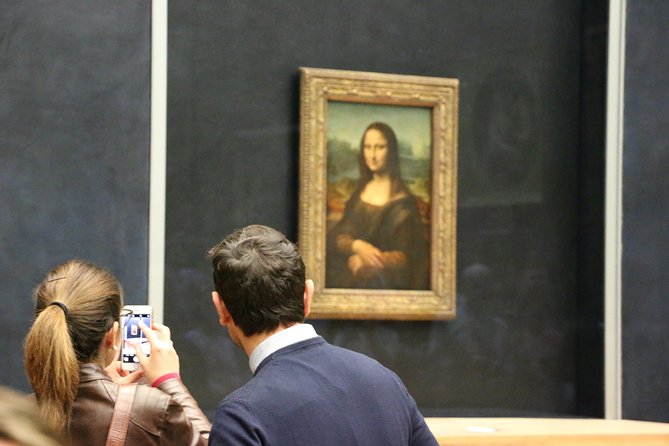
The Mona Lisa is the centerpiece for many people, and the tour includes access to Leonardo da Vinci’s famous painting. Your guide explains why the portrait became so well known and discusses the continuing questions around the subject’s expression.
Prepare for a crowded viewing area. The painting itself is smaller than many first-time visitors expect, and the time in front of it may be limited by the crowd and the group’s schedule. The experience is less about standing alone with the portrait and more about seeing it in context, learning why it matters, and then moving on to the rest of the museum.
That is one reason I like having a guide here. You can easily reach the Mona Lisa, take a quick look, and leave without understanding much beyond its fame. A good guide directs your attention to the painting and gives you a reason to look closely.
One point deserves care: the exact viewing conditions can change with crowd levels and museum operations. The timed ticket helps with entry, but it does not create a private appointment with the painting.
More museums and galleries in Paris:
- Paris: Louvre Museum Entry Ticket With Host and River Cruise
★ 4.6 · 9,926 reviews - Les Invalides: Napoleon’s Tomb & Army Museum Entry
★ 4.6 · 9,185 reviews - Louvre Museum – Exclusive Guided Tour (Entry Included)
★ 5.0 · 6,296 reviews - Paris: Louvre Museum Hosted Entry and Mona Lisa Audioguide
★ 4.6 · 5,235 reviews
Italian Renaissance paintings and Raphael
After the most famous portrait, the tour turns to the Louvre’s Italian Renaissance collection. The itinerary includes Leonardo, Botticelli, Titian, and Raphael, giving you a compact look at artists who changed European painting.
The guide’s role is especially useful in these galleries. Renaissance paintings can seem crowded with figures, gestures, symbols, and religious references. A clear explanation helps you understand what you are seeing instead of simply taking a photo and walking on.
Raphael’s Saint George on a magnificent horse is one of the named highlights. The scene gives your guide a chance to discuss composition, movement, and the way artists presented heroic subjects. Botticelli and Titian add different approaches to color, line, and storytelling.
You will not have time to study every painting in the Italian galleries. That is the tradeoff for seeing a wider range of the museum. If one artist captures your attention, make a note of the room and return later if your schedule allows.
The Galerie d’Apollon and French crown jewels
The Louvre was once a royal palace, and the Galerie d’Apollon helps you see that side of the building. The tour includes the surviving French crown jewels, displayed among the ornate decoration of the gallery.
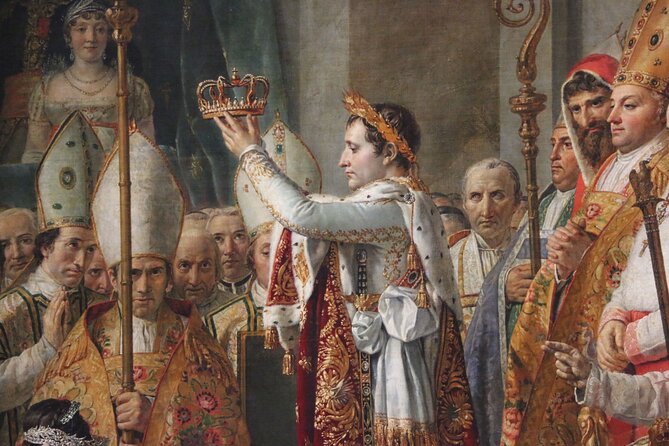
This stop broadens the visit beyond paintings and sculpture. You see objects tied to monarchy, ceremony, wealth, and political power. The jewels also help explain why the Louvre feels different from a straightforward art gallery. Its identity is part palace, part museum, and part national collection.
The Galerie d’Apollon is worth your attention even if you came mainly for the Mona Lisa. Look up as well as down. The room itself is part of the experience, and your guide can connect the decoration and treasures to the building’s royal past.
What the guide adds to the visit
The strongest part of this experience is the human explanation. The Louvre gives you objects, but it does not automatically give you a useful order in which to see them.
Guides named in the feedback were praised for different strengths. Sid was described as approachable and good at explaining difficult ideas. Nadia was praised for helping a small family group move through the busy museum. Will was noted for an energetic, slightly quirky style and for paying attention to practical details such as water, restrooms, and lockers.
Maryam was praised for combining background information with humor and charm. Helin was valued for answering questions and linking art with the history of the museum. Dimitri was noted for giving the right amount of detail rather than turning every stop into a long lecture.
No guide can guarantee the same style for every departure, and one visitor found a guide’s accent and fast pace difficult to follow. That is a fair consideration when booking any English-language group tour. If you have trouble hearing, stay near the guide and ask for repetition early. Some departures may use an audio system, but that is not listed as a standard inclusion, so do not rely on it.
Price, ticket value, and what you get
The listed price is $54.42 per person. That includes the guided tour, an English-speaking art guide, the small-group format, and museum admission.
The ticket value depends partly on your age and residency. The included entrance fee is listed as €32 for non-EEA visitors and €22 for EEA visitors. Admission is free for visitors under 18 and EEA residents under 26 when they show valid identification and proof of residency, though you should check how the booking handles those categories.
For a first-time visitor, the extra cost over a basic museum ticket can be worthwhile because you are paying for direction, interpretation, and time management. The Louvre can be hard to navigate, and the guide helps you see major works without spending your limited Paris hours searching.
If you already know the Louvre well and prefer to move at your own pace, the group may feel restrictive. You will follow the guide’s route rather than linger wherever you wish. In that case, a ticket alone may suit you better.
Timing, crowds, and practical preparation
The activity is offered in English and should be booked ahead. It is commonly reserved well before the visit, with an average booking window of about 50 days. That suggests planning early if your Paris dates are fixed.
Wear shoes you can walk in for several hours. The museum is large, the route includes major galleries and stairways, and crowded holiday periods can make movement slower. January may be quieter than peak periods, but crowd levels vary.
Bring only what you need. The tour does not include food or drinks, and there is no hotel transfer. Some guide-led departures may help with lockers or suggest a restroom break, but those details are not guaranteed as part of every tour.
Service animals are allowed, and the museum is near public transportation. The tour requires moderate physical fitness, so consider how comfortably you manage extended walking and standing before booking.
Free cancellation is available if you cancel at least 24 hours before the start time. Changes or cancellations inside that window are not accepted for a refund. The experience also requires a minimum number of participants, so a cancellation by the operator for that reason results in an alternative date or experience, or a full refund.
Who should book this Louvre tour?
I would choose this tour for a first Louvre visit, especially if you want to see the major names without spending hours studying a museum map. It also suits families, since several guides were praised for keeping teenagers and adults interested at the same time.
It works well for people who want art explained in plain English. You do not need a background in painting, sculpture, or French history. The route gives you enough context to appreciate what you are seeing without requiring a full course in art history.
Couples and small groups may also like the social side of the format. You meet other people, but the group is limited enough to remain manageable. If you strongly dislike group tours, or if you want to spend half an hour with one painting, this is not the best match.
Should you book the Mona Lisa Louvre tour?
Book it if you want a structured first look at the Louvre, a timed museum entry, and a guide who can connect the Mona Lisa with sculpture, Renaissance painting, and royal treasures. The price is reasonable for a guided visit that includes admission, particularly when your Paris schedule is short.
Skip it if you have already explored the Louvre and want total freedom, or if two and a half hours feels too rushed. For most first-time visitors, though, the combination of a small group, a focused route, and clear art-history commentary offers a practical way to get your bearings in a famously overwhelming museum.
FAQ
How long does the Louvre guided tour last?
The advertised duration is approximately 2 hours and 30 minutes. The route information allows about 2 hours and 25 minutes inside the museum, plus a short meeting period.
Is museum admission included?
Yes. The experience includes a pre-booked Louvre entrance ticket. The listed ticket value is €32 for non-EEA visitors and €22 for EEA visitors.
Is the Mona Lisa included?
Yes. The tour includes access to see the Mona Lisa and an explanation of its fame and mysterious expression.
What other artworks are included?
The route includes the Venus de Milo, Winged Victory of Samothrace, Bernini’s Sleeping Hermaphroditus, works by Leonardo da Vinci, Botticelli, Titian, and Raphael, plus the French crown jewels.
What language is the tour offered in?
The tour is offered in English with an English-speaking guide.
How large is the group?
The maximum group size is 20 people per guide. Some departures may be smaller.
Where does the tour meet?
The meeting point is near the Louvre Pyramid in the Cour Napoléon, by the statue of Louis XIV under the guise of Marcus Curtius.
Does the tour include hotel pickup?
No. Hotel pickup and drop-off are not included, so you must reach the meeting point independently.
Is the tour physically demanding?
You should have a moderate level of physical fitness. The Louvre is large, and the tour involves walking and standing.
Can I cancel for a full refund?
Yes, if you cancel at least 24 hours before the scheduled start time. Cancellations or changes made less than 24 hours in advance are not refunded.
Just added around Paris
- Paris: Croissant Baking Class with a Chef★ 5.0 · 201 reviews
- Cooking Class with a Parisian Chef★ 5.0 · 46 reviews
- Cocktails lessons in Speakeasy★ 4.5 · 72 reviews
- Paris: Choux Pastry and Chocolate Éclair Making Class★ 4.9 · 50 reviews
- Paris: Classic Sites Tour by Vintage Citroen 2CV★ 4.6 · 189 reviews
- Paris: Cheese and Wine Class in a 17th Century Cellar★ 4.8 · 91 reviews
- Paris: Romantic Photoshoot for Couples★ 4.9 · 131 reviews
- Paris: Bread and Croissant-Making Class★ 4.8 · 206 reviews
Louvre Tours, compared.


Louvre Guided Tour with Reserved Access & Boat Cruise
Read our review →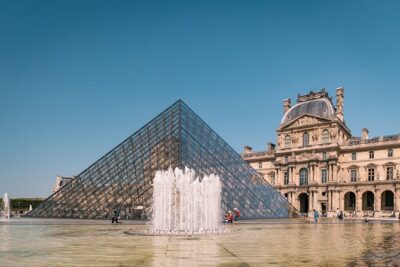
Louvre Museum Masterpieces Guided Tour with Access
Read our review →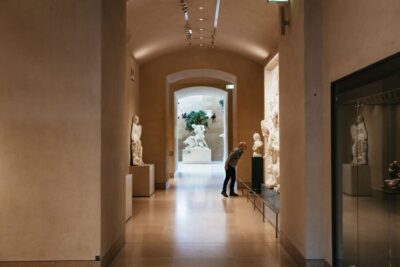
Louvre Museum Entry Ticket With Host and River Cruise
Read our review →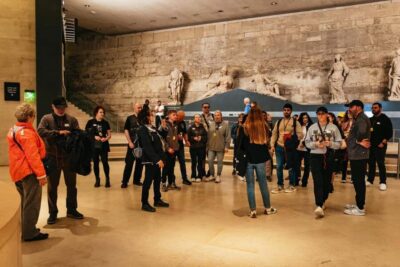
Priority Access Louvre with Host -Direct to Mona Lisa
Read our review →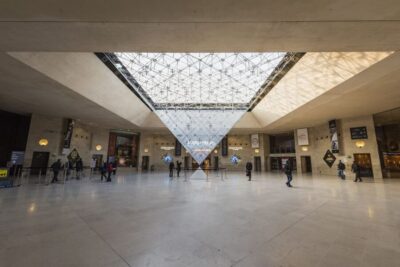
Mona Lisa & Louvre Masterpieces Tour with Reserved Access
Read our review →
Louvre Museum – Exclusive Guided Tour (Entry Included)
Read our review →
Louvre Reserved Ticket and River Cruise Combo
Read our review →Browse the lists this tour appears in