
Reviewed · WALKING TOURS
Marseille: Essential Guided Walking Tour of the City
Marseille’s story comes into focus on foot. This 150-minute walk links La Major Cathedral, the old quarter of Le Panier, the harbor, Saint-Victor Abbey, and Palais du Pharo, giving you a useful first look at a city shaped by Greek settlers, Roman rule, war, trade, and the sea. Charles, the bilingual local guide, adds old maps, photographs, humor, and plenty of personal knowledge.
I like the small groups of up to eight and the way the route mixes famous sights with quieter streets. I also like the finish at Le Pharo, where the city opens toward the Mediterranean. The main drawback is the pace and terrain: this is a roughly 5-kilometer walk with hills and uneven streets, so it is not suitable for wheelchair users and may feel demanding in hot weather.
Key points to know
- Charles leads the walk: He speaks French and English and uses stories, old images, and maps to explain how Marseille changed.
- Le Panier gets proper attention: Allow about 30 minutes for murals, narrow streets, the Vieille Charité, and the old Windmill Hill area.
- The route connects major sights: You move from La Major Cathedral to the Old Port, Canebière, Saint-Victor Abbey, and Le Pharo.
- It is a true walking tour: The advertised route covers about 5 kilometers, with no food, drinks, or transport included.
- The ending is flexible: You can finish near the Old Port or Palais du Pharo, useful if you want to continue exploring.
- The value comes from the guide: At $41 per person, the appeal is the historical context, small group, and local recommendations rather than entry to paid attractions.
Starting beneath La Major Cathedral
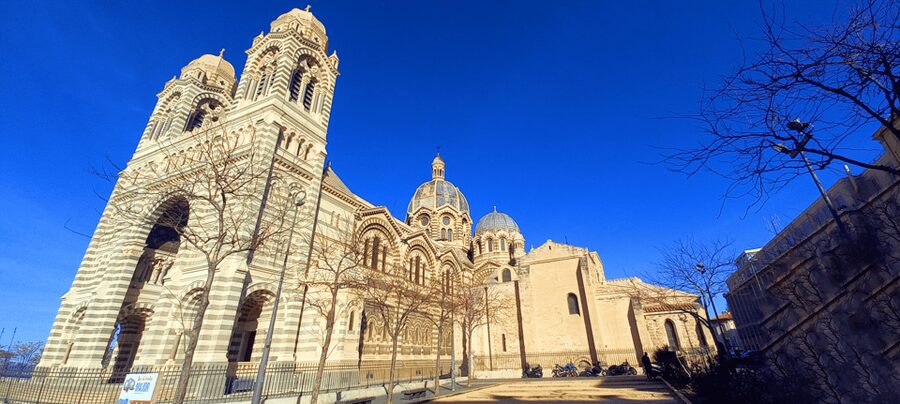
Meet your guide in front of Cathédrale Basilique Sainte-Marie-Majeure, usually called La Major. Look for Charles wearing a white cap. This is a memorable place to begin, with the cathedral’s Neo-Byzantine and Romanesque design providing an immediate sense that Marseille is not simply a seaside resort.
The opening stop lasts about 10 minutes and sets the tone for the walk. You get an introduction to Marseille’s 2,600-year story, including its Greek and Roman beginnings. The value here is context. Instead of seeing separate monuments as unrelated photo stops, you begin to understand how the old port, religious buildings, and hillside neighborhoods fit together.
You should arrive ready to walk, not expecting a formal indoor cathedral visit. The experience is built around outdoor sightseeing and explanation. Comfortable shoes, water, sunglasses, and clothing suited to the weather will make a real difference.
More Walking Tours in Provence
- Marseille: Half-Day City Highlights Guided Walking Tour
★ 5.0 · 273 reviews - Marseille: No-Diet Club Local Food Tasting and Walking Tour
★ 4.8 · 173 reviews - Marseille: Walking Food Tour with Full Meal
★ 4.7 · 137 reviews
Le Panier, Marseille’s old hillside quarter
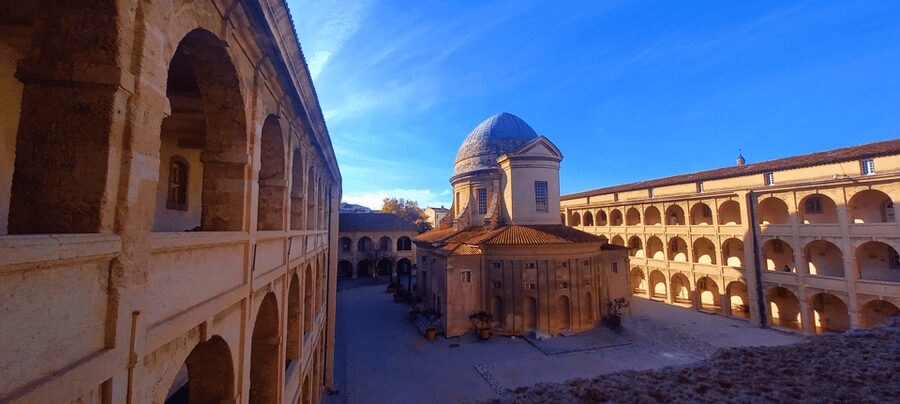
From La Major, the route moves into Le Panier, one of the city’s oldest areas. The neighborhood rises above the Vieux Port, and its narrow streets bring a different mood from the open waterfront. You can expect murals, street art, old façades, and sudden views toward the sea.
About 30 minutes are devoted to Le Panier, which is enough to get a feel for the district without turning the walk into a full neighborhood tour. Charles explains the area’s past while pointing out places you might otherwise pass without understanding, including the Vieille Charité and the quieter Windmill Hill area.
This is one of the strongest parts of the experience for anyone who wants more than Marseille’s headline sights. Le Panier has an artistic and bohemian feel, but it is also a real residential district with a complicated past. The narrow streets can be uneven, and the hillside means you should expect some climbing. That is part of the character of the neighborhood, but it is worth considering if you have limited mobility.
The route then reaches the Church of Accoules, with roughly 10 minutes for a guided look. Short stops like this work well because Charles can give you the essential story without asking you to spend the whole afternoon inside every building.
From Rue de la République to the Old Port
The walk continues along Rue de la République, where the architecture and street plan help explain Marseille’s changing identity. This stop lasts about 10 minutes and acts as a bridge between the older hillside quarter and the harbor district.
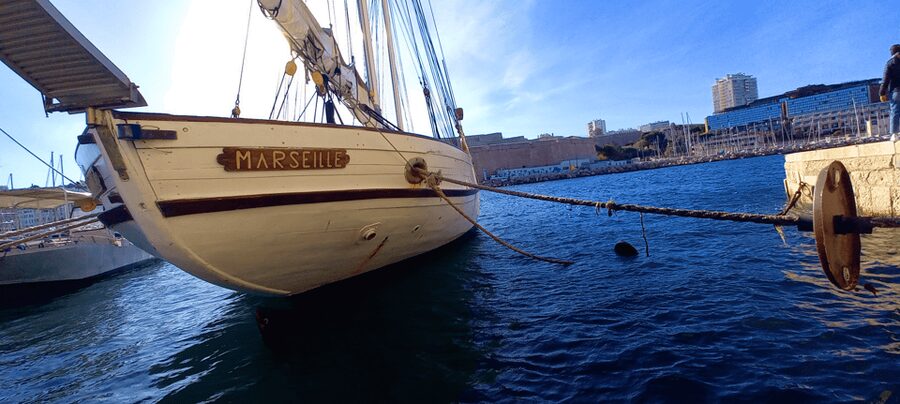
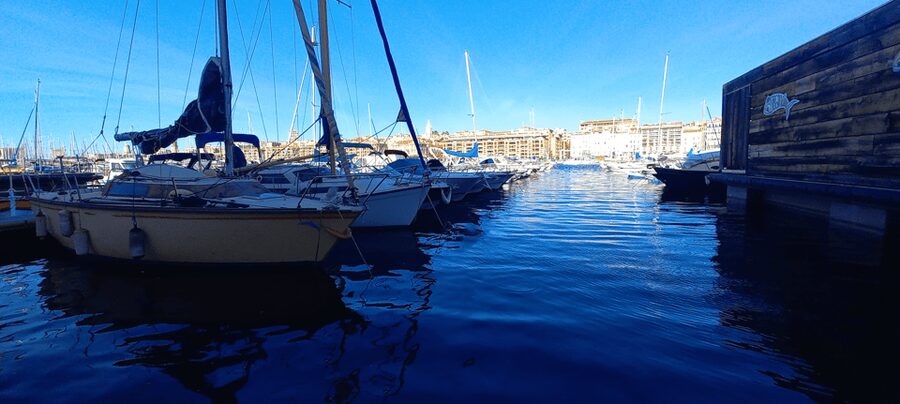
You then reach the Old Port, or Vieux Port, for about 15 minutes of sightseeing. This is Marseille’s natural center, where boats and yachts sit in the water and the forts of Saint-Jean and Saint-Nicolas guard the harbor entrance. The port has been central to the city since ancient times, so this is the place where the Greek, Roman, commercial, and maritime parts of the story come together.
I like this sequence because it shows Marseille in layers. You move from an old residential quarter to a grander street and then into the open harbor. If you were to visit only the Old Port on your own, you would see the boats and restaurants but might miss why the site mattered so much over thousands of years.
Charles also discusses Marseille’s difficult wartime past near the docks. The tour does not present the city as a polished postcard. You hear about the destruction and tragedy connected with World War II, alongside the city’s earlier links to the Roman Empire. That balance makes the walk more useful than a simple list of pretty buildings.
Canebière and Cours Honoré d’Estienne d’Orves

The route continues toward Canebière, Marseille’s famous central avenue. Galleries, workshops, boutiques, cafés, bistros, and restaurants line the way, giving you a practical look at the city’s everyday commercial life.
Canebière is not treated as a standalone shopping stop. It is part of the larger story of how Marseille connects its port to the city behind it. You get time to look around, but the main purpose is to understand the street’s place in Marseille’s urban fabric.
The itinerary also includes Cours Honoré d’Estienne d’Orves, with about 10 minutes for guided sightseeing. This gives you another view of the area around the harbor and a chance to ask Charles questions. Several people who took the tour alone or in very small groups found the format especially personal, and that makes sense here. A group capped at eight is small enough for the guide to adjust the explanation and respond to individual interests.
If you enjoy stopping often for photographs, you may find the 150-minute schedule a little brisk. The route covers a lot of ground, and there is no long free period at each sight. On the other hand, the steady pace helps you see a broad sweep of central Marseille in one outing.
More Walking Tours in Marseille:
- Marseille: Foodie Walking Tour of the Cours Julien District
★ 4.8 · 97 reviews - Marseille: Guided Off-the-Beaten-Path Neighborhood Walk
★ 4.9 · 63 reviews - Marseille Walking food and culture tour 3 hour Private tour
★ 4.0 · 36 reviews - Marseille Walking Tour: Explore Top Sights & Hidden Gems
★ 5.0 · 31 reviews
Saint-Victor Abbey and a pause with a view
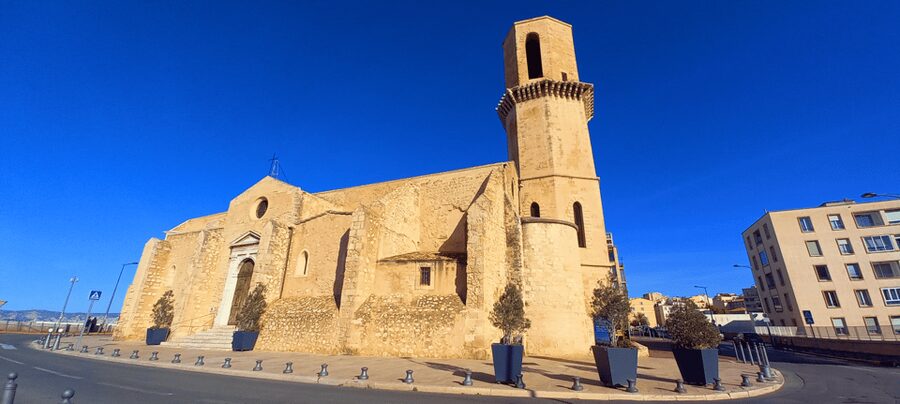
Next comes Abbaye Saint-Victor, one of Marseille’s key religious landmarks. The guided sightseeing portion lasts about 15 minutes, followed by a 20-minute break and scenic time along the way.
Saint-Victor is valuable because it connects the city’s spiritual traditions with its ancient past. Charles places the abbey within the wider story of Marseille rather than treating it as an isolated church. You can also take a breather here, which matters after the uphill and downhill streets of Le Panier and the longer waterfront stretches.
The break is not presented as a meal stop, and food and drinks are not included. Bring your own water and a snack if you need one. This is particularly important in summer, when the sun and stone streets can make a five-kilometer route feel longer.
The tour is not designed for wheelchair users. Even travelers without mobility concerns should wear firm shoes and expect stairs, slopes, and irregular paving in parts of the old city. The route is manageable for a reasonably active walker, but it is not a flat promenade.
The final climb to Palais du Pharo
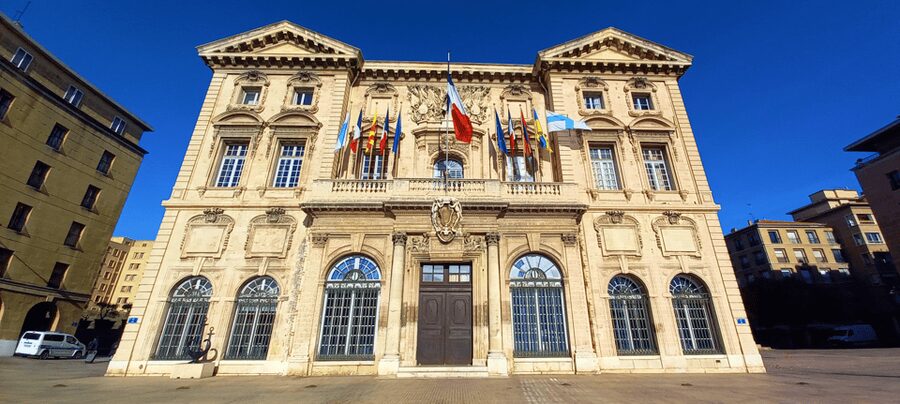
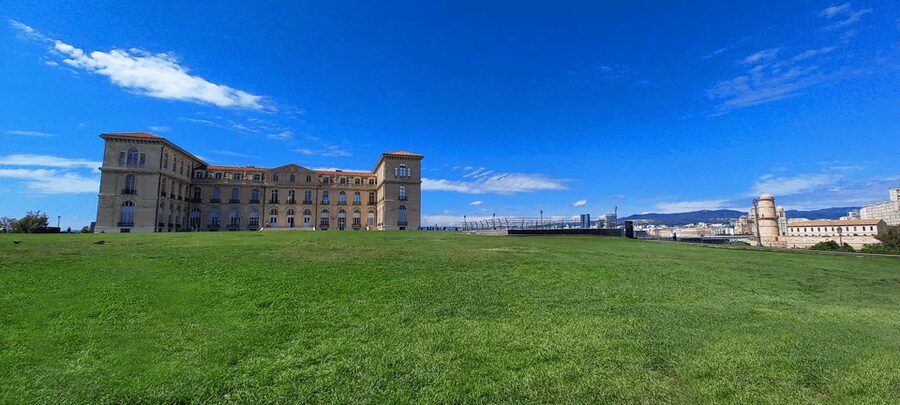
The final major stop is Palais du Pharo, reached after the Old Port and Saint-Victor area. About 30 minutes are set aside here, making it one of the longest stops on the route.
The palace was built in the mid-19th century by Emperor Napoleon III for Empress Eugénie. Its formal architecture contrasts with the narrow lanes of Le Panier and the working waterfront. From the terraces, you can look back toward the harbor and across the Mediterranean, making this a strong place to finish a first orientation tour.
The name Le Pharo refers to both the palace area and the broad setting around it. You get architectural detail, open views, and a final chance to connect the city’s past with its present role as a major Mediterranean port.
The tour offers two possible drop-off points, the Old Port and Palais du Pharo. That is useful because you can continue from either area. If you want to eat near the harbor, return to the Old Port. If you prefer to stay near the final viewpoint, finish at Le Pharo and make your own plans from there.
What makes Charles a strong guide
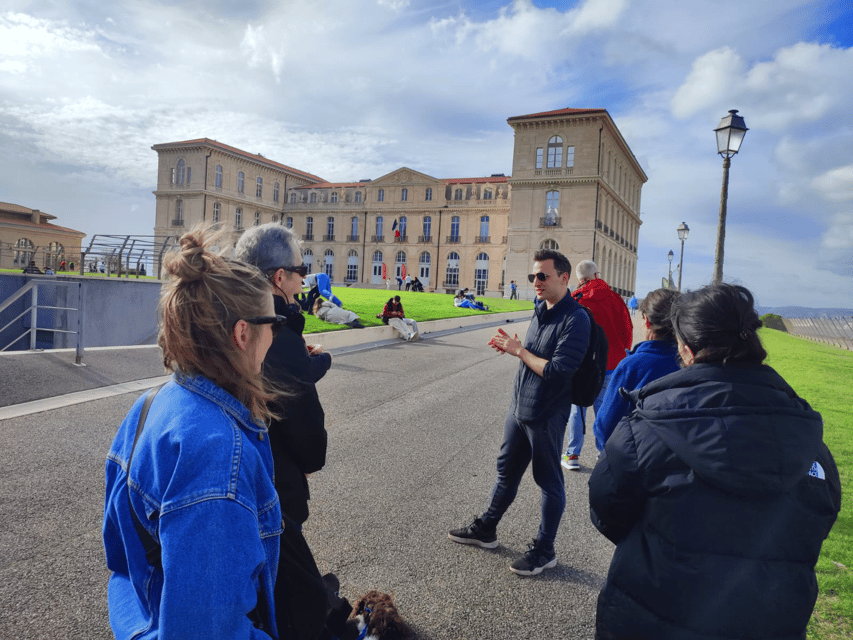
The guide can make or break a history walk, and Charles is clearly the central reason this experience earns such strong marks. His style combines local pride with humor, and he speaks English well enough for detailed questions and conversation. He also leads in French.
A useful feature is his use of diagrams, photographs, and old maps. These visual aids help explain how Marseille developed and what changed over time. They are especially helpful when looking at the harbor, old streets, and wartime events, where a spoken explanation alone can be hard to picture.
Charles also appears to adjust the experience to the people in front of him. Solo participants can ask questions without feeling ignored, while couples and small groups still receive individual attention. In hot weather, he has been known to choose shaded stopping places when possible, a small detail that can make the afternoon much more comfortable.
His recommendations extend beyond the walk. You can ask about museums, restaurants, and other places to see during your stay. Past participants received suggestions for food and local activities, including bouillabaisse restaurants. Treat these as a useful starting point, then check current opening hours and menus yourself.
Is $41 a fair price?
At $41 per person, this is not the cheapest way to see Marseille, but the price is reasonable if you value explanation and a small group. The fee covers the guide and walking tour. Food, drinks, and admission to attractions are not included.
The route lasts 150 minutes and covers major sights that would take effort to connect on your own. You are paying for the route design, historical background, local perspective, and chance to ask questions. You also avoid spending your first hours in Marseille trying to work out how the old quarter, harbor, cathedral, abbey, and palace relate to one another.
The value is strongest if you take the tour early in your stay. You can use Charles’s suggestions to plan later visits, choose a restaurant, or decide which museum deserves your time. If you already know Marseille well and only want to wander at your own speed, the price may feel less worthwhile.
There is one point to keep in mind: the official route is described as about 5 kilometers, while one account of the walk described a longer distance. Exact mileage can vary with the group and route details, so plan for a substantial walk rather than a short stroll.
Who should book this Marseille walk?
I would recommend it to first-time visitors who want a clear introduction to Marseille in one afternoon. It suits people who enjoy history, architecture, local stories, and active sightseeing more than those looking for a relaxed café tour.
It is also a good fit for cruise or short-stay visitors who need a quick orientation. The tour covers the cathedral, oldest quarter, harbor, central avenue, abbey, and Le Pharo without requiring a full day.
Solo visitors should find the small-group setup comfortable, especially since Charles makes room for questions and conversation. Couples and families with older children may also enjoy it, provided everyone can manage the distance and hills.
I would be cautious about booking if you use a wheelchair, have difficulty walking on uneven streets, or dislike a fixed route. Bring water, wear comfortable shoes, and plan around the weather. Marseille’s sun can be intense, and the city’s stone streets offer little shade in some places.
Should you book it?
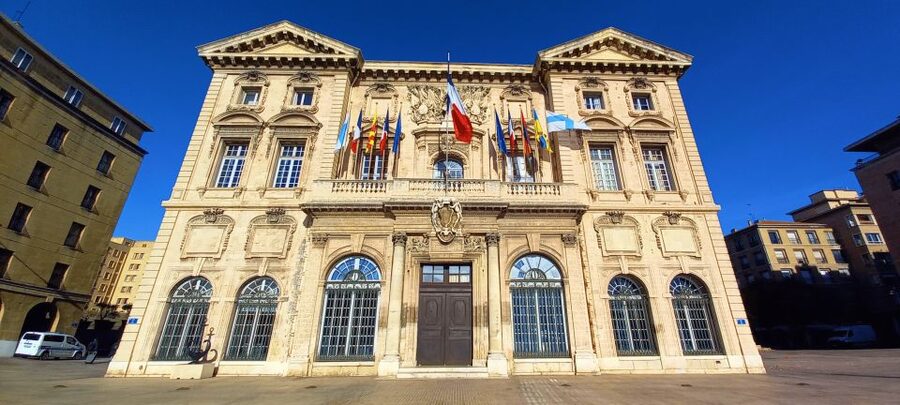
Book this tour if you want a well-rounded first look at Marseille rather than a single monument or food stop. Charles brings together ancient origins, wartime events, religious buildings, street art, harbor life, and sea views in a route that feels thoughtfully connected.
The best reason to choose it is the guide’s personal approach. The small group, bilingual explanations, old images, humor, and practical recommendations add value that a self-guided walk cannot easily match. Skip it only if you prefer total independence, need an accessible route, or want to spend your time inside museums rather than walking between districts.
FAQ
Where does the Marseille walking tour begin?
The tour begins in front of Cathédrale Basilique Sainte-Marie-Majeure, known as La Major Cathedral. The guide wears a white cap.
How long is the tour?
The tour lasts 150 minutes, or two and a half hours.
How far do you walk?
The route covers about 5 kilometers. The walk includes old streets and hillside areas, so comfortable shoes are important.
Which languages does the guide speak?
The live guide speaks French and English.
What is included in the price?
The price includes the guide and walking tour. Food and drinks are not included.
Is the tour suitable for wheelchair users?
No. The tour is not suitable for wheelchair users, and the route includes hills and uneven streets.
Just added around Marseille
- The Urban Hike of Marseille★ 5.0 · 35 reviews
- Rando-Palmée Getaway Around an island★ 4.0 · 54 reviews
- Sunset Lavender Tour in Valensole with pickup from Marseille★ 5.0 · 41 reviews
- Sailing day in the heart of the Calanques★ 4.5 · 61 reviews
- Sormiou Calanques National Park Electric Bike Tour from Marseille★ 5.0 · 60 reviews
- Provence : Aix en Provence, Cassis and Marseille Private Tour★ 4.5 · 53 reviews
- Cassis and Aix en Provence Sightseeing Tour from Marseille★ 4.5 · 132 reviews
- Lavender Small-Group Tour In Valensole from Marseille★ 4.5 · 53 reviews
Walking Tours, compared.

Paris Top Sights Half Day Walking Tour with a Fun Guide
Read our review →
Montmartre Hidden Gems and Scenic Highlights Walking Tour
Read our review →
Montmartre Hill French Gourmet Food and Wine Tasting Walking Tour
Read our review →
Paris Île de la Cité and Notre-Dame Walking Tour With Crypt
Read our review →
Montmartre Cheese, Wine & Pastry Guided Walking Tour
Read our review →
Paris in a Day: Louvre or Orsay, Eiffel Tower, City Walk & Cruise
Read our review →
Montmartre Highlights Walking Tour with a Local Guide
Read our review →
Browse the lists this tour appears in