
Reviewed · MONTMARTRE TOURS
Montmartre Walking Tour with a Local Guide
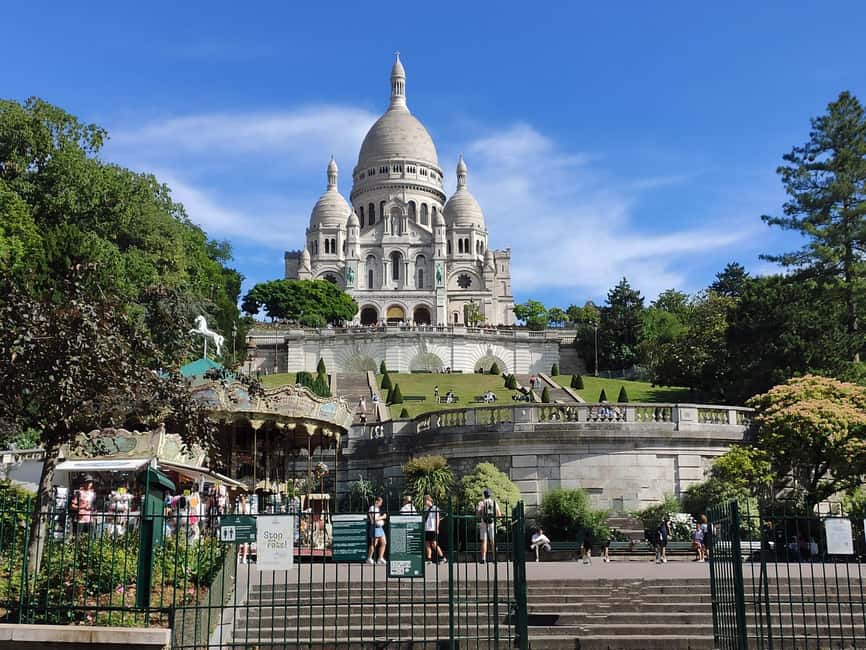
Montmartre is at its best when you get off the main stairways and let someone point out the small details: the artists’ corners, old windmills, painted walls, film locations, and streets tied to Picasso, Van Gogh, Lautrec, and Dalida. This two-hour walk takes you from Place Blanche up to the white-domed Sacré-Cœur, with a local English-speaking guide filling in the stories along the way.
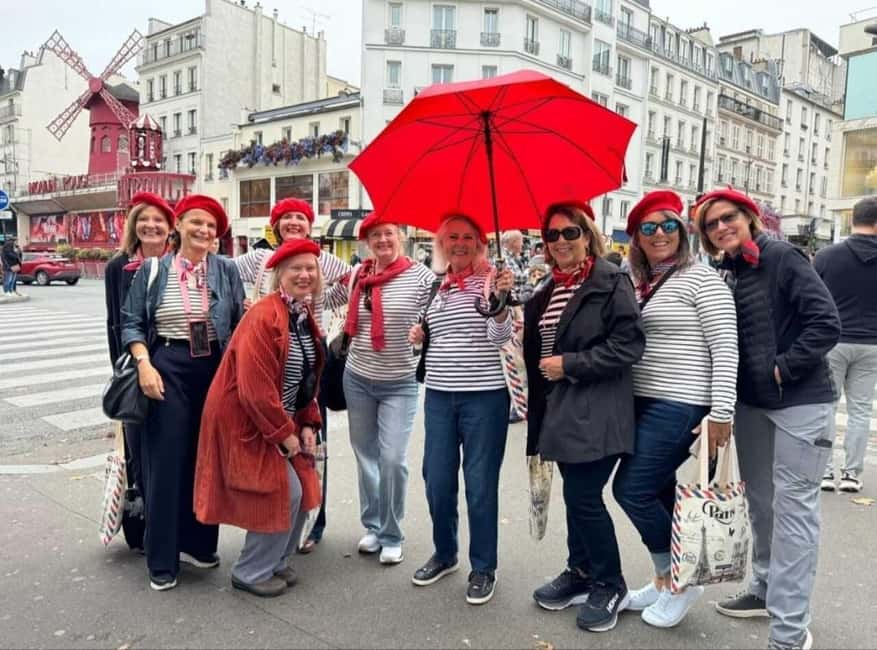
I like the relaxed pace and the fact that the route works its way uphill rather than sending you straight up a long staircase. I also like the small-group feel, often capped at about eight people, and the guide’s habit of taking family photos and sharing practical Paris tips. The main drawback is simple: Montmartre has hills, and the popular sights can feel crowded, especially around Place du Tertre and Sacré-Cœur.
Key points at a glance
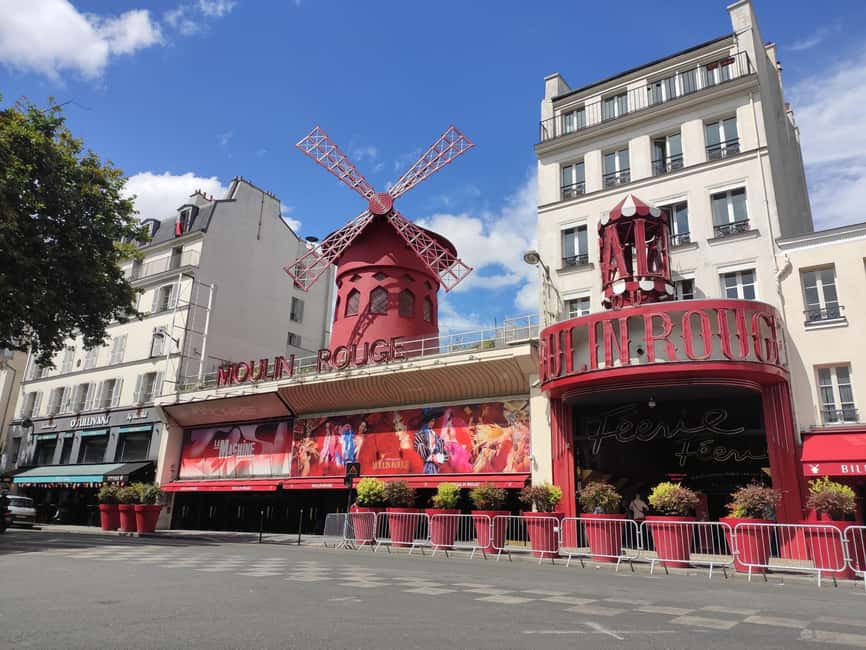
- Start beside Moulin Rouge: Meet near the Blanche Metro station, where the guide carries a green booklet and wears a green badge.
- A story-led route: The walk connects artists, cabaret, street art, cinema, music, and everyday Montmartre life.
- A gentler way uphill: The route uses small inclines and a back approach to Sacré-Cœur instead of relying only on the famous front steps.
- Small groups help: Recent departures have often been limited to around eight people, making questions and photo stops easier.
- Samy is a frequent guide: He is known for clear English, strong local knowledge, patience, safety advice, and a friendly manner.
- Finish with a Paris panorama: From Montmartre’s summit, you can look toward the Eiffel Tower, Notre-Dame, and Montparnasse Tower.
Starting at Place Blanche beside Moulin Rouge
The tour begins near the exit of Blanche Metro station on Line 2, close to Moulin Rouge. This is a handy meeting point if you are already exploring Pigalle, and it gives the walk an immediate sense of place. You are not starting in a quiet residential lane. You begin in one of Paris’s most famous entertainment districts.
Look for the guide with a green booklet and green badge. The activity is conducted in English, and the guide is expected to lead the group on foot for roughly two hours. The exact finish can take longer if the group moves slowly or spends extra time at the stops.
The first stop is Moulin Rouge, usually a short guided visit and photo pause of about 10 minutes. You should not expect a cabaret performance or an inside tour here. The value is the setting and the explanation of how this landmark fits into Montmartre’s nightlife and artistic identity.
From the start, the route mixes famous names with street-level details. That is useful because Montmartre can otherwise become a checklist of pretty streets and crowded viewpoints. A guide gives those streets a reason to matter.
More Walking Tours in Paris
- Paris Top Sights Half Day Walking Tour with a Fun Guide
★ 5.0 · 2,893 reviews - Montmartre Hidden Gems and Scenic Highlights Walking Tour
★ 5.0 · 2,684 reviews - Montmartre Hill French Gourmet Food and Wine Tasting Walking Tour
★ 5.0 · 2,588 reviews
The Wall of Love and Montmartre’s softer side
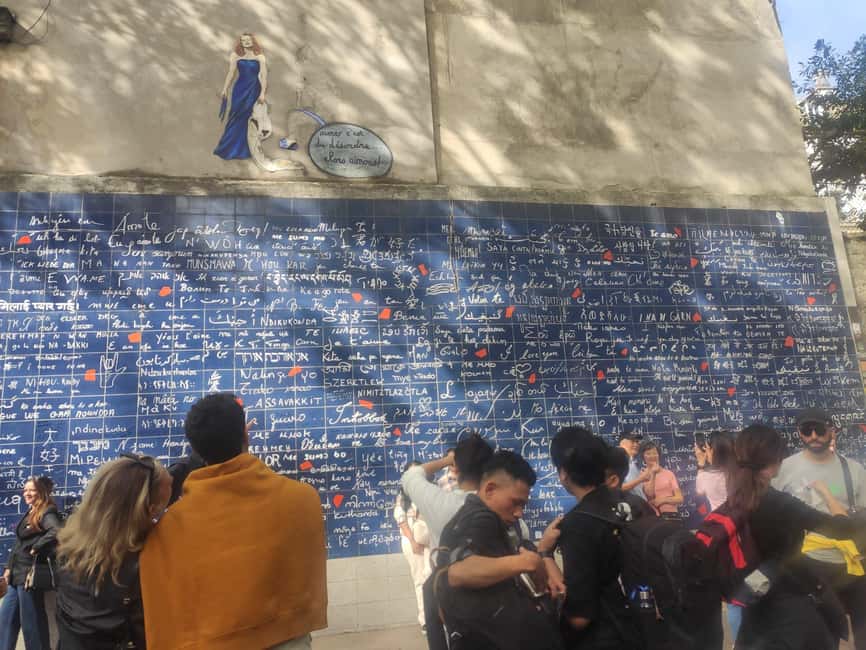
Next comes Le Mur des Je T’aime, or the Wall of Love. This tiled artwork presents the words I love you in many languages, making it an easy photo stop and a welcome change from the district’s darker cabaret and bohemian associations.
The stop lasts around 10 minutes, enough time to look closely, take pictures, and hear the guide explain why the wall became part of modern Montmartre’s sightseeing circuit. It is a popular place, so you may need to wait for a clear angle for your photo.
I like this part of the route because it shows that Montmartre is not only about painters and old nightlife. The neighborhood also trades in romance, pop culture, and small visual surprises. The guide’s role is especially useful here because the artwork is easy to pass without understanding its purpose.
Moulin de la Galette and the artists’ neighborhood
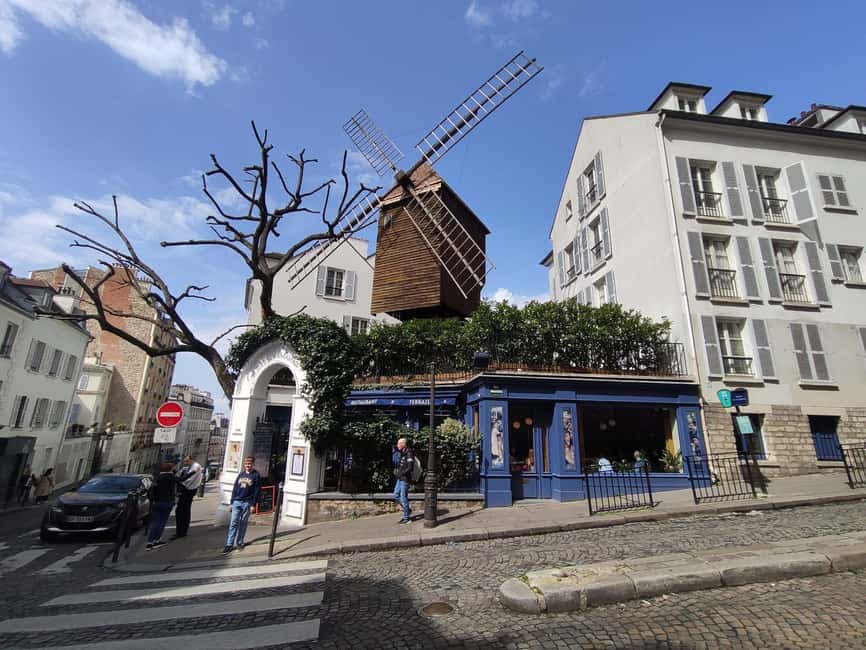
The route then heads toward Moulin de la Galette, one of Montmartre’s best links to its rural past and artistic fame. The area once had windmills and a village character, long before Paris spread around the hill.
This is where the stories about painters become more than a list of famous names. Picasso, Van Gogh, and Toulouse-Lautrec are part of the district’s artistic mythology, and a good guide can connect their lives to the streets you are walking through. The emphasis is on Montmartre as a place where artists lived, worked, met, and helped shape the neighborhood’s image.
The stop is brief, about 10 minutes, so you will not get a full art lecture. That is probably a benefit for most visitors. You get enough context to recognize why the area mattered, then keep moving before the walk becomes too formal.
The pavement can be uneven, and the streets begin to slope more noticeably. Comfortable shoes are not optional here. You should also expect occasional pauses while the guide waits for the group to gather.
Dalida’s statue and La Maison Rose
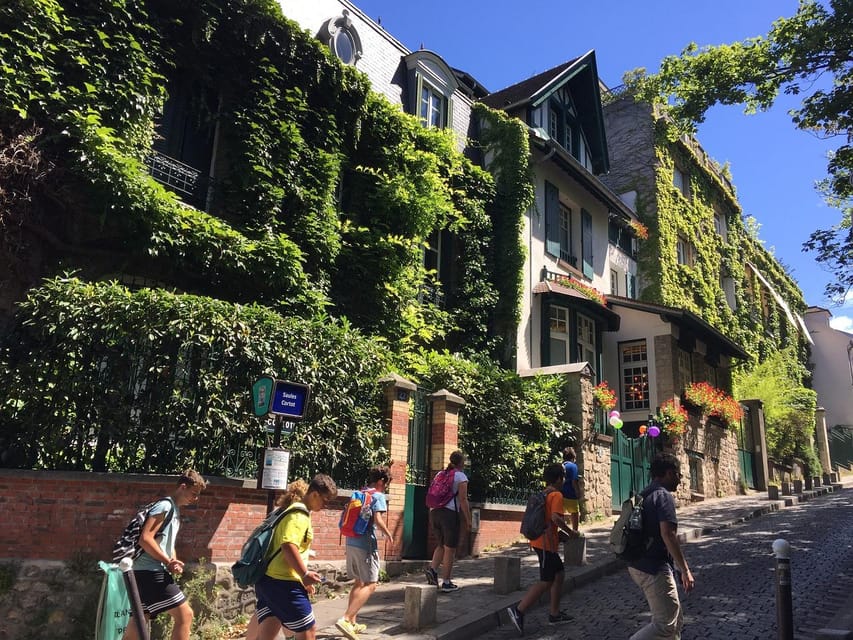
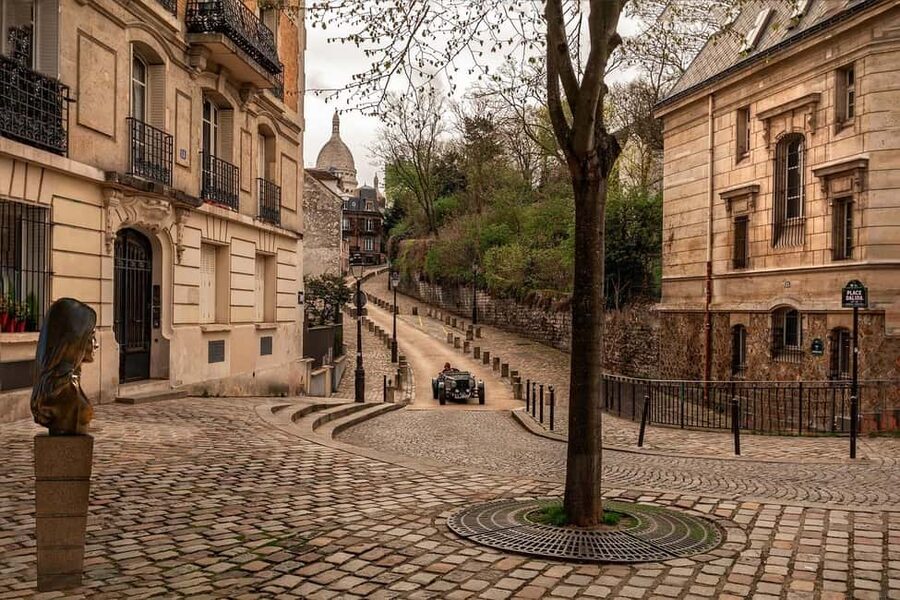
Two of the route’s most appealing stops are Dalida’s statue and La Maison Rose. They offer a more personal view of Montmartre, linking the neighborhood to music, celebrity, cafés, and the visual style that appears on so many Paris postcards.
Dalida was a major French and international singer, and her statue has become a small place of tribute. The guide explains the connection between the performer and Montmartre, while you get a chance to see a less formal landmark than the basilica or Moulin Rouge. It is the sort of stop that is easy to miss if you simply follow the busiest streets.
La Maison Rose is one of the district’s most photographed buildings. Its pink exterior and corner setting make it instantly recognizable, but the stop is more useful when paired with the neighborhood’s wider story. Here, you see how Montmartre’s visual charm has been shaped by cafés, painters, entertainers, and modern photography.
These are photo stops, not long interior visits. Do not book the tour expecting extended time inside every building. The experience is about walking through the district and hearing why each place matters.
More Montmartre walks and Sacre-Coeur visits:
- Paris: Montmartre Cheese, Wine & Pastry Guided Walking Tour
★ 4.8 · 2,255 reviews - Paris: Montmartre Highlights Walking Tour with a Local Guide
★ 4.9 · 1,668 reviews - Paris: Sacré-Coeur and Montmartre Tour with Expert Guide
★ 4.1 · 1,027 reviews - Private Montmartre Food Tour with Wine, Cheese & Pastries
★ 5.0 · 1,027 reviews
Place du Tertre and the working artist tradition
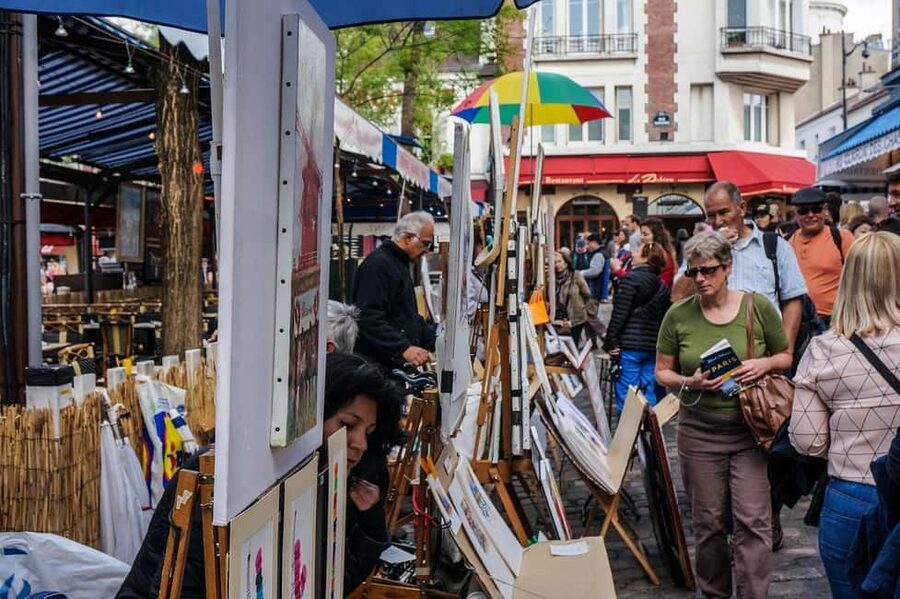
Place du Tertre is the point where Montmartre’s artistic reputation becomes most visible. Painters display their work around the square, and you can watch artists making portraits, sketches, and other pieces.
The square is also one of the busiest points on the route. It can feel lively and crowded, particularly during peak sightseeing hours. Some people love the atmosphere; others find the concentration of souvenir shops and portrait artists less authentic than they expected.
A guide helps you read the scene without pretending it is frozen in the past. The square is part of a living tourist economy, not a preserved artists’ colony untouched by time. That distinction matters. You can enjoy the art stalls while still understanding that modern Montmartre is a mixture of local life, commerce, tourism, and memory.
The scheduled stop is again about 10 minutes, but the guide may allow time to walk around and take pictures. The small group makes it easier to ask where to return later if you want a closer look. If you intend to buy artwork, plan to do that after the tour rather than trying to carry purchases through the remaining uphill route.
Reaching Sacré-Cœur by the quieter approach
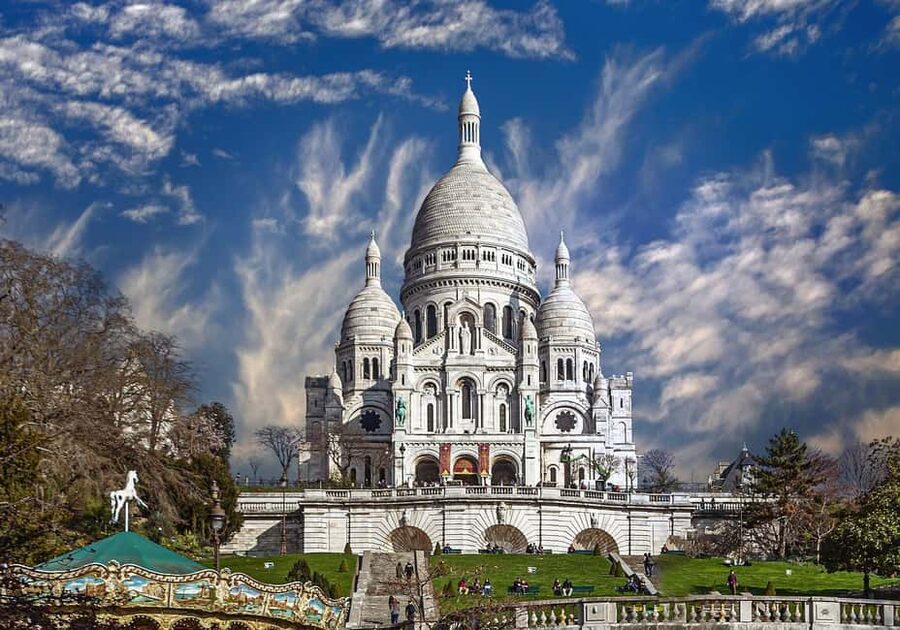
The final climb leads to the Basilica of Sacré-Cœur. The route is designed to reach the basilica from the back way, using smaller inclines rather than making you tackle all the front steps at once. You still need to be comfortable walking uphill, but the pace is usually gentle and includes breaks.
This is one of the tour’s strongest practical choices. Montmartre is not a flat neighborhood, and the direct stair route can be tiring, especially for older family members or anyone traveling with children. Recent groups have included toddlers and older adults, with guides adjusting the pace when needed. That does not make the walk suitable for everyone, but it does make it more manageable for people who can walk independently.
The basilica stop includes the outside and the inside of Sacré-Cœur. Dress and behave respectfully inside, and remember that this is an active religious site as well as a major attraction. The guide can provide context before you enter, then give you time to look around.
The white domes are impressive from close up, but the real reward comes outside. From the hill, Paris spreads below you in a wide panorama. The guide points out landmarks such as the Eiffel Tower, Notre-Dame, and Montparnasse Tower. On a clear day, this view gives you a useful map of the city. You can see how central Paris relates to the hill and begin recognizing the skyline during the rest of your visit.
What the guide adds to the walk
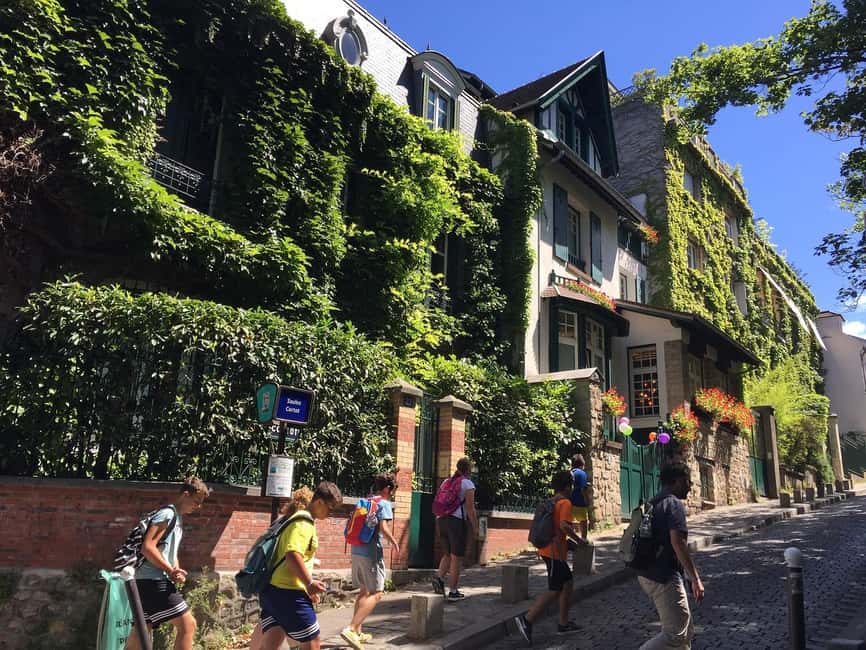
The guide is the difference between this being a pleasant stroll and a useful introduction to Montmartre. Samy is the guide most often named in recent departures, and his approach seems to suit families and first-time visitors. He speaks clear English, answers questions, takes pictures, and adjusts the pace when someone needs more time.
His strongest quality is the range of stories. You hear about painters and musicians, but also about graffiti, filming locations, safety issues, cafés, shops, and practical things to do elsewhere in Paris. The walk can feel almost like a local orientation, not just a set of historical speeches.
Several groups have found the tour lasted longer than the advertised two hours, particularly in rainy weather or when the group needed a slower pace. That can be welcome, but you should not build a tightly timed reservation immediately afterward. A two-hour estimate is realistic, while the actual finish may vary with group size, questions, weather, and walking speed.
The tour is also useful for families. Children may not care about every artist’s name, but the changing scenery, colorful buildings, famous film locations, and photo stops keep the walk varied. The guide has adjusted explanations and pace for children in past groups.
Price, pace, and overall value at $27
At $27 per person, this is a good-value introduction to Montmartre if you want context rather than simply a map. You cover several major sights, get a guide for about two hours, and finish at one of Paris’s best viewpoints. A private guide would cost much more, while wandering alone means doing the research yourself and probably missing the smaller details.
The value is strongest for a first visit. You get your bearings, learn which streets and landmarks deserve a second look, and receive suggestions for what to do elsewhere in Paris. The tour can also save energy because the guide handles the route and the uphill sequence.
There are limits. Food and drinks are not included, and this is not a tasting tour. You also will not have long free periods at each stop. If you want to sit at a café, shop for art, enter every church, or take posed photos without a schedule, explore Montmartre independently after the guided walk.
The tour runs in rain or shine. Bring comfortable shoes and weather protection. Rain can make the cobbles slippery and reduce the quality of the panorama, but the route still covers its main stops. The group may move more slowly in poor weather.
Who should book this Montmartre walk
I would choose this tour for a first or second visit to Paris, especially if you want Montmartre explained rather than merely photographed. It suits couples, families with older children, and small groups who prefer a personal guide to a large crowd.
It is also a good choice if you are interested in art, music, cinema, local stories, and the way a neighborhood changes over time. The route offers enough of each subject without becoming a specialist lecture.
You should think twice if hills are difficult for you or if you use a wheelchair. The activity is not suitable for wheelchair users or people with mobility impairments, and the route includes moderate climbs. It is also not the best fit if your schedule allows no flexibility beyond exactly two hours.
Meet near Blanche Metro station, close to Moulin Rouge, and allow a little extra time to find the guide. Cancellation is free up to 24 hours before the activity, and you can reserve now and pay later, which helps if your Paris plans are still shifting.
Should you book it?
Book this Montmartre walking tour if you want a friendly, story-filled introduction to the hill, with a manageable route, a small group, and a strong finish at Sacré-Cœur. The combination of artists, cabaret, Dalida, La Maison Rose, Place du Tertre, and the city view gives you much more than a quick basilica visit.
Skip it if you want a flat walk, a food-focused outing, or several hours of independent browsing. For most visitors who can handle the climb, $27 is a fair price for the orientation, local stories, photos, and practical advice you receive.
FAQ
Where does the Montmartre walking tour start?
Meet near the exit of Blanche Metro station on Line 2, close to Moulin Rouge. The guide can be identified by a green booklet and green badge.
Where does the tour finish?
The walk finishes at the Basilica of Sacré-Cœur, also called the Basilica of the Sacred Heart of Paris.
How long does the tour take?
The planned duration is two hours. It can take longer depending on the group’s pace, the number of questions, weather, and how much time participants need at each stop.
Is the tour conducted in English?
Yes. The tour has a live English-speaking guide.
Does the tour enter Sacré-Cœur?
Yes. The experience includes time to explore both the outside and inside of the Basilica of Sacré-Cœur.
Is the walking tour suitable for wheelchair users?
No. The tour is not suitable for wheelchair users or people with mobility impairments. You should also be comfortable walking uphill on parts of the route.
Just added around Paris
- Paris: Croissant Baking Class with a Chef★ 5.0 · 201 reviews
- Cooking Class with a Parisian Chef★ 5.0 · 46 reviews
- Cocktails lessons in Speakeasy★ 4.5 · 72 reviews
- Paris: Choux Pastry and Chocolate Éclair Making Class★ 4.9 · 50 reviews
- Paris: Classic Sites Tour by Vintage Citroen 2CV★ 4.6 · 189 reviews
- Paris: Cheese and Wine Class in a 17th Century Cellar★ 4.8 · 91 reviews
- Paris: Romantic Photoshoot for Couples★ 4.9 · 131 reviews
- Paris: Bread and Croissant-Making Class★ 4.8 · 206 reviews
Montmartre Tours, compared.
Montmartre Hidden Gems and Scenic Highlights Walking Tour
Read our review →
Montmartre Hill French Gourmet Food and Wine Tasting Walking Tour
Read our review →
Montmartre Cheese, Wine & Pastry Guided Walking Tour
Read our review →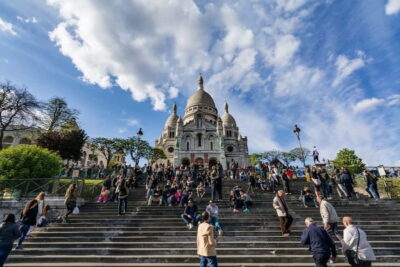
Montmartre Highlights Walking Tour with a Local Guide
Read our review →
Sacré-Coeur and Montmartre Tour with Expert Guide
Read our review →
Private Montmartre Food Tour with Wine, Cheese & Pastries
Read our review →
Paris Montmartre Food Tour – A Full French Meal by Do Eat Better
Read our review →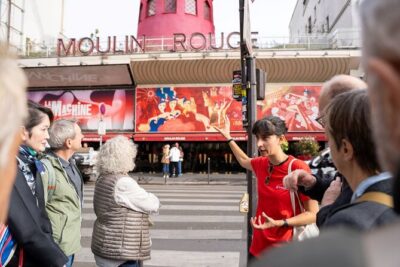
Hidden Montmartre: Paris’ Secret Streets Walking Tour
Read our review →Browse the lists this tour appears in