
Reviewed · OCCITANIE TOURS
Narbonne: visit the Archbishops’ Palace and Cathedral
Narbonne’s Archbishops’ Palace is the heart of this walk, but the real pleasure is seeing how Roman roads, medieval power, church architecture, markets, and daily life still meet in a compact part of town. You move from the ancient Via Domitia to a palace courtyard, then through a Gothic cathedral and onward to the canal-side Promenade des Barques.
I like the clear two-hour route and the chance to see the palace interiors, cloister, gardens, cathedral, and Pont des Marchands without arranging separate visits. I also like that guide Marion Quart puts plenty of weight on explanation, humor, and local stories rather than simply pointing at buildings.
The main consideration is scope. At $23 per person, this is a strong introduction, but it does not include the Donjon, the town’s art collection, or the Treasure Room. You will need an additional €12 admission ticket for those areas, and the tour is listed in French and Sangro, so check the language before booking.
Key points to know before you book
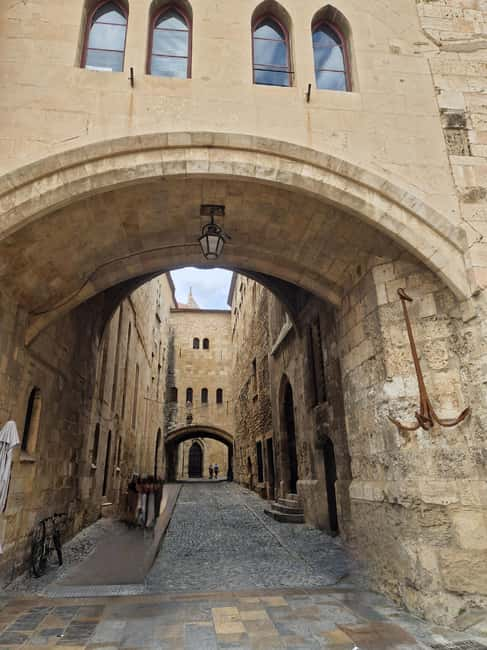
- The Palace is the tour’s centerpiece: See its exterior, main courtyard, Grand Staircase, Passage de l’Ancre, and archbishop’s garden.
- The cathedral visit goes beyond a quick look: Expect the cloister, gargoyles, vaulted ceiling, monumental organ, and historic altarpieces.
- The route connects several eras: The Via Domitia, medieval palace, cathedral, market, and Pont des Marchands form one readable story.
- Marion Quart leads the experience: Her style is described as warm, enthusiastic, humorous, and easy to follow.
- The finish at Les Halles is useful: You end near Narbonne’s main food market, a good place to continue exploring on your own.
- Extra sights cost more: The Donjon, museum collection, and Treasure Room are outside the $23 tour price.
Why Narbonne’s center works so well on foot
Narbonne is unusually easy to understand through a short walking route. The sights are not scattered across the city. Instead, the walk follows a tight historic core where each stop adds another layer.
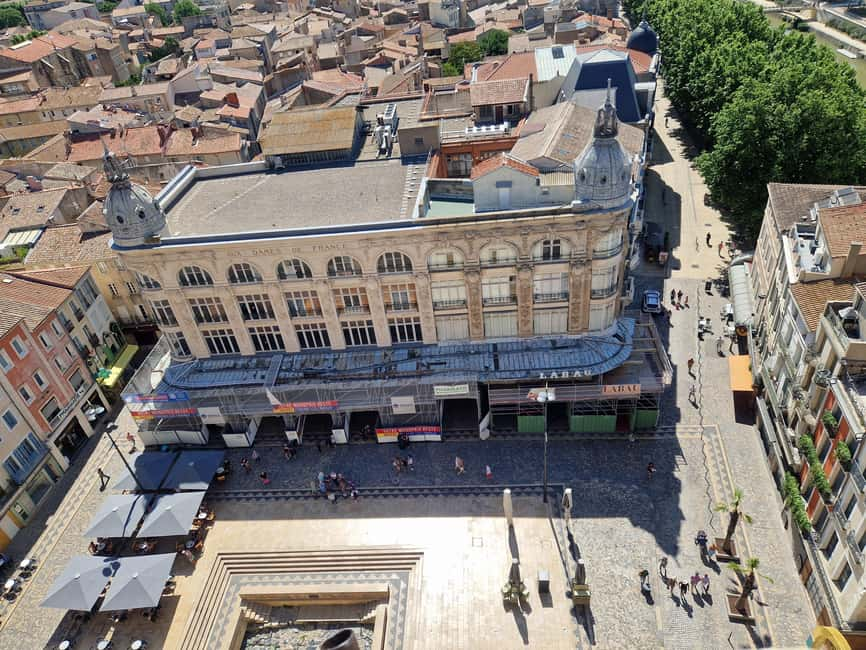
You begin near Les Halles, a practical meeting point rather than a grand monument. From there, the route heads toward the Place de l’Hôtel de Ville, where the city’s ancient and medieval stories come together. The Via Domitia is especially important because it gives you a physical reminder that Narbonne was shaped by movement long before modern roads and railways.
I like this kind of beginning. You are not asked to memorize a long timeline before seeing anything. You encounter the street and buildings first, then learn why they matter. The guide can connect the Roman road to the later palace and cathedral without making the city feel like a string of unrelated stops.
The private-group format also matters. You are not joining a large crowd with a flag or trying to hear a guide from the back of a group. The exact group size is not stated, but the experience is described as private, which should make it easier to ask questions and keep the pace comfortable.
A few more Occitanie half-days worth comparing
- Saw2 vs Squid Game – Escape Game Montpellier
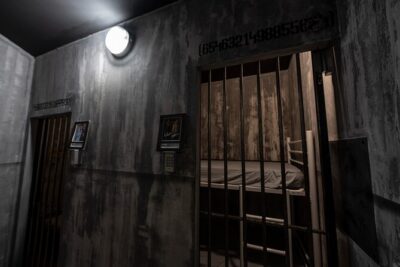
★ 5.0 · 752 reviews - The “Break in Prison” room
★ 5.0 · 609 reviews - Prison Break – Escape game in Montpellier
★ 5.0 · 583 reviews
Starting at Les Halles and the Via Domitia
The meeting point is in front of the main entrance to Les Halles de Narbonne, near the war memorial. Look for a guide wearing a green neckerchief and carrying a professional card.
This location gives you an immediate sense of present-day Narbonne. Les Halles is the city’s emblematic meeting place, and ending there makes the market more than a convenient landmark. It becomes part of the story of how people use the city today.
The route also includes the Via Domitia. This ancient road is a small but powerful stop because it helps you picture Narbonne as a place built around travel, trade, and contact between regions. You do not need a full Roman history lesson to appreciate it. A good explanation here should help you see why this particular patch of ground mattered before the palace and cathedral took shape.
The exact amount of time spent at each stop is not fixed, so the guide may adjust the pace. If Roman remains are your main interest, ask Marion to give the Via Domitia extra attention early in the walk.
Reading the façade of the Archbishops’ Palace
The former Palais des Archevêques, or Archbishops’ Palace, is the main architectural focus. The first look comes from the Place de l’Hôtel de Ville, where the façade offers clues about the power once held by Narbonne’s archbishops.
This is where a guide adds real value. A façade can look impressive while remaining silent to anyone who does not know what to notice. Marion’s role is to explain how the building’s details reflect its religious and civic importance, helping you read the exterior instead of simply photographing it.
You then enter the main courtyard and see the Grand Staircase. Courtyards are often the best places to understand large historic buildings because they show how people moved through them. The staircase gives the palace a sense of ceremony, while the interior visit lets you get beyond the public face of the building.
The Passage de l’Ancre is also included. It is one of the smaller details that can make this tour more rewarding than a basic cathedral visit. You get a sense of how the palace complex was connected and used, not just how it looks from the square.
Crossing the cloister beneath the gargoyles
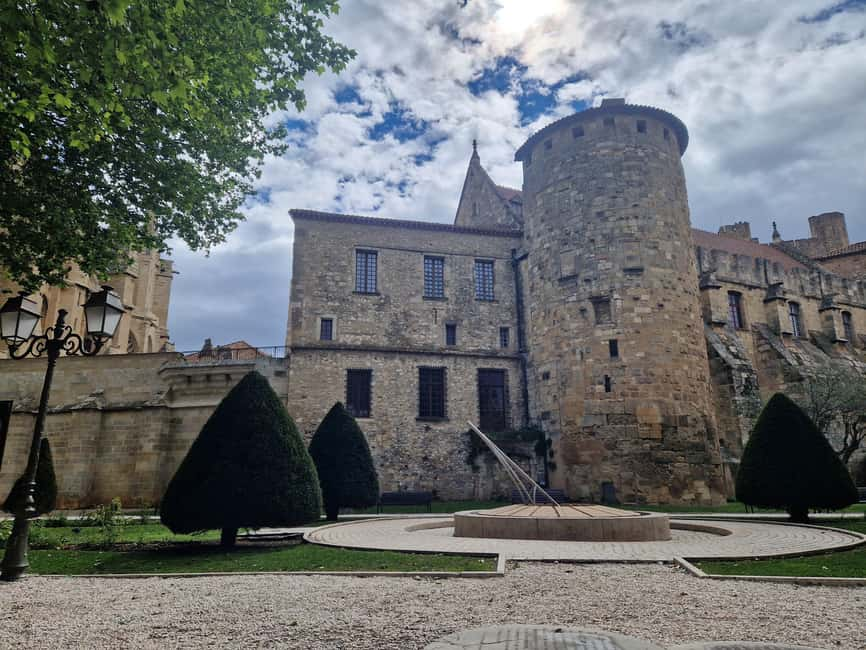
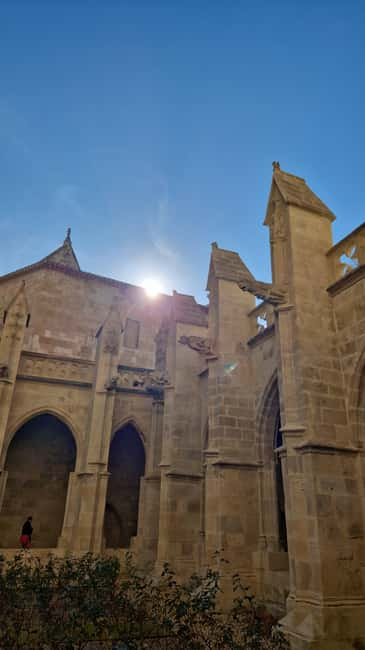
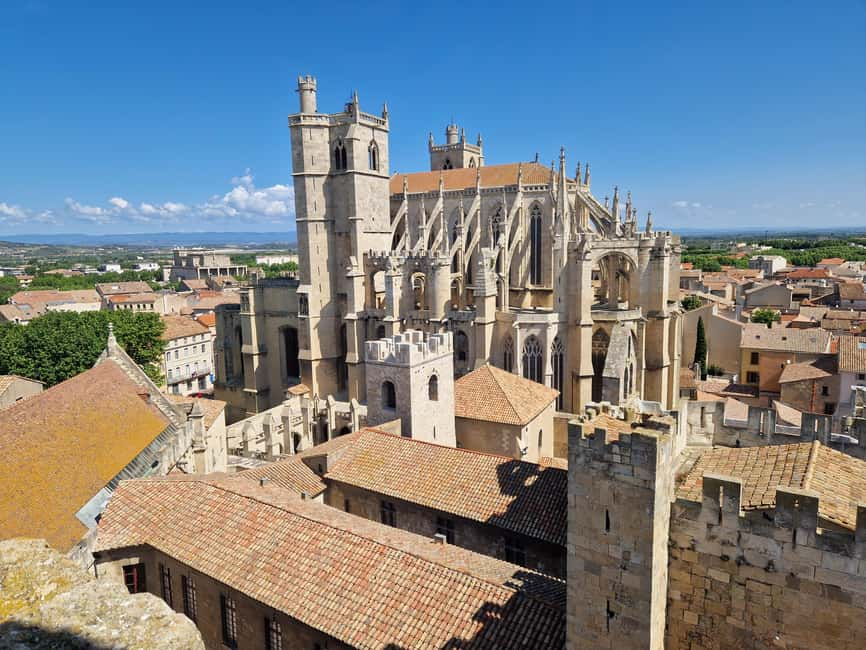
From the palace, the route continues to Saint-Juste and Saint-Pasteur Cathedral. The crossing through the cloister is one of the most atmospheric parts of the walk. Gargoyles tower above you, adding a little medieval drama without requiring a theatrical presentation.
The cloister also provides a slower transition between palace and cathedral. You move from the world of archbishops and civic power into the religious space itself. I like that the route does not treat the cathedral as an isolated monument. The surrounding architecture helps explain its place in the larger complex.
The tour includes both the interior and exterior of the cathedral. That balance is useful. Outside, you can take in the Gothic structure and the cloister details. Inside, the focus shifts to scale, decoration, and the objects that give the building its character.
The cathedral is known for the height of its vaulted ceiling. Look up as soon as you enter, then give your eyes time to adjust to the proportions. A two-hour tour cannot cover every detail, but this pause should help you understand why the building feels so imposing.
Same trip, a completely different kind of day:
- Toulouse: Carcassonne Day Trip by Coach with Audioguide
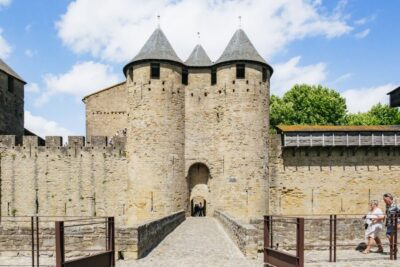
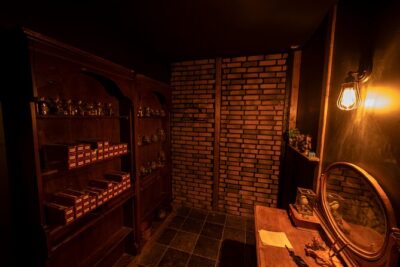
★ 4.4 · 580 reviews - School of Magic – Escape game Montpellier
★ 4.5 · 536 reviews - Toulouse Food & History Tour with a Chef (in English)
★ 5.0 · 503 reviews - Toulouse: Albi and Cordes/Ciel Day Trip with Audio Guides
★ 4.5 · 486 reviews
What to look for inside the cathedral
Several specific features are included in the visit:
- The monumental organ: Its size makes it one of the first objects to seek out inside.
- The 17th-century altarpiece: This adds a later layer to a building mainly associated with Gothic architecture.
- The 14th-century sculpted altarpiece: It is described as a picture book, with scenes and details that reward close looking.
- The vaulted ceiling: The height is one of the cathedral’s defining features.
- The exterior and cloister: These keep the visit from becoming an indoor-only art stop.
I appreciate this mix of architecture, music, sculpture, and religious art. You are not asked to admire one empty space and move on. Each object gives you another way to understand the cathedral.
The phrase picture book is a useful way to approach the sculpted altarpiece. Rather than trying to absorb it all at once, look for individual scenes and figures. Your guide can help explain what you are seeing, especially if you are not familiar with medieval religious art.
There is one practical limitation. The cathedral may be the part of the tour where you want the most time, but the route still has several outdoor stops and a final walk to Les Halles. If church interiors are your priority, tell Marion at the beginning so you can use the time well.
The archbishop’s garden and the palace’s quieter side
The archbishop’s garden is included, offering a change from grand façades, stone vaults, and civic squares. The available details do not specify its size or planting, so I would treat it as a peaceful part of the palace complex rather than expect a formal garden tour.
This stop matters because historic power is not only expressed through monumental buildings. Gardens provided space away from official rooms and public ceremonies. Even a short visit can make the palace feel more like a lived-in complex.
The tour includes the palace’s exterior and interior courtyards, so you get several views of the site rather than one walk through a single room. That variety helps justify the visit for people who want more than a quick photograph of the front façade.
The Promenade des Barques, Pont des Marchands, and Les Halles
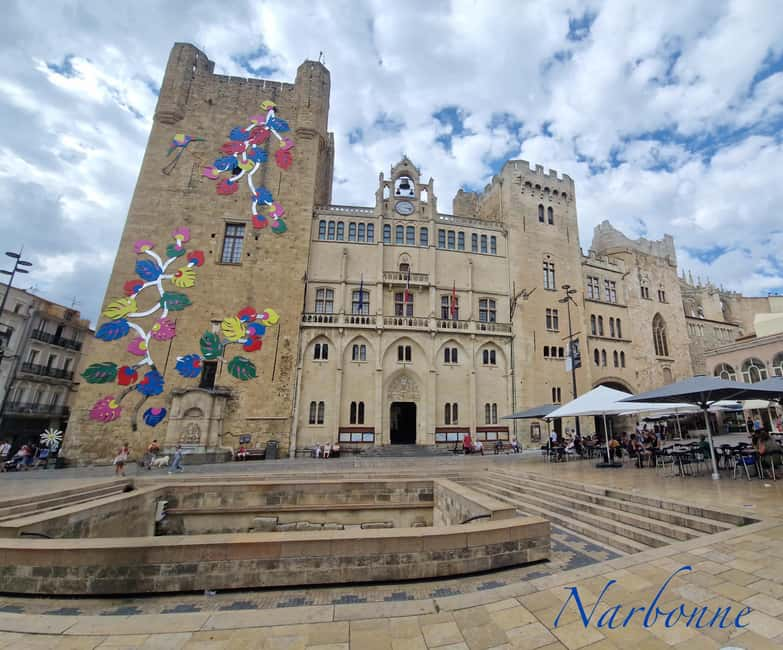
The final section leads along the Promenade des Barques toward the Halles, with the Pont des Marchands included along the way. This is a welcome change of pace after the palace and cathedral.
The Pont des Marchands is one of Narbonne’s distinctive city sights. Its inclusion gives the route another type of architecture and another reminder that the city developed around movement and commerce. After Roman roads, archiepiscopal power, and religious building, you finish with a place tied more closely to everyday urban life.
Ending at Les Halles is a practical choice. You can browse the market after the tour, stop for food, or use the area as a base for further walking. The tour does not promise a tasting or meal, so plan to explore the market on your own after the guide says goodbye.
I especially like this ending because it keeps the experience connected to present-day Narbonne. You are not deposited in a remote monument parking area. You finish in a place where locals meet and shop, with easy options for continuing your afternoon.
Marion Quart’s guiding style
The strongest praise attached to this experience centers on Marion Quart. Her approach is described as passionate, engaging, professional, and easy to follow. Several comments focus on her ability to explain history with humor and simplicity, without making the two hours feel like a lecture.
That combination is important in Narbonne. The city’s past covers several periods, and a guide can easily bury you under dates and names. Marion’s reported style is to give information in manageable pieces, using enthusiasm and clear explanations to keep the route moving.
A particularly useful detail is that she can make the city feel like a journey through time. That is exactly what this itinerary needs. The Via Domitia, palace, cathedral, bridge, and market do not automatically form a story. The guide’s job is to show how they fit together.
The language information needs careful attention. The activity is listed with live guidance in French and Sangro, and some content is shown in its original language. If you need a specific language, confirm it before paying. Do not assume that the listing’s wording guarantees English or another language.
Is $23 good value for two hours?
At $23 per person, I consider this a good-value introduction to central Narbonne, especially because the tour includes several places rather than one admission-only sight. You receive a guided route through the Via Domitia, palace, Passage de l’Ancre, cloister, cathedral, archbishop’s garden, Promenade des Barques, Pont des Marchands, and Les Halles.
The value is strongest if you want context. You can walk past many of these places for free, but you may not understand what connects them or which details deserve your attention. The guide turns a series of buildings into a readable route.
The price is less attractive if you mainly want access to the Donjon, museum collection, or Treasure Room. Those areas are not included, and an additional €12 admission ticket is needed for them. If those interiors are your priority, budget for the extra charge and allow enough time to see them separately.
The tour lasts two hours, which is long enough for a solid introduction but not long enough for every room and object. Think of it as a focused orientation to Narbonne’s historic center, not a full-day study of the palace and cathedral.
Who will enjoy this walk most?
I would choose this experience if you want:
- A guided first look at Narbonne rather than a self-guided route
- Architecture from Roman, medieval, and later periods
- A private group setting
- A compact two-hour activity
- A guide who explains history with warmth and humor
- A finish near a food market and central walking area
- A wheelchair-accessible option
It should suit history fans, first-time visitors, and anyone who likes seeing how a city’s major sights connect. The route also works well for people who prefer a measured walk with frequent points of interest instead of a long excursion outside town.
I would pause before booking if you want a tour in English, since the listed languages are French and Sangro. I would also pause if your main goal is a deep look at the museum collection, Donjon, or Treasure Room, since those require a separate €12 ticket.
The free-cancellation policy gives you some flexibility, with cancellation up to 24 hours before the activity for a full refund. You can also reserve now and pay later. The activity is wheelchair accessible, though the supplied details do not explain the access arrangements at every individual building, so ask if you need specific information.
Should you book the Narbonne palace and cathedral tour?
Book it if you want the main story of Narbonne in two focused hours. The route brings together the Via Domitia, Archbishops’ Palace, cloister, cathedral, bridge, promenade, and market, while Marion Quart adds the explanation that makes the stops connect.
The best reason to book is the balance: important architecture, smaller details such as the Passage de l’Ancre and gargoyles, and a useful ending at Les Halles. Just confirm the guide language and remember that the Donjon, museum collection, and Treasure Room cost extra.
FAQ
How long does the Narbonne tour last?
The tour lasts two hours.
What is the price per person?
The listed price is $23 per person.
Where is the meeting point?
Meet in front of the main entrance to Les Halles de Narbonne, near the war memorial.
How will I recognize the guide?
The guide will wear a green neckerchief and have a professional card.
Who leads the experience?
The experience provider is Marion Quart, and Marion is identified as the guide in the tour information.
Which languages are available?
The listed languages are French and Sangro. Some content is shown in its original language.
Is the tour wheelchair accessible?
Yes, the activity is listed as wheelchair accessible.
Are the Donjon, museum, and Treasure Room included?
No. Admission to the Donjon, the town’s art collection, and the Treasure Room is not included. These areas are available with an additional €12 admission ticket.
Can I cancel the booking?
Yes. You can cancel up to 24 hours in advance for a full refund. You can also reserve now and pay later.
Just added around Occitanie
- The force to escape – Escape game in Montpellier★ 4.5 · 84 reviews
- Legendary Montpellier, flexible legends and storytelling tour★ 5.0 · 54 reviews
- Private Discovery of Montpellier by Bike-Taxi★ 5.0 · 83 reviews
- Escape Game Session in Montpellier★ 5.0 · 33 reviews
- Blind Test Room & karaoke Montpellier★ 5.0 · 48 reviews
- Discovery of the Grands Sites de l’Hérault from Montpellier★ 5.0 · 77 reviews
- Private guided tours of Lourdes / Walking tour★ 5.0 · 56 reviews
- Half-day sailing on the Gave de Pau★ 5.0 · 180 reviews
Occitanie Tours, compared.

Toulouse Food & History Tour with a Chef (in English)
Read our review →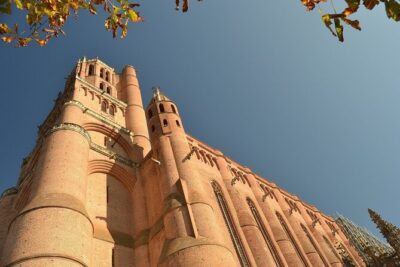
Albi and Cordes/Ciel Day Trip with Audio Guides
Read our review →

Toulouse Victor Hugo Market Small Group Tasting Tour
Read our review →Browse the lists this tour appears in