
Reviewed · D-DAY BEACHES TOURS
Normandy D-Day Sites & Cemetery Day Trip from Paris with Lunch
Normandy’s D-Day sites are powerful because the history is never far away. You walk on Utah Beach, look across Omaha Beach, and see the American Cemetery’s rows of white markers above the sea. This tour packs those places into one long day from Paris, with the guide telling the story as you travel.
I especially like the mix of battlefield visits and quiet remembrance. Utah Beach gives you museum displays and personal letters, while Pointe du Hoc and Omaha Beach put you outdoors where the fighting happened. I also like the pre-booked lunch, since it saves you from hunting for food in small coastal towns.
The tradeoff is time. You may spend three to four hours each way on the coach, leaving only short visits at some sites. This is a strong overview for a first visit, not a slow, detailed exploration of Normandy.
Key points to know before booking
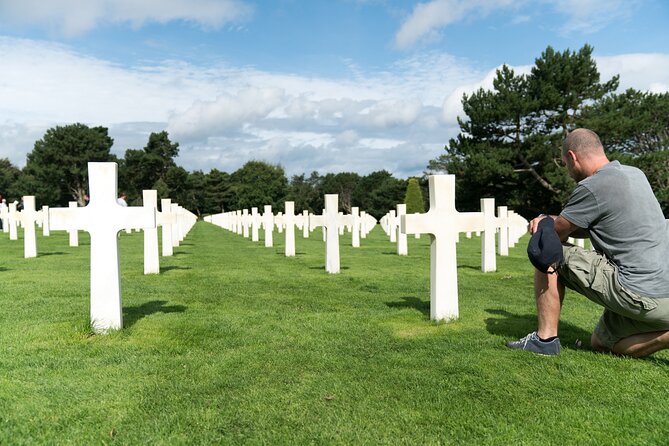
- The American Cemetery is the emotional center: You get time for the memorial, chapel, reflecting pool, and rows of graves overlooking Omaha Beach.
- Pointe du Hoc still feels like a battlefield: German bunkers and bomb craters remain visible across the rough grass and cliffs.
- Utah Beach includes a museum visit: The museum occupies a former German bunker and displays an original B-26 aircraft and soldiers’ letters.
- The day begins early and ends late: Departure is at 7:00 a.m., and the full outing lasts about 14 hours.
- Guides make a major difference: Maja, John, Raymond, Sam, and Thelma have been praised for clear storytelling and strong command of the subject.
- Lunch is convenient but not the main attraction: The two-course meal and Norman cider are included, but food quality and service can vary.
Why this Normandy day trip works from Paris

If you have only one day for Normandy, this trip removes a difficult planning problem. The D-Day beaches are spread across the coast, and reaching several of them by public transport in one day would be hard. Here, you board an air-conditioned coach in Paris, listen to the background story on the way, and let someone else handle the route.
The meeting point is at Église Notre-Dame de Compassion on Place du Général Kœnig in the 17th arrondissement. You need to be there for the 7:00 a.m. departure, and hotel pickup is not included. The tour finishes at Place de la Porte Maillot, so plan your evening from there rather than assuming you will return to the exact starting point.
The drive takes a large part of the day. Depending on traffic and the route, expect roughly three to four hours each way. That sounds daunting, but the guide uses the journey to explain the Allied preparations, the German defenses, and the events of June 6, 1944. A good guide turns the coach ride into the opening chapter rather than dead time.
The group can reach up to 50 people. That makes this an easy option for solo visitors and couples, but it also means you must stay aware of meeting times and follow instructions at each stop. The schedule works because everyone returns to the coach promptly.
More Day Trips in Normandy
- Day Trip to Mont-Saint-Michel from Paris
★ 4.5 · 4,876 reviews - Normandy D-Day Small-Group Day Trip with Omaha Beach, Cemetery & Cider Tasting
★ 5.0 · 2,786 reviews - Mont Saint Michel Day Trip from Paris with English Speaking Guide
★ 4.5 · 2,750 reviews
Utah Beach Museum brings the invasion down to human scale
The first major stop is the Utah Beach Museum, located in an old German bunker beside the landing beach. You get about 45 minutes inside, with admission included.
The museum helps explain the size of the operation through equipment, photographs, and displays. An original B-26 aircraft gives you a sense of the machinery involved, while soldiers’ letters bring the story back to individual people. That contrast matters. The invasion was a huge military operation, but it was carried out by young men facing fear, confusion, and brutal uncertainty.
The museum visit is guided as part of the day, so you do not have to work out the displays alone. Guides such as Maja, John, and Sam have been singled out for their storytelling, and that personal delivery can make a major difference in a place where dates and military terms quickly blur together.
Forty-five minutes is enough for an introduction, but not enough for a careful look at every display. If you are a serious military-history student, you may want more time here. You should treat this stop as a sharp orientation to Utah Beach, not a full museum study.
Utah Beach shows why the landing succeeded
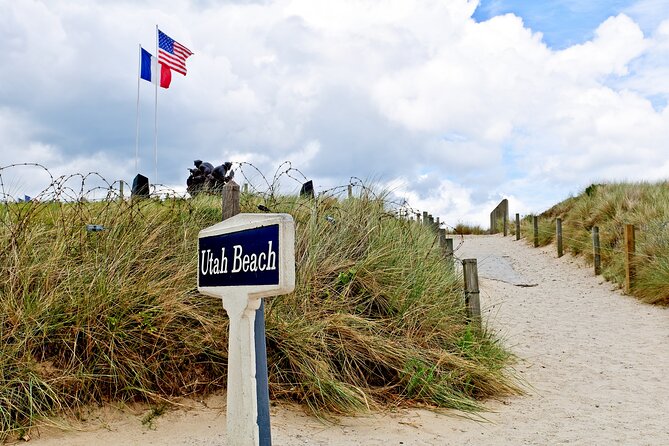
After the museum, you spend about 30 minutes at Utah Beach itself. It was the westernmost of the five main D-Day landing areas, and American forces met less resistance here than at Omaha Beach.
The beach is broad and open. That physical scale helps you picture the problem facing the troops: men, vehicles, supplies, and landing craft had to move from the water inland under fire. The calm appearance today can make the events feel distant, which is exactly why standing on the sand matters.
You get free time to look toward the water, listen to the guide, and consider the difference between the beach as it appears now and the confusion of the invasion. Wear shoes that can handle sand and uneven ground, and dress for wind and changing coastal weather. The physical demands are moderate, but you will be on your feet several times during the day.
The combined museum and beach visit is one place where the schedule can feel tight. If Utah Beach is your main interest, you may wish for more than the total time allowed. Still, the stop gives you both context and a real sense of place before the route moves east toward the more dramatic battlefield sites.
Lunch at L Estran keeps the schedule moving
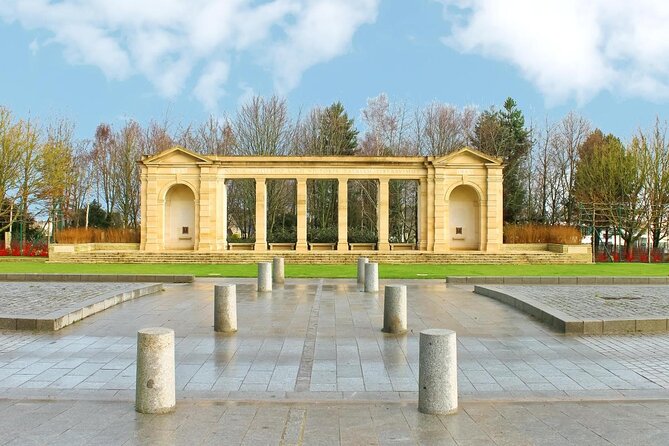
Lunch is arranged in advance at L Estran, a port-town restaurant. The meal includes two courses and a glass of Norman cider. Extra drinks are not included.
There is a practical reason to accept a set lunch on this kind of day. Normandy’s coastal towns have limited dining choices, and a group of up to 50 people cannot simply wander into the first restaurant it sees. A reserved table keeps the coach schedule intact and gives you a proper break after the morning sites.
The meal is also a chance to see a little of the coastal setting rather than eating on the bus. That said, lunch receives the most mixed response in the supplied feedback. Some people enjoyed the setting, while others found the food cold, bland, or poorly handled. One particularly serious complaint involved a family struggling to find seats and leaving without eating.
I would not book this tour for its food. Think of lunch as useful fuel and a scheduled pause, not a culinary highlight. If you have children, strict dietary needs, or a strong preference for reliable meals, note your requirements when booking and carry a small snack. Dietary requests belong in the special requirements field, and the long day makes that preparation sensible.
More D-Day landing beach tours:
- Normandy D-Day Beaches and American Cemetery Day Trip from Paris
★ 4.5 · 2,673 reviews - Normandy American D-Day Beaches Full Day Tour from Bayeux
★ 5.0 · 2,103 reviews - Normandy American D-Day Experience – Group tour from Bayeux
★ 5.0 · 1,566 reviews - Omaha and Band Of Brothers Full Day Tour
★ 5.0 · 1,104 reviews
Pointe du Hoc remains the day’s starkest battlefield
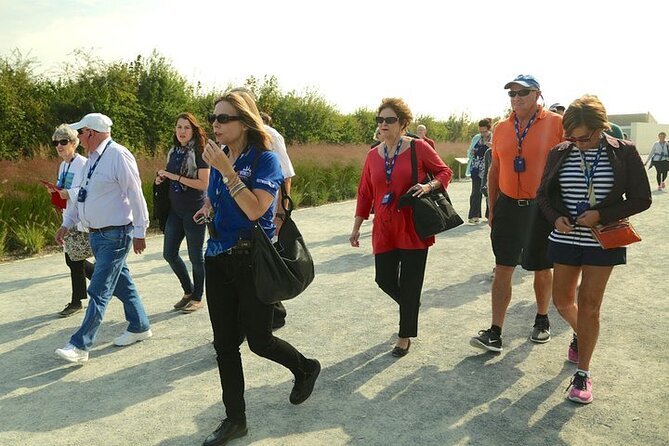
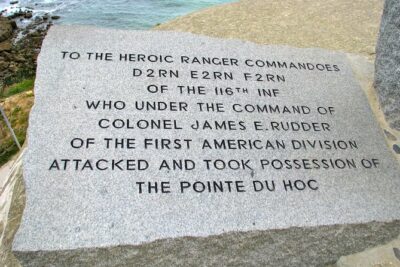
At Pointe du Hoc, you get about an hour with a guided visit. This is one of the most striking stops because the ground still shows the violence of the battle.
The German position sat on high cliffs above the English Channel and threatened the landing beaches below. On D-Day, U.S. Army Rangers climbed cliffs about 100 feet high under fire to capture the position. The task was dangerous even before they reached the top, and the site helps you understand why the position mattered.
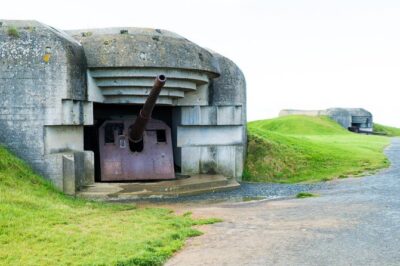
Today you can walk among German bunkers, broken fortifications, and bomb craters. The rough ground makes this stop feel less polished than a conventional memorial. You are not simply looking at a plaque. You are moving through a scarred military position, with the sea visible beyond it.
Bring sturdy, comfortable shoes. The walking is manageable for anyone with moderate fitness, but the ground is uneven and the weather can make it muddy or slippery. The hour gives you a useful visit, though it may leave you wishing for time to explore the craters and bunkers at your own pace.
For many people, Pointe du Hoc is the most visually memorable stop. It also rewards a guide who can explain the military purpose of the site rather than offering only dates. John, Maja, and other guides praised for their storytelling can help you see how the position fits into the larger invasion plan.
Omaha Beach makes the human cost impossible to ignore
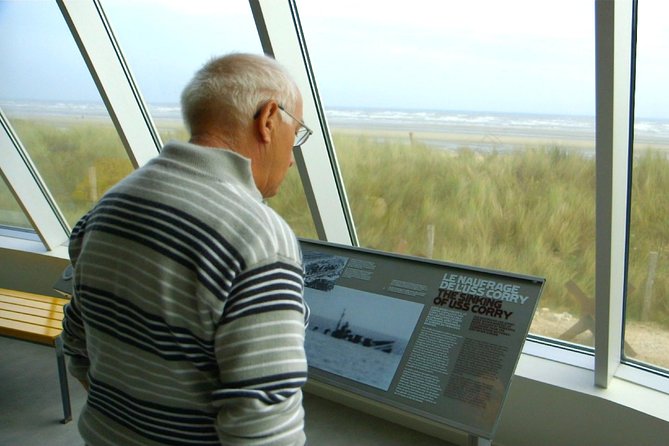
The coach then stops at Omaha Beach for about 30 minutes. This was where American troops met the fiercest resistance and suffered heavy casualties.
The beach is enormous, which can be unsettling. A short visit lets you walk along the sand, look up toward the bluffs, and imagine how exposed the landing forces were. The scene is quiet now, but its openness makes the danger easier to picture.
You will not get a long independent exploration here. Thirty minutes is enough to walk a short stretch, take in the view, and hear the guide connect the beach to the operation. It is not enough for a detailed study of every memorial, bunker, or nearby feature.
I like the fact that Omaha is paired with the American Cemetery. The beach gives you the setting of the fighting, while the cemetery shows the cost in individual lives. Without both, the story can become either abstract military history or a memorial visit disconnected from the battle.
The American Cemetery offers the time for reflection

The final major stop is the American Cemetery at Colleville-sur-Mer, where you get about 1 hour and 15 minutes. This is the longest site visit of the day, and it deserves that time.
The cemetery overlooks Omaha Beach and contains nearly 10,000 American graves from the Normandy landings. The white crosses and Stars of David are arranged across carefully maintained grounds, with a memorial, reflecting pool, and chapel adding to the quiet setting.
Your guide provides a tour, then you have free time. Use it slowly. You can walk among the rows, read names and dates, and look back toward the sea. The scale can be hard to absorb from a distance, but the individual markers make the loss personal.
This is the point where the day often becomes emotional. That is not a problem to solve. Give yourself permission to be quiet and let the place speak without rushing to the next photo. The cemetery is also where the value of the long coach ride becomes clearest: you are not merely seeing a battlefield from a road. You are paying respects at a major memorial connected directly to the beach below.
Some people would prefer even more time here, since the grounds are large. Still, 75 minutes is more generous than the time given to Utah Beach, Omaha Beach, or Pointe du Hoc. If you want to see every corner, you will need a longer Normandy visit.
What the guide adds to the long coach ride

The guide is with you all day and speaks English. Names that appear in especially strong feedback include Maja, John, Raymond, Sam, and Thelma. Guides vary by departure, so you should not assume one specific person will lead your tour, but the best guides do more than recite facts.
They explain how the beaches connect, point out why the Allied plan depended on speed and surprise, and fill the long drive with stories about the people involved. Several guides have been praised for warmth, energy, and passion, qualities that matter on a 14-hour day.
Clear English is important in a coach setting. One person found a guide’s accent difficult to follow, so if you have hearing difficulty or are not fully comfortable with spoken English, sit where you can hear well and ask questions when needed. The tour is offered in English only.
The group size can reach 50, so this is not a private conversation with a historian. It is a structured group tour. The benefit is efficiency and a clear schedule. The cost is less freedom to linger.
The $120.93 price and the value of one long day
At $120.93 per person, the tour is priced as a practical way to reach several distant sites from Paris. The fee includes return coach transport, the English-speaking guide, the Utah Beach Museum, a two-course lunch, and a glass of Norman cider.
You are also paying for route planning and the ability to see four major D-Day locations in one day. Renting a car would give you more control, but it would require navigation, parking, fuel, and your own historical research. A train-based visit would not easily cover this full combination of beaches, Pointe du Hoc, and the cemetery in a single day.
The price is strongest for a first visit when your priority is coverage. It is weaker if you value long museum visits, quiet time, or a flexible lunch. You should compare it with the cost of spending a night in Normandy, especially if you have two days available.
Free cancellation is offered up to 24 hours before the start time. Weather can affect operations, and one reported cancellation involved late communication, so keep an eye on messages before departure. The provider confirmed a full refund in that case, but last-minute disruption can still create transport costs and frustration.
Who should book this day trip
I would choose this tour if you have limited time in Paris and want a guided first look at the Normandy invasion sites. It suits history buffs, families introducing older children to World War II history, solo visitors, and anyone who does not want to drive in an unfamiliar region.
It also works well if the American Cemetery is your main reason for going. The visit is long enough to walk, reflect, and see the memorial without being rushed through in a few minutes.
You should think twice if you dislike long coach rides or need a relaxed pace. The day starts early, finishes at Porte Maillot, and includes several short stops. Anyone with limited mobility should note the moderate fitness requirement, uneven ground at Pointe du Hoc, sand at the beaches, and the amount of time spent getting on and off the coach.
Families should prepare children for a serious subject and bring water and a light snack. The coach is comfortable, but comfort cannot erase the distance. Dress for the weather, wear practical shoes, and do not count on lunch being the meal everyone remembers fondly.
Should you book this Normandy tour?
Book it if you want a well-organized overview and accept that Normandy is a long way from Paris. The strongest parts are the guide’s storytelling, Pointe du Hoc, Omaha Beach, and the American Cemetery. Utah Beach adds useful context, and the included lunch keeps the day running without a restaurant search.
Do not book it expecting an unhurried two-day Normandy experience. You will not have enough time to study every museum display or wander every battlefield. For that, stay overnight in the region.
For a single day, though, this is a sensible way to reach the major American D-Day sites. The schedule is demanding, the lunch may disappoint, and the weather can make the day harder. But if you prepare for those limits, the chance to stand on Utah and Omaha beaches, walk Pointe du Hoc, and pay respects above the sea makes the $120.93 fare worthwhile.
FAQ
How long does the Normandy day trip last?
The experience lasts approximately 14 hours, beginning at 7:00 a.m. and ending in Paris at Place de la Porte Maillot.
Where does the tour depart?
The meeting point is Église Notre-Dame de Compassion, Place du Général Kœnig, 75017 Paris.
Where does the tour end?
The service ends at Place de la Porte Maillot in Paris. Hotel pickup and drop-off are not included.
Is the tour offered in English?
Yes. An English-speaking guide accompanies the group throughout the day.
What food is included?
Lunch includes two courses and one glass of Norman cider. Extra drinks are not included. You can note dietary requirements in the special requirements field when booking.
Which D-Day sites are included?
The route includes the Utah Beach Museum, Utah Beach, Pointe du Hoc, Omaha Beach, and the American Cemetery at Colleville-sur-Mer.
Is cancellation available?
You can cancel up to 24 hours before the experience start time for a full refund. Changes or cancellations made less than 24 hours before departure are not accepted for a refund.
Just added around Normandy
- From Le Havre: D-Day Beaches Shore Trip with Packed Lunch★ 4.9 · 101 reviews
- Bike tour from Vernon to Giverny with local guide★ 4.7 · 47 reviews
- Bayeux: Normandy D-Day Landing Beaches Full-Day Guided Tour★ 4.8 · 158 reviews
- Bay of Mont Saint-Michel : Quicksands And Discovery★ 4.9 · 168 reviews
- Bayeux: 2-hour tour of the D-Day beaches, by vintage sidecar★ 4.9 · 64 reviews
- Bayeux: Band Of Brothers Full-Day Tour★ 4.9 · 53 reviews
- From Paris: 2-Day Normandy & Brittany Tour★ 4.5 · 93 reviews
- Small-Group Giverny and Van Gogh’s Room in Auvers from Paris★ 4.9 · 168 reviews
D-Day Beaches Tours, compared.
Normandy D-Day Small-Group Day Trip with Omaha Beach, Cemetery & Cider Tasting
Read our review →
Normandy D-Day Beaches and American Cemetery Day Trip from Paris
Read our review →
Normandy American D-Day Beaches Full Day Tour from Bayeux
Read our review →
Normandy American D-Day Experience – Group tour from Bayeux
Read our review →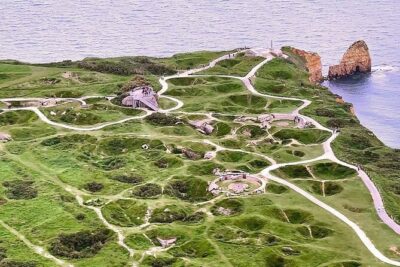
Omaha Beach D-Day Experience – Afternoon group tour from Bayeux
Read our review →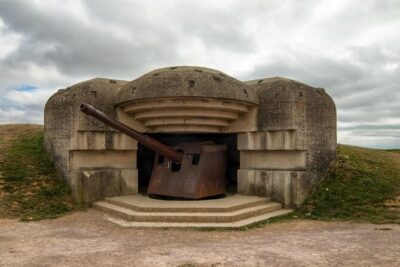

Normandy D-Day Sites Guided Day Trip with Lunch
Read our review →Browse the lists this tour appears in