
Reviewed · LE MARAIS TOURS
Paris Bike Tour Hidden Secrets in the Latin Quarter & Le Marais neighborhoods
Paris Bike Tour Hidden Secrets in the Latin Quarter and Le Marais is less about checking off famous monuments and more about connecting the city’s scattered stories. In four hours, you ride from medieval lanes and university streets to Roman ruins, Jewish Paris, royal squares, and remnants of the old city wall.
I like the small-group limit of 12, which keeps the ride personal and gives guides such as Arnaud, Cece, Aaron, and Joris room to answer questions. I also like the well-planned lunch break, since you can stop for a savory crepe, bakery food, or a café meal along Rue Mouffetard instead of eating on the move.
The catch is simple: this is city cycling, not a car-free park ride. You’ll share streets with cars, buses, scooters, and pedestrians, and one-speed bikes can make hills and busy intersections harder than expected.
Key things to know before you book
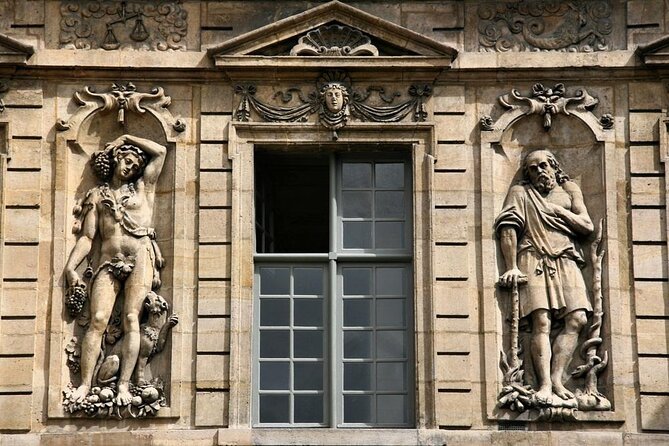
- Two old Paris neighborhoods in one ride: The route links the Latin Quarter’s university and Roman past with Le Marais’s Jewish heritage, elegant squares, and medieval remains.
- A real four-hour outing: There are frequent stops, but you still need to pedal through city traffic and be comfortable on a bike.
- Lunch is separate: You get about 30 minutes near Marche Monge and Rue Mouffetard, with food and drinks paid for on your own.
- Bikes and helmets are included: The bikes are described as new and comfortable, though they have no baskets, so bring a small backpack.
- Great guides can shape the day: Arnaud, Cece, Aaron, Joris, Lena, Lucien, and others have been praised for humor, care, local detail, and steady pacing.
- Traffic confidence matters: Most people can manage the route, but it is not the right pick if riding beside cars makes you anxious.
Starting at Fontaine Saint-Michel
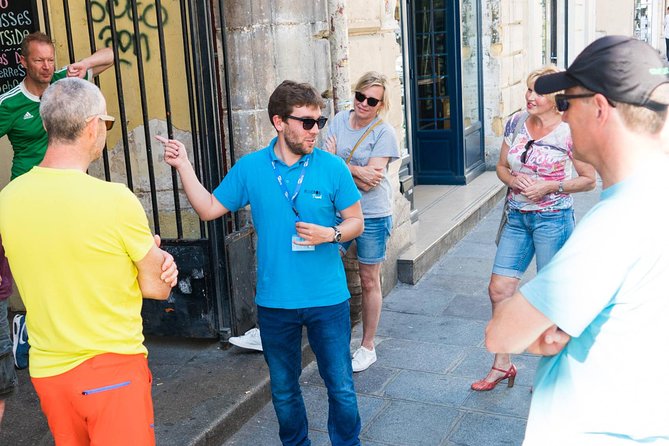
The tour begins at Fontaine Saint-Michel in Place Saint-Michel at 10 a.m. This is a useful starting point, since you are already close to Notre-Dame, the Seine, and the Latin Quarter.
Give yourself enough time to find the fountain. White market tents or construction can partly block the landmark, so the meeting point may not be as obvious as it sounds. The guide is expected to help identify the group, but arriving early is still wise.
The ride ends back at the same meeting point. You receive a bike and helmet, and the group is capped at 12 people. A smaller group matters in Paris, where a long line of bicycles can be awkward at crossings and narrow streets.
The tour is offered in English. Confirmation arrives at booking, and the activity is near public transportation. It runs in all weather, so check the forecast and bring rain protection. One guide even carried ponchos when rain was expected, but you should still dress for the day and skip flip-flops.
More Bike Tours in Paris
- Versailles Palace Bike Tour with Market & Marie-Antoinette hamlet
★ 5.0 · 2,680 reviews - Paris: Charming Nooks and Crannies Bike Tour
★ 4.8 · 2,585 reviews - From Paris: Versailles Bike Tour w/ Palace, Gardens, & Picnic
★ 5.0 · 2,150 reviews
Latin Quarter: university streets and old Paris
The first half of the ride explores the Latin Quarter, one of central Paris’s oldest sections. Its name comes from the Latin once used by students and teachers connected with the Sorbonne, when Paris was home to one of Europe’s early international universities.
This is a good district to explore by bike because its narrow streets hold more atmosphere than spectacle. You pass through small lanes, pause often, and hear how education, religion, politics, and daily life shaped the quarter. The ride helps you cover ground without reducing the area to a quick walk between major monuments.
Shakespeare and Company
The first stop is Shakespeare and Company, the famous English-language bookshop near the Seine. Its medieval setting, exposed wooden beams, plaster walls, and crowded shelves make it feel unlike a modern bookstore.
You get about 15 minutes here, including time to look inside. The shop has long welcomed writers, and some authors have slept there, so this stop adds a literary note to the morning without requiring a full museum visit.
The practical point is that this is a short look, not a long browsing session. If you want to buy a book or spend serious time inside, you may need to return later. Still, the stop gives you a pleasant pause early in the ride.
Le Procope and Saint-Sulpice
At Le Procope, founded in 1686, your guide explains the café’s links with figures such as Benjamin Franklin, Voltaire, Napoleon Bonaparte, and Victor Hugo. You have about 10 minutes to hear the stories and take photographs from outside.
The stop works best as a quick history lesson. It is not a meal stop, and food is not included, so save your appetite and budget for the later break.
Next comes Saint-Sulpice, one of Paris’s largest churches. Its two towers do not match, and the building has an unusual past. The church also gained extra fame through its connection with Dan Brown’s The Da Vinci Code.
You get about 15 minutes to see the interior. Admission is not included, so be prepared to pay if an entry charge applies. This is one of the stops where the guide’s explanation adds real value, since the exterior alone does not reveal why the church matters.
More ways to explore Le Marais:
- Award-Winning Paris French Bakery Experience — Le Marais, 4th Arr
★ 4.5 · 1,186 reviews - Paris Le Marais Food Tour With 10+ Tastings, Cheese, Wine & More
★ 5.0 · 985 reviews - Paris Le Marais District Original Food and Wine Tasting Tour
★ 4.5 · 880 reviews - Paris: Food and Wine Tasting Walking Tour in Le Marais
★ 4.9 · 446 reviews
The Pantheon
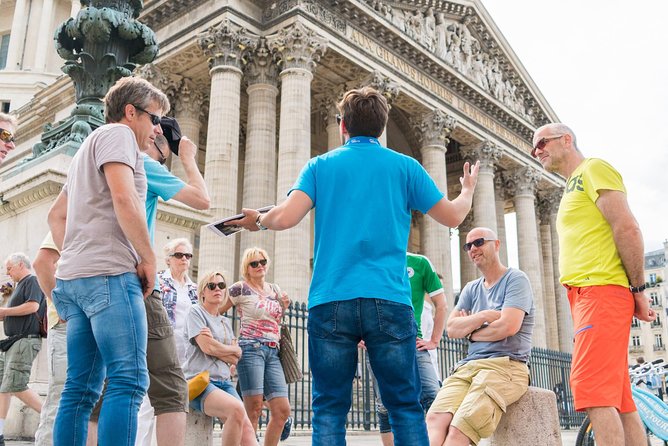
The Pantheon is a large neoclassical monument and a final resting place for some of France’s most honored figures. The tour points out people including Pierre and Marie Curie, Alexandre Dumas, Victor Hugo, and Josephine Baker.
The stop lasts around 15 minutes and is listed as free for the tour. You should not expect a full interior visit at this pace. Instead, you get context and a chance to understand why the building matters before deciding if you want to return for a longer visit.
I find this kind of stop useful on a bike tour. It gives you a clear reason to come back, rather than trying to rush through a major monument while keeping the group moving.
Marche Monge and Rue Mouffetard lunch break
The half-hour lunch stop is near Marche Monge and Rue Mouffetard. This is one of the best parts of the schedule because it gives you time to sit down, eat, and reset before the second half.
You can look for a savory crepe, choose a bakery, or settle into a small café. Food and drinks are not included, so bring a payment method and allow enough time to order and eat within the 30-minute break.
This section of the Latin Quarter feels more local than the postcard sights. You are not being rushed from one landmark to the next, and you can use the break to ask the guide for food or ice cream suggestions. Joris, for example, has been particularly helpful with lunch recommendations.
Bring a small backpack. The bikes do not have baskets, and one rider ended up carrying belongings for other people. Avoid a large shoulder bag, which can shift while you ride.
Arenes de Lutece: Roman Paris below the modern city
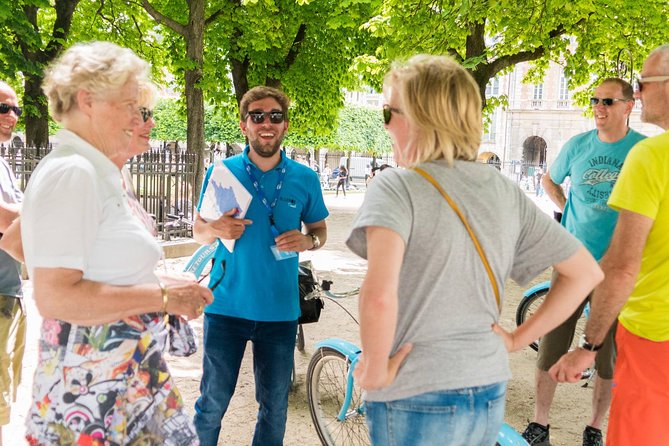
The Arenes de Lutece is an ancient Roman arena tucked into the Latin Quarter. You cycle into the site and learn how Roman rule helped shape early Paris, then hear about the games once held there.
The arena is a strong example of the tour’s purpose. It is not hard to reach, but many people pass through the neighborhood without realizing it is there. At around 20 minutes, the stop is long enough to look around and get the basic story without turning into a formal archaeological visit.
The ride from the Latin Quarter toward Le Marais changes the mood. You move from university streets and Roman remains into a district shaped by Jewish life, royal planning, old walls, and modern shops.
Le Marais and the memory of Jewish Paris
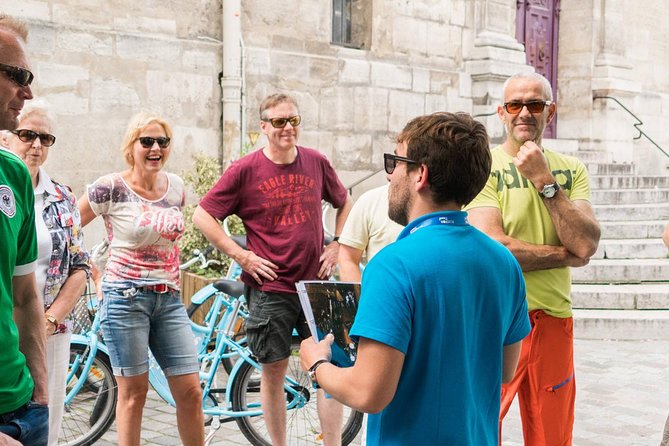
Le Marais was once marshland. Over time it became one of central Paris’s most attractive districts, with much of its cultural identity tied to the local Jewish community.
Your guide explains how the area developed and why it is especially lively on Sundays. French shops must close for at least one day each week, and in Le Marais many businesses close on Saturday instead. That leaves Sunday as a popular day for browsing, eating, and walking.
This part of the tour is not just about pretty streets. It asks you to look at the neighborhood’s Jewish identity and the damage caused during World War II.
Memorial de la Shoah
The Memorial de la Shoah is a serious stop. A wall records the names of more than 3,900 non-Jewish French people who risked their lives, and in some cases died, while helping French Jewish people during the war.
You spend about 15 minutes here. The subject is painful, but it gives the rest of the Le Marais route moral and historical weight. The neighborhood’s restaurants and shops are only one part of its story, and this memorial prevents the tour from treating Jewish Paris as a decorative theme.
The guide’s tone matters here. You can expect a cultural tour, but not every guide will handle a difficult subject in exactly the same way. The best guides keep the explanation clear, respectful, and brief enough for the group to continue thoughtfully.
Rue des Rosiers
At Rue des Rosiers, you walk your bike rather than ride through the pedestrian street. This is the center of the Jewish quarter, with small shops, kosher restaurants, and food aromas spilling into the lane.
The stop takes about 15 minutes. It is a good place to notice how the neighborhood feels at street level, but it can also be crowded. Keep your bike close and follow the guide’s instructions.
Do not confuse this with the lunch break. You have time to look and take in the scene, but food is still your own expense and the scheduled meal stop comes earlier near Rue Mouffetard.
Place des Vosges
Place des Vosges is one of Paris’s most distinctive squares. Red-brick buildings frame a grassy center, where local residents picnic, relax, and let children play near the fountains.
The square also mixes ordinary daily life with high-end Paris. The surrounding buildings hold art shops and a fine hotel, while the center remains open and informal. Your 15-minute stop gives you enough time for photographs and a quick walk through the arcades.
This is one place where a bike tour saves effort. You can reach the square as part of a larger route, hear the story, and return later on foot if you want a slower look.
Medieval walls and the Hotel de Sens
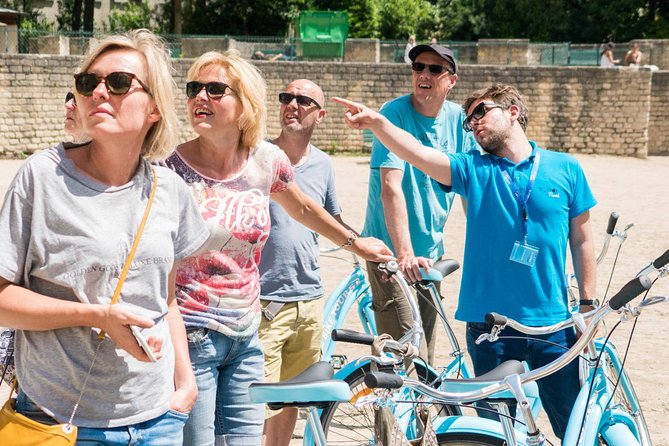
The Wall of Philip II Augustus is one of the route’s most useful history stops. In the late 1100s, Philip built a large stone wall around Paris to defend the city. The tour also touches on his strange political relationship with Richard the Lionheart, the English king of the period.
You stop at the largest and best-preserved section, spending about 15 minutes there. It is a sharp reminder that Paris was once a much smaller fortified city. Modern streets and apartments make the old boundary easy to miss, so a guide’s explanation helps you see the city’s earlier shape.
The final stop is the Hotel de Sens, a fortress-like mansion with turrets and gargoyles. It has the look of a small castle tucked into an ordinary neighborhood.
The guide explains why it was built and points out the cannonball lodged in its facade. You get another 15-minute stop, enough for a photograph and a memorable final story before returning to Place Saint-Michel.
What the cycling is really like
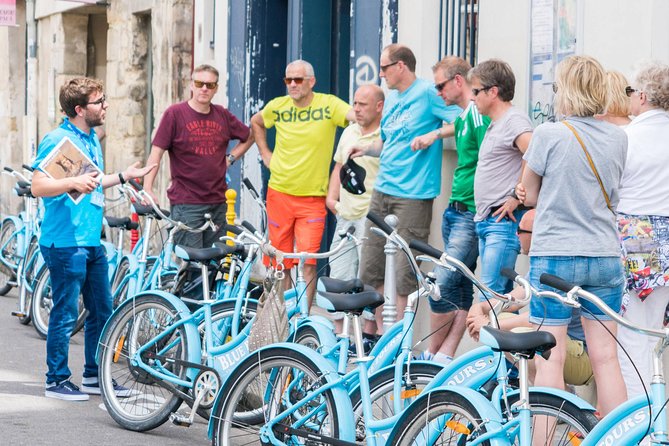
The route is described as manageable, and many people find the pace comfortable because the tour stops often. It is not four hours of constant pedaling. Still, you need to be able to ride independently and pay attention.
The bikes are one-speed models with low gearing. That makes them simple to operate, but hills and busy intersections can require heavy standing pedaling. If you are nearly 70, out of practice, or not used to city riding, the day may feel like a workout even at a gentle pace.
You also ride near cars, buses, scooters, and pedestrians. Some streets have bike lanes, but others do not. Main-road crossings can split a group, and a light may not stay green long enough for everyone to cross together.
That does not make the tour unsuitable for most riders. It does mean you should be honest about your confidence. You need to follow the guide closely, hold your line, and stay alert rather than looking only at the buildings.
The tour is not recommended for adults who are easily frightened on bikes or who lack confidence in traffic. Children aged 10 and older must know how to cycle on their own. Children aged 1 to 4 may use a reserved child seat, while children aged 5 to 9 may ride independently or use a reserved tandem attachment with a parent. Every child needs a paid place in the group.
Price, guides, and overall value
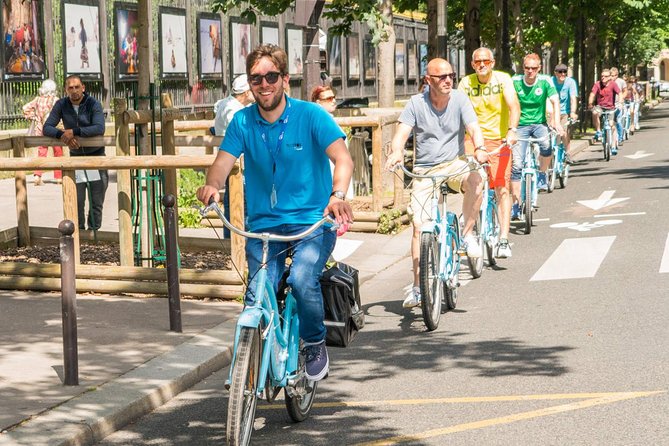
At $54.42 per person, the tour is fairly priced if you want four hours of guided sightseeing, bike rental, helmet rental, and access to parts of Paris that are easy to miss on foot.
The value comes from the route and the guide more than from admission savings. Most stops are viewed from outside or listed as free, and Saint-Sulpice admission is not included. You are paying for local explanation, route planning, equipment, and the ability to connect several districts in one morning.
Guide quality can make a major difference. Arnaud has been praised for clear explanations and humor. Cece has been especially attentive with small private groups. Aaron is a strong choice for a cautious rider who wants a relaxed pace, while Joris is useful if you want practical lunch advice as well as local stories. Lena, Lucien, Michael, Ryan, and others have also been praised for care, energy, and steady navigation.
The rating is 4.9 from 766 reviews, with 98 percent recommending the experience. Those numbers suggest a reliable product, but they should not hide the traffic issue. The same route that feels exciting to an experienced city cyclist can feel tense to someone who rarely rides beside vehicles.
Free cancellation is available up to 24 hours before the 10 a.m. start time. Changes or cancellations inside that window are not accepted for a refund.
Who should book this Paris bike tour?
I would choose this tour if you have already seen the major monuments, want a more local-feeling route, or have only a few days in Paris and want to cover two important districts efficiently.
It also suits families with older children, couples, solo riders, and small groups who enjoy history in short, lively portions. The frequent stops keep the day varied, and the lunch break prevents the ride from feeling like a four-hour endurance test.
I would skip it if you want protected cycle paths, a slow photography tour, or a completely traffic-free experience. I would also think twice if you have balance concerns, dislike hills, or are not comfortable managing a bike at crossings.
For the right rider, this is a smart way to see another side of Paris. You get Roman ruins, literary corners, Jewish history, royal architecture, medieval defenses, and everyday cafés in one compact outing. Bring a small backpack, wear sensible shoes, watch the forecast, and arrive ready to ride rather than simply sit back and sightsee.
FAQ
How long does the Paris bike tour last?
The tour lasts approximately four hours, beginning at 10 a.m. and ending back at Fontaine Saint-Michel.
Where does the tour begin?
It begins at Fontaine Saint-Michel, Place Saint-Michel, 75005 Paris, France.
Where does the tour end?
The activity ends back at the starting meeting point.
Are bikes and helmets included?
Yes. Bike rental and helmet rental are included.
Is food included?
No. Food and drinks are not included. You have about 30 minutes for lunch near Marche Monge and Rue Mouffetard and pay for your own meal.
Is the tour offered in English?
Yes. The tour is offered in English.
How large is the group?
The group has a maximum of 12 participants.
Do I need to be confident on a bike?
Yes. This is a city bike tour with traffic, crossings, and some hills. Participants aged 10 and older must be able to cycle independently.
Can young children join?
Children aged 1 to 4 can use a child seat on a parent’s bike if reserved in advance. Children aged 5 to 9 can ride solo if able or use a reserved tandem attachment with a parent.
What happens if it rains?
The tour operates in all weather. Dress for the forecast, bring rain protection, and do not wear flip-flops.
Can I cancel for a full refund?
Yes. You can cancel at least 24 hours before the start time for a full refund. Cancellations or changes made less than 24 hours before the start time are not accepted.
More Latin Quarter Walks
- Paris Latin Quarter Pub Crawl Bars and Clubs
★ 4.5 · 394 reviews
Just added around Paris
- Paris: Croissant Baking Class with a Chef★ 5.0 · 201 reviews
- Cooking Class with a Parisian Chef★ 5.0 · 46 reviews
- Cocktails lessons in Speakeasy★ 4.5 · 72 reviews
- Paris: Choux Pastry and Chocolate Éclair Making Class★ 4.9 · 50 reviews
- Paris: Classic Sites Tour by Vintage Citroen 2CV★ 4.6 · 189 reviews
- Paris: Cheese and Wine Class in a 17th Century Cellar★ 4.8 · 91 reviews
- Paris: Romantic Photoshoot for Couples★ 4.9 · 131 reviews
- Paris: Bread and Croissant-Making Class★ 4.8 · 206 reviews
Le Marais Tours, compared.
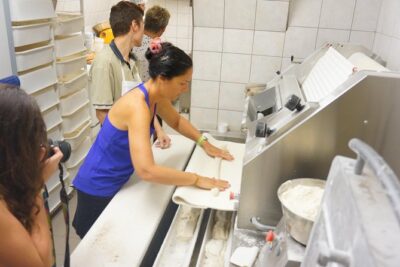
Award-Winning Paris French Bakery Experience — Le Marais, 4th Arr
Read our review →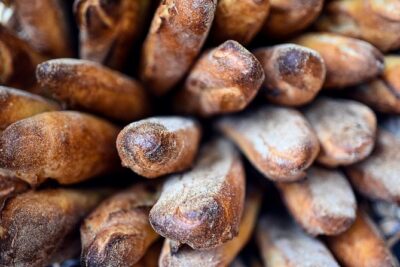
Paris Le Marais Food Tour With 10+ Tastings, Cheese, Wine & More
Read our review →
Paris Le Marais District Original Food and Wine Tasting Tour
Read our review →
Food and Wine Tasting Walking Tour in Le Marais
Read our review →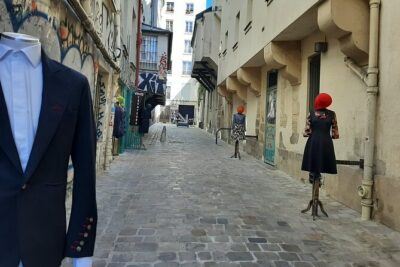
Le Marais/Paris – The Historic, Trendy, Jewish, LGBT district
Read our review →Browse the lists this tour appears in