
Reviewed · SEINE RIVER CRUISES
Paris: Cruise on the Saint-Martin Canal and the Seine River
Paris: Cruise on the Saint-Martin Canal and the Seine River is most memorable below street level, where the boat enters a roughly 2-kilometre underground vault pierced by small openings of light. I like the way this cruise mixes canal engineering with classic Paris views, and I like that it shows neighborhoods most sightseeing boats skip. The nine locks are clever to watch, though the repeated stops can feel slow by the later stages.
The trip also gives you a useful change of scene: Parc de la Villette and Canal Saint-Martin at the start, then the historic center and Notre Dame from the Seine. Allow extra time to find the departure point, and arrive early if sitting with your group matters, since the boat can be nearly full before the stated departure time.
Key points to know before booking
- The underground canal is the star: Enter a dark vault beneath Paris, where light holes send reflections across the water and walls.
- Nine locks shape the pace: The boat repeatedly rises or lowers through the canal system, offering an unusual look at old city engineering.
- The route ends near Musée d’Orsay: You finish beside one of Paris’s best museums, close to Île Saint-Louis, Île de la Cité, and Notre Dame.
- This is not a standard Seine cruise: Much of the journey passes through Canal Saint-Martin and lesser-seen parts of eastern Paris.
- Live commentary is bilingual: The guide speaks French and English, with guides such as François and Bruno praised for humor and historical detail.
- Bring a jacket and patience: The upper deck can be chilly, and time spent waiting at locks is part of the experience.
Why this Paris cruise is different
A typical Seine cruise gives you the postcard version of Paris: the Eiffel Tower, grand bridges, Notre Dame, and the Louvre-side riverfront. This trip gives you some of that, but only near the end. Most of the 2.5 hours follow Canal Saint-Martin, where the city feels more local, practical, and engineered.
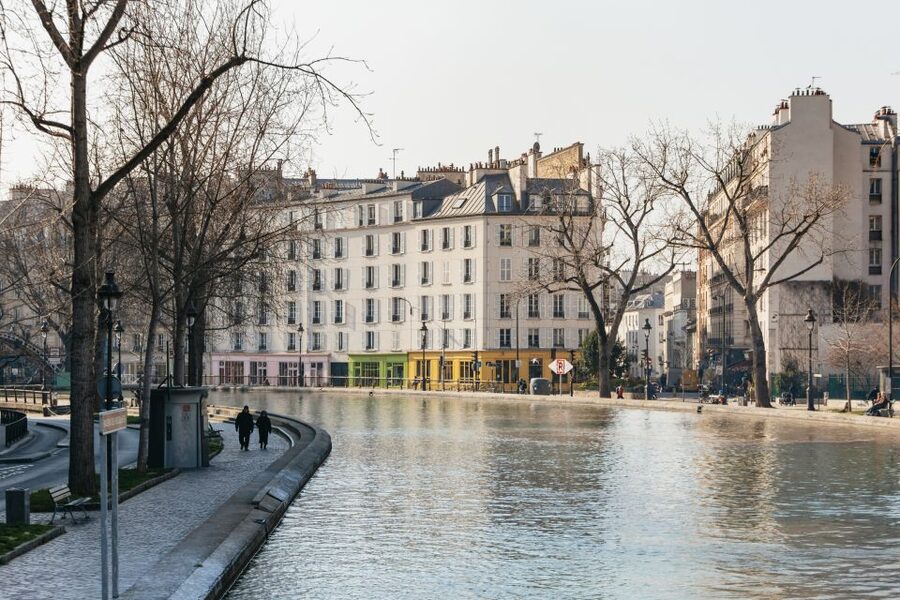
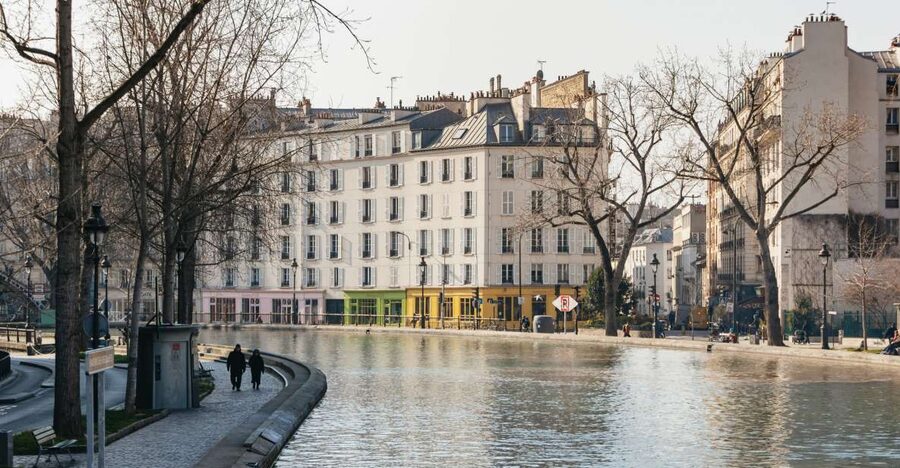
I like this route for repeat visits to Paris, or for a first visit when you want more than the usual monuments. It begins in the 19th arrondissement and passes through waterways that once helped supply and serve the city. You see pedestrian bridges, chestnut trees, fishermen, changing neighborhoods, locks, swing bridges, and the canal’s unusual underground section.
The setting changes slowly. This is a gentle sightseeing journey, not a fast ride from one landmark to another. You spend time waiting while the water level changes, so the cruise suits you best if you enjoy watching how a city works. If you want constant monument views, choose a shorter Seine cruise instead.
At $28 per person, the value is strong for a 2.5-hour activity with live commentary. You are paying for a long route, not just a short pass by famous buildings. The main tradeoff is that part of the time is spent stationary at locks, and the Seine portion is fairly short.
More Boat Tours in Paris
- Paris: Evening River Cruise with Music
★ 4.4 · 22,721 reviews - Paris: Louvre Guided Tour with Reserved Access & Boat Cruise
★ 4.3 · 16,353 reviews - Paris: Big Bus Hop-On Hop-Off Tour with Optional Cruise
★ 4.4 · 13,279 reviews
Finding Parc de la Villette without getting lost
The departure point is outside Parc de la Villette in Paris’s 19th district. The clearest route is from Porte de Pantin Metro station, using Exit 1.
From the station, walk straight ahead and follow the Galerie de la Villette, the pedestrian area covered by a gray, undulating roof. Continue toward the canal. Look for the Paris Canal white board near 211 Avenue Jean Jaurès.
Give yourself extra time. Parc de la Villette is large, and the departure point can be hard to spot if you approach by taxi or ride share. One practical problem is that a car may leave you on a nearby street rather than beside the boat. If you use a taxi or app-based car, confirm that you are going to the canal-side departure point, not simply the park’s general address.
Arriving early is also wise. The scheduled meeting time does not necessarily mean boarding begins then. A boat can already be filling, and groups may not find seats together. This matters if you are traveling with family or friends.
Bassin de la Villette and the first bridges
The boat starts in the center of Parc de la Villette and moves toward the Bassin de la Villette. This broad basin gives you room to settle in before the tighter canal sections begin.
One early highlight is the elevated bridge at Rue de Crimée. The route then approaches the Rotonde de la Villette, a striking former customs building designed by Claude-Nicolas Ledoux. You are seeing Paris from a working water route rather than from a boulevard, so the views are less polished and more revealing.
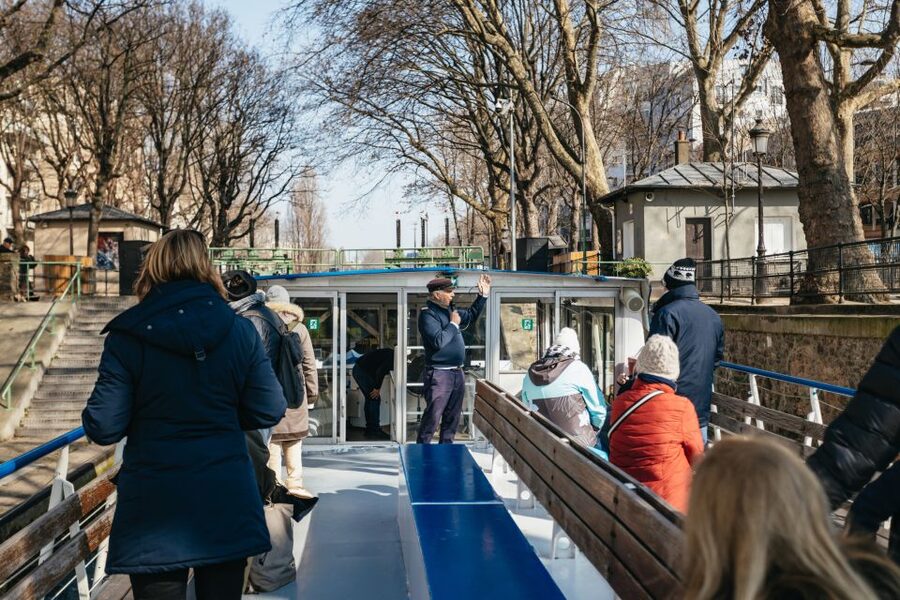
The boat has seating on an open upper deck and an enclosed lower deck. The upper level gives you the best sightlines and fresh air, but it can be cold even on a pleasant day. A jacket is useful, especially outside the warmest months. The lower level has large windows, some of which can be opened, along with a bar where drinks may be purchased.
Seating conditions can vary. One boat had plenty of room, while another sailing used folding chairs packed closely on the upper deck. If fresh air and broad views matter to you, board early and claim an outside place.
Canal Saint-Martin and nine working locks
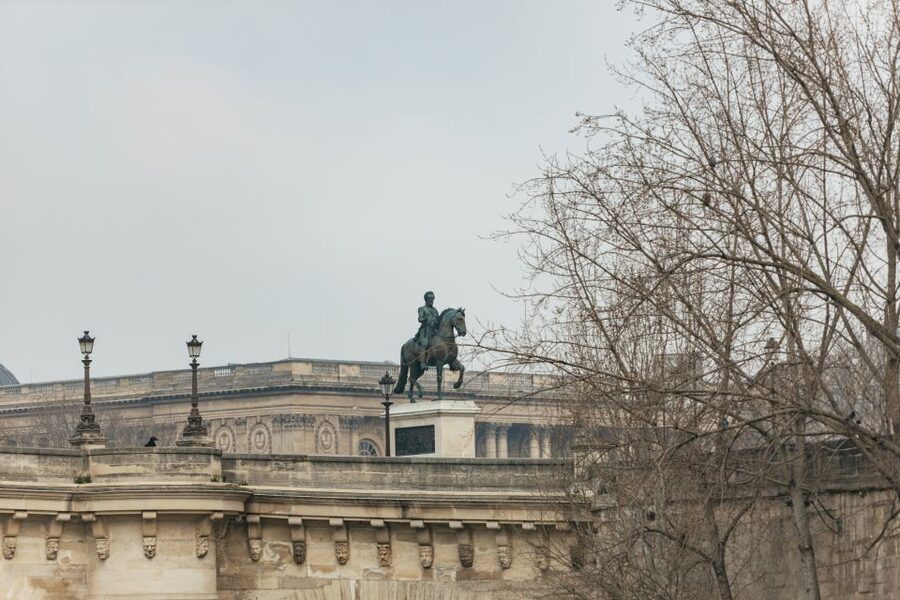
The first lock appears near the Récollets Center. From here, the canal becomes the main event. You pass the Hotel du Nord, known to many through French cinema, as the boat works through a series of locks and bridges.
The locks are not a minor detail. There are nine in total, and they account for a large share of the trip. Each one requires the boat to wait while the water level changes. At first, the process is fascinating. You can watch gates close, water move, and the boat rise or lower into the next section.
This is also where the cruise asks for patience. By the fourth lock, and especially later in the sequence, you may feel that you have seen the basic trick already. The boat is not covering much distance during these pauses. I would not call this wasted time, though. The locks explain why the canal works, and the slow pace lets you see an important part of Paris that a bus or walking tour cannot show.
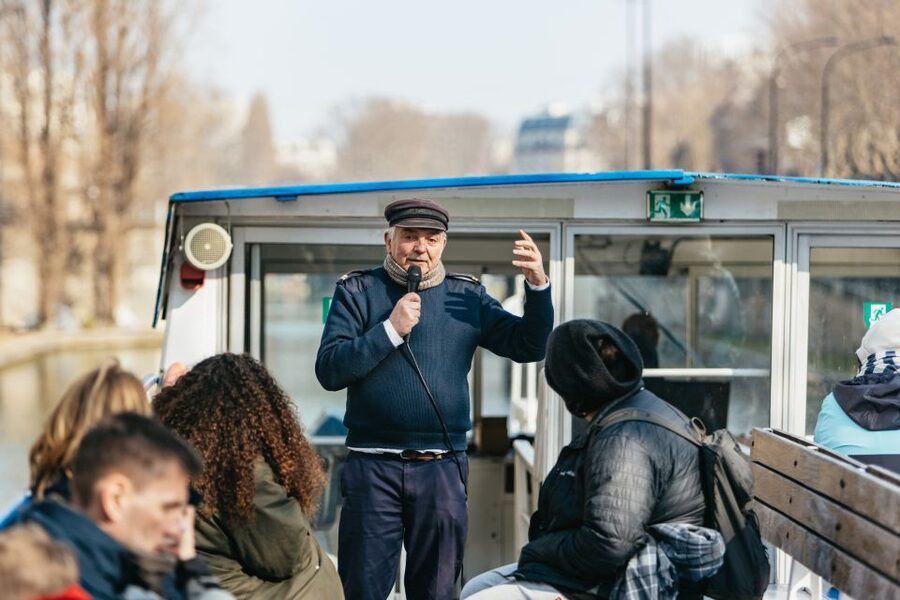
The guide’s commentary gives the mechanics a human setting. Past guides have included François and Bruno, and the strongest commentary combines history, local stories, film references, and plain explanations of the canal system. The French and English narration is delivered during the same trip, so the pace can feel full. Some people find a guide’s English difficult to follow, especially if the microphone is weak or the boat is noisy.
Try to sit where you can hear the guide clearly. If you miss a few words, the locks and bridges still make visual sense, but the stories add much of the value.
More cruises along the Seine:
- Paris: Seine Cruise & Crepe Tasting near the Eiffel Tower
★ 4.4 · 11,231 reviews - Paris: Seine River Panoramic Views Dinner Cruise
★ 4.3 · 10,611 reviews - Paris: Eiffel Tower Access by Elevator & Seine River Cruise
★ 4.6 · 7,329 reviews - Paris: 3-Course-Dinner Cruise on the Seine with live music
★ 4.7 · 7,248 reviews
The underground vault beneath Paris
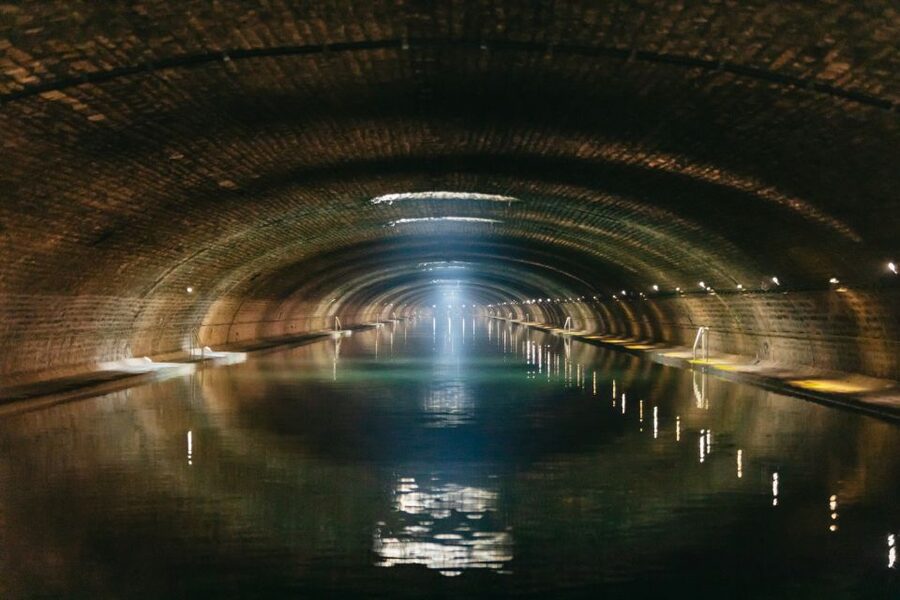
The canal eventually slips into darkness. This is the part I would most want to see, and it gives the cruise its special character.
The underground section is described as more than one mile, or about 1.5 to 2 kilometres depending on how the length is measured. The boat travels through a vaulted passage beneath the city, with small openings that let daylight reach the water. As the boat moves, the light scatters across the walls and surface.
You do not get a normal sightseeing view here. Instead, you get a quiet engineering experience: a canal built into the city, hidden beneath streets and buildings. The darkness, the echo, and the small points of daylight make this stretch feel unlike a standard river ride.
This section can be cool, and the lighting is not a guaranteed show in every weather condition. Still, it is a strong reason to choose this route over a basic Seine cruise. You are seeing a piece of Paris that cannot be understood from the pavement above.
Arsenal Port and Place de la Bastille
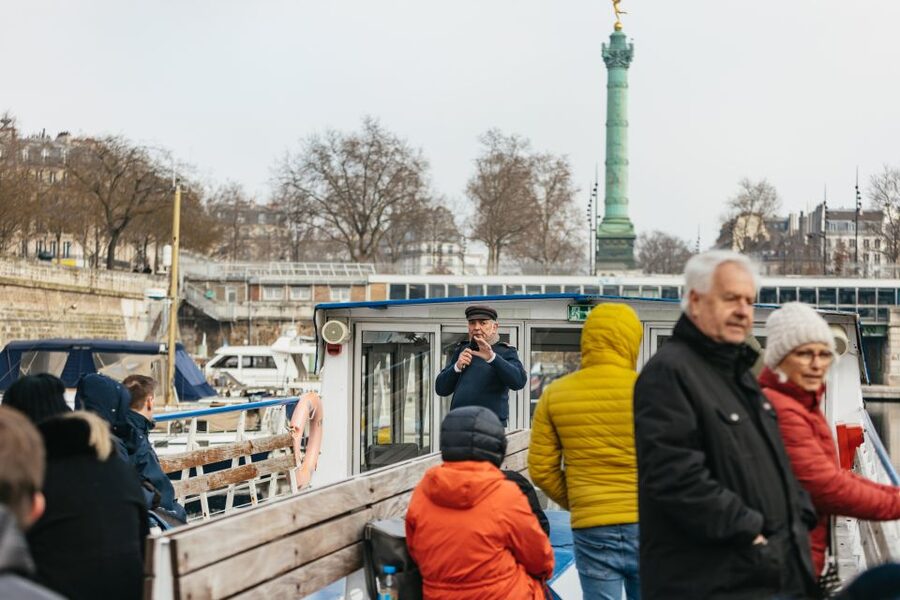
The boat returns to daylight at Arsenal Port. Ahead is the July Column in Place de la Bastille, one of Paris’s most important public squares.
The transition is satisfying. One moment you are in a dark passage beneath the city, and the next you are looking toward an open Paris neighborhood and a major historical landmark. This is also the point where the canal route gives way to the Seine.
Place de la Bastille is not presented as a long walking stop. You view it from the boat as part of the changing scenery. That distinction matters: this is a moving sightseeing tour, not a series of shore visits.
The Seine finale: Notre Dame, the islands, and Musée d’Orsay
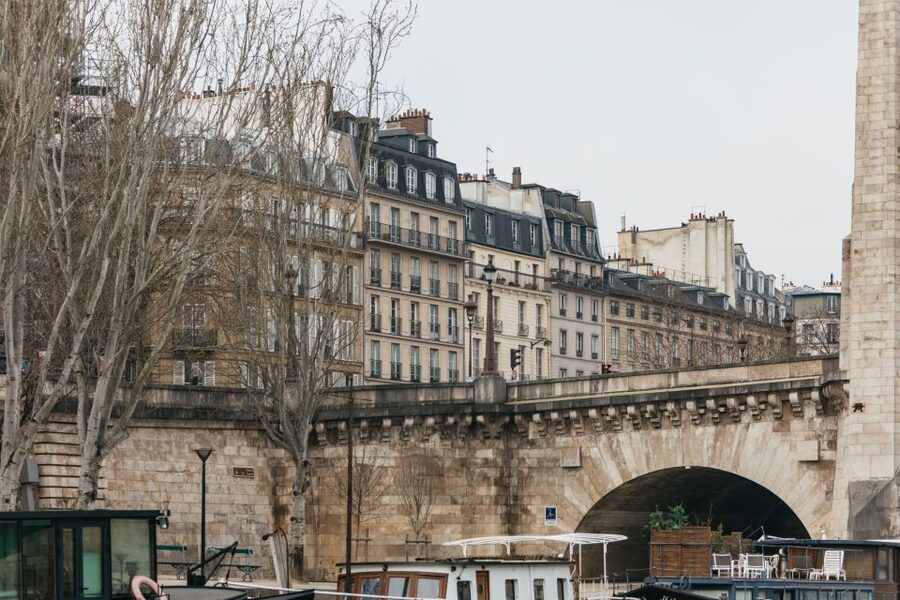
The Seine section comes near the end and lasts only a short part of the cruise. The boat passes Île Saint-Louis and Île de la Cité, with views toward Notre Dame before continuing toward the Musée d’Orsay.
This final stretch is beautiful because you now see central Paris from the water after spending most of the trip in the canal system. Notre Dame, the historic islands, and the riverfront provide the familiar Paris views that balance the lesser-known opening route.
I do wish the Seine portion were longer. The cruise does not continue toward the Eiffel Tower or the Statue of Liberty replica. If your main goal is a full tour of the famous Seine monuments, a dedicated one-hour Seine cruise will serve you better.
The ending at Musée d’Orsay is useful. You can visit the museum afterward, arrange lunch nearby, or continue walking along the river. The cruise typically finishes around midday, depending on the exact departure time and canal conditions.
Commentary, comfort, and what to bring
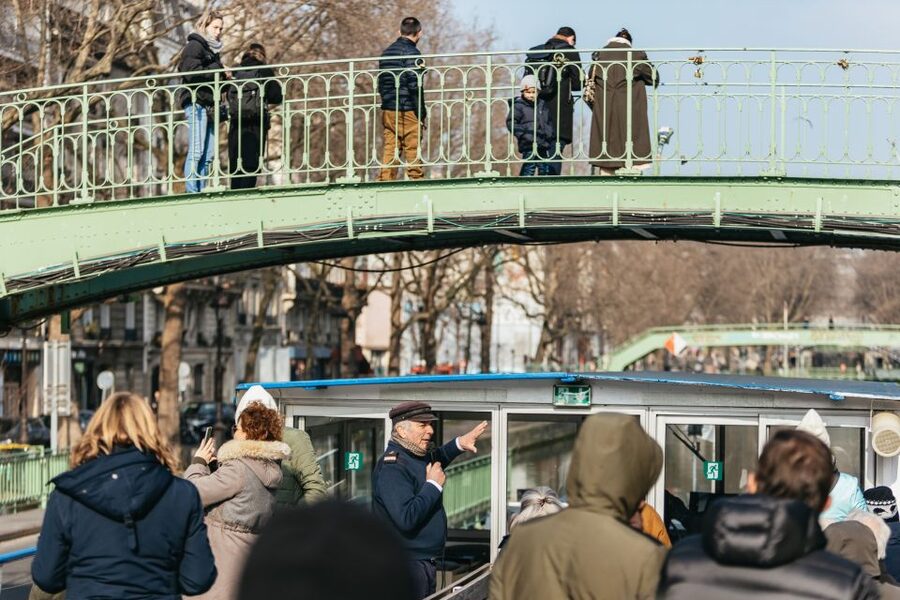
The live guide speaks French and English. Strong guides keep the long canal section moving with stories about Paris, the canal, locks, bridges, local places, and historical events. Past commentary has also included film references and details about an underground crypt.
The bilingual format is helpful, but it naturally makes the commentary longer. Some English-speaking passengers have found the delivery hard to understand. A seat near the guide or speaker can make a real difference, especially if the boat is full.
Comfort is basic rather than luxurious. The lower deck has a bar and enclosed seating, while the upper deck is open to the air. Drinks are available onboard, but food is not provided, so bring a snack if you need one during the 2.5-hour ride. Check the boat’s current rules before bringing your own food or drink.
Wear layers. The open deck can be chilly, and the underground section may feel cool as well. Rain does not automatically cancel the trip, since the cruise operates in wet weather, but the experience will be less comfortable if you are not prepared.
Diesel fumes can also be noticeable, particularly when the wind carries engine exhaust toward the seating area. This is not constant, but it is worth knowing if you are sensitive to smoke or odors.
Who will enjoy this cruise most
I would choose this cruise for:
- Repeat visitors to Paris who have already seen the main Seine sights.
- Families with older children or teenagers who enjoy locks, bridges, tunnels, and machines.
- History and city-infrastructure fans who want to see how a canal operates.
- Couples seeking a quiet afternoon with a mix of open water, central Paris, and unusual views.
- Visitors with half a day available who like a relaxed pace rather than a packed walking schedule.
- Museum visitors who want to finish near Musée d’Orsay.
I would be more cautious if you dislike slow transportation, get impatient during waits, or want a constant parade of major monuments. Nine locks are part of the point, but they also take time. The guide’s bilingual commentary may be hard to follow for some listeners, and seating can become tight on a busy sailing.
Price, timing, and overall value
At $28 per person, this is a good-priced half-day activity in Paris. A standard Seine cruise may be shorter and more focused on famous landmarks, but this trip gives you a longer route and a more unusual mix of canal, locks, tunnel, and river.
The value comes from variety. You get eastern Paris, the Canal Saint-Martin, the underground vault, Place de la Bastille, the historic islands, Notre Dame, and Musée d’Orsay in one continuous journey. You do not get long stops at any of those sights, so think of the cruise as an introduction and a way to connect parts of the city.
The tour offers free cancellation up to 24 hours in advance and allows you to reserve now and pay later. Daily departures are offered from May through August, with availability outside those months depending on the schedule. Groups larger than 40 people are possible at any time of year.
Should you book the Canal Saint-Martin cruise?
Book it if you want a different side of Paris, enjoy watching locks work, and like the idea of traveling through a hidden underground waterway before reaching the Seine. The guide, the nine locks, and the light-filled tunnel give the trip real character.
Skip it if you want the Eiffel Tower, a long Seine tour, or nonstop landmark views. Also skip it if standing or waiting through several locks sounds tedious.
For most visitors with an open afternoon, I think the $28 price is fair. Arrive early, bring a jacket and a snack, follow the Porte de Pantin directions carefully, and treat the locks as part of the attraction rather than an interruption. That is the key to enjoying this unusual Paris boat trip.
FAQ
How long does the cruise last?
The cruise lasts 2.5 hours.
Where does the cruise depart?
It departs outside Parc de la Villette in Paris’s 19th district, near 211 Avenue Jean Jaurès.
How do I reach the departure point by Metro?
Use Porte de Pantin station and Exit 1. Walk straight ahead, follow the Galerie de la Villette, and continue toward the canal.
Where does the cruise finish?
The cruise finishes near the Musée d’Orsay after passing along the Seine.
Does the boat pass through locks?
Yes. The route passes through nine locks along Canal Saint-Martin.
How long is the underground section?
The underground vault is more than one mile long, with descriptions also placing it at roughly 1.5 to 2 kilometres.
Is commentary available in English?
Yes. Live commentary is provided in English and French.
Does the cruise operate in bad weather?
The cruise operates rain or shine. Daily trips run from May through August, with availability outside those months depending on the schedule.
Just added around Paris
- Paris: Croissant Baking Class with a Chef★ 5.0 · 201 reviews
- Cooking Class with a Parisian Chef★ 5.0 · 46 reviews
- Cocktails lessons in Speakeasy★ 4.5 · 72 reviews
- Paris: Choux Pastry and Chocolate Éclair Making Class★ 4.9 · 50 reviews
- Paris: Classic Sites Tour by Vintage Citroen 2CV★ 4.6 · 189 reviews
- Paris: Cheese and Wine Class in a 17th Century Cellar★ 4.8 · 91 reviews
- Paris: Romantic Photoshoot for Couples★ 4.9 · 131 reviews
- Paris: Bread and Croissant-Making Class★ 4.8 · 206 reviews
Seine River Cruises, compared.
Seine Cruise & Crepe Tasting near the Eiffel Tower
Read our review →
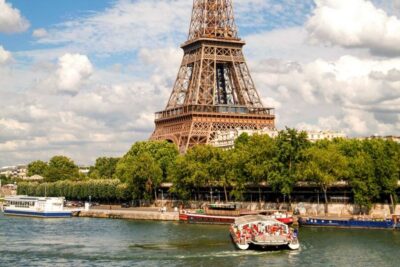
Eiffel Tower Access by Elevator & Seine River Cruise
Read our review →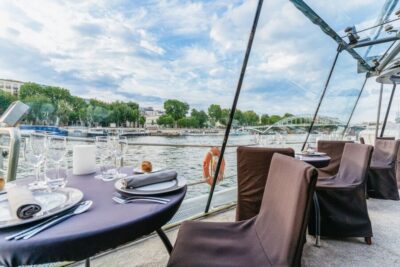
3-Course-Dinner Cruise on the Seine with live music
Read our review →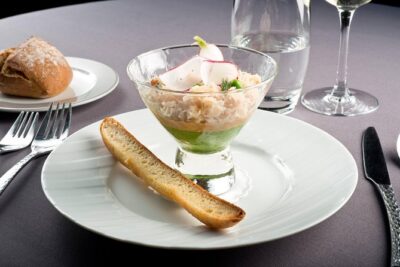
Bateaux Parisiens Seine River Gourmet Dinner & Sightseeing Cruise
Read our review →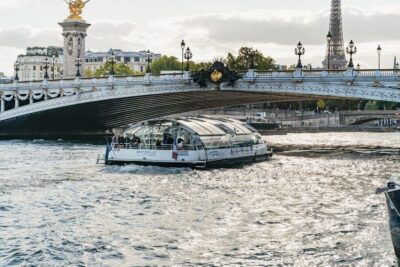
Paris: Hop-On Hop-Off Seine Cruise Pass with 9 Stops
Read our review →
3-Course Gourmet Dinner Cruise on Seine River
Read our review →Browse the lists this tour appears in