
Reviewed · HISTORICAL TOURS
Paris Jewish History 2-Hour Private Guided Walking Tour
Paris Jewish history is not confined to one museum or memorial. It is written into the streets between Notre Dame and the Marais, where medieval expulsions, religious prejudice, wartime persecution, and modern Jewish life all meet. This private walk gives you that difficult story in place, not behind glass.
I like the small private format, which lets you ask questions and set the pace. I also like the route’s range: Notre Dame, the Vichy memorial, Pletzl, Rue des Écouffes, and the Rue Pavée synagogue each add a different piece. The main caution is time. Two hours is enough for a strong introduction, but not enough for every story, and one review specifically wished for more detail about everyday Jewish life in Paris.
Key points to know before you book
- The route begins at Shakespeare & Company: Meet your guide by the green fountain, where they carry a red canvas tote bag.
- Notre Dame gets about 30 minutes: You’ll hear about Jewish connections and unusual details tied to this famous cathedral.
- The Marais takes about an hour: Pletzl, Rue des Écouffes, Goldenberg Deli, Place des Vosges, and Rue Pavée form the main walking section.
- The Rue Pavée synagogue is an Art Nouveau highlight: You see a roughly century-old building, though the tour information does not promise interior access.
- The story includes painful chapters: Expect discussion of medieval persecution, the Dreyfus affair, the Vichy government, and the Nazi occupation.
- This is a private, accessible walk: It runs rain or shine, costs $176 per person, and offers English, French, and Serbo-Croatian.
Why this Paris Jewish history walk matters
Paris is often sold through grand landmarks, famous cafés, and pretty boulevards. This walk asks you to read the city differently. A cathedral, a square, and a narrow lane become clues to how Jewish communities lived, were forced out, returned, and faced new dangers.
The story begins centuries ago, before France took its modern shape. You’ll hear about Hebrew communities in the Paris area, royal raids, restrictions, and the old superstitions that helped turn religious difference into prejudice. Those early chapters matter because they show that anti-Semitism did not appear suddenly in the twentieth century.
The tour also connects the medieval past with the Dreyfus affair, the Nazi occupation, and the Vichy government. That broad timeline is one of the experience’s strongest features. You are not given a single tragic episode in isolation. You are shown how laws, rumors, political movements, and official decisions affected Jewish life over many generations.
I appreciate that the route includes both painful history and places connected with Jewish life in Paris. You’ll hear about persecution, but you’ll also walk through the traditional quarter, see the old deli location, and pass the synagogue on Rue Pavée. That balance helps keep the tour from becoming only a memorial walk.
The tone will depend partly on your guide. Hannah has been praised for being friendly, professional, and willing to answer questions. Boris has been praised for connecting the story of Jewish people with the wider story of Paris and Europe. Those names are useful to know when you book, but guide assignments can change.
More Historical Tours in Paris
- Paris: Louvre Museum Entry with History of Mona Lisa
★ 3.9 · 2,823 reviews - Paris: Dark History and Ghostly Guided Walking Tour
★ 4.7 · 1,000 reviews - Le Marais/Paris – The Historic, Trendy, Jewish, LGBT district
★ 5.0 · 341 reviews
Meeting at Shakespeare & Company
The tour begins outside Shakespeare & Company, beside the green water fountain. Your guide carries a red canvas tote bag, so you have a clear visual marker in a busy part of central Paris.
This is a practical starting point. You are close to Notre Dame, and the meeting point is easy to connect with before or after other sightseeing around the Île de la Cité. I would arrive a little early, since the area around the bookstore can be crowded and the group does not wait invisibly.
The tour is private, so you are not joining a large crowd with a fixed script. That matters on a subject that can raise questions. If a point about the Dreyfus affair, Vichy France, or medieval prejudice needs clarification, you can ask without worrying about holding up a busload of people.
The guide speaks English, French, or Serbo-Croatian. Make sure you select the language that suits your group when arranging the walk.
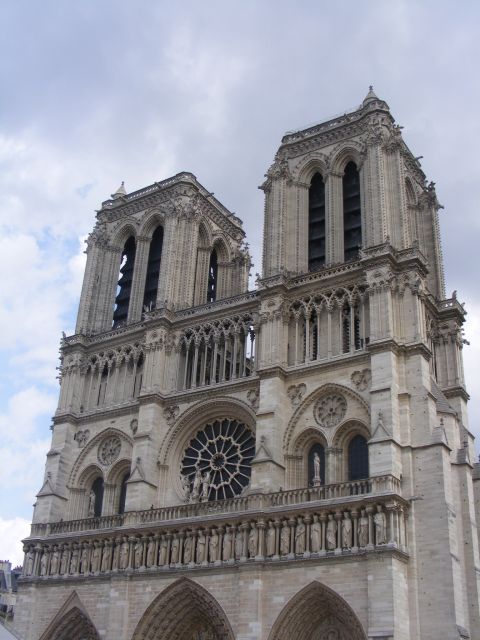
Notre Dame and the first 30 minutes
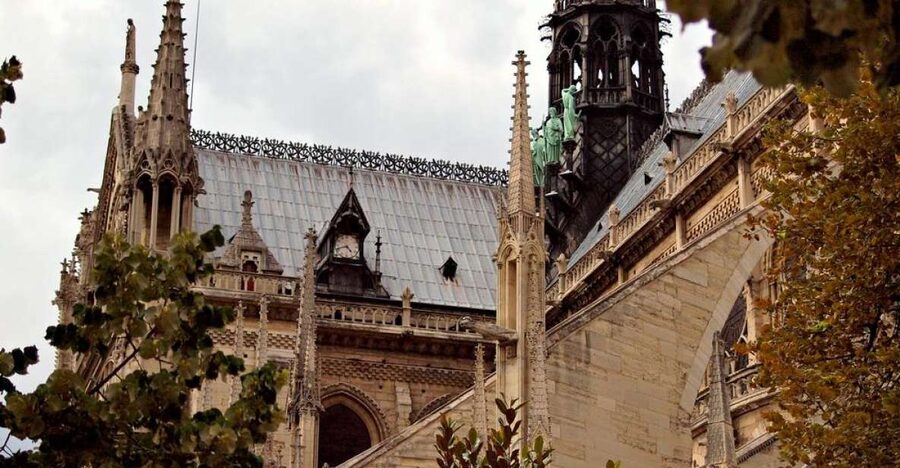
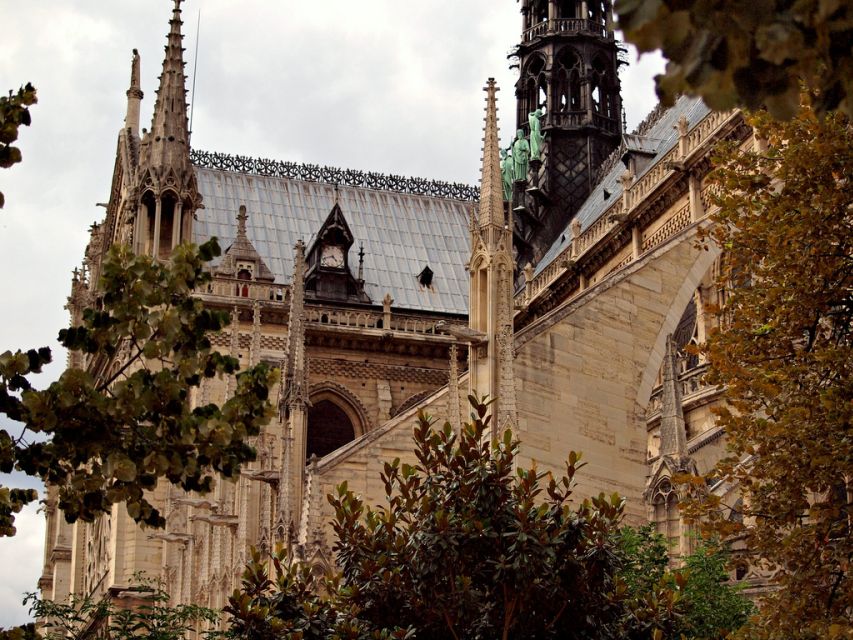
Notre Dame is the first major stop, with about 30 minutes of guided explanation. The focus is not simply the cathedral’s famous architecture. You’ll learn about Jewish aspects of Notre Dame and how the building fits into the religious and political story of Paris.
This is a smart opening because the cathedral gives you immediate context. Medieval Paris was a place where Christian institutions, royal power, trade, and minority communities existed close together. The guide uses the cathedral and its surroundings to introduce the conditions Jewish residents faced.
The experience also promises attention to the architectural skill behind this complex structure. That gives the first section a second layer. You are looking at an enormous medieval building while considering the society that produced it, including its religious divisions and social pressures.
Do not expect a full cathedral tour in half an hour. Notre Dame is too large and complex for that. The value here is the Jewish and historical angle, not a complete survey of every chapel, sculpture, and architectural feature.
This section may be especially useful if you have already seen Notre Dame but never considered how Jewish people were represented, treated, or discussed in medieval Paris. It shifts a familiar sight into a new question: who had power in this city, and who was pushed to its edges?
The Vichy memorial and the hard turn into modern history
After Notre Dame, the route includes a memorial to victims of the Vichy regime. The tour information gives this stop about 15 minutes, making it shorter than the Notre Dame and Marais sections.
That short pause carries serious weight. Vichy France collaborated with Nazi Germany during the occupation, and the memorial brings the story from long-standing prejudice into the machinery of twentieth-century persecution. You’ll hear about the Nazi occupation and the Vichy government as part of the history of Paris’s Jewish community.
This is where the walk’s broad time span becomes useful. Earlier sections address raids by French kings and medieval beliefs. The memorial shows how prejudice can become state policy when government, police, and ideology work together.
I would treat this part as a moment for attention rather than a quick photo stop. The experience is not designed as a museum visit, and the memorial section is brief. Still, its place in the route helps you understand that the Second World War was not an isolated outside event. Paris and French institutions were directly involved.
If your interest is mainly in wartime Paris, you may want a longer specialized occupation tour on another day. This walk gives you the essential connection, then continues into the neighborhoods where Jewish life has been more visible.
More Walking Tours in Paris
- Paris Top Sights Half Day Walking Tour with a Fun Guide
★ 5.0 · 2,893 reviews - Montmartre Hidden Gems and Scenic Highlights Walking Tour
★ 5.0 · 2,684 reviews - Montmartre Hill French Gourmet Food and Wine Tasting Walking Tour
★ 5.0 · 2,588 reviews - Paris Île de la Cité and Notre-Dame Walking Tour With Crypt
★ 5.0 · 2,272 reviews
Entering Pletzl, the historic Jewish quarter
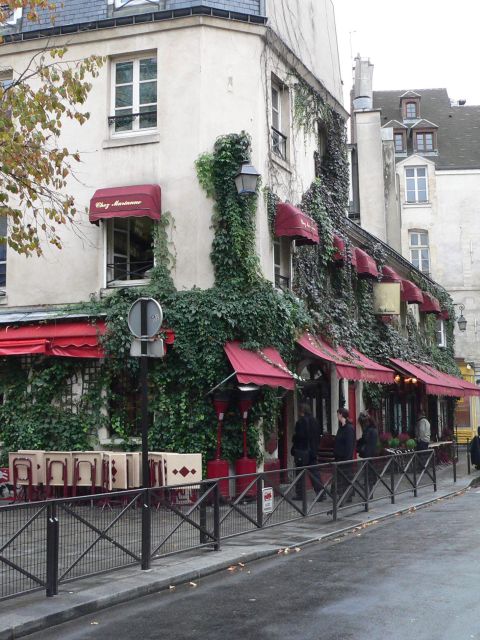
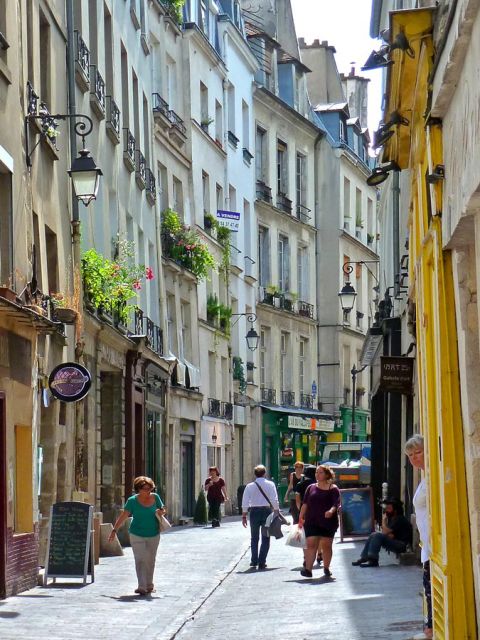
The longest portion of the tour takes place in Le Marais, with about an hour devoted to the historic Jewish quarter. Pletzl is the heart of this section. The name is associated with the small square and the surrounding streets that became a center of Jewish life in Paris.
Here the walk becomes more personal and street-level. Instead of hearing only about royal decrees or wartime government, you see the lanes, businesses, and buildings connected with community life. Rue des Écouffes is one of the key streets, and the route includes the Goldenberg Deli.
The deli is an important detail because food can make history tangible. A famous Jewish food address tells you something about neighborhood identity, migration, and the daily routines that official records often miss. The tour does not include food or drinks, so you should not expect a tasting, but you can note the location and return later if it interests you.
Pletzl is also where you may want to ask for more stories about ordinary life. One piece of feedback specifically wished for more detail about Jewish life in Paris, rather than mainly major historical events. That is a fair point to keep in mind. If you want stories about families, work, religious practice, migration, and neighborhood customs, ask directly. A private format gives you a better chance of steering the conversation in that direction.
The Marais today has plenty of shops, restaurants, and foot traffic. The current scene can make it hard to imagine earlier periods. A good guide helps you separate what is old from what is recent and explains how the neighborhood changed over time.
Place des Vosges and the shape of the Marais
Place des Vosges is one of the route’s visual rewards. It is often considered one of the most beautiful squares in the world, with a carefully planned architectural form that feels calm and balanced compared with the narrower streets around it.
The square is not included simply as a pretty pause. It helps explain how urban design, wealth, and status shaped this part of Paris. The guide can point out the architectural planning that made the square’s complex layout possible, giving you a break from the heavier historical material while keeping the focus on the city itself.
I like this change of pace. A tour about persecution can become emotionally flat if every stop has the same tone. Place des Vosges offers space to look closely at the buildings and understand the physical setting of the Marais.
Still, this is not a dedicated architecture tour. If you care most about the square’s design, ask your guide to spend a little time on its construction and layout. The schedule is tight, and the Jewish history theme remains the priority.
Rue Pavée synagogue and Art Nouveau detail
Rue Pavée brings one of the walk’s most distinctive sights: a synagogue about a century old and designed in the Art Nouveau style. Its curved lines, decorative treatment, and unusual design make it feel different from the grand medieval and classical buildings seen earlier.
This is a strong stop for anyone who likes architecture with a human story behind it. The synagogue is not just a pretty façade. It represents Jewish religious life in a later period and shows how the community’s buildings could take a modern form within the old streets of the Marais.
The tour describes seeing the synagogue, but it does not guarantee that you enter. Plan on viewing the exterior unless your guide confirms otherwise. This matters because some people book religious architecture tours expecting a full interior visit.
Even from outside, the building adds variety to the route. Notre Dame represents medieval Christian power. The synagogue offers a different religious and architectural presence, tied to a later phase of Jewish life in Paris.
What two hours can and cannot cover
Two hours is a good length for a first look at this subject. It is long enough to connect several sites without turning the walk into an all-day commitment. You can fit it into a busy Paris schedule, perhaps before dinner or after sightseeing on the Île de la Cité.
The limitation is just as clear. Paris Jewish history covers centuries, and this route moves from the medieval period to the present. You will receive a carefully chosen outline, not a full academic course.
The schedule gives roughly 30 minutes to Notre Dame, 15 minutes to an additional guided stop that appears to be the Vichy memorial, and an hour to Le Marais. The remaining time is used for walking and transitions. Wear comfortable shoes and expect a steady urban walk, even though the route is listed as wheelchair accessible.
The tour operates rain or shine. Paris weather can change quickly, so bring suitable clothing rather than assuming a wet day will cancel the walk.
Is $176 per person good value?
At $176 per person, this is not a low-cost stroll. The value depends on your group size and your interest in the subject.
For a private group, the price buys more than transportation between landmarks. You get a live guide, a flexible conversation, and a route built around one theme rather than a general Paris checklist. If you are traveling with family or friends who want to ask detailed questions, the private setup can make the price reasonable.
The cost is harder to justify if you want only a quick introduction or if you are mainly interested in seeing famous buildings without historical explanation. You could walk through the Marais on your own for much less. The fee pays for interpretation and connections between places.
Food and drinks are not included. That is no great problem, since the Marais gives you plenty of choices before or after the tour, but budget separately if you want to make the deli or neighborhood restaurants part of your day.
The operator, Paris in Person Private Tours, was selected among the top 10 small tour operators in Europe in a 2025 industry award program. That does not guarantee that every guide will suit every group, but it does give the company a stronger track record than an unknown independent listing.
Who will enjoy this walk most?
I would recommend this tour to you if you want Jewish history tied to actual Paris streets. It suits first-time visitors who want a focused introduction and returning visitors who have already seen the headline sights.
It is also a good fit for families with older children, students, and anyone interested in how religious minorities shaped the city. The private format makes it easier to adjust the level of detail and ask sensitive questions.
You may want something else if you need a long museum-style treatment, extensive discussion of daily Jewish life, or guaranteed synagogue entry. The walk touches all these themes, but its strength is the connection between landmarks and historical events.
The subject includes persecution, collaboration, and the Holocaust. It is serious material. You should book it because you want to engage with that history, not because you expect a light neighborhood walk with a few Jewish references.
Booking details that matter
You meet in front of Shakespeare & Company by the green fountain. Look for the red canvas tote bag. The tour ends near Place de la Bastille, so plan your next stop from the eastern side of central Paris rather than back at Notre Dame.
The experience is available in English, French, and Serbo-Croatian. It is listed as wheelchair accessible, though you may still want to confirm the route details for your particular chair and preferred pace.
You can cancel up to 24 hours before the start for a full refund, and the reserve-now, pay-later option keeps your plans flexible. The tour runs in rain, so do not assume poor weather will remove the booking from your schedule.
Should you book the Paris Jewish History walk?
Book it if you want a focused, private introduction to Jewish Paris that links medieval persecution, the Dreyfus affair, the Vichy regime, Nazi occupation, and present-day community life. The route is well chosen, especially the combination of Notre Dame, Pletzl, Place des Vosges, and the Art Nouveau synagogue on Rue Pavée.
I would book it with realistic expectations. Two hours gives you a strong framework, not every detail. Ask your guide for more stories about ordinary Jewish life, especially if that is your main interest. At $176 per person, the tour makes the most sense for a small group that values direct conversation and a carefully explained route.
FAQ
How long is the Paris Jewish History walking tour?
The tour lasts two hours.
Where does the tour meet?
You meet in front of Shakespeare & Company bookstore, beside the green water fountain. Your guide carries a red canvas tote bag.
Where does the tour finish?
The walk finishes near Place de la Bastille.
What languages are available?
The live guide can conduct the tour in English, French, or Serbo-Croatian.
Is the tour wheelchair accessible?
Yes. The activity is listed as wheelchair accessible.
Does the tour run in bad weather?
Yes. Tours operate rain or shine.
More 2-Hour Experiences in Paris
- The Père Lachaise Cemetery: Guided 2-Hour Small-Group Tour
★ 4.7 · 1,065 reviews - Paris: 2-Hour Perfume Creation Workshop
★ 4.8 · 731 reviews - Paris Louvre: 2-Hour Private Tour for Groups or Families
★ 4.6 · 639 reviews - Paris Montmartre: 2-Hour City Tour in German
★ 4.9 · 299 reviews
Just added around Paris
- Paris at the First Lodges – Ducasse sur Seine dinner cruise★ 4.0 · 165 reviews
- Paris at the First Lodges – Ducasse sur Seine Lunch Cruise★ 4.5 · 70 reviews
- Disneyland® Paris 1 Day with Round-Trip Train Tickets from Paris★ 4.0 · 50 reviews
- Explore speakeasies and hidden bars, sip meet & socialize★ 4.5 · 47 reviews
- Disneyland® Paris Express Shuttle with Admission Ticket from Central Paris★ 3.5 · 172 reviews
- Paris Cheeses and Wines Tour de France with Tasty Games★ 5.0 · 32 reviews
- Musée Orsay Highlights Tour – Best of Impressionism & Hidden Gems★ 5.0 · 27 reviews
- Private Tour: Discover Paris with Local, 3 hours on a Segway★ 5.0 · 71 reviews
Historical Tours, compared.
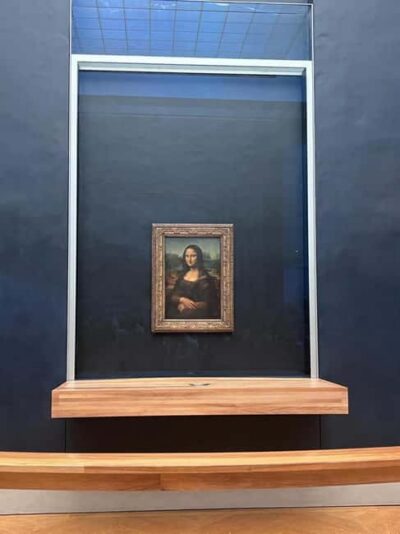
Louvre Museum Entry with History of Mona Lisa
Read our review →

Vieux Lyon Cultural & Historical Walking Guided Tour (English)
Read our review →

Toulouse Food & History Tour with a Chef (in English)
Read our review →
Small-Group Full-Day Tour of Côte de Nuits, Côte de Beaune Vineyards and Beaune Historical District
Read our review →
Browse the lists this tour appears in