
Reviewed · LOUVRE TOURS
Paris: Louvre Museum Skip-The-Line Tour
The Louvre can swallow a whole day, yet this two-hour private tour gives you a clear route through its major artistic turning points. Instead of wandering until your feet give out, you move from Renaissance experiments to Neoclassical order and Romantic drama, with the Mona Lisa and Nike of Samothrace along the way.
I like the way the tour connects art with changing ideas, especially the shift from Medieval religious tradition toward Humanism. I also like the private format, which lets a guide such as Boris adjust the explanation to your group, including families with teenagers.
The tradeoff is simple: $294 per person is a serious price for two hours, even with skip-the-ticket-line entry. You are paying for a private guide and a tightly planned introduction, not for an all-day Louvre visit.
Key points at a glance
- A focused art-history route: Renaissance, Neoclassicism, and Romanticism form the backbone of the visit.
- Major works in one sweep: See the Mona Lisa, Nike of Samothrace, Marriage at Cana, Raft of Medusa, and more.
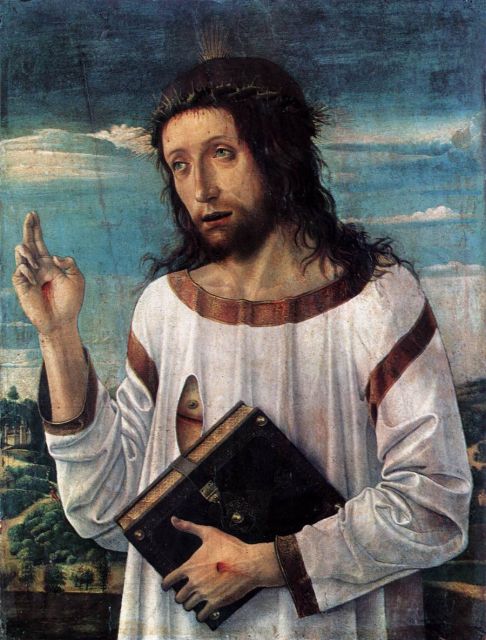
- Early Renaissance detail: Botticelli frescoes and Mantegna’s Saint Sebastian help explain the move toward Humanism.
- Private group format: Your guide can adapt the pace and discussion to your interests.
- Meeting point is easy to identify: Look for the guide with a red canvas tote at the Arc de Triomphe du Carrousel.
- Practical limits matter: Bags larger than 55 by 35 by 20 centimeters are not allowed inside.
Starting at the Arc de Triomphe du Carrousel
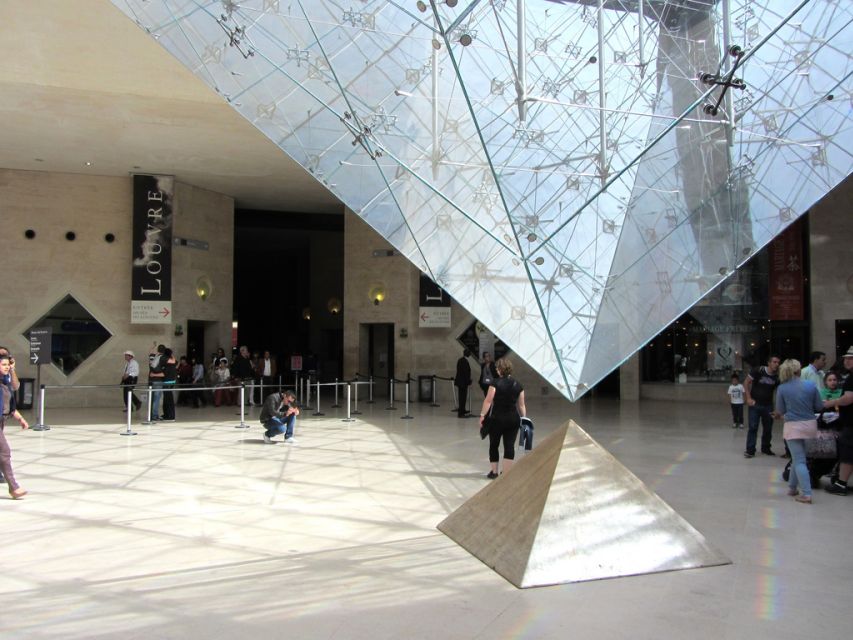
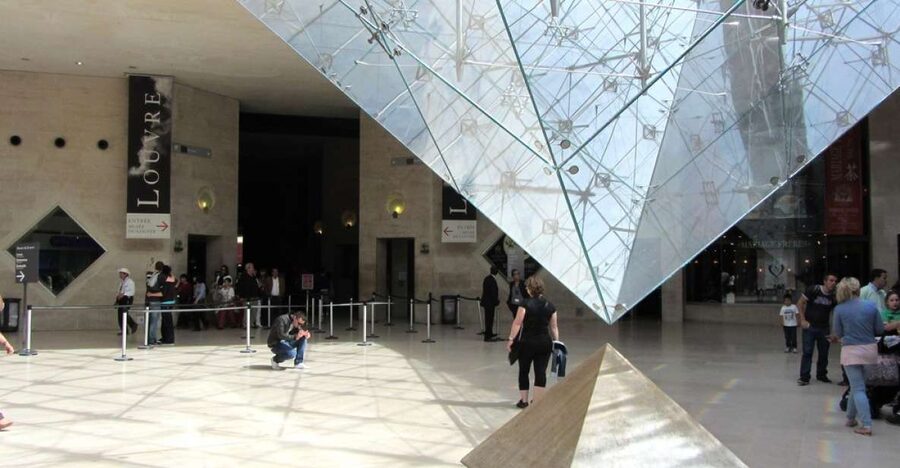
Your meeting point is the Arc de Triomphe du Carrousel, the smaller triumphal arch near the Louvre. Look for a guide carrying a red canvas tote bag. That detail matters in a crowded area, where a simple visual marker can save time and confusion.
The tour includes skip-the-ticket-line entrance, so you avoid the main ticket queue. This does not turn the Louvre into a quiet private house. The museum is still enormous, popular, and busy, but bypassing the ticket line gives a two-hour visit a much better chance of staying on schedule.
Arrive ready to walk and look upward. The Louvre is housed in a former royal palace, and even the passages between artworks can pull your attention away from the guide. A private group helps here because you are not trying to keep up with a large crowd.
The museum does not allow oversize luggage or items larger than 55 by 35 by 20 centimeters. Pack lightly. A small day bag is the sensible choice, and large suitcases should not be part of your plan for this visit.
More Louvre tickets and guided visits:
- Paris: Louvre Museum Timed-Entrance Ticket
★ 4.6 · 71,977 reviews - Paris: Louvre Guided Tour with Reserved Access & Boat Cruise
★ 4.3 · 16,353 reviews - Louvre Museum Masterpieces Guided Tour with Access
★ 4.5 · 12,023 reviews
A two-hour route through three artistic eras
The central idea is not simply to collect famous paintings. Your guide uses the art to show how European ideas changed across three periods: the Renaissance, Neoclassicism, and Romanticism.
That approach gives the visit a useful shape. The Renaissance section looks at renewed interest in the human figure, classical antiquity, and observation. Neoclassicism turns toward discipline, civic duty, and Roman models. Romanticism brings stronger emotion, conflict, and individual experience.
I find this kind of structure especially useful at the Louvre. Without it, the museum can feel like a long list of names. With it, individual works begin to answer one another across centuries.
A past tour led by Boris focused on how artists used the sun and light in different periods. That is a good example of the kind of thread that can make a large collection easier to understand. Rather than treating each work as an isolated masterpiece, you can watch an idea change from room to room.
Botticelli and the move toward Humanism
The early Renaissance portion includes Botticelli’s fresco Venus and the Three Graces Presenting Gifts to a Young Woman. This is one of the most useful stops for understanding the shift away from strictly Medieval ways of presenting sacred and human subjects.
The scene allows your guide to discuss the early Renaissance and the growing interest in Humanism. You are not just looking at decorative figures. You are considering why classical mythology, graceful bodies, and human emotion began to receive fresh attention in Italian art.
The fresco also gives you a chance to see Botticelli beyond the single image most people associate with him. His line, figures, and sense of movement are easier to appreciate when someone points out how the work belongs to a period in transition.
Mantegna’s Saint Sebastian adds another view of early Renaissance art. It is a useful companion to Botticelli because the two artists do not approach the human body and space in exactly the same way. You can compare how religious subject matter is treated with greater attention to physical presence and classical form.
The tour also highlights early Florentine art and Venetian painting, including works by Bellini. Those regional differences are valuable. Florence and Venice developed distinct artistic traditions, and a guide can help you notice changes in color, surface, composition, and mood without turning the stop into a technical lecture.
Leonardo, Veronese, and the Louvre’s headline works
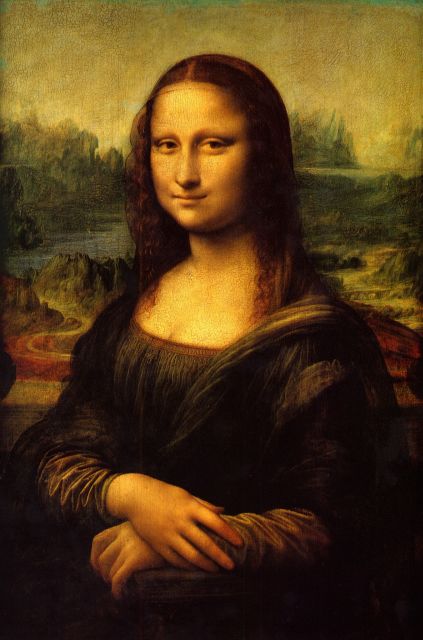
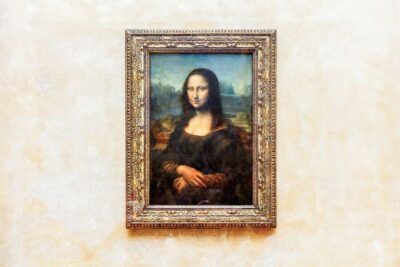
At some point, the route brings you to Leonardo da Vinci’s Mona Lisa. You should expect this to be one of the most crowded stops. The painting is small compared with the space and attention surrounding it, so your time there may feel different from the more thoughtful pauses elsewhere.
The private format still helps. Your guide can give you the historical and artistic context before or after you approach the painting, when the crowd makes a long explanation difficult. I would not judge the entire tour by how much time you get directly in front of the Mona Lisa. The value is in understanding why Leonardo’s work matters within the wider Renaissance story.
Veronese’s Marriage at Cana offers a very different experience. It is the largest painting in the Louvre, and its scale changes the way you look at it. Rather than focusing on one face or gesture, you need to take in a broad scene filled with figures, architecture, and carefully arranged activity.
This is a strong stop for learning how a Venetian painter handled color and spectacle. It also provides a useful contrast with the more restrained attention usually given to Leonardo. One artwork asks you to study a face. The other asks you to scan an entire wall.
Bellini’s Venetian paintings reinforce that contrast. The guide can help you see why Venetian art is often discussed through its use of color and atmosphere, while Florentine art is frequently associated with drawing and structure. The point is not to reduce either school to one formula, but to give you a starting point for looking closely.
More museums and galleries in Paris:
- Paris: Louvre Museum Entry Ticket With Host and River Cruise
★ 4.6 · 9,926 reviews - Les Invalides: Napoleon’s Tomb & Army Museum Entry
★ 4.6 · 9,185 reviews - Louvre Museum – Exclusive Guided Tour (Entry Included)
★ 5.0 · 6,296 reviews - Paris: Louvre Museum Hosted Entry and Mona Lisa Audioguide
★ 4.6 · 5,235 reviews
The Nike of Samothrace and the power of sculpture
The Nike of Samothrace is one of the Louvre’s unforgettable sculptures. This second-century BC marble figure represents Nike, the Greek goddess of Victory, and its position on a grand staircase makes the approach part of the experience.
You do not need a long art lecture to understand why this work stops people. The figure seems to surge forward, and the sculptor uses the folds of the clothing to suggest wind and motion. The missing head and arms do not erase its force. If anything, the fragmentary condition makes the surviving body and drapery more striking.
This stop also widens the tour beyond painting. You move from Renaissance frescoes and portraits to ancient Greek sculpture, then back into later European art. That range is one reason a guide is useful. The Louvre’s collection covers thousands of years, and a good route needs to make those jumps feel connected rather than random.
The museum includes works from Ancient Egypt and Greece through the early 19th century, but a two-hour visit cannot cover all of those collections. The tour selects particular works rather than promising a full survey. That is a sensible choice, as long as you understand that many galleries will remain unseen.
David, Ingres, and the controlled drama of Neoclassicism
The Neoclassical section includes Jacques-Louis David’s The Oath of the Horatii and The Crowning of Napoleon. These paintings are useful together because they show how art can serve ideas of duty, authority, sacrifice, and public ceremony.
The Oath of the Horatii presents its figures with strong structure and deliberate gestures. The painting feels organized, almost staged, and that order is part of its message. A guide can point out how the composition directs your eye and how the figures embody civic ideals.
The Crowning of Napoleon works on a much larger ceremonial scale. It presents power through costume, architecture, arrangement, and formal behavior. Look for the difference between an image that celebrates heroic duty and one that records a grand political event.
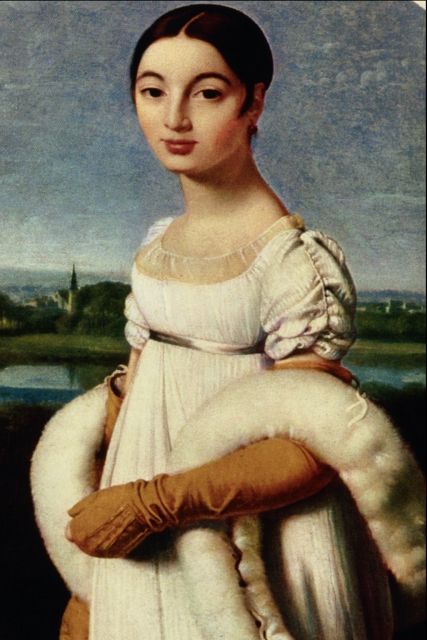
Ingres’s Une Odalisque brings a more intimate subject into this period. The sinuous nude is known for its elongated form, and it gives your guide a chance to discuss the gap between idealized bodies and observed anatomy. It also shows that Neoclassicism was not limited to public history paintings.
The route through these works helps you see that Neoclassical art was not simply old-fashioned decoration. It used classical references and clear design to express modern political and social ideas.
Géricault and Delacroix bring Romanticism into view
The final major turn is Romanticism, represented by Théodore Géricault’s Raft of Medusa and Eugène Delacroix’s Liberty Leading the People.
The Raft of Medusa is vast, intense, and emotionally difficult. Its figures are caught between despair and hope, and the composition pushes your eye upward toward possible rescue. This is not the calm order of David. The painting places suffering, fear, and human survival at the center.
The work also shows why scale matters at the Louvre. A reproduction can communicate the basic subject, but the size of the canvas affects your physical response. You can see how bodies, gestures, and waves build pressure across the surface.
Delacroix’s Liberty Leading the People commemorates the July Revolution of 1830. The allegorical figure of Liberty leads people forward over the fallen, combining political event and symbolic image. It is one of the most direct examples of Romanticism’s interest in emotion, conflict, movement, and national identity.
These final stops give the tour a strong ending. You have moved from the measured balance of earlier periods toward art that feels urgent and unstable. I like that the route closes with paintings that leave you thinking about politics and human cost, not just technique.
What the private guide adds
The guide is the main reason to choose this experience over entering the Louvre alone. The museum provides the objects, but the guide provides the connections. You can ask for more detail about a favorite painter, request a slower explanation, or move past a work that does not interest your group as much.
Boris has been especially effective for visitors who want historical context and clear explanations. One tour also adapted well to a group with two teenage boys, which tells me this format can work for families who need a route with enough variety to hold attention.
The guides speak English, French, and Serbo-Croatian. You should choose the language that lets you ask questions comfortably. The tour is offered as a private group, so the experience is not built around keeping pace with strangers.
That flexibility has limits. Two hours is still two hours, and the Louvre is too large for a leisurely look at every major room. If your group wants long periods of quiet observation, you may need a separate return visit.
The provider was selected among the top 10 small tour operators in Europe in 2025 from 26,000 companies. That recognition does not replace your own judgment, but it helps explain why the company is positioned as a specialist in small, private experiences rather than a basic ticket seller.
Is $294 per person good value?
At $294 per person, this is not a budget Louvre visit. The price makes the most sense for a private group that values a guide, a planned route, and time saved at the ticket line.
For one person or a couple, the cost may feel hard to justify when the Louvre can be visited with other ticket options. For a family or group splitting the cost of private guiding, the calculation can look better, particularly if different ages and interests make independent planning difficult.
I would also consider the cost of a lost morning. If avoiding the ticket queue and wandering saves you time during a short Paris visit, that has real value. The tour gives you a strong introduction, then leaves you free to return on your own if a particular collection catches your interest.
Still, do not buy this expecting an all-day museum experience. The price pays for focus and guidance. It does not include food or drinks, and there is no claim that every Louvre department will be covered.
Who should book this Louvre tour?
I would choose this tour if you want the Louvre’s major art story explained in plain terms, especially if you are visiting for the first time. It also suits families, private groups, and people who prefer asking questions rather than listening from the back of a large crowd.
Art-history beginners should get plenty from the Renaissance to Romanticism sequence. You do not need prior knowledge to appreciate Botticelli, Leonardo, David, or Delacroix, and the route gives you enough context to keep the names from becoming a blur.
This is less suitable if you want Ancient Egyptian objects, Greek sculpture, or every famous painting in the building. The tour includes the Nike of Samothrace and covers art from broad periods, but its main focus is the Renaissance, Neoclassicism, and Romanticism.
The museum is wheelchair accessible, and the tour operates rain or shine. Since the route is indoors, weather will not change the art itself, but you still need to arrive at the meeting point prepared for the conditions outside.
Should you book it?
Book this tour if you want a well-organized first look at the Louvre, value a private guide, and can accept a high per-person price for two hours. The strongest feature is the way the guide links individual masterpieces to changes in European thought and style.
Skip it if you prefer to wander alone, plan to spend most of the day inside, or are mainly interested in collections outside the Renaissance to Romanticism route. For everyone else, the private format, skip-the-ticket-line entry, and clear sequence make this a practical way to get your bearings before deciding what deserves a longer second visit.
FAQ
How long does the Louvre tour last?
The tour lasts two hours.
What does the tour include?
It includes skip-the-ticket-line entrance to the Louvre and a live guide.
What languages are available?
The tour is available in English, French, and Serbo-Croatian.
Where is the meeting point?
Meet at the Arc de Triomphe du Carrousel. Your guide will carry a red canvas tote bag.
Is this a private tour?
Yes. The experience is organized for a private group.
Which Louvre artworks are included?
The route includes the Nike of Samothrace, Botticelli’s Venus and the Three Graces Presenting Gifts to a Young Woman, Mantegna’s Saint Sebastian, Leonardo da Vinci’s Mona Lisa, Veronese’s Marriage at Cana, Géricault’s Raft of Medusa, Delacroix’s Liberty Leading the People, Ingres’ Une Odalisque, and David’s The Crowning of Napoleon and The Oath of the Horatii.
Can I bring a large suitcase?
No. Oversize luggage is not allowed, and items larger than 55 by 35 by 20 centimeters cannot enter the museum.
Can I cancel the tour?
Yes. You can cancel up to 24 hours in advance for a full refund. You can also reserve now and pay later.
More Skip-the-Line Tickets in Paris
- Versailles: Skip-the-Line Tour of Palace with Gardens Access
★ 4.7 · 9,778 reviews - Versailles: Skip-the-Line Guided Palace Tour and Full Access
★ 4.6 · 5,214 reviews - Louvre Museum: Skip-the-Line Small Group Guided Tour
★ 4.6 · 3,960 reviews - From Paris: Versailles Skip-the-Line Tour & Gardens Access
★ 4.7 · 3,011 reviews
Just added around Paris
- Paris at the First Lodges – Ducasse sur Seine dinner cruise★ 4.0 · 165 reviews
- Paris at the First Lodges – Ducasse sur Seine Lunch Cruise★ 4.5 · 70 reviews
- Disneyland® Paris 1 Day with Round-Trip Train Tickets from Paris★ 4.0 · 50 reviews
- Explore speakeasies and hidden bars, sip meet & socialize★ 4.5 · 47 reviews
- Disneyland® Paris Express Shuttle with Admission Ticket from Central Paris★ 3.5 · 172 reviews
- Paris Cheeses and Wines Tour de France with Tasty Games★ 5.0 · 32 reviews
- Musée Orsay Highlights Tour – Best of Impressionism & Hidden Gems★ 5.0 · 27 reviews
- Private Tour: Discover Paris with Local, 3 hours on a Segway★ 5.0 · 71 reviews
Louvre Tours, compared.

Louvre Guided Tour with Reserved Access & Boat Cruise
Read our review →
Louvre Museum Masterpieces Guided Tour with Access
Read our review →
Louvre Museum Entry Ticket With Host and River Cruise
Read our review →
Priority Access Louvre with Host -Direct to Mona Lisa
Read our review →
Mona Lisa & Louvre Masterpieces Tour with Reserved Access
Read our review →
Louvre Museum – Exclusive Guided Tour (Entry Included)
Read our review →
Louvre Reserved Ticket and River Cruise Combo
Read our review →Browse the lists this tour appears in