
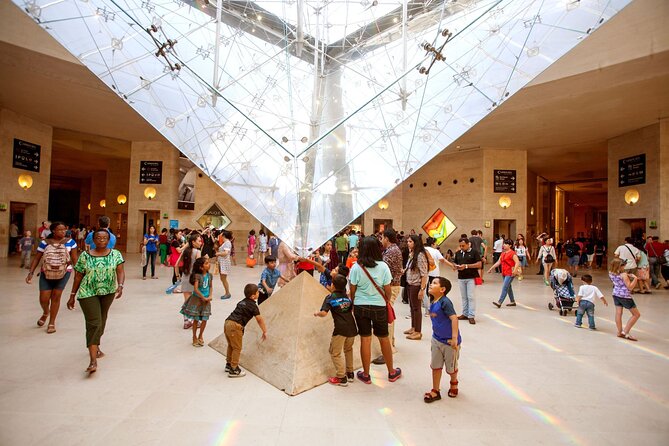
Reviewed · LOUVRE TOURS
Paris: Louvre Museum Tour Mona Lisa & Iconic Masterpieces
The Mona Lisa is only one small stop in a museum that can swallow an entire day. This two-hour guided route gives you a useful path through the Louvre’s biggest sights, from the pyramid entrance to Greek sculpture, Renaissance paintings, and the medieval castle foundations below the palace.
I like the pre-reserved entry and the way the tour turns a giant museum into a story you can follow. I also like that you can keep exploring after the guide leaves. The main drawback is time: two hours is enough for a strong first look, not enough for a full Louvre visit, and busy rooms can make the pace feel quick.
Key points to know before booking
- See the three headline works: The route includes the Mona Lisa, Venus de Milo, and Winged Victory of Samothrace.
- Meet outside the museum: Your guide meets you at the Kiosque des Noctambules, not at the Louvre entrance.
- Expect a group of up to 20: Headsets help you hear the guide in crowded galleries.
- Use the extra museum time: After the tour, you may stay and explore, but you cannot re-enter galleries once you exit beneath the pyramid.
- Guides make the difference: Sophie, Gabriela, Megan, Lucia, and others have been praised for clear explanations, humor, and strong storytelling.
- Plan for stairs and crowds: This tour is not suitable for wheelchair users or people with mobility impairments, and security may take up to 20 minutes in peak season.
Why a guided Louvre visit makes sense
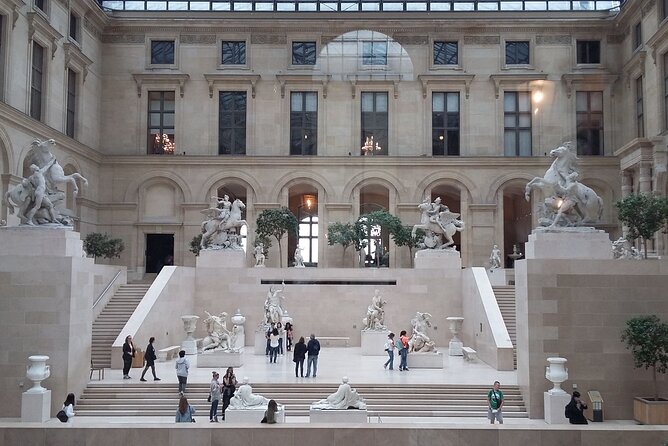
The Louvre is not simply a large art museum. It is a former royal residence with collections stretching from ancient civilizations through the mid-19th century. Without a plan, you can spend half your visit finding the right staircase, crossing long corridors, or standing in the wrong crowd.
I like this tour as a first visit because it gives you a basic map of the place. Your guide connects the building, the collections, and the famous objects instead of treating each painting as an isolated stop. That context matters at the Louvre. You are not just looking at a marble statue. You are learning why it mattered, how it was found or displayed, and how it fits into the museum’s long story.
The experience costs $79 per person. That is more than a basic museum admission, but the price includes a licensed guide, reserved entry, headsets, and a planned route. For a first visit, the money buys structure and saved time. If you already know the Louvre well and prefer to wander alone, you may find the extra cost harder to justify.
More Louvre tickets and guided visits:
- Paris: Louvre Museum Timed-Entrance Ticket
★ 4.6 · 71,977 reviews - Paris: Louvre Guided Tour with Reserved Access & Boat Cruise
★ 4.3 · 16,353 reviews - Louvre Museum Masterpieces Guided Tour with Access
★ 4.5 · 12,023 reviews
Finding the Kiosque des Noctambules
The meeting point is the Kiosque des Noctambules, a colorful artistic structure decorated with Murano glass beads, facing the Comédie Française. It is about a five-minute walk from the Louvre entrance.
This detail matters. Do not go straight to the pyramid or wait at the museum ticket area. The guide arrives at the selected start time, not before, and holds a GetYourGuide flag. The nearest metro stop is Palais Royal, Musée du Louvre, using the Place Colette exit.
I would arrive early enough to locate the kiosk without rushing. One unusual detail is that copying the meeting address into a map can send you to the wrong place, so use the stated landmark and metro exit rather than relying only on an automatically generated route. If you arrive late, the group booking may not allow a ticket to be issued.
Entering through the Louvre pyramid
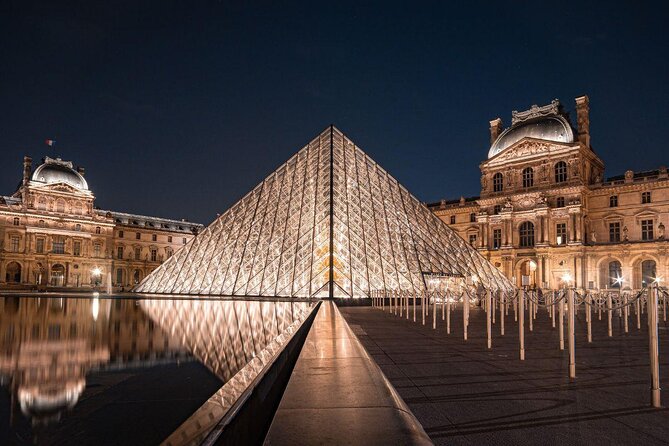
The tour includes a pre-reserved museum ticket and skip-the-ticket-line access. That does not mean every part of the entrance is instant. You still need to pass security, and during the busiest summer periods the security check can take up to 20 minutes.
Still, reserved entry is a real advantage at a museum where lines can consume valuable Paris time. Once inside, your group follows the guide through the pyramid and into the former palace. The headset is useful here, since the Louvre’s broad halls and crowded galleries can make it hard to hear someone speaking at normal volume.
The group size can reach 20 people. That is not a private experience, and you will not receive the same amount of personal attention as you would on a small-group tour. The benefit is a lower price than a private guide, while still giving you someone to steer the visit.
The Louvre palace and medieval foundations
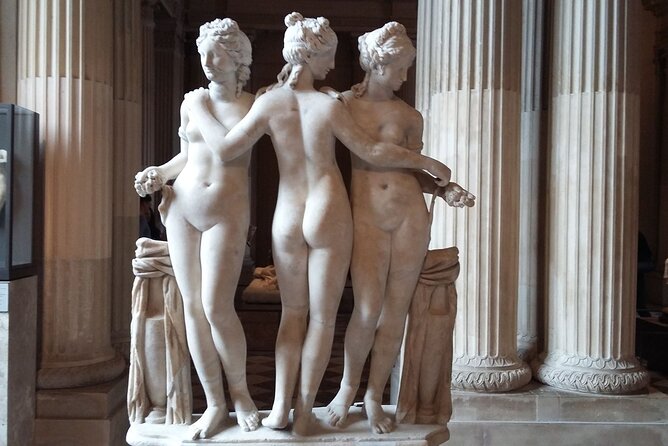
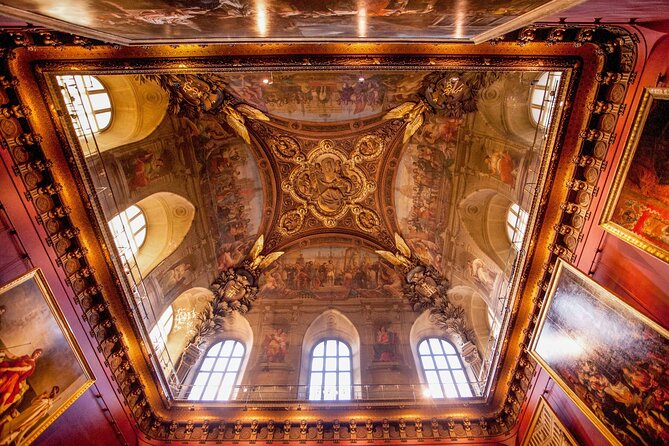
Before the paintings and statues take over, the building itself deserves attention. The Louvre began as a fortified castle, and the tour includes the foundations of that earlier structure in the basement of the palace.
This is one of the most useful stops for understanding the museum. The pyramid and grand galleries can make the Louvre feel like a single enormous palace built for art. The foundations remind you that the site changed over centuries, from defensive castle to royal residence to public museum.
You will not see every period of the building in two hours. Instead, the guide gives you a framework for the place. That helps later, when you are exploring on your own and realize that the Louvre is as much an architectural maze as an art collection.
More museums and galleries in Paris:
- Paris: Louvre Museum Entry Ticket With Host and River Cruise
★ 4.6 · 9,926 reviews - Les Invalides: Napoleon’s Tomb & Army Museum Entry
★ 4.6 · 9,185 reviews - Louvre Museum – Exclusive Guided Tour (Entry Included)
★ 5.0 · 6,296 reviews - Paris: Louvre Museum Hosted Entry and Mona Lisa Audioguide
★ 4.6 · 5,235 reviews
Venus de Milo and ancient Greek sculpture
The Venus de Milo is one of the tour’s main stops. This ancient Greek sculpture has inspired artists for generations, and the guide explains its place in the history of sculpture rather than simply pointing out the missing arms.
The value here is the chance to look closely with a purpose. A guide may direct your attention to the pose, the balance of the figure, and the way the sculpture is presented. You can then spend a few minutes seeing the details for yourself instead of moving on after a quick photograph.
The Louvre’s ancient Greek collection includes more than its two most famous statues. The route also touches on other relics and the development of Greek sculpture. If you are especially interested in antiquity, two hours will feel short. You will see a selected portion, not a full study of the collection.
Winged Victory of Samothrace
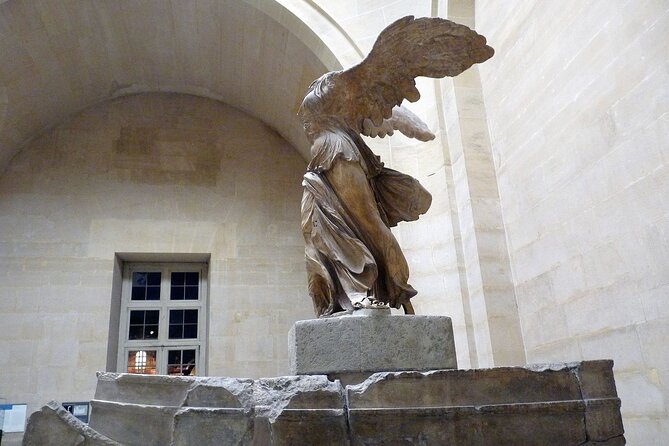
The Winged Victory of Samothrace is another essential stop. The Hellenistic statue represents Nike, the Greek goddess of victory, and its position on the Daru staircase makes it one of the Louvre’s most dramatic displays.
The staircase setting is part of the experience. You see the sculpture from below and then approach it at close range, which makes the folds of the clothing and the sense of movement easier to appreciate. A good guide helps you notice how the statue suggests wind, motion, and arrival even though the head and arms are missing.
This is also where the museum’s crowds can affect the visit. The staircase is a popular route, and you may need to pause at the edge of the flow rather than stand wherever you like. Headsets make it easier to keep listening while the group moves through the space.
Mona Lisa and the story behind the fame
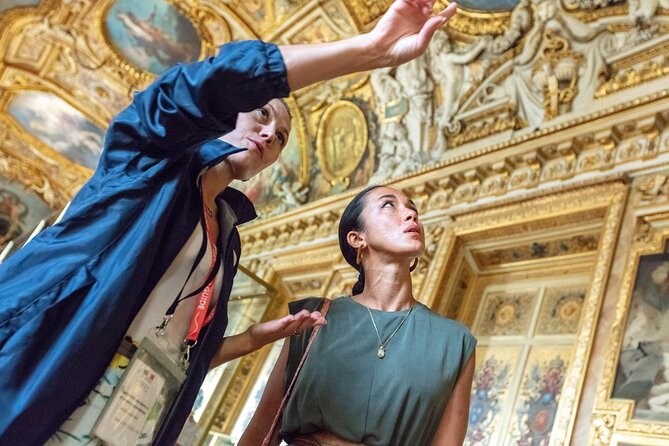
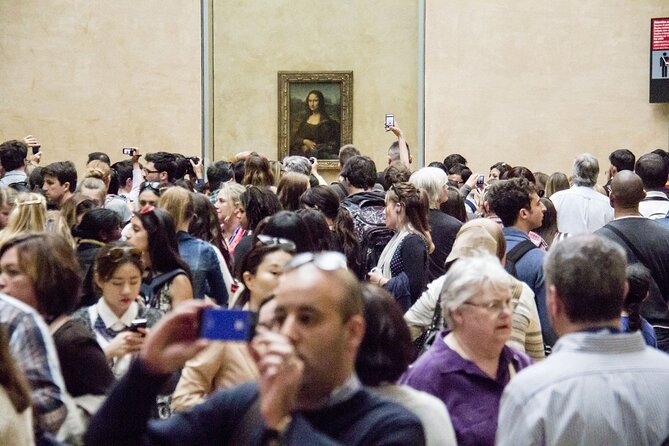
The Mona Lisa is the stop most people have in mind when they book. The painting is protected behind a barrier, and the room can be crowded, especially in summer and during high-demand periods. Your guide leads the group toward the viewing area and explains the painting’s fame, including the 1911 theft that helped turn it into a global celebrity.
The painting itself is smaller than many first-time visitors expect. The pleasure is partly in examining Leonardo’s technique and partly in understanding how a portrait became a cultural event. A guide can make the stop more meaningful than a quick glance followed by a photograph.
Do not expect a quiet, private viewing. You will share the room with other museum visitors, and your time near the front may be limited. The practical advantage of joining a guided group is that you do not have to work out the route on your own. One guide, Babou, was especially praised for getting the group near the front of the Mona Lisa viewing area, though guide assignments vary.
Renaissance paintings and lesser-known works
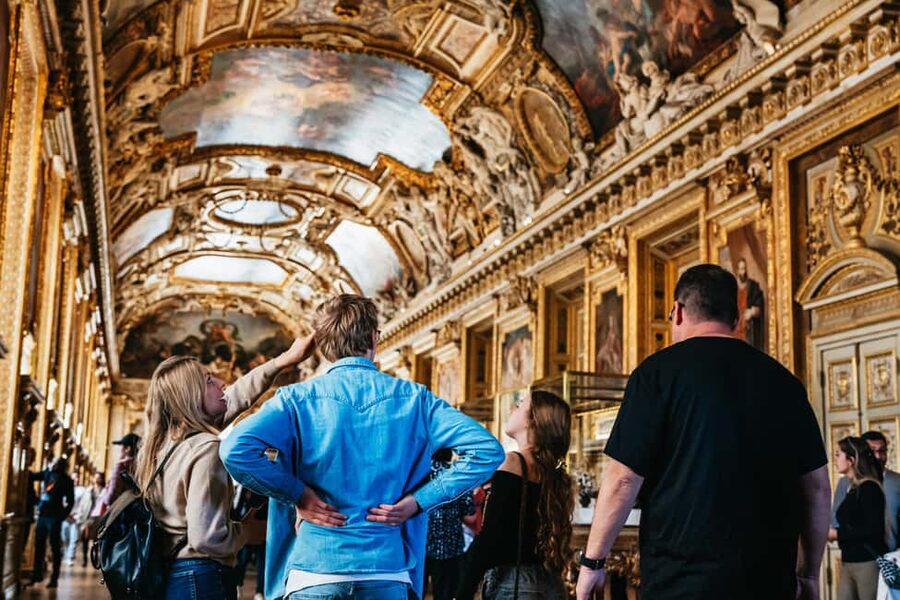
The tour includes Renaissance treasures and paintings from the 13th through 19th centuries. The exact route can shift with crowd levels, gallery access, and the guide’s judgment, so you should think of this as a highlights tour rather than a fixed checklist of every major painting.
This flexibility can work in your favor. Guides such as Sophie, Gabriela, Megan, Lucia, and Gabrielle have been singled out for making facts easy to follow, adding humor, and connecting individual artworks to the wider story of the museum. The strongest part of the experience is not simply reaching famous rooms. It is having someone point out a detail you might otherwise miss.
You will also see works that are less famous than the Mona Lisa but worth your attention. That keeps the visit from becoming a three-stop race. Still, the tour moves at a purposeful pace, and people who want long, quiet stretches in front of a painting should plan to stay afterward.
What happens after the two-hour tour

When the guided portion ends, you can continue exploring the Louvre at your own pace. This is important because two hours gives you an organized introduction, but the museum holds far more than any short route can cover.
I would decide in advance what you want to see after the tour. You might return to a gallery that caught your eye, look for a particular period, or simply follow the signs until your feet protest. The extra time is especially valuable if the tour gives you enough orientation to feel less lost.
There is one firm limitation: once you have exited the wings and are under the pyramid, you cannot re-enter the rooms. Do not leave the galleries casually if you still intend to see more art.
How the guides shape the experience
The guide is the heart of this tour. The best feedback centers on clear explanations, warmth, humor, and the ability to keep a group interested inside an overwhelming museum.
Sophie has been praised for an upbeat, easy-to-follow narrative. Gabriela and Gabrielle are noted for passionate storytelling and for explaining a large range of periods without making the tour feel like a classroom lecture. Megan has been described as kind, funny, interactive, and helpful with questions. Other praised guides include René, Babou, Francesca, Lucia, Andrea, Martha, and Imad.
You cannot select a particular guide from the information provided, so treat these names as examples of the guide style you might receive, not a promise. The tour is offered in English and Portuguese, and the booking includes headsets to make the commentary easier to hear.
Crowds, stairs, and what to bring
Wear comfortable shoes. The Louvre involves a great deal of walking, and the route includes many stairs. The tour is not suitable for wheelchair users or people with mobility impairments, and non-folding wheelchairs and electric wheelchairs are not permitted.
Do not bring luggage, large bags, selfie sticks, or a double baby stroller. The museum cannot accept these items for this visit. A small personal bag is a wiser choice, but follow the current museum rules at the time of booking.
Summer is the most demanding period, with larger crowds and a possible security wait of up to 20 minutes. If your schedule is tight, build in extra time before the tour rather than arriving at the meeting point just as the start time approaches.
Is $79 a fair price?
At $79, this is a convenience-and-context purchase. You are paying for more than access to the galleries. The reserved ticket reduces the risk of losing time in a long ticket line, while the guide gives you a workable route through a museum that can be confusing on a first visit.
The value is strongest if you have only a few hours in Paris, are visiting the Louvre for the first time, or want the famous works explained rather than simply photographed. It is also useful if official museum tickets are sold out, since the tour includes a reserved entry ticket.
The value is weaker if you want to spend an entire day studying paintings, move at your own pace, or avoid groups. A two-hour group tour cannot provide a private experience, and the most crowded rooms may feel rushed. The best approach is to treat it as your introduction, then use the remaining museum time for your own interests.
An optional upgrade adds a morning visit to the Orsay Museum. That can suit someone building a full art-focused day, but you should remember that the Louvre portion alone is physically demanding.
Who should book this Louvre tour?
I would recommend it most strongly to first-time Louvre visitors, short-stay visitors, families with older children who need a clear route, and anyone who wants the major sights without spending hours studying a floor plan.
Art lovers who already know the museum may prefer independent entry. The same is true for visitors who need step-free access, a private pace, or a wheelchair-friendly plan. You should also skip this option if you dislike meeting at an outside landmark or cannot reliably arrive on time.
The cancellation details need careful attention when you book. The booking information allows cancellation up to 24 hours in advance for a full refund, while the important notes also say the tour is non-refundable and cannot be rescheduled. Check the terms shown for your exact booking before paying, since the two statements do not fully match.
FAQ
Where does the Louvre tour meet?
Meet at the Kiosque des Noctambules, the colorful Murano glass-bead structure facing the Comédie Française. It is about a five-minute walk from the Louvre entrance. The nearest metro stop is Palais Royal, Musée du Louvre, using the Place Colette exit.
Can I go directly to the Louvre entrance?
No. You must meet the guide at the Kiosque des Noctambules. Look for a guide holding a GetYourGuide flag at your selected start time.
How long does the guided tour last?
The guided tour lasts two hours. Afterward, you may continue exploring inside the Louvre on your own.
Which languages are available?
The tour is offered in English and Portuguese.
Are museum tickets included?
Yes. A Louvre pre-reserved entry ticket is included, along with a licensed guide and headsets.
Can wheelchair users join this tour?
No. The tour is not suitable for wheelchair users or people with mobility impairments. The route includes many stairs, and non-folding and electric wheelchairs are not permitted.
Can I bring luggage or a large stroller?
No. Luggage, large bags, selfie sticks, and double baby strollers are not allowed for this visit. Once you leave the wings and return beneath the pyramid, you cannot re-enter the galleries.
Should you book it?
Book this tour if you want the Louvre’s major works explained by a lively guide and you value reserved entry more than total independence. The two-hour route covers the Mona Lisa, Venus de Milo, Winged Victory, Renaissance art, ancient Greek pieces, and the palace foundations, then leaves you free to continue alone.
I would book it for a first Louvre visit, especially on a short Paris trip. I would not book it for a wheelchair user, a visitor seeking a private art study, or someone who wants to spend ten quiet minutes with every painting. For most first-timers, though, the guide and the clear route are worth paying for at a museum this enormous.
Just added around Paris
- Paris: Croissant Baking Class with a Chef★ 5.0 · 201 reviews
- Cooking Class with a Parisian Chef★ 5.0 · 46 reviews
- Cocktails lessons in Speakeasy★ 4.5 · 72 reviews
- Paris: Choux Pastry and Chocolate Éclair Making Class★ 4.9 · 50 reviews
- Paris: Classic Sites Tour by Vintage Citroen 2CV★ 4.6 · 189 reviews
- Paris: Cheese and Wine Class in a 17th Century Cellar★ 4.8 · 91 reviews
- Paris: Romantic Photoshoot for Couples★ 4.9 · 131 reviews
- Paris: Bread and Croissant-Making Class★ 4.8 · 206 reviews
Louvre Tours, compared.


Louvre Guided Tour with Reserved Access & Boat Cruise
Read our review →
Louvre Museum Masterpieces Guided Tour with Access
Read our review →
Louvre Museum Entry Ticket With Host and River Cruise
Read our review →
Priority Access Louvre with Host -Direct to Mona Lisa
Read our review →
Mona Lisa & Louvre Masterpieces Tour with Reserved Access
Read our review →
Louvre Museum – Exclusive Guided Tour (Entry Included)
Read our review →
Louvre Reserved Ticket and River Cruise Combo
Read our review →Browse the lists this tour appears in