
Reviewed · MONTMARTRE TOURS
Paris: Montmartre Culture and Local Pastries Walking Tour
Montmartre makes the most sense on foot, one sloping lane and grand view at a time. This tour connects the Sacré-Coeur, Place du Tertre, artists’ former haunts, and the Moulin Rouge into one guided walk, with local advice on pastries and cafés along the way.
I like the mix of famous sights and tucked-away streets, and I like that guides such as Frédéric and Climont bring extra attention to the district’s artists, shops, and food stops. The main catch is important: this is not a tasting tour. Pastry sampling, food, and drinks are not included in the $37 price.
Key points
- Follow Montmartre’s artist trail: See places linked with Picasso, Modigliani, Utrillo, Van Dongen, Juan Gris, Matisse, Renoir, and Van Gogh.
- Cover the district’s big landmarks: The walk includes Sacré-Coeur, Place du Tertre, and the Moulin Rouge.
- Get local food guidance: Your guide points out pastry shops and cafés, including Café des Deux Moulins, but purchases are your responsibility.
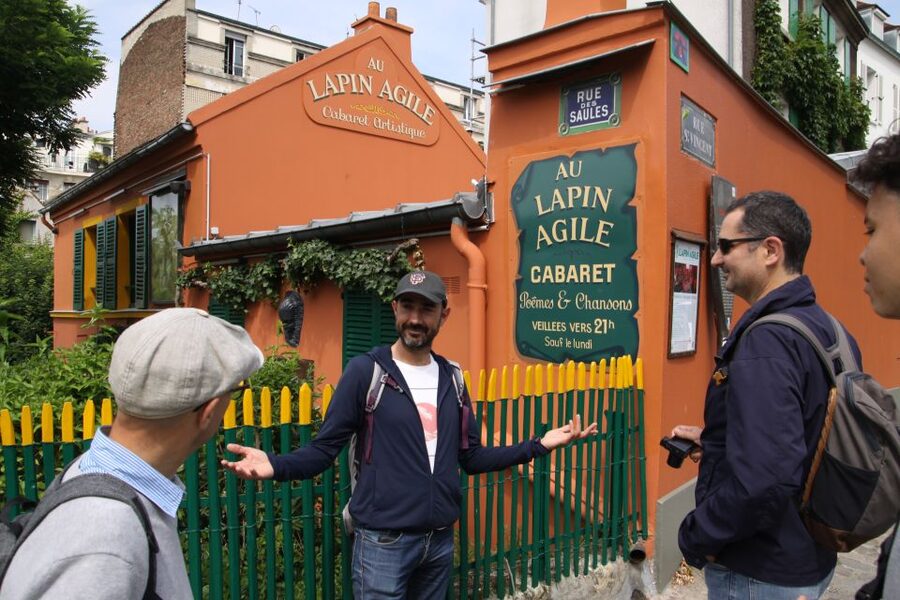
- Walk winding side streets: The route is designed to show more than the main tourist paths.
- Choose from five languages: Tours are offered in English, French, German, Italian, and Spanish.
- Plan for hills and uneven walking: Comfortable shoes are essential, and the tour is not suitable for wheelchair users or people with mobility impairments.
A smart way to meet Montmartre
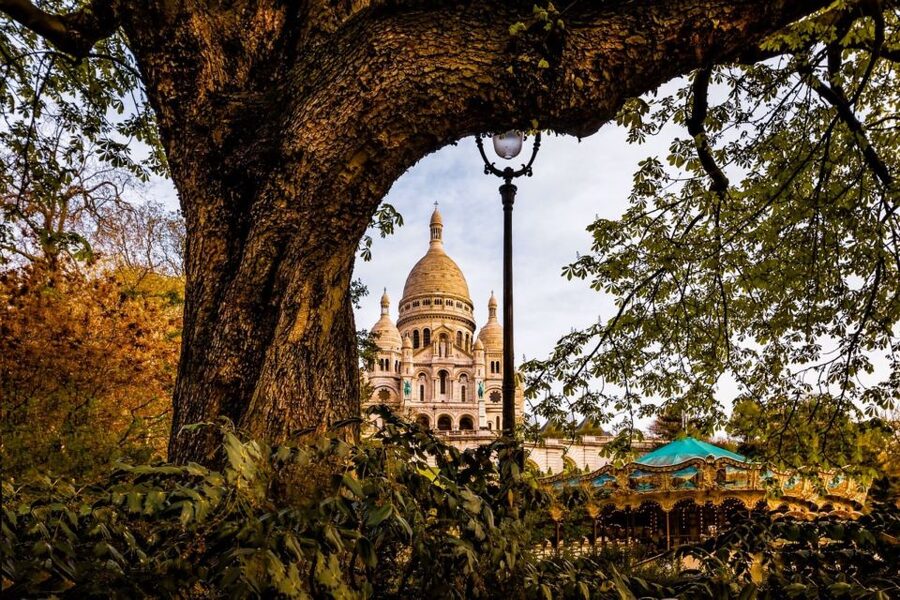
Montmartre is not one single sight. It is a hill, a neighborhood, a former artists’ quarter, a pilgrimage stop, and a busy visitor district all at once. A good walking tour helps you connect those pieces before the streets start to blur together.
This 150-minute route begins near the Lamarck-Caulaincourt Metro station, between the Metro stairs and Chez Ginette. That meeting point places you in the residential side of Montmartre rather than dropping you straight into the busiest area around Sacré-Coeur.
From there, you walk through squares, narrow lanes, and side streets toward the district’s best-known landmarks. I like this order because it gives you time to get a feel for the neighborhood before reaching the postcard views and crowded art square.
The route ends at the Moulin Rouge, which makes the tour easy to pair with an evening in Pigalle or a separate night at the cabaret. The tour does not include a Moulin Rouge show, so think of the final stop as a useful orientation point, not a ticketed performance.
More Walking Tours in Paris
- Paris Top Sights Half Day Walking Tour with a Fun Guide
★ 5.0 · 2,893 reviews - Montmartre Hidden Gems and Scenic Highlights Walking Tour
★ 5.0 · 2,684 reviews - Montmartre Hill French Gourmet Food and Wine Tasting Walking Tour
★ 5.0 · 2,588 reviews
Starting near Lamarck-Caulaincourt
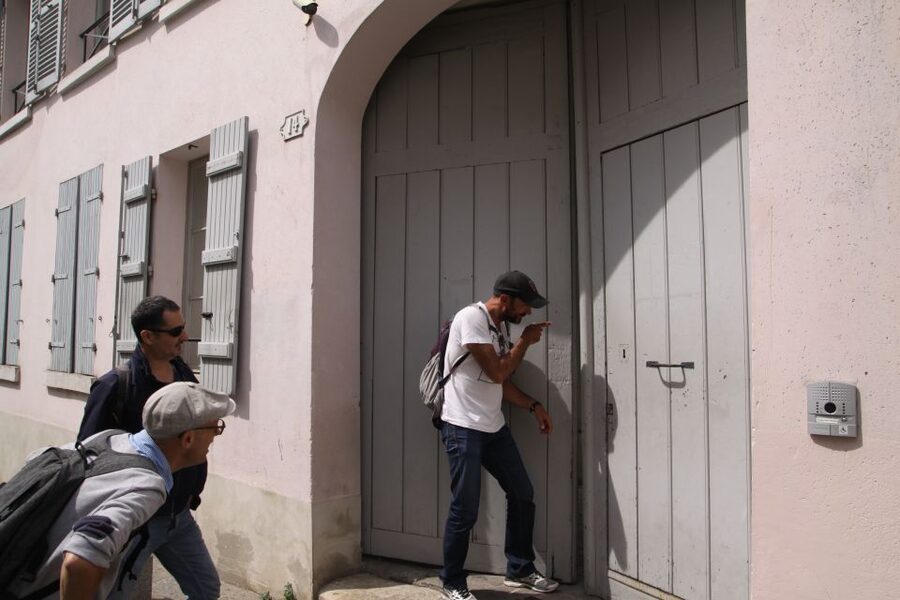
The meeting point is simple but worth preparing for. Look for your guide between the Metro stairs at Lamarck-Caulaincourt and the restaurant Chez Ginette. Arrive with enough time to identify the exact spot, since a busy street and several nearby entrances can make a last-minute meeting needlessly awkward.
The start also tells you something about the route. You are not beginning with a formal museum or a long introduction. You begin in the neighborhood, then learn about Montmartre as you move through it.
That is a good fit if you prefer history tied to actual streets. You can ask questions as you walk, and the guide can explain how the area’s character changes from one lane or square to the next.
The tour is offered in English, German, French, Italian, and Spanish. If you book in a language other than English, confirm availability for your chosen departure before paying.
Following Picasso, Modigliani, and Van Gogh
The strongest historical thread is Montmartre’s connection to artists. The walk points out a former studio associated with artists including Modigliani, Picasso, Utrillo, Van Dongen, Juan Gris, and Matisse.
That list matters because it turns a general art-history lesson into a sense of place. You are not only hearing that famous painters worked in Montmartre. You are seeing the streets and buildings connected with the period when the district attracted them.
You may also see the famous mill painted by Renoir and Van Gogh. The appeal here is visual and historical: an ordinary-looking structure becomes more meaningful when you understand how artists saw and recorded it.
Do not expect a museum visit or a long examination of original paintings. The value comes from the guide’s explanation and the setting. This is a street-level look at artists’ lives, not a substitute for the Musée d’Orsay or the Musée de Montmartre.
Guides can make a big difference on this part of the walk. Frédéric is described as offering lively explanations of Montmartre and Paris, while Climont is noted for explaining the district’s history, culture, restaurants, and shops. Those details suggest the tour works best when you treat it as a conversation, not a lecture.
Sacré-Coeur and the hilltop view
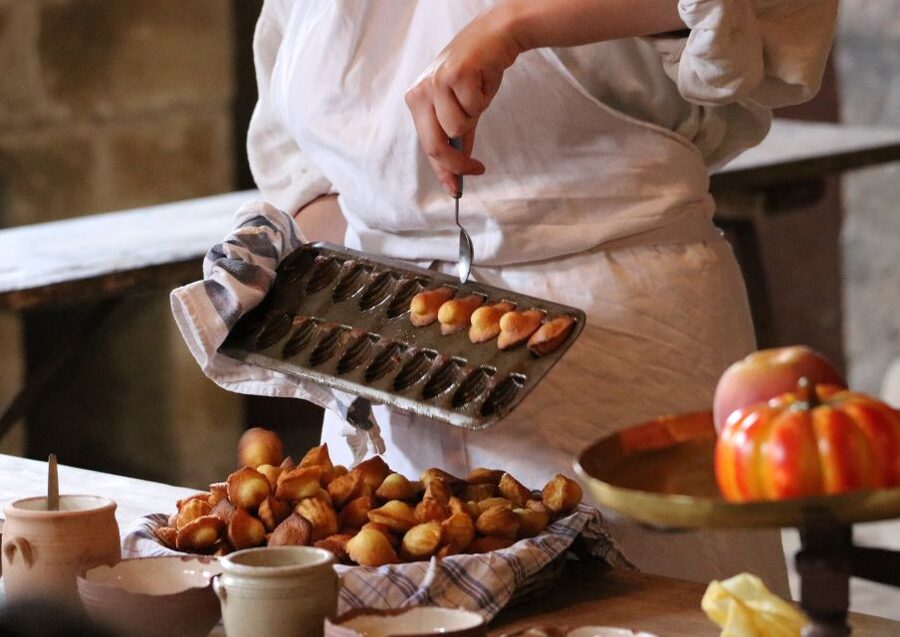
Sacré-Coeur is one of Paris’s most recognizable landmarks, and it gives the walk a clear center. The white basilica sits high above the city, so reaching it usually involves an uphill approach and stairs or steep streets.
The tour includes the basilica as a must-see stop. It is a strong place to pause, take photos, and understand Montmartre’s physical layout. From the hilltop, you can see why this district feels separate from the flatter streets of central Paris.
Your guide can also help you place the basilica within the neighborhood rather than treating it as a quick photo stop. That context is useful because Sacré-Coeur can dominate a first visit, while the surrounding lanes hold much of Montmartre’s character.
The practical warning is clear: this is a walking tour on a hill. Wear shoes you can trust, dress comfortably, and be realistic about the route if stairs, inclines, or uneven streets are difficult for you. The activity is not suitable for wheelchair users or people with mobility impairments.
The tour information does not promise a guided interior visit, so plan on seeing Sacré-Coeur as part of the walking route unless your guide says otherwise. If entering the basilica is a priority, ask about timing during the tour.
More Montmartre walks and Sacre-Coeur visits:
- Paris: Montmartre Cheese, Wine & Pastry Guided Walking Tour
★ 4.8 · 2,255 reviews - Paris: Montmartre Highlights Walking Tour with a Local Guide
★ 4.9 · 1,668 reviews - Paris: Sacré-Coeur and Montmartre Tour with Expert Guide
★ 4.1 · 1,027 reviews - Private Montmartre Food Tour with Wine, Cheese & Pastries
★ 5.0 · 1,027 reviews
Place du Tertre and Montmartre today
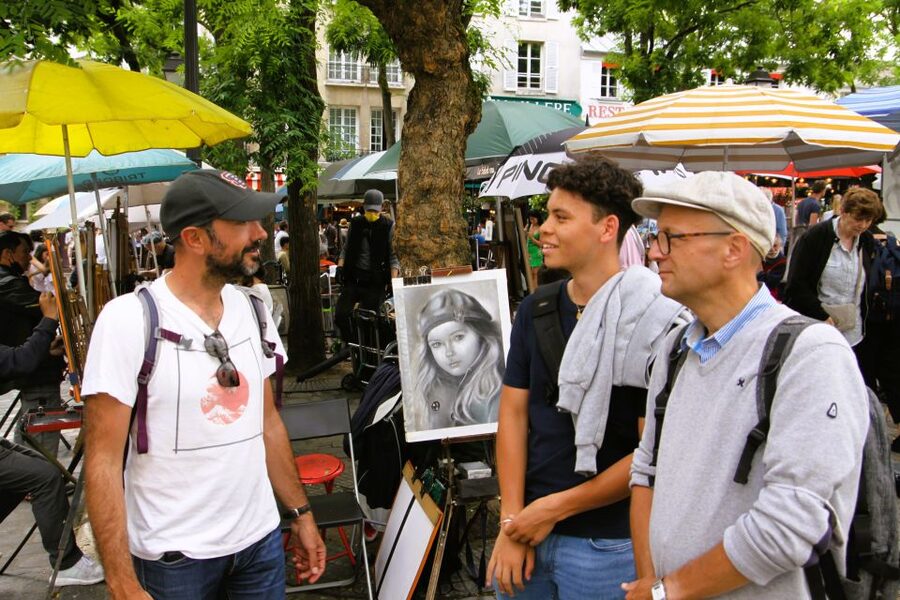
Place du Tertre is the district’s best-known artistic square. It is still associated with painters and portrait artists, but it is also a heavily visited place where the old Montmartre image meets modern tourism.
That contrast is part of the appeal. You can see the artistic identity that made Montmartre famous while also noticing how much the neighborhood has changed. A guide helps you read the square rather than simply passing through it for a photograph.
I especially like that this route includes current cultural spots as well as old artist addresses. Montmartre is not only a historic backdrop. It remains a place of cafés, galleries, food shops, and small streets where local life continues around the visitor traffic.
Place du Tertre can be crowded, so keep your belongings close and stay aware of where the group is. The route’s value is not dependent on having a quiet square. Even when the area is busy, the guide can point out the details that are easy to miss on your own.
Pastry advice, with no pastry included

The food portion needs careful explanation. The guide takes you to some of the city’s best spots for pastries and drinks and presents iconic Parisian pastries along the way. You receive recommendations and local direction, but the tour price does not cover tasting.
That distinction explains one of the lower ratings for the experience. If you book expecting included croissants, tarts, or drinks, you will feel misled. If you see the food section as a guided introduction to places where you can buy your own treats, the arrangement makes more sense.
Café des Deux Moulins is one of the named stops. Your guide can help you understand why it matters within the area and where it fits into the local café scene. You should budget extra if you want to stop for a drink or pastry.
I would carry a little cash or make sure your payment method works for small purchases, though the tour information does not specify accepted payment types. The safest approach is to treat every food item as optional and paid separately.
This setup can actually suit people with different appetites. You can skip a purchase, choose something that fits your diet, or save your money for a bakery you want to revisit later. Just do not confuse pastry guidance with a food tour.
Winding lanes and the Moulin Rouge finish
The route’s side streets are a useful counterweight to the major sights. Montmartre’s narrow lanes can feel confusing, especially when you are trying to move from the basilica toward the lower streets. A local guide keeps the walk moving and adds stories to streets you might otherwise cross without noticing.
The tour ends at the Moulin Rouge, the famous cabaret at the foot of the hill. This gives you a strong final landmark and places you near another part of Paris worth exploring after the walk.
The end point is practical, too. You can take photos outside, continue into Pigalle, find a restaurant, or make your way back by Metro. The tour does not include cabaret admission, dinner, or a show, so arrange those separately.
Because the itinerary covers a large part of Montmartre in two and a half hours, expect a steady pace. There is time for explanations and stops, but this is not a slow café crawl. If you want long visits at Sacré-Coeur, extended shopping, or a leisurely meal, plan those for before or after the tour.
What $37 gets you
At $37 per person, the main purchase is the guide’s route and local context. You are paying for 150 minutes of organized walking, not for transportation, museum admission, food, or drinks.
I consider that a fair price for a first visit if you want to see the main sights and understand the artists’ connection to the neighborhood. The guide can save you time, help you navigate the hill, and point out places you may not locate by yourself.
The value is weaker if you mainly want pastry samples. Since all food and drinks cost extra, a self-guided walk followed by a bakery visit could cost less. The tour earns its price through the explanations, the route planning, and the combination of major landmarks with less obvious streets.
The flexible booking terms add some practical value. You can reserve now and pay later, and cancellation is free up to 24 hours before the tour for a full refund. That is useful when your Paris schedule is still shifting.
The tour has a 4.8 rating from 210 reviews, but the more useful point is what the high marks focus on: guides who explain Montmartre clearly, speak English well when booked in English, and make the walk feel personal rather than stiff. Frédéric and Climont are names worth noting if you have a choice of guide or departure.
Who will enjoy this walk
I would recommend this tour to a first-time Paris visitor who wants an organized introduction to Montmartre without spending half a day in a museum. It also suits you if you enjoy art history but want it attached to real buildings, lanes, and cafés.
It is a good choice for couples, friends, and families with older children who can manage hills and a two-and-a-half-hour walk. The five-language choice makes it useful for mixed-language groups, provided your preferred language is available for the date you choose.
You may want something else if you need step-free access, dislike uphill walking, or want a true food tour with included tastings. You should also skip it if you have already explored Montmartre thoroughly and prefer a specialized art, architecture, or culinary experience.
Bring comfortable shoes, comfortable clothes, and a camera. Those sound like basic suggestions, but the hill, the walking pace, and the photo stops make them genuinely useful.
Should you book the Montmartre walk?

Book it if you want the neighborhood’s major sights tied together by stories about its artists and present-day café culture. The strongest parts are the route through side streets, the links to Picasso, Modigliani, Utrillo, Matisse, Renoir, and Van Gogh, and the chance to finish at the Moulin Rouge.
Just adjust your expectations before you go. At $37, this is a guided sightseeing walk with pastry advice, not a tasting experience. If you are comfortable paying separately for food and handling Montmartre’s slopes, it offers a practical first look at one of Paris’s most distinctive districts.
FAQ
How long is the Montmartre Culture and Local Pastries Walking Tour?
The tour lasts 150 minutes, or two and a half hours.
How much does the tour cost?
The listed price is $37 per person.
Where does the tour meet?
Meet your guide between the Metro stairs at Lamarck-Caulaincourt and the restaurant Chez Ginette.
Which languages are available?
The live tour guide may lead the experience in English, German, French, Italian, or Spanish. Check availability for your chosen time and language.
Are pastries and drinks included?
No. Food and drinks are not included. The guide presents Parisian pastries and points out places for pastries and drinks, but you pay for any purchases yourself.
Does the tour visit Sacré-Coeur?
Yes. Sacré-Coeur is one of the main landmarks included on the walking route.
Does the tour end at the Moulin Rouge?
Yes. The route ends at the Moulin Rouge. A cabaret show or admission is not included.
Is the tour suitable for wheelchair users?
No. The activity is not suitable for wheelchair users or people with mobility impairments.
Can I cancel the tour for a refund?
Yes. You can cancel up to 24 hours in advance for a full refund. You can also reserve now and pay later.
More Pastry and Chocolate Tours in Paris
- Paris: Day or Sunset Cruise with Drink, Ice Cream or Dessert
★ 4.4 · 4,225 reviews - Award-Winning Paris French Bakery Experience — Le Marais, 4th Arr
★ 4.5 · 1,186 reviews - Paris: Entrance Ticket to the Chocolate Museum
★ 4.1 · 1,105 reviews - Paris French Sweets Tasting Tour with Pastries and Chocolates
★ 4.5 · 947 reviews
Just added around Paris
- Paris at the First Lodges – Ducasse sur Seine dinner cruise★ 4.0 · 165 reviews
- Paris at the First Lodges – Ducasse sur Seine Lunch Cruise★ 4.5 · 70 reviews
- Disneyland® Paris 1 Day with Round-Trip Train Tickets from Paris★ 4.0 · 50 reviews
- Explore speakeasies and hidden bars, sip meet & socialize★ 4.5 · 47 reviews
- Disneyland® Paris Express Shuttle with Admission Ticket from Central Paris★ 3.5 · 172 reviews
- Paris Cheeses and Wines Tour de France with Tasty Games★ 5.0 · 32 reviews
- Musée Orsay Highlights Tour – Best of Impressionism & Hidden Gems★ 5.0 · 27 reviews
- Private Tour: Discover Paris with Local, 3 hours on a Segway★ 5.0 · 71 reviews
Montmartre Tours, compared.
Montmartre Hidden Gems and Scenic Highlights Walking Tour
Read our review →
Montmartre Hill French Gourmet Food and Wine Tasting Walking Tour
Read our review →
Montmartre Cheese, Wine & Pastry Guided Walking Tour
Read our review →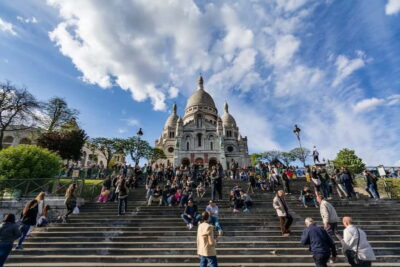
Montmartre Highlights Walking Tour with a Local Guide
Read our review →
Sacré-Coeur and Montmartre Tour with Expert Guide
Read our review →
Private Montmartre Food Tour with Wine, Cheese & Pastries
Read our review →
Paris Montmartre Food Tour – A Full French Meal by Do Eat Better
Read our review →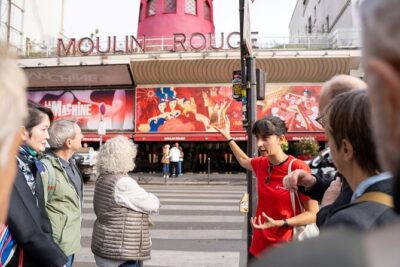
Hidden Montmartre: Paris’ Secret Streets Walking Tour
Read our review →Browse the lists this tour appears in