Reviewed · GUIDED
Paris: Roland-Garros Stadium Guided Backstage Tour
Walking the corridor that leads players toward the clay at Roland-Garros is the heart of this tour. You see the Philippe Chatrier Court from a working player’s viewpoint, then connect the place with champions such as Rafael Nadal, Steffi Graf, Björn Borg, and Chris Evert.
I like the mix of access and history. You are not simply shown the main court from the public entrance. You visit areas such as the presidential tribune and media rooms, while guides such as Amir, Lionel, Mathieu, and Aida have brought the stories to life. The $24 price is also fair for 90 minutes inside one of tennis’s great venues.
The main caution is that the tour can feel crowded, and commentary may be hard to hear when the group spreads out. Some areas can close for stadium activity, and the court may not have clay on it outside the playing season.
Key points to know before you go
- The player corridor is the emotional high point: You walk the route used by competitors heading onto the clay court.
- Philippe Chatrier Court is the main event: Look up at its retractable roof and out across the court toward Paris.
- The tour goes beyond tennis matches: Expect the presidential tribune, media spaces, trophy displays, and, when available, locker-room areas.
- The storytelling matters: Guides explain Nadal’s French Open record, the Four Musketeers of French tennis, and the venue’s development.
- The group size can affect the experience: Stay close to the guide so you do not miss the opening of each explanation.
- The $24 fee offers strong value: It gives you a guided look inside a place that is normally most visible during the costly French Open tournament.
Why the player entrance corridor matters
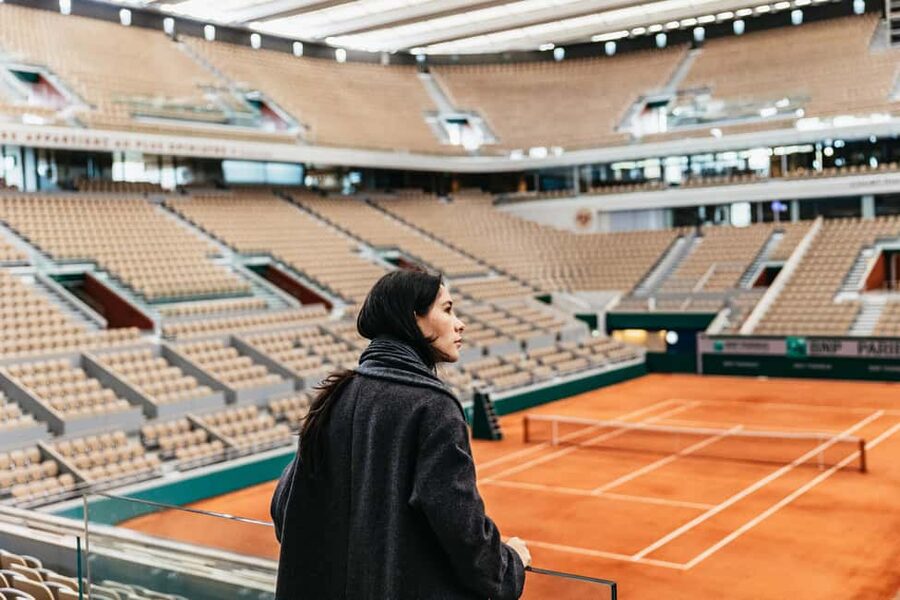
Roland-Garros is easy to understand on television. You see the orange clay, the packed stands, and players walking out to Philippe Chatrier Court. The tour gives you the missing piece: the spaces behind that polished public view.
The corridor leading to the court is especially effective because it turns tennis history into a physical route. You are not just hearing that great players competed here. You are following the path they used before facing the crowd.
This is where a guide can add real value. A good guide links the building to names and moments instead of simply pointing out doors. Lionel, described by one participant as highly enthusiastic, brought strong energy to the history and details. Amir was also praised for friendly, clear explanations and insider stories about how the French Open operates.
The guide’s style can vary. That is normal on a live tour, and it may affect how much you enjoy the visit. English, French, and Spanish tours are offered, but you should choose your preferred language carefully when booking. One English-language visit was difficult for a participant to follow because of the guide’s accent, even though the guide was patient and repeated information when asked.
A few more Paris half-days worth comparing
- Paris: Louvre Museum Timed-Entrance Ticket
★ 4.6 · 71,977 reviews - Disneyland® Paris 1-Day Ticket
★ 4.6 · 49,412 reviews - Paris: Versailles Palace and Gardens Full Access Ticket
★ 4.6 · 41,579 reviews
Philippe Chatrier Court and the retractable roof
Philippe Chatrier Court is the stadium’s main attraction. The tour gives you an unobstructed view of the court and its seating bowl, along with a chance to study the design of the modern venue.
The retractable roof is a major talking point. It changed the way the central court can operate during rain and is one of the most visible signs of Roland-Garros’s modern redevelopment. Your guide explains the court as both a sporting arena and an architectural project.
The view is not only about tennis. From the stadium, you can also look toward the surrounding cityscape. It is a different angle on Paris, with the court and stadium structure in the foreground rather than the usual monuments.
Do not expect the same atmosphere as a match day. There is no packed crowd, player noise, or live competition during this standard stadium visit. That quiet can be an advantage because you have time to take photographs and look closely at the details, but it also means the court may feel less dramatic than it does during the French Open.
The surface itself can change with the season. One visit took place when there was no clay on the main court. The tour remained worthwhile, but anyone hoping to see a fully prepared competition court should understand that this is not guaranteed.
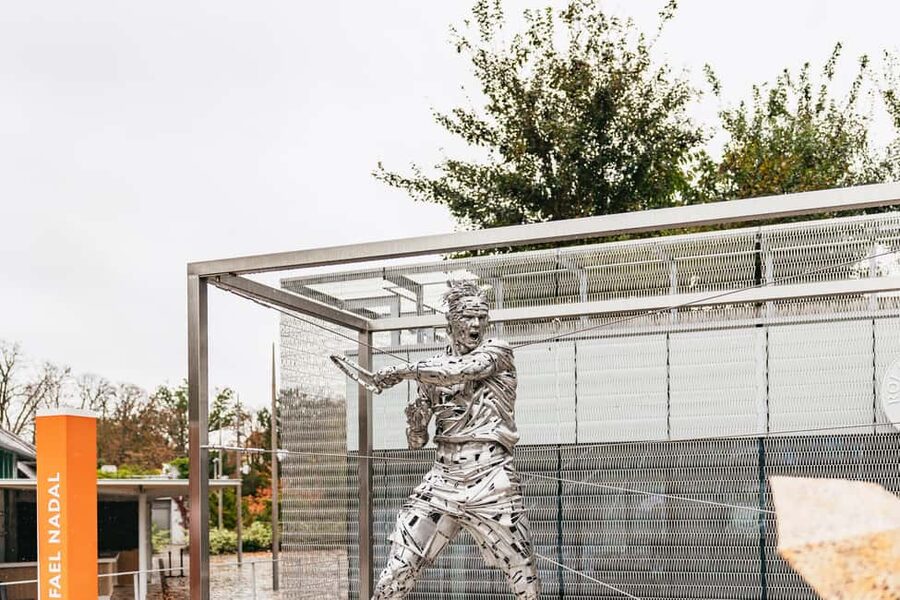
A plaque dedicated to Rafael Nadal is one of the details that many tennis fans will want to see. Nadal won the French Open 14 times, and his connection with Roland-Garros is central to the modern identity of the venue. The tour also includes references to other champions, including Steffi Graf, Björn Borg, and Chris Evert.
Behind the public stands

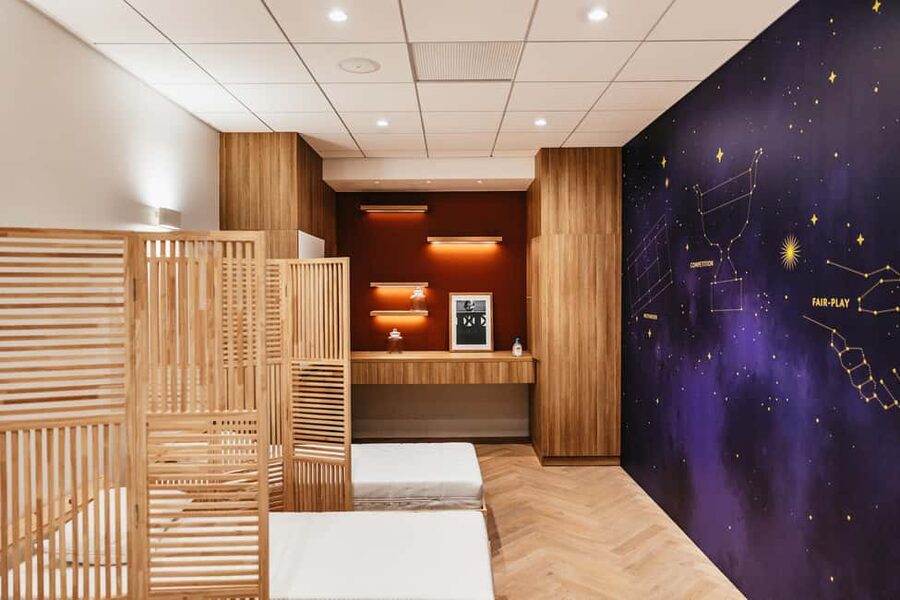
Roland-Garros has more to offer than the central court. The route includes areas connected with the tournament’s operation, including the presidential tribune and media spaces.
The presidential tribune gives you a sense of where important guests watch the matches. It is a small detail, but it helps explain the different layers of a major tournament. The best seats are not all sold to ordinary ticket holders, and this part of the tour lets you see the venue from a different position.
The media room is another useful stop. Some guides have made the visit more playful by staging mock interviews. That turns an otherwise plain room into a quick bit of fun, especially if you are visiting with family or friends.
Trophy displays may also be part of the route, with major silverware visible behind glass. You cannot reproduce the feeling of a French Open final, but seeing the trophies in the setting where they belong gives the history some weight.
Locker-room access needs a qualification. Several past visits included locker rooms, and one participant specifically enjoyed seeing Nadal’s and Federer’s lockers. But another visit could not enter because of renovations. Stadium work and tournament preparation can change the route, so treat the locker rooms as a possible extra rather than a guaranteed stop.
That same rule applies to other restricted areas. The tour operator notes that some parts of the stadium may be closed because of activity on the day. If a specific room matters most to you, ask at the start rather than assuming every stop will be available.
The Four Musketeers and the story of French tennis
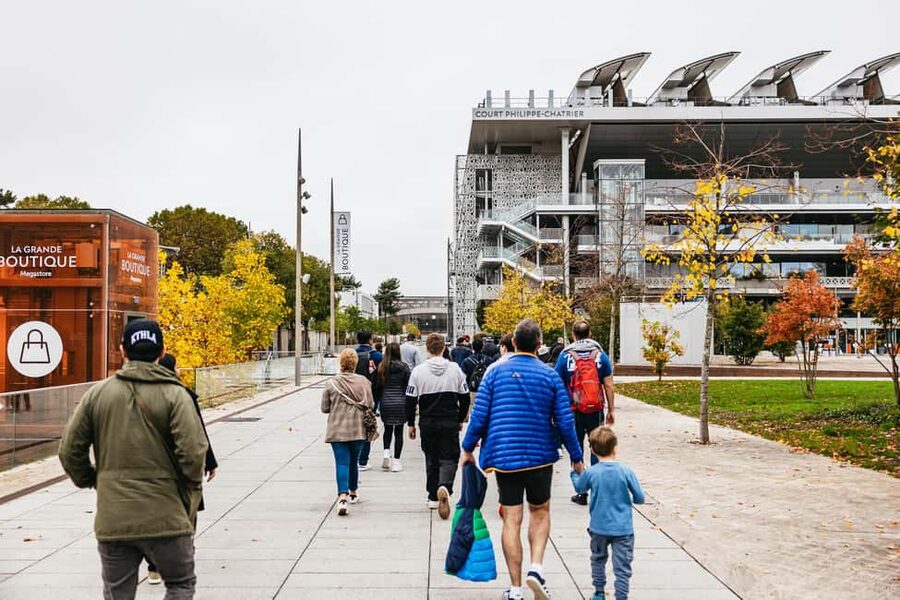
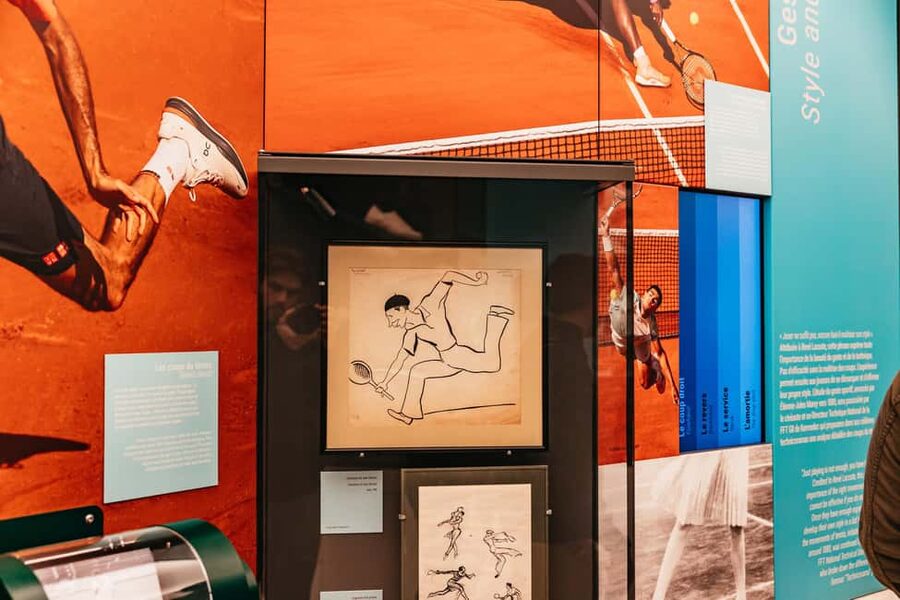
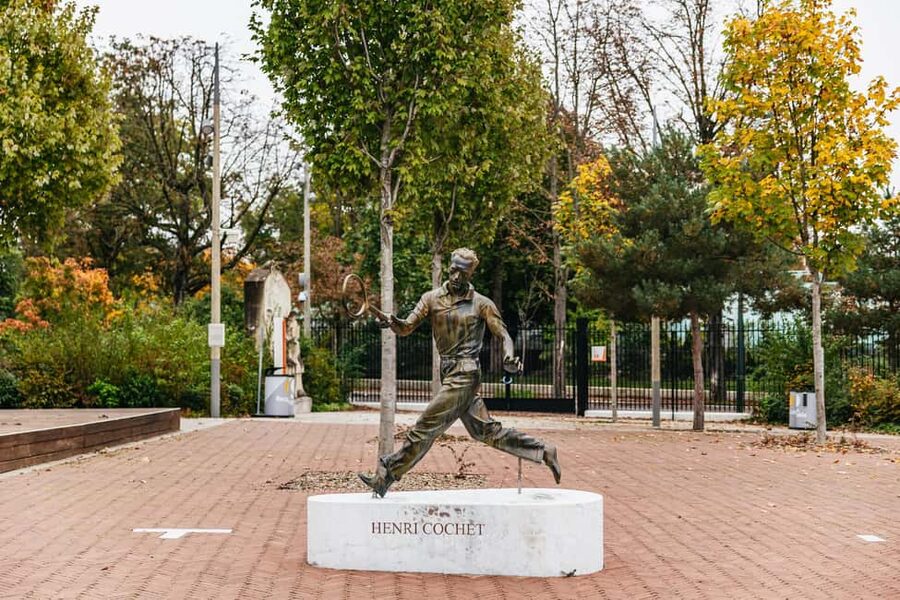
The history here reaches beyond recent champions. Guides tell the story of the Four Musketeers: Jean Borotra, Jacques Brugnon, Henri Cochet, and René Lacoste.
These four French players helped shape the early identity of French tennis. Their story gives the stadium a national connection that goes beyond the annual tournament. You begin to see Roland-Garros not just as the place where Nadal made records, but as part of a longer French sporting tradition.
This historical layer helps non-specialists. You do not need to know every Grand Slam winner to follow the tour. One participant who did not consider herself an avid tennis fan still found the stadium, players, and French Open history interesting.
For committed tennis fans, the history is more personal. If you have watched the French Open for decades but never reached Paris during the tournament, the tour lets you connect television memories with actual rooms, seats, corridors, and courts. It is not the same as attending a final, but it answers many of the practical questions you may have about what lies behind the broadcast.
Same trip, a completely different kind of day:
- Paris: Evening River Cruise with Music
★ 4.4 · 22,721 reviews - Paris: Eiffel Tower Entry Ticket with Optional Summit Access
★ 4.4 · 20,035 reviews - Paris: Eiffel Tower Summit or Second Floor Access
★ 4.3 · 17,248 reviews - Paris: Louvre Guided Tour with Reserved Access & Boat Cruise
★ 4.3 · 16,353 reviews
A 90-minute route with a clear rhythm
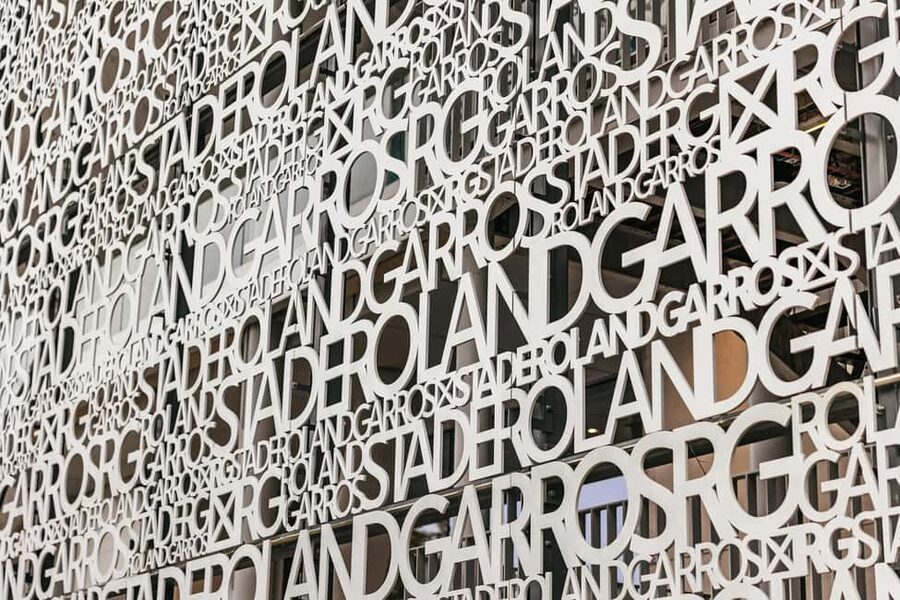
The meeting point is inside the Grande Boutique on Avenue Gordon-Bennett, at Gate 36. Arrive with enough time to find the shop and check in, since one past participant had trouble reaching the correct starting point when the meeting information was unclear.
The tour itself lasts about 90 minutes. It begins with an introduction to the stadium and its history, then moves through selected behind-the-scenes areas before reaching Philippe Chatrier Court.
You should expect to walk and pause at several points. The route is wheelchair accessible, and a guide has previously accommodated a participant who needed to use elevators. If you need step-free access, mention it when booking or at the meeting point so the guide can help with the practical route.
The tour ends back at Avenue Gordon-Bennett. The stadium shop is open from 9:30 AM to 6:30 PM and can be visited before or after the tour. It is a useful place to browse if you want a Roland-Garros souvenir, and one past visit included a 10 percent shop discount connected with the tour.
Group size is worth considering. A few participants found larger groups made it harder to hear, especially when people gathered at different points in a room. Stay near the guide and move promptly when the group changes location. If you miss the first sentence of an explanation, ask the guide to repeat it.
One useful quality of the guides is their willingness to take questions. Several guides, including Mathieu, Amir, Lionel, and Aida, have been praised for being friendly, prepared, and engaging. Their approach can make a large group feel more personal, but the quality of the experience still depends on the individual guide and the language of the group.
Is $24 a fair price?
At $24 per person, this is one of the better-value ways to see Roland-Garros outside the French Open itself. The fee includes the guide and entrance, and you receive access to spaces that are not part of a normal public visit.
The value is strongest if you are a tennis fan. A match ticket during the tournament can cost much more, and it still may not show you the media rooms, player route, presidential tribune, or locker-room areas. This tour helps explain how the venue functions when the cameras are not focused on the action.
You also get more than a quick photo at the main court. The guide provides context about the Four Musketeers, major champions, stadium construction, the roof, and tournament life. That extra explanation is what makes the entrance fee worthwhile.
The price is less compelling if you want only to see clay up close. The court may not be covered in clay outside the tournament season, and the tour does not promise access to every room. You are paying for a guided look at the venue as a whole, not a guaranteed list of every backstage space.
Free cancellation up to 24 hours before the tour and the reserve-now, pay-later option make it easier to fit into a changing Paris schedule. Availability and starting times vary, so check the day’s options before planning other activities around it.
Who will enjoy this most?
I would put this near the top of the list for anyone who follows the French Open, especially fans of Rafael Nadal. Seeing the plaque connected with Nadal and walking the route toward the court can make the visit feel surprisingly personal, even if you never attend a tournament match.
It also suits tennis fans who live far from France and may never make the trip for the competition itself. The tour gives you access to the venue without the cost, crowds, and ticket pressure of tournament season.
Families and mixed-interest groups can enjoy it too, provided the tennis fan in the group accepts that the focus is strongly on the stadium and its sporting past. The mock interview activity in the media room can add a lighter moment for children or non-fans.
I would be more cautious if you dislike guided tours or need a slow, independent museum visit. The group moves on a set schedule, and you may not have long to read every display. One participant wished for more time with the exhibition honoring Nadal. The tour is built around spoken explanation and movement, not quiet study.
Practical tips for a better visit
- Choose English, French, or Spanish according to the language you follow most easily.
- Arrive at the Grande Boutique inside Gate 36 on Avenue Gordon-Bennett.
- Stay close to the guide, especially when the group enters a new room.
- Bring a camera for Philippe Chatrier Court, the player corridor, trophy displays, and the stadium views.
- Do not count on locker-room access, since renovations or stadium activity can change the route.
- Visit the shop before or after the tour if you want souvenirs. It is open from 9:30 AM to 6:30 PM.
- If you are a serious tennis fan, ask questions. The guides often add useful stories beyond the basic route.
Should you book the Roland-Garros tour?
Book it if you want the story behind the French Open, not just a photograph of a tennis court. The player corridor, Philippe Chatrier Court, Nadal references, media areas, and Four Musketeers history create a satisfying 90-minute visit for a reasonable price.
You should also book it if your Paris plans do not line up with tournament season. It gives you a genuine look at a famous working venue, even though the crowd, clay, and match-day tension may be missing.
Skip it only if you need guaranteed access to a particular room or want to spend a long time reading exhibits at your own pace. For most tennis fans, and for curious visitors who want a different side of Paris, the combination of access, stories, and strong value makes this an easy recommendation.
FAQ
Where does the Roland-Garros stadium tour begin?
Meet inside the Grande Boutique on Avenue Gordon-Bennett at Gate 36.
How long does the tour last?
The guided visit lasts 90 minutes.
Which languages are available?
Live guides are available in English, French, and Spanish.
Is the tour wheelchair accessible?
Yes, the tour is listed as wheelchair accessible.
Will I definitely visit the locker rooms?
No. Locker-room access can vary because some areas may be closed for renovations or stadium activity on the day of your visit.
Can I visit the stadium shop?
Yes. The shop can be visited before or after the tour and is open from 9:30 AM to 6:30 PM.
Just added around Paris
- Paris: Croissant Baking Class with a Chef★ 5.0 · 201 reviews
- Cooking Class with a Parisian Chef★ 5.0 · 46 reviews
- Cocktails lessons in Speakeasy★ 4.5 · 72 reviews
- Paris: Choux Pastry and Chocolate Éclair Making Class★ 4.9 · 50 reviews
- Paris: Classic Sites Tour by Vintage Citroen 2CV★ 4.6 · 189 reviews
- Paris: Cheese and Wine Class in a 17th Century Cellar★ 4.8 · 91 reviews
- Paris: Romantic Photoshoot for Couples★ 4.9 · 131 reviews
- Paris: Bread and Croissant-Making Class★ 4.8 · 206 reviews
Guided, compared.
Louvre Guided Tour with Reserved Access & Boat Cruise
Read our review →
Louvre Museum Masterpieces Guided Tour with Access
Read our review →
Louvre Museum – Exclusive Guided Tour (Entry Included)
Read our review →
Versailles: Skip-the-Line Guided Palace Tour and Full Access
Read our review →
Louvre Priority Access with Mona Lisa Escort or Guided Option
Read our review →
Louvre Museum: Skip-the-Line Small Group Guided Tour
Read our review →