Reviewed · PROVENCE TOURS
Time flies in this complete tour of Aix-en-Provence
Aix-en-Provence reveals itself best on foot, one fountain, alley, market square, and old story at a time. Benjamin Reilly leads this small-group walk from the tourist office to Saint-Sauveur Cathedral, mixing local food with the city’s Roman, medieval, artistic, and wartime past.
I like the small group of no more than 12, which gives you room to ask questions, and I like the personal angle Benjamin brings through his family ties to Aix. The Calisson tasting, market stop, and Polaroid-style souvenir photo add warmth to what could otherwise be a standard history walk.
The main consideration is pace. The route covers a lot in two to three hours and can approach 10,000 steps, so wear solid walking shoes and expect limited time inside major sights. The Hotel de Caumont is viewed from outside, and its admission is not included.
Key details that shape the experience
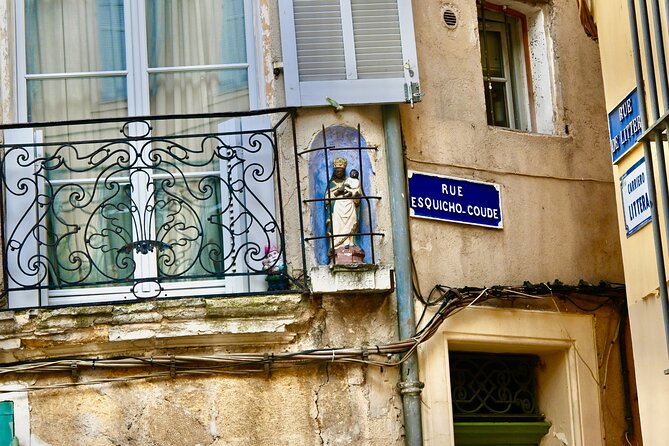
- A 15-stop route: You move from the Rotonde fountain and Cours Mirabeau into old lanes, plazas, churches, and the cathedral.
- Benjamin Reilly as your guide: His local family background, teaching style, humor, and yellow binder help turn dates into stories.
- Food built into the walk: You taste a Calisson, visit the farmers market in the morning, or receive an afternoon gelato discount.
- A compact group: The maximum of 12 makes it easier to hear the guide and ask about places that catch your eye.
- A useful first-day orientation: You finish near the cathedral with practical ideas for food and sightseeing during the rest of your stay.
- About $127.03 per person: The price is fair if you value a personal guide, tastings, included entries, and a broad introduction rather than long museum visits.
Starting at the tourist office on Avenue Giuseppe Verdi
The meeting point is the Tourist Information Center at 300 Av. Giuseppe Verdi. That is a sensible place to begin because you can use the nearby public toilets, grab a last-minute drink at a café, and meet the guide before entering the historic center.
Benjamin starts with introductions, a short safety briefing, and a map. This opening takes about 15 minutes, but it has practical value. You learn how the walk will work, and the guide can help you get your bearings before the fountains and old streets begin.
The tour is offered in English. It is also near public transportation, and confirmation arrives when you book. The experience requires a moderate level of fitness, a fair warning given the amount of walking and the many short stops.
A few more Provence half-days worth comparing
- Marseille: City Sightseeing Hop-On Hop-Off Bus Tour
★ 3.8 · 2,820 reviews - From Arles: Half-Day 4×4 Camargue Safari
★ 4.7 · 1,772 reviews - Sea trips Scandola Girolata and Calanches de Piana
★ 5.0 · 1,146 reviews
The Rotonde and Cours Mirabeau set the scene
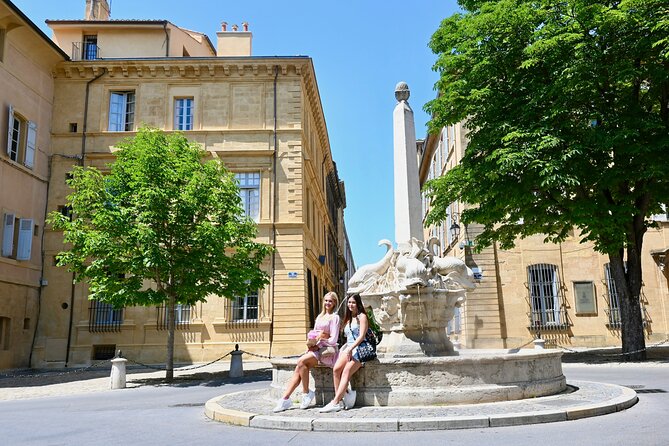
The first proper stop is Fontaine de La Rotonde, Aix’s broad, busy starting point. Benjamin uses the fountain to explain the city’s geography and historical development, giving you a basic map in your head before the route turns into narrower streets.
This is where a good guide matters. Aix can feel like several different towns pressed together: a grand avenue, a refined 18th-century quarter, a medieval center, and a working market city. A short overview helps you understand how those pieces connect.
From there, you stroll along Cours Mirabeau, the city’s best-known avenue. The walk here is less about checking off a single monument and more about seeing how Aix presents itself through plane trees, fountains, façades, cafés, and long views down the street.
Benjamin gives the avenue its historical setting while you walk, rather than stopping you for a long lecture. That keeps the opening lively. It also means you should not expect a detailed architectural tour of every building.
Hotel de Caumont and the story of two young friends
At Hotel de Caumont, you pause for about five minutes to hear about the 18th-century mansion and the way the city was planned around it. The building’s interior admission is not part of the tour, so this stop is best viewed as an architectural introduction, not a museum visit.
Next comes Middle School Mignet, tied to two major 19th-century figures: Paul Cezanne and Emile Zola. The stop is brief, yet the connection gives Aix a more personal artistic dimension. You are not only hearing that Cezanne belonged to Aix. You are seeing one of the places linked to his early life and his relationship with Zola.
Benjamin’s teaching style seems especially useful here. He uses personal stories, humor, and visual material in his yellow binder to make historical figures feel less remote. If Cezanne is a major reason you came to Aix, this tour gives you context, but it does not replace a dedicated Cezanne tour or museum visit.
Fountains, a church, and the Calisson stop
Aix is famous for its fountains, and Fontaine des Quatre-Dauphins is one of the prettiest pauses on the route. Benjamin allows time for a photo, including a souvenir picture. That small touch gives you something tangible to take home and breaks up the historical material.
At Eglise Saint-Jean-de-Malte, you enter a church connected with the Knights Templars. The visit adds an interior space to a route otherwise spent mostly outdoors. You get about 10 minutes here, enough for an introduction and a look around, though not an extended religious-art visit.
Then comes Rue d’Italie and the Calisson tasting. This almond and candied-fruit sweet is closely tied to Provence, and tasting it makes the food section more useful than simply hearing a list of local specialties.
The food stop is short, but it gives you a flavor to remember and a clue about Provence’s sweet-making traditions. If you have dietary restrictions, the supplied details do not specify alternatives, so ask Benjamin before the tasting if that matters to you.
Same trip, a completely different kind of day:
- Marseille: Côte Bleue Calanques Half-Day Kayak Tour
★ 4.7 · 877 reviews - Camargue: Half-Day 4×4 Guided Safari Adventure
★ 4.6 · 846 reviews - 3.5 Hour Camargue 4×4 Safari from Le Grau-du Roi
★ 4.5 · 775 reviews - Porto: Scandola and Calanches of Piana Boat Trip
★ 4.7 · 719 reviews
Passage Agard and the turn into medieval Aix
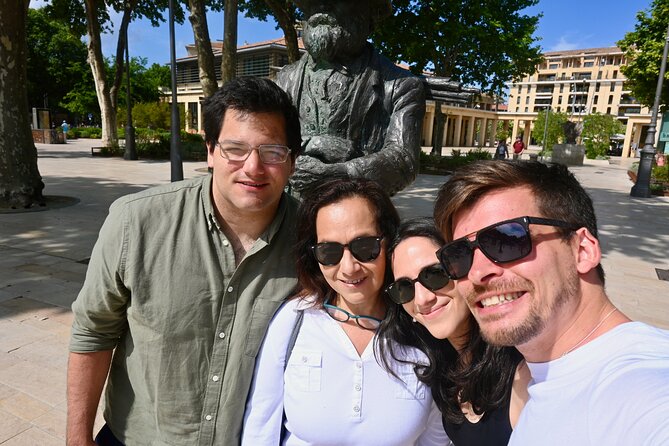
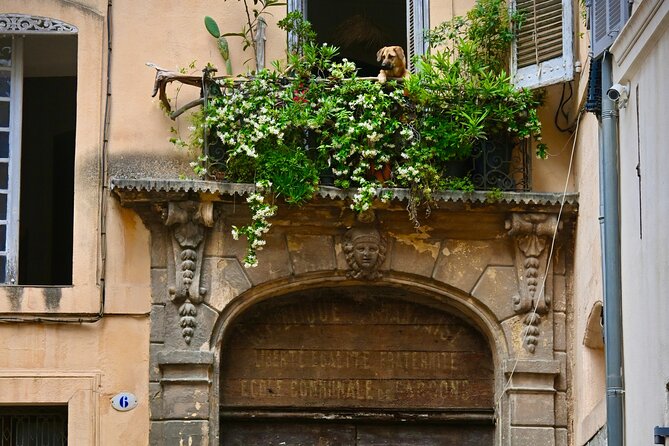
Passage Agard is one of the route’s more unusual moments. You pass through a private passage that was once a convent, moving through a piece of Aix that is easy to miss if you are walking alone.
The stop lasts only about five minutes, so expect a quick story and a look at the passage rather than an extended visit. Its value is the change in scale. After broad avenues and formal fountains, you are suddenly in a tucked-away lane with a more enclosed feel.
At Place des Prêcheurs, the route opens again. You see the courthouse, look for statues, and take in the space of the plaza. This stop helps connect public life, law, art, and daily movement in the old city.
The walking route alternates well between major squares and small lanes. That variety keeps the two to three hours from becoming a single long march, though you will still be on your feet for most of it.
Rue du Puits Juif and the medieval Jewish quarter
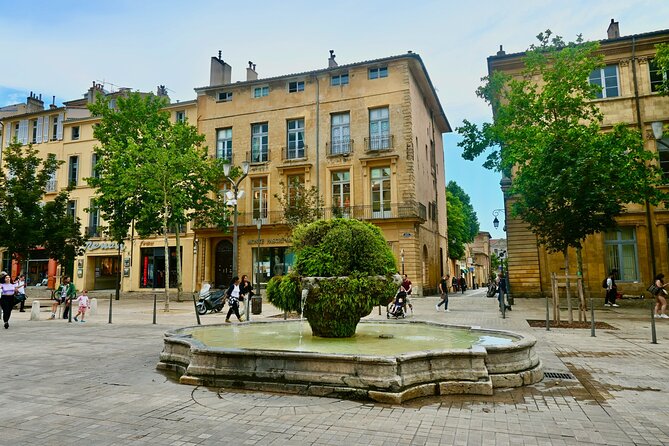
Rue du Puits Juif introduces the medieval Jewish quarter and the role Jewish communities played in the region. This is one of the more meaningful history stops because it widens the story beyond famous painters, elegant mansions, and Provençal food.
The information provided for the tour does not promise an extensive discussion of every building or surviving structure. Instead, you receive a concise account of the quarter and its influence. I appreciate that this part of the walk recognizes a community that can easily be left out of a quick city tour.
The stop also shows why a local guide can be useful. Names on streets and small traces in the urban fabric do not always explain themselves. Benjamin’s job here is to connect the physical lane with the people and events that shaped it.
Place Richelme brings Aix into the present
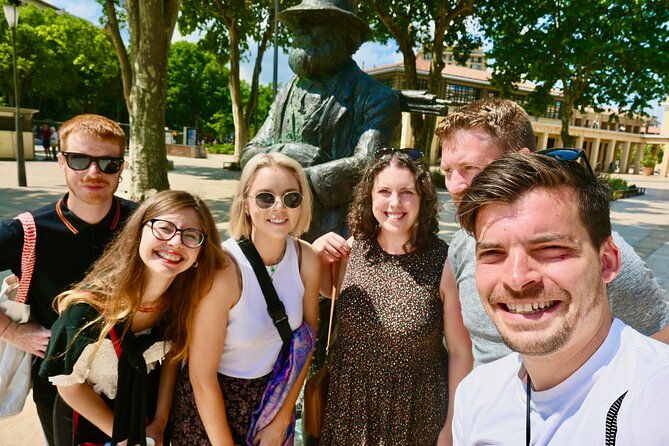
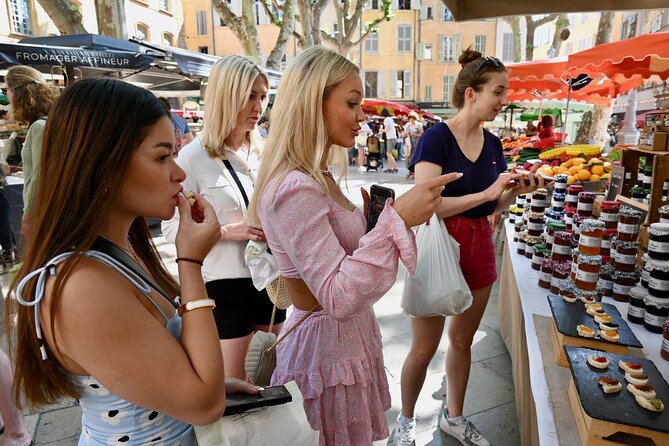
Place Richelme is the food-centered heart of the route. In the morning, you visit the farmers market, smell the produce, and sample market goods. In the afternoon, you watch the square and receive a discount at a recommended gelato shop.
The timing matters. A morning tour gives you the market at its most useful, while an afternoon tour offers a more relaxed people-watching stop and a cold treat. The tour’s food element changes with the time of day, so check the departure time before booking if the market is important to you.
You should also know that bottled water is not supplied despite the inclusion notes. You can refill your own bottle at local water sources, so bring one. That is a small practical detail, but it matters on a warm day.
Town Hall and the wartime story at Place des Martyrs
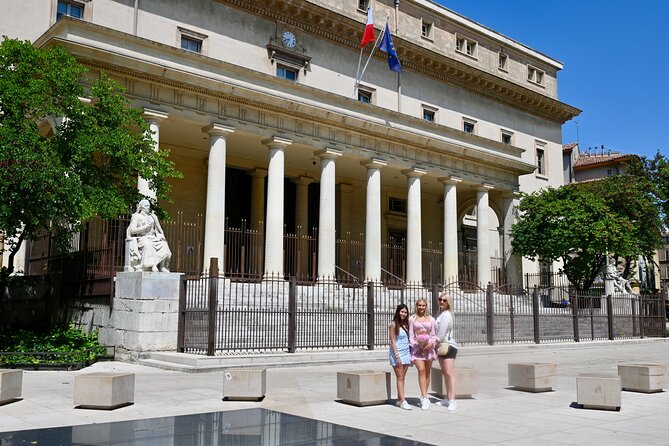
At the Town Hall, Benjamin brings you into the civic center of Aix. The stop is only about five minutes, yet it gives the walk a clear sense of how the city functions today, not just how it looked in earlier centuries.
You then reach Place des Martyrs de la Resistance, where the story shifts to the Second World War. Benjamin discusses survivors and the American army’s role in liberating Aix from Nazi control.
This is a serious moment in an otherwise light and social walk. The mix of humor, food, architecture, and difficult history is one of the tour’s strengths. You get a city portrait rather than a string of disconnected photo stops.
The guide’s style is described as funny and personal, but also careful with the subject. That balance matters. A tour that covers wartime suffering should not treat it as just another colorful anecdote.
Saint-Sauveur Cathedral completes the route
The tour ends at Cathédrale Saint-Sauveur, at 34 Place des Martyrs de la Resistance. This is a practical finish because you are already in the historic center and can continue exploring after the guide says goodbye.
The cathedral has served as the center of Christianity in the region for about 1,500 years. You also hear about the open-air concert setting used during the opera festival and see a hidden statue of the Black Madonna.
Cathedral entry is included, as is entry to the church earlier in the walk. Still, both visits are short. If you want to study the architecture, chapels, or artwork in detail, return later on your own.
The ending gives the tour a satisfying arc. You begin with a geographic overview at the Rotonde and finish at one of Aix’s major religious and cultural centers. Along the way, the route moves through artistic, commercial, civic, Jewish, military, and culinary parts of the city.
What Benjamin Reilly adds to the route
The strongest reason to book this walk is Benjamin Reilly. The information provided about him points to a guide with local family connections, teaching experience, a warm sense of humor, and a serious interest in Aix.
That combination changes the feel of the tour. You are not simply being taken from fountain to fountain. Benjamin connects his own family story with the city’s past, encourages questions, and adjusts to mixed ages. One family found him especially good with teenagers, while another appreciated his patience during cold, rainy weather.
His use of a yellow binder, stickers, and a Polaroid-style photo gives the walk a handmade quality. These details are not essential, but they help the tour feel personal rather than mass-produced.
The group limit of 12 supports that approach. You can ask about a restaurant, a local custom, or a building that catches your attention without competing with a large crowd. The guide has also helped people with practical logistics after the walk, which is useful if Aix is one stop in a larger Provence trip.
Is $127.03 a fair price?
At $127.03 per person, this is not the cheapest way to walk around Aix. You can see the fountains and public squares for free, and the route does not include the Hotel de Caumont’s paid interior.
The value comes from the structure and access to a local guide. You receive two to three hours of guided context, entry to Saint-Jean-de-Malte and Saint-Sauveur Cathedral, a Calisson tasting, a market or gelato benefit, a souvenir photo, and a small group capped at 12.
I would consider the price reasonable if you are visiting Aix for the first time, want a strong orientation, and prefer conversation over an audio guide. It is less compelling if you already know the city well or mainly want long visits inside museums and churches.
The tour is often booked about 45 days ahead, which suggests planning early if your dates are fixed. Group discounts may help families or larger parties, though the group itself is still limited to 12 people.
Who will enjoy this Aix walking tour?
I would recommend it most for first-time visitors, families with older children or teenagers, and anyone who wants history explained in plain language. The route works especially well as an opening activity because it gives you restaurant ideas, neighborhood context, and a list of places to revisit.
It also suits people who like food as part of cultural travel. The Calisson and market or gelato elements are modest, but they make the city easier to remember through taste and smell.
You should think twice if you have difficulty walking for several hours, need frequent seating, or dislike a busy itinerary. The route includes many stops, but most are short. You may cover around 10,000 steps, and the tour requires good weather. If poor weather cancels it, you can choose another date or receive a full refund.
Free cancellation is available up to 24 hours before the start time. Changes or cancellations inside that window are not accepted for a refund, and the experience also requires a minimum number of participants.
Should you book it?
Book this tour if you want Aix explained by a local guide who can connect Cezanne, fountains, food, Jewish history, wartime events, and everyday city life. Benjamin’s personal connection and easy teaching style are the central reasons to choose it.
Skip it if you prefer to explore at your own pace, spend hours inside museums, or avoid a fairly active walk. For most first visits, though, the route offers a useful start: you see a wide slice of Aix, learn where to return, taste something local, and finish near the cathedral with a better sense of how the city fits together.
FAQ
How long does the Aix-en-Provence tour last?
The tour lasts approximately two to three hours.
Where does the tour begin?
It begins at the Tourist Information Center, 300 Av. Giuseppe Verdi, Aix-en-Provence.
Where does the tour end?
The tour ends at Paroisse Cathédrale Saint-Sauveur Aix-en-Provence, 34 Place des Martyrs de la Resistance.
How large is the tour group?
The maximum group size is 12 travelers.
Is food included?
Yes. You receive a Calisson tasting. In the morning, the tour includes tasters at the farmers market. In the afternoon, you receive a discount at a gelato shop.
Is admission to the Hotel de Caumont included?
No. The tour discusses the exterior and history of Hotel de Caumont, but admission is not included. Entry to the church and cathedral is included.
Just added around Provence
- Guided tour Distillery of Lavender between Nîmes & Arles★ 5.0 · 84 reviews
- A Private Guided Historical and Cultural Tour in Nîmes★ 4.5 · 32 reviews
- Skip the Line: Museum of Romanity Ticket★ 4.5 · 45 reviews
- The Grand Canyon of Europe and Its Lavender Fields Small group★ 4.5 · 81 reviews
- Provence Wine Tour – Private Day Tour from Cannes★ 5.0 · 36 reviews
- Provence Wine Tour – Private Day Tour from Nice★ 5.0 · 99 reviews
- Provence Wine Tour – Small Group Tour from Nice★ 5.0 · 301 reviews
- Provence Wine Tour – Small Group Tour from Cannes★ 5.0 · 41 reviews
Provence Tours, compared.
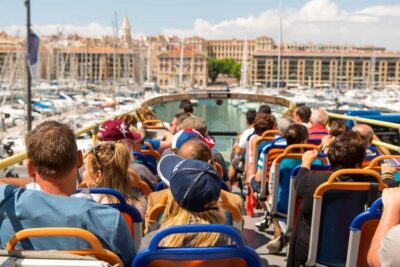
Marseille: City Sightseeing Hop-On Hop-Off Bus Tour
Read our review →

Sea trips Scandola Girolata and Calanches de Piana
Read our review →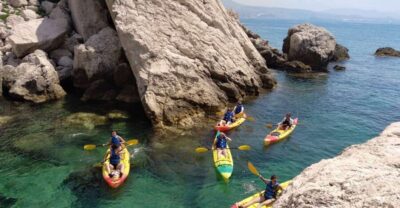


3.5 Hour Camargue 4×4 Safari from Le Grau-du Roi
Read our review →
Porto: Scandola and Calanches of Piana Boat Trip
Read our review →