
Reviewed · WWI BATTLEFIELD TOURS
1 day Canadian WW1 private tour including Vimy Ridge
The most moving part of this day is the way it links Canada’s best-known First World War site with smaller cemeteries and battlefield ground across northern France. At Vimy Ridge, you walk through trench areas and no man’s land before seeing Walter Seymour Allward’s great memorial, then continue toward the Somme.
I like the private format, limited to three people, and the use of historic maps on the vehicle’s GPS to explain troop movements as you drive. I also like the lunch stop at a local café or restaurant, which may include Le Tommy in Pozières, a café and war museum with wartime objects.
The main drawback is the pace. Seven hours covers a lot of ground, and the tour cannot begin in Paris. You need to reach the pickup area around Arras, Amiens, or Saint-Quentin, and some stops are brief.
Key points at a glance
- Walk through the Grange Tunnel and trench system: Depending on attendance, the visit can include a close look at a preserved underground route and the German trench line.
- See Vimy Ridge in context: The Canadian National Vimy Memorial makes more sense after you have crossed the former front line and viewed the battlefield positions.
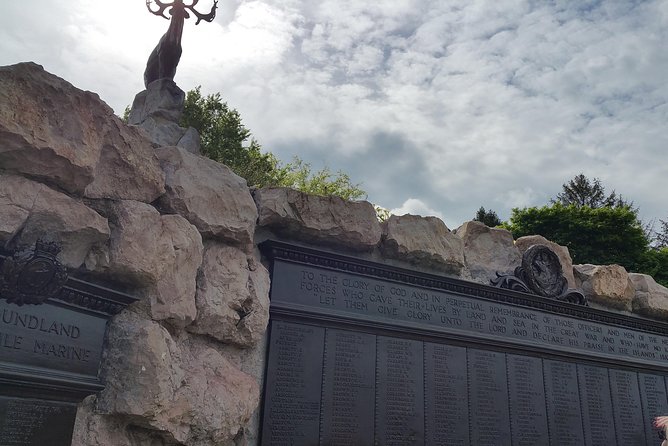
- Spend real time at Beaumont-Hamel: The Newfoundland Park has well-preserved trenches, the Caribou Memorial, and the famous Danger Tree.
- Use maps while you drive: Olivier Dirson uses historic battlefield maps on the vehicle’s GPS to make troop movements easier to follow.
- Travel privately in a group of up to three: This gives you room to ask questions and adjust attention to Canadian, Newfoundland, or family history.
- Expect a focused Canadian story: The route connects Vimy, the Somme, Givenchy Road, Courcelette, and Beaumont-Hamel in one long day.
Why this Canadian battlefield route works
This is not simply a drive from one monument to another. The day follows the Canadian experience across two major campaigns: the Battle of Arras in 1917 and the Battle of the Somme in 1916.
That order gives you a useful sense of time and place. You begin at Vimy Ridge, where the Canadian Corps attacked in April 1917, then move south toward the Somme sector. Along the way, you see how cemeteries, villages, trenches, and memorials fit together. The countryside can look quiet now, but the route helps you picture the front lines and the movement of troops.
Olivier Dirson is the guide named most often in the booking details, and his role goes well beyond driving. He uses maps and photographs to explain how the lines changed. That matters here because the battlefield is spread across ordinary roads and farmland. Without some visual help, it can be hard to understand what happened where.
I would choose this tour for someone who wants more than a quick photograph at the Vimy Memorial. It suits you if you want the Canadian story explained in detail, with time for questions and room to connect major events to specific ground.
More WWI Battlefield Tours in Northern France
- Somme Battlefields Small-Group Day Trip with John Monash Centre from Paris
★ 4.5 · 270 reviews - Somme Battlefields from Paris with Australian memorial & Amiens Cathedral
★ 5.0 · 228 reviews - Private Round Trip Transfer to Vimy Ridge from Arras
★ 5.0 · 164 reviews
Starting at Vimy Ridge and the Grange Tunnel
The first major stop is the Canadian National Vimy Memorial visitor centre and surrounding battlefield area. Depending on attendance, the Grange Tunnel visit is added to the day. Since that part depends on availability, you should treat it as a possible extra rather than a guaranteed feature.
The tunnel and trench section gives you a physical sense of how close the opposing positions were. You cross the former Canadian line, pass through no man’s land, and walk into the German trench system facing the Canadian positions. That movement is short in distance but useful in practice. It turns an abstract battle map into something you can see under your feet.
The trench visit may be less comfortable for anyone with mobility concerns, since historic underground and outdoor sites can involve uneven ground. The supplied details say most people can take part, but children must be accompanied by an adult.
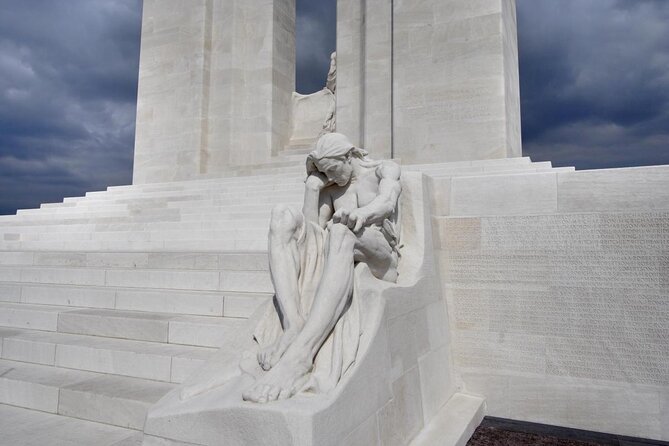
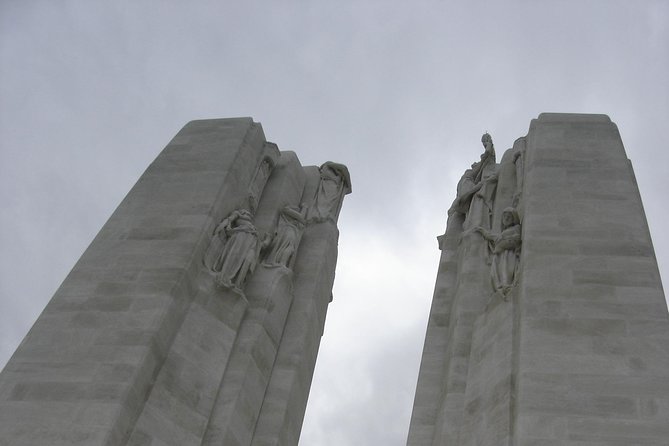
After the battlefield walk, you drive to the Canadian memorial designed by Walter Seymour Allward. The memorial was fully refurbished in 2007. Its scale and setting give the day a solemn center, but the guide’s earlier explanation helps you read it as more than a grand monument.
Allow about two hours for this opening section. That is generous enough to combine the visitor centre, possible tunnel visit, trench area, and memorial without reducing the stop to a rushed photo call.
A quiet stop at Givenchy Road Cemetery
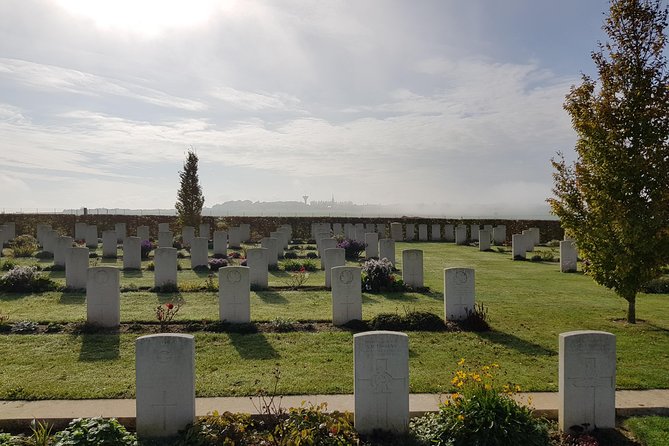
Before heading farther south, the tour stops at Givenchy Road Canadian Cemetery. It contains the graves of 108 Canadians who died on April 9, 1917, and in the days that followed during the Battle of Arras.
You get about 15 minutes here. That is not long, but it is appropriate for a small cemetery stop. The visit shifts the focus from military plans to individual loss. After the large memorial at Vimy, the cemetery gives you a more intimate place to pause.
I appreciate this kind of stop because it prevents the day from becoming only a study of generals, maps, and advances. The names and dates make the cost of the campaign personal.
Lunch near Pozières or La Boisselle
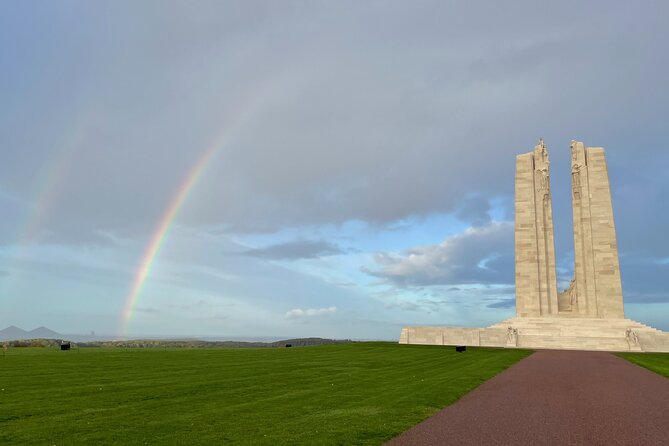
The lunch break lasts about 45 minutes and takes place at a local café or restaurant in La Boisselle or Pozières. Lunch is not included in the price, so plan to pay separately.
One possible choice is Le Tommy, a café and war museum with wartime objects that can be handled. That combination gives the break a stronger connection to the subject than a standard roadside meal, though the exact café is not promised in the details.
The short lunch window keeps the tour moving, but it also means you should not expect a long relaxed meal. If you like local food and a pause between memorials, this is a welcome change of rhythm. If you need a slow lunch, you may find the schedule tight.
The stop also places you in the Somme area, where the next visits focus on the Newfoundland and Canadian roles in the 1916 fighting.
Same trip, a completely different kind of day:
- Entrance Ticket Nausicaa, the biggest aquarium in Europe
★ 3.5 · 1,135 reviews - Lille Driving Tour by Convertible Citroen 2CV
★ 4.9 · 711 reviews - Nausicaá National Sea Center: Full-Day Entry Ticket
★ 4.5 · 541 reviews - Unique Tour of Lille by Convertible 2CV – 1h00
★ 5.0 · 470 reviews
Beaumont-Hamel and the Newfoundland Park
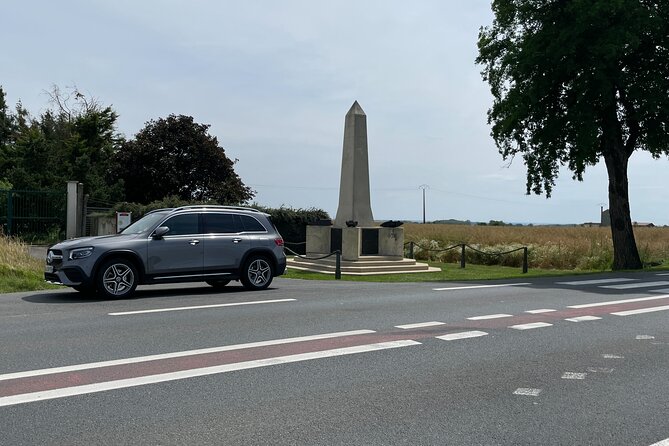
After lunch, you visit the Newfoundland Park at Beaumont-Hamel. The Newfoundland Regiment suffered its second-worst casualty level for a regiment on the first day of the Battle of the Somme.
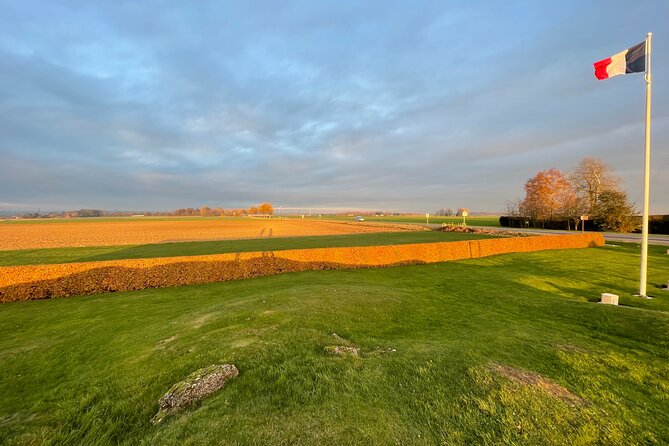
This is one of the strongest parts of the day because the trench system remains well preserved. You can see how the ground was shaped for defense and why trench warfare was so difficult to understand from a textbook alone.
The Caribou Memorial and the Danger Tree face the former German line. These landmarks help you connect the site to the soldiers who attacked here, rather than viewing the park as a generic military memorial.
The planned stop lasts about an hour. For many people, especially those with Newfoundland family connections, that may feel short. One useful feature of a private group is that you can tell Olivier in advance if Beaumont-Hamel is your main priority. A Newfoundland couple received extra attention there, showing how the route can respond to a group’s background, within the limits of the day.
This visit is also a good reason to bring sturdy shoes and allow time for outdoor walking. The tour includes trench areas and battlefield ground, not only paved memorial approaches.
Courcelette and the first tanks
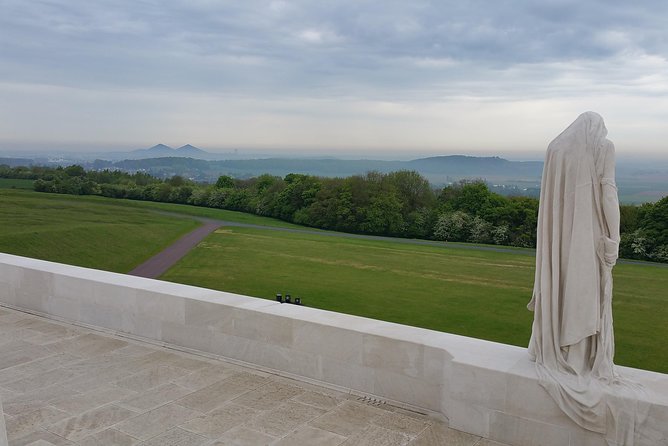
The final listed stop is the Canadian Memorial at Courcelette, with about 15 minutes at the site. The village was captured by Canadian forces in mid-September 1916, on the same day tanks were used for the first time in history.
That detail gives Courcelette a particular place in the story. You are not only looking at another memorial. You are seeing a location linked to a major change in battlefield technology and to the Canadian advance during the Somme campaign.
Fifteen minutes is enough for an introduction and a brief look, but not for a long independent visit. The value comes from Olivier’s explanation and from placing Courcelette after Beaumont-Hamel and Pozières. By this point, the day has shown you several parts of the same campaign rather than isolated points on a map.
The sequence also explains why the driving commentary matters. Much of the learning happens between stops, while the vehicle moves through the area. Historic GPS maps can show front lines and troop movements in a way that a static plaque cannot.
What the private format adds
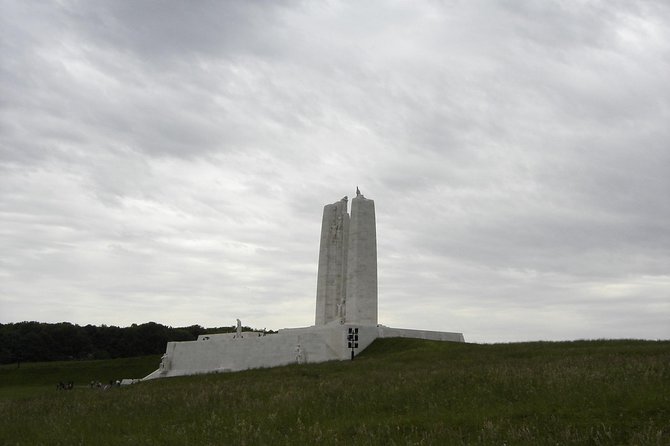
The group limit is three people, with private transportation, bottled water, and live commentary. That is a major difference from a large coach trip. You can ask about Canadian units, Newfoundland service, family names, tactics, or the meaning of a particular memorial without waiting for a whole bus to settle down.
A private tour also helps with the emotional pace. Some people want time to walk quietly at a cemetery. Others want detailed military explanation at every turn. Olivier can focus the conversation more closely than a guide addressing a large mixed group.
The small vehicle is also practical because the route covers Vimy, the Arras area, and the Somme. Pickup is flexible within the Amiens, Arras, and Saint-Quentin areas, with arrangements made after booking. The start time is 9:30 am, and the full experience lasts about seven hours.
You should not book this expecting a fully independent day. The guide shapes the schedule, and the short stops at Givenchy Road and Courcelette leave limited time for wandering. The tradeoff is that you cover much more ground than you could easily manage alone.
Price, pickup, and who gets good value
At $372.43 per person, this is not a low-cost sightseeing outing. The price makes more sense if you are sharing with one or two people and want private transport, a licensed local guide, and a tightly organized day across several battlefield areas.
The value is strongest when you care about interpretation. You are paying for the driving time, the route planning, the maps, the live explanation, and access to sites that are difficult to connect without local knowledge. If you only want to see the Vimy Memorial, a shorter visit may be better value.
Pickup is offered from a hotel, bed-and-breakfast, or train station in the stated service areas. You cannot begin this tour in Paris, so you need to arrange your own route to Arras, Amiens, or Saint-Quentin. One practical benefit is that Olivier has helped people work out the train journey from Paris to Arras.
The tour is offered in English. Confirmation arrives within 48 hours of booking, subject to availability. Free cancellation is available up to 24 hours before the start time. Changes or cancellations inside that window are not accepted for a refund.
Who should book this day
I would recommend it most strongly to Canadians researching family service, people with Newfoundland connections, and anyone who wants a focused account of Canada’s role in the First World War.
It also suits history-minded couples or small families who prefer questions and conversation over a fixed group script. Children can join, but they must be accompanied by an adult. Most people can participate, though trench walking and outdoor ground may not suit everyone equally.
You should think twice if your priority is a slow, reflective visit at each location. The route covers many sites in seven hours, and the drive between them is part of the program. You should also be comfortable paying separately for lunch and reaching the pickup region without a Paris departure.
Should you book the Vimy and Somme tour?
Book it if you want the Canadian First World War story explained across the actual ground where it happened. The best parts are the trench and no man’s land walk at Vimy, the careful use of maps in the vehicle, the emotional pause at Givenchy Road, and the well-preserved trenches at Beaumont-Hamel.
The day is especially worthwhile with Olivier Dirson if you want detailed answers and a guide who can connect Vimy, Arras, and the Somme into one story. Skip it if you only have time for a single monument or prefer to set your own pace. For a small group with a serious interest in Canadian military history, the private format makes the high price easier to justify.
FAQ
How long does the Canadian WWI private tour last?
The tour lasts approximately seven hours.
What time does the tour begin?
The scheduled start time is 9:30 am.
Where can pickup be arranged?
Pickup can be arranged within the Amiens, Arras, and Saint-Quentin areas, including a train station, hotel, or bed-and-breakfast.
Can the tour start in Paris?
No. The tour provider states that tours cannot originate from Paris because of travel distance and time limits.
How many people can join the private tour?
The group is limited to three people, and only your group participates.
Is lunch included?
No. Lunch is not included. The tour includes a 45-minute lunch break at a local café or restaurant in La Boisselle or Pozières.
Is the Grange Tunnel visit guaranteed?
No. The Grange Tunnel visit is added depending on attendance, so it should be viewed as subject to availability.
Which memorials and cemeteries are visited?
The route includes the Canadian National Vimy Memorial, Givenchy Road Canadian Cemetery, Beaumont-Hamel Newfoundland Park, and the Courcelette Canadian Memorial.
Is the tour offered in English?
Yes. The tour is offered in English and includes live commentary.
What is the cancellation policy?
You can cancel up to 24 hours before the experience start time for a full refund. Cancellations or changes made less than 24 hours before the start time are not accepted for a refund.
More Day Trips in Northern France
- WWI Somme Battlefields Day Trip from Paris
★ 4.9 · 111 reviews - Disneyland® Paris 1-Day Ticket
★ 4.6 · 49,412 reviews - Normandy D-Day Sites & Cemetery Day Trip from Paris with Lunch
★ 5.0 · 6,877 reviews - From Nice: French Riviera in One Day
★ 4.5 · 5,215 reviews
Just added around Northern France
- Private Lille Tour by Classic Convertible 2CV with Champagne★ 5.0 · 49 reviews
- 1 Hour Private Lille Tour by Convertible 2CV with a Local Products Tasting★ 5.0 · 78 reviews
- 30-Minutes Private Guided Tour of Lille by Convertible 2CV★ 5.0 · 79 reviews
- Rallye “Discoveries and Surprises”★ 5.0 · 52 reviews
- Lille Scavenger Hunt and Highlights Self Guided Audio Tour★ 4.0 · 32 reviews
- Lille Old Town Walking Tour With A Guide★ 4.5 · 40 reviews
- Lille Scavenger Hunt and City Highlights Walking Tour★ 4.5 · 47 reviews
- Quad and Moto hike, discover the Corrèze otherwise. Accessible to everyone !!★ 5.0 · 33 reviews
WWI Battlefield Tours, compared.
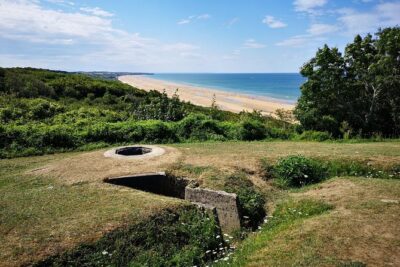
Normandy Battlefields Tour – American Sites (A3)
Read our review →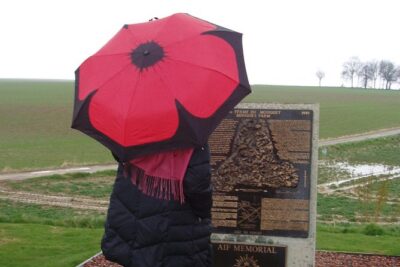
Somme Battlefields Small-Group Day Trip with John Monash Centre from Paris
Read our review →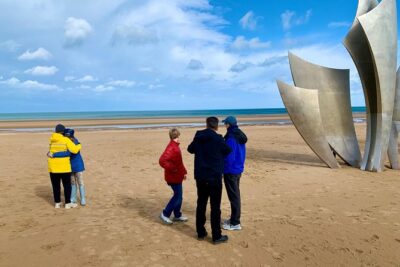
Normandy Battlefields D-Day Private Trip with VIP Services from Paris
Read our review →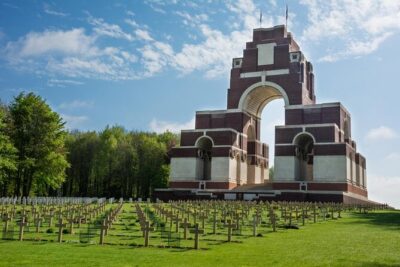
Somme Battlefields from Paris with Australian memorial & Amiens Cathedral
Read our review →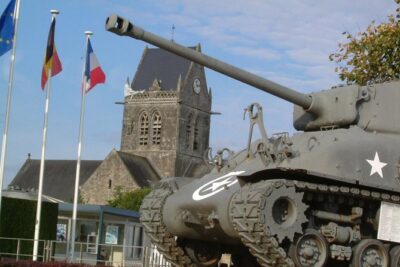
Full-Day US Battlefields of Normandy Tour from Bayeux (A3LST)
Read our review →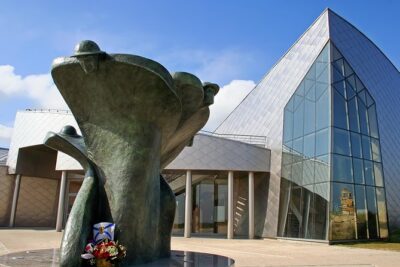
Full-Day Canadian Battlefields & sites Normandy Tour from Bayeux
Read our review →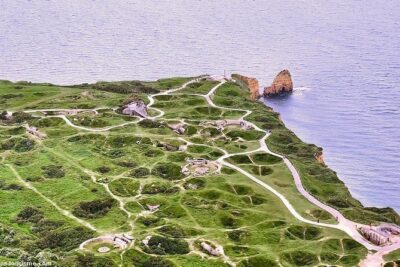
Private Day Tour including Normandy Landing Beaches & Battlefields from Bayeux
Read our review →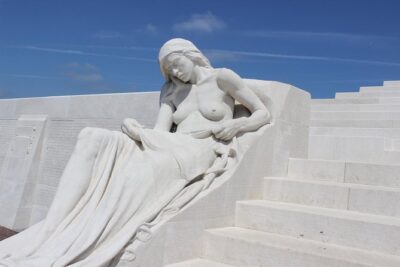
Browse the lists this tour appears in