
Reviewed · LE MARAIS TOURS
Paris Marais Quarter 2-Hour Private Walking Tour
The Marais packs an astonishing amount of Paris into a short walk. This private tour follows the neighborhood from former swamp to royal quarter, Jewish center, and modern arts district, with stops at Les Halles, Hôtel de Ville, the Pletzl, and Place des Vosges. I like the clear historical sweep, and I like that a private guide can adjust explanations for a mixed-age group, as Alexandre did for visitors ranging from 6 to 75. The main drawback is time: two hours is enough for an introduction, not a slow visit to every street or building.
I also like the route’s variety. You get markets, city government, religious history, aristocratic architecture, the Centre Pompidou, and Place de la Bastille in one outing. At $176 per person, it is a serious price for a two-hour walk, so the value depends on your group size and how much you want personal attention rather than a cheaper shared tour.
Key points to know before booking
- The route covers several eras: You move from medieval Paris and Les Halles to aristocratic mansions, Jewish heritage, and the modern Pompidou Centre.
- It is a private walk: Your guide can shape the pace and explanations around your group instead of following a fixed public script.
- The Pletzl gives the tour its human story: This historic Jewish quarter remains one of the Marais’s defining areas.
- Place des Vosges is a major finale: Its elegant square offers a very different mood from the crowded streets around Les Halles.
- The meeting point is easy to identify: Meet at Metro Étienne Marcel and look for the guide carrying a red canvas tote bag.
- Guides speak three languages: Tours are offered in English, French, and Serbo-Croatian.
Why the Marais makes such a good walking tour
Many Paris neighborhoods have one strong identity. The Marais has several, and they do not always fit neatly together. It began as wet, undeveloped ground. After the marsh was drained, people settled there, and the area gradually became part of the city’s daily life.
Later, the Marais attracted aristocratic families and even a royal court. Its fortunes then changed. The elegant quarter declined into a place many people avoided, before beginning another revival in modern times. That sequence gives your guide plenty to explain beyond dates and façades.
I find this sort of neighborhood tour more useful than a simple parade of monuments. You are not only looking at buildings. You are learning why the same streets could be fashionable in one period, neglected in another, and desirable again later.
The private format matters here. A guide can stop when your group has a question, simplify the story for children, or give more architectural detail to adults who want it. The past tours have been led by guides including Alexander, Caroline, Boris, Fabienne, Yvana, Anja, and Alexandre. The feedback consistently praises clear explanations, a pleasant manner, and the ability to connect separate parts of the neighborhood.
More Walking Tours in Paris
- Paris Top Sights Half Day Walking Tour with a Fun Guide
★ 5.0 · 2,893 reviews - Montmartre Hidden Gems and Scenic Highlights Walking Tour
★ 5.0 · 2,684 reviews - Montmartre Hill French Gourmet Food and Wine Tasting Walking Tour
★ 5.0 · 2,588 reviews
Starting at Les Halles and Fontaine des Innocents
The tour begins at Metro Étienne Marcel, close to the Les Halles area. Find the guide with the red canvas tote bag, a useful detail in a busy part of Paris.
Les Halles was once the city’s largest open market. That fact gives the opening stop real weight. Your guide can help you picture the area as a center of food, trade, noise, and everyday work, rather than just another central Paris intersection.
The nearby Fontaine des Innocents adds an older architectural marker to the beginning of the route. This early section sets up one of the tour’s main ideas: Paris is not a single, polished story. It is a city rebuilt, reused, and reinterpreted over many centuries.
Do not expect a long market visit or a food tasting. Food, snacks, and drinks are not included, and the tour is a walking experience rather than a culinary outing. If you want a snack before or after, plan that separately.
Linking medieval Paris with the Centre Pompidou
The Centre Pompidou is one of the route’s most useful modern reference points. Its bold, contemporary appearance can seem far removed from the medieval streets around it, but the tour uses that contrast to connect old Paris with new Paris.
The important point is not simply seeing a famous modern building. Your guide explains the relationship between the Middle Ages and the Pompidou Centre, giving you a way to read the city as a layered place instead of a collection of unrelated sights.
This is where a guide adds real value. You can look at a building on your own, but you may not know why it matters in the story of the neighborhood. The tour’s strength is this habit of joining one period to another.
Since the entire experience lasts only two hours, expect a stop and explanation rather than an extensive visit inside the Centre Pompidou. The tour is outside and on foot, with the emphasis on the Marais rather than museum admission.
Hôtel de Ville and the city’s grand public face
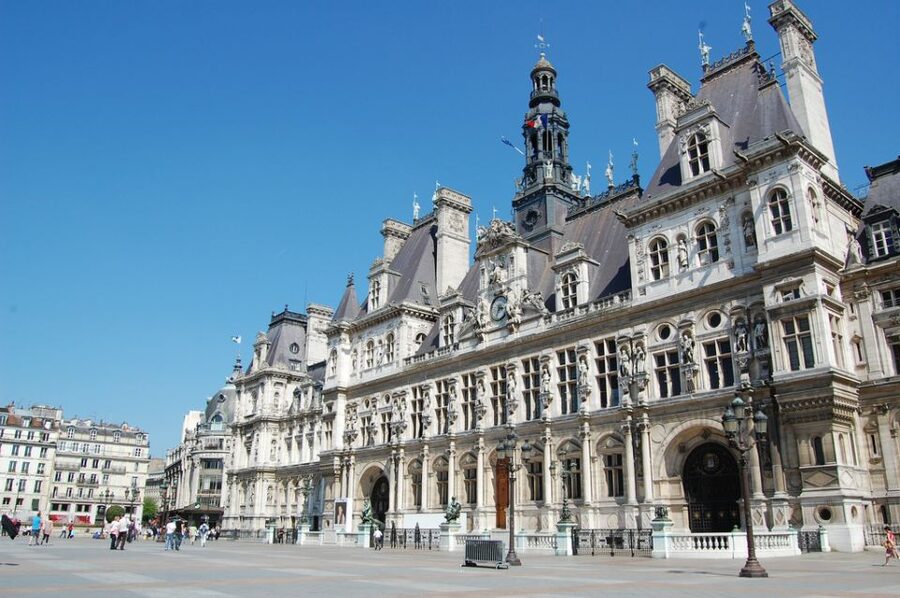
From the central streets, the walk reaches Hôtel de Ville, Paris’s opulent Renaissance City Hall. This is a useful change of scale. Les Halles introduces ordinary commerce, while Hôtel de Ville brings in civic power, ceremony, and the public image of the city.
I like having this stop in the route because it keeps the tour from becoming only an architecture walk. Your guide can place the building within the wider story of Paris and show how the city presented itself through grand public spaces.
The stop also helps you understand the Marais’s position in central Paris. You are still close to major civic landmarks, but the route soon turns toward the more intimate streets of the Pletzl. That contrast is one of the best features of the itinerary.
More ways to explore Le Marais:
- Award-Winning Paris French Bakery Experience — Le Marais, 4th Arr
★ 4.5 · 1,186 reviews - Paris Le Marais Food Tour With 10+ Tastings, Cheese, Wine & More
★ 5.0 · 985 reviews - Paris Le Marais District Original Food and Wine Tasting Tour
★ 4.5 · 880 reviews - Paris Bike Tour Hidden Secrets in the Latin Quarter & Le Marais neighborhoods
★ 5.0 · 766 reviews
The Pletzl and Rue Pavée
The Pletzl is the historic center of Paris’s Jewish community and remains a key part of the Marais. This is likely to be the most personal and socially important section of the walk.
The tour includes Rue Pavée and its synagogue. The information provided describes seeing the synagogue, not a scheduled interior visit, so you should think of this as a guided look at the area and its religious heritage rather than a synagogue tour.
The neighborhood’s Jewish story gives the Marais a strong identity that cannot be reduced to grand houses and attractive squares. A good explanation here helps you see the streets as a living part of Paris, shaped by community, faith, migration, and memory.
I would pay close attention during this part. The guide’s ability to explain the area clearly matters more than simply checking off a street name. Fabienne was praised for adapting her explanations to her audience, while Caroline was noted for showing both the history and less obvious corners of the district. Those are useful qualities in a neighborhood where context makes the difference.
Hôtel de Sully and the aristocratic Marais
The route then turns toward Hôtel de Sully, one of the Marais’s grand aristocratic residences. This stop represents the quarter’s high point as a fashionable home for powerful families.
Here, the tour’s earlier story about changing fortunes becomes easier to follow. The Marais was not always a mixed, lively district with shops, galleries, religious sites, and restaurants. It once carried the prestige of court life and noble residences.
A private guide can help you look beyond the surface of a handsome doorway or courtyard. You may hear how the building fits into the period when the Marais attracted aristocrats and royal connections. The supplied details do not promise interior access, so plan on viewing the site as part of the street walk.
The broader lesson is useful for the rest of Paris. Grand architecture does not always mean a neighborhood has remained wealthy or fashionable. The Marais’s later decline and revival make its elegant buildings more interesting, not less.
Place des Vosges, the tour’s graceful centerpiece
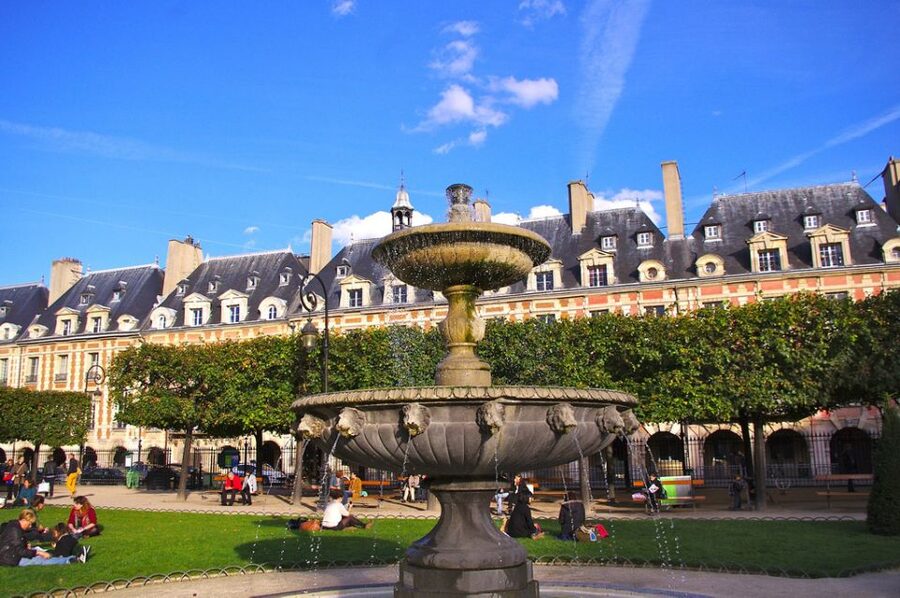
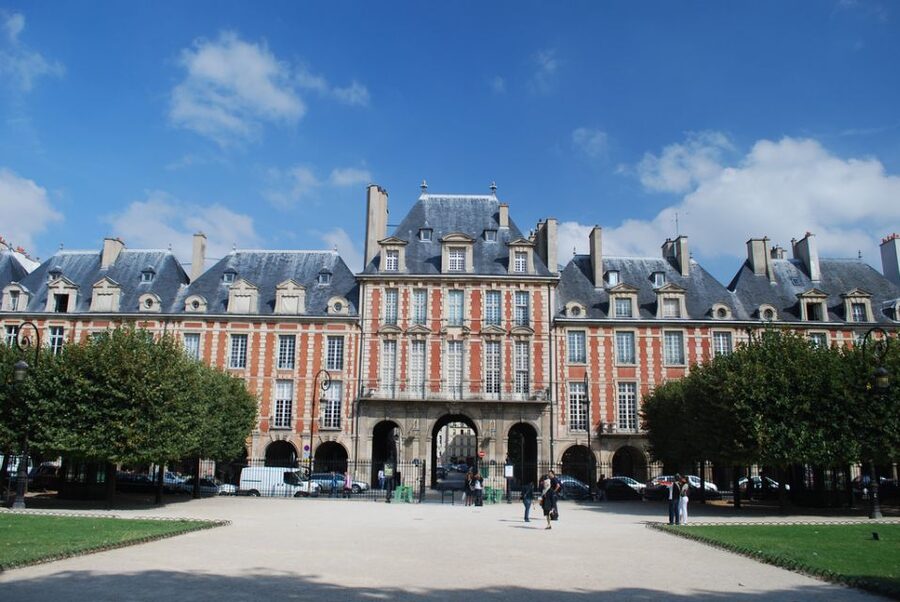
Place des Vosges is one of the most beautiful squares in the world, and it provides the route with a calm, ordered contrast to the busy streets near Les Halles and Hôtel de Ville.
Its presence also reinforces the Marais’s aristocratic past. After hearing about royal and noble connections, you arrive at a square that expresses that formal side of the neighborhood more clearly than almost any other stop on the walk.
Give yourself a moment here. Two hours is short, and the guide needs to keep moving toward Bastille, but Place des Vosges is the kind of place where you may want time to look around. If your group is especially interested in architecture or photography, mention that at the start so the guide understands your priorities.
This is also a good point to consider the tour’s private format. A larger shared group may need to keep to a strict schedule. A private guide has more room to answer questions or adjust the pace, although the total route still has to fit into two hours.
Finishing at Place de la Bastille
The walk ends at Place de la Bastille, a fitting final stop for a tour about change. The Marais has moved from wet ground to settlement, from royal quarter to decline, and from neglect to renewed popularity. Bastille adds another major chapter to Paris’s political and civic story.
The route from Étienne Marcel to Bastille gives you a broad cross-section of the district. You see commercial Paris, public Paris, Jewish Paris, aristocratic Paris, and modern cultural Paris without leaving the Marais area.
Do not expect every stop to receive equal time. The tour lists many locations, and the route is only two hours. The guide will need to keep the story moving. That is good for a first look, but less suitable if you want long visits, museum interiors, or detailed architectural study.
How the private format affects the value
The price is $176 per person. For one person or a couple, that is expensive for a two-hour walking tour. For a larger private group, the cost may make more sense because you are paying for a dedicated guide rather than separate tickets or transport.
The tour includes the two-hour guided walk only. Food, snacks, beverages, admissions, and other extras are not included. The main purchase is the guide’s time and the ability to shape the experience around your group.
I would book it if you value conversation, historical explanation, and a flexible private setting. I would hesitate if you mainly want a low-cost orientation walk or prefer to explore independently with a guidebook.
The past guide feedback points to the strongest part of the experience: communication. Alexander was praised for tying the history of Paris and the Marais together. Anja was noted for her understanding of history, architecture, and culture. Yvana’s walk was described as clear, lively, and illuminating, while Alexandre handled a group with ages from 6 to 75.
Those details matter more than a long list of stops. A private tour can be excellent or merely adequate depending on the person leading it. Here, the available record suggests that the guides are selected for clear speaking and a friendly approach, but your exact guide will depend on availability.
Timing, languages, and practical planning
The tour lasts two hours and operates rain or shine. Wear shoes suitable for steady city walking and bring protection from the weather, since the experience is outdoors.
Guiding is available in English, French, and Serbo-Croatian. Make sure the language you need is selected when you book, especially if your group includes people with different levels of comfort in English or French.
The meeting point is Metro Étienne Marcel. Arrive with enough time to locate the guide and the red canvas tote bag. The tour does not include food, so eat beforehand or plan a stop after the walk.
Free cancellation is available up to 24 hours before the start for a full refund. You can also reserve now and pay later, which helps if your Paris schedule is still changing.
Who should book the Marais walking tour?
I think this tour is best for first-time visitors who want the Marais explained rather than simply photographed. It also suits repeat visitors who have walked through the district before but never understood how its Jewish, aristocratic, civic, and modern cultural stories connect.
Families may appreciate the private format, particularly because the guide can adjust the explanations for different ages. The example of a group ranging from 6 to 75 suggests that the walk can work across generations when the guide keeps the storytelling clear.
It is less suited to anyone looking for a museum-heavy outing, a food tour, or a relaxed half-day pace. The route covers a lot, and two hours goes quickly. You will see several important places, but you will not have long interior visits at each one.
Should you book it?
Book this tour if you want a short, private introduction to the Marais with a strong historical thread. The best reason to choose it is not one individual monument. It is the way the route joins Les Halles, the Pletzl, Hôtel de Sully, Place des Vosges, and Bastille into one story about Paris changing over time.
At $176 per person, it is not a bargain walk. It earns its price when your group wants personal attention, clear explanations, and the freedom to ask questions. If you are satisfied with a self-guided stroll, save the money. If you want the Marais to make sense in two focused hours, this is a sensible choice.
FAQ
Where does the Paris Marais walking tour meet?
The meeting point is at Metro Étienne Marcel. Your guide will carry a red canvas tote bag so you can identify them.
How long does the tour last?
The private walking tour lasts two hours.
Which languages are available?
The tour is offered in English, French, and Serbo-Croatian.
What places are included on the route?
The route includes Les Halles, Fontaine des Innocents, Centre Pompidou, Hôtel de Ville, the Pletzl, the synagogue at Rue Pavée, Hôtel de Sully, Place des Vosges, and Place de la Bastille.
Is food included?
No. Food, snacks, and beverages are not included in the tour.
What happens if it rains?
The tour operates rain or shine, so plan for the weather on the day of your walk.
More 2-Hour Experiences in Paris
- The Père Lachaise Cemetery: Guided 2-Hour Small-Group Tour
★ 4.7 · 1,065 reviews - Paris: 2-Hour Perfume Creation Workshop
★ 4.8 · 731 reviews - Paris Louvre: 2-Hour Private Tour for Groups or Families
★ 4.6 · 639 reviews - Paris Montmartre: 2-Hour City Tour in German
★ 4.9 · 299 reviews
Just added around Paris
- Explore Hidden bars and Speakeasies in Paris★ 5.0 · 79 reviews
- Paris Private Custom Tour with a Local Guide, Hidden Gems & Highlights★ 5.0 · 293 reviews
- Paris French Baking Class Baguettes and Croissants in a Bakery★ 4.5 · 172 reviews
- Paris: Experience Segway Top Highlights Small Group 2 Hours★ 5.0 · 75 reviews
- Seine River Evening Cruise with Music (Drink Options)★ 3.5 · 321 reviews
- Eiffel Tower Tour & River Cruise with Summit Option★ 4.0 · 215 reviews
- Paris Evening City of Lights Small Group Bike Tour & Boat Cruise★ 5.0 · 97 reviews
- Paris Eternelle Notre-Dame Virtual Reality Tour★ 4.5 · 50 reviews
Le Marais Tours, compared.
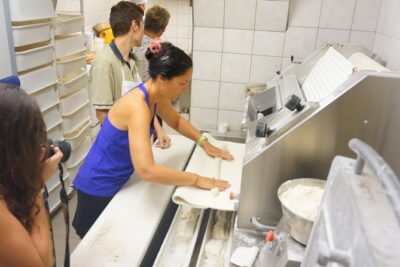
Award-Winning Paris French Bakery Experience — Le Marais, 4th Arr
Read our review →
Paris Le Marais Food Tour With 10+ Tastings, Cheese, Wine & More
Read our review →
Paris Le Marais District Original Food and Wine Tasting Tour
Read our review →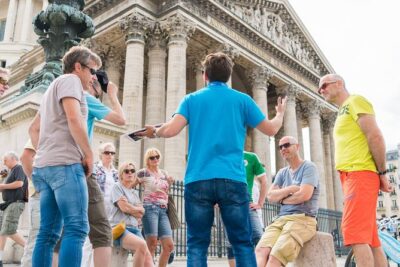
Paris Bike Tour Hidden Secrets in the Latin Quarter & Le Marais neighborhoods
Read our review →
Food and Wine Tasting Walking Tour in Le Marais
Read our review →
Le Marais/Paris – The Historic, Trendy, Jewish, LGBT district
Read our review →

Browse the lists this tour appears in