
Reviewed · MUSEUMS
Les Invalides: Napoleon’s Tomb & Army Museum Entry
Napoleon’s tomb is the star here, but it is only the opening chapter. Beneath the gilded Dome Church, his enormous red porphyry sarcophagus sits below a soaring cupola, surrounded by the story of France’s military power. Then the Army Museum spreads through the former veterans’ hospital in galleries that cover the Middle Ages to the present.
I like the freedom to explore at my own pace, and I like the sheer range: royal armor, cannons, uniforms, personal objects, maps, photographs, and strong World War exhibits. The main drawback is simple: Les Invalides is much larger than it looks. Three hours can give you a fine taste, but four to five hours, or a full day with a break, is a better plan.
Key points to know before you go
- Napoleon’s tomb is under the gilded Dome Church, one of Paris’s most striking interiors.
- The collection covers more than 500,000 objects, from medieval armor to modern military history.
- Your ticket includes several museums, including Plans-Reliefs and the Order of the Liberation.
- The ticket is valid for one day, so you can leave for lunch and return later.
- This is a self-guided visit, with a multimedia guide available for €5 on site.
- Keep your ticket handy, since you may need to show or scan it at different parts of the complex.
Les Invalides: more than Napoleon’s tomb
The Hotel National des Invalides was created under Louis XIV to house veterans and wounded soldiers. Its original purpose still shapes the visit. This is not just a grand church with a famous grave. It is a large military complex, filled with objects connected to French soldiers, commanders, battles, and national memory.
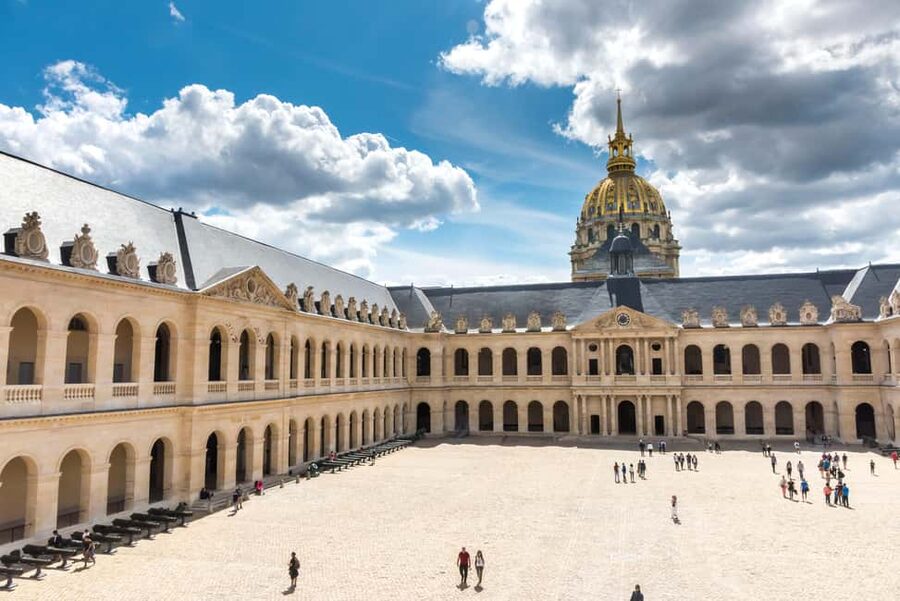
You enter in the heart of Paris, near the Esplanade des Invalides. The long façades and formal courtyards give you a sense of scale before you even reach the galleries. The building itself is part of the attraction. Its proportions are grand, but the site also retains a serious, institutional feel. It was built for service and care, not only ceremony.
Your admission covers the permanent collections, temporary exhibitions, the Dome Church, the Museum of Plans-Reliefs, and the Museum of the Order of the Liberation. That makes the $20 price good value if you are prepared to spend several hours inside. It is less compelling if you only want a quick look at Napoleon’s grave, although the tomb alone is memorable enough to justify the ticket for many people.
More museums and galleries in Paris:
- Paris: Louvre Museum Timed-Entrance Ticket
★ 4.6 · 71,977 reviews - Louvre Museum Masterpieces Guided Tour with Access
★ 4.5 · 12,023 reviews - Paris: Louvre Museum Entry Ticket With Host and River Cruise
★ 4.6 · 9,926 reviews
The Dome Church and Napoleon’s sarcophagus
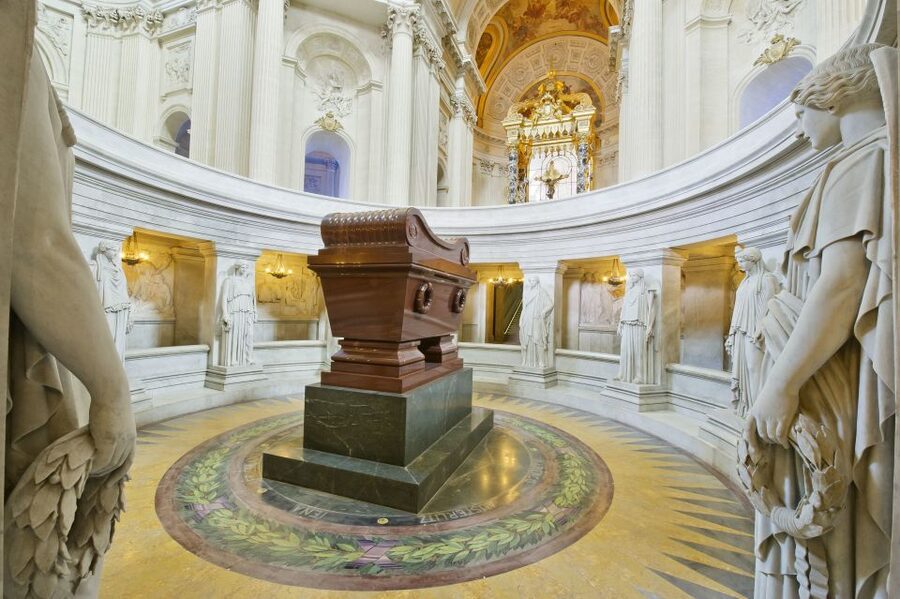
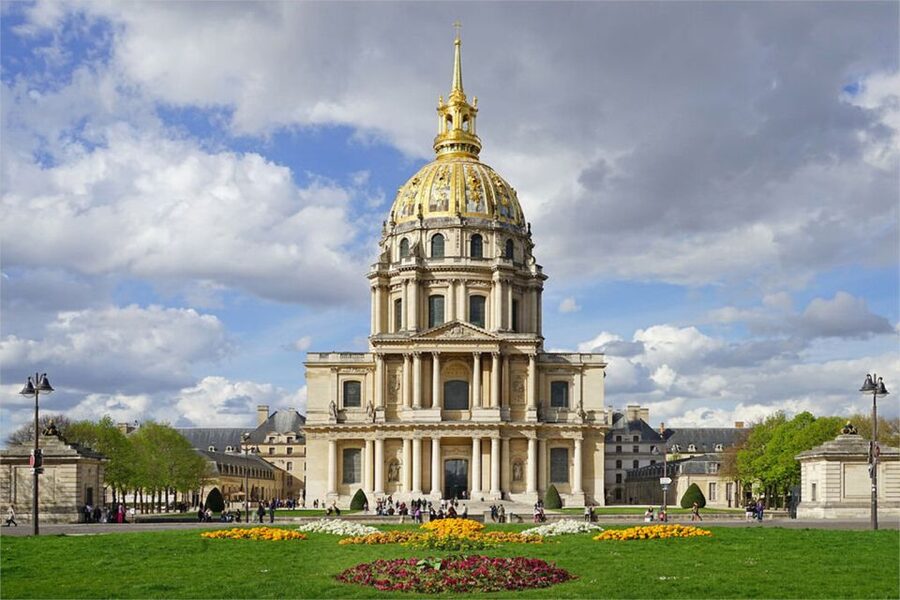
Make the Dome Church your first stop, especially if Napoleon is your main reason for coming. Since 1861, the church has held Napoleon Bonaparte’s tomb. The interior is highly ornate, with the gilded dome drawing your eye upward before the tomb pulls it back toward the floor.
The sarcophagus is set below the dome in a circular space. You can look down toward it from the surrounding gallery and see the arrangement from several angles. The effect is theatrical and deliberately grand. Napoleon wanted a powerful public image in life, and this memorial continues that message in death.
You do not need to be an admirer of Napoleon to appreciate the room. In fact, the setting invites a useful question: how does a country choose to remember a ruler who changed Europe through war? The museum gives you plenty of material for your own answer. The architecture celebrates him, while the surrounding collections show the cost, reach, and machinery of military power.
The Dome Church is also the most visually immediate part of the visit. If you are short on time, see it first, then choose one or two collections. If you have a full day, resist the temptation to leave after the tomb. The museum’s strongest material is spread across the complex.
Medieval armor and the weapons of French kings

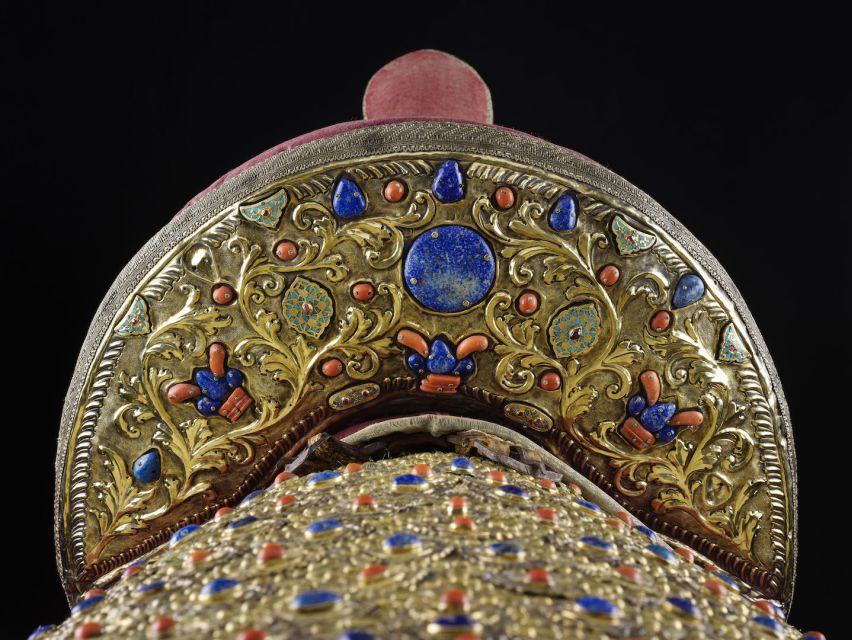
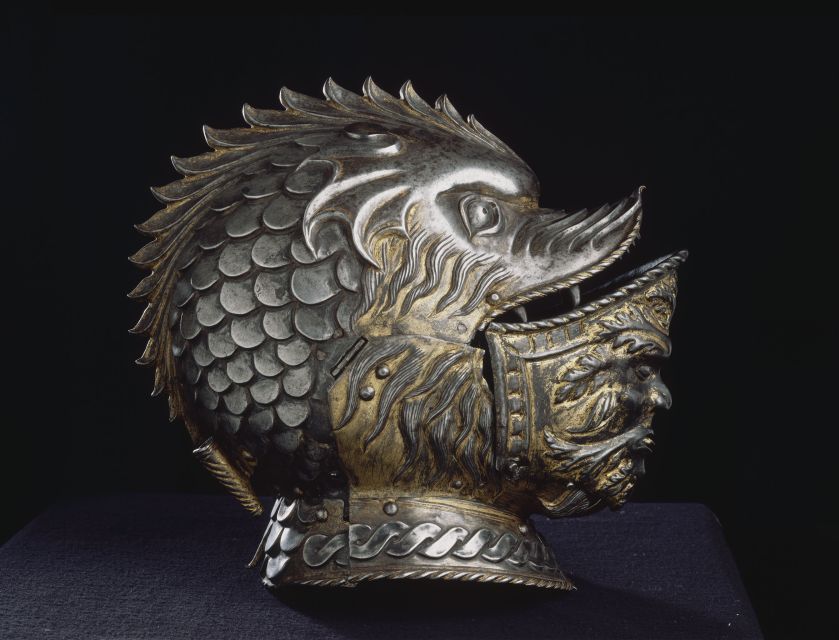
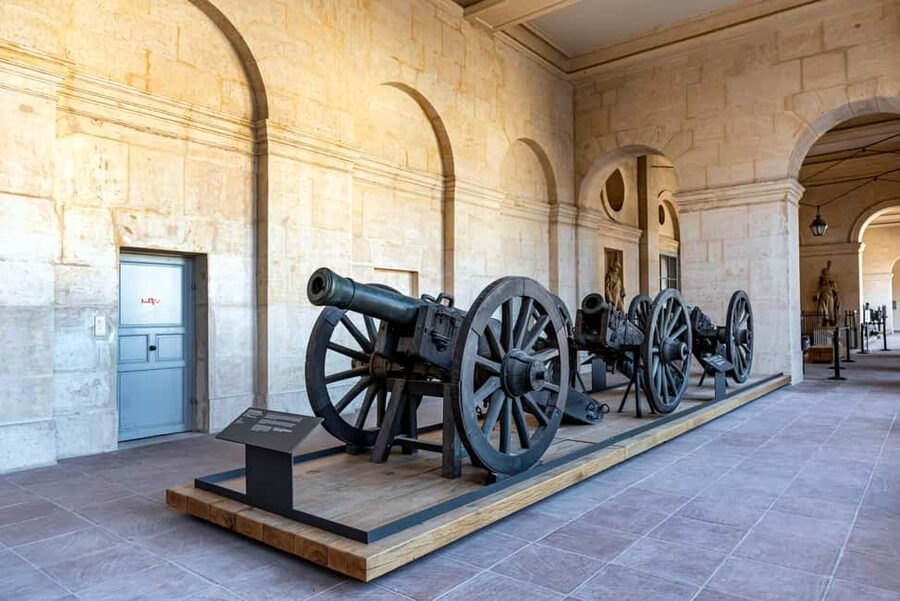
The older galleries focus on armor and weapons, including pieces associated with the kings of France. Here you will see swords, shields, helmets, firearms, and protective armor arranged to show how warfare changed over time.
The appeal is not limited to military specialists. Armor makes medieval power visible. A suit of plate armor tells you about status, wealth, technology, and the physical demands placed on a soldier. Swords and firearms show the shift from close combat to weapons that could be produced and used on a larger scale.
The collection is one of the largest arms and armor displays in the world, and the sheer number of objects can be both its strength and its problem. You get a broad picture rather than a small, tightly edited exhibition. I suggest picking a few objects that catch your eye and reading the labels carefully instead of trying to absorb every case.
Families often find these rooms easier to enjoy than text-heavy historical galleries. Young visitors can focus on the shapes of the armor, unusual weapons, and large cannons while adults follow the political story. Children under 18 enter free, but they still need an access pass collected from the museum office before going in.
From Louis XIV to Napoleon III
Another important section follows French military and political power from Louis XIV through Napoleon III. This is where the building’s connection to the monarchy and empire becomes clearer.
You will encounter uniforms, paintings, weapons, and personal belongings linked to major French figures. These displays help connect the objects to people rather than treating them as anonymous equipment. A uniform can show rank and ceremony. A personal item can suggest the human side of a commander who otherwise appears only in official portraits.
This area is useful if you want context for Napoleon’s tomb. The memorial does not exist in isolation. It belongs to a long French tradition of using military achievement, royal ceremony, and public monuments to shape national identity.
The amount of material can feel overwhelming, particularly if you arrive expecting a short attraction. You may find a one-way stair circuit in some areas, which helps manage movement but can make it harder to retrace your steps. Wear comfortable shoes and allow time to pause. Seating is available throughout much of the museum, which helps if you are visiting with children or need regular rests.
A few more Paris half-days worth comparing
- Disneyland® Paris 1-Day Ticket
★ 4.6 · 49,412 reviews - Paris: Versailles Palace and Gardens Full Access Ticket
★ 4.6 · 41,579 reviews - Paris: Evening River Cruise with Music
★ 4.4 · 22,721 reviews - Paris: Eiffel Tower Entry Ticket with Optional Summit Access
★ 4.4 · 20,035 reviews
World War I and World War II galleries
The World War sections are among the most useful parts of the museum for visitors who want modern history. They combine artifacts, photographs, films, scale models, and explanatory displays. The result is more varied than a room of uniforms and weapons.
The World War I and World War II material also gives the museum a wider frame. You are not only looking at French victories or famous commanders. You are seeing campaigns, occupation, resistance, and the experience of a country caught in enormous international conflicts.
The World War II exhibition includes material about the French Resistance, including the important role played by women. That emphasis adds welcome depth. Resistance history can easily become a story of a few famous men, but the displays help show that many kinds of people took part.
Allow at least a couple of hours for these galleries if modern history interests you. Films and interactive digital features slow the visit down in a good way, but they also mean you cannot rush through and claim to have seen everything. English and French signs make the exhibitions easier to follow for many international visitors.
The Museum of Plans-Reliefs
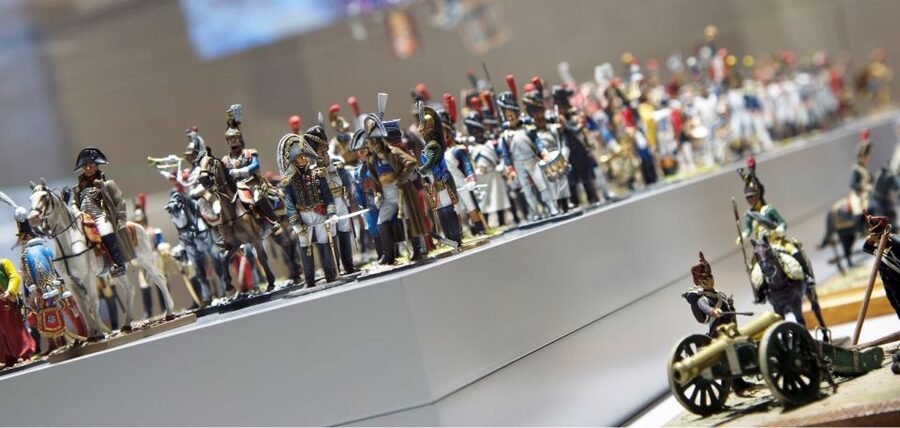
The Museum of Plans-Reliefs contains scale models connected to French fortifications and military planning. These models help explain how armies understood territory, defended towns, and planned campaigns.
A map gives you symbols and lines. A relief model gives you walls, hills, roads, and fortified positions in three dimensions. That makes military strategy much easier to grasp, especially if you are not familiar with the geography of a particular campaign.
This is a good section to visit after the historical galleries. Once you have seen the weapons and read about commanders, the models show how those decisions worked on the ground. The pace is quieter here, and the displays reward close looking.
It is also one of the sections most likely to be missed by anyone who treats Les Invalides as only Napoleon’s tomb. Check your ticket and keep it with you, since the complex contains several museums and you may need to present it again when entering another area.
The Order of the Liberation and the French Resistance
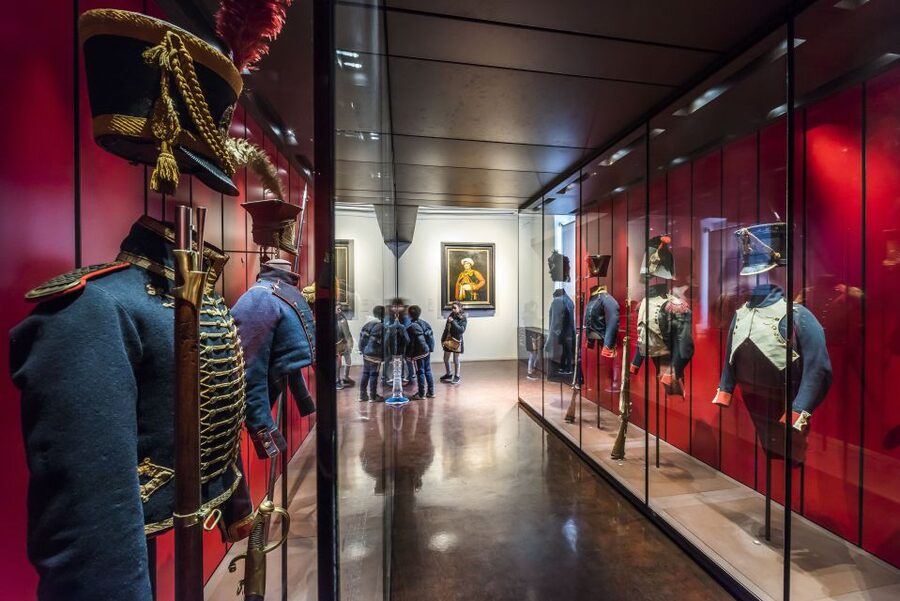
The Museum of the Order of the Liberation focuses on the Free French and the Resistance during World War II. It offers a different tone from the royal armor rooms and imperial displays.
The subject is modern, personal, and often morally difficult. Objects connected with resistance work can be small and ordinary, yet their meaning is serious. The displays help explain how people opposed occupation and how the Free French continued the fight outside occupied France.
This museum is especially worthwhile if you have already seen the grand ceremonial side of Les Invalides and want a closer look at individual actions and choices. It also helps balance the heavy focus on commanders and battlefield hardware found elsewhere in the complex.
If your time is limited, you could pair the Dome Church with this museum and the World War galleries. That combination gives you Napoleon, military technology, and twentieth-century French history without trying to cover every room.
A self-guided visit with room to set your own pace
This admission is not a guided tour. You walk through the collections on your own, choosing how long to spend in each section. That arrangement suits independent visitors who dislike being hurried, but it places the planning burden on you.
A multimedia guide is available to purchase on site for €5. It can add dates, names, and explanations to the objects, which is useful when the collection begins to blur together. If you have a strong interest in military history, the guide may help you organize the visit around key themes.
Some visitors have also enjoyed guided visits with people named Nelly, Yazid, Marcela, or Péter, but those guided experiences are not part of this entry ticket. Do not buy this product expecting a guide to meet you or lead you through the building.
The flexible entry is a real advantage. The ticket is valid for one day, so you can visit in the morning, leave for lunch, and return later. This matters in Paris, where a long museum session can make the rest of the day feel like work. A pause can help you return with enough attention for the World War galleries or the Plans-Reliefs models.
Timing, entrances, and practical details

Access from the Esplanade des Invalides is available from 10 AM to 6 PM. The Place Vauban entrance is open from 2 PM to 6 PM. Museum tills close 30 minutes before closing, so do not arrive at the last moment and expect to see the full complex.
The ticket helps you avoid the cash desk queue, but it does not mean you will walk through every part without stopping. Because the site includes several museums and the Dome, you may need to show or rescan the ticket at different entrances. Keep it with you until the end.
Cloakrooms are available. The site is wheelchair accessible, though access is not perfect in every area. If mobility is a concern, plan extra time and ask staff for help. The building includes older architectural features, and some routes may be less straightforward than a modern museum.
The complex is closed on January 1, May 1, and December 25. Check the selected date before you commit, since the booking is non-refundable.
How much time should you allow?
For Napoleon’s tomb and a quick look at the main galleries, allow around three hours. That will give you the headline attractions, but it will leave large parts of the complex unseen.
Four to five hours is a better target if you want the main armor displays, the Dome Church, and the World War sections. A full day makes sense for serious military history enthusiasts, families who want a slower pace, or anyone who wants to use the multimedia guide and stop for breaks.
The most common mistake is underestimating the size. You may arrive with an afternoon plan and discover that the museum has several more rooms than expected. If you have only half a day, choose your priorities before entering.
A practical route is:
- Start at the Dome Church and Napoleon’s tomb.
- Visit the medieval armor and royal weapons.
- Continue to the Louis XIV through Napoleon III galleries.
- Spend your main study time in the World War sections.
- Finish with the Order of the Liberation or Plans-Reliefs, depending on your interests.
You can change that order, of course. The key is not to wander without a plan for the first hour and then rush the sections you came to see.
Who will get the most from this admission?
This is an excellent choice for anyone interested in Napoleon, French history, military technology, World War I, World War II, or the French Resistance. It also works well for families. A 13-year-old may enjoy the history and films, while a younger child may prefer the armor, weapons, and large-scale models.
The museum is less suitable if you want a quick, light attraction between other appointments. It requires attention and stamina. The subject matter is serious, and the number of displays can tire you before you reach the final galleries.
The $20 cost is fair because it covers several museums and a full day of entry. The value improves sharply if you stay four hours or more. Visitors under 18 are admitted free, and EU citizens under 26 are also free, though both groups need to collect an access pass at the museum office.
Should you book Les Invalides?
Book it if you want more than a photograph of Napoleon’s tomb. The Dome Church is the visual highlight, but the Army Museum gives the visit its real weight. You can move from royal armor to imperial ceremony, then to the world wars and the French Resistance, all within one historic complex.
Skip it if your Paris schedule is packed and you have no interest in military or political history. The site deserves time, and a rushed visit will make the collection feel like a long corridor of objects.
For most history-minded visitors, I would book the ticket and reserve at least half a day. Arrive early, keep the ticket accessible, take a break if needed, and do not judge the museum by the first hour. Les Invalides keeps revealing more after the famous tomb.
FAQ
How much does admission to Les Invalides cost?
The listed price is $20 per person. Children under 18 and EU citizens under 26 can enter free, but they still need an access pass from the museum office.
How long is the ticket valid?
The ticket is valid for one day. You can leave and return during the same day, which is useful if you want a lunch break.
Is a guided tour included?
No. This is an unguided admission ticket. A multimedia guide can be purchased on site for €5.
What does the ticket include?
It includes the permanent collections, the Dome Church and Napoleon’s tomb, the Museum of Plans-Reliefs, the Museum of the Order of the Liberation, and temporary exhibitions.
Can I see Napoleon’s tomb with this ticket?
Yes. Entry to the Dome Church, where Napoleon’s tomb is located, is included.
Do I need to keep my ticket after entering?
Yes. Les Invalides contains several museums and the Dome, so you may need to show or scan your ticket again at different parts of the site.
What are the opening access times?
The Esplanade des Invalides entrance is available from 10 AM to 6 PM. The Place Vauban entrance is available from 2 PM to 6 PM.
Is Les Invalides wheelchair accessible?
The activity is wheelchair accessible, though some parts of the historic site may not be fully convenient for every visitor.
Are children’s activities available?
Family activities are available on Saturdays and Sundays at 11 AM and 2:30 PM in French, subject to availability. Tickets cost €7 per child and are sold on site.
When is Les Invalides closed?
The site is closed on January 1, May 1, and December 25. Museum tills close 30 minutes before the museum itself closes.
Just added around Paris
- Paris: Croissant Baking Class with a Chef★ 5.0 · 201 reviews
- Cooking Class with a Parisian Chef★ 5.0 · 46 reviews
- Cocktails lessons in Speakeasy★ 4.5 · 72 reviews
- Paris: Choux Pastry and Chocolate Éclair Making Class★ 4.9 · 50 reviews
- Paris: Classic Sites Tour by Vintage Citroen 2CV★ 4.6 · 189 reviews
- Paris: Cheese and Wine Class in a 17th Century Cellar★ 4.8 · 91 reviews
- Paris: Romantic Photoshoot for Couples★ 4.9 · 131 reviews
- Paris: Bread and Croissant-Making Class★ 4.8 · 206 reviews
Museums, compared.

Louvre Museum Masterpieces Guided Tour with Access
Read our review →
Louvre Museum Entry Ticket With Host and River Cruise
Read our review →
Louvre Museum – Exclusive Guided Tour (Entry Included)
Read our review →
Louvre Museum Hosted Entry and Mona Lisa Audioguide
Read our review →
Louvre Museum Tour Mona Lisa & Iconic Masterpieces
Read our review →
Louvre Museum: Skip-the-Line Small Group Guided Tour
Read our review →Browse the lists this tour appears in