
Reviewed · MONTMARTRE TOURS
Paris: Le Marais & Montmartre Jewish History Walking Tour
Paris: Le Marais & Montmartre Jewish History Walking Tour Review
The most useful thing about this tour is its two-part story. In Le Marais, you trace Jewish life, persecution, survival, and daily community life. Then public transport carries you to Montmartre, where Jewish artists and writers formed part of the creative circles that helped shape modern Paris.
I like the small group of up to nine people, which gives a guide room to answer questions and adjust the pace. I also like the way the tour connects the solemn Shoah Memorial with ordinary streets, food shops, old homes, cafés, studios, and the broad view from Sacré-Cœur. The main drawback is that this is a long walk with stairs, hills, and uneven streets, and you see the synagogues and other sites from outside.
Key points to know before booking
- Two neighborhoods, one connected story: Le Marais covers Jewish community life and memory, while Montmartre focuses on artists, writers, and cultural change.
- A small-group format: Groups can include up to nine people, with private tours also available.
- The Shoah Memorial matters: The exterior visit includes the Wall of Names and the memorial crypt area, according to the route described by participants.
- Several respected guides lead this experience: Benjamin, Benoit, Pierre-Louis, Achilles, Pilu, and others have been praised for clear explanations and a thoughtful approach to difficult subjects.
- Public transport is built in: The transfer from Hôtel de Ville to Montmartre takes about 30 minutes, and tickets are included.
- Plan for a serious walk: The route lasts 210 minutes and is not suitable for wheelchair users or people with mobility impairments.
Why this Paris tour works as a two-neighborhood history lesson
Many Paris walks stay in one district and explain what you see on the street. This one takes a wider view. It begins in the Marais, the city’s best-known Jewish quarter, then shifts to Montmartre, where the subject changes from community and memory to art, writing, and social life.
That change of setting is useful. You are not left with the idea that Jewish Paris is only about tragedy or old religious buildings. The route also shows Jewish people as shopkeepers, neighbors, artists, writers, thinkers, and active members of Parisian life.
The guide’s role matters a great deal here. The subject includes medieval settlement, religious discrimination, the Holocaust, modern Jewish identity, and the cultural life of Montmartre. The strongest guides on this tour, including Benjamin, Benoit, Pierre-Louis, Achilles, Thomas, and Pilu, are praised for making difficult material clear without treating it casually.
The English is intended for an English-speaking group, and the guides are expected to lead the tour live rather than deliver a recorded script. That makes the small group especially useful. You can ask how a particular event affected Paris, request more detail about a site, or connect the history to places you plan to visit later.
More Historical Tours in Paris
- Paris: Louvre Museum Entry with History of Mona Lisa
★ 3.9 · 2,823 reviews - Paris: Dark History and Ghostly Guided Walking Tour
★ 4.7 · 1,000 reviews - Le Marais/Paris – The Historic, Trendy, Jewish, LGBT district
★ 5.0 · 341 reviews
Beginning near BHV Marais and finding your guide
The starting point may be near BHV Marais or L’Elephant Du Nil, depending on the option you book. Check your confirmation carefully, since the meeting point can vary.
One practical issue deserves attention: BHV Marais has several entrances. One participant had trouble finding the correct one, and another had difficulty identifying the guide because an expected orange flag was not being used. Arrive at least 15 minutes early, read the meeting instructions closely, and keep the local operator’s contact details handy.
That small bit of preparation can prevent a tense start. You cannot join after the walk has begun, so arriving late is more serious than it would be for a hop-on bus.
Le Marais, where Jewish Paris becomes visible in the street
The first 90 minutes are spent in Le Marais. This district is now known for food, fashion, galleries, and handsome old buildings, but the guide asks you to read the streets through several periods of Jewish life.
You pass through Le Village Saint-Paul and streets connected with Jewish homes, businesses, and community life. The point is not simply to look for preserved facades. Much of the story involves places that changed, disappeared, or now serve a different purpose. That can be less visually dramatic than a fully preserved historic quarter, but it gives you a more honest picture of how cities change.
The Marais portion also places Jewish life within wider French history. You learn about the community from the Middle Ages to the present, including periods of growth, exclusion, persecution, and rebuilding. A good guide makes clear that Jewish Paris was never a single, unchanging community.
The route includes time around Jewish-owned businesses and food shops. The walk may end near places where you can find falafel and other Jewish or Middle Eastern food, and guides such as Benoit have offered useful dining suggestions. Food is not the main event, but it gives the subject a present-day, everyday dimension.
The Agoudas Hakehilos Synagogue and Hector Guimard’s design
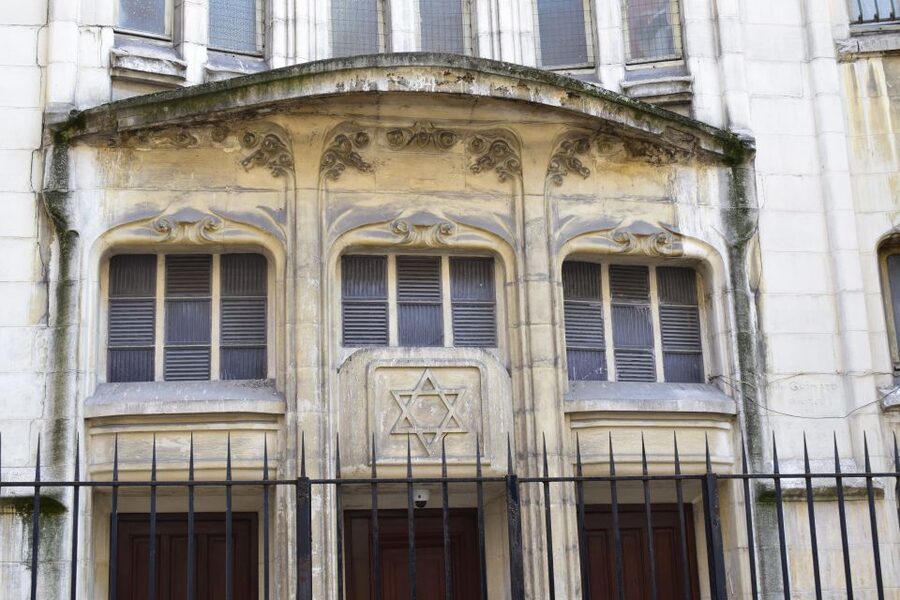
One of the visual highlights is the exterior of Agoudas Hakehilos Synagogue, also known as the Guimard Synagogue. It was designed by Hector Guimard, the Art Nouveau architect associated with Paris Métro entrances.
You will examine the outside rather than enter. Its curving forms and decorative details make it an especially worthwhile stop for anyone interested in architecture. The guide can also explain how a building designed in an artistic style fits into the story of an immigrant Jewish community in Paris.
Do not book this walk expecting synagogue interiors. Indoor visits to synagogues are not included, and admission to monuments or historical sites is also excluded. The value here is the setting, the exterior design, and the explanation around it.
More Walking Tours in Paris
- Paris Top Sights Half Day Walking Tour with a Fun Guide
★ 5.0 · 2,893 reviews - Montmartre Hidden Gems and Scenic Highlights Walking Tour
★ 5.0 · 2,684 reviews - Montmartre Hill French Gourmet Food and Wine Tasting Walking Tour
★ 5.0 · 2,588 reviews - Paris Île de la Cité and Notre-Dame Walking Tour With Crypt
★ 5.0 · 2,272 reviews
The Shoah Memorial, a serious pause in the route
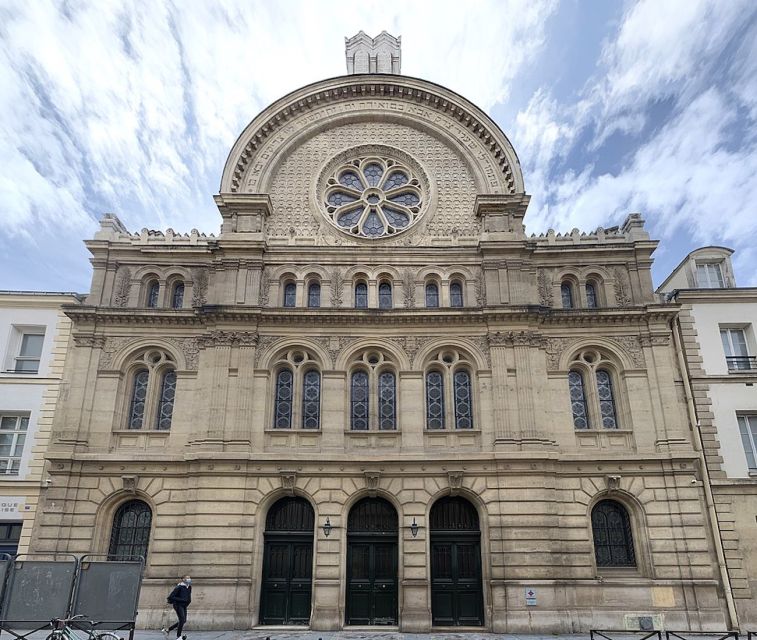
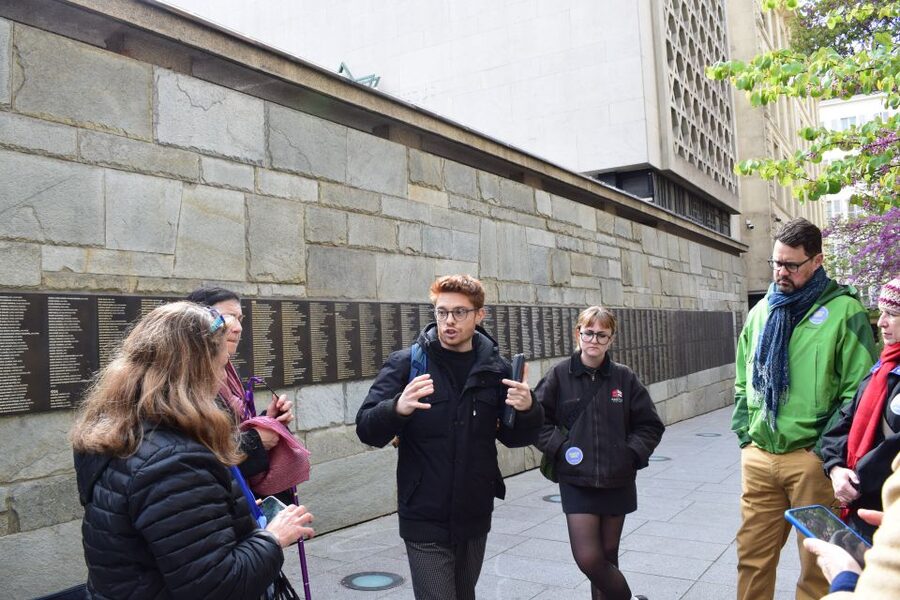
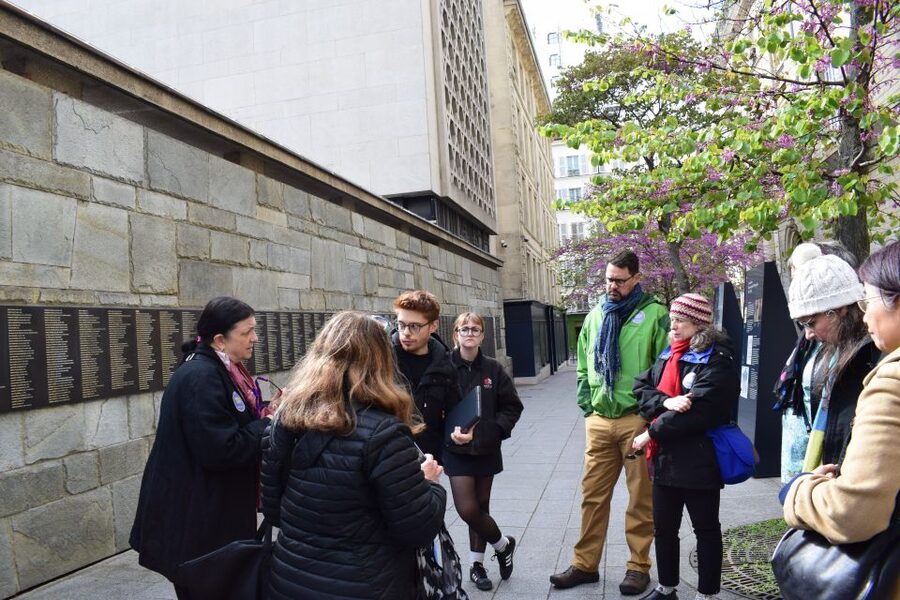
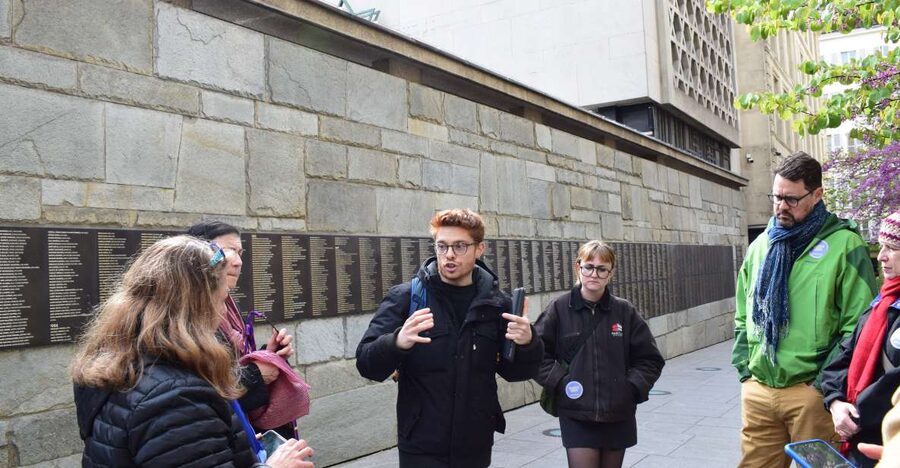
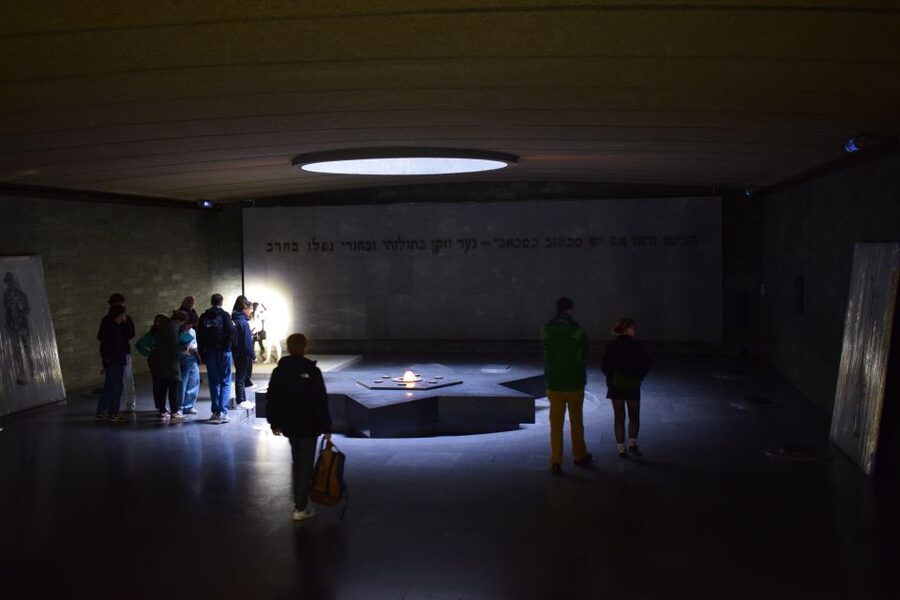
The Shoah Memorial is the emotional center of the Le Marais section. The outside area includes the Wall of Names and a memorial crypt area, creating a quiet break from the busy streets around it.
This stop is not treated as a quick photo opportunity. The guide explains its place in French Jewish memory and the destruction of Jewish life during the Second World War. The route also addresses the French people who helped Jewish people escape or survive, which adds another layer to the story without softening the scale of the persecution.
The subject can be painful, and the quality of the explanation is important. Several guides have been praised for handling difficult material with care, including when discussing current tensions connected with Jewish identity and the Middle East. You should expect a thoughtful discussion rather than a light sightseeing stop.
If you prefer a tour focused only on architecture and pleasant streets, this section may feel heavy. If you want to understand how Jewish Paris remembers the war and how that memory fits into the city today, it is one of the most valuable parts of the walk.
The Marais portion finishes near Hôtel de Ville, Paris’s City Hall. You then use public transport to reach Montmartre. The transfer takes about 30 minutes, and public transport tickets are included.
The ride to Montmartre changes the mood
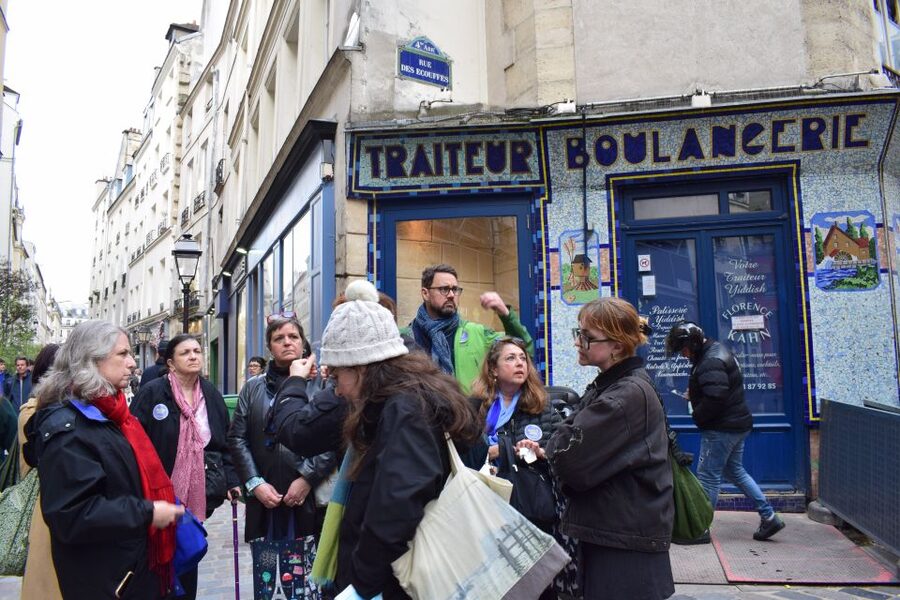
The transfer is not just a practical gap between two neighborhoods. It gives the tour a clear pause. You leave the older Jewish quarter and move toward the hills, studios, cafés, and artistic mythology of Montmartre.
You should not expect a private vehicle. This is a public transport connection, so you need to stay with the group and keep track of your belongings. It also adds time to the day without adding another long walking section, which is helpful after 90 minutes on foot.
Once you reach Montmartre, the tone becomes lighter, though the history remains serious. The guide follows Jewish artists, writers, and thinkers who were part of the neighborhood’s creative life in the late 19th and early 20th centuries.
Rue Ravignan and the artists of Montmartre
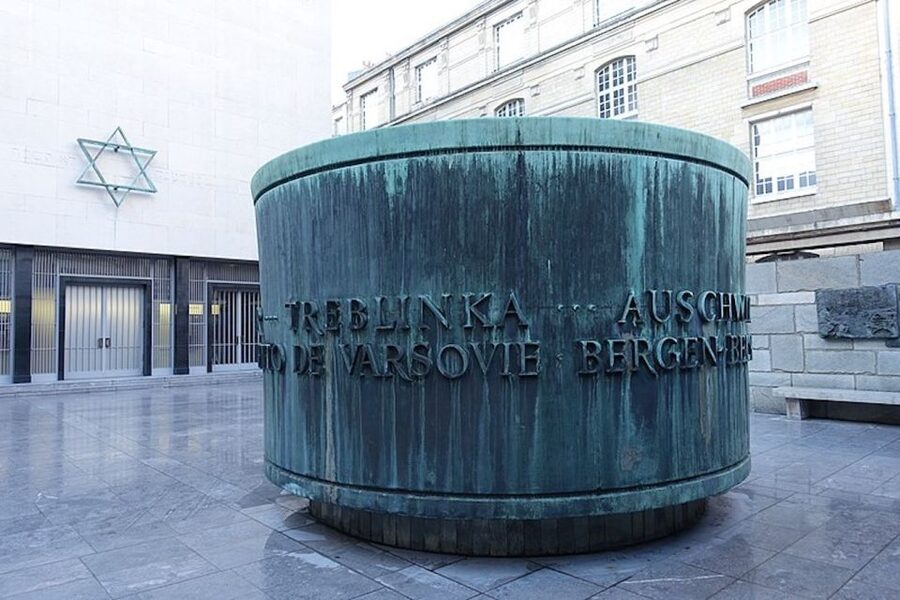
The Montmartre walk lasts about 90 minutes. It includes 7 Rue Ravignan and Le Bateau-Lavoir, two locations tied to the neighborhood’s artistic story.
Le Bateau-Lavoir is associated with artists and writers who worked in Montmartre. The building and street help you picture the studios and creative circles that gave the district its reputation. The Jewish story here is not presented as a separate footnote. Instead, it becomes part of a larger account of how artists and thinkers from different backgrounds met, worked, argued, and influenced one another.
You also pass the Musée de Montmartre. The route does not include entry, so you should think of this as an exterior landmark and a way to orient yourself within the neighborhood. If the museum is a priority, save it for another visit or plan extra time after the walking tour.
The streets can be crowded, steep, and busy with pedestrians. That is part of Montmartre’s appeal, but it also means you should stay alert when crossing roads and moving through busy areas. One participant specifically advised guides to watch the group’s pace around Paris traffic and bicycle routes. Keep children and slower walkers close.
The climb to Sacré-Cœur and the final view
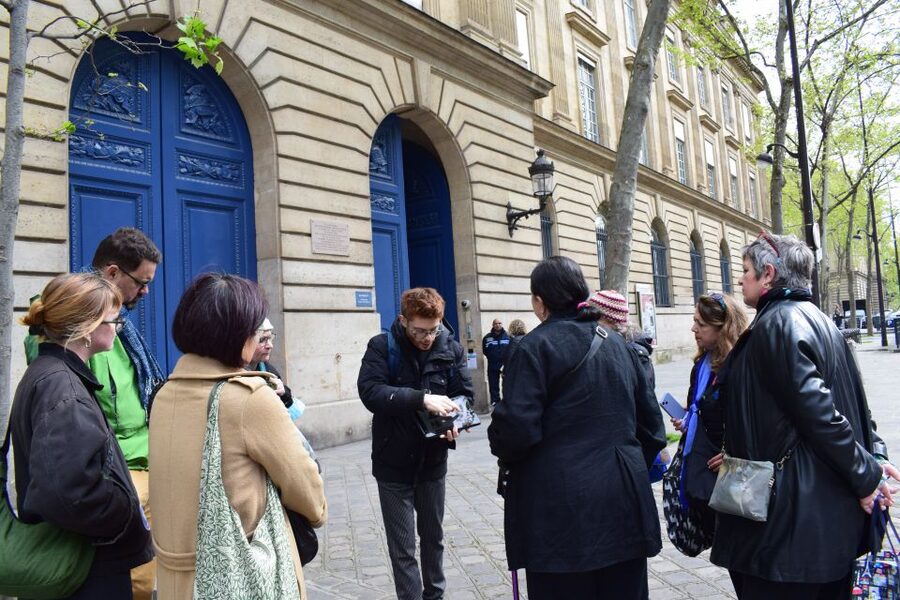
The walk continues toward 16 Rue du Mont-Cenis and then Sacré-Cœur Basilica. The route finishes around Square Louise-Michel, below the basilica, with wide views over Paris.
Sacré-Cœur gives the tour a strong visual ending. After the close streets of Le Marais and the narrow lanes of Montmartre, the city opens out in front of you. The guide links that view with the neighborhood’s artistic identity and with the Jewish voices that formed part of its cultural life.
The basilica itself is a sightseeing stop, not an included interior tour. You should not assume entry to the church or any other monument. The final reflection takes place around the basilica and Square Louise-Michel.
The climb is worth keeping in mind. This is not a flat route, and the tour is officially unsuitable for people with mobility impairments or wheelchair users. Comfortable shoes are essential. If your energy drops after a long day, book this as a main activity rather than squeezing it between several other walks.
The guides are the heart of the experience
The clearest pattern across the guide team is strong command of the subject and a friendly, measured delivery. Benjamin is repeatedly singled out for his explanations of Le Marais and for handling sensitive history well. Benoit is praised for making the neighborhood relevant and for offering practical food advice. Pierre-Louis is described as an excellent communicator who connects French history with Jewish history.
Other guides, including Achilles, Pilu, Thomas, Elliot, Lucien, Matthieu, Patrick, and JP, have also led the experience. Names may vary by date and availability, so you should not book on the assumption that one particular guide is guaranteed unless the booking option says so.
The small group helps the best guides do their work. You are not simply standing at the back of a crowd while a guide speaks into a microphone. The format allows questions, conversation, and occasional adjustment to the group’s interests.
One caution: a very curious group member can make the walk run beyond its planned finish. That is not necessarily a flaw, but it matters if you have a restaurant reservation or another timed activity afterward. Give yourself a buffer after the scheduled 210 minutes.
Is $80 a fair price?
At $80 per person, this is not the cheapest way to see Le Marais or Montmartre. You are paying for a three-and-a-half-hour guided experience, a small group, an English-speaking local guide, public transport tickets, and a route that joins two subjects most ordinary neighborhood walks treat separately.
The value is strongest if you want interpretation rather than simple orientation. A self-guided walk can show you the streets, the synagogue exterior, the memorial, and Sacré-Cœur. It cannot easily explain how Jewish life changed across centuries, how the Holocaust reshaped Paris, or how Jewish artists fit into Montmartre’s creative circles.
The price is harder to justify if you mainly want photographs or a quick introduction to the neighborhoods. You also need to remember what is not included: synagogue interiors, monument entry, food, and any museum admission.
For a private group, the price may make more sense if you want to ask many questions or shape the discussion around family history, architecture, or French Jewish life. For a small shared group, the strongest value comes from the guide’s ability to connect places that otherwise seem unrelated.
Who should book this walk?
I would choose this tour if you have a serious interest in Jewish history, French history, architecture, or the way artists shape a neighborhood’s identity. It also suits first-time Paris visitors who want to see Le Marais and Montmartre while learning more than the usual legends about each district.
It is a good fit for couples, families with older children, and small groups who enjoy asking questions. The subject is suitable for people with Jewish family connections, but you do not need that background to follow the story. Several guides also cover general French history, so the walk can work for anyone who wants a broader understanding of Paris.
I would skip it if you want a relaxed, flat stroll, a food tour, or a tour with lots of indoor entries. Rain and heat can make the route tougher, though guides have continued to lead it in difficult weather. Wear practical shoes, carry water, and avoid scheduling it at the end of an exhausting sightseeing day.
Should you book the Jewish Paris walking tour?
Book it if you want Paris to feel more human and more complicated than a collection of famous buildings. The strongest parts are the guide-led explanation in Le Marais, the quiet pause at the Shoah Memorial, the Guimard synagogue exterior, and the shift to Jewish artistic life in Montmartre.
The route is long, partly uphill, and not built for mobility limitations. The sites are mainly viewed from outside, and the quality of your experience depends heavily on the guide assigned that day. Still, with a small group, public transport included, and a well-connected route through two major Paris neighborhoods, $80 is a reasonable price for a focused history walk.
If you are willing to walk at a steady pace and give serious subjects your attention, I would book it early in your Paris stay. The guides often add food and neighborhood suggestions that can help you explore Le Marais on your own afterward.
FAQ
How long does the tour last?
The tour lasts 210 minutes, or three and a half hours. About 90 minutes are spent in Le Marais, the public transport transfer takes about 30 minutes, and about 90 minutes are spent in Montmartre.
Where does the tour begin?
The available starting points are BHV Marais and L’Elephant Du Nil. The exact meeting point depends on the option booked, so check your booking details carefully.
Is the tour offered in English?
Yes. The tour includes a live English-speaking guide.
Are synagogue interiors included?
No. The tour visits the exterior of Agoudas Hakehilos Synagogue and does not include indoor synagogue visits.
Are public transport tickets included?
Yes. Public transport tickets for the transfer from the Marais area to Montmartre are included.
Is the tour suitable for wheelchair users?
No. The tour is not suitable for wheelchair users or people with mobility impairments because it involves a long walk, hills, and city streets.
More Le Marais Tours
- Award-Winning Paris French Bakery Experience — Le Marais, 4th Arr
★ 4.5 · 1,186 reviews - Paris Le Marais Food Tour With 10+ Tastings, Cheese, Wine & More
★ 5.0 · 985 reviews - Paris Le Marais District Original Food and Wine Tasting Tour
★ 4.5 · 880 reviews - Paris Bike Tour Hidden Secrets in the Latin Quarter & Le Marais neighborhoods
★ 5.0 · 766 reviews
More Montmartre Tours
- Paris: Montmartre Cheese, Wine & Pastry Guided Walking Tour
★ 4.8 · 2,255 reviews - Paris: Montmartre Highlights Walking Tour with a Local Guide
★ 4.9 · 1,668 reviews - Private Montmartre Food Tour with Wine, Cheese & Pastries
★ 5.0 · 1,027 reviews - Paris: Sacré-Coeur and Montmartre Tour with Expert Guide
★ 4.1 · 1,027 reviews
Just added around Paris
- Paris at the First Lodges – Ducasse sur Seine dinner cruise★ 4.0 · 165 reviews
- Paris at the First Lodges – Ducasse sur Seine Lunch Cruise★ 4.5 · 70 reviews
- Disneyland® Paris 1 Day with Round-Trip Train Tickets from Paris★ 4.0 · 50 reviews
- Explore speakeasies and hidden bars, sip meet & socialize★ 4.5 · 47 reviews
- Disneyland® Paris Express Shuttle with Admission Ticket from Central Paris★ 3.5 · 172 reviews
- Paris Cheeses and Wines Tour de France with Tasty Games★ 5.0 · 32 reviews
- Musée Orsay Highlights Tour – Best of Impressionism & Hidden Gems★ 5.0 · 27 reviews
- Private Tour: Discover Paris with Local, 3 hours on a Segway★ 5.0 · 71 reviews
Montmartre Tours, compared.

Montmartre Hidden Gems and Scenic Highlights Walking Tour
Read our review →
Montmartre Hill French Gourmet Food and Wine Tasting Walking Tour
Read our review →
Montmartre Cheese, Wine & Pastry Guided Walking Tour
Read our review →
Montmartre Highlights Walking Tour with a Local Guide
Read our review →
Sacré-Coeur and Montmartre Tour with Expert Guide
Read our review →
Private Montmartre Food Tour with Wine, Cheese & Pastries
Read our review →
Paris Montmartre Food Tour – A Full French Meal by Do Eat Better
Read our review →
Hidden Montmartre: Paris’ Secret Streets Walking Tour
Read our review →Browse the lists this tour appears in