
Reviewed · NOTRE DAME TOURS
Notre-Dame Cathedral Exterior & Latin Quarter Guided Tour
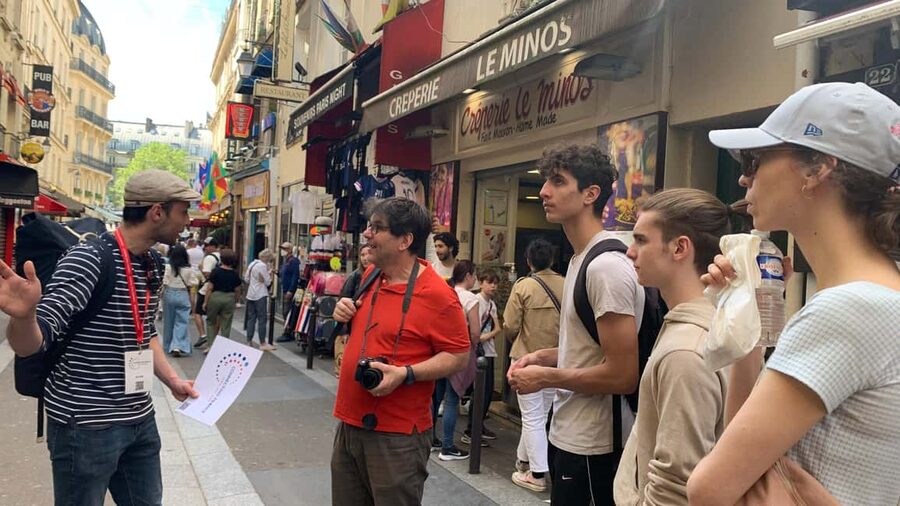
The best part of this tour is the way it links Roman Paris to modern Paris in a single, well-packed walk. You begin at Fontaine Saint-Michel, pass medieval churches and ancient baths, climb toward the Panthéon, and finish beside Notre-Dame, with a guide explaining how each layer fits together.
I like the small group size, capped at 11, and the quality of the guides. Benjamin, Pilou, and Pierre are singled out for clear explanations, warm personalities, and strong answers to questions. I also like the route’s variety: Gothic glass, Roman ruins, revolutionary-era stories, bookshops, cafés, and Notre-Dame’s carved façade all appear within two hours. The main drawback is pace. There is a lot to cover, and the tour can feel fast and fairly academic, especially if you want long stops or interior visits.
Key points at a glance
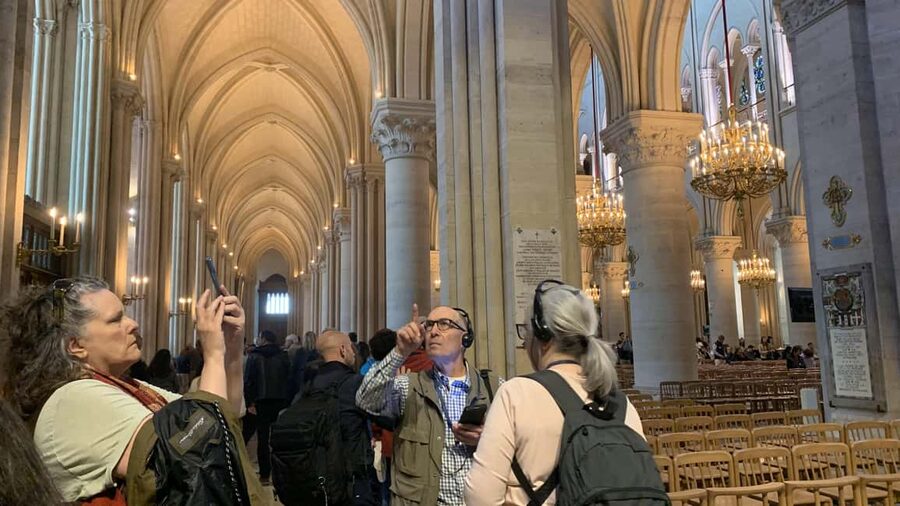
- Roman baths in the middle of Paris: See the remains of Lutetia’s ancient public bathing complex near the Cluny Museum.
- A close look at Gothic Paris: Study St. Séverin’s stained glass, unusual double ambulatory, and medieval design.
- Notre-Dame from the outside: Hear the cathedral’s story, including the 2019 fire, while examining its sculptures and gargoyles.
- A guide-led neighborhood walk: English-speaking guides such as Benjamin, Pilou, and Pierre bring local detail to the streets and monuments.
- Small groups, limited time: The maximum group size is 11, but the two-hour route moves quickly.
- Optional Seine cruise: Add a one-hour boat ride with audio in 11 languages and broad views of Paris’s major monuments.
A smart way to read the Latin Quarter
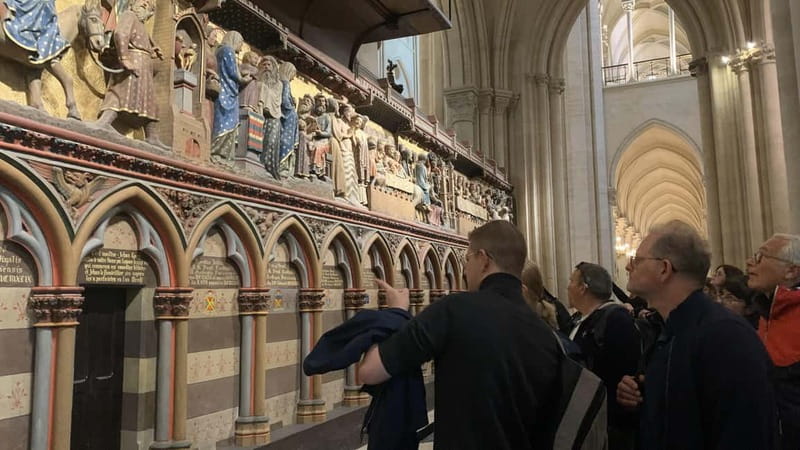
The Latin Quarter is often presented as a pleasant area for wandering, but this walk gives you a clearer sense of why the district matters. It has been tied to Roman settlement, medieval religious life, university study, political change, and Parisian literature for centuries.
Your starting point is Place Saint-André des Arts, in front of Café G. This is a practical place to meet, but traffic can be slow, so arriving by taxi or Uber may not be wise if you are cutting things close. Look for the guide holding a Connecting France sign.
From there, the route moves on foot through streets that are generally flat but can be uneven and cobbled. You will want shoes that can handle two hours of steady walking. The tour runs in all weather, so rain protection and clothing suited to the forecast matter.
The guide does most of the work here. Instead of simply pointing out façades, the better guides connect architecture with people and events. Benjamin is repeatedly praised for his energy and careful explanations, while Pilou is known for making the walk feel conversational and lively. Pierre is described as friendly, cheerful, and able to explain a great deal in a short time.
More ways to see Notre-Dame:
- Paris Île de la Cité and Notre-Dame Walking Tour With Crypt
★ 5.0 · 2,272 reviews - Paris: Eternal Notre-Dame VR Experience Ticket
★ 4.4 · 1,150 reviews - Paris: Notre-Dame Cathedral Exterior Tour & Free Entrance
★ 3.7 · 1,010 reviews
Fontaine Saint-Michel sets the tone
The tour begins near Fontaine Saint-Michel, one of the Latin Quarter’s most dramatic public monuments. Its central figure is the Archangel Michael defeating the Devil, a scene designed for visual impact rather than quiet contemplation.
This is a good opening stop because it gives your guide a chance to explain the changing character of the neighborhood. You are not starting at a single grand palace or museum. You are starting in a public square, surrounded by the movement of daily Paris, then turning into older streets on foot.
Do not expect a long formal visit at every location. The tour is designed as a connected walk. You will pause for explanation, look closely, and then move on. That format works well if you want orientation and context before exploring the area on your own.
St. Séverin shows Gothic Paris at human scale
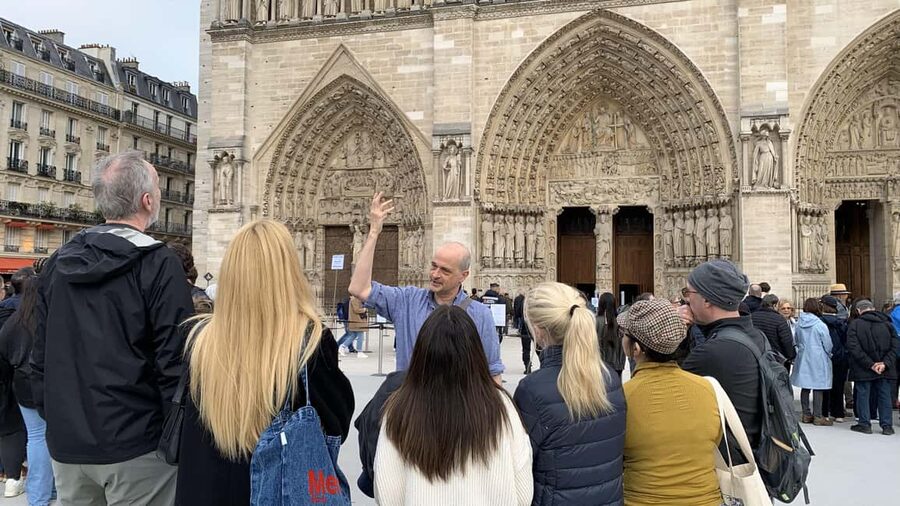
St. Séverin Church is one of the most rewarding stops because it offers Gothic architecture without the enormous scale of Notre-Dame. Its medieval stained-glass windows and double ambulatory give the guide plenty to discuss, and the church feels like a place to study rather than simply photograph.
The double ambulatory is especially useful for understanding how church design worked. You can see how circulation around the central worship space shaped the building, while the Gothic details reward a slower look.
This stop also helps balance the better-known monuments. Many people arrive in Paris focused on Notre-Dame, the Louvre, and the Eiffel Tower. St. Séverin gives you a quieter architectural encounter, and a strong guide can point out details you might miss on a solo walk.
The limitation is time. If church interiors are your main interest, two hours will not allow for extended viewing at each stop. Think of this as an introduction, then return later if the church captures your attention.
The Cluny Roman Baths reveal Lutetia
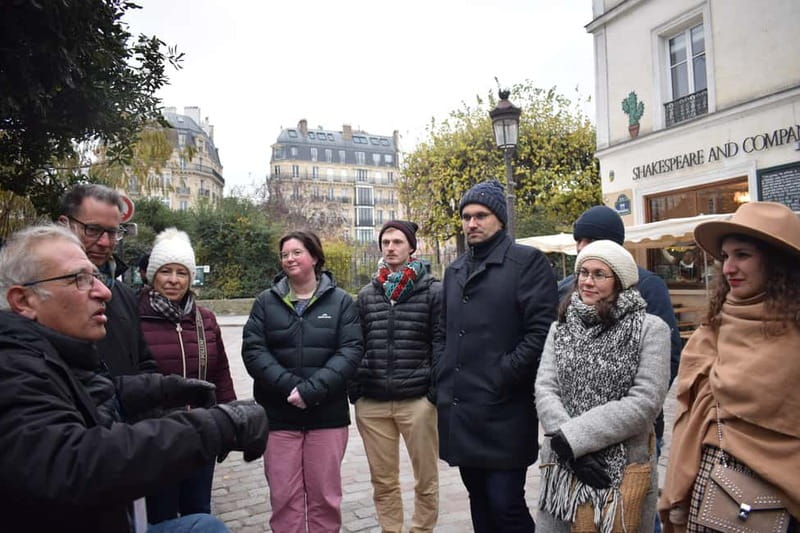
Near the Musée National du Moyen Âge, you will pass the Cluny Roman Baths, the remains of a public bathing complex from the ancient city of Lutetia. These ruins make an important point: Paris did not begin in the Middle Ages.
The baths were part of public life in Roman Paris, and their surviving walls offer a glimpse of the scale and organization of the early settlement. Your guide also introduces the adjacent Cluny Museum and its collections, though entrance to the museum is not part of the tour.
This is one of the places where a guide adds real value. Roman remains can look like disconnected stonework if you do not know what you are seeing. With an explanation of how the baths functioned and why they mattered, the ruins become part of a larger story about urban life.
You will only view the baths from outside on this experience. If you want the museum or a more extended look at the Roman remains, plan a separate visit and budget for admission.
More Latin Quarter and Saint-Germain walks:
- Paris Bike Tour Hidden Secrets in the Latin Quarter & Le Marais neighborhoods
★ 5.0 · 766 reviews - Paris Latin Quarter Pub Crawl Bars and Clubs
★ 4.5 · 394 reviews - Saint-Germain The Original Chocolate Tasting Tour with Pastries and Macaron
★ 4.5 · 215 reviews - Cheese and Wine Tasting in the Latin Quarter with Chef Alex
★ 4.5 · 169 reviews
The Sorbonne and the uphill walk to the Panthéon
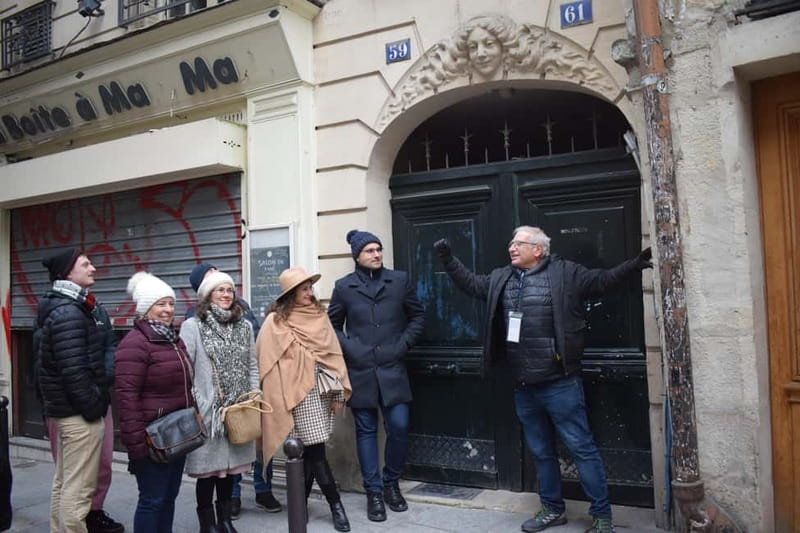
The route includes sightseeing near La Sorbonne before continuing uphill toward the Panthéon. This section shifts the focus from ancient Paris to the intellectual life associated with the Left Bank.
The streets here help explain the Latin Quarter’s long connection with education, writing, and political thought. Your guide may also use the route to discuss French figures, social change, and the ideas that shaped the country.
The Panthéon is an impressive neoclassical building, first constructed as a church and later transformed into a mausoleum for prominent French figures. Voltaire, Rousseau, Victor Hugo, and Marie Curie are among those buried there.
You will see the Panthéon from outside, not enter it. One person specifically wished an entrance had been included, and that is a fair point for anyone who wants to visit the crypt or see the interior dome. Admission to monuments and museums is not covered, so treat this stop as an exterior introduction.
The uphill section is manageable for many people, but it adds effort to an already busy walk. The route is described as flat-walking overall, yet it is not suitable for people with mobility impairments. If you need a slower pace or more flexibility, a private tour may be the better choice.
Bookshops, cafés, and the everyday Latin Quarter
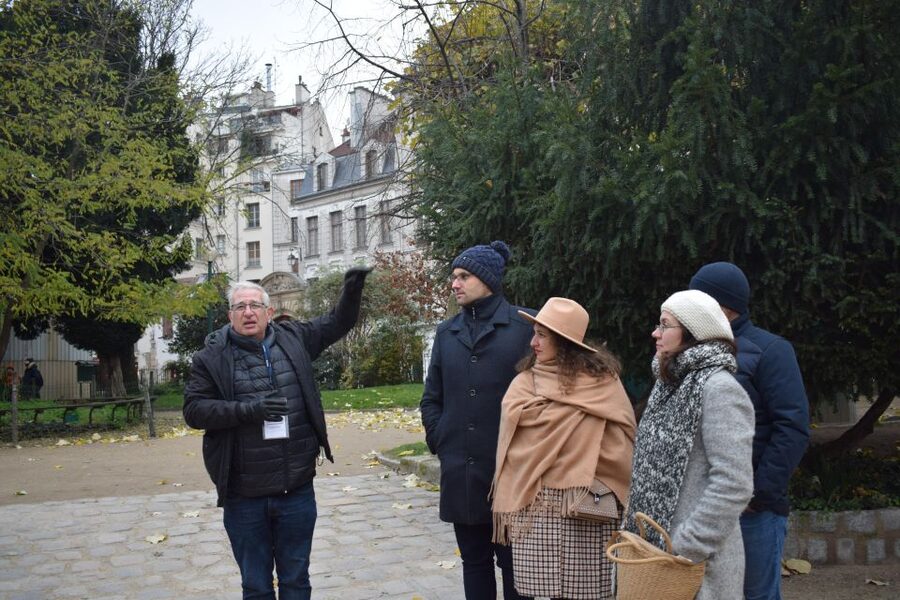
Between major monuments, the tour follows a historic street lined with bookshops, cafés, and courtyards. This part matters because Paris is not only its famous buildings. The neighborhood’s character comes from the spaces between them.
You will get a feel for the Latin Quarter as a working district of study, conversation, and local movement. The exact rhythm depends on the group and the guide, but this section gives you time to notice street details rather than moving only from landmark to landmark.
I find this kind of walking especially useful early in a Paris visit. You learn where the district’s streets connect, which makes it easier to return for a meal, a museum, or an unplanned wander later.
St. Julien le Pauvre beside Notre-Dame
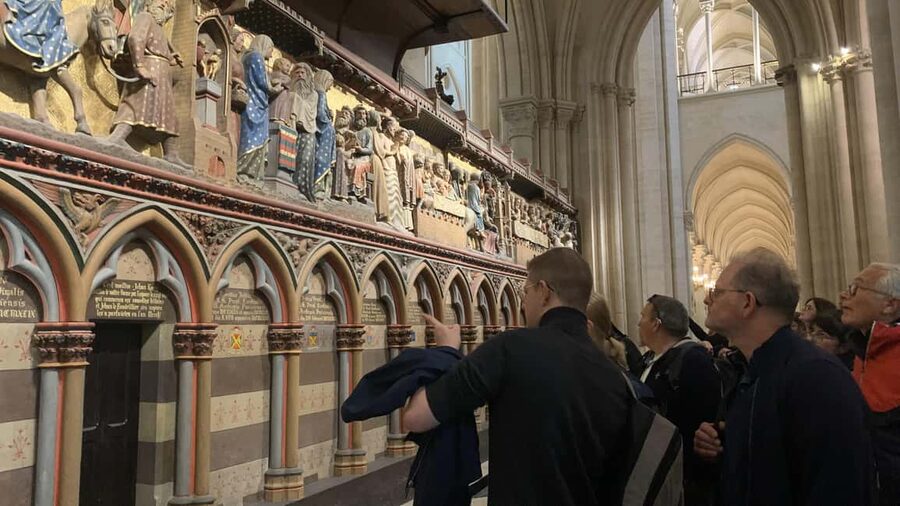
Near Notre-Dame, St. Julien le Pauvre offers a sharp contrast to the cathedral. This small church dates to the 12th century and has a Byzantine-style character that feels more intimate than the vast Gothic building nearby.
The stop helps you see the Île de la Cité area in a less obvious way. Notre-Dame naturally draws attention, but St. Julien le Pauvre reminds you that medieval Paris was made up of many religious buildings and smaller institutions, not one single landmark.
The church is included as part of the guided walk, not as an interior admission. Your guide explains its place in the medieval city before leading you toward the main event of the route.
Notre-Dame’s façade and the story of the fire
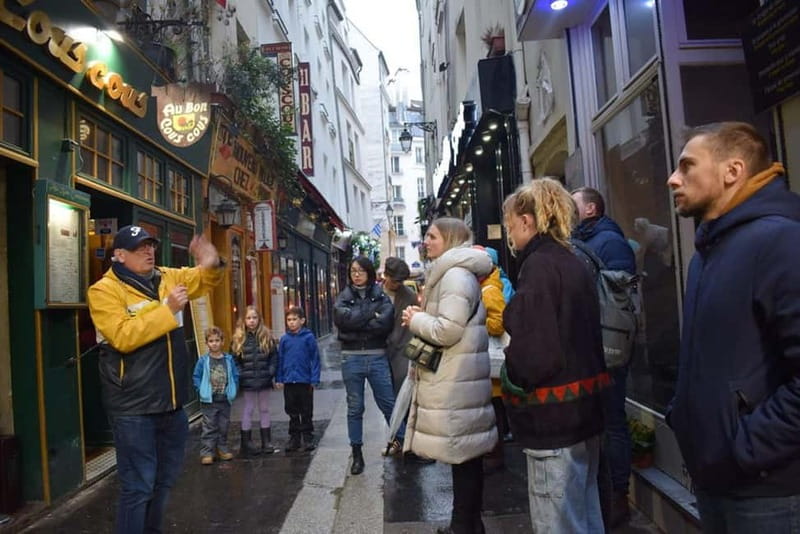
The tour ends at Notre-Dame Cathedral, where you examine the exterior rather than entering. You will have time to look at the façade, sculptures, and gargoyles while hearing about the cathedral’s medieval origins and the devastating 2019 fire.
This is a useful approach if you are visiting at a time when a guided interior visit is not available to your group. The outside alone offers plenty to discuss, from the arrangement of the façade to the figures and creatures carved into the stone.
Keep your expectations clear: entrance to Notre-Dame is not included, and the interior remains off limits for this guided experience. The value comes from interpretation and close observation, not from skipping an admission line.
The stated route finishes at Notre-Dame, while the meeting details also describe the activity as ending back at the meeting point. Confirm the exact end point when you book, especially if you have a timed reservation or another appointment afterward.
Is the optional Seine cruise worth adding?
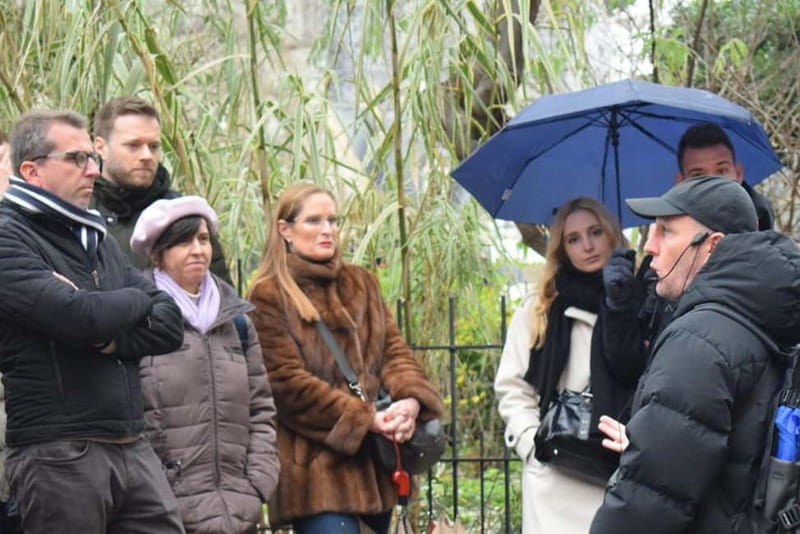
You can add a one-hour Seine River boat cruise to the walking tour. Audio explanations are available in 11 languages, and the route offers water-level views of the Eiffel Tower, Notre-Dame, Île de la Cité, Les Invalides, Musée d’Orsay, Hôtel de Ville, the Louvre, Place de la Concorde, and the Grand Palais.
The boat ride changes the pace nicely. After two hours on foot, you get a seated view of Paris and pass beneath the city’s famous bridges. It also gives you a useful sense of how the river connects the historic center.
The cruise is optional, not part of the basic walking tour. Check the current booking details for its price, timing, and departure arrangements. I would consider it if you want a broader Paris overview or are visiting for the first time. If your priority is detailed neighborhood history, use your time for the walk and explore the museums separately.
How much value do you get for $43?
At $43 per person, the basic tour offers two hours with an English-speaking professional guide, a small group capped at 11, and exterior stops at several important sites. That is a reasonable price if you value explanation and orientation more than entry tickets.
You are not paying for museum or monument admissions, food, hotel pickup, or transport. The price makes the most sense when you see the walk as a guided introduction, not as an all-inclusive sightseeing package.
The small group is a real advantage. It gives you a better chance to hear the guide and ask questions than a large city tour. Private groups are also available if you want a slower pace or more control over the route.
The strongest value appears when you get a guide such as Benjamin, Pilou, or Pierre. The experience depends heavily on the person leading it, since the route itself is accessible without a tour. The guide’s ability to connect Roman remains, church architecture, French history, and local streets is what turns a walk into a useful visit.
Who should book this walk?
Book it if you want a history-focused introduction to central Paris, especially if Roman and medieval subjects appeal to you. It also suits repeat visitors. One guide was born in the area, and local knowledge can make familiar Paris streets feel newly readable.
This is a good choice for people who enjoy asking questions and listening to detailed explanations. It is less suitable if you want a relaxed stroll with long photo stops, a food-focused tour, or extensive interior visits.
Families with older children may appreciate the changing subjects, though the quick pace and academic tone may not suit every child. People with mobility limitations should consider the private option or another format, since the activity is not suitable for those needs.
FAQ
How long is the guided walking tour?
The guided walk lasts two hours.
What language is the guided tour in?
The live tour guide speaks English.
How many people can join the group?
The group is limited to a maximum of 11 people. A private group option is also available.
Does the tour enter Notre-Dame Cathedral?
No. The tour visits Notre-Dame’s exterior, including its façade, sculptures, and gargoyles. Entrance to the cathedral is not included.
Are museum and monument admissions included?
No. Entrances to the Panthéon, Cluny Museum, Notre-Dame, and other monuments are not included.
Is the Seine River cruise included?
The one-hour Seine cruise is optional. It includes audio explanations in 11 languages when selected.
Where does the tour begin?
Meet at Place Saint-André des Arts, in front of Café G. The guide will hold a Connecting France sign. Arrive in comfortable shoes and dress for the weather, since the tour runs rain or shine.
Should you book the Notre-Dame and Latin Quarter tour?
Book this tour if you want context, strong guiding, and a compact route through old Paris. The combination of Roman baths, St. Séverin, the Panthéon, St. Julien le Pauvre, and Notre-Dame gives you far more than a single cathedral stop.
Skip it if you mainly want interior access, a slow walk, or plenty of free time at each monument. For everyone else, $43 buys a well-organized introduction to one of Paris’s most layered districts, with the best results likely when you arrive ready to walk, listen, and ask questions.
Just added around Paris
- Paris at the First Lodges – Ducasse sur Seine dinner cruise★ 4.0 · 165 reviews
- Paris at the First Lodges – Ducasse sur Seine Lunch Cruise★ 4.5 · 70 reviews
- Disneyland® Paris 1 Day with Round-Trip Train Tickets from Paris★ 4.0 · 50 reviews
- Explore speakeasies and hidden bars, sip meet & socialize★ 4.5 · 47 reviews
- Disneyland® Paris Express Shuttle with Admission Ticket from Central Paris★ 3.5 · 172 reviews
- Paris Cheeses and Wines Tour de France with Tasty Games★ 5.0 · 32 reviews
- Musée Orsay Highlights Tour – Best of Impressionism & Hidden Gems★ 5.0 · 27 reviews
- Private Tour: Discover Paris with Local, 3 hours on a Segway★ 5.0 · 71 reviews
Notre Dame Tours, compared.
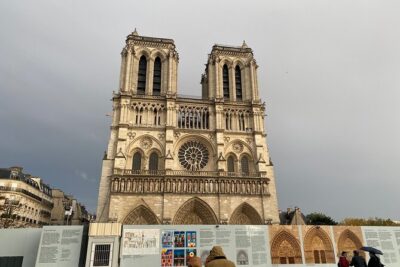
Paris Île de la Cité and Notre-Dame Walking Tour With Crypt
Read our review →
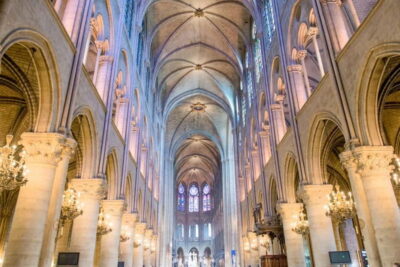
Notre-Dame Cathedral Exterior Tour & Free Entrance
Read our review →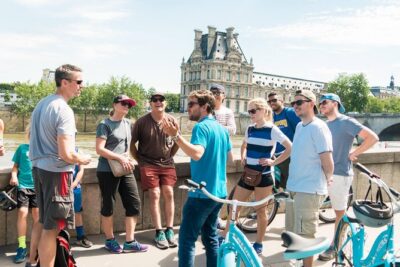
Paris Highlights Bike Tour: Eiffel Tower, Louvre and Notre-Dame
Read our review →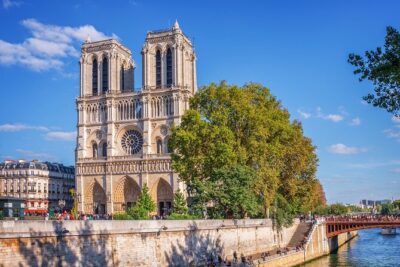
Early Access Paris Notre Dame Cathedral Walking Tour
Read our review →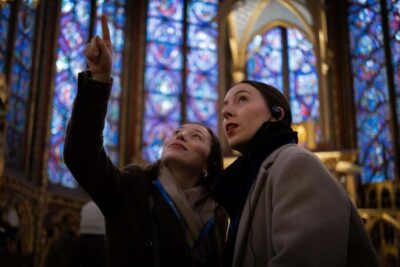
Sainte-Chapelle, Conciergerie, Notre Dame Guided Tour
Read our review →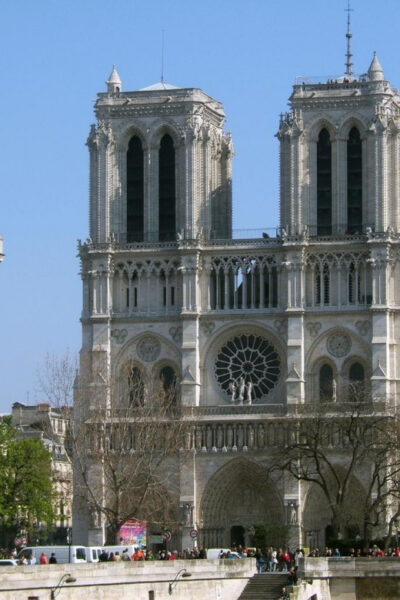
Notre Dame Outdoor Tour with Sainte-Chapelle / Crypt.
Read our review →
Notre Dame Outdoor Walking Tour and Entrance to Sainte Chapelle
Read our review →Browse the lists this tour appears in