
Reviewed · WALKING TOURS
Strasbourg: Walking Tour with Local Guide
Strasbourg’s past is not simple. It sits on the French-German border, and its buildings, food, language, and family stories reflect that tug of war. This two-hour walk with Nicolas, a proud local guide, gives you the context to read the city instead of simply photographing it. You’ll move from medieval lanes to revolutionary squares, with the cathedral, covered bridges, and Petite France along the way.
I like two things in particular: the small group of no more than six, which makes questions easy, and the practical help at the end. Nicolas sends recommendations for restaurants, bakeries, markets, shopping, and further day trips. The main consideration is that this is a walking tour without cathedral admission, and it is not suitable for people with mobility impairments.
Key points to know before you book
- A genuinely small group: With a maximum of six people, you can hear clearly and ask about the details that catch your eye.
- A local view of Alsace: Nicolas connects Strasbourg’s architecture and border history with his own Alsatian family background.
- A strong first-day tour: The route gives you a useful map of the center, so you can decide where to return later.
- Photo help along the way: You get advice on good angles and the most photogenic views of the cathedral and old streets.
- Useful food advice: Expect tips on tarte flambée, local restaurants, bakeries, markets, and places to drink.
- Plan for two hours on foot: Wear comfortable shoes. Cathedral entry is not included.
Why this walk works so well as your Strasbourg introduction
At $41 per person, this is not the cheapest way to stroll around town, but the value comes from the small size and the local guidance. A large group can point out the same monuments, but it rarely leaves much room for questions. Here, you can ask why Strasbourg looks French in one street and German in the next, or how a square got its name, without shouting over twenty other people.
I would book this early in your stay. The route passes many of the city’s key sights, including Petite France, the covered bridges, Saint-Thomas Church, Strasbourg Cathedral, Place Saint-Étienne, and Place de la République. Afterward, you’ll have a better sense of where to spend your free time.
Nicolas also adds something a standard sightseeing route often misses: present-day Strasbourg. He talks about local customs, Alsatian identity, food, and daily life. His family connections to the city help explain why the place feels personal to him, rather than just a collection of handsome buildings.
The group size matters most when the weather turns poor. The walk can still go ahead in rain or snow, and at times a small booking has become a private tour. That can be a lucky outcome, but you should still dress for the forecast. Strasbourg’s old streets are best explored outdoors, and there is no promise of shelter at every stop.
More Walking Tours in Alsace
- Strasbourg: Walking Tour with a Local Guide
★ 4.3 · 607 reviews - Strasbourg: Guided Historical Neighborhoods Walking Tour
★ 4.9 · 275 reviews - Strasbourg: Traditional Food Walking Tour with Tastings
★ 4.8 · 219 reviews
Starting near Place d’Austerlitz and finding your bearings
The stated starting option is Place d’Austerlitz, though the exact meeting point can depend on the option you book. Pay attention to the guide’s instructions. Nicolas has been praised for sending a clear description of where to meet and what he will be wearing, along with a picture of the location.
That small bit of preparation is useful in a city where several squares and narrow streets can look alike. Arrive ready to walk, with comfortable shoes and a charged phone if you want to take photos. The walk finishes at Place de la République, so you will not necessarily end where you began.
The route covers central Strasbourg rather than taking you out to distant suburbs. You get a solid orientation in two hours, but you should not expect long interior visits or extended time inside each church. This is a city walk built around streets, views, stories, and questions.
Covered bridges and the first look at Petite France
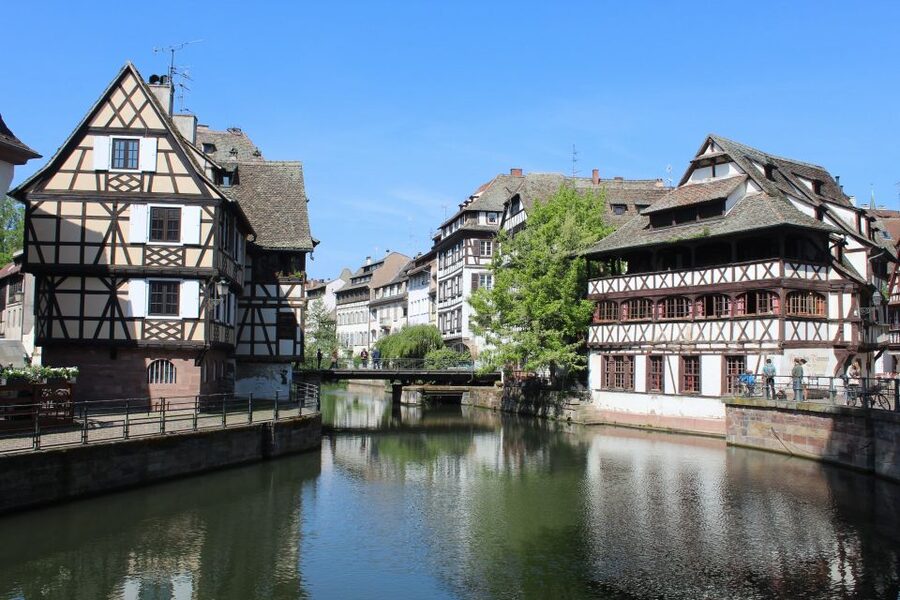
The covered bridges, or Ponts Couverts, make a strong early stop. Their towers and waterways introduce Strasbourg as a fortified medieval city, while the surrounding views help you understand how closely the old center is tied to the river.
The guided portion here lasts about ten minutes. That is enough for an explanation and photos, but not enough for a slow architectural study. I like this kind of short stop at the beginning because it gives you a visual framework for the rest of the walk. You start noticing the relationship between water, defense, trade, and settlement.
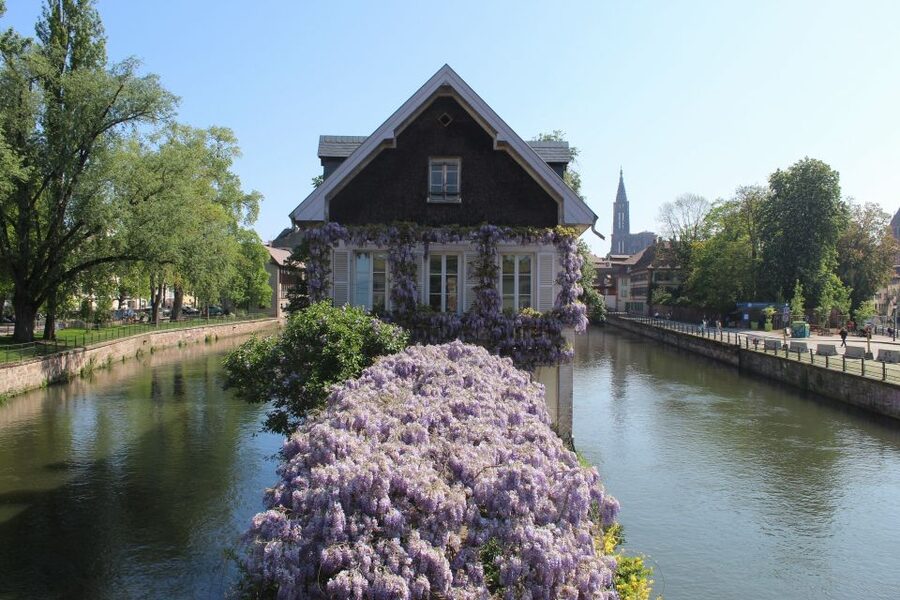
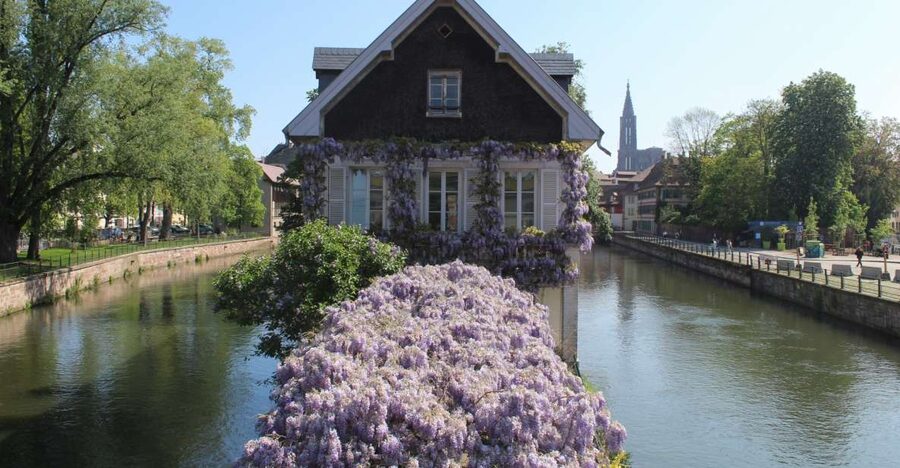
From there, you head into Petite France for about twenty minutes. This is one of the most atmospheric parts of Strasbourg, with narrow streets, old façades, canals, and traditional Alsatian character. Nicolas uses the area to explain local life and the way the city developed.
Petite France is also one of the easiest sections for photographs. Ask about angles rather than simply taking the usual front-on picture. The guide gives suggestions for more attractive images as you go, which can save you from returning home with a dozen nearly identical cathedral shots.
The lanes can be busy, particularly at popular times of year, so do not expect a quiet private stroll at every moment. The benefit of a guide here is not silence. It is knowing which details deserve your attention.
Saint-Thomas Church and Strasbourg’s layered past
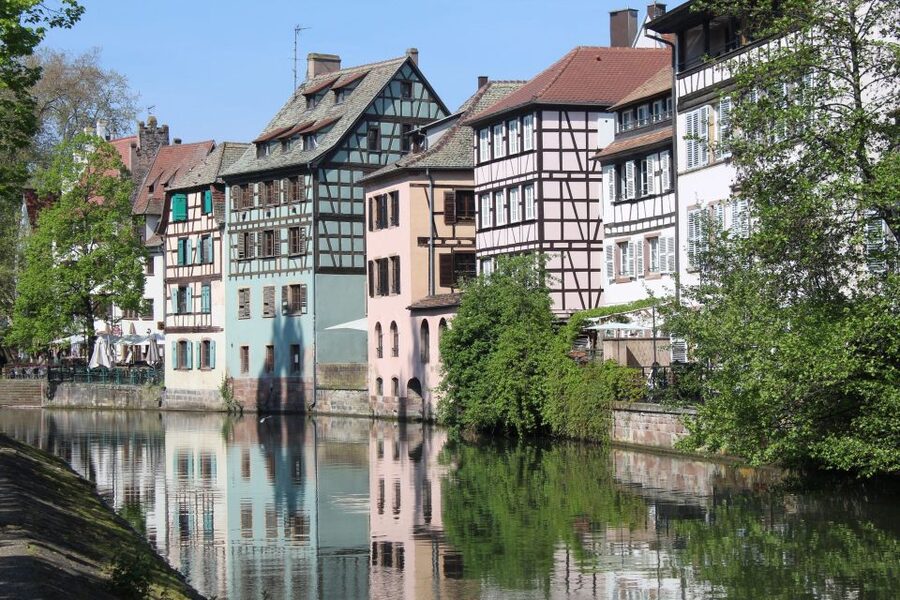
The walk continues to Église Saint-Thomas, with about ten minutes of guided explanation. This stop adds another layer to the city’s religious and cultural story, and it keeps the tour from becoming only a procession of postcard views.
Nicolas is especially good at connecting dates and buildings to the wider story of Alsace. Strasbourg’s location has shaped its politics, language, architecture, and family identities. His explanations help you make sense of those changes without reducing the city to a simple French-versus-German story.
This is where the personal style of the tour matters. Nicolas has shared family anecdotes about Alsatian life, and his local background gives the historical discussion a human scale. You are not just memorizing names and dates. You are hearing how the region’s past still affects the people who live there.
The stop is short, so listeners who want a detailed church interior tour may want to return on their own. The walk’s purpose is to build a connected picture of Strasbourg, not to examine every monument in depth.
More Walking Tours in Strasbourg:
- Paris Top Sights Half Day Walking Tour with a Fun Guide
★ 5.0 · 2,893 reviews - Montmartre Hidden Gems and Scenic Highlights Walking Tour
★ 5.0 · 2,684 reviews - Montmartre Hill French Gourmet Food and Wine Tasting Walking Tour
★ 5.0 · 2,588 reviews - Paris Île de la Cité and Notre-Dame Walking Tour With Crypt
★ 5.0 · 2,272 reviews
Strasbourg Cathedral and the legends around its spire
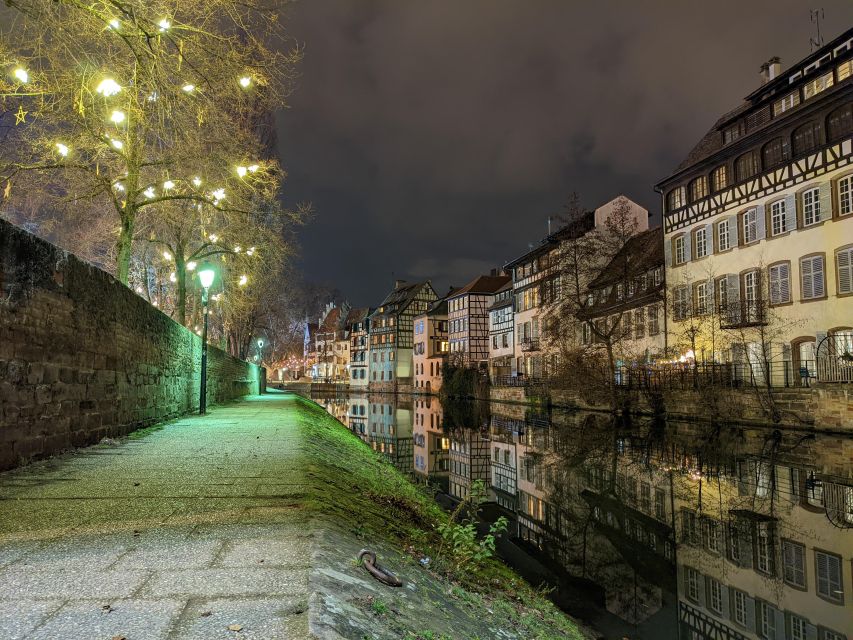
The cathedral is the visual centerpiece of the route. Its Romanesque and Rayonnant Gothic design makes it one of Strasbourg’s essential sights, and the building is part of the Grande Île UNESCO World Heritage listing.
The guided visit here lasts about fifteen minutes. Nicolas explains the cathedral’s history and the legends attached to it, while giving you time to photograph the façade. He also offers suggestions for better angles, an especially useful touch in the crowded square directly in front of the building.
Cathedral admission is not included. That keeps the tour moving and avoids turning a two-hour city walk into a longer interior visit, but you should budget extra time if you want to go inside. Check opening conditions separately before planning your day around entry.
The cathedral can be visually overwhelming, so a guide helps you focus. Look up at the tower, scan the carved details, and notice how the building dominates the surrounding streets. Nicolas is also the sort of guide you can ask about measurements, dates, legends, or small architectural features. His enthusiasm for exact details is one reason the commentary feels more substantial than a quick introduction.
Place Saint-Étienne and the quieter streets
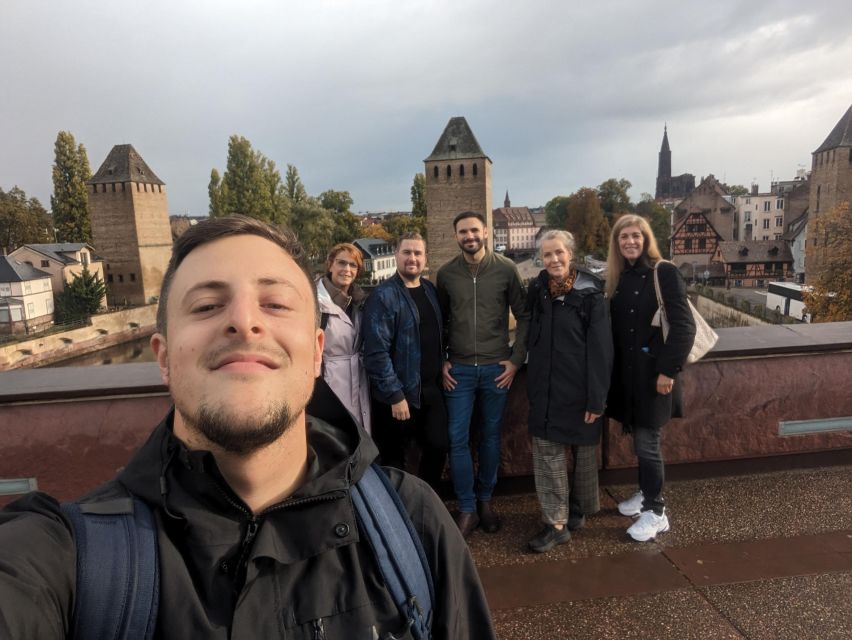
Place Saint-Étienne receives around ten minutes of attention. It offers a change of pace after the cathedral square, with a more intimate setting and a chance to hear about Strasbourg beyond its most famous landmark.
This part of the route is useful for understanding how locals experience the center. Strasbourg is not only a historic display for visitors. It is also a lived-in city, with residents moving through the same streets, squares, cafés, and shops.
The walk through smaller streets is one of the tour’s practical strengths. You may pass places you would not think to seek out alone, and you can ask Nicolas which areas deserve a return visit. He adapts the conversation to the group, so the balance between architecture, politics, food, and daily life can shift depending on your interests.
Families should find the short format manageable, though the tour still involves steady walking. One parent noted that children stayed interested because Nicolas mixed historical facts with stories and humor. That is a better sign than a promise that every child will love two hours on foot, so consider your own family’s pace.
Place de la République and the city’s political story
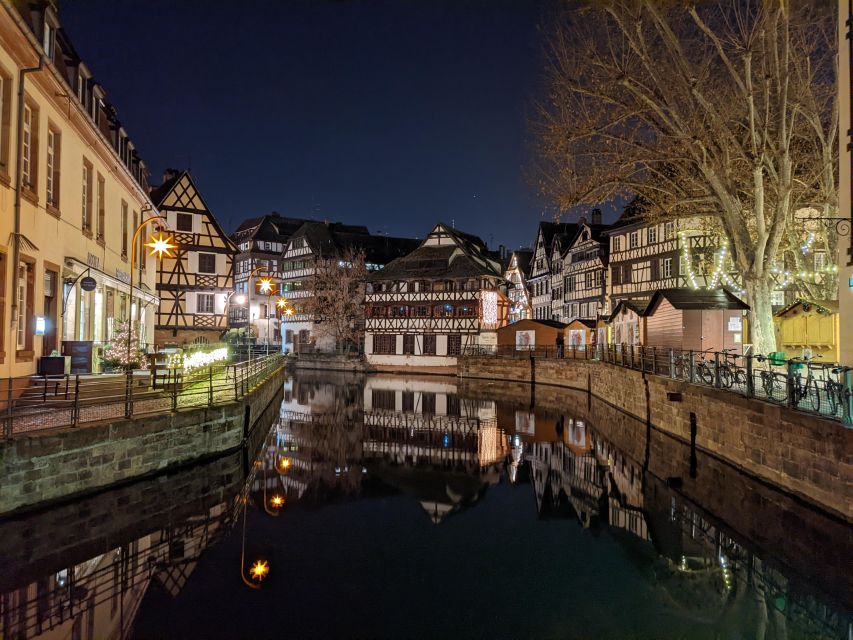
The route reaches Place de la République, where the tour finishes after roughly fifteen minutes of guided commentary. This broad square gives Nicolas room to discuss Strasbourg’s later history and its changing political identity.
The tour also includes Place Kléber in the downtown area. Named for French revolutionary general Jean-Baptiste Kléber, it brings the revolutionary period into the walk. You learn about Kléber’s military career and architectural connection to the city, as well as France’s revolutionary wars.
That subject is especially useful in Strasbourg, where national borders and political loyalties have shifted repeatedly. A square, monument, or public building may carry several layers of meaning. Nicolas explains those changes in plain language, helping you see why Alsace cannot be understood through architecture alone.
Finishing at Place de la République is convenient for continuing into the city, though the tour does not provide transport back to the starting point. Since the walk stays within central Strasbourg, you can continue on foot from the finish, but plan your next stop with the endpoint in mind.
The Tonneliers district and the food advice
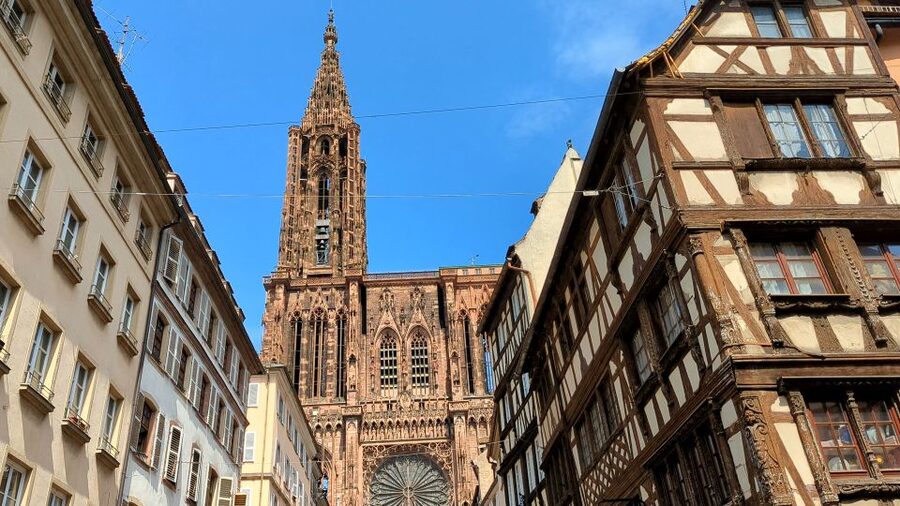
The Tonneliers district brings the conversation closer to present-day Strasbourg. Its bars and restaurants show the city as a place where people live, eat, and meet, not simply an open-air museum.
This is also where Nicolas’s recommendations become particularly useful. He can point you toward places for Alsatian food, drinks, bakeries, markets, and local products. Tarte flambée is one specialty worth asking about, and the guidance can help you distinguish a meal you chose because it was nearby from one that fits the region.
The food advice is delivered at the end as well, often with a longer list of suggestions for places to eat and things to do around Strasbourg and Alsace. If you are staying several days, ask for recommendations that match your budget and interests. The guide has also helped people plan visits to Colmar and nearby parts of Germany, though the tour itself remains focused on Strasbourg.
Do not expect food tastings to be included. The value here is advice, not a meal. You will still pay separately for lunch, dinner, drinks, and any other activity.
Nicolas as your guide
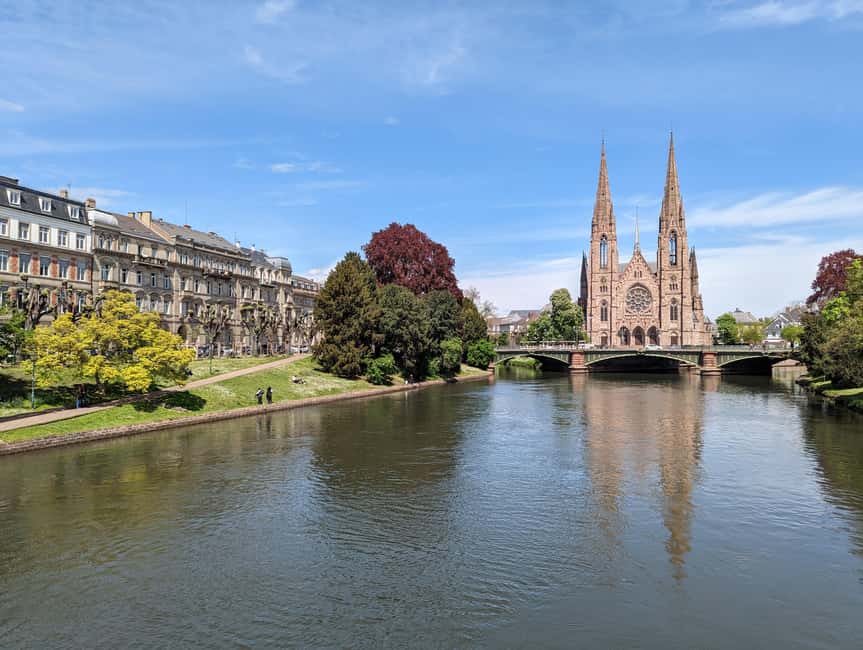
The strongest part of this experience is Nicolas’s role as a local storyteller. He speaks French and English, and he has guided mixed-language groups in both. His English has been described as clear, and his approach is friendly, chatty, and willing to answer questions.
His local roots come up often, but the tour is not only about his family. He uses personal stories to explain Alsatian culture, then connects them to the city’s buildings and public spaces. That gives the walk a sense of place that a memorized script often lacks.
He also pays attention to small logistics. Communication before the tour can include meeting-point details and a description of his appearance. During the walk, he may adjust the timing to catch a changing feature of the city, such as a bridge movement, when conditions allow.
The small group lets him adapt. If you care about photography, ask for more picture advice. If you want food suggestions, say so. If the city’s border history is your main interest, you can spend more time there than a fixed large-group route usually allows.
What the $41 price buys you
At $41, you are paying for two hours of direct access to a local guide, not for admissions or transportation. The cathedral entry fee is separate, and food and drinks are not included.
I consider the price fair for the group size. Six people or fewer means the per-person cost supports a more personal exchange, and a very small booking may even become a private walk. The value rises if you use the advice after the tour. A good restaurant recommendation, a better understanding of the tram-free center, or a clear plan for your next day can save time and make the rest of your visit easier.
If you already know Strasbourg well, this may feel basic in places. It covers major sights and gives a city overview rather than a specialist study of one building or historical period. For a first visit, though, that broad approach is useful.
Free cancellation is available up to 24 hours before the start for a full refund, and you can reserve now and pay later. Starting times vary, so check availability when booking.
Who should book this Strasbourg walk?
I would choose this tour if you want a strong first look at Strasbourg, prefer small groups, and enjoy asking questions. It suits couples, solo visitors, families with older children, and anyone who wants local food advice along with history.
It is also a good match for photographers. You get time to take pictures at the cathedral, Petite France, the covered bridges, and the old streets, plus tips on angles that may not be obvious at first glance.
You should think twice if walking is difficult, if you need regular seating, or if you want extended indoor sightseeing. The experience is not suitable for people with mobility impairments, and two hours of city walking can feel demanding in poor weather.
Should you book it?
Book this walk if you want to understand Strasbourg quickly and then explore it with more confidence. Nicolas brings together the major sights, Alsatian culture, revolutionary history, personal stories, and useful food advice in a group small enough to feel conversational.
The best plan is to take it near the start of your stay, wear comfortable shoes, and keep the rest of the day open for places he recommends. Skip it only if you want a cathedral interior tour, a food tasting, or a very specialized history program. For most first-time visitors, $41 buys a practical and personal introduction to the city.
FAQ
How long does the Strasbourg walking tour last?
The tour lasts two hours.
What is the price?
The price is $41 per person.
What languages does the guide speak?
The live guide speaks French and English.
How many people are in the group?
The group is limited to six participants.
Is Strasbourg Cathedral admission included?
No. Entry to the cathedral is not included in the tour price.
Where does the tour start?
One stated starting option is Place d’Austerlitz. The meeting point may vary depending on the option booked.
Where does the tour finish?
The tour finishes at Place de la République.
What sights are included on the route?
The route includes the Ponts Couverts, Petite France, Église Saint-Thomas, Strasbourg Cathedral, Place Saint-Étienne, and Place de la République. The tour also covers central areas such as Place Kléber and the Tonneliers district.
What should I bring?
Bring comfortable shoes because the experience is a walking tour.
Can I cancel the booking?
You can cancel up to 24 hours in advance for a full refund. Reserve now and pay later is also available.
Just added around Strasbourg
- Capture the Magic of Strasbourg with an Exclusive Photoshoot★ 4.9 · 61 reviews
- Alsace: Full-Day Wine Tour & Tastings from Strasbourg★ 4.8 · 125 reviews
- Strasbourg: 1-Day Bike Rental★ 4.1 · 45 reviews
- From Strasbourg: Medieval Villages & Wine Tasting Day Trip★ 4.8 · 329 reviews
- Strasbourg: Traditional Food Walking Tour with Tastings★ 4.8 · 219 reviews
- Alsace Wine Route Small Group Half-Day Tour with Tasting from Strasbourg★ 4.5 · 291 reviews
- Alsace Wine Route Wineries & Tasting Small Group Guided Tour from Strasbourg★ 5.0 · 229 reviews
- Strasbourg: Guided Historical Neighborhoods Walking Tour★ 4.9 · 275 reviews
Walking Tours, compared.
Paris Top Sights Half Day Walking Tour with a Fun Guide
Read our review →
Montmartre Hidden Gems and Scenic Highlights Walking Tour
Read our review →
Montmartre Hill French Gourmet Food and Wine Tasting Walking Tour
Read our review →
Paris Île de la Cité and Notre-Dame Walking Tour With Crypt
Read our review →
Montmartre Cheese, Wine & Pastry Guided Walking Tour
Read our review →
Paris in a Day: Louvre or Orsay, Eiffel Tower, City Walk & Cruise
Read our review →
Montmartre Highlights Walking Tour with a Local Guide
Read our review →
Browse the lists this tour appears in