
Reviewed · D-DAY BEACHES TOURS
2- to 6-hour sidecar excursion on the D-Day Landing Beaches
A vintage sidecar is an unusually fine way to see Normandy’s D-Day sites. From Bayeux, you ride with a guide such as Rémi or Philippe along small country roads, then stop at places where the history is easier to grasp because you are standing right in it. I like the mix of serious battlefield history and cheerful open-air travel, and I like that the guides can shape the day around your interests. The main drawback is simple: a motorcycle ride can feel cold, wet, or windy, especially from October through late spring.
I also like the access. The sidecar lets you cover more ground than you could on foot, while the smaller roads reveal the villages and farmland between the beaches. Still, this is not the best choice if you want a quiet, museum-heavy day or if poor weather is likely. Bring warm layers, a scarf, and a willingness to walk at the stops.
Key points to know before you book
- Choose your history zone: A 2-hour outing focuses on either the British or American sector.
- Ride with local guides: Rémi, Philippe, and other drivers combine battlefield knowledge with personal stories and easy humor.
- See more on small roads: The sidecar reaches coastal towns and countryside routes that a standard coach may bypass.
- The 6-hour route adds Pointe du Hoc: This longer option gives you a fuller picture of the Allied campaign.
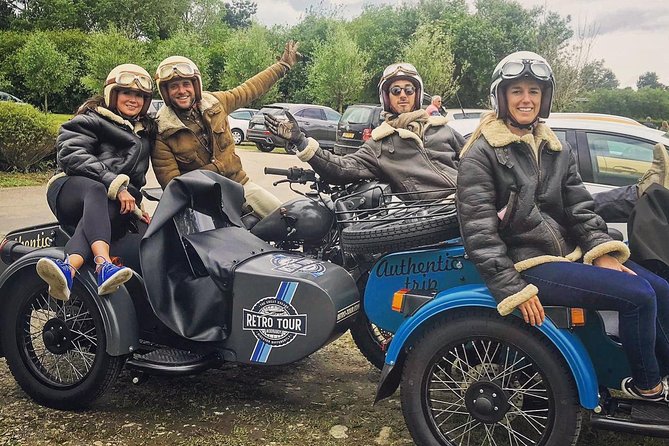
- Dress for the ride: Helmets, gloves, goggles, and rain gear are supplied, but warm clothing remains essential.
- Private and small-scale: Each booking is private, with one or two passengers per sidecar and up to six people normally included.
Why a sidecar works so well in Normandy
The D-Day beaches are spread across a broad stretch of coast. You can visit a single beach by taxi or rental car, but connecting several sites in one day takes time and a good sense of direction. A sidecar gives you a moving view of Normandy between stops, then puts you close to the ground when you arrive.
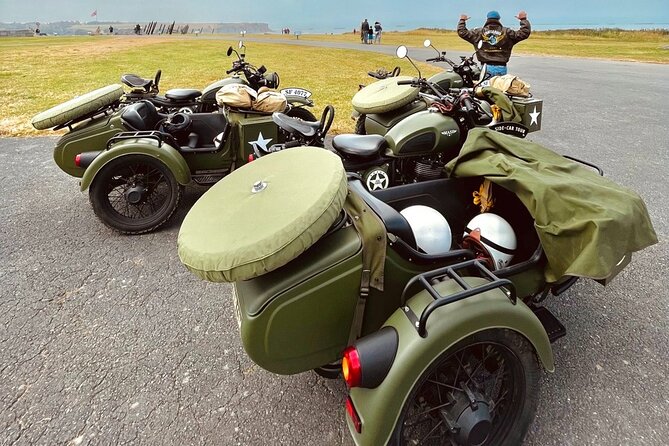
You sit either behind the pilot or in the sidecar basket. The basket takes one passenger, while another person can ride behind the driver. The setup feels more personal than a bus, and you are exposed to the countryside rather than sealed behind glass.
That openness is part of the fun, but it is also the practical issue to take seriously. Wind can feel sharp even on a sunny day. Several people who rode in late autumn or winter found that a scarf and several layers made a major difference. Rain gear is provided, yet you should still dress as if you will spend hours outdoors.
The drivers supply helmets, gloves, and retro goggles. You meet at a location of your choice in Bayeux, at the Bayeux Battle of Normandy Museum parking lot, or at the bus station. After a short briefing and gear-up, the ride begins. Stops are built in for photographs, fresh air, and a closer look at each site.
More Vintage Car Tours in Normandy
- Private vintage sidecar tour of the D-Day Landing Beaches
★ 5.0 · 130 reviews - Bayeux: 2-hour tour of the D-Day beaches, by vintage sidecar
★ 4.9 · 64 reviews - Private tour: visit Deauville in a sidecar
★ 5.0 · 161 reviews
Picking the right length: two hours, half day, or six hours
The 2-hour choices are useful if your schedule is tight. You select the British sector or the American sector rather than trying to cover everything quickly.
The British-sector route includes Arromanches-les-Bains and Longues-sur-Mer. The American-sector route includes Port-en-Bessin-Huppain, Omaha Beach, and the Normandy American Cemetery, subject to opening hours. These are focused outings, not rushed attempts to see every beach.
The half-day option gives you more breathing room and a better chance to connect the events from one site to the next. You can spend longer listening, asking questions, taking photographs, and riding through the countryside without checking the clock at every stop.
The full-day route lasts about six hours and adds Pointe du Hoc. This is the strongest choice if D-Day is a central reason for your visit to Normandy. You get the British and American sectors, the cemetery, Omaha Beach, and the German gun position at Pointe du Hoc in one carefully connected route.
A longer tour also makes better value of the sidecar. At $169.31 per person, the cost is not low for a short ride, but it includes a private guide, the motorcycle experience, equipment, transportation between sites, and several hours of personal interpretation. If you only want a quick look at one beach, a shorter option may make more sense. If you would otherwise hire a car, pay for parking, and research the sites yourself, the longer outing becomes easier to justify.
Arromanches and Longues-sur-Mer: the British sector
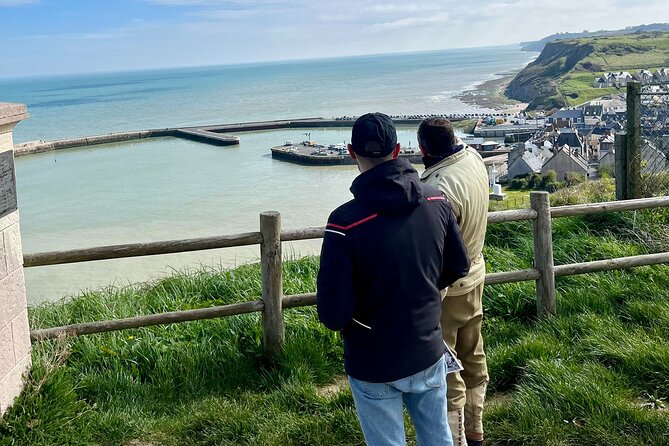
Arromanches-les-Bains is one of the most useful stops for understanding how the invasion continued after the first landings. The Allies built Mulberry B here, a temporary artificial harbor that allowed heavy equipment and supplies to come ashore before the Allies captured a major deep-water port.
The town was in the central part of the Gold Beach zone, but it avoided the worst fighting on June 6, 1944. British troops landed farther east, between Asnelles and Ver-sur-Mer, then reached Arromanches by land that evening. The harbor began operating on June 14.
Your guide can use the town and shoreline to explain the practical problem behind the invasion. Soldiers needed food, fuel, vehicles, ammunition, and machinery. Winning the beach was only the first step. Arromanches shows how the Allies built a supply system under wartime pressure.
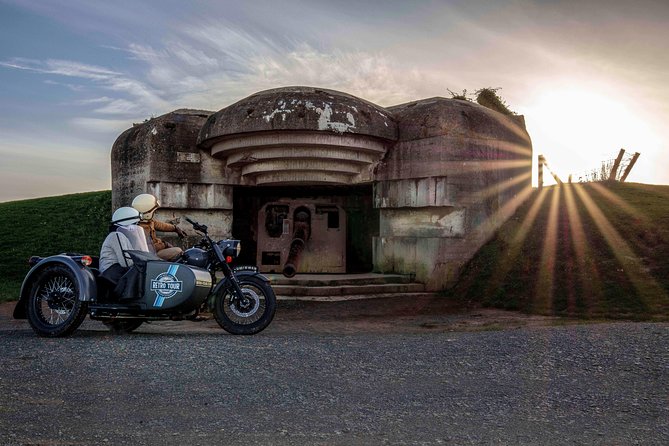
Longues-sur-Mer gives you a different view. Its German battery held four 150 mm naval guns, each protected by a concrete casemate. The position sat between Omaha Beach and Gold Beach and was attacked from the air and sea before the landings.
The battery was captured by British troops the next day and remains remarkably intact. Walking among the casemates gives you a physical sense of the Atlantic Wall, far more clearly than a photograph in a museum. You can see the scale of the concrete structures and the way the guns were positioned along the coast.
The limitation is timing. A 2-hour British-sector ride gives you two major sites, but not the American beaches farther west. Choose it if the harbor project and German coastal defenses interest you most.
Port-en-Bessin and Omaha Beach: the American sector
Port-en-Bessin-Huppain adds an important supply story to the usual beach narrative. The 47th Royal Marines Commando liberated the port on June 8, 1944. By June 16, it had become the central point for a fuel pipeline network about 120 kilometers long.
That detail helps explain the scale of the Allied advance. Armies could not move inland on courage alone. They needed a steady flow of fuel, and Port-en-Bessin became part of that system. Later, Operation PLUTO extended the supply effort with underwater pipelines between the Isle of Wight and Querqueville near Cherbourg.
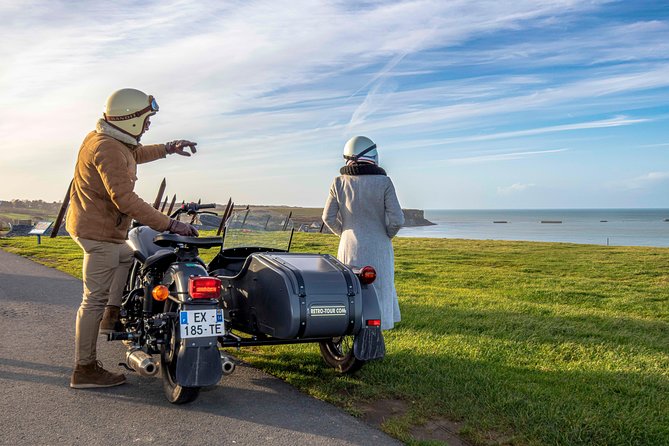
Omaha Beach is the emotional center of the American-sector route. You walk on the sand where American troops came ashore under heavy fire and artillery bombardment. The beach is broad and open, which can make the events feel even more difficult to picture. Your guide connects the physical setting with the decisions and dangers faced by the soldiers.
This is a place to slow down. You may want time for photographs, but the strongest part of the stop is often simply standing still and looking inland. The guide’s stories give shape to a place that might otherwise appear calm and ordinary.
You should expect a mix of riding and walking. The tour is not only a scenic motorcycle trip. The historical stops carry weight, and the best experience comes when you allow time for both the thrill of the ride and the seriousness of the subject.
More D-Day landing beach tours:
- Normandy American D-Day Beaches Full Day Tour from Bayeux
★ 5.0 · 2,103 reviews - Normandy American D-Day Experience – Group tour from Bayeux
★ 5.0 · 1,566 reviews - Omaha and Band Of Brothers Full Day Tour
★ 5.0 · 1,104 reviews - Omaha Beach D-Day Experience – Afternoon group tour from Bayeux
★ 5.0 · 1,088 reviews
Normandy American Cemetery at Colleville-sur-Mer
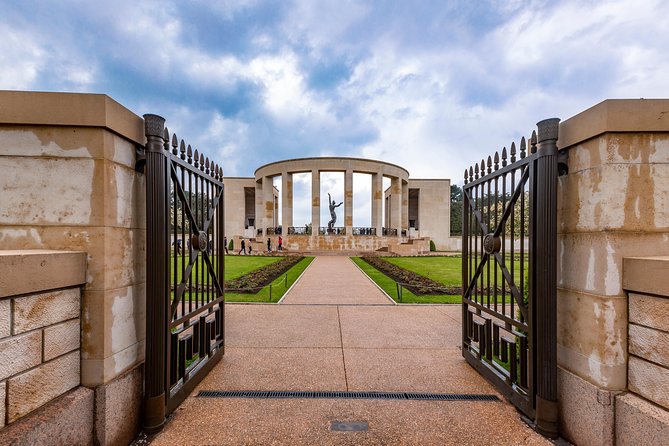
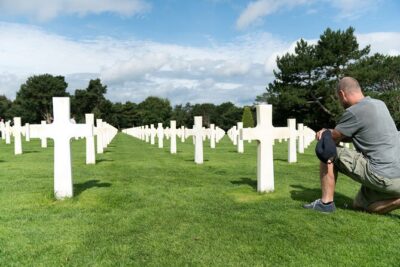
The Normandy American Cemetery sits on a cliff above Omaha Beach. Rows of white marble crosses and Stars of David stretch across the grounds, with the sea visible beyond them.
Your guide may share stories about individuals buried there and explain how their sacrifice fits into the wider campaign. That personal focus matters. Instead of treating the cemetery as a grand monument alone, you get a reminder that each marker represents one person, one family, and one unfinished life.
The cemetery is included in the American-sector, half-day, and full-day options, but timing matters. In the low season, it closes earlier, and a tour beginning at 4:00 PM cannot include the visit. Opening hours can change, so I would avoid a late departure if the cemetery is essential to your plans.
From 2026, the cemetery visit cannot be guaranteed and may be replaced by WN60. If you are booking for a future date and this site is a priority, confirm the current arrangement before paying.
Pointe du Hoc and the six-hour route
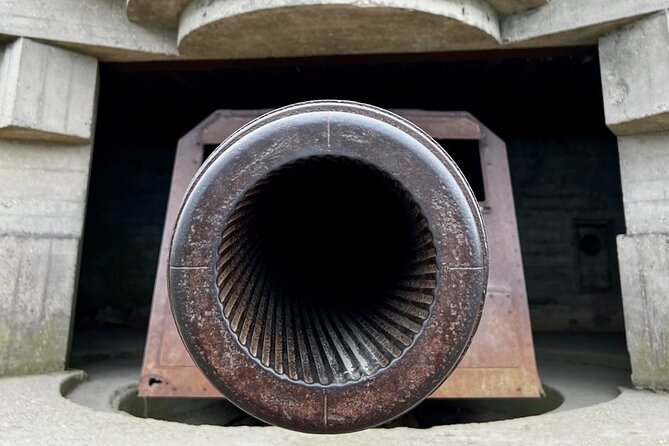
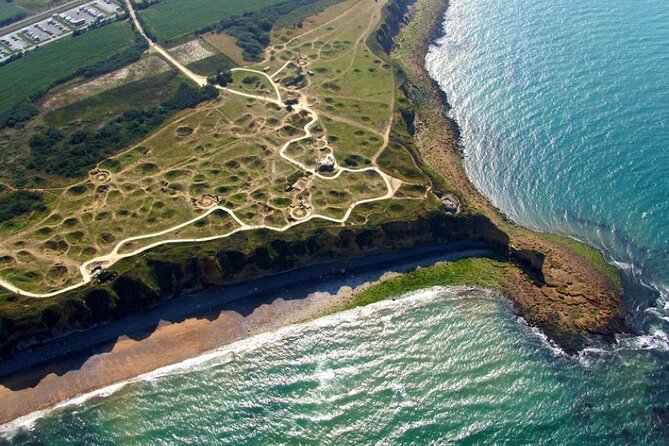
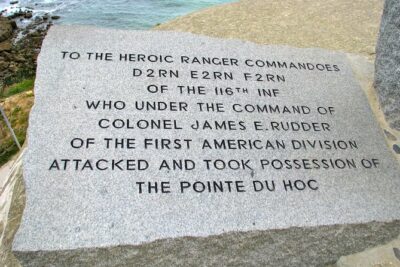
Pointe du Hoc is reserved for the 6-hour option. The promontory sits between Utah Beach and Omaha Beach and was heavily fortified by the Germans. Allied reconnaissance identified long-range guns there as a threat to both landing areas.
The position had to be neutralized quickly. At Pointe du Hoc, you see the ground where strategy, climbing, bombardment, and close combat came together. The surviving concrete positions and battered terrain help you understand why this site mattered beyond its size.
I would choose the full route for anyone who wants the clearest sequence of events. Arromanches explains supply by sea. Longues-sur-Mer and Pointe du Hoc show German coastal defenses. Port-en-Bessin explains fuel. Omaha and the cemetery bring the American experience into focus.
Six hours is still a compact way to cover this much territory. You will not get an exhaustive visit to every museum or beach, and lunch is not included. The drivers can recommend a restaurant, but you should expect the meal to fit around the route rather than form part of it.
The guides make the difference
The strongest part of this experience is the guide riding with you. Rémi is repeatedly singled out for his warmth, humor, and grasp of the campaign. Philippe is also described as an engaging pilot who can explain weapons, tanks, and battlefield movements in detail. Jack is another guide associated with personal stories and a strong understanding of the area.
The style is conversational rather than formal. You can ask questions as you go, and the drivers can adjust the emphasis to your interests. One person may want troop movements and military equipment. Another may care more about the lives of soldiers and civilians. The format gives you room for both.
The guides also use less-traveled roads between the sites. That matters because the ride itself becomes part of the visit. You pass through Normandy villages and open farmland rather than spending the entire day on major roads. The scenery offers a welcome pause between difficult historical subjects.
Because this is a private activity, only your group participates. The usual maximum is six people, with up to twelve possible on request. That makes conversation easier than on a large coach, though a larger family group may require several sidecars and careful coordination.
Comfort, age limits, and weather
The minimum age is four years old. Service animals are allowed, and most people can participate. The sidecars are described as spacious enough for tall adults, including a passenger around 6 feet 2 inches with a large build.
That does not mean every rider will find the same position comfortable for six hours. You should tell the provider about your group’s size and seating needs when booking. One passenger rides behind the pilot and another sits in the basket, so couples may want to discuss who prefers each position.
The supplied equipment includes helmets, gloves, vintage goggles, and rain gear. I would still pack a warm coat, scarf, and clothes that can handle wind. Weather directly affects the experience, not just your photographs. A bright day can make the ride exhilarating, while cold rain can turn a long route into hard work.
The experience requires good weather. If the operator cancels because of poor conditions, you are offered another date or a full refund. You can also cancel for a full refund up to 24 hours before the start time. Changes or cancellations inside that window are not accepted.
Who should book this experience?
I would recommend it to you if you want D-Day history delivered at the actual sites, enjoy unusual transportation, and like a private guide who can answer questions along the way. It works particularly well for couples, families with older children, and small groups who want a shared day rather than a standard coach excursion.
The 2-hour route suits a short stay in Bayeux or a visitor who already plans to see museums separately. The half-day option is a good middle ground. I would pick the six-hour outing if you have only one day for the beaches and want Pointe du Hoc included.
I would think twice if you dislike motorcycles, get cold easily, need a fully indoor experience, or want long, unhurried visits inside museums. Lunch is not included, and the cemetery may not be available on late or future departures. The ride also depends on the weather.
Should you book the sidecar tour?
Book it if you want to connect the D-Day sites through both history and movement. The sidecar adds fun without turning the subject into a gimmick, and guides such as Rémi and Philippe bring the stops to life with military detail, local knowledge, and human stories.
For the best balance of cost and coverage, I would choose at least the half-day option. If D-Day is the main purpose of your Normandy visit, spend the extra time on the 6-hour route, dress warmly, and start early enough to protect the cemetery visit. This is a memorable choice for seeing a difficult chapter of history with a small group, a clear sense of place, and a little wind in your face.
FAQ
Where does the sidecar excursion begin?
You can meet your guide at a pickup location of your choice in Bayeux, at the Bayeux Battle of Normandy Museum parking lot, or at the Bayeux bus station.
How long does the excursion last?
Options run from about 2 hours to 6 hours. The available choices include a 2-hour British-sector route, a 2-hour American-sector route, a half-day option, and a full-day option.
Which sites are included in the British-sector route?
The British-sector route includes Arromanches-les-Bains and Longues-sur-Mer.
Which sites are included in the American-sector route?
The American-sector route includes Port-en-Bessin-Huppain, Omaha Beach, and the Normandy American Cemetery, subject to cemetery opening hours.
Is Pointe du Hoc included in every option?
No. Pointe du Hoc is included only in the 6-hour option.
What equipment is provided?
Helmets, gloves, vintage goggles, and rain gear are provided.
How many people can ride in one sidecar?
Each sidecar carries one or two passengers. One person rides behind the pilot, and one person sits in the basket. The normal maximum is six people per booking, with up to twelve available on request.
Can children participate?
The minimum age is four years old. The tour states that most people can participate, and service animals are allowed.
Is lunch included?
No. Lunch or dinner is not included. The drivers can recommend restaurants if you want to stop for a meal.
What happens if the weather is poor?
The experience requires good weather. If it is canceled because of poor conditions, you will be offered another date or a full refund.
More Vintage Car Tours in Bayeux
- Paris: Discover Paris by Night in a Vintage Car with a Local
★ 4.6 · 1,058 reviews - Paris Private Flexible Duration Guided Tour on a Vintage Sidecar
★ 5.0 · 776 reviews - Lille Driving Tour by Convertible Citroen 2CV
★ 4.9 · 711 reviews - Vintage 2CV Adventure: 2 -Hour Paris Secrets Tour
★ 4.5 · 488 reviews
Just added around Bayeux
- Bayeux: Normandy D-Day Landing Beaches Full-Day Guided Tour★ 4.8 · 158 reviews
- Bayeux: 2-hour tour of the D-Day beaches, by vintage sidecar★ 4.9 · 64 reviews
- Bayeux: Band Of Brothers Full-Day Tour★ 4.9 · 53 reviews
- Full-Day US Battlefields of Normandy Tour from Bayeux (A3LST)★ 5.0 · 214 reviews
- Full-Day Canadian Battlefields & sites Normandy Tour from Bayeux★ 5.0 · 191 reviews
- Normandy Battlefields D-Day Private Trip with VIP Services from Paris★ 5.0 · 240 reviews
- Private vintage sidecar tour of the D-Day Landing Beaches★ 5.0 · 130 reviews
- Historic Bayeux Daily Group City Tour In English 2 hrs (Apr-Sept)★ 5.0 · 220 reviews
D-Day Beaches Tours, compared.
Normandy D-Day Sites & Cemetery Day Trip from Paris with Lunch
Read our review →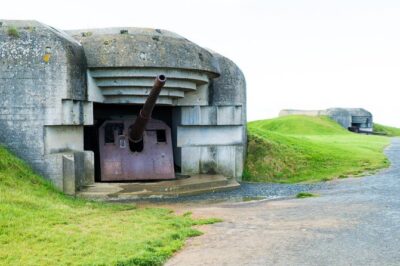
Normandy D-Day Small-Group Day Trip with Omaha Beach, Cemetery & Cider Tasting
Read our review →
Normandy D-Day Beaches and American Cemetery Day Trip from Paris
Read our review →
Normandy American D-Day Beaches Full Day Tour from Bayeux
Read our review →
Normandy American D-Day Experience – Group tour from Bayeux
Read our review →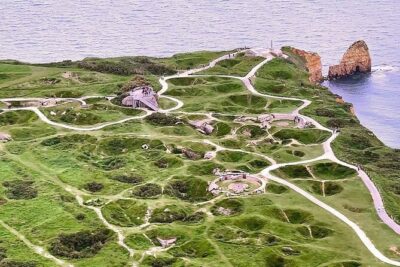
Omaha Beach D-Day Experience – Afternoon group tour from Bayeux
Read our review →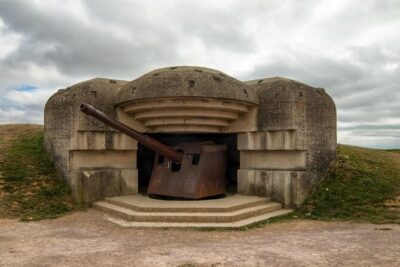
Browse the lists this tour appears in