
Reviewed · VINTAGE CAR TOURS IN NORMANDY
Guided Tour in an Old Convertible Car on the Côte de Nacre
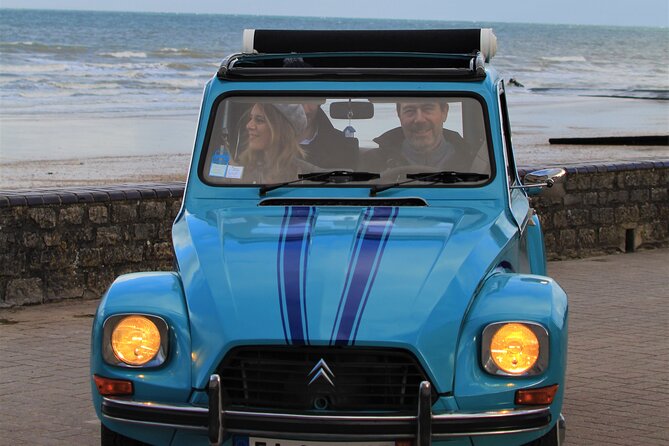
The star of this outing is a classic Citroën Dyane, an open-top French car that turns a simple sightseeing drive into a small trip back in time. Bernard drives you from Ouistreham along the Côte de Nacre, mixing short walks, village lanes, seaside roads, architecture, and Second World War connections.
I like two things right away: the route reaches places you could easily miss in a larger vehicle, and the private format lets Bernard shape the conversation around your interests. A possible drawback is the price, $108.61 per person, which feels best for a couple or small group that values a personal outing rather than a low-cost bus tour.
Key points to know before booking
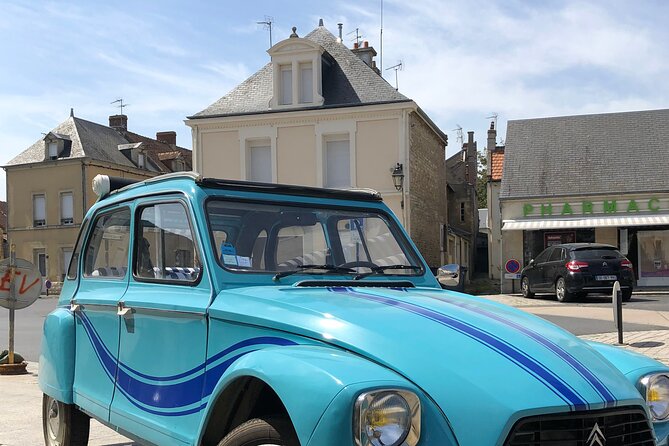
- The Citroën Dyane is part of the attraction: You ride in an open-top vintage car, with the breeze and old-fashioned feel adding real character to the afternoon.
- Bernard leads the tour: His approach combines architecture, local stories, coastal life, and wartime context rather than focusing on only one subject.
- The route covers ten stops: You see Ouistreham, Pegasus Bridge, Douvres-la-Délivrande, and several seaside villages along the Côte de Nacre.
- This is a private experience: Only your group takes part, so the pace and conversation can feel more personal.
- Expect a mix of driving and walking: Several stops include short walks through lanes, along the dike, or around historic buildings.
- Plan for weather: The convertible is a major part of the fun, but an open car is more exposed to wind, sun, and rain.
Why the old Citroën Dyane changes the whole outing
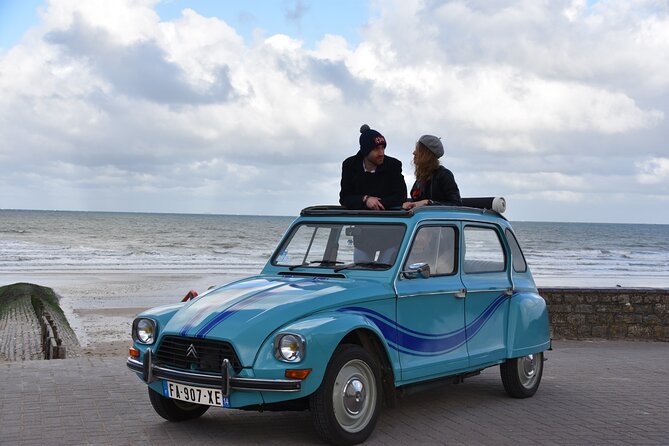
You can see Normandy by coach, rental car, bicycle, or on foot. This tour offers something different: a slow ride in a small convertible that makes the road itself part of the experience.
The Dyane is not just transport between sights. Bernard presents the car at the start, explains how the afternoon will work, and gets you settled before setting off. Its age and polished appearance give the trip a playful, personal feel. One of the most memorable touches is the chance, when conditions allow, to ride with the roof open and enjoy the coast with the wind around you.
That charm comes with a practical trade-off. A vintage convertible is less sheltered than a modern vehicle, so bring a light layer even on a pleasant afternoon. The tour begins at 2 p.m., when the coast may be bright and warm, but the breeze near the Channel can still be cool.
The car also helps keep the outing intimate. This is a private tour, not a large group squeezed into a bus. You can ask about a villa, a church, a wartime event, or a village street as it comes into view. That makes the experience a good fit if you prefer conversation and local detail over a fixed script.
More Vintage Car Tours in Normandy
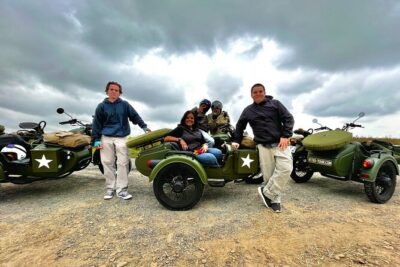
- Private tour: visit Deauville in a sidecar
★ 5.0 · 161 reviews - Private sidecar tour and cider tasting from Deauville or Honfleur
★ 5.0 · 145 reviews - 2- to 6-hour sidecar excursion on the D-Day Landing Beaches
★ 5.0 · 131 reviews
Starting in Ouistreham with Saint-Samson
The meeting point is at 2 Pl. Albert Lemarignier in Ouistreham. The first stop is Eglise Saint-Samson, where Bernard introduces the car, gives instructions, and sets the tone for the afternoon.
This opening is useful because the tour is not simply a drive-by circuit. You begin with an explanation of what you are about to see, then return to the old district of Ouistreham near the end. That gives the outing a clear beginning and ending in the same town.
At the close of the tour, you pass along the Orne, near the lighthouse, and across the vehicle locks. You then walk through Ouistreham’s older quarter, where fishermen’s houses and Saint-Samson church bring the afternoon back to its starting point.
The loop makes sense geographically, but it also gives you a second look at Ouistreham after seeing the neighboring towns. I like that structure. You get the seaside drive first, then finish with a quieter look at the port town itself.
Colleville-Montgomery and the first seaside views
The next stop is Colleville-Montgomery, known here for its remarkable villas and sea dike. This is an early introduction to the architectural character of the Côte de Nacre.
The dike gives you a chance to get out, stretch your legs, and look at the relationship between the houses and the coast. The focus is not on entering a major monument. Instead, Bernard points out the built details and setting that are easy to miss when you drive through on your own.
That distinction matters. The tour is about reading the villages, not collecting admission tickets. Every listed stop is free, so your cost goes toward the private vehicle, guiding, and route rather than entrance fees.
Hermanville-sur-Mer, where styles meet
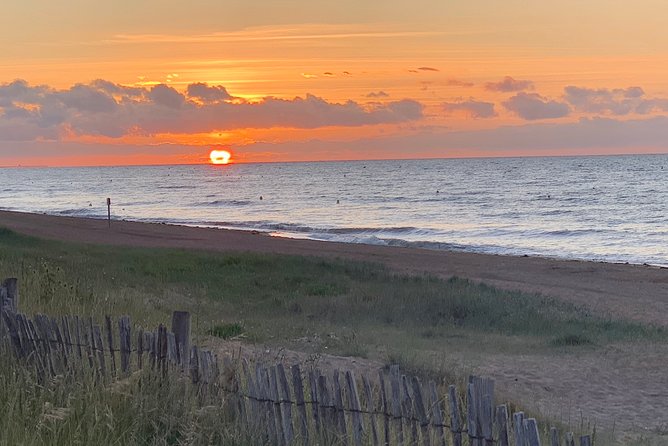
Hermanville-sur-Mer receives a longer stop of about 30 minutes. The emphasis here is on Art Nouveau, Baroque, and Anglo-Norman architecture.
For me, this is one of the strongest parts of the route because three different styles give you a way to compare the local buildings. Bernard’s explanations connect appearance with the stories behind the places, and the walk helps you see details that would pass too quickly from a car window.
The stop also shows why a guide adds value on this route. Without context, you may notice an attractive house or unusual facade but not understand what makes it distinctive. With Bernard, you can look at the buildings with a clearer sense of period, influence, and local identity.
Same trip, a completely different kind of day:
- Normandy D-Day Sites & Cemetery Day Trip from Paris with Lunch
★ 5.0 · 6,877 reviews - Day Trip to Mont-Saint-Michel from Paris
★ 4.5 · 4,876 reviews - Normandy D-Day Small-Group Day Trip with Omaha Beach, Cemetery & Cider Tasting
★ 5.0 · 2,786 reviews - Mont Saint Michel Day Trip from Paris with English Speaking Guide
★ 4.5 · 2,750 reviews
The villages of Luc, Langrune, and Lion
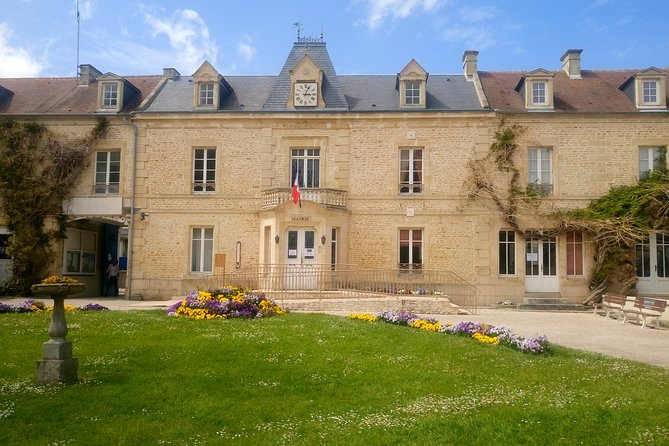
The middle part of the afternoon moves through several small coastal communities. This section is less about one headline attraction and more about the pleasure of seeing how the towns differ.
In Luc-sur-Mer, you go through picturesque streets and continue along the dike. The stop lasts about 20 minutes, enough for a short walk and a closer look at the town.
Langrune-sur-Mer is a shorter visit of around 10 minutes. The route passes through lanes, near Tournebu castle, and along the sea dike. It is a quick taste rather than a full visit, so you should not expect a long exploration of the castle or an extended beach stop.
Lion-sur-Mer allows about 20 minutes. You pass through small streets, see the town hall, and go by the castle. The pattern is clear: Bernard uses the car to connect the villages, then gives you brief walks where the buildings and streets deserve a slower look.
This pacing suits you if you want variety. In three hours, you see many places without spending the whole afternoon in one town. It may feel too quick if you prefer to sit at a cafe, browse shops, or explore every street at leisure.
Saint-Aubin-sur-Mer and houses by the sea
Saint-Aubin-sur-Mer offers another short stop, focused on houses by the sea. This is a small detail, but it fits the larger theme of the tour: the coast is presented through architecture and daily life as much as through scenery.
I like this approach because it encourages you to look up and around. The seaside towns are not interchangeable. Their houses, streets, public buildings, and relationship with the shore tell different parts of the story.
The stop lasts about 10 minutes, so keep your expectations modest. You are getting an introduction to the character of Saint-Aubin-sur-Mer, not an in-depth town visit.
Douvres-la-Délivrande and the barony
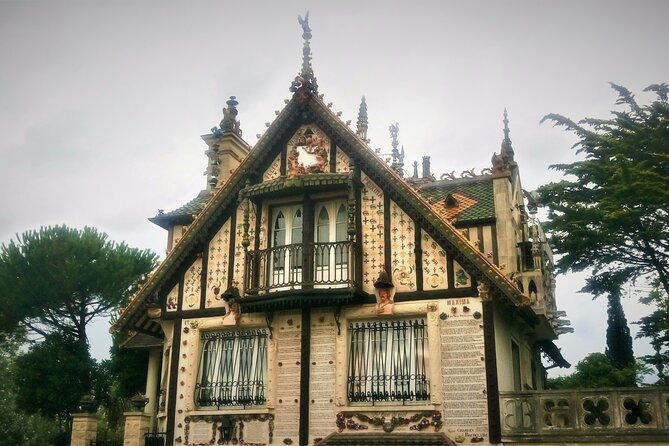
The tour then turns inland to Douvres-la-Délivrande, where the focus shifts toward notable architecture, local stories, and the barony. This change of setting keeps the route from becoming a simple sequence of beach towns.
The town gives Bernard another chance to explain how local places developed and why certain buildings matter. After several coastal stops, the inland setting adds contrast and helps you see the Côte de Nacre as more than a strip of shoreline.
The planned stop is about 20 minutes. That is enough to hear the stories and view the main architectural points, but you will not have time for an unhurried independent visit. If you want a detailed look at Douvres-la-Délivrande, you may wish to return on your own.
Pegasus Bridge and the Second World War
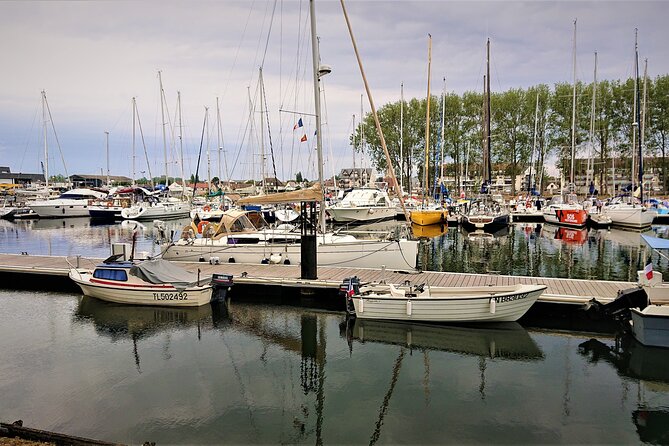
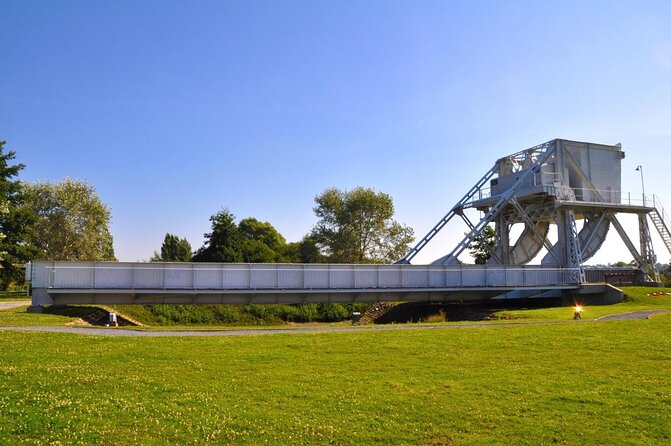
Pegasus Bridge is the clearest wartime stop on the route. You cross the bridge and pass in front of Café Gondrée, a famous point connected with the D-Day story.
The visit is short, around 10 minutes, so this is not a full museum tour or an extended military-history visit. It is a brief, meaningful stop within a wider tour that connects Normandy’s wartime past with its architecture and coastal communities.
That balance will suit you if you want context without spending the whole day at battlefield sites. Bernard’s background in local history and his ability to link places together are especially useful here. The bridge is not treated as an isolated photo stop. It forms part of the route back toward Ouistreham and the Orne.
If your main purpose in Normandy is an intensive D-Day study tour, this outing should supplement a dedicated battlefield visit rather than replace one. If you want to add a wartime landmark to a relaxed village and coast tour, it fits well.
The return through Ouistreham
The final section returns along the Orne, passes near the lighthouse, and crosses the vehicle locks before reaching Ouistreham’s old quarter.
This is a pleasant way to finish because the ride continues to offer changing views instead of simply returning by the fastest road. The fishermen’s houses and Saint-Samson church give you a final look at local life and older architecture.
By this point, the variety of the route becomes clear. In one afternoon, you have seen seaside villas, dikes, village lanes, castles, town halls, churches, a wartime bridge, and waterways near Ouistreham. The tour works because Bernard keeps the scale small. You are not trying to conquer Normandy in one day. You are following one part of the coast at an easy pace.
What Bernard adds to the experience
Bernard is central to the quality of the outing. His style combines history, architecture, and personal exchange. He explains the places in plain terms, then responds to questions instead of treating the tour as a speech delivered from start to finish.
The strongest theme in the feedback is his enthusiasm and his ability to make people curious about ordinary details. You may begin by admiring a pretty villa and leave thinking about the social clues in its design, including how a building once displayed its owner’s wealth.
He also appears attentive to practical issues. When one couple was delayed getting from Caen, he remained flexible and reassured them rather than turning the late arrival into a problem. That matters because transport connections can be unpredictable during a Normandy visit.
A fresh apple cider break was also part of one memorable outing. It is not listed as a guaranteed feature, so do not book expecting a cider stop every time. Still, it reflects the informal, personal nature of the tour and the possibility of small local touches along the way.
Price, timing, and who gets good value
At $108.61 per person, this is not a bargain sightseeing ride. The price makes more sense if you are traveling as a couple, family, or small private group and want a guide, a distinctive vehicle, and a route that joins many smaller places in one afternoon.
You are paying for more than three hours of driving. The experience includes Bernard’s commentary, the private format, the vintage car, short walks, and a route that would be awkward to reproduce without your own vehicle. There are no listed admission charges, so the value rests on the guiding and the character of the outing.
Group discounts are available, which may improve the price for a larger party. The tour is offered in English, and confirmation is provided when you book. Most people can participate, service animals are allowed, and the meeting point is near public transportation.
Free cancellation is available if you cancel at least 24 hours before the 2 p.m. start time. A cancellation or change made inside that window is not accepted for a refund.
Who should book this Dyane tour
I would choose this outing if you enjoy old cars, local architecture, and a relaxed route with plenty of conversation. It is particularly well suited to couples, families, and small groups who want a private experience with a strong sense of place.
It also works well as a change of pace after more demanding museum or battlefield visits. The open car, sea air, and small village stops create a calm afternoon, while Pegasus Bridge and the wartime references add substance.
You may want something else if you need a fully accessible vehicle, a long stop at each town, or a detailed military tour. The information confirms that most people can participate, but it does not give specific vehicle accessibility details. Ask before booking if mobility is a concern.
Should you book it?
Book this tour if the idea of exploring Normandy in a vintage Citroën Dyane sounds as appealing as the sights themselves. The car, Bernard’s warm guiding style, and the mix of coast, architecture, village streets, and wartime history give the afternoon a clear personality.
Skip it if you want the lowest possible price or a long, detailed visit at one major attraction. For everyone else, this is a memorable way to see the Côte de Nacre at a human pace, with enough structure to teach you something and enough freedom to let the afternoon feel like an outing rather than a lecture.
FAQ
Where does the tour start and finish?
The tour starts at 2 Pl. Albert Lemarignier, 14150 Ouistreham, France, at 2 p.m. It ends back at the same meeting point.
How long does the experience last?
The tour lasts approximately three hours.
Is the tour private?
Yes. Only your group participates in the activity.
Is the tour offered in English?
Yes. The experience is offered in English.
Does the tour include Pegasus Bridge?
Yes. The route crosses Pegasus Bridge and passes in front of Café Gondrée. The planned stop lasts about 10 minutes.
Can I cancel for a full refund?
Yes, if you cancel at least 24 hours before the local start time. Cancellations or changes made less than 24 hours before the tour are not accepted for a refund.
Just added around Normandy
- Normandy D-Day Beaches with Juno Beach, bunkers & Canadian Cemetery from Paris★ 5.0 · 296 reviews
- Normandy D-Day Landing Beaches Private Day Trip from Paris★ 5.0 · 50 reviews
- Normandy D-Day Tour with Mont Saint-Michel Day Trip from Paris★ 4.5 · 58 reviews
- Giverny Day with Monet Foundation Audio Guided Tour from Paris★ 3.5 · 30 reviews
- Giverny & Versailles Audio Guided Day Trip with Lunch from Paris★ 3.5 · 38 reviews
- Normandy D-Day Beaches All-American Private Day Tour from Paris★ 5.0 · 27 reviews
- 3 Days Trip to Normandy, Loire and Mont Saint Michel from Paris★ 4.5 · 86 reviews
- Normandy 2Days Trip Landing Beaches and Mont St Michel from Paris★ 4.0 · 219 reviews
Vintage Car Tours in Normandy, compared.
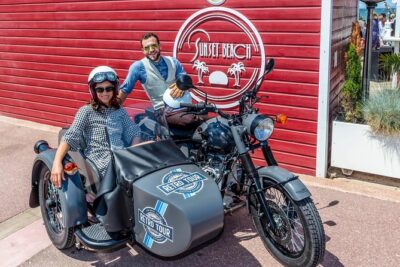
Private sidecar tour and cider tasting from Deauville or Honfleur
Read our review →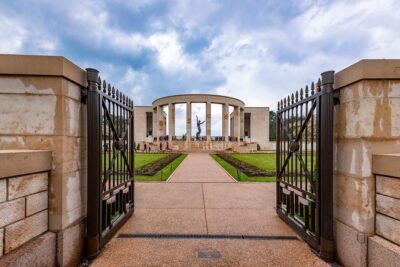
2- to 6-hour sidecar excursion on the D-Day Landing Beaches
Read our review →
Private vintage sidecar tour of the D-Day Landing Beaches
Read our review →
Normandy WWII Private Half-day Sidecar Tour From Bayeux
Read our review →
Browse the lists this tour appears in